REVIEW · ROME
Castel Sant’Angelo | The Tomb of Hadrian Private Guided Tour
Book on GetYourGuide →Operated by Tour in the City - Travel Agency Rome - · Bookable on GetYourGuide
Your Rome story starts with a bridge. With skip-the-line entry and a rooftop terrace finish, Castel Sant’Angelo turns into a personal show of emperors, popes, and prisoners. The only catch: this is a steady 2-hour walk with some stairs, so plan for moderate effort and wear comfortable shoes.
I like how this tour begins right where the views and drama begin, at Ponte Sant’Angelo, then carries you into the castle without line stress. You meet your guide outside the main entrance (Lungotevere Castello n° 50) and use headsets so the guide stays clear even when crowds swell. It’s private, typically 2 to 10 people, and offered in English, Spanish, French, and Italian.
In This Review
- Key things that make this tour worth your time
- Ponte Sant’Angelo: why the tour starts with statues
- Skip-the-line entry: using your time inside Hadrian’s Mausoleum
- Hadrian’s tomb to papal rooms: art you’ll notice more with a guide
- The prison story: dark chapters told with concrete details
- Rooftop terrace views: a photo plan that feels worth the climb
- What the 2-hour experience really feels like
- Price and value: what $225.44 per person buys you
- Who this private tour is best for (and who should pass)
- Should you book Castel Sant’Angelo: Private Guided Tour?
- FAQ
- How long is the Castel Sant’Angelo private guided tour?
- Where do we meet the guide?
- Is skip-the-line access included?
- What languages are available for the live guide?
- What should I bring and wear?
- Is the tour wheelchair accessible?
- Are there any clothing rules for inside the castle?
Key things that make this tour worth your time
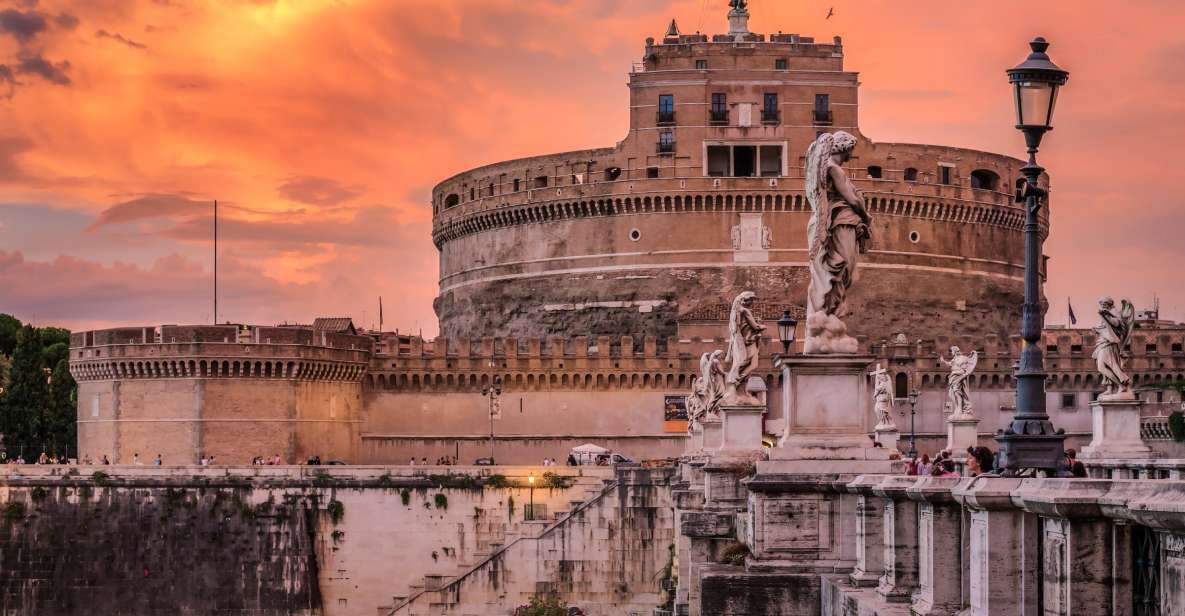
- Ponte Sant’Angelo sculptures as the warm-up so you understand the bridge before you cross it
- Straight into the castle with skip-the-line access to save time for the good parts
- Papal rooms plus art details like Pope Clement VII’s bathroom frescoes linked to Raphael’s school
- Prison history told with specific dark details, including a cell reached via a trapdoor
- Michelangelo’s courtyard so you see how Renaissance design shaped the site
- Rooftop terrace views over the Tiber and Rome built right into the route
Ponte Sant’Angelo: why the tour starts with statues
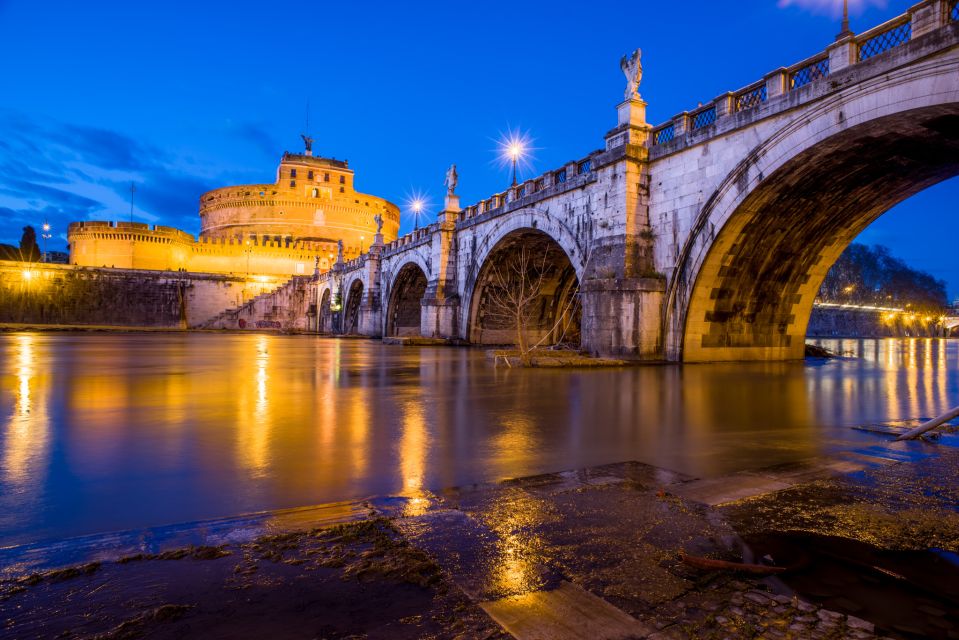
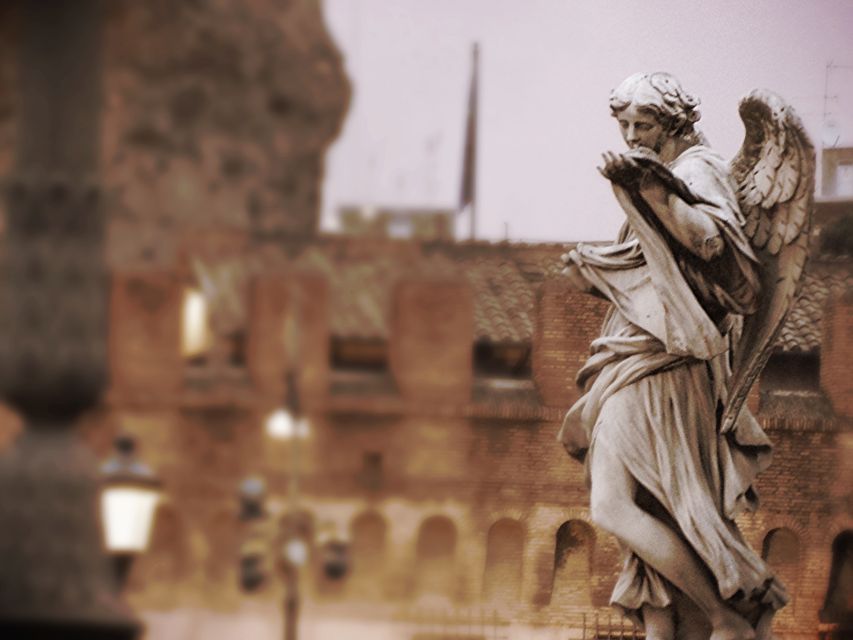
Castel Sant’Angelo may steal the spotlight, but the smart move here is starting at Ponte Sant’Angelo first. That bridge is the entryway to the whole story. You get the statues context early, so when you later look back at the river and city angles, it makes sense why this spot mattered for centuries.
This is one of the places where a guide pays off fast. Even if you’re good at self-guided walking, the sculptures can feel like decoration until someone connects them to the bridge’s role between river, city, and fortress. Once you understand that, you start noticing details in the stone instead of just moving past them.
And practically? It also sets the pace. You’re not rushed from street to ticket desk. You ease into the experience with the most photogenic orientation point first, with the Tiber flowing under you like a roadmap for Rome.
You can also read our reviews of more guided tours in Rome



Skip-the-line entry: using your time inside Hadrian’s Mausoleum
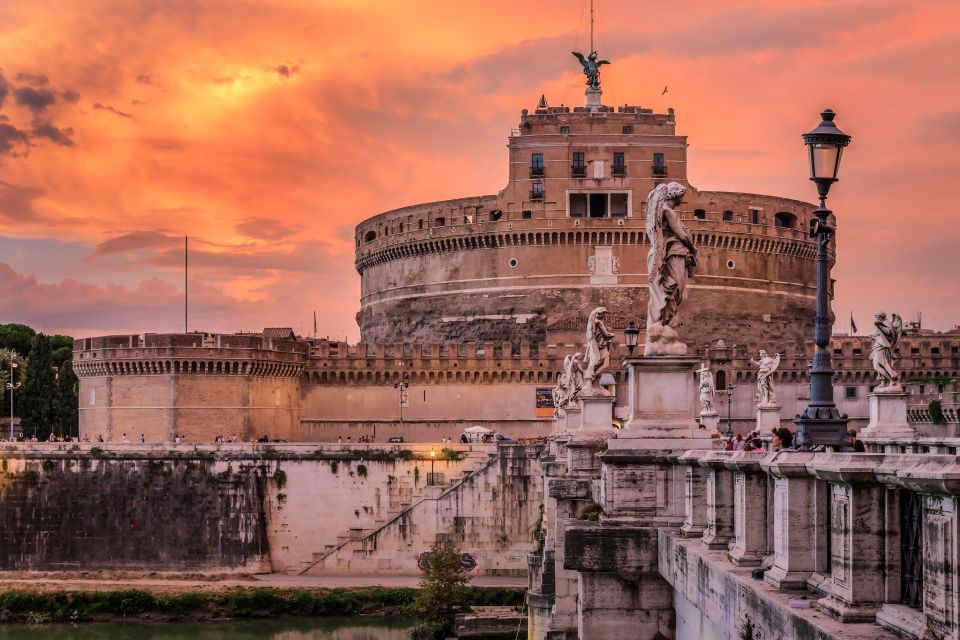
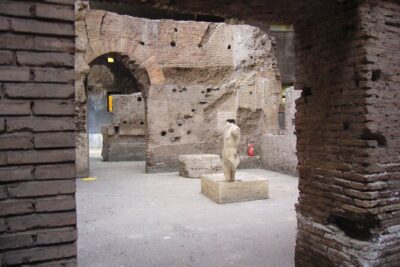
The castle’s big advantage is that it’s not one thing. It’s an emperor’s tomb, then a papal residence, then a fortress, then a prison, then an execution site, and now a museum. With skip-the-line access, you spend your energy where it counts: in the rooms and corridors that hold that transformation.
At the entrance, your guide brings you in without the usual ticket-line shuffle. That matters because Castel Sant’Angelo can get crowded, and waiting is the fastest way to drain the value out of a guided tour. Here, the “time tax” is reduced, so your 2-hour window stays focused on history you can actually hear.
Once inside, you’re guided through how the site evolved over time. You’re not just looking at walls. You’re tracing the logic of power: what rulers needed, how the structure was used, and why certain rooms and routes would have felt tense. You also get headsets, which is a real quality-of-life win when you’re near other tour groups or in echo-heavy spaces.
Hadrian’s tomb to papal rooms: art you’ll notice more with a guide
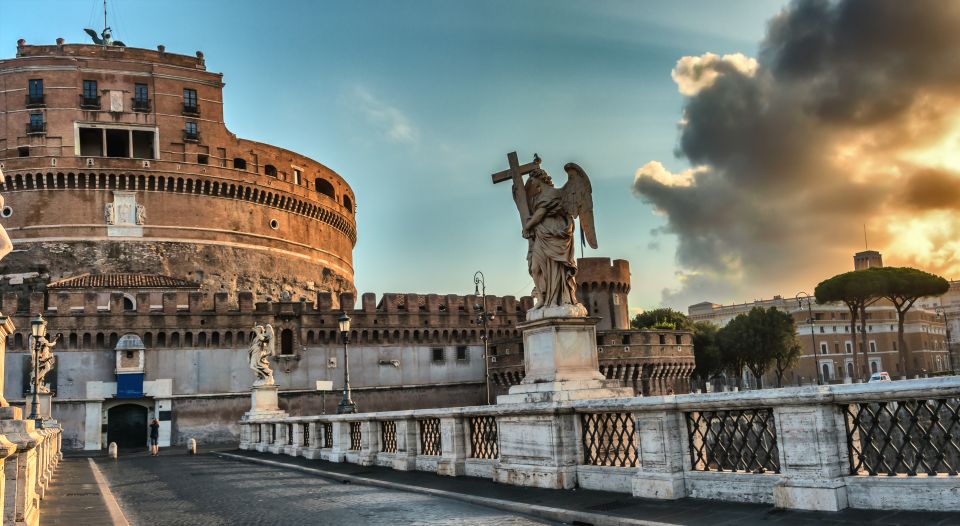
Castel Sant’Angelo begins as Hadrian’s mausoleum. That’s the baseline of scale and intention. The emperor planned a monument built for legacy. Then later popes took the structure and re-wired it for residence and ceremony.
One highlight you don’t want to miss is the papal-side rooms and their art. The most specific detail that stands out is Pope Clement VII’s bathroom, with frescoes connected to Raphael’s school. That’s exactly the kind of detail that can pass you by if you’re just wandering. With a private guide, you get the “what to look for” and the “why it mattered” story so the decorations feel placed, not random.
You also get moments like Michelangelo’s courtyard, which helps you see how Renaissance influence shaped the site. Even if you’re not a design nerd, you’ll appreciate how the courtyard breaks the visual intensity. It gives your eyes a pause while still keeping you inside the castle’s evolution.
The guide’s job here isn’t to recite facts. It’s to point you at the parts that explain the site’s personality: where comfort was built for popes, where authority was displayed, and how space changed function over time.
The prison story: dark chapters told with concrete details
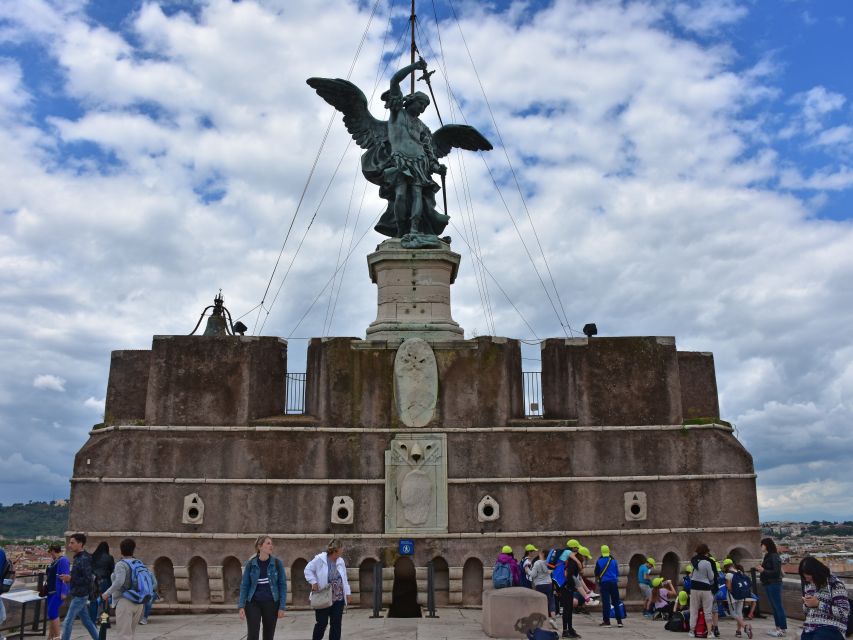
This is where Castel Sant’Angelo becomes more than a “pretty museum.” The site has a documented and dramatic prison past. Your guide explains the grim side with specific, memorable details, including the most dreaded cell described as a confined space above Hadrian’s mausoleum’s spiraling ramp. That cell is accessed only through a trapdoor.
You’ll also hear about another cell hidden in the floor, used for disposal of bodies. Those are heavy details, but that’s also the point of visiting this place. The castle’s architecture isn’t just decorative; it was adapted for control.
I appreciate that the tour doesn’t treat this as horror entertainment. It treats it as part of how the castle functioned. When you know there’s a trapdoor above a ramp, or that floors held hidden cells, you start noticing how people could be contained without modern systems. You understand why certain routes, corridors, and levels were built the way they were.
One more useful element: if you’re a fan of popular references, you’ll connect the site to Angels and Demons by Dan Brown. The castle’s story influenced that cultural imagination, and once you’ve stood in the place itself, the references make more sense.
Rooftop terrace views: a photo plan that feels worth the climb
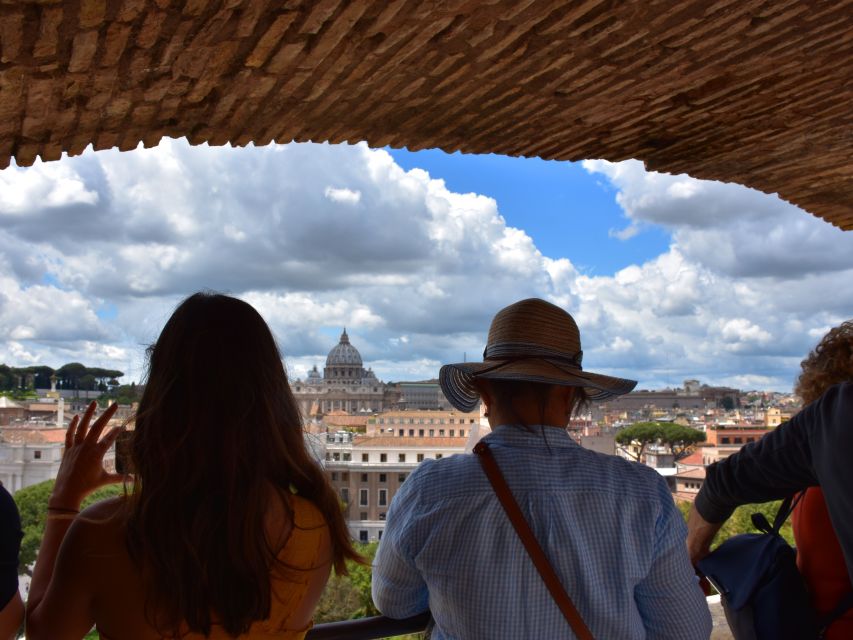
The tour ends with the pay-off view: the rooftop terrace with panoramas over Rome. You also get perspective that includes Castel Sant’Angelo Bridge, so the whole route snaps together in your mind. The bridge becomes more than a starting point—it becomes part of the larger geometry of river and city.
This is one of those moments where you’ll either rush photos or actually enjoy the skyline. A guide helps here by timing your look so you’re not chasing the best angle after you’re already tired. Since the view is an actual part of the tour, you’re less likely to treat it as optional.
Practical tip: bring your phone camera strap or keep your hands free. You’ll be walking and standing with a moderate climb. Also, dress for sun changes. Rome light can shift quickly as you move from shaded corridors to open terrace space.
You can also read our reviews of more private tours in Rome






What the 2-hour experience really feels like
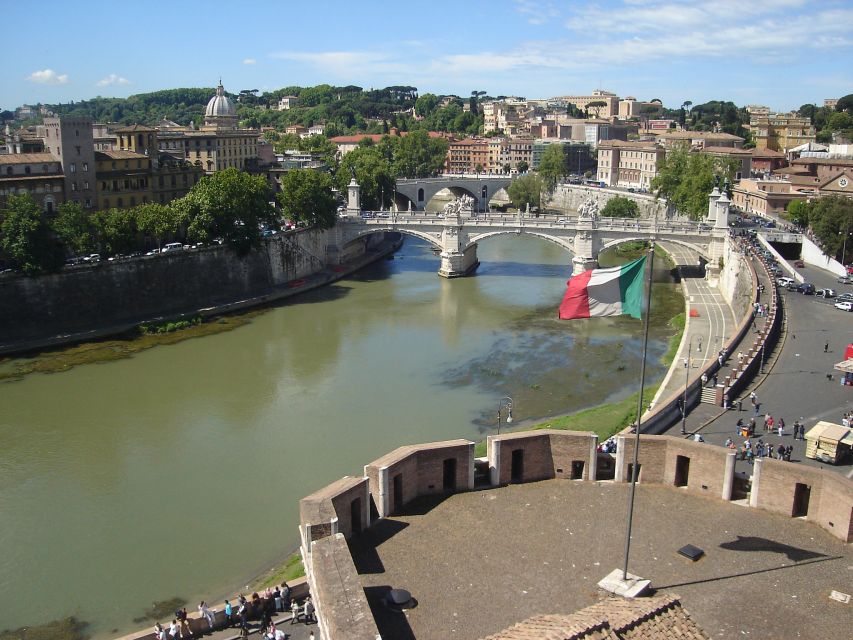
Two hours sounds short, but Castel Sant’Angelo is dense with meaning per square meter. Expect a moderate amount of walking and some stairs. The pacing is built for comprehension: you’re not sprinting through rooms, but you’re also not lingering forever in one spot.
The tour also includes a short stop at Ponte Sant’Angelo for context via guided focus on the bridge’s sculptures. That’s a good use of time. It sets a framework so the castle doesn’t feel like a collection of unrelated chambers.
If you prefer very relaxed travel, this may feel like more action than you’re used to. If you like a structured tour where someone points you at the details, this is a strong fit. Either way, plan for steady movement and bring comfortable shoes.
Price and value: what $225.44 per person buys you
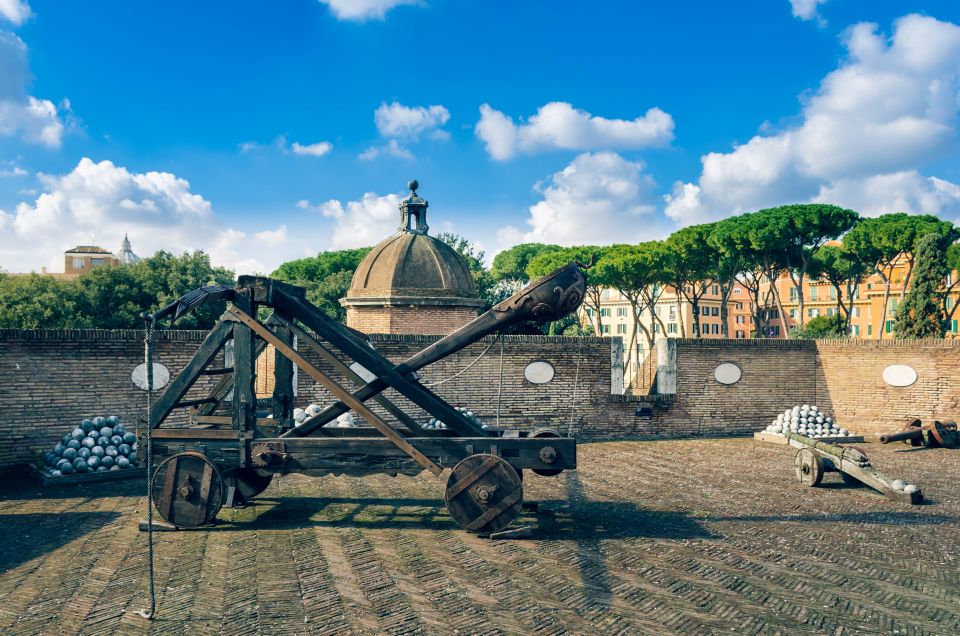
At $225.44 per person, this isn’t a cheap “see the sights” add-on. The value comes from four parts that are included:
- Entrance fees
- Skip-the-line access
- A professional private guide with art and historical focus
- Headsets so you don’t lose the narration
When you’re paying that amount, you’re really buying time and clarity. Castel Sant’Angelo has layered stories—emperors, papal power, fortress use, prison and execution history, and museum interpretation. A private guide helps you connect those layers instead of treating the visit as a quick checklist.
Also, the private format matters. Maximum group size is 10, minimum is 2. That makes it easier for the guide to answer questions and tailor attention without turning the tour into a generic script.
If you’re the type who likes to understand what you’re seeing—especially the art details like Pope Clement VII’s bathroom frescoes—this price makes more sense. If you prefer wandering without narration, you’ll likely feel the cost more sharply.
Who this private tour is best for (and who should pass)
This tour is a great match if you like:
- Architecture plus storytelling, not just photo stops
- The connection between art and power (papal rooms, fresco references, Renaissance spaces)
- Darker, real-world history told clearly, including the prison details
It’s less ideal if you need:
- Wheelchair access (this tour is not wheelchair accessible)
- A very slow pace with long rests (the walking is moderate)
Comfort also matters. The tour asks for smart casual dress. And if you plan to visit the little chapel inside, shoulders and knees must be covered.
Should you book Castel Sant’Angelo: Private Guided Tour?
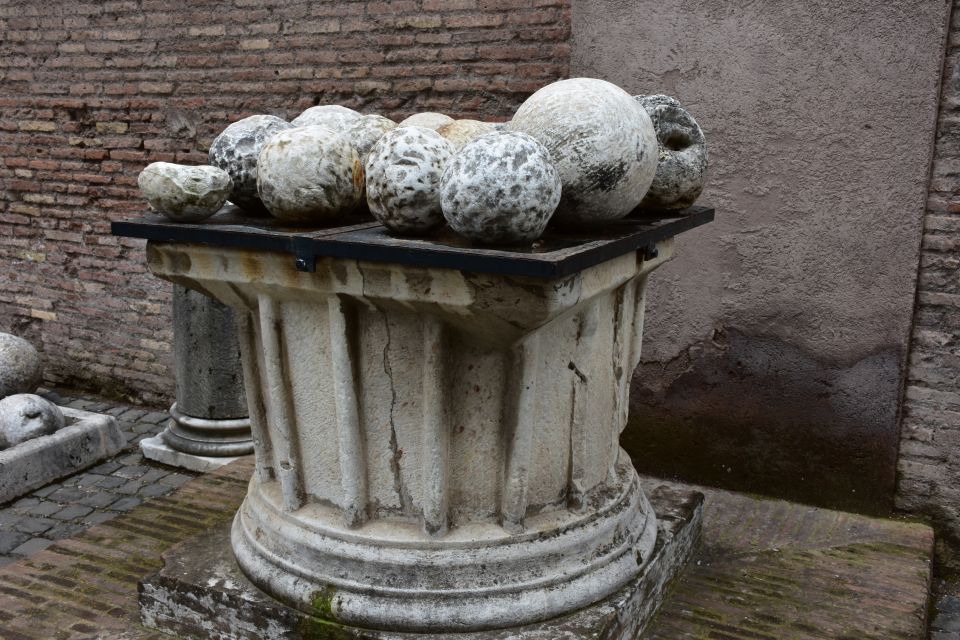
I’d book it if you want your time inside the castle to feel guided, not scattered. The biggest wins are the skip-the-line entry, the guide-led connections between the bridge, the tomb, the papal rooms, and the prison story, and the rooftop terrace view that ties the whole route together.
I’d think twice if you:
- hate walking and stairs
- want a totally self-guided visit
- need wheelchair-friendly routing (not offered here)
If you like learning while you walk, this is a smart use of a Rome morning or afternoon. You’ll leave with a clearer understanding of why Castel Sant’Angelo looks the way it does—and what it was used for.
FAQ
How long is the Castel Sant’Angelo private guided tour?
The tour lasts 2 hours.
Where do we meet the guide?
You meet outside Castel Sant’Angelo’s main entrance at Lungotevere Castello n° 50. Your guide will hold a Tour in the City sign.
Is skip-the-line access included?
Yes. Entrance fees and skip-the-line access are included.
What languages are available for the live guide?
The tour is offered with live guides in English, Spanish, French, and Italian.
What should I bring and wear?
Bring a passport or ID card and wear comfortable shoes. Dress code is smart casual.
Is the tour wheelchair accessible?
No, it is not wheelchair accessible.
Are there any clothing rules for inside the castle?
Inside the castle, you can visit a little chapel, and shoulders and knees must be covered to enter.