REVIEW · ROME
Golf Cart Private & Customizable tour of Rome & Colosseum (3/5h)
Book on Viator →Operated by Limousine Service in Italy · Bookable on Viator
Rome’s sights feel more manageable in a golf cart. This private tour is built for unobstructed views and quick stops at major landmarks, with your driver keeping you moving while you hop out for photos and short looks. I like that it’s customizable—you can steer the pacing—and that the tour includes pickup and drop-off from central places inside the Aurelian Walls.
One thing to plan around: entrance tickets are not included, and at the Colosseum you’ll focus on the monument from the outside rather than an inside visit.
When the guide knows where to point and when to pause, the whole ride clicks. Names that show up again and again with this operator include Nikola and Andrea (with other guide/driver pairings like Sabrina, Marco, and Valentina), and the common thread is clear explanations plus smart photo stops. It’s also worth noting the transport can feel flexible—one booking noted switching to an enclosed Mercedes van when rain rolled in, which is a nice comfort boost in Rome’s mood swings.
In This Review
- Key things that make this tour worth your time
- Why a private golf cart tour fits Rome so well
- Smooth pickup in central Rome (Aurelian Walls only)
- The Colosseum stop: outside photos and real context
- Pantheon: quick stop, small ticket, excellent payoff
- Trevi Fountain and the Spanish Steps: classic scenes, quick strategy
- Vatican-side grand space: St. Peter’s Square without the pressure
- Piazza Navona: baroque geometry you can feel
- Campidoglio and the Forum viewpoints: the “Rome on a hill” moment
- Circus Maxentius to Piazza del Popolo: finishing with scale and arrival
- Price and value: what $276.06 per person really buys
- The “hop off” guide upgrade: when it helps
- Dress code and planning so you don’t lose time
- Who should book this tour?
- Should you book this Rome and Colosseum golf cart tour?
- FAQ
- How long is the Rome and Colosseum golf cart tour?
- Is the tour private or shared?
- Do I get hotel pickup and drop-off?
- Are attraction tickets included?
- How much is the Pantheon ticket?
- What’s the dress code for the stops?
Key things that make this tour worth your time
- Private cart, no mixing, so you can move at your pace and make quick tweaks on the fly
- English driver-guide with stop-by-stop context, not just “here’s the landmark”
- Short, efficient stops that hit the Pantheon area, fountains, piazzas, and viewpoints without long waits
- Pickup inside the Aurelian Walls, meaning less stress the moment you step out of your hotel
- Tickets are the only extra cost (and you’ll know which ones ahead of time)
Why a private golf cart tour fits Rome so well

Rome is a city of angles. Squares sit higher than streets, monuments pop into view around corners, and the best photos often happen when you get a clean line of sight. A golf cart is good at this. You’re not stuck in a slow crush for every street, and you’re not forced to choose between walking way too much or missing the view.
This style of tour is also great for “orientation day.” The route threads through the historic center so you get a mental map fast: Colosseum zone, Pantheon area, then the baroque showpieces (Trevi, Spanish Steps, Piazza Navona), and finally the Vatican side and back toward major viewpoints. Even if you plan to return later for deeper visits, you’ll remember where things sit.
And because it’s private and customizable, you’re not locked into a rigid script. If your group wants more time at a viewpoint or wants to shorten a stop, you can usually make that call without derailing the whole day.
You can also read our reviews of more private tours in Rome



Smooth pickup in central Rome (Aurelian Walls only)
The biggest “value” win here is how the tour starts. You get hotel, Airbnb, or Termini station pickup and drop-off, but your lodging must be inside the Aurelian Walls. That restriction matters because it determines whether the driver can access your area efficiently.
If you’re staying in the classic central neighborhoods, this is a big help. You skip the part where you spend your morning wrangling transit tickets, searching for a meeting spot, and walking more than you wanted to. Instead, you roll right into the historic center and save your legs for the moments you’ll actually enjoy.
You’ll also receive a mobile ticket, which makes arrival smoother once you’re with the operator. Keep an eye on the dress code before you go—more on that later.
The Colosseum stop: outside photos and real context
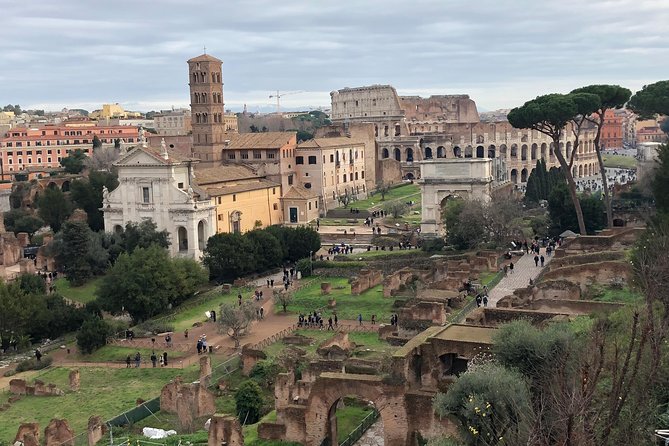
The itinerary begins at the Colosseum, with about 20 minutes focused on the famous amphitheater from the outside. Admission tickets are not included for this stop, which is important to understand up front.
So what do you get for that time? You get the “big picture” view plus the story that makes the building click. A good guide doesn’t just list facts—they helps you see how the Colosseum sits in its landscape and why it matters. If you’re not trying to cram in an official entry ticket that day, this outside focus can be the right move.
Possible drawback: if your dream is to walk inside the Colosseum with a timed entry, you’ll need a separate plan. This tour is designed more for fast sightseeing and learning from the outside than for full interior access.
Pantheon: quick stop, small ticket, excellent payoff

Next is the Pantheon, one of Rome’s best-preserved ancient structures. This stop lasts about 15 minutes, and tickets are not included.
Here’s the practical part: the Pantheon ticket price is listed as €7.00 per person cash. That’s the one specific charge you should budget for during the tour.
Why this stop works even with a short time window? The Pantheon’s magic is immediate. You walk in and the scale hits you—its dome, its lighting, and how it still functions as a place of worship. Since the tour keeps moving, you’re not stuck in a long transit chain or waiting around for the group to wander.
Also, if you’re wearing the wrong clothes, this is one of those places where Rome won’t politely ignore it. The general dress rule for worship places (and selected museums) is that knees and shoulders must be covered, and sleeveless tops or shorts can cause refused entry. Plan your outfits accordingly.
Trevi Fountain and the Spanish Steps: classic scenes, quick strategy
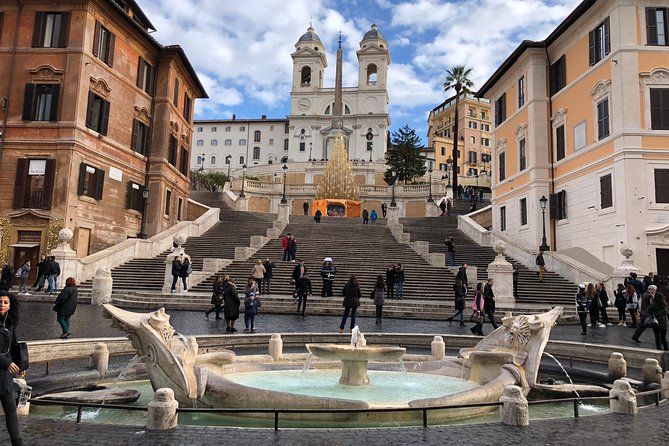
Trevi Fountain gets about 15 minutes, and Spanish Steps also get about 15 minutes. Both are listed as free entry stops, so the main “ticket math” here is your time and patience, not your wallet.
Trevi Fountain is famous for a reason. It’s the kind of landmark where the first sight gives you a jolt, even if you’ve seen it in a thousand photos. The trick is not to spend your whole stop arguing with crowds. A quick, well-timed look—plus a few smart photo angles—usually does the job.
Spanish Steps are similar: you’ll get the stairway itself plus the surrounding context that makes the landmark feel like more than a postcard. Because the tour is private, you can take a breath, stand where you can see the full sweep, and then move on before you lose the group to slow-moving foot traffic.






Vatican-side grand space: St. Peter’s Square without the pressure
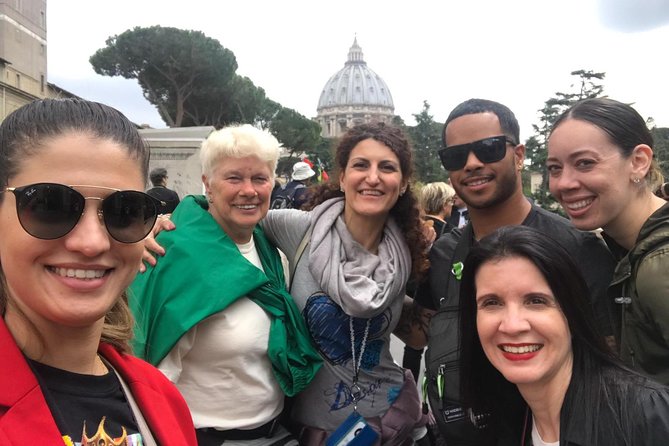
St. Peter’s Square is about 15 minutes, and it’s listed as free. This part of the itinerary is a “big wow” transition: after fountains and piazzas, Rome goes monumental.
The square was redesigned by Gian Lorenzo Bernini in the mid-1600s under Pope Alexander VII’s direction. Even without getting inside, St. Peter’s Square has that dramatic layout that makes people look up and spread out a little. The colonnades create the sense that you’re in a stage set designed for mass gatherings and visual impact.
If you want to minimize stress, this fits nicely. You see the setting, you orient yourself for later Vatican visits, and you keep your day moving in a controlled way.
Piazza Navona: baroque geometry you can feel
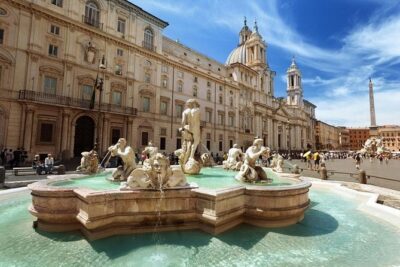
Piazza Navona is another 15-minute stop, also listed as free. It sits on the site of Domitian’s stadium, then later became a baroque showpiece under Innocent X’s reign (1644–1655).
This is one of those squares where the layout helps you “read” what you’re seeing. You can stand back and see the shapes, or you can get closer and notice how the buildings frame the space. It’s a good counterpoint to the ancient scale you’ll see earlier in the tour.
A practical tip: since this is a quick stop, pick your moments. If you want photos with the buildings clean behind you, do that first. Then do the slow look while you’ve still got daylight and energy.
Campidoglio and the Forum viewpoints: the “Rome on a hill” moment
You’ll move through Piazza del Campidoglio for about 15 minutes. This is one of the best kinds of stops: not just a landmark, but a vantage point.
From the top, you can admire Michelangelo’s redesign of the square for Pope Paul III and also see the ancient area of the Roman forums with temples and basilicas spread out below. Even if you don’t know every ruin name, the view does the teaching. You understand how Rome’s center layers itself: hill, forum, streets, all tied together by perspective.
There’s also time set aside for Piazza Venezia and Via del Corso as you roll through the center. Those are the areas that help you feel the city’s “hub” energy—arteries, intersections, and the sense of what direction Rome’s people move.
Circus Maxentius to Piazza del Popolo: finishing with scale and arrival
The last stretch keeps ancient Rome going. You’ll see Circus of Maxentius (about 10 minutes, free) and then head to Piazza del Popolo (about 10 minutes, free).
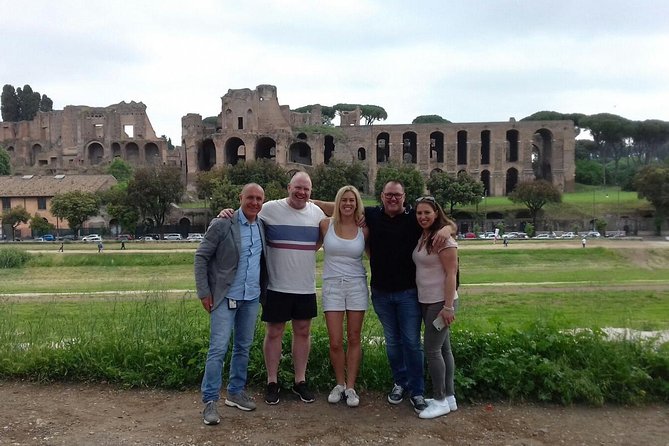
Circus Maximus—also called the Circus of Maxentius in the itinerary details—is described as Rome’s ancient chariot-racing stadium and a major entertainment venue. What matters for you on a golf cart tour is the scale and the setting. You get a feel for how big ancient events were and how entertainment shaped the city.
Piazza del Popolo translates to People’s Square, and the itinerary notes it lies inside the northern gate of the Aurelian Walls. It historically served as the traveler’s first major view of Rome upon arrival. That’s a neat way to end the day: you start near the most famous monument and finish with a place tied to the feeling of arriving in the city.
Price and value: what $276.06 per person really buys
At $276.06 per person, this isn’t the cheapest way to see Rome. The value comes from cutting down friction.
You’re paying for:
- A private route with your group only
- Pickup and drop-off in central areas inside the Aurelian Walls
- A guided ride that helps you understand what you’re seeing as you go
- Efficient sightseeing in about 3 to 5 hours, without long walks between far-apart landmarks
You are also paying attention to what’s not included. Entrance fees aren’t part of the base price. Most stops in the route are free, but you should plan for tickets at places like the Colosseum and the Pantheon (with the Pantheon listed at €7.00 cash).
So if you want to do everything inside every major site, you’ll still spend extra. If your goal is to see the highlights, learn the connections, and stay comfortable while moving, the price starts to make sense.
The “hop off” guide upgrade: when it helps
The tour includes an English-speaking driver-guide, with a mention of an upgrade option for a private guide who will hop off at stops. A licensed tour guide is listed as available on request.
This matters if:
- You want deeper storytelling at each stop
- You care about art and architecture detail more than just big landmark views
- Your group likes to ask lots of questions and wants the guide with you when you step off the cart
If you prefer a lighter touch—walk for photos, then move on—the base setup may already feel like enough.
Dress code and planning so you don’t lose time
Rome can be strict about clothing at churches and some museum spaces. The rule given here is clear: no shorts or sleeveless tops, and knees and shoulders must be covered for both men and women. If you don’t meet that, entry can be refused.
This tour includes stops tied to worship spaces and formal settings, so it’s worth planning. Bring a light layer that covers shoulders. Wear pants or a skirt that covers knees. It’s a small adjustment that can save your group from time wasted finding something to cover up.
Also, if you’re heading out in summer heat, consider breathable fabric that still meets the rules.
Who should book this tour?
Book it if you want:
- A private way to see the “top Rome” sights without spending your whole day commuting
- A route that helps you get bearings fast
- Comfortable sightseeing for people who don’t want a long day of walking (one booking specifically highlighted this when mobility was an issue)
Consider another approach if you:
- Want to do full interior ticketed experiences at major monuments in one go
- Are comfortable building your own day around public transit and long entry lines
This tour shines as a first-day or time-saving highlight loop—then you can return later for whatever you want to do in more depth.
Should you book this Rome and Colosseum golf cart tour?
If your ideal Rome day looks like highlights plus context, with pickup and no stress, I think this one is an easy yes. The private cart, short stop rhythm, and English narration are a smart combo for first-time visitors and for anyone who wants to see a lot without wearing down.
Just be ready for the only real catch: ticket costs and the fact that some stops (like the Colosseum) are outside-focused. If you plan your outfit for entry rules and budget separately for major tickets, you’ll get a smooth, memorable overview of Rome’s core sights fast.
FAQ
How long is the Rome and Colosseum golf cart tour?
It runs about 3 to 5 hours.
Is the tour private or shared?
This is a private tour/activity. Only your group participates, and it is not combined with other groups.
Do I get hotel pickup and drop-off?
Yes, pickup and drop-off are offered from hotels, Airbnb locations, and Termini train station, as long as your hotel is inside the Aurelian Walls.
Are attraction tickets included?
No. Entrance fees and any skip-the-line tickets are not included. You can buy tickets directly on official websites or ask the office to buy them.
How much is the Pantheon ticket?
The Pantheon ticket price is listed as €7.00 per person cash.
What’s the dress code for the stops?
You’ll need knees and shoulders covered. No shorts or sleeveless tops are allowed, and refused entry is possible if you don’t meet the dress requirements.