REVIEW · ROME
Fountains and Squares of Rome 2-Hour Walking Tour
Book on GetYourGuide →Operated by Romaetravel · Bookable on GetYourGuide
Rome’s fountains come with stories. In just two hours, this walk strings together Baroque and Renaissance squares, so you see the big names and the legends behind them without spending the whole day in line.
I like how the tour hits two “must-see” styles at once: fountain theatrics like the half-sunken ship at Piazza di Spagna, and the solemn scale of ancient Rome at the Pantheon. The route also stays human-sized thanks to a small group format and a guide who keeps things moving at a realistic pace.
One thing to weigh is that the itinerary is packed and walking is the point, so there’s limited time to slow down for photos at every stop. Also, at $74 per person, you’ll want to be sure this guided route is how you prefer to spend your day versus going at your own speed.
In This Review
- Key highlights worth planning around
- Why this 2-hour Rome fountain tour makes sense
- Piazza Barberini to Piazza di Spagna: a walk built for iconic views
- Fontana della Barcaccia: the half-sunken ship moment
- Trevi Fountain: coin-throwing, palace backdrop, and crowd control
- Pantheon interior: that giant dome without the distraction
- Piazza Navona built on Domitian’s stadium
- Campo de’ Fiori: the market square and Giordano Bruno
- Value and pricing: is $74 worth it?
- Guide quality: Felice, Federica, and Luisa bring the tour to life
- What logistics you should plan for before you go
- Who should book this tour?
- Should you book the Fountains and Squares of Rome tour?
- FAQ
- Where does the tour start?
- How long is the tour?
- What are the main stops on the route?
- Which major fountains and sights are included?
- How much does it cost?
- What’s included in the price?
- What language is the guide?
- Do I need to bring anything?
- Is there free cancellation?
Key highlights worth planning around
- Start in Piazza Barberini, right where the guide meets you in front of the fountain
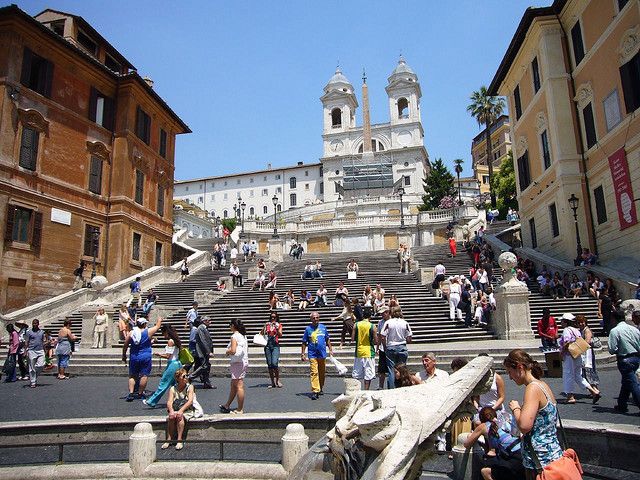
- 135 steps at Piazza di Spagna, including the view and the Baroque Fontana della Barcaccia
- Trevi Fountain coin ritual with the classic photo-and-legend moment
- Pantheon interior, capped by the world’s largest non-reinforced concrete dome
- Piazza Navona on Domitian’s old stadium site, with Bernini’s Fontana dei Quattro Fiumi
- Campo de’ Fiori finale with the bronze statue of Giordano Bruno
Why this 2-hour Rome fountain tour makes sense
If your Rome plan is short, this kind of tour does the math for you. You get a tight route through some of the city’s most famous squares, and the guide connects what you’re seeing to why it matters—so the landmarks don’t feel like random postcards.
I like that it’s only two hours long. That keeps the pace focused and helps you fit it around meals, museums, or a longer walk on your own later.
The biggest tradeoff is also simple: you’re moving. If you want long stops, lots of museum-style time, or you’re traveling with very slow mobility, this may feel brisk.
You can also read our reviews of more walking tours in Rome


Piazza Barberini to Piazza di Spagna: a walk built for iconic views
The tour starts in Piazza Barberini, with the guide waiting in front of the fountain. It’s a good anchor point because the square is easy to orient yourself in, and it quickly turns your morning (or afternoon) into a structured loop.
From there, you head toward Piazza di Spagna at the base of the Spanish Steps. The steps are famous for a reason, and you’ll get context for what the staircase originally connected—plus how the piazza framing makes the whole area feel theatrical.
And yes, you’ll be dealing with steps. Even if you don’t climb every step, plan on walking and frequent looking up.
Fontana della Barcaccia: the half-sunken ship moment
At Piazza di Spagna, the spotlight is Fontana della Barcaccia, the Baroque fountain shaped like a half-sunken ship. It’s one of those designs that feels almost like a stage set—less “perfect symmetry” and more drama in stone.
This stop is also where I think the tour earns its keep. The guide doesn’t just point. You learn what to notice, and suddenly the fountain stops being background.
Tip for photos: try a position that shows both the fountain shape and the surrounding staircase lines. That’s when it looks the most like a story.
Trevi Fountain: coin-throwing, palace backdrop, and crowd control
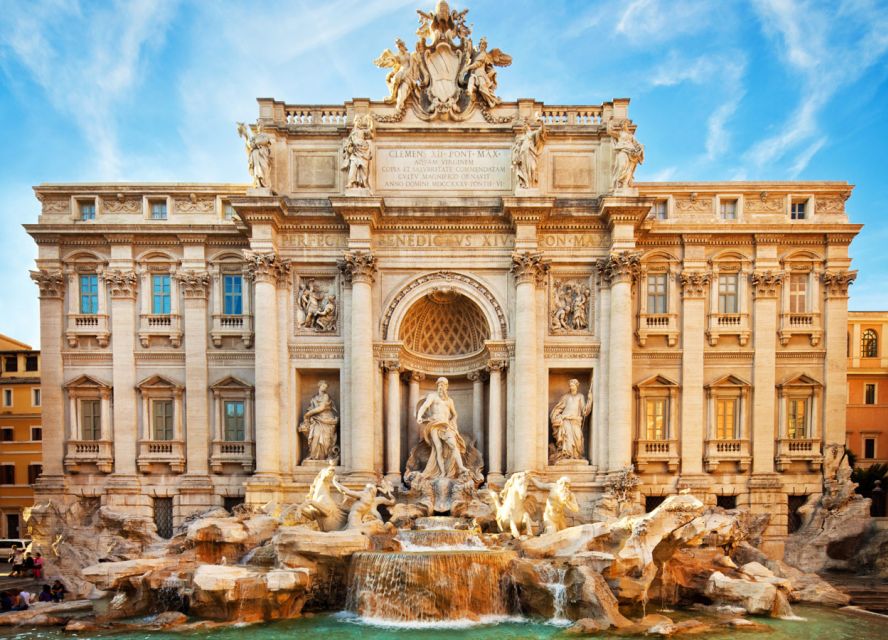
Next comes the Trevi Fountain, the heavyweight of Rome fountain viewing. The set-up here is classic: the fountain sits with a major palace backdrop, which is part of why it feels like the center of the whole scene.
You’ll do the famous ritual—throw a coin into the water as a symbol of returning to Rome. Whether you treat it as legend or just a fun tradition, it’s the kind of moment that makes a tour feel like more than sightseeing.
Here’s the practical side: Trevi is busy. A guided walk helps because you’re not starting from scratch on where to stand or how long to wait for clear angles.
Pantheon interior: that giant dome without the distraction
After Trevi, you move on to the Pantheon, one of the best preserved ancient monuments in Rome. Outside, it’s impressive. Inside, it becomes an engineering and design lesson.
The key moment is the dome: the world’s largest non-reinforced concrete dome. It’s the sort of fact you’ll remember because you’re physically standing under the evidence.
This stop also gives you a reset from Baroque flourishes. The tone shifts from fountain drama to ancient Roman “big idea” scale, and the contrast makes the whole tour feel balanced.
A note for your planning: the tour info only lists the guide and the small-group format as included. If an attraction charges entry on your day, you’ll want to budget for that separately.
You can also read our reviews of more tours and experiences in Rome





Piazza Navona built on Domitian’s stadium
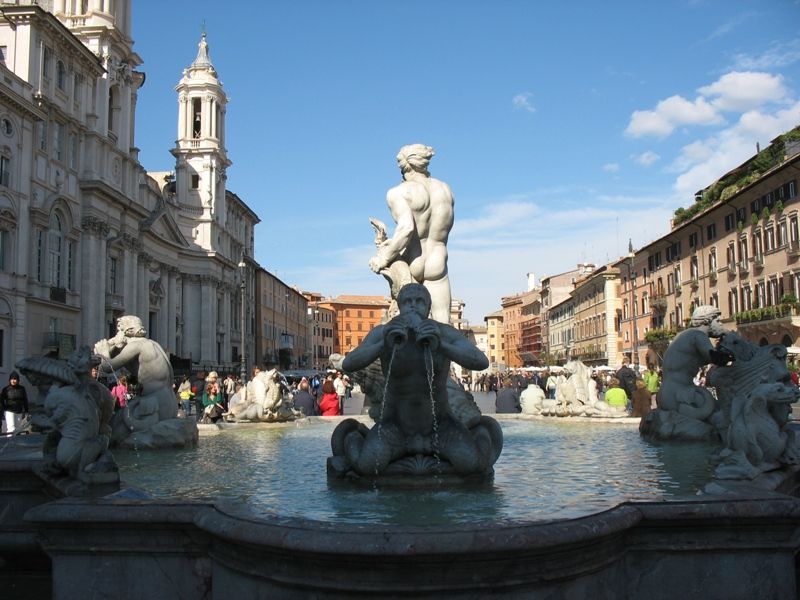
Then you arrive at Piazza Navona, a Baroque-era square that’s built on the site of the old Stadium of Domitian. Knowing that changes how you read the space. You stop seeing it as just a square and start seeing layers.
One highlight here is Bernini’s Fontana dei Quattro Fiumi (Fountain of the Four Rivers). This is where Baroque art feels clever instead of just ornate: you’re looking at symbolism, not only decoration.
I like how the guide connects the fountain to the broader “who’s who” feel of Rome’s elite and power. It turns the square into more than a photo stop.
Campo de’ Fiori: the market square and Giordano Bruno
The tour ends at Campo de’ Fiori, a square with a past that feels darker than you’d guess just from walking through it today. The area was once used as a medieval market, and later it became a site for public executions.
At the center, you’ll see the bronze statue of Giordano Bruno, burned at the stake for heresy in 1600. It’s not a heavy lecture moment in the middle of a walking tour, but it’s a powerful way to understand Rome’s complicated mix of art, faith, and politics.
If you like ending your tours with something you can explore after, this is a good choice. Campo de’ Fiori is easy to continue wandering from once the tour wraps.
Value and pricing: is $74 worth it?
Let’s talk money honestly. At $74 per person for a 2-hour experience, you’re paying for three things: expert guidance, a small-group format, and a route that hits major stops efficiently.
You can absolutely DIY many of these landmarks. But doing it well means stitching together logistics, deciding how much time to spend inside the Pantheon, and figuring out what to notice at each fountain and piazza. This tour saves you that planning time and gives you the context that makes the stops stick.
Also, this is a walking tour, so you’ll want to be comfortable on foot. If you’re going to pay a premium, it should be because walking with a guide is your preferred way to learn Rome.
If you’re the type who likes to linger at one place for 45 minutes, you may find this itinerary a little tight. If you like getting the core sights in a focused block and then wandering off-plan afterward, it’s strong value.
Guide quality: Felice, Federica, and Luisa bring the tour to life
This is one of those tours where the guide really changes the experience. The best version is when the guide tunes the pacing and makes difficult details feel easy.
I’m drawn to the way guides like Felice handle group needs—especially when families and kids are in the mix. One guide style highlighted is tailoring to family interests, which matters when you’re trying to keep attention without rushing kids into boredom.
Other guides like Federica are noted for friendliness and patience, including keeping pace steady for an older group. That’s a big deal on a route that includes squares, steps, and multiple iconic stops.
Then there’s Luisa, praised for turning historical info into bite-size stories with helpful little extras along the way. That’s exactly what you want for a 2-hour window: memorable facts, not a lecture marathon.
What logistics you should plan for before you go
Meeting point is straightforward: the guide waits in front of the fountain in Piazza Barberini. You’ll also get the meeting details about 24 hours before the tour, which helps you confirm where to stand.
Bring comfortable shoes. Rome’s stone streets look charming until you’re halfway through a walking tour and your feet start sending emails to your brain.
Weather matters too. If rain starts right around the end time, it helps to have a guide who’s alert to the moment. One guide was even known to help locate a cab back to a hotel when rain hit right after the tour.
Who should book this tour?
This is a great fit if you:
- Want a quick, structured overview of Rome’s fountains and piazzas
- Like learning stories behind landmarks (coin rituals, architectural context, and why squares are where they are)
- Prefer a small-group guide over doing everything alone
It may be less ideal if you:
- Need lots of downtime at each stop
- Can’t handle stairs or sustained walking, since the route includes the Spanish Steps area
- Expect everything to be fully “entry-inclusive,” since only the guide and small-group format are listed as included
Should you book the Fountains and Squares of Rome tour?
I’d book it if you’re short on time and you want the Rome classics—Trevi, the Pantheon dome, Piazza Navona—without spending your brainpower on how to connect them. The 2-hour length is tight, but it’s also what makes it feel like a smart use of a day.
Skip it only if you plan to linger heavily at monuments, or if walking pace is a big challenge for your group. For most first-time visitors (and many return visitors), this is a clean way to see a lot of Rome in one guided sweep.
FAQ
Where does the tour start?
The tour meets in front of the fountain in Piazza Barberini.
How long is the tour?
It lasts 2 hours.
What are the main stops on the route?
The route goes from Piazza Barberini to Piazza di Spagna, then to the Trevi Fountain, Pantheon, Piazza Navona, and ends at Campo de’ Fiori.
Which major fountains and sights are included?
You’ll see Fontana della Barcaccia at Piazza di Spagna, throw a coin at Trevi Fountain, visit the Pantheon (including its large non-reinforced concrete dome), and see Bernini’s Fontana dei Quattro Fiumi in Piazza Navona. You’ll also stand in the area of the old Stadium of Domitian and end at Campo de’ Fiori with the statue of Giordano Bruno.
How much does it cost?
The price is $74 per person.
What’s included in the price?
The tour includes a live guide and a small group tour.
What language is the guide?
The tour is offered in English and Italian.
Do I need to bring anything?
Wear comfortable shoes.
Is there free cancellation?
Yes. You can cancel up to 24 hours in advance for a full refund.