REVIEW · ROME
Rome: Campo de Fiori, Jewish Ghetto and Trastevere Food Tour
Book on GetYourGuide →Operated by Eating Europe Food Tours · Bookable on GetYourGuide
Rome’s best bites start at a market. This walking tour connects Campo de Fiori to the Jewish Ghetto and then works its way into Trastevere, with stories, food, and a crossing over Rome’s oldest bridge. It’s the kind of route that keeps your eyes moving while your stomach stays busy.
What I like most is the mix of classic Roman food and Jewish-Roman specialties, especially the legendary Jewish-style fried artichoke. I also love the guide-led pacing and personality I’ve heard about from guides like Georgia and Walter, who keep things friendly and informative without turning it into a lecture.
One thing to consider: Campo de Fiori shows up only on the morning tour, so the experience can shift depending on what time you book. Also, it’s not wheelchair-friendly and you’ll need to walk.
In This Review
- Key takeaways before you go
- Campo de Fiori Market: where the tour gets its appetite
- Jewish Ghetto: landmarks plus Roman-Jewish dishes you can actually taste
- Trastevere and hidden passages: walking becomes part of the meal
- Da Enzo in Trastevere: the fried artichoke moment
- Spirito di Divino: pasta, wine, and a cellar older than the Colosseum
- Drinks and 4-hour pacing: what the day feels like
- Price and value: does $146.14 make sense?
- Who should book this Rome tour, and who should skip it?
- Should you book this Rome food tour?
- FAQ
- How long is the Rome Campo de Fiori, Jewish Ghetto and Trastevere Food Tour?
- How many food stops are included?
- What’s included besides the food?
- What tastings can I expect on the tour?
- Is Campo de’ Fiori visited on both the morning and evening tours?
- Where does the tour start, and what should I look for?
- Is the tour wheelchair accessible?
- Are pets allowed?
Key takeaways before you go
- Six food stops plus wine, beer, and Prosecco, so you’re not just sightseeing with snacks.
- Da Enzo fried artichoke is a highlight built around one iconic bite.
- Jewish Ghetto landmarks and culinary hotspots give context to what you’re eating.
- Trastevere hidden passages and Rome’s oldest bridge make the route feel special.
- Spirito di Divino serves a pasta meal with wine, alongside a wine cellar described as older than the Colosseum.
- You’ll finish back at the meeting point, with the tour staying centered and walkable.
Campo de Fiori Market: where the tour gets its appetite
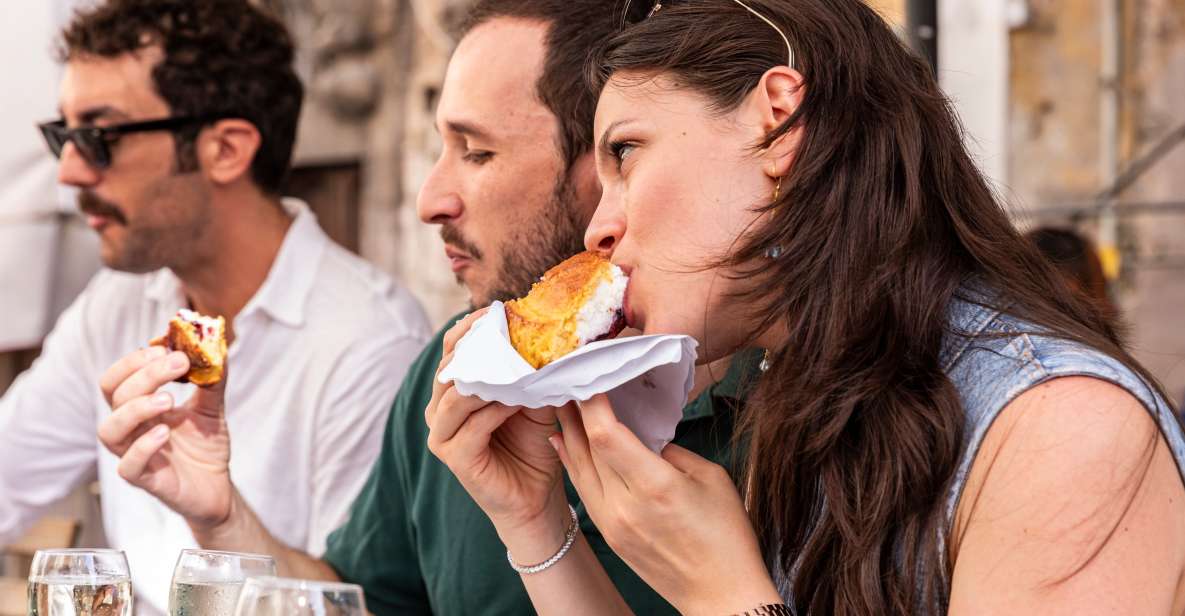
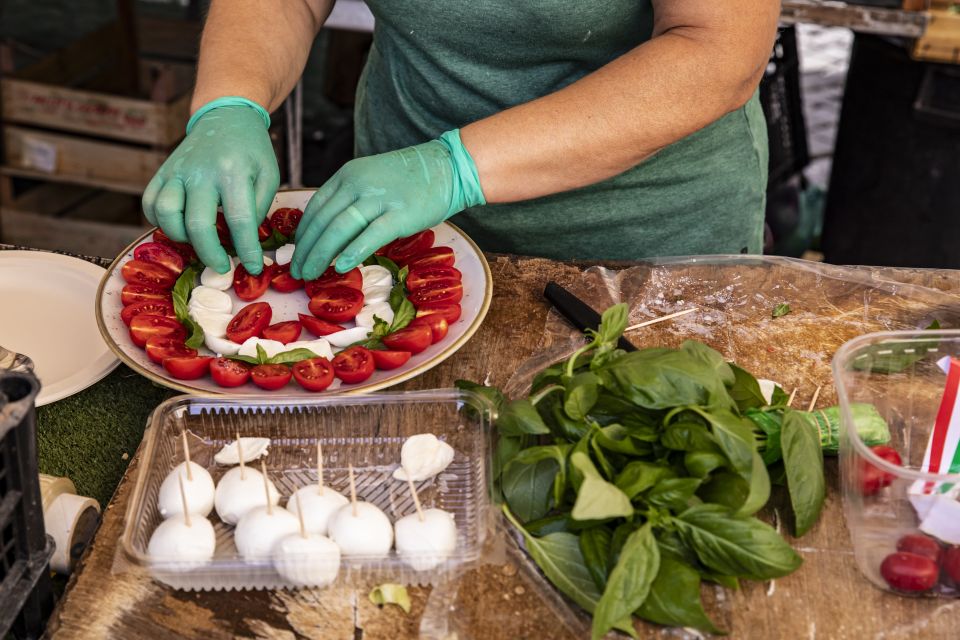
Most Rome food tours start with a location. This one starts with a mood. You meet your guide next to the only newspaper stand in the square, and you’ll see them holding an Eating Europe sign. From there, you move into the Campo de’ Fiori area where the market sights and smells do half the work of “setting the scene.”
If you book the morning tour, you’ll actually spend time here. That matters, because the market is visited only in the morning. You get the live energy of shoppers and vendors, and you also get a baseline for what’s local: what people buy, what looks fresh, and what food habits fit daily life in Rome.
If you’re wondering whether this is just food-for-food’s-sake, it’s not. Market time is useful because it explains the ingredients and rhythms that show up again later in the Jewish Ghetto and Trastevere stops. Even if your main goal is tasting, getting grounded at Campo de Fiori helps you read the neighborhood with your eyes, not just your fork.
Practical tip: arrive about 15 minutes early. The guide starts on time, and you’ll want to be settled before the walking part begins.
You can also read our reviews of more food & drink experiences in Rome
Jewish Ghetto: landmarks plus Roman-Jewish dishes you can actually taste
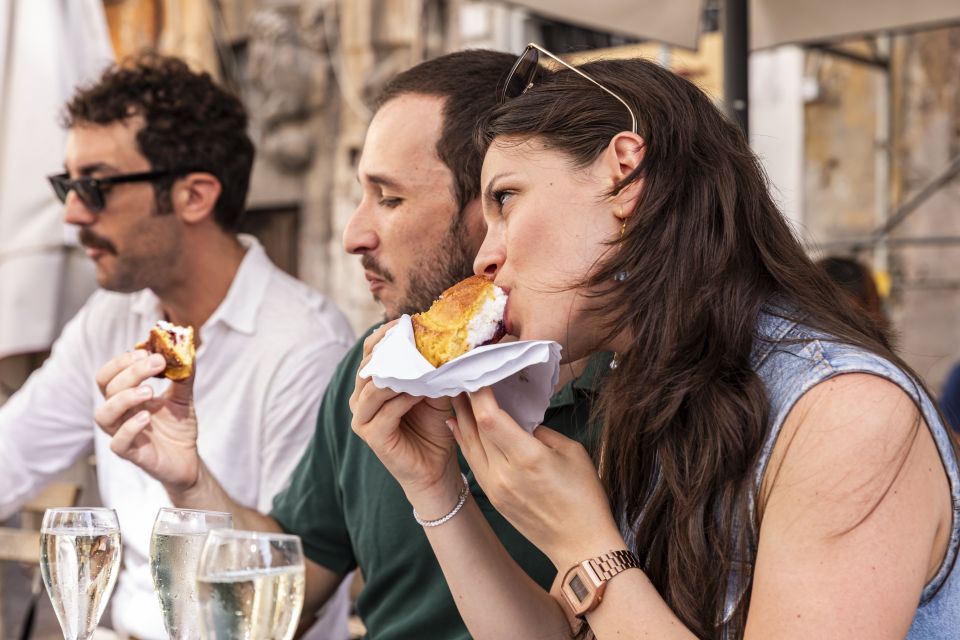
After Campo de Fiori, the route shifts into the Jewish Ghetto with a clear purpose: you’re not just walking through old streets. You’re learning what’s still felt there through food and local favorites.
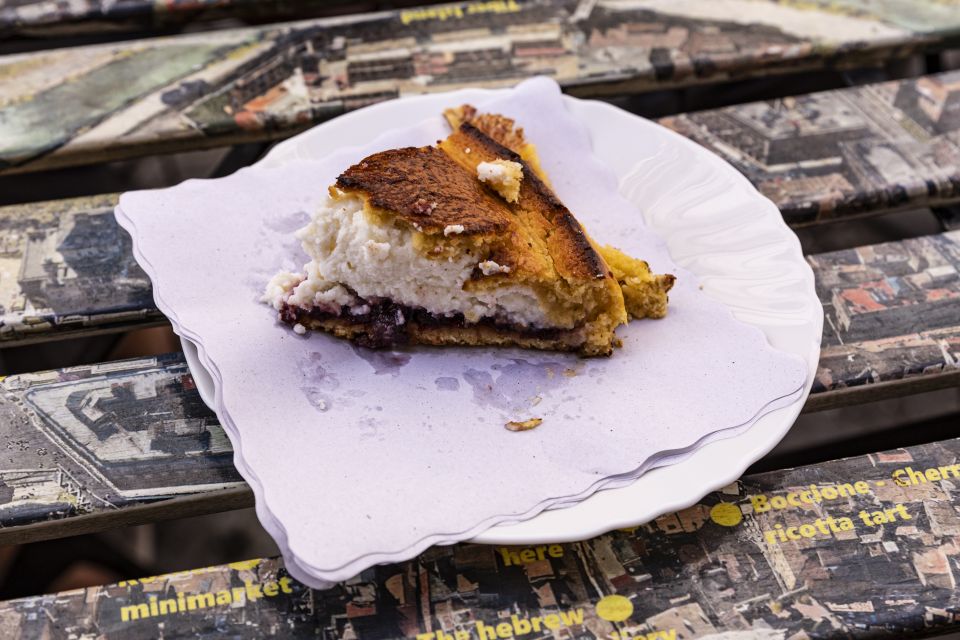
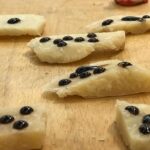
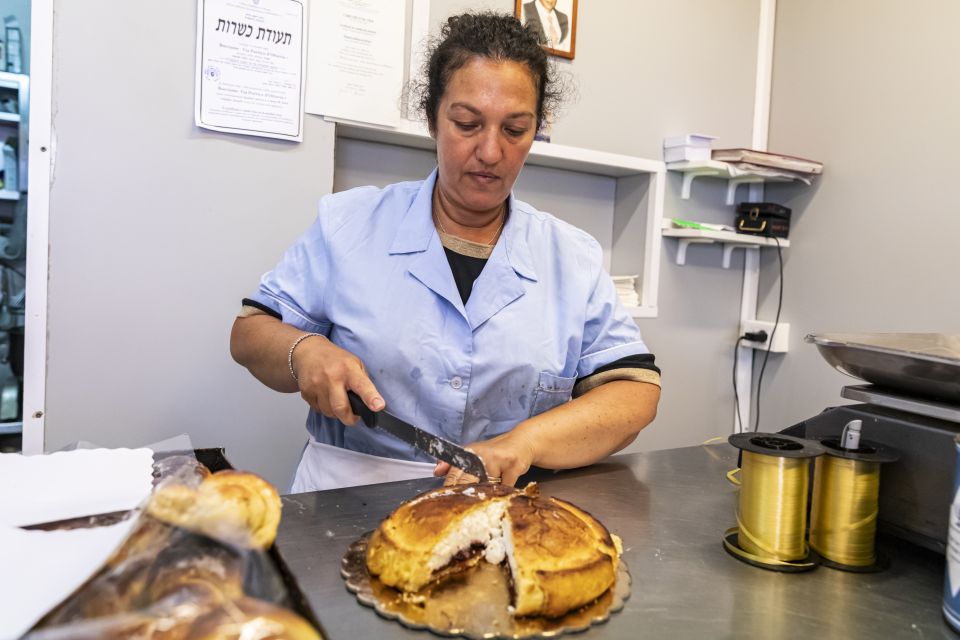
You’ll see Jewish Ghetto landmarks and culinary hotspots, guided by someone who keeps it moving. The goal is to connect stories to what you’re eating, so you understand why certain flavors exist in this part of Rome. For example, the tour includes traditional Roman-Jewish dishes such as Jewish-style fried artichokes, and later a sour cherry tart dessert. Those aren’t random sweets and snacks. They’re specific to local culinary culture.
From the food list, you can also expect dairy-heavy comfort flavors like ricotta, plus dessert and gelato. That combination tends to hit what most people want on a walking day: something savory early, something creamy mid-route, and something sweet to wrap your brain around later.
Why this works for real-world travel: the Jewish Ghetto can feel like a maze if you wander on your own. Here, the guide handles the order of sights and the timing of tastings, so you get both a mental map and a food trail. You come away knowing what you saw and why it matters to the local palate.
Trastevere and hidden passages: walking becomes part of the meal
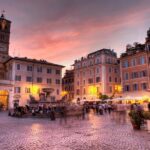
Then you shift again into Trastevere, where the vibe changes from market square to quieter lanes and side streets. The tour includes exploring hidden passages in Trastevere, which is exactly the kind of detail that’s hard to pull off without a guide. You’re walking through the parts that tend to be less obvious than the main streets.
A key route moment is that you cross Rome’s oldest bridge. That’s not just a trivia line. It gives your group a natural milestone to refocus, and it also helps you pace the walking. You get a view, a direction shift, and a psychological “reset” before the next round of food stops.
Trastevere is where your tour starts to feel like Rome in a more lived-in way. Instead of just looking at monuments, you’re moving through neighborhoods that still run on daily habits. That’s when tastings feel more “earned,” because the route is making you part of the street-level rhythm.
Da Enzo in Trastevere: the fried artichoke moment
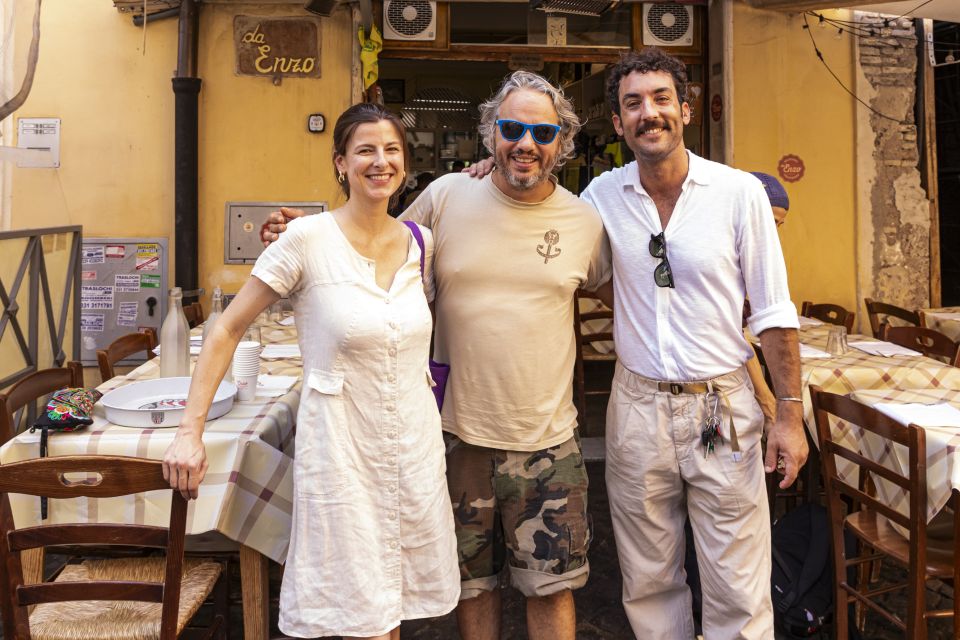
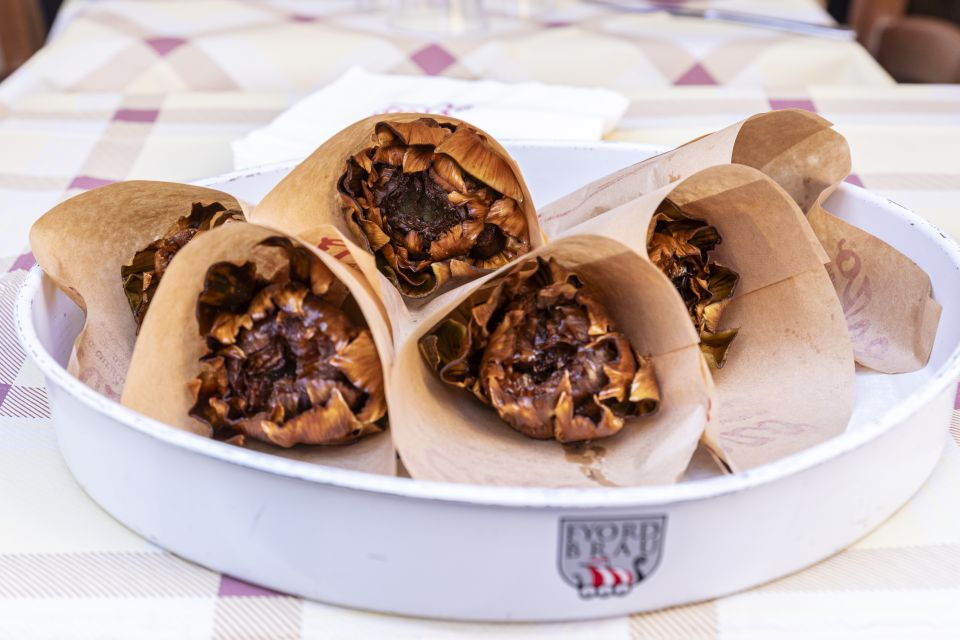
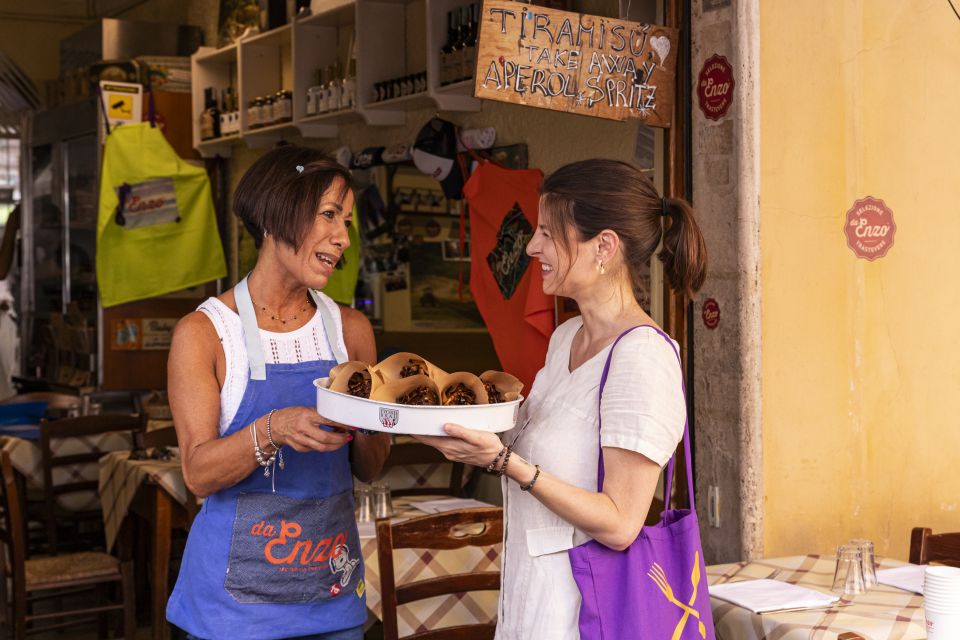
One of the tour’s biggest named-food anchors is the Jewish-style fried artichoke at Da Enzo in Trastevere. This is one of those items that can define your memory of the day, because it’s specific and it’s not something you usually find as a signature dish back home.
What you can expect from the tour description is simple: you’ll be served a Jewish-style fried artichoke at a tucked-away eatery in Trastevere. The fact that the tour calls it legendary is a hint that it’s the kind of dish worth planning around during your trip. Fried food also works well in a walking itinerary because it’s portable and instantly shareable in the moment.
Why it’s valuable: tastings on a tour are easy to blur together. But a single standout item gives you a clear highlight. It also helps you understand the broader Roman-Jewish angle. The Fried artichoke is the edible clue; the surrounding storytelling helps you place it in context.
Spirito di Divino: pasta, wine, and a cellar older than the Colosseum
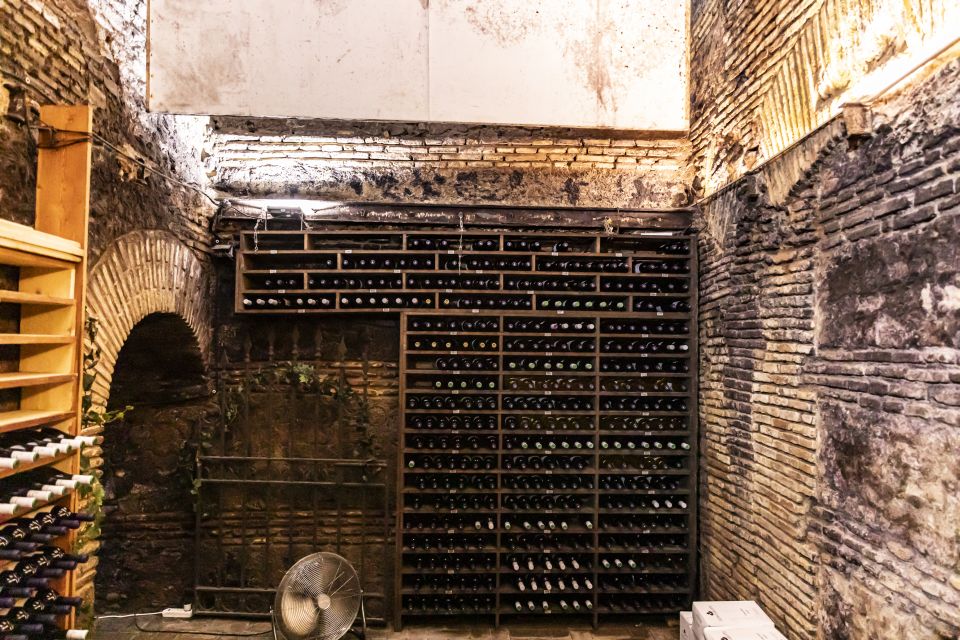
After the street-level wandering and fried stop, the tour delivers a more sit-down, food-forward finish. At Spirito Divino, you get a freshly prepared pasta feast paired with wine. This is described as a slow-food restaurant, which usually means you’re not rushing through a plate-and-go experience.
The big “wow” detail here is the wine cellar visit. The cellar is described as older than the Colosseum. Even if you don’t track Roman timelines for fun, that kind of detail changes how you experience the meal. You’re tasting in a setting that feels anchored in time, not in a generic dining room.
The included fare here rounds out what you’ve been eating across the tour. The itinerary notes include pasta and also porchetta as part of the overall food stops. Combine that with the earlier tastings like ricotta and desserts, and you get a full arc: savory bites, a richer main, and sweet endings that keep you from feeling like you’re only eating one type of flavor.
For pacing, this kind of restaurant stop is smart. It gives your feet a break and gives your stomach a structured moment, so you don’t end up snacking the whole way without a real sense of meal progression.
You can also read our reviews of more tours and experiences in Rome



Drinks and 4-hour pacing: what the day feels like
This is a 4-hour walking tour with 6 food stops. It also includes Prosecco, Italian wines, and beer. Extra drinks are not included, so you’re basically paying for tastings and set pairings, not an open-ended bar tab.
That mix affects pacing in a good way. You’re tasting at intervals, and the alcohol pairings are designed to match the food sequence rather than to turn the tour into a party night. Still, you should plan on being full. Six stops plus dessert and gelato means this is not a light “sample and stroll” experience.
I also like that the tour includes a Rome Food Guide PDF. That’s practical value. After you eat through neighborhoods like the Jewish Ghetto and Trastevere, you’ll want quick reminders of what you liked and where to look for similar flavors later.
Group size seems to be kept small based on feedback I’ve heard, which helps with questions and making sure everyone gets moving at the right pace. If you prefer quieter tours where you can actually hear your guide and not compete for attention, this format usually fits well.
Price and value: does $146.14 make sense?
At $146.14 per person for about 4 hours, this tour isn’t trying to be a budget snack crawl. It’s positioned as a guided food-and-wine experience with multiple included elements:
- Local guide
- 6 food stops
- Prosecco, Italian wines, and beer
- Named tastings including Jewish-style fried artichoke and pasta
- Porchetta among the included food items
- A wine cellar visit
- Dessert items like sour cherry tart, plus ricotta and gelato
- Rome Food Guide PDF
When you list it like that, the price looks less like a ticket and more like a package meal plus wine pairings plus guided neighborhood routing. The big value question is whether you want to pay for convenience and context.
If you’re the type who wants to wander and pick places yourself, you might find the cost steep. But if you want a planned route that mixes market time, a historically anchored neighborhood, and a restaurant meal with wine-cellar access, this pricing is easier to justify.
Who should book this Rome tour, and who should skip it?
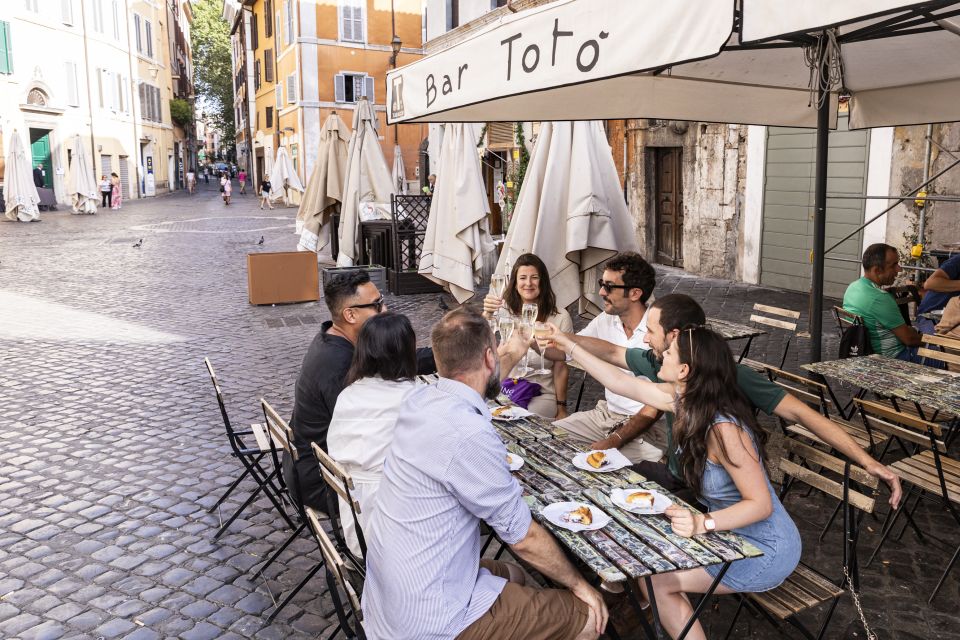
This tour fits best if you like your Rome travel in two ways: food that’s specific (not generic Italian) and guided walking that keeps you from getting lost in the wrong alleys.
You’ll likely enjoy it if you:
- Want Roman-Jewish flavors alongside classic Roman comfort food
- Like the idea of a sit-down pasta moment after snack stops
- Prefer a structured route across Campo de’ Fiori, the Jewish Ghetto, and Trastevere
You should think twice if:
- You use a wheelchair. The tour is not suitable for wheelchair users
- You have severe or life-threatening allergies. That’s not a gray area here; the tour notes these guests can’t participate for safety
- You’re traveling with pets. Pets aren’t allowed (assistance dogs are allowed)
Also, consider timing. If you care about the market atmosphere, pick the morning tour, since Campo de Fiori is only visited then.
Should you book this Rome food tour?
I think this tour is a strong choice if you want a “food route” across three neighborhoods that have very different textures. The day works because it has standout food moments—especially the fried artichoke at Da Enzo—and then it adds a proper restaurant meal at Spirito di Divino with wine and a cellar visit.
My decision tip is simple: match the tour time to your priorities. Choose the morning option if you want the Campo de’ Fiori market included. Choose the evening option if you’d rather focus on what replaces that market stop later in the day (the tour notes an evening fried delicacy tied to market closing hours).
If you like your Rome travel guided, tasty, and walkable, book it. If you prefer unguided exploration and you’re comfortable sorting out food stops on your own, you might find a DIY plan cheaper—but you’ll lose the structured sequencing and the specific Jewish-Roman focus that anchors this experience.
FAQ
How long is the Rome Campo de Fiori, Jewish Ghetto and Trastevere Food Tour?
It lasts about 4 hours.
How many food stops are included?
The tour includes 6 food stops.
What’s included besides the food?
You get a local guide, Prosecco, Italian wines, and beer, plus a visit to a wine cellar. A Rome Food Guide PDF is also included.
What tastings can I expect on the tour?
The included items listed are a Jewish-style fried artichoke, pasta, porchetta, ricotta, sour cherry tart, and gelato.
Is Campo de’ Fiori visited on both the morning and evening tours?
Campo de’ Fiori is visited only on the morning tour.
Where does the tour start, and what should I look for?
Your guide meets you next to the only newspaper stand in the square. Look for a guide holding an Eating Europe sign.
Is the tour wheelchair accessible?
No. It is not suitable for wheelchair users.
Are pets allowed?
Pets are not allowed. Assistance dogs are allowed.