REVIEW · ROME
2 Hour Guided Walking Tour in Trastevere and Jewish Ghetto
Book on Viator →Operated by RomAbout Tours · Bookable on Viator
Two Roman neighborhoods, one focused walk. Trastevere to the Jewish Ghetto gives you a side of Rome that most first-timer routes skip, told by a guide as you move from square to square for about two hours. You’ll get a small-group experience (max 12) in English, and headsets are provided when the group gets larger than 10.
I especially like two things about this tour. First, the guide service is a big deal here: people praise Sarah for long experience, smooth explanations, and patience while answering questions. Second, the setup makes it easy to hear and keep up, with headsets for bigger groups and a route designed for walking rather than long waits.
One caution: this is a tour of public squares (piazzas), not a museum crawl. Even though tickets are listed for the stops, you shouldn’t expect lots of indoor entries. Also, the Trastevere portion is smaller than the time spent in the Jewish Quarter, so history buffs will feel more at home in the second half.
In This Review
- Key things to know before you go
- Trastevere to the Jewish Ghetto: why this route feels smart
- Piazza di Santa Maria in Trastevere: a 12th-century first impression
- Piazza Trilussa: where locals linger after dark
- Campo de’ Fiori: Rome’s central market square
- Into the Antico Quartiere Ebraico: 16th-century tragedy, explained in place
- Teatro di Marcello: your final anchor in ancient Rome
- Timing and route flow: what two hours feels like
- Small-group logistics: max 12, headsets if needed
- Language and communications: English + mobile ticket
- Value for $23.91: what you’re really paying for
- Who should book this tour (and who might skip it)
- Should you book this Trastevere + Jewish Ghetto walking tour?
- FAQ
- How long is the 2 Hour Guided Walking Tour in Trastevere and Jewish Ghetto?
- What is the price per person?
- What language is the tour offered in?
- Where do I meet, and where does the tour end?
- Is there a limit on group size?
- Are headsets included?
- What’s included in the tour?
- Is hotel pickup or drop-off included?
- Is this tour in public areas only or does it include indoor visits?
- What is the cancellation policy?
Key things to know before you go
- Small-group pace (max 12) keeps questions from getting lost in the shuffle
- Headsets for groups over 10 make the walking format actually work
- Sarah’s on-the-ground storytelling is repeatedly praised for clarity and Q&A
- Trastevere to the Jewish Ghetto in one route helps you compare two Romes fast
- You’re seeing piazzas, not museums—adjust expectations for where you stop and what you enter
- A clean finale at Teatro di Marcello gives you an anchor moment for ancient Rome
Trastevere to the Jewish Ghetto: why this route feels smart
Rome has a way of being split into “photo stops” and “real places.” This tour stitches those together by starting in Trastevere and then cutting over toward the Antico Quartiere Ebraico. The best part is that you’re not just looking at buildings. You’re learning how these streets and squares shaped daily life, faith, and survival—then you see how ancient Rome still shapes the city around you.
You also get a practical benefit: the whole experience is built for a two-hour walk. That means you can fit it between bigger attractions without losing a whole day. And because it’s a small group, the guide can answer follow-up questions instead of racing through a script.
You can also read our reviews of more walking tours in Rome



Piazza di Santa Maria in Trastevere: a 12th-century first impression
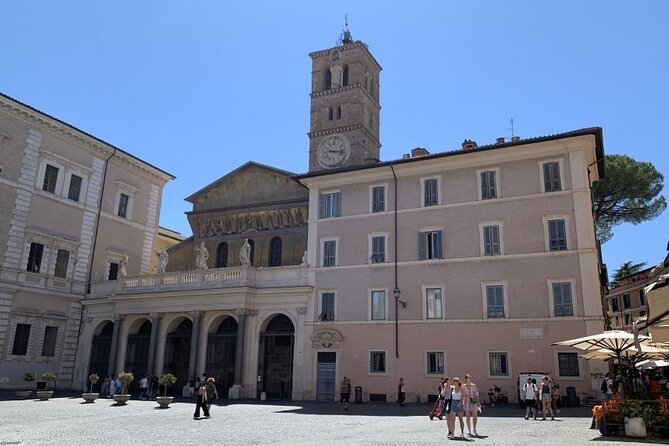
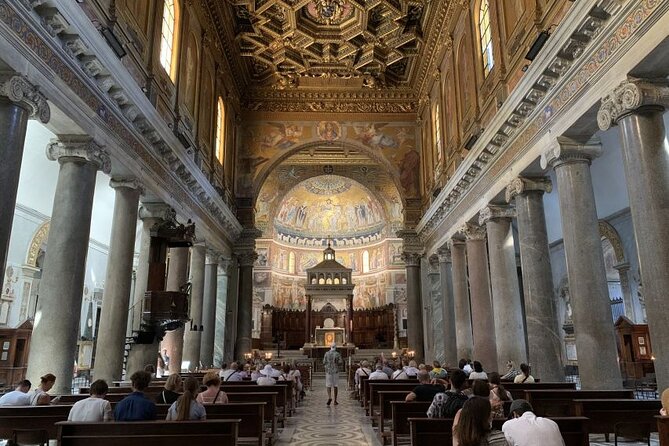
The tour opens at Piazza di Santa Maria in Trastevere, with the basilica in view. The key detail here is its age—this church dates back to the 12th century. That early foundation matters, because Trastevere’s identity didn’t start with tourism. Standing in this square, you get a sense of how long people have been gathering in the same kind of urban space: a main square, a major church, and everyday foot traffic around it.
What I like about this start is how it sets the tone. A good guide uses the surroundings to explain what you’re seeing, not just the name on the façade. If you’re the type who likes to understand the “why” behind the look of a neighborhood, this opening works well.
Piazza Trilussa: where locals linger after dark
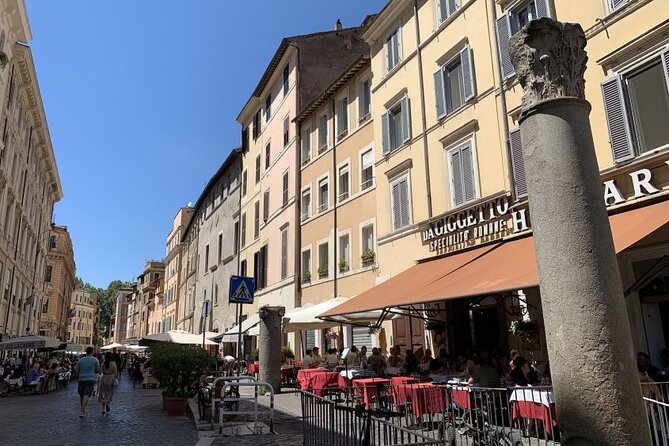
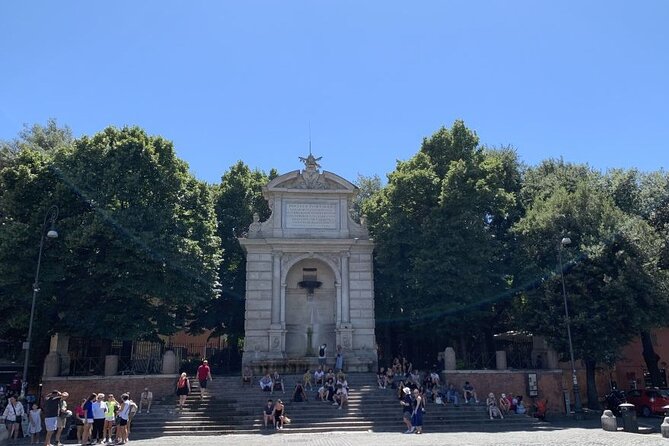
Next comes Piazza Trilussa. This is the kind of place that feels built for evening hangs, especially for younger crowds. Even if you’re not there at night, your guide’s framing helps you imagine the rhythm of the square: people meeting, moving slowly, lingering at café tables, and using the piazza as a social center.
This stop also helps you build visual context. In a short tour, you need landmarks that let you picture where you are and where you’re going. Piazza Trilussa does that. You can use it like a reference point for the rest of the walk.
Campo de’ Fiori: Rome’s central market square
From there, the walk goes to Campo de’ Fiori, one of Rome’s central squares. The big practical point: this is a main market area in the morning. So depending on when your tour runs, you might see the square doing its everyday job—vendors, shoppers, and that quick, purposeful energy that comes with commerce.
I like that the guide keeps your eyes open here. It’s easy to treat Campo de’ Fiori as a “busy place you pass.” But with a guide pointing out what the square traditionally supported, you start seeing it as infrastructure for daily life—food, errands, meeting points, and the kind of public space that shaped how neighborhoods functioned.
Into the Antico Quartiere Ebraico: 16th-century tragedy, explained in place
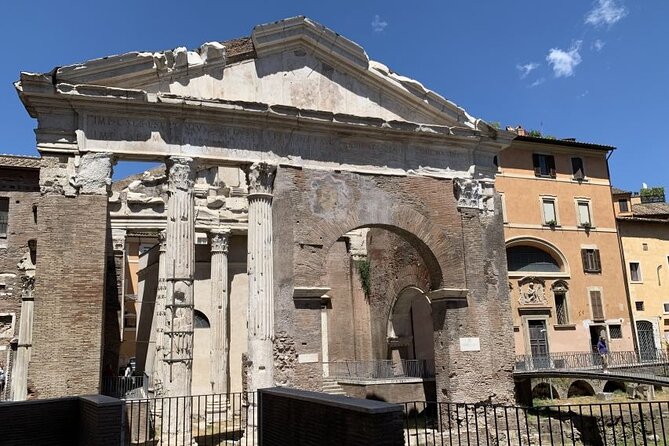
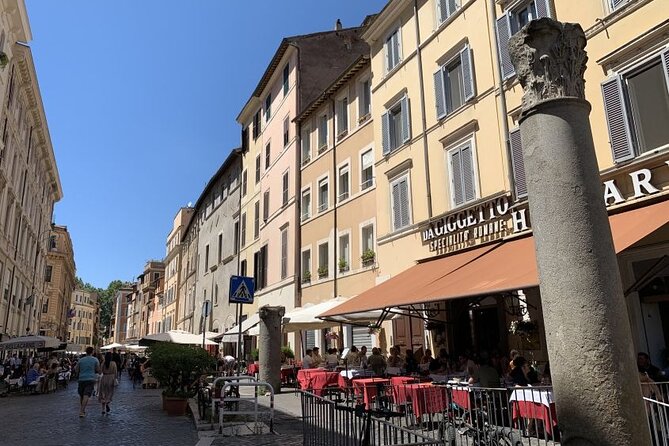
The heart of the tour is Antico Quartiere Ebraico. Here, your guide explains the tragic history that occurred in this neighborhood during the 16th century. This is the moment when the tour stops being just scenery and becomes narrative you can follow step-by-step as you walk.
What’s valuable is how the history is tied to the streets and what you can actually see around you. In the Jewish Quarter, you’ll get help reading the neighborhood: the way architecture and small markers communicate layers of the past. Even if you consider yourself “not a history person,” this kind of guided interpretation can flip the switch. Suddenly, the area isn’t just a set of buildings. It’s a map of meaning.
You can also read our reviews of more guided tours in Rome






Teatro di Marcello: your final anchor in ancient Rome
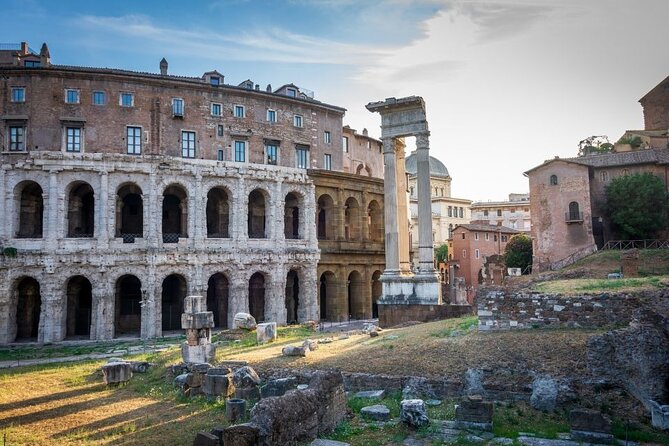
The walk finishes at the Teatro di Marcello, an ancient Roman amphitheater dating back to 13 BC. It’s a strong ending point because it ties your whole route back to Rome’s older bones. You start with a medieval church square, move through lively modern urban life, and then land in a structure built for entertainment nearly two thousand years ago.
This finale is also practical. It puts you near a recognizable ancient landmark, which makes it easier to plan what comes next. You’ll likely use it as a mental anchor—figuring out where you are, where the main roads run, and how to connect to your next stop.
Timing and route flow: what two hours feels like
The tour runs for about two hours and follows a series of stops, each taking around 20 minutes. That structure matters because it keeps the experience moving without turning it into a sprint. It’s long enough for your guide to explain, and short enough that you’re not exhausted before the best stories start.
The walking is part of the value. You get to absorb the city as you go, rather than staying parked in one spot. And because you’re moving square to square, you’re constantly reorienting. That makes it easier to remember what you learned once you leave.
Small-group logistics: max 12, headsets if needed
This is set up for an intimate experience: a maximum of 12 travelers. If the group grows past 10, you’ll have headsets. That’s not a small detail. Headsets keep the guide audible while you walk, and they reduce the “wait for someone to catch up” problem that can ruin a walking tour.
A few other practical notes to keep in mind:
- There’s no hotel pickup or drop-off, so plan to arrive on time at the meeting point.
- It’s near public transportation, so you’re not stuck with one complicated transit option.
- Most people can participate, which suggests the pace is not extreme.
If you want the experience to feel easy, wear comfortable shoes. Rome’s stone can be slick, and you’ll be standing and walking more than you might expect from a “just two hours” description.
Language and communications: English + mobile ticket
The tour is offered in English, which is great if you want the full story without guessing. You’ll also get a mobile ticket, which is convenient when you’re bouncing between neighborhoods and don’t want to manage printed paperwork.
You should receive confirmation at booking time. That means you can plan your day with less stress, knowing you’re set.
Value for $23.91: what you’re really paying for
$23.91 for about two hours isn’t just about walking around. In this price range, you’re buying three things:
1) A professional guide to explain what you’re seeing
2) A structured route that connects Trastevere, the Jewish Quarter, and Teatro di Marcello
3) A small-group format that makes questions possible
If you’re the type who learns faster with a human guide, this tour can be excellent value. If you’re expecting a long museum day with lots of indoor time, you might feel differently, because this experience is built around piazzas and squares. It’s about understanding place, not ticking off ticketed sites behind doors.
Who should book this tour (and who might skip it)
This works especially well for you if:
- You want a guided history-and-place walk in Rome without spending all day
- You’re curious about the Jewish Quarter but don’t want to plan it all yourself
- You like hearing stories that help you look at architecture and streets differently
- You prefer smaller groups over big bus-style crowds
You might hesitate if:
- You strongly want indoor museum stops and extended building access
- You’re limited on walking time and want mostly seated experiences
- You get frustrated when a tour focuses on interpretation in public space rather than inside venues
Should you book this Trastevere + Jewish Ghetto walking tour?
I’d book it if you want a focused, human-guided route that connects Trastevere’s daily-life feel to the Jewish Quarter’s heavy historical meaning, ending with an ancient anchor at Teatro di Marcello. The small group and the headset option make it easier to actually hear the story, not just listen from the back of a crowd.
Skip or choose something else if your main goal is indoor museum entry and you don’t want a tour centered on outdoor squares. With this one, the payoff is in how the guide helps you read the city while you walk.
If you’re trying to see Rome in layers—medieval, early-modern, and ancient—this is a tidy way to do it in one sitting.
FAQ
How long is the 2 Hour Guided Walking Tour in Trastevere and Jewish Ghetto?
It runs for about 2 hours.
What is the price per person?
The price is $23.91 per person.
What language is the tour offered in?
The tour is offered in English.
Where do I meet, and where does the tour end?
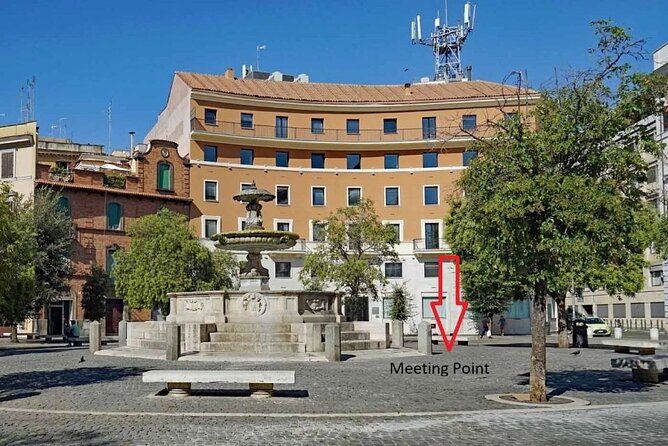
You start at Piazza Mastai, 00153 Roma RM, Italy and finish at Via del Teatro di Marcello, 00186 Roma RM, Italy.
Is there a limit on group size?
Yes. The maximum group size is 12 travelers.
Are headsets included?
Headsets are provided if the group is more than 10 people.
What’s included in the tour?
A professional tour guide is included. Headsets are included when applicable, and admission ticket is listed for the scheduled stops.
Is hotel pickup or drop-off included?
No. Hotel pickup and drop-off are not included.
Is this tour in public areas only or does it include indoor visits?
The scheduled stops are piazzas and squares, and the tour does not advertise museums or archaeological areas.
What is the cancellation policy?
You can cancel for a full refund up to 24 hours in advance of the experience start time. Free cancellation applies within that window, and later changes are not accepted.