REVIEW · ROME
Florence: Uffizi Gallery Small Group Guided Tour
Book on GetYourGuide →Operated by Italy Wonders · Bookable on GetYourGuide
The Uffizi can feel overwhelming fast. This small-group guided visit is interesting because it gets you into the Uffizi Gallery quickly with a separate entrance and then points your eyes at big-name works with an expert guide like Mateo, not just random wall labels. I especially liked the fast, organized pace and the way the guide connected the art to what was happening in Florence, not just who painted what. One thing to consider: in high season, security checks can still take longer, so you’ll want to arrive right on time.
In just 1.5 hours, you’ll move through standout Renaissance masterpieces without trying to see everything. The tour runs in Spanish, Italian, or English, and it’s live-led, so you can ask questions and keep momentum. You’ll also end back at the meeting point, which makes it easy to plan the rest of your day.
A quick heads-up: unaccompanied minors aren’t allowed. If that affects your group, you’ll need to plan accordingly.
In This Review
- Key highlights you’ll actually feel during the tour
- Where you meet: Piazzale degli Uffizi and the Andrea Obgagna statue
- Skip-the-line at the Uffizi: what you gain (and what you don’t)
- Inside the Uffizi: how a 90-minute guided focus changes the museum
- Stop 1: Your first meaningful look at Botticelli
- Michelangelo’s Tondo Doni: why the guide’s framing matters
- Caravaggio’s dramatic realism: the emotional punch you can’t fake
- Titian’s Venus of Urbino and Raphael’s Madonna of the Goldfinch
- Pace, group size, and the “good organization” you’re paying for
- Languages and communication: Spanish, Italian, or English
- Price and value: is $100.40 worth it in Florence?
- Who should book this Uffizi tour (and who might prefer something else)
- Handy tips so your 90 minutes feel effortless
- Should you book the Uffizi Gallery Small Group Guided Tour?
- FAQ
- How long is the Florence Uffizi Gallery tour?
- Where do I meet the host?
- Is skip-the-line entrance included?
- Which artworks are included in the tour?
- What languages are the live guides?
- Is it wheelchair accessible, and can minors attend alone?
Key highlights you’ll actually feel during the tour
- Skip-the-line entrance helps you avoid the slow start that can ruin a museum morning.
- 1.5-hour structure keeps you focused on the works that most people come for.
- Stop-by-stop guidance turns Botticelli, Michelangelo, Caravaggio, Titian, and Raphael into a story.
- Guide quality matters; one guide named Mateo was singled out for being excellent.
- Multilingual live tour in Spanish, Italian, or English keeps the explanations clear.
- Wheelchair accessible means you’re not forced into a strict route with no flexibility.
Where you meet: Piazzale degli Uffizi and the Andrea Obgagna statue
I love tours that start with clear ground-level directions, because Florence can be maze-like when you’re in a hurry. You meet the host in front of the Andrea Obgagna statue at Piazzale Degli Uffizi, at the first statue on the left.
The exact clue that helps most: the statue sits in the corner between Piazzale degli Uffizi street and Via della Nina street. If you arrive early, you can take a quick look around and confirm you’ve got the right spot before the group gathers.
Plan to arrive 10 minutes before the start time. During busier periods, security and entry timing can stretch out, and being early keeps stress low.
You can also read our reviews of more guided tours in Rome



Skip-the-line at the Uffizi: what you gain (and what you don’t)
This tour includes skip-the-line entrance through a separate entrance, which is a real value in the Uffizi area. The big advantage is simple: you lose less time at the point where lines usually form, and you get to the art sooner.
Still, there’s one reality check. The info notes that during high season, waiting time for security can be longer. That doesn’t cancel the benefit, but it does mean you should not treat this as magic that makes security disappear.
When you think about the price, this is the part that justifies it for most people. Paying more isn’t only about the guide—it’s also about reducing the downtime between your schedule and the masterpieces.
Inside the Uffizi: how a 90-minute guided focus changes the museum
The Uffizi is famous, but it’s also big. If you walk in cold and try to “see it all,” your eyes get tired and your brain starts skipping.
That’s where this 1.5-hour guided focus helps. The guide doesn’t just point at famous paintings; it turns them into a sequence, so you understand why these works matter and how they relate to the Renaissance mood in Florence.
Because it’s a small-group tour, the pace feels human. You’re not swallowed by a huge pack, and the guide can explain with enough clarity for the whole group to follow.
Stop 1: Your first meaningful look at Botticelli
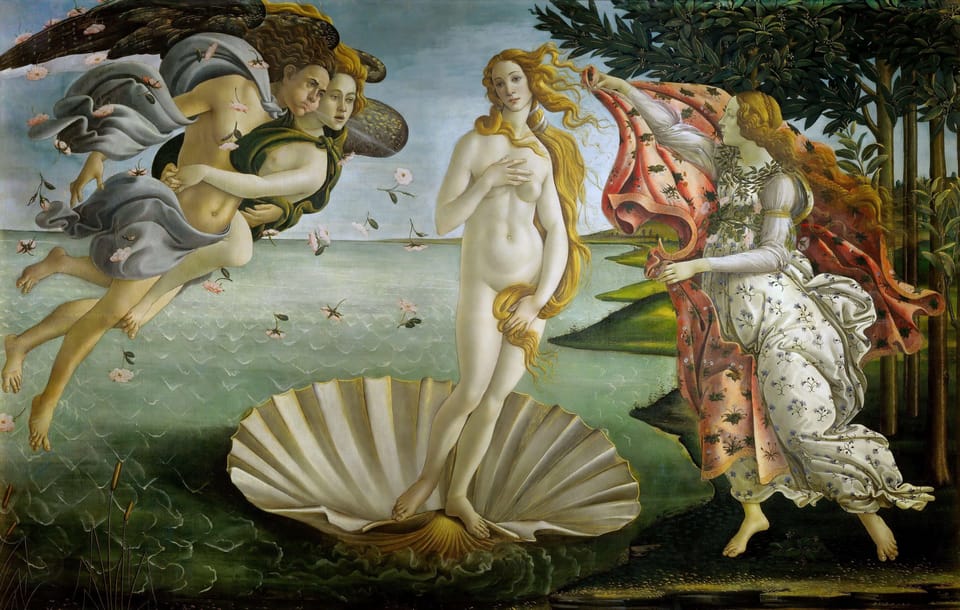
The highlight moment you’ll be waiting for is how the guide sets up Botticelli. You’ll see The Birth of Venus, and that’s a big deal for first-time Uffizi visitors. Venus isn’t just a pretty image; it’s one of those artworks people remember because it’s instantly recognizable.
I like how this kind of tour helps you slow down. In a big museum setting, it’s easy to glance and move on. With a guide, you’re more likely to notice details like pose, expression, and composition choices—things you may miss when you’re scanning quickly.
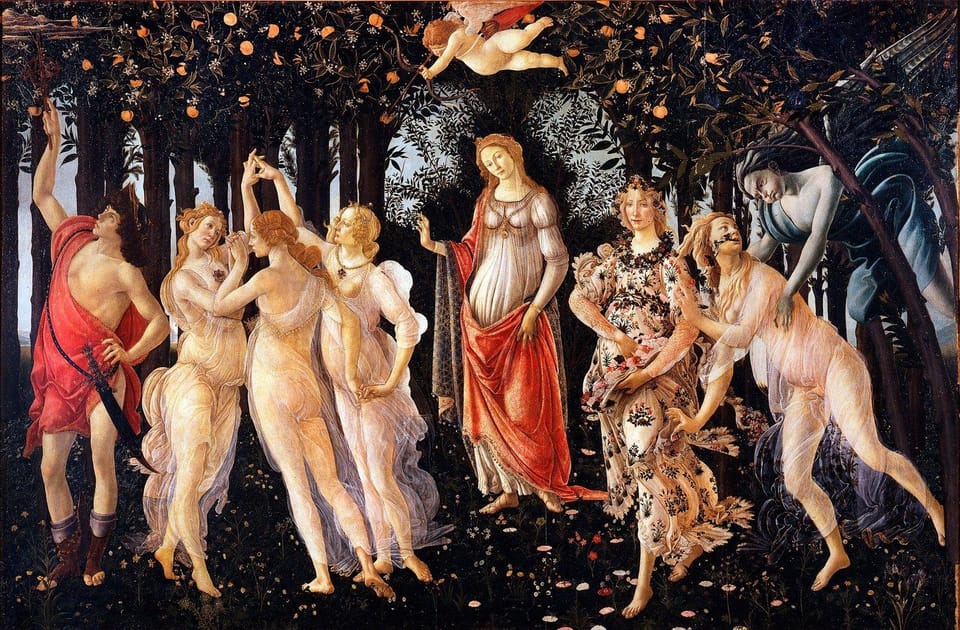
The tour also includes Botticelli’s Primavera. Seeing these works as part of a spoken narrative helps you get more out of them than a quick photo stop.
Michelangelo’s Tondo Doni: why the guide’s framing matters
Next comes Michelangelo’s Tondo Doni, which changes the mood. Michelangelo’s work tends to feel powerful even when you only have a short time with it, but what makes it click on a guided tour is the explanation that connects technique and emotion.
A short tour is the right size for Michelangelo here. You don’t need an hour and a half of museum fatigue to appreciate his impact; you need a moment that puts the work in context. That’s what this tour format supports.
The pace matters because Michelangelo can be visually dense. A guide helps you know what to look for first—so your attention lands in the right place.
You can also read our reviews of more museum experiences in Rome




Caravaggio’s dramatic realism: the emotional punch you can’t fake
Then the tour shifts into Caravaggio’s dramatic realism. Caravaggio often feels like a sudden switch from idealized beauty to something more raw. When the guide brings that contrast into the conversation, you feel it more clearly than you would from the painting alone.
This is one of the best parts of a tight tour like this. Caravaggio can dominate a museum experience, but too many visitors try to see everything around him at once. With guidance, you get the focus you need while still keeping your energy for the final stops.
Think of this segment as the tour’s emotional high point. Even if you don’t know the names, you’ll likely recognize the intensity once the guide points out what makes the scenes feel so immediate.
Titian’s Venus of Urbino and Raphael’s Madonna of the Goldfinch
After the high-voltage moments, the tour ends with two masterpieces that balance the experience.
You’ll admire Titian’s Venus of Urbino, which is another unforgettable image for many art lovers. The guide’s job here is important: it helps you notice how the painting’s presence changes the room. It’s not only about what’s depicted, but how the artist builds a sense of presence and mood.
Next is Raphael’s Madonna of the Goldfinch. Raphael can feel more gentle and human in tone. On a guided visit, it’s easier to track what makes the Madonna scene work—how the figures relate, how attention is guided, and why this piece is so often remembered.
For me, this ending is smart. You finish with a strong variety of style—so you leave the museum feeling like you actually got a cross-section of what makes the Uffizi special.
Pace, group size, and the “good organization” you’re paying for
The tour is designed around a clean flow: meet at Piazzale degli Uffizi, go in for the guided visit for about 1.5 hours, then end back at the meeting point.
That last detail matters more than it sounds. When tours don’t bounce you back where you started, you can lose time navigating. Here, your time stays yours for lunch, a gelato break, or jumping to another Florence stop.
The reviews associated with the experience highlight good pace and useful information, which matches what I’d expect from a properly run small-group guide-led format. Also, one guide named Mateo was praised as an excellent guide, which is a strong sign that the tour effort goes beyond reading off facts.
You should still manage your expectations. In 1.5 hours, you won’t see the entire Uffizi. But you will see major works and learn how to look at them in a way that sticks.
Languages and communication: Spanish, Italian, or English
One practical win: the live guide is offered in Spanish, Italian, and English. That means you’re not stuck with a generic translation or slow group lag if you’re not fluent.
If you’re taking this tour because you want explanations you can follow, language coverage is a big deal. It’s also useful if your group has mixed language comfort—you can choose the option that best fits the day.
Price and value: is $100.40 worth it in Florence?
At $100.40 per person, this isn’t a budget activity. But value in Florence often comes down to how much time you save and how much you absorb.
You’re paying for three things:
- Skip-the-line entrance, which reduces wasted time.
- A licensed live guide, which helps you see more than you would on your own.
- A tight 1.5-hour focus on the most iconic works.
If you’re someone who gets annoyed by long lines and wants your museum time to count, this price starts looking reasonable. If you’re the type who enjoys drifting and reading everything at your own tempo, you might feel boxed in by a structured visit.
Also consider this: security delays can be longer during high season. When that happens, a tour that already anticipates entry issues tends to feel more valuable, not less.
Who should book this Uffizi tour (and who might prefer something else)
This tour is a great fit for:
- Art lovers who want a short hit of the big masterpieces
- First-timers to the Uffizi who want a plan and a guide to get you oriented fast
- People who prefer small-group energy over large crowds
- Anyone who wants live explanations in Spanish, Italian, or English
It might not be ideal if:
- You want to spend hours wandering the entire gallery without limits
- You prefer museum time that’s completely self-directed
- Your group includes unaccompanied minors, since that isn’t allowed for this activity
Handy tips so your 90 minutes feel effortless
These are the small choices that make guided museum tours go smoothly:
- Wear comfortable shoes. Even in 1.5 hours, you’ll be standing and moving enough to feel it.
- Arrive early to lock in the correct meeting spot by the Andrea Obgagna statue.
- If you’re sensitive to noise, keep expectations realistic: museums are active places, and you’ll share space with others.
- Use your guide time to ask questions. This tour is short, so every good question can pay off immediately.
Should you book the Uffizi Gallery Small Group Guided Tour?
Yes, if you want a practical way to experience the Uffizi’s biggest names without losing your morning to lines or indecision. The skip-the-line entrance and 1.5-hour guided focus are the core reasons to choose it, and the guide experience—highlighted by excellent commentary and a steady pace—helps you actually remember what you saw.
I’d skip it only if you’re hoping to cover the whole museum on one ticket or you want a totally self-guided experience. For everyone else, it’s a solid way to spend a limited time in Florence and walk out with a clear thread through Renaissance art.
FAQ
How long is the Florence Uffizi Gallery tour?
The tour lasts about 1.5 hours.
Where do I meet the host?
Meet the host in front of the Andrea Obgagna statue at Piazzale Degli Uffizi, the first statue on the left, in the corner between Piazzale degli Uffizi street and Via della Nina street.
Is skip-the-line entrance included?
Yes. The tour includes skip-the-line entrance to the Uffizi Gallery through a separate entrance.
Which artworks are included in the tour?
The tour focuses on major works including Botticelli’s The Birth of Venus and Primavera, Michelangelo’s Tondo Doni, Caravaggio’s masterpieces, Titian’s Venus of Urbino, and Raphael’s Madonna of the Goldfinch.
What languages are the live guides?
The live tour guide is offered in Spanish, Italian, and English.
Is it wheelchair accessible, and can minors attend alone?
The tour is wheelchair accessible. Unaccompanied minors are not allowed.