REVIEW · ROME
Trekking Excursion History and Nature Necropolis of Norchia from Rome
Book on Viator →Operated by Back To Nature · Bookable on Viator
Norchia feels like Italy lost in time. From Rome, you’ll head to a near-abandoned Etruscan necropolis nicknamed the Little Italian Petra, then walk down into the Acqualta river canyon and back up through woods to an acropolis site linked to medieval Di Vico.
I love two things most: the rock-tomb scale at Norchia—grand, jagged, and oddly quiet—and how the day connects Etruscan Orclae to later Roman roads and even a 12th-century Di Vico castle setting. If you’re lucky with your guide, you may hear archaeologist Edoardo Expert explain the places so clearly you start seeing how the route, tombs, and settlement fit together.
One thing to consider: this is not a casual stroll. It’s a 7 km walk with a real canyon descent and return uphill, and you’re required to show up with outdoor clothing and proper trekking shoes.
In This Review
- Key highlights at a glance
- Why Norchia earns the Little Italian Petra nickname
- The Rome-to-Norchia transfer: more than just “getting there”
- Necropolis walking: down toward the Acqualta canyon, then back up
- The forest acropolis and the Di Vico castle setting
- Cava Buia and Via Clodia: walking a route cut into tuff
- Lunch and breaks: typical products, water and wine
- Price and value: is $254.67 a fair deal?
- Who this trek suits (and who should rethink it)
- Should you book the Norchia trek from Rome with Back To Nature?
- FAQ
- What time does the Norchia trek start?
- How long is the experience?
- Is lunch included?
- How much walking is involved?
- Do I need to bring trekking shoes?
- Are tickets to the archaeological site included?
- What kind of transportation do you use from Rome?
- Is the tour private?
- Is the experience weather dependent?
- What’s the cancellation window?
Key highlights at a glance
- Little Italian Petra vibes in a necropolis that feels far from the usual tourist circuit
- 7 km canyon walk down toward the Acqualta river area, then back up through forest
- Via Clodia / Cava Buia: a tuff-cut route section you can actually walk
- Etruscan Orclae to Di Vico castle traces in one outing
- Packed lunch with water and wine, plus coffee/tea breaks included
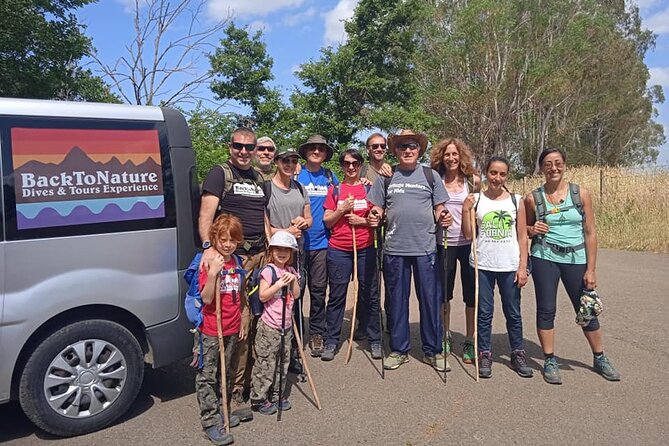
- Private-group style in a small van (8-seater transfer) with pickup options
Why Norchia earns the Little Italian Petra nickname
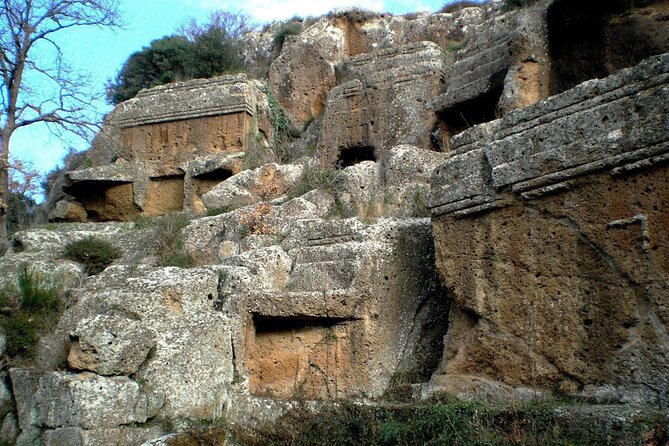
Norchia is one of those places that looks “unfinished” in a good way. You’re not surrounded by museum glass or tight paths. Instead, the necropolis reads like stone carved with purpose and then left to weather—so the Etruscan tombs feel raw and real.
The site centers on rock tombs tied to Etruscan Orclae, believed to be connected to the larger Etruscan capital of Tarquinia (Tarchna). That’s the key idea: Norchia wasn’t an isolated outpost. It was part of a wider Etruscan world, with power and trade reach that extended well beyond the local canyon.
Then you get the layered surprise. Norchia also sits on ground that later connects to a Roman presence and a medieval twist: in the Middle Ages, the acropolis area became the setting for a 12th-century Di Vico castle, with later traces protected (and partially hidden) by a lush forest canopy. When you walk there, it’s not just ancient rocks. It’s a timeline that moves from Etruscan tomb culture to medieval occupation marks.
You can also read our reviews of more historical tours in Rome


The Rome-to-Norchia transfer: more than just “getting there”
This is a long day, and the drive matters. Your morning starts at 8:00 am with pickup from chosen Rome-area points. Once you’re in, you transfer north in an 8-seater van, which keeps the group feeling tighter and more conversational than a giant bus.
Along the way, the route is structured around old Roman roads and coastal scenery. You’ll pass stretches of the Via Aurelia, and you’ll have viewpoints over the Via Consolare corridor area, framed by the Tolfa Mountains and the Lazio coast. Then comes a stop area around Tolfa, and later Civitavecchia, where you can look out toward the port city.
These pauses aren’t the main event, but they do two useful things for you:
1) They set expectations. You’re heading into countryside and stone terrain, not just ticking off a site.
2) They break the long ride so you arrive ready to walk, not already wiped out.
Necropolis walking: down toward the Acqualta canyon, then back up
The core of the experience is the walking day inside the Norchia terrain. Your time at the site begins with exploration in the necropolis zone, then it turns into a canyon journey: you descend toward the Acqualta river area before climbing back through wooded terrain.
Expect the day to feel physically “connected.” You’re not walking in a straight line from Point A to Point B and calling it done. The route is designed to let you experience the way the landscape shaped where people built tombs, paths, and later settlements.
This is also where a good guide earns their keep. At Norchia, context is everything. Stone tombs can look similar if you’re just snapping photos. But when someone explains the layout and why the site was important, your eyes adjust fast. You start noticing how the canyon setting shapes movement and why the settlement’s position mattered.
Practical tip: plan your pace like you’re hiking, not strolling. Shoes matter because the surface can be uneven, and the day’s rhythm includes descent and a return uphill.
The forest acropolis and the Di Vico castle setting
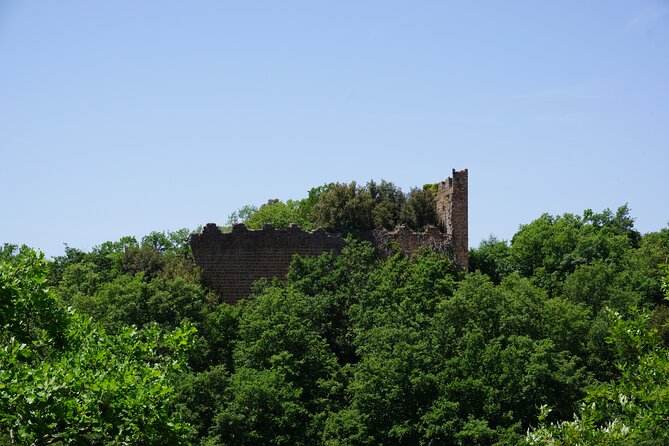
One of Norchia’s best “aha moments” comes when the path takes you up into the woods toward the acropolis area. This is where the Middle Ages leave their mark, even if you’re mostly seeing traces rather than a full reconstructed castle.
The acropolis area was tied to a 12th-century Di Vico castle, and the forest helps guard the feeling of stepping into older space. Even without ruins posed for photos, the setting works. The trees and slopes make the place feel tucked away, and that helps you understand why the site remained compelling even after the Etruscan period faded.
What you’ll enjoy here is the change in atmosphere. The necropolis side feels stark and stone-heavy. The acropolis side is shaded and calmer. Together, the two halves give you variety without breaking the flow of a single day.
Cava Buia and Via Clodia: walking a route cut into tuff
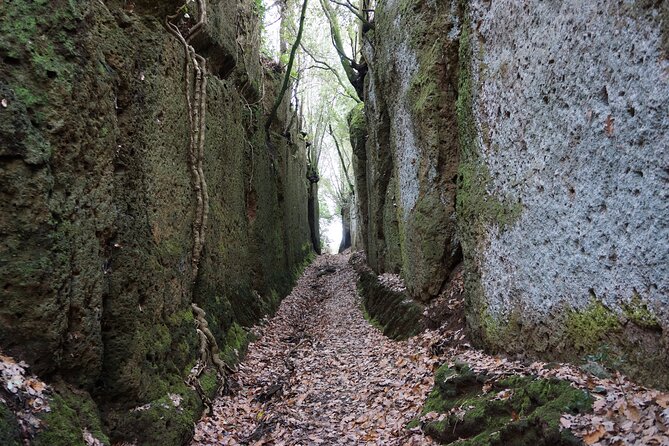
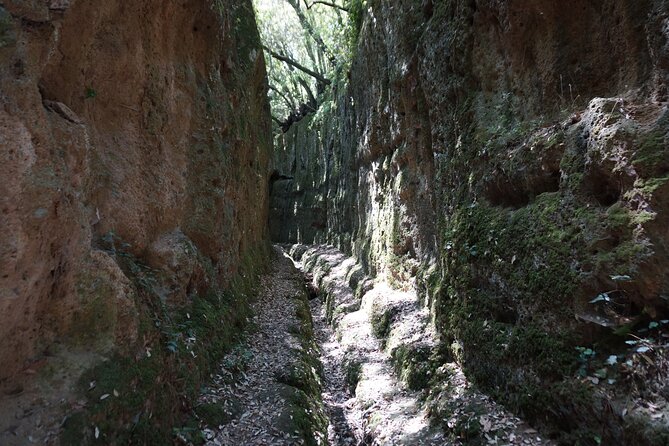
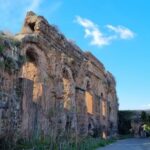
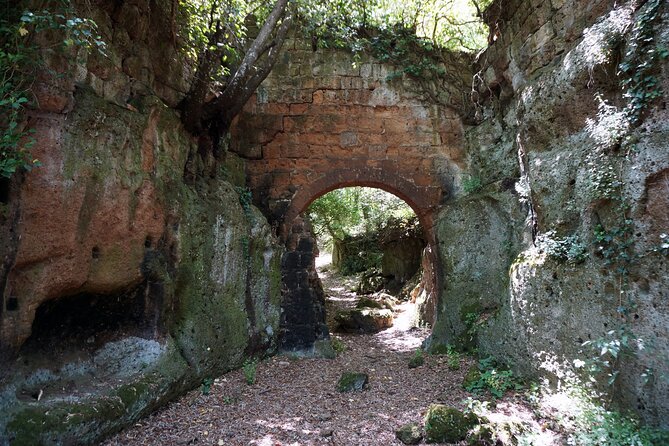
The day also highlights a specific Roman-era corridor: the ancient Via Clodia, described as cut into tuff for more than 400 meters. Today, that tuff-cut section is called Cava Buia, and it’s a major reason this trek feels different from a typical “see tombs, take photos, leave.”
When you walk a route like this, you’re experiencing the engineering. Tuff isn’t like soft dirt that disappears under your feet. It’s shaped stone. Paths carved into it tell you that movement, trade, and control mattered.
This section is also where the guide’s storytelling really helps. If you only look at the tombs, you get one layer of the story. If you connect tombs to paths and paths to the settlement’s role, the whole area starts making sense in one long sentence: people lived here, traveled here, marked here, and returned here across centuries.
Photo tip: take a moment at the start of Cava Buia and look back. The carved pathway shows depth and slope in a way that wide shots often miss. Then take close-ups once your footing is settled.
You can also read our reviews of more hiking tours in Rome

Lunch and breaks: typical products, water and wine
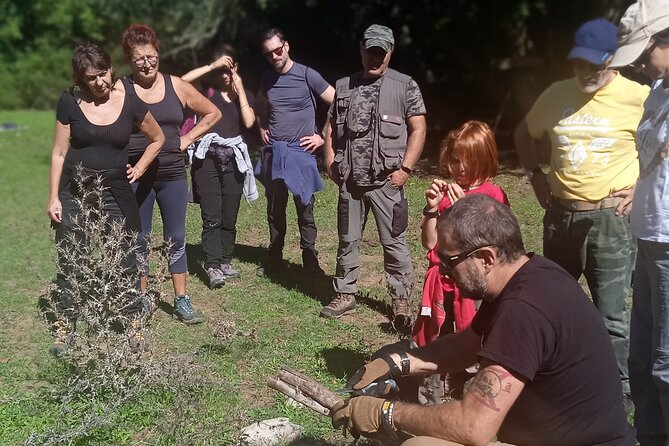
A big value point: lunch is included. You’ll get a packed meal with typical local products, plus water and wine, and coffee/tea are also included.
Why this matters on a trekking day: when food and drinks are handled, you waste less time deciding what to eat and where, and you walk with a steadier energy level. It also keeps the group together during the day’s slower “settle in and listen” parts.
What to do with this info: eat at the right pace. Don’t rush your meal. Then take a short walk-off break before you start moving again. The difference is huge on a day that totals about 7 km.
Also remember: trekking shoes and a backpack/outdoor clothes are not included. If you’re coming from Rome in city sneakers, make a shoe decision before pickup.
Price and value: is $254.67 a fair deal?
At $254.67 per person, this isn’t a budget “half-day in a van” add-on. But for what’s included, it can feel like good value—especially if you care about both ancient sites and active time outside.
Here’s what you’re paying for beyond the ride:
- Entrance ticket to the archaeological site
- Lunch included (typical local products) plus water and wine
- Coffee and/or tea
- Parking fees and civil liability insurance
- Pickup options and a transfer in a small 8-seater van
- A day organized around a guided, structured walk rather than a self-guided scramble
Add it up and the math looks different than “transport + admission.” You’re also paying for guided interpretation that helps you understand what you’re seeing, and that’s the part that turns rock tombs into a story you can retell.
One more detail that helps: it’s offered as a private tour/activity, meaning only your group participates. That often makes the pace and stops feel more responsive.
Who this trek suits (and who should rethink it)
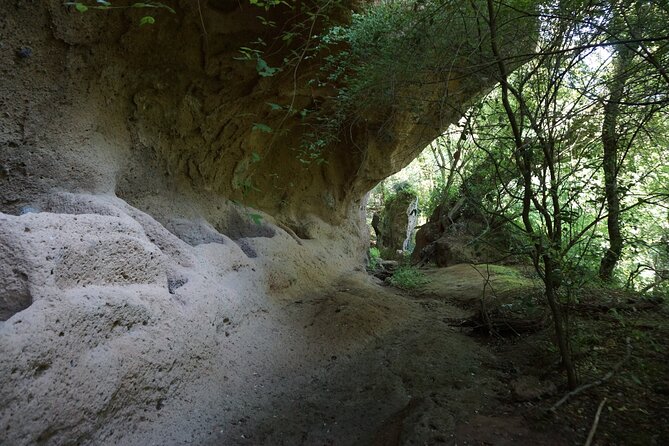
This is a great match if you want the mix of nature + archaeology in one day. Norchia isn’t polished. It’s more “wild and grandiose, almost abandoned,” and that feeling appeals to people who like authentic places over staged ones.
You’ll also like it if:
- You’re comfortable with a 7 km walking day that includes a canyon descent and uphill return
- You care about Etruscan and Roman connections, including the Via Clodia / Cava Buia tuff-cut segment
- You want a guide who can explain why the site mattered (archaeologist-style commentary is part of the appeal)
You might want to skip or rethink if:
- You don’t have proper trekking shoes
- You hate walking in uneven outdoor terrain
- Weather is a concern for you, since the experience requires good weather
Should you book the Norchia trek from Rome with Back To Nature?
Book it if you want a day that feels like travel, not just sightseeing. The big wins are the rock tomb scale, the canyon-to-forest hike, and the chance to walk a piece of old route history like Cava Buia—all with lunch, drinks, and site entry handled.
Skip it if you’re looking for flat ground, short time on your feet, or a strictly indoor museum-style experience. This is an outdoor trek with real walking requirements.
If you’re the type who likes to learn by moving through a place—stone, paths, and setting—this is the kind of Rome-area day that sticks.
FAQ
What time does the Norchia trek start?
The start time is 8:00 am.
How long is the experience?
Plan for about 9 to 10 hours total.
Is lunch included?
Yes. You’ll get a packed lunch with typical local products, plus water and wine.
How much walking is involved?
The walking portion is about 7 km.
Do I need to bring trekking shoes?
Yes. Trekking shoes and suitable outdoor clothing are mandatory, and they are not included.
Are tickets to the archaeological site included?
Yes. The entrance ticket to the archaeological site is included.
What kind of transportation do you use from Rome?
You’ll use a transfer in an 8-seater van, with pickup offered from selected points.
Is the tour private?
Yes. It’s described as a private tour/activity, meaning only your group participates.
Is the experience weather dependent?
Yes. The experience requires good weather. If it’s canceled due to poor weather, you’ll be offered a different date or a full refund.
What’s the cancellation window?
You can cancel for a full refund up to 24 hours in advance of the experience start time.