REVIEW · ROME
Urban Hike to the Aqueduct Park in Rome
Book on Viator →Operated by Salvatore Benintende · Bookable on Viator
Aqueducts hit different when you walk them. This urban hike turns Rome’s water engineering into a story you can follow on foot, with key stops like Acquedotto Felice and Porta Furba. I also like the metro-friendly start and finish, so you can get in, hike, and get back to the city without a long guessing game.
The one catch: this is an outdoor, moderate-fitness walk for about 3 hours, so wear real shoes and plan on staying on your feet for stretches.
In This Review
- Key highlights you’ll feel fast
- Aqueducts on foot: why this hike feels different
- Pigneto: a trendy start with an old-water mission
- Acquedotto Felice: following the waterline in sections
- Porta Furba and Pope Clement XII’s fountain stop
- Parco degli Acquedotti and Appia Antica views
- Tor Fiscale: nature, history, and extra aqueduct scenery
- Pace, group size, and what moderate fitness means in practice
- Price and value: $35.49 for a focused Roman morning
- Getting there and heading back from Giulio Agricola
- Who should book this aqueduct hike, and who might skip it
- Should you book Urban Hike to the Aqueduct Park in Rome?
- FAQ
- How much does the Urban Hike to the Aqueduct Park cost?
- How long is the tour?
- What time does the tour start?
- Where do I meet for the tour?
- Where does the tour end, and what subway station is nearby?
- What group size should I expect?
- Do I need anything besides a phone for the ticket?
- Is cancellation free if my plans change?
Key highlights you’ll feel fast
- Small group (max 15): easier questions and a guide who can keep the pace human.
- Salvatore Benintende (Sal) leads: lots of energy and clear explanations about how the aqueducts worked.
- Pigneto morning start: you begin in a real neighborhood near coffee shops and a local market vibe.
- Aqueducts + parks combo: engineering views paired with breaks in Parco degli Acquedotti and Tor Fiscale.
- Easy transit ending: you finish close to the Giulio Agricola metro (A line).
Aqueducts on foot: why this hike feels different
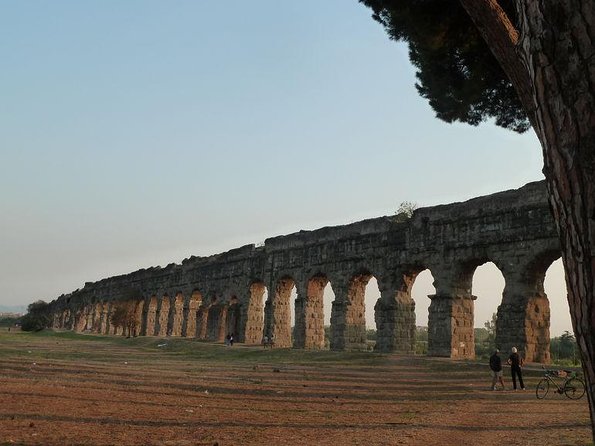
Rome’s aqueducts can look like distant ruins in photos. On this hike, you move alongside them, at park level, so the scale makes sense. You’re not just staring at stone—you’re following a practical system that once carried water into the city.
What I like here is the balance between city energy and quiet greens. You start in Pigneto, where the day feels local, then you gradually shift into the Parco Archeologico areas where fewer people are around. That change of scenery is a big part of the value: it’s the kind of morning break that still counts as a “Rome thing.”
And you’ll get more than the postcard version. Your guide, Salvatore Benintende (Sal), explains the aqueduct story in a way that connects construction and purpose—how water was sourced and why these structures mattered.
You can also read our reviews of more hiking tours in Rome

Pigneto: a trendy start with an old-water mission
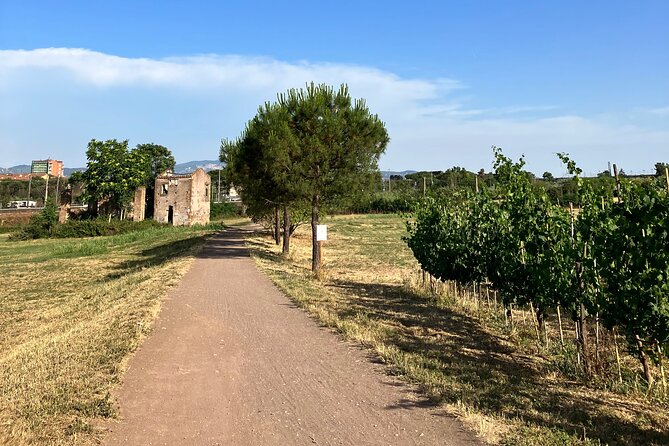
The tour begins around Pigneto (meeting at Pigneto00176, Rome) at 8:30 am, right when the neighborhood is waking up. Expect a mix of local morning market atmosphere, charming coffee shops, and that friendly “you’re in Rome, not at a museum” feeling.
Stop 1 is a short one—about 15 minutes—focused on getting your bearings and introducing the first aqueduct connection. The practical advantage of starting here is that you’re in a real walking environment from the beginning. It makes the shift to ancient engineering feel natural rather than sudden.
One more smart detail: admission is free for the stops listed. That matters because you can spend your time walking and listening, not hunting for ticket counters or paying extra at each viewpoint.
Acquedotto Felice: following the waterline in sections
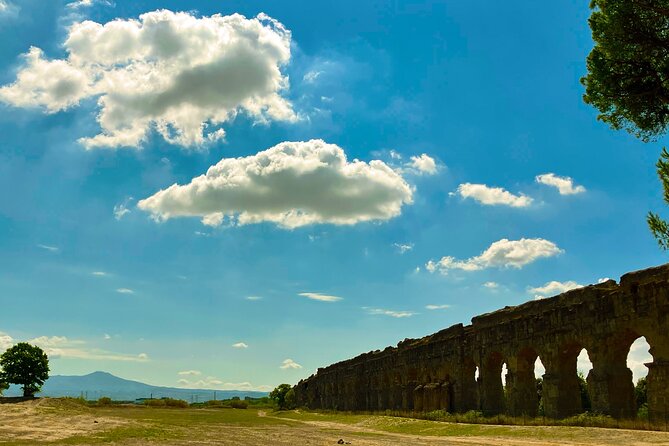
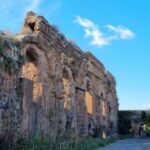
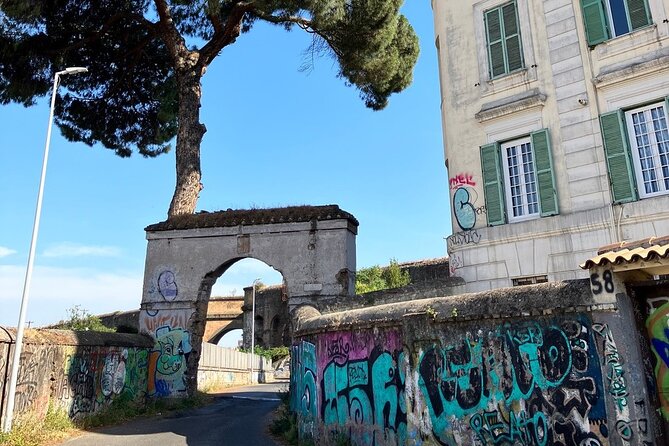
Stop 2 is built around the Aqueduct Felice (Acquedotto Felice), which guides you almost all the way to Aqueduct Park. This is one of the moments where the hike earns its keep: you’re not just hearing about Rome’s water system; you’re seeing how it threads through the area.
You’ll get around 25 minutes here, and the pacing is designed to let you absorb both the structure and the city views. The kind of thinking Sal brings—construction, sources, timing—makes the aqueduct feel functional, not just decorative.
If you like ancient tech, this stop is especially rewarding. Aqueducts can be hard to “place” in your mind when you only read about them. Walking alongside them gives you scale, and it clarifies the route from city needs to park setting.
Porta Furba and Pope Clement XII’s fountain stop
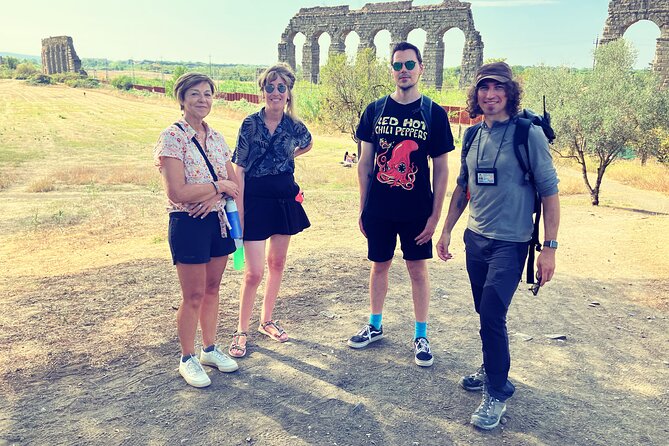
Next you move to Porta Furba, one of Rome’s main entrance gates. This isn’t a long stop—about 15 minutes—but it’s a nice way to connect infrastructure to the urban layout.
From there, you pause at the fountain of Pope Clement XII, which took its water from the Felice aqueduct. That link—water infrastructure feeding a public fountain—turns the hike from stone-focused sightseeing into a real-world story about everyday Rome.
The small drawback here is time pressure. Fifteen minutes goes quickly if you want photos, questions, and a moment to just look. If you’re the type who likes to linger, arrive ready to move fast during this stop and save your longer looking for the park sections later.
Parco degli Acquedotti and Appia Antica views
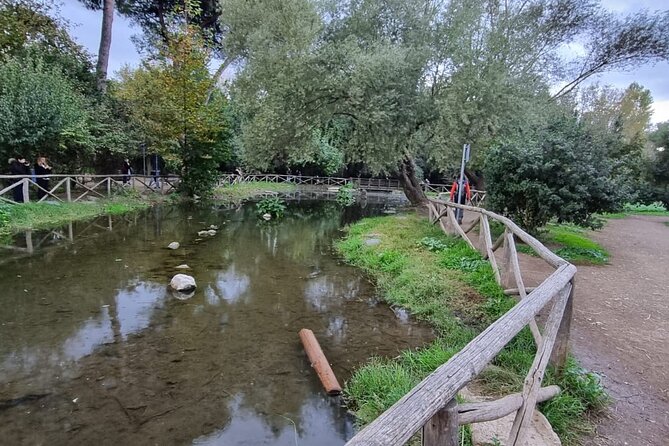
Stop 4 is the heart of the parks portion: Parco degli Acquedotti – Parco Archeologico dell’Appia Antica. You’ll have about 45 minutes, which is long enough to feel like a break, not just a quick photo stop.
This part is where the “ancient engineering meets nature” idea becomes real. You’ll be shown the interesting pieces of the park route, with guide explanations tied to the aqueduct features you can actually see. And you’ll get the best chances for wider views over Rome’s spread—those “oh wow” moments when you can sense the city beyond the trees.
The practical value of this stop is how it’s structured. You’re not left to self-explore with no direction. Instead, you get a guided path, then you get a reasonable chunk of time to take in the setting. That’s ideal if you want authenticity without turning the morning into homework.






Tor Fiscale: nature, history, and extra aqueduct scenery
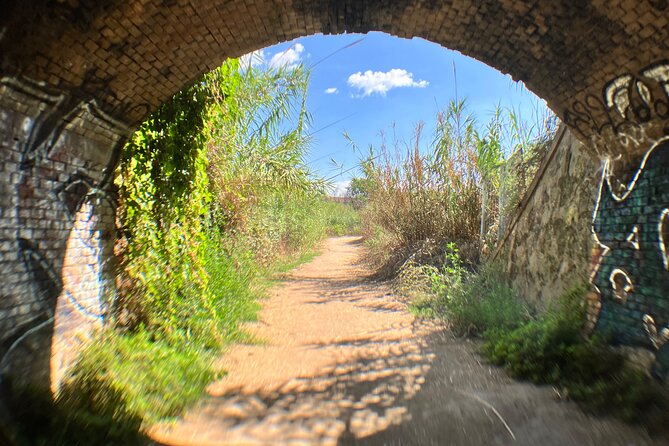
Stop 5 takes you through Parco di Tor Fiscale – Parco Archeologico dell’Appia Antica, with about 30 minutes. This is another chance to see the aqueduct presence in a greener, quieter frame.
The goal here is to broaden what you’ve already learned. After Acquedotto Felice and the central park highlights, Tor Fiscale helps reinforce the “system” idea—Rome’s water planning wasn’t one straight line, it was a network of routes and structures.
You’ll probably feel the walking rhythm change here too. This is the part of the morning where your legs start settling into the pace. If you manage your effort early, you’ll enjoy this more instead of feeling like you’re catching your breath the whole time.
Pace, group size, and what moderate fitness means in practice
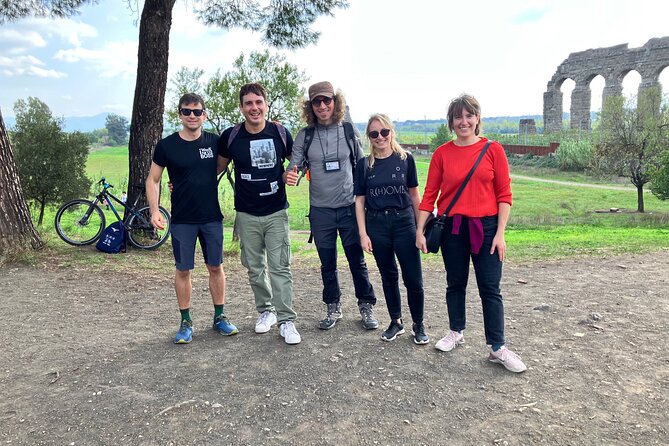
The tour runs for about 3 hours, and the group size is capped at 15 people. That’s a sweet spot: small enough for conversation, big enough that you’re not stuck waiting around for one person’s pace.
The data only says moderate physical fitness. Translation: expect continuous walking and standing time outdoors. Bring water, plan for sun or shade depending on the season, and wear shoes that handle uneven ground. If you’re comfortable doing a solid city walk, you’re likely in the right zone.
Also, the route includes several short stops. That can be great for keeping energy up, but it does mean you won’t get a long slow meander. Think of it as guided movement through multiple highlights rather than a single long viewpoint.
Price and value: $35.49 for a focused Roman morning
At $35.49 per person for roughly 3 hours, this hike is priced like a small guided activity rather than a big-ticket museum day. In Rome terms, that’s a reasonable way to pay for direction, storytelling, and access to a route that you’d probably struggle to connect on your own.
Value-wise, there are three wins:
- You get a guided narrative tied to specific aqueduct structures (not generic “Roman history” talk).
- Most stops involve free admission as listed, so the cost stays contained.
- Logistics are smooth, with public transport close to both start and finish.
There’s one planning detail worth noting: the experience is typically booked about 55 days in advance on average. If your dates are flexible, you can wait. If you’re traveling during a busy season or have tight timing, book earlier so you get the slot that fits your morning.
Getting there and heading back from Giulio Agricola
This tour is designed to keep transit simple. You meet at Pigneto00176 Rome, and you end at Via Lemonia, 214, 00178 Roma RM. The finish is close to the Giulio Agricola subway station on the A line.
From there, getting back is easy: you can return to Pigneto (C line) by switching lines at San Giovanni. Even if you’re not a transit wizard, that’s a straightforward chain.
One more practical note: you’ll use a mobile ticket. That saves time and makes it less likely you’ll scramble for paper confirmations on your way out.
Who should book this aqueduct hike, and who might skip it
You should book if you want:
- Ancient engineering you can actually see, not just read about.
- A morning that gives you a break from crowds while still feeling thoroughly Roman.
- A guide with energy and context—Sal is a big reason the hike stays fun while still informative.
You might skip it if you:
- Need very long rest breaks, since the tour moves through multiple stops in a set time window.
- Don’t do well with outdoor walking for about 3 hours, even at a moderate pace.
Should you book Urban Hike to the Aqueduct Park in Rome?
If your ideal Rome day includes real walking, real neighborhoods, and aqueduct ruins tied to clear explanations, this is an easy yes. The combination of small-group size, Salvatore Benintende (Sal) guiding, and an itinerary that mixes city and park scenes makes it feel like a smart use of a morning.
If you’re on the fence, here’s the decision shortcut: choose this hike if you want aqueducts plus breathing room. Pick something else if your trip style is mostly indoor, sit-down, slow-paced sightseeing.
FAQ
How much does the Urban Hike to the Aqueduct Park cost?
The price is $35.49 per person.
How long is the tour?
It lasts about 3 hours.
What time does the tour start?
The start time is 8:30 am.
Where do I meet for the tour?
You meet at Pigneto00176 Rome, Metropolitan City of Rome Capital, Italy.
Where does the tour end, and what subway station is nearby?
It ends at Via Lemonia, 214, 00178 Roma RM, Italy, close to the Subway station Giulio Agricola (A line).
What group size should I expect?
The tour has a maximum of 15 travelers.
Do I need anything besides a phone for the ticket?
You’ll use a mobile ticket.
Is cancellation free if my plans change?
Yes. You can cancel for a full refund up to 24 hours before the experience start time.