REVIEW · ROME
Rome Highlights Tour Squares and Fountains Stroll Through History
Book on Viator →Operated by Tour In Rome by Tour in the City · Bookable on Viator
Rome is a feast for the eyes, and this route helps you digest it fast. You’ll link together iconic landmarks and the stories behind them, moving from the Spanish Steps to Trevi and on to the Pantheon, Piazza Navona, and Castel Sant’Angelo. It is a tight highlights tour that still feels like more than a photo stop list.
Two things I really like: you get headsets so the guide is clear even with a group (they cap the size, and the audio helps), and the guide team is very focused on art and history instead of just dates. Also, the price is reasonable for a 2–2.5 hour walk that hits major sites across central Rome and the Tiber.
One consideration: this is still a walking tour. If you have trouble with stairs or long stretches, you may find some segments challenging, and the company says it is not recommended for walkers with motor difficulties.
In This Review
- Why This Walking Route Works So Well
- Meeting Spot to Main Stroll: How You’ll Experience Rome
- Trinità dei Monti Church and the Spanish Steps: Start at the Top
- Trevi Fountain: The Baroque Showstopper You’ll Actually Understand
- Pantheon: A Fast Visit With Big Payoff
- Piazza Navona and Fontana dei Quattro Fiumi: A Stadium Turned Stage
- Castel Sant’Angelo Area: From Mausoleum to River Views
- St. Peter’s Basilica: A Quick Look at a Major Ending
- Price and Value: Is $69.84 a Good Deal?
- Who This Tour Is For (and Who Might Skip It)
- Tips to Get More From Every Stop
- Should You Book This Rome Squares and Fountains Tour?
- FAQ
- How long is the Rome highlights tour?
- Is the tour in English, and do you use headsets?
- Which attractions have admission included?
- Where do I meet, and where does the tour end?
- Do I need to arrive early?
- Can I cancel for a full refund?
Why This Walking Route Works So Well
- A first-timer-friendly hit list, from Piazza di Spagna to Piazza Navona and the Vatican-side moment at St. Peter’s Basilica
- Clear guide audio with headsets (especially helpful in busy squares)
- Short, focused time at each stop, so you see more without feeling stuck
- Real context for major art and architecture, not just where things are
- A strong end point with views, finishing at Ponte Sant’Angelo in front of Castel Sant’Angelo Bridge
- A small-group feel, with a maximum of 50, plus headset support for up to 8 people
Meeting Spot to Main Stroll: How You’ll Experience Rome
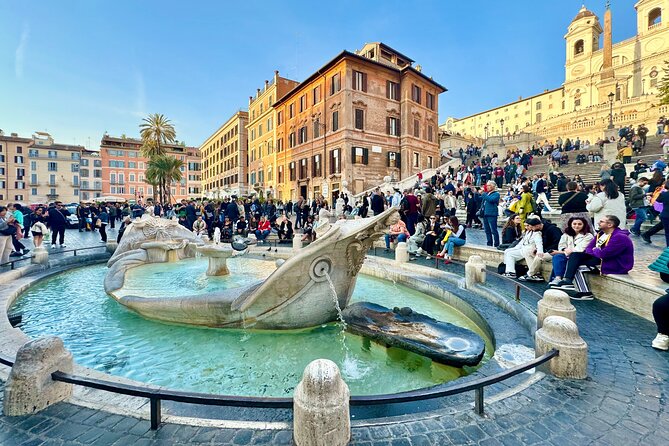
This tour starts at Piazza della Trinità dei Monti, 380, in Rome, and it ends at Piazza di Ponte S. Angelo in front of the bridge leading into Castel Sant’Angelo. You will meet 15 minutes before the scheduled departure time, so build in buffer time; this area can get crowded, and you want to be at the right spot early.
Plan for a smart casual dress code. You’re walking between major sights, often through areas where you’ll want to look up, slow down, and actually read the details the guide points out. If the weather turns, the experience can be adjusted or changed, which matters because the whole plan is outdoors on a timetable.
The big picture: you’re not just crossing Rome. You’re building a mental map of how the city’s power, religion, and art left fingerprints on its piazzas and fountains.
You can also read our reviews of more historical tours in Rome


Trinità dei Monti Church and the Spanish Steps: Start at the Top
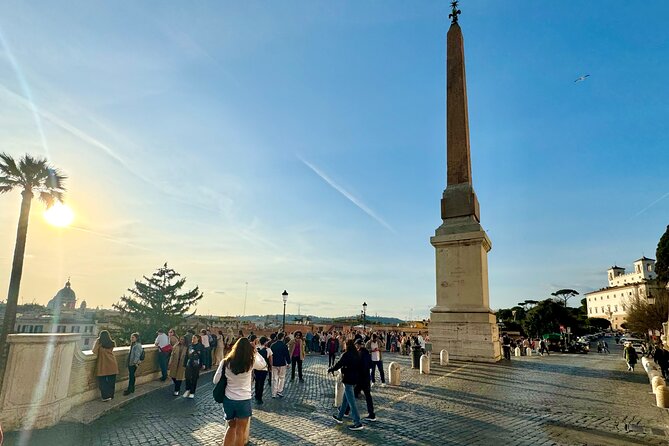
Your first major moment is the Church of Santissima Trinità dei Monti, often called Trinità dei Monti. It sits above the Spanish Steps, and it is tied to the stepped connection between the church and Piazza di Spagna below. That geography is the point. The view lines up what the guide wants you to notice: how architecture and patronage shaped what you see as you walk.
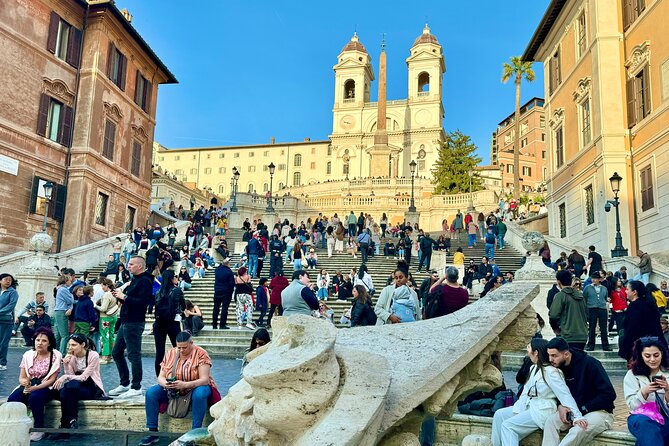
Then you go to the Spanish Steps themselves. This staircase is 135 steps climbing a steep slope between Piazza di Spagna at the base and Piazza Trinità dei Monti at the top. The steps link with the church under the patronage of the Bourbon kings of France, and they also connect to diplomatic presence through the Spanish Embassy to the Holy See.
What makes this stop worth your time is that it is not just scenery. It is a lesson in how Rome’s landmarks often act like political statements in stone. You’ll get the story fast, and the payoff is you understand what you’re looking at while you’re looking at it.
Practical tip: bring comfortable shoes before you arrive. You’ll likely be moving across uneven paving and up and down stairs early in the tour, so do not save your “less comfortable” footwear for day one.
Trevi Fountain: The Baroque Showstopper You’ll Actually Understand
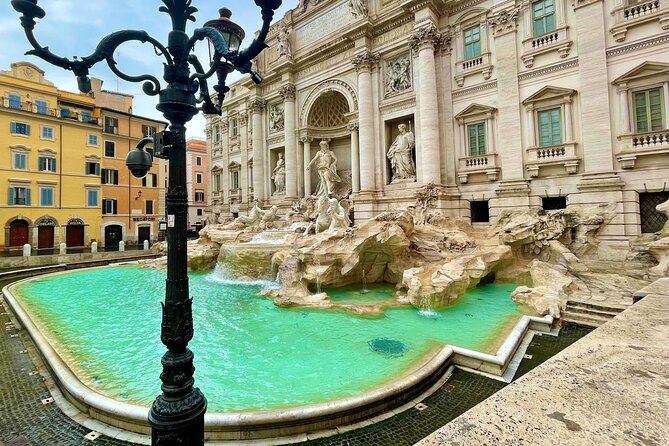
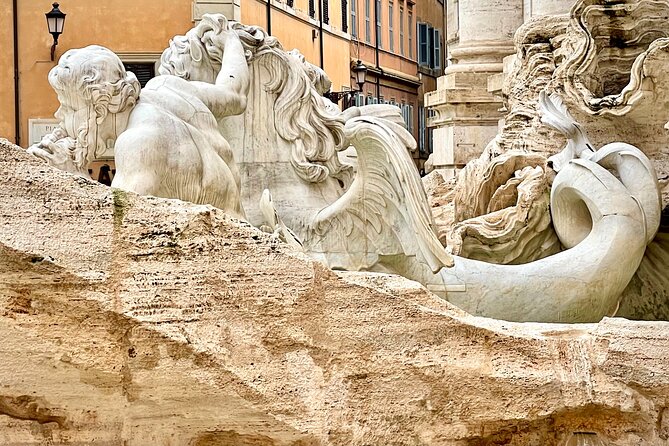
Next comes Fontana di Trevi, and yes, it lives up to the hype. This is an 18th-century Baroque fountain designed by Nicola Salvi and completed by Giuseppe Pannini in 1762. It is enormous—about 26.3 meters high and 49.15 meters wide—making it the largest Baroque fountain in Rome.
What I like here is that the guide’s explanation turns the fountain from a background object into a symbol-laden artwork. Trevi is one of those places where the details can feel overwhelming if you simply stare. With a guide’s structure, you learn what to look for and why it was built in that style.
A plus for planning: the tour notes admission is included for Trevi. That means you won’t be juggling ticket decisions at the moment you arrive at one of Rome’s busiest corners.
Watch for crowds. Even on a highlights timeline, Trevi can pack in people. Headsets help keep you synced with the guide, and you can still get a feel for the fountain’s dramatic composition without spending the entire stop shoulder-to-shoulder.
Pantheon: A Fast Visit With Big Payoff
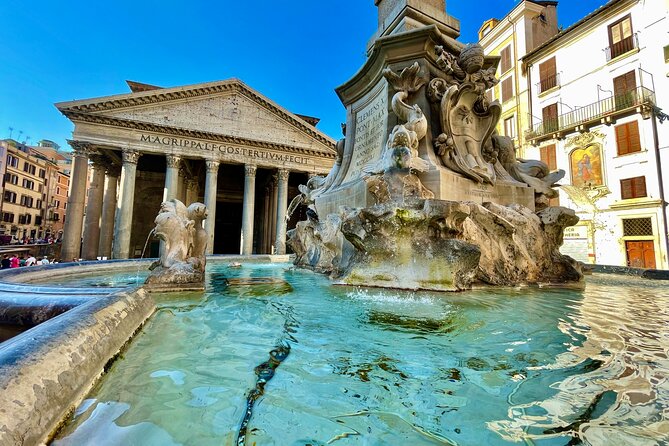
Then you head to the Pantheon, one of Rome’s most important buildings. It is a former Roman temple, and since AD 609 it has been a Catholic church: Basilica Santa Maria ad Martyres (St. Mary and the Martyrs). The current structure is associated with Emperor Hadrian, likely dedicated around AD 126, and it sits on the site of an earlier temple commissioned by Marcus Agrippa.
Your visit is listed as outside, which is actually a good thing for a tour like this. You’re not stuck waiting around for interior time. Instead, you get the building’s presence—its scale, the facade, and the immediate sense that this is a Rome that still has muscle.
The tour notes admission is not included for the Pantheon. So you should expect you may need to pay separately if you want an inside look beyond what the walking tour covers.
If you love architecture, this is where you feel the tour earn its place. Even with limited minutes, the guide’s framing helps you understand why this building mattered to Romans, and why it kept mattering after it became a church.
Piazza Navona and Fontana dei Quattro Fiumi: A Stadium Turned Stage
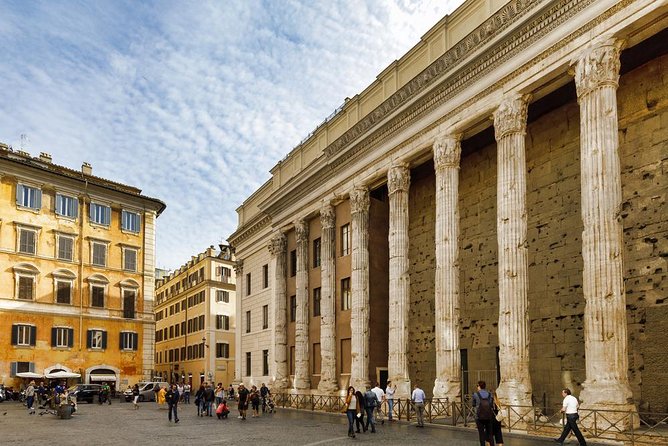
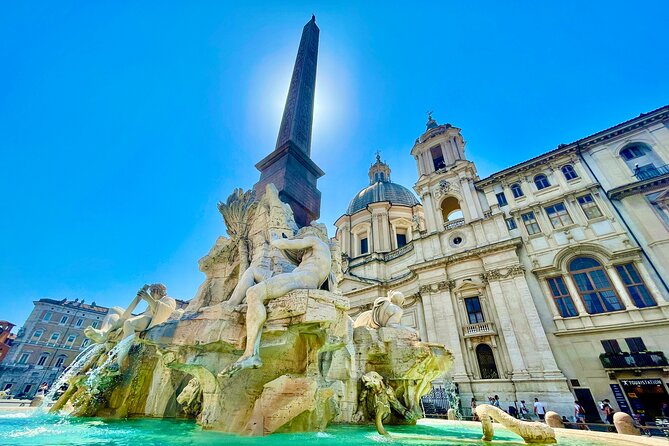
Next is Piazza Navona, which is famous for being built on the footprint of the 1st-century AD Stadium of Domitian. You can feel the ancient oval shape in the layout. Over time, it became a showcase for Baroque design, with major artists associated with the space’s look and feel.
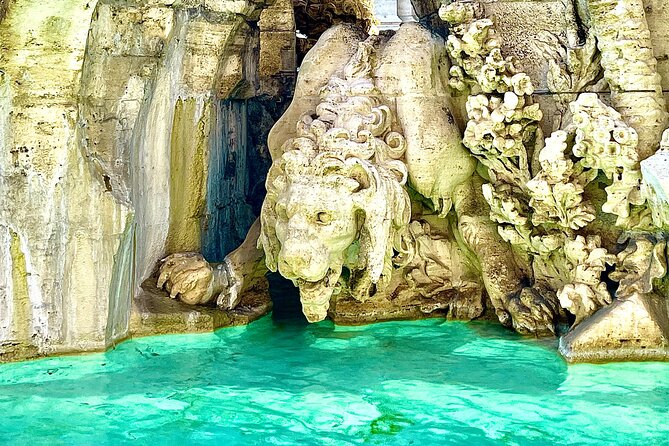
In front of the scene you see the Fountain of the Four Rivers (Fontana dei Quattro Fiumi). This fountain is designed by Gian Lorenzo Bernini for Pope Innocent X, commissioned in 1651. The prompt here is simple: the fountain connects art to power, and it does it with symbolism and dramatic forms.
This stop is a great use of your tour time because it changes your Rome “texture.” Earlier, you’ve had a church-and-steps story and a grand standalone fountain. Here you’re in a piazza that functions like a stage—flat enough to read, grand enough to impress, and surrounded by buildings that show how Rome’s arts and institutions overlapped.
Admission is noted as not included for Piazza Navona and the fountain. Usually that means you are free to enjoy the outdoor space, but it may not cover any paid entry if you decide to go inside a church nearby or add anything.



Castel Sant’Angelo Area: From Mausoleum to River Views
After Piazza Navona, the tour moves you toward the Tiber and Castel Sant’Angelo. The mausoleum is also known as Castel Sant’Angelo, commissioned by Emperor Hadrian as a family mausoleum. Later, popes used it as a fortress, and today it is a museum.
Even if you don’t go inside during this tour, the building is visually hard to ignore. It was once described as the tallest building in Rome, and when you see it in person, you get why it became a defensive and symbolic landmark.
Then you cross to St. Angelo Bridge (Ponte Sant’Angelo). It spans the Tiber to connect the city to the mausoleum’s hill. The bridge is Roman in origin, completed in AD 134, faced with travertine marble, and it runs on five arches. It is now pedestrian, and the scenic payoff is obvious: it gives you a view back toward Castel Sant’Angelo and along the river corridor.
This is also where the tour ends—at Piazza di Ponte S. Angelo, in front of Castel Sant’Angelo Bridge. That finish point is strategic. You’ll have a clear landmark to navigate from after the tour, and it is a natural place to keep exploring on your own.
St. Peter’s Basilica: A Quick Look at a Major Ending
The final stop listed is St. Peter’s Basilica in Vatican City. Your time here is short, about 1 minute, and it is noted as free admission.
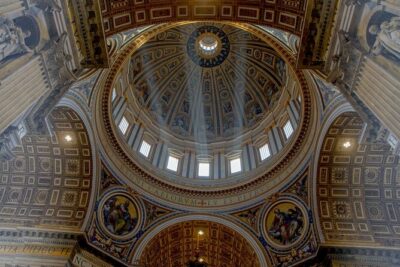
Even if you only get a quick glimpse, this stop can help you connect your walking tour to the bigger Rome-to-Vatican story. St. Peter’s Basilica is a High Renaissance masterpiece, with construction beginning in 1506 and completed in 1626. It replaced an older basilica built in the 4th century.
Keep expectations realistic: this is not a full basilica visit. It is a quick visual capstone on a tour that focuses on squares, fountains, and the broader cultural story stitched through central Rome.
Price and Value: Is $69.84 a Good Deal?
At $69.84 per person for about 2 to 2.5 hours, the value comes from how much ground you cover and what you get included.
Here’s the practical breakdown:
- You are paying for a guided route across multiple headline sights, not just one attraction.
- You get headsets, which is a real convenience in crowded squares and a quality-of-life upgrade.
- The guide is described as a professional art historian, available for roughly 2.5 to 3 hours, which explains why the tour tends to feel like it has themes rather than random stops.
- Trevi Fountain is indicated as admission included, which trims out one extra cost during the most famous fountain stop.
If you were to do these sights on your own, you would still spend time figuring out the connections, and you might miss the meaning behind the layout and style changes between locations. For many first-timers, that is where this type of tour pays off.
One more value clue: the tour is booked quite far in advance on average. That suggests it is a popular way to get oriented early, before your days in Rome get packed.
Who This Tour Is For (and Who Might Skip It)
This tour is ideal if:
- You want a fast introduction to Rome’s biggest squares and fountains.
- You like art-and-history context that makes landmark photos feel less like snapshots.
- You want an organized route that ends at a convenient, scenic location by the Tiber.
You might want to think twice if:
- Stairs and long walking stretches are an issue. The operator says it is not recommended for travelers with motor difficulties and walker users.
- You need long indoor time at major monuments. Several stops are outside or short, and Pantheon is outside.
A small but important note: smart management of pace matters. In the experience details, there’s at least one example of a guide adjusting the walking pace for someone with knee problems by taking short cuts. So if you have limitations, tell the staff in advance and ask what adjustments are possible.
Tips to Get More From Every Stop
Bring these small habits and the tour will feel smoother:
- Wear shoes you can handle on stairs and old stone. The Spanish Steps start things off with climbing.
- Keep your phone ready for photos, but listen first. The guide’s explanations make the visual details easier to spot.
- If you want to go inside the Pantheon or any nearby church, remember that admission is not included at some stops. Budget time and money if you plan to expand beyond the tour’s short view.
- If you’re traveling with anyone who needs extra time, communicate early. The tour notes that anything preventing you from joining regularly should be communicated in advance.
Should You Book This Rome Squares and Fountains Tour?
I think you should book it if you want a high-value, first-timer orientation that links Rome’s biggest visual landmarks into a single story. The combination of headsets, an art-history style guide approach, and a route that finishes at Ponte Sant’Angelo makes it a smart way to spend a morning or early afternoon.
Skip it if your main goal is deep monument time inside buildings, or if walking and stairs are likely to derail you. In that case, you might prefer fewer stops with more rest, so you do not rush through what you came to savor.
If you do book, show up early, wear comfortable shoes, and treat the guide’s explanations like your shortcut through a city that can otherwise feel like one endless list of must-sees.
FAQ
How long is the Rome highlights tour?
It runs about 2 hours to 2 hours 30 minutes.
Is the tour in English, and do you use headsets?
Yes. The tour is offered in English, and headsets are included so you can hear the guide clearly.
Which attractions have admission included?
Trevi Fountain is listed as admission ticket included. Pantheon, Spanish Steps, Piazza Navona, and Fontana dei Quattro Fiumi are listed as admission not included.
Where do I meet, and where does the tour end?
You meet at Piazza della Trinità dei Monti, 380, 00187 Roma RM, Italy. The tour ends at Piazza di Ponte S. Angelo, 00186 Roma RM, in front of Castel Sant’Angelo Bridge.
Do I need to arrive early?
Yes. You must be there 15 minutes before the scheduled departure time.
Can I cancel for a full refund?
You can cancel up to 24 hours in advance for a full refund.