Rome turns into a 3D storybook quickly. This archaeologist-led walking tour mixes street-level Rome with phone augmented reality so you can visualize major ancient spaces like the Colosseum and Forum as you move through the city. It also stays intentionally small, so you’re not fighting a crowd for attention.
Two things I like a lot: the way archaeologist Anastasia connects details across stops, and the fact that the route includes less-followed landmarks like the Jewish Ghetto, Tiber Island, and the keyhole viewpoint. One thing to consider: the walk includes uphill and downhill, so you’ll want comfortable shoes and a bit of stamina.
In This Review
- Key Highlights Worth Your Time
- Phone in Hand: How the AR Changes Rome
- Teatro di Marcello: Theater Where Rome Looks Like a Castle
- Ghetto Ebraico di Roma: Old Walls, Real Streets, Good Food Energy
- Isola Tiberina: A Tiny Island With Legends and Meaning
- Bocca della Verità and Santa Maria in Cosmedin
- Foro Boario: Early Temples and a Marble Surprise
- Giardino degli Aranci on the Aventine Hill: The St. Peter Optical Trick
- Buco della Serratura: Keyhole Views of Malta’s State-Within-a-State
- Testaccio: Escape the Main Drag and Meet Real Rome
- Piramide Cestia: Rome’s Egyptian-Era Oddball
- What Anastasia the Archaeologist Does Best
- Price and Value: Why $3.61 Feels Like a Good Deal
- Logistics That Matter: Timing, Group Size, and What to Bring
- Who This Tour Fits Best
- Should You Book This Rome Urban Trekking Tour?
- FAQ
- FAQ
- What is the duration of the Rome urban trekking tour?
- How much does the tour cost?
- Is the tour offered in English?
- How large is the group?
- Do I get a mobile ticket?
- Are the admission tickets at the listed stops free?
- Where do I meet the tour?
- Is the tour suitable if I have limited walking stamina?
- What if the tour is canceled due to poor weather?
Key Highlights Worth Your Time
- Phone augmented reality helps you picture ancient Rome in 3D, including the Colosseum and Forum
- Archaeologist-led small group (max 10), with room to ask questions and get answers on the spot
- A mix of famous and overlooked stops, from the Teatro di Marcello to Testaccio
- Photo-friendly pacing, with short time blocks at each site so the walk doesn’t blur together
- A crazy-value price point for a 3 to 4 hour guided archaeological trek
- A practical Rome walk, with hills and weather changes handled by the guide if needed
Phone in Hand: How the AR Changes Rome
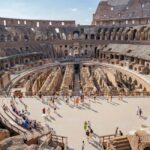
The coolest hook here is how your phone becomes a quick time machine. As you walk, you get augmented reality views that show ancient Rome in 3D, including the Colosseum and the Forum. The effect is simple: you’re not just standing in front of stone and guessing what it looked like.
I like this approach because it helps you read the city as you go. When you see an old theater or an island in the Tiber, AR makes it easier to place what you’re looking at in the bigger Roman story.
If you’re traveling with kids, you’ll probably like that the visuals turn boring explanations into something your group can follow. If you hate app fiddling, just know the tour’s whole vibe is built around the phone tool, so be ready to use it.
You can also read our reviews of more hiking tours in Rome

Teatro di Marcello: Theater Where Rome Looks Like a Castle
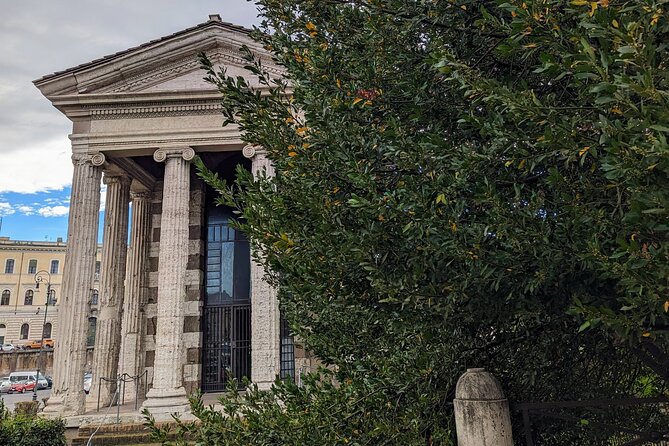
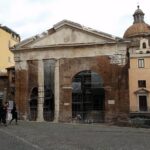
Your first stop is the Teatro di Marcello, an ancient theater that can throw people off. You might know amphitheaters and gladiators, but this is different: theaters meant performers and stage space, not just public spectacle.
What I find fun about this stop is how the building’s shape and survival make it feel medieval, like something that got repurposed over centuries. That contrast is exactly what the rest of the walk is about: Rome layers its past, and you learn to spot the seams.
You’ll also get a short window (about 20 minutes) to take it in without feeling rushed. The downside? If you’re expecting a full-blown museum stop here, it’s more of a thoughtful street-side introduction.
Ghetto Ebraico di Roma: Old Walls, Real Streets, Good Food Energy
Next comes the Ghetto Ebraico di Roma, the historic Jewish Ghetto area. You get both the architecture angle and the “this is still a neighborhood” feel, including streets where daily life continues alongside heavy history.
This stop is a good reset after the ancient stone. It reminds you that history is not only what’s preserved—it’s also what people continued to build, live in, and adapt over time. And yes, the area is known for food stops, so you’ll leave with cravings and context.
One practical note: the time here is short. If you want to linger for a meal, treat the tour’s visit as your orientation, then plan your own slower return.
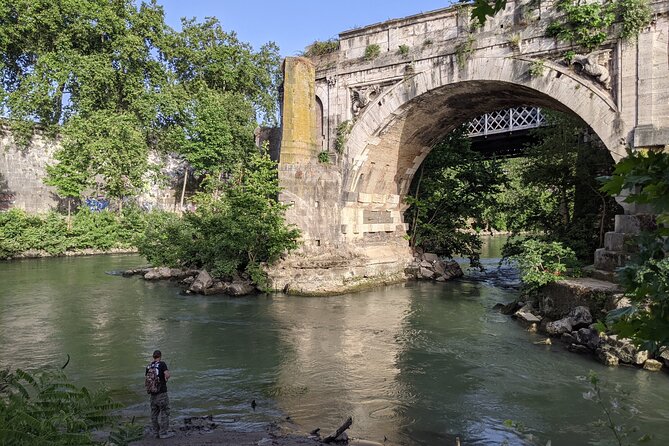
Isola Tiberina: A Tiny Island With Legends and Meaning
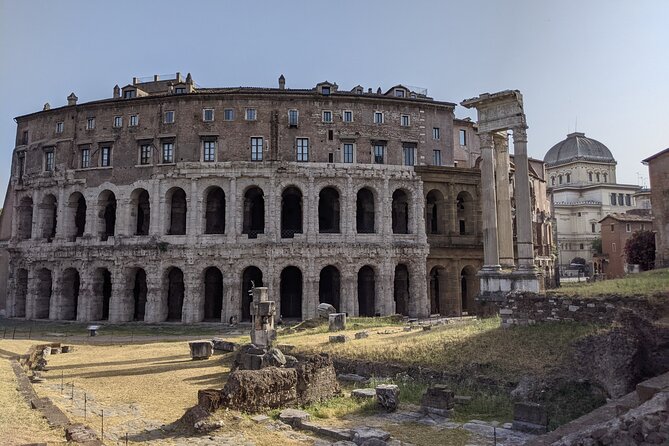
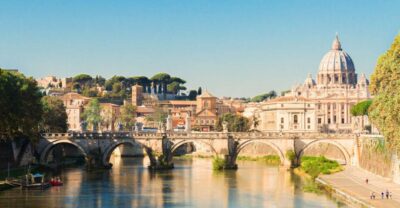
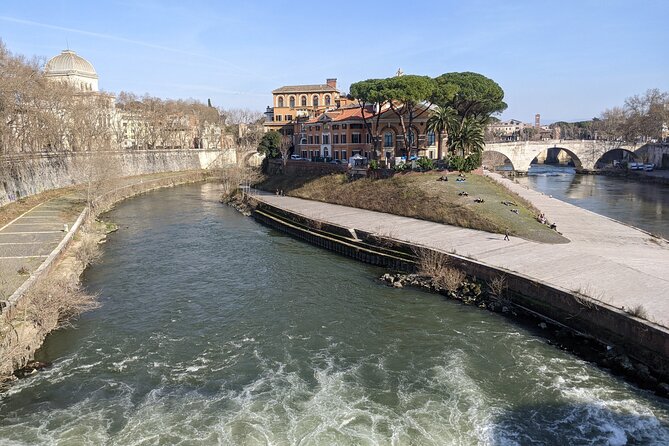
Then you cross into the mythology zone at Isola Tiberina, the small island in the Tiber River. It’s famous for legends and for having played a role for Rome’s earliest inhabitants—small geography, big importance.
This is one of those stops where the setting does half the explaining. Water, views, and the sense of being slightly away from the main streets help you focus, and the legends give you a reason to care beyond the scenery.
You should come prepared for a little “where am I standing?” mapping. The tour keeps the stops relatively compact, so you’ll likely want to check the AR visuals so the island’s significance lands fast.
Bocca della Verità and Santa Maria in Cosmedin
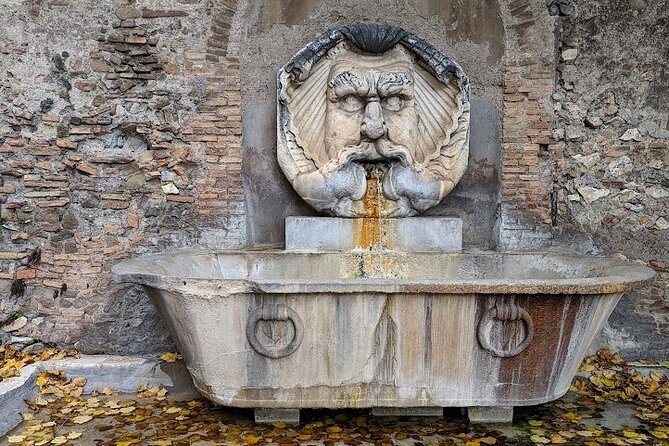
At Bocca della Verità, you’ll hit one of Rome’s best-known photo-and-legend sites. The idea here is play and mystery: a test of truthfulness paired with the medieval church setting nearby.
This stop also connects you to Santa Maria in Cosmedin, where the relics of St. Valentine rest. That detail matters because it links the ancient world’s symbolism and everyday beliefs to medieval devotion, all in the same area.
The tour gives you about 20 minutes, which is enough to see the place, hear the story, and take photos without turning it into a long queue day. The only drawback is that this kind of site tends to attract attention, so keep your eye on your guide and group timing.



Foro Boario: Early Temples and a Marble Surprise
Then you shift to Foro Boario, where the focus turns to early Roman temples. This is not the usual “big monument only” approach. Instead, you get the story of how early sacred spaces worked and how later Roman tastes left a visible mark.
There’s a specific moment the walk points you toward: the first temple in marble that is still well-preserved. The twist is why it’s in such good shape, and hearing that explanation changes how you look at every surviving fragment.
I like this stop because it gives you a better sense of Roman priorities. Romans didn’t only build for power—they built for ceremony, identity, and public memory, and the street-level evidence tells that story.
Giardino degli Aranci on the Aventine Hill: The St. Peter Optical Trick
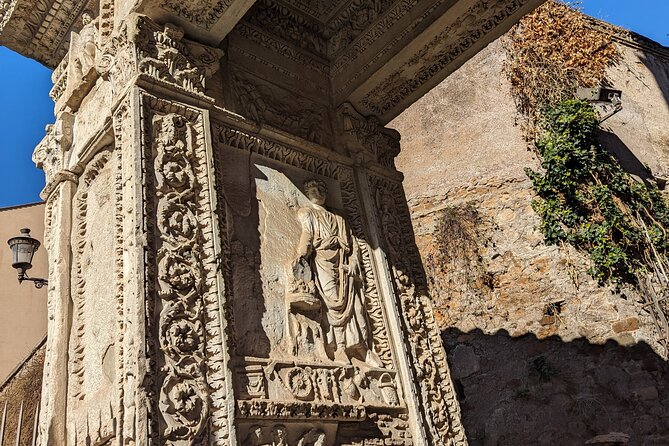
Aventine Hill is where the walk starts feeling more “Rome movie set” than “Rome brochure.” The Giardino degli Aranci (Orange Garden) offers panoramic views over the city, and you’ll get the classic vantage point feeling without having to force it.
The standout teaching moment here is an optical illusion involving St. Peter’s Basilica. As you approach from a certain angle, it seems to shrink. It’s the kind of thing you’ll either notice right away or spend the next ten minutes trying to spot again from a slightly different step.
This stop also includes uphill, so it’s worth treating as your mid-walk energy check. Bring water, sip slowly, and don’t rush the viewpoint. You’ll enjoy it more if you stand still.
Buco della Serratura: Keyhole Views of Malta’s State-Within-a-State
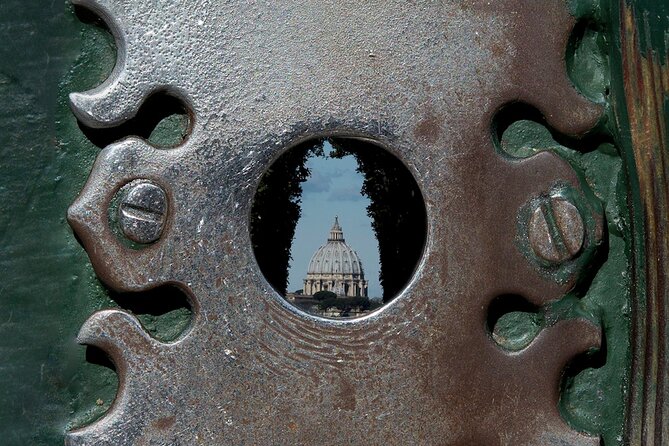
Next is Buco della Serratura, famous for the keyhole viewpoint of the Priory of the Knights of Malta. It’s a short stop with a big payoff: you peer through the keyhole and see a hidden wonder connected to the Sovereign Military Order of Malta.
What makes this site interesting is the political quirk. The Order maintains its own sovereign territory within the heart of Rome—an unusual state-within-a-city situation that most visitors never hear about.
Because it’s a keyhole, it’s also a natural “turn your phone down and focus” stop. You’ll get your moment, then move on. If you’re tall or short, you may find the viewing angle matters, so follow the guide’s positioning cues.
Testaccio: Escape the Main Drag and Meet Real Rome
Then you get out of the classic circuit mindset and into Testaccio, an authentic Roman neighborhood where ancient layers meet modern life. This is one of my favorite kinds of stops: less about a single monument and more about how the place feels.
You’ll explore around the neighborhood market area, spot colorful street art, and hear about a mysterious hill that hides a secret from Rome’s ancient past. That combination—everyday movement, visible creativity, and a story about the underground—keeps it from turning into just another walk-by.
This part is also where you can personally decide how you want to use your leftover energy. If you want to keep wandering, Testaccio gives you that permission. If you’d rather return to hotel energy quickly, you can without feeling you skipped the tour’s whole purpose.
Piramide Cestia: Rome’s Egyptian-Era Oddball
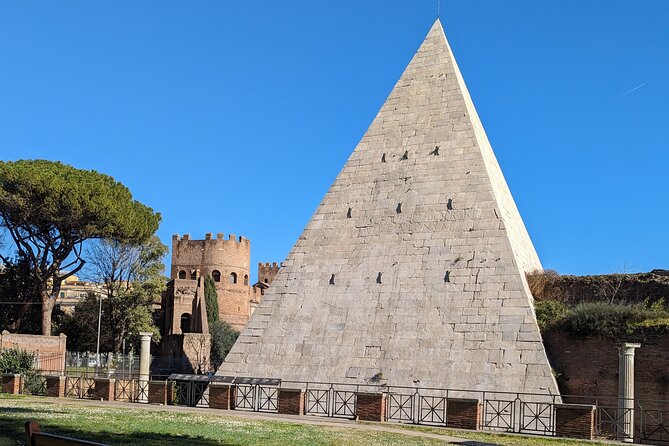
To wrap, you’ll meet the Pyramid of Cestius, one of Rome’s loner survivors of Egyptian-inspired fascination. Yes, Romans copied and adapted. This pyramid shows that Rome wasn’t only obsessed with Greece and Rome-shaped models—it also played with far-off styles.
The context matters: it was one of many similar structures at one time, tied to tastes of a wealthy Roman magistrate and the city’s eclectic mix of influences. Seeing it in person makes that point land.
Because the stop is brief (around 15 minutes), plan for quick photos and a fast story absorption. If you’re the type who loves details, pay attention at the first explanation, because you won’t get a long sit-down here.
What Anastasia the Archaeologist Does Best
A lot of tours tell you dates and names. This one focuses more on how Roman thinking worked. The best part is how the archaeologist connects different places through practical stories, not just facts.
Two details from the walking experience that stick with me: the idea of a fish tax and the discussion about recycling of marble. Those aren’t random trivia. They help you understand how Rome ran day to day, how materials moved through time, and why buildings look the way they do today.
Also, because the group is capped at 10, you’re more likely to get time to ask questions as you walk. That changes the tour feel. You don’t just absorb; you interact. And that interaction is what turns a city tour into a personal learning moment.
Price and Value: Why $3.61 Feels Like a Good Deal
At $3.61 per person, you’re paying for a structured, archaeologist-led walking experience with a phone-based augmented-reality component. In a city where guided tours often cost far more, this pricing makes the math easy: the main cost is your time and shoe wear.
The “value” isn’t only the price tag. It’s the mix of stops—Colosseum/Forum context via AR, plus real neighborhood moments like the Ghetto and Testaccio, plus viewpoint and curiosity stops like the keyhole and the optical illusion.
One more value point: this isn’t a museum-day bottleneck tour. It’s designed around walking, short explanations, and city observation. If you like moving through Rome instead of sitting in one place, it’s a good match.
Logistics That Matter: Timing, Group Size, and What to Bring
The tour runs about 3 to 4 hours. Start time is 10:00 am, and the finish point is different from where you begin, so check the meeting/end location details on your confirmation.
Your starting point is at Gusto Massimo Bar Bistrò di TIZIANO DI M. E. F. S.r.l., Via del Circo Massimo, 5a, 00153 Roma RM. It’s near public transportation, which makes it easier to pair with other Rome plans.
You’ll want flat, comfortable shoes because the route includes uphill and downhill sections. Bring a bottle or cup for water, and in warm months plan for sun protection like sunglasses, a hat, and sunscreen. Layered clothing helps too, since Rome mornings can shift.
In bad weather, the guide can change or cancel. The good news is you’re not stuck with a mystery plan—weather-driven adjustments are part of the experience design.
Who This Tour Fits Best
This urban trekking style works best if you want:
- A guided way to understand ancient sites without only chasing big-ticket monuments
- AR support to help you visualize Rome’s past quickly
- A smaller group where you can ask questions and get real answers
- A route that includes neighborhoods like Testaccio and historically specific areas like the Jewish Ghetto
It’s also a smart choice if you’re a repeat visitor. Even Rome locals can miss lesser-noticed corners, and this route is built to show those.
If you’re someone who hates walking or struggles with hills, think twice. The tour requests a moderate physical fitness level, so plan accordingly.
Should You Book This Rome Urban Trekking Tour?
Yes, I’d book it if you want Rome to feel like a living timeline rather than a checklist. The blend of phone AR 3D views, archaeologist storytelling, and stop variety (ancient theater, river island, keyhole mystery, Aventine viewpoint, and Testaccio neighborhood time) makes it a standout kind of guided day.
But book with realistic expectations: it’s a walking trek with short stops, so you won’t get long museum-style pacing at every site. If that suits your travel style, you’ll likely come away with a sharper sense of how Rome’s layers fit together—and a few memorable stories you’ll repeat for the rest of the trip.
FAQ
FAQ
What is the duration of the Rome urban trekking tour?
The walking tour lasts about 3 to 4 hours.
How much does the tour cost?
The price is $3.61 per person.
Is the tour offered in English?
Yes, it is offered in English.
How large is the group?
The tour has a maximum of 10 travelers.
Do I get a mobile ticket?
Yes, the tour uses a mobile ticket.
Are the admission tickets at the listed stops free?
The stops are listed with admission tickets marked as free.
Where do I meet the tour?
You meet at Gusto Massimo Bar Bistrò di TIZIANO DI M. E. F. S.r.l., Via del Circo Massimo, 5a, 00153 Roma RM, Italy.
Is the tour suitable if I have limited walking stamina?
You should have a moderate physical fitness level because the route includes uphill and downhill sections.
What if the tour is canceled due to poor weather?
If unfavorable weather causes cancellation, you’ll be offered a different date or a full refund. You can also cancel for a full refund if you cancel at least 24 hours in advance.