REVIEW · ROME
Trastevere and Jewish Ghetto Private Walking Tour
Book on Viator →Operated by LivTours · Bookable on Viator
Rome’s backstreets tell real stories. This private Trastevere and Jewish Ghetto walking tour links places of worship, old-market corners, and riverside views into one easy 2-hour route. I like that it’s designed to help you move without getting swallowed by a big crowd, and you can pick start times across the day. You’ll also get an expert local guide’s commentary at each stop, so the streets feel less like a backdrop and more like a living neighborhood.
Two big wins for me: the chance to see Santa Maria in Trastevere’s 13th-century artwork, and the focused look at the Jewish Ghetto area, including views around the Tempio Maggiore di Roma and the turtle fountain. One consideration: admission tickets are not included for the synagogue and the theatre, and places of worship have a strict dress code (shoulders and knees covered), so plan your outfit before you go.
In This Review
- Key highlights to look for
- Why this private walk beats the big-crowd version
- Meeting at Piazza Trilussa and choosing your start time
- Ponte Sisto and Piazza Trilussa: getting oriented fast
- Santa Maria in Trastevere: mosaics, frescoes, and a slow pause
- Il Portico di Ottavia and Porta Otavia: the old market framework
- Tempio Maggiore di Roma viewpoint, synagogue etiquette, and the turtle fountain
- Tiber Island, Trastevere streets, and the Pope Julius II plan
- Teatro di Marcello outside: Roman scale without a ticket
- Price, language, and what’s included in the $181.02
- Who this tour suits best (and who might want a different plan)
- Should you book this tour?
- FAQ
- How long is the Trastevere and Jewish Ghetto private walking tour?
- Is this tour private?
- Where do I meet, and where does the tour end?
- Is admission included for Tempio Maggiore di Roma?
- Is admission included for Teatro di Marcello?
- What dress code do I need for places of worship?
- What languages are available?
- Are there different start times available?
- Are service animals allowed?
- What’s the cancellation policy?
Key highlights to look for
- Private-by-design pace: Only your group, no big herd to fight through
- Start anywhere in the day: Multiple start times so you can match your schedule
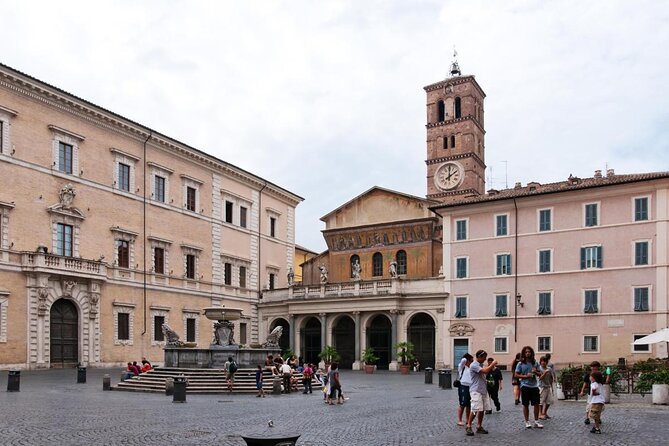
- Santa Maria’s 13th-century art: Bronze mosaics and frescoes are the star here
- Jewish Ghetto context: You’ll connect Jewish life, memory, and place names on foot
- Ponte Sisto and the Fountain of the Hundred Priests: A dramatic way to get oriented fast
- Two “not included” stops: Tempio Maggiore and Teatro di Marcello are viewing moments unless you add tickets
Why this private walk beats the big-crowd version
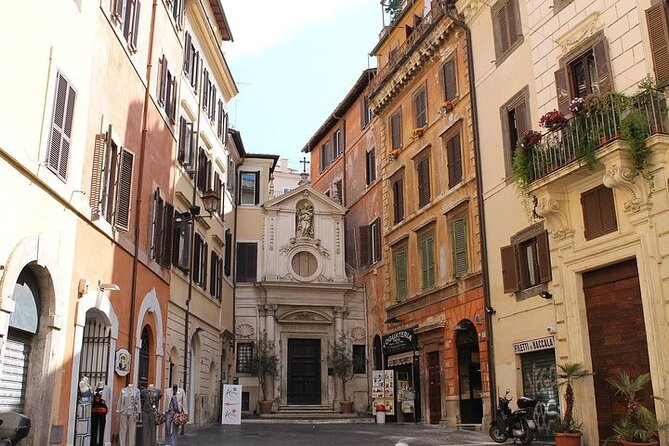
If Rome is crowded, it can turn history into noise. This tour is built to fix that. Because it’s private, you’re not stacking yourself into a long line of strangers trying to photograph the same wall. You can actually follow the guide’s train of thought, ask questions, and pause when something feels worth looking at longer than a quick glance.
I also like the scope. You’re not just bouncing between famous “must-sees.” The route mixes everyday neighborhood spaces with major historic landmarks. You start around Piazza Trilussa, work into Trastevere and the Tiber area, and then spend real time in the Jewish Ghetto zone. That flow matters. It makes the city feel connected instead of chopped into separate attractions.
One more thing I appreciate: the guide is expected to bring an insightful perspective even if they are not of Jewish heritage. That’s an honest setup, and it means the focus should stay on context, careful storytelling, and how these places functioned and still function today. If you want Rome filtered through lived-in neighborhoods rather than postcard angles, this is the kind of tour that delivers.
You can also read our reviews of more walking tours in Rome

Meeting at Piazza Trilussa and choosing your start time

You meet at Piazza Trilussa, 00153 Roma RM, Italy, and the tour ends back at the same point. That is convenient. You don’t have to figure out transportation or a second rendezvous after 2 hours of walking.
Start times are available throughout the day, which gives you flexibility. If you’ve already booked Colosseum time earlier, or you’re waiting for a church visit window, you can still slot this tour in. It’s also worth booking ahead. The tour is often reserved about 71 days in advance on average, which usually means limited availability during popular stretches.
You’ll get a mobile ticket, and the tour runs as a “walking external tour.” Translation: you’re seeing sights from the street-side viewpoints included in the itinerary rather than relying on a schedule of indoor entrances at every stop.
Practical tip: plan your clothing around the dress code. Places of worship on this route require shoulders and knees covered. No tank tops, no short dresses. If you forget, you can end up waiting outside while the rest of the group moves on, and you will miss the storytelling that comes with each stop.
Ponte Sisto and Piazza Trilussa: getting oriented fast
Your first stop is Piazza Trilussa, a local meeting place where the pace is less tourist-and-more-Rome. It’s a strong “warm-up” location because you can get your bearings quickly before the route starts tightening into specific historic points.
From there, you connect to Ponte Sisto—and the guide ties it to a famous feature: the Fountain of the Hundred Priests. Even if you’ve seen pictures of Ponte Sisto, the guide’s framing helps you notice details instead of just snapping photos. You’re also building context for the river crossing and the Tiber area that show up later in the walk.
This early section is valuable because it sets the rhythm for the rest of the tour. After Ponte Sisto, the route starts feeling more like a guided stroll through old districts with clear landmarks, rather than a random list of buildings. It also keeps you from burning time trying to figure out where to stand.
If you’re the type who likes to understand how neighborhoods connect to water, markets, and transit routes, this is the part that will help you “read” what you see next.
Santa Maria in Trastevere: mosaics, frescoes, and a slow pause
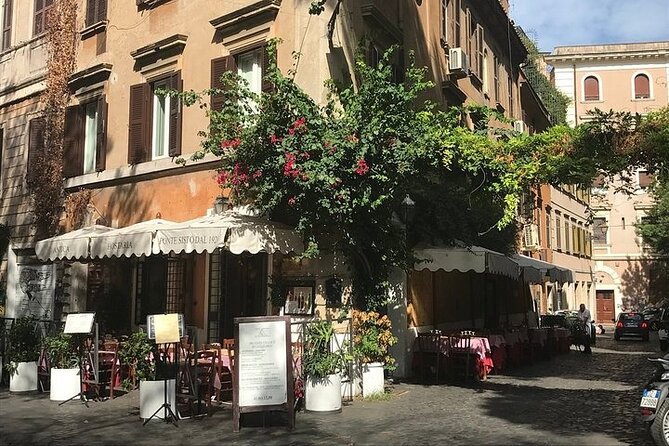
Next up is Piazza di Santa Maria v Trastevere and the Basilica of Santa Maria in Trastevere. This church is described as one of the oldest churches of Rome, and the highlight here is specific: the 13th-century bronze mosaics and frescoes.
Admission for this stop is included, which matters. Some tours include the exterior only, or they rush you in and out. Here, you’re scheduled for about 20 minutes, and that’s usually just enough time to see what makes the artwork special without feeling like you’re being shoved through a checklist.
What I like about this stop is the way it anchors the route in something people still use. Churches in central Rome can feel like museums. With the guide’s commentary, you’ll more likely treat Santa Maria as a living place of worship and art, not just a pretty facade.
The drawback is also predictable: dress code enforcement. Since shoulders and knees must be covered, I recommend bringing a light layer even in warm weather. It makes the church stop smooth and keeps you from scrambling right before you enter.
Il Portico di Ottavia and Porta Otavia: the old market framework
Then you shift to Il Portico di Ottavia, once used as a fish market. The structure is also tied to a long timeline, dating back to 146 B.C. and connected to the area’s older commercial life.
This stop works because it’s not just about admiring ruins. The guide helps you imagine the daily rhythm: trade, deliveries, and the kinds of businesses that would have clustered here. Even if you’ve visited other Roman markets, this one has a distinctive feel because it was a fish-market setting, and the portico layout shapes how people moved through the space.
Admission is free for this portion, and your time here is short—about 10 minutes. That can be perfect if you want a compact “history snapshot” before moving on. Just don’t expect a long, museum-style stop. This is designed as a quick, story-focused waypoint.
If you like architecture explained through how people used the space, Portico di Ottavia is a highlight. It makes the broader neighborhood feel less random and more structured by trade routes and transit.
You can also read our reviews of more private tours in Rome




Tempio Maggiore di Roma viewpoint, synagogue etiquette, and the turtle fountain
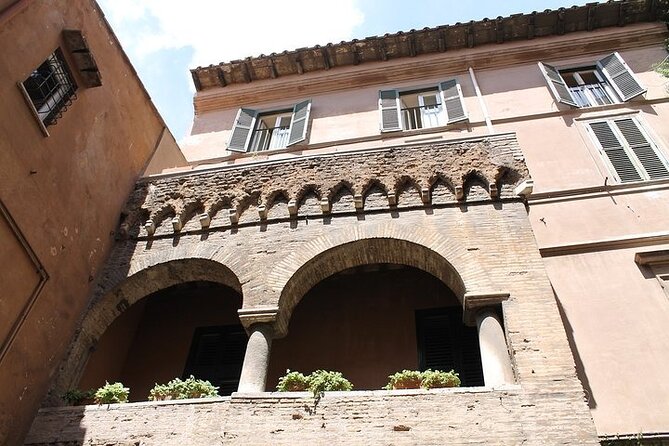
The route includes Tempio Maggiore di Roma, described as the largest synagogue in Rome. Your time here is brief, around 10 minutes, and admission for the synagogue is not included.
That combination is important for expectations. You can still learn from the guide and get a meaningful look and context, but if you want to go inside, you may need to plan for separate entry. In other words: treat this stop as a guided encounter with the place and its story, not a guaranteed full entry.
Dress code matters here too because it’s a place of worship. Shoulders and knees covered is required for entries to places of worship on this tour. Keep that in mind especially if you’re traveling in summer or packing only light clothing.
This is also where your walk starts to feel more emotionally specific. The Jewish Ghetto section isn’t just “sights.” The tour is designed to explain the area as a community space and a lived geography. Even if the guide’s personal background is not Jewish, you should still come away with a careful sense of how Jewish Romans built community around these institutions.
The tour includes the turtle fountain as well, which helps keep the area from feeling like only solemn stops. It’s a reminder that everyday art and daily life sit side-by-side with major historical landmarks. Little contrasts like that are one reason this route works.
Tiber Island, Trastevere streets, and the Pope Julius II plan
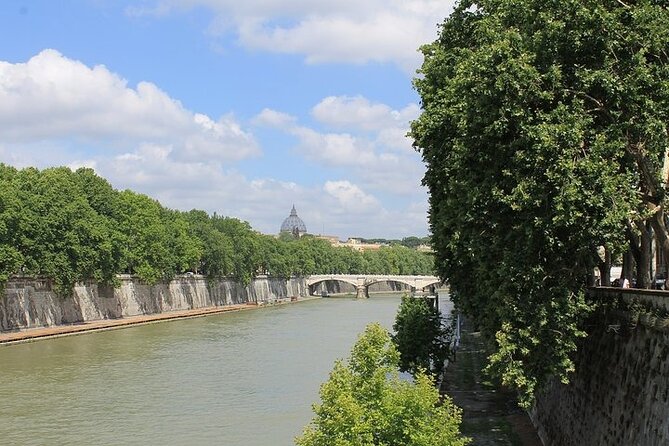
After the portico and synagogue viewpoints, the walk continues through the heart of the route’s neighborhood character.
You’ll spend time with Trastevere itself, including stories about the district when it was a center of river trade. That river-trade framing changes how you read the streets. Instead of viewing Trastevere as only restaurants and narrow lanes, you start seeing the logic of a neighborhood shaped by movement, goods, and crossings.
The itinerary also includes Tiber Island. Even if you’re not stopping for a long scenic detour, having that island moment inside a two-hour schedule helps connect the earlier Ponte Sisto setup to the later “where community formed” context. It’s one of those Rome details that makes the city feel like one connected system rather than separate boroughs.
There’s also a stop focused on an urban plan: a street designed in 1508 as part of an urban development ordered by Pope Julius II. You don’t just hear that as a date. You’ll likely connect it to how Rome reshaped space to manage movement and city growth. Since the exact street name isn’t spelled out in the tour outline you provided, I’d treat this as a guided explanation of the kind of planning forces that shaped what you’re walking through.
If you want a tour that balances architecture, institutions, and street-level context in the same afternoon, this section is doing the heavy lifting.
Teatro di Marcello outside: Roman scale without a ticket
The final major landmark stop is Teatro di Marcello. Admission is not included, and the experience is described as you standing in front of the ancient open-air theatre built in the 1st century.
That makes this section accessible even if you don’t want to pay for theatre entry. You still get the sense of scale: an outdoor theatre means you can see the architecture in relation to the street, not separated by a museum entrance. The guide’s anecdotes help you visualize how the space would have functioned when it was active.
Time here is around 10 minutes, so again this is not built for a long deep-visit. It’s a set-piece conclusion: a classic Roman structure, explained in a way that fits a two-hour total schedule.
One practical consideration: since it’s outdoors and you’re walking throughout, wear footwear that handles uneven pavements and small elevation changes. In Trastevere, the street surfaces can be a bit less forgiving than smoother central areas.
Price, language, and what’s included in the $181.02
At $181.02 per person for about 2 hours, this sits in the private-tour pricing tier. The key question is value: what’s covered, and what isn’t.
What you do get included:
- A local expert guide and a private tour for your group only
- The walking route through Trastevere and the Jewish Ghetto area
- Stops such as Ponte Sisto, Santa Maria in Trastevere, Il Portico di Ottavia (Porta Otavia), Tiber Island, Theatre of Marcellus, and the turtle fountain
- Admission is included for Santa Maria in Trastevere, and free entry points like Piazza Trilussa and Il Portico di Ottavia are included as free stops
- A mobile ticket for the experience
What is not included:
- Admission tickets for Tempio Maggiore di Roma and Teatro di Marcello
I also like that the tour is offered in English and several other languages (French, Spanish, Portuguese, and Italian). If you want Italian or another language, you can specify it in your booking notes.
Quality signal from guide feedback is strong. The tour has a 5-star rating across 61 reviews, with 100% recommendation reported. Names that came up in feedback include Francesca, Paul, Sara, and Christian, and comments highlight warm, entertaining guiding and good English. One review even noted that the guide tailored the tour to the group’s interests, which is exactly what you want from a private format.
If you’re traveling with 2 people, private tours often feel like better value than they look, because you’re paying for experience time, not just transport. If you’re solo, it’s still a good choice when you want a quieter, structured walk rather than a chaotic group scramble.
Who this tour suits best (and who might want a different plan)
This tour is a strong match if you:
- Want a smaller, controlled pace through two Rome neighborhoods that can feel crowded around peak hours
- Like religious and historic sites but prefer them explained by a human guide rather than a phone app
- Appreciate street context: markets, urban planning, and how communities formed around specific places
You might want to think twice if you:
- Only care about inside-the-building attractions for every stop, since synagogue and theatre admission are not included
- Have trouble meeting the dress code for places of worship
- Are sensitive to walking uneven streets (you are on foot for about 2 hours)
A good strategy is to treat this as a neighborhood understanding tour. If you want more museum-style time, you can pair it later with a separate, longer-ticket attraction on another day.
Should you book this tour?
Yes, you should book this if you want Rome with a human tempo. The private format, the careful mix of Trastevere and the Jewish Ghetto, and the inclusion of Santa Maria’s 13th-century bronze mosaics and frescoes make it feel like more than a basic “highlights walk.”
Book it especially if you’re in Rome long enough to slow down and you care about context: why these streets mattered, how market life shaped the neighborhood, and what it means to stand where people gathered for worship and community. Just plan for the dress code, and decide in advance whether you want to add synagogue or theatre entry on your own.
If your schedule is tight, or you’re chasing only famous interiors, you might feel the lack of included admission. But if you want a well-paced neighborhood story, this is the kind of private walk that makes Rome click.
FAQ
How long is the Trastevere and Jewish Ghetto private walking tour?
It lasts about 2 hours.
Is this tour private?
Yes. It’s a private tour/activity, so only your group participates.
Where do I meet, and where does the tour end?
You meet at Piazza Trilussa, 00153 Roma RM, Italy, and the tour ends back at the same meeting point.
Is admission included for Tempio Maggiore di Roma?
No. Admission tickets are not included for Tempio Maggiore di Roma.
Is admission included for Teatro di Marcello?
No. Admission tickets are not included for Teatro di Marcello.
What dress code do I need for places of worship?
You must have shoulders and knees covered (no tank tops or short dresses).
What languages are available?
The tour is offered in English, French, Spanish, Portuguese, and Italian. You should specify your language preference under additional notes if it’s not English.
Are there different start times available?
Yes. You can choose from a range of start times all throughout the day.
Are service animals allowed?
Yes, service animals are allowed.
What’s the cancellation policy?
You can cancel for a full refund if you cancel at least 24 hours before the experience’s start time. Cancellation within 24 hours of the start time is not refunded.