REVIEW · ROME
Small-Group Walking Tour of Rome Center with Guide
Book on Viator →Operated by Rome Walkers · Bookable on Viator
Rome gets easier when you know where to start. This small-group walking tour strings together Rome’s big-name sights with plain explanations you can actually use. You’ll walk through the Colosseum-area zone, then pivot into squares and churches that show how power, religion, and daily life have mixed for centuries.
Two things I especially like: you get licensed guide commentary (so you’re not translating Rome from scratch), and the pace is relaxed enough to really look up and notice details instead of speed-walking for photos. One possible drawback is that this tour expects good weather—and it’s mostly on foot, so comfy shoes matter.
In This Review
- Key highlights at a glance
- Walking Rome’s center in a small group (and why it works)
- Starting point: Trajan’s Column and the Fori Imperiali zone
- Trajan’s Column: victory in stone, not just a photo stop
- Mercati di Traiano: a Roman shopping-mall myth you can test yourself
- Piazza Venezia: a major square with major buildings
- Antico Quartiere Ebraico: the Jewish Ghetto as a living neighborhood
- Campo de’ Fiori: market vibes you can actually use
- Piazza Navona: from ancient stadium to baroque drama
- Pantheon: why it still feels ancient (and why that matters)
- Piazza di Pietra and the Temple of Hadrian
- Fontana di Trevi finish: a big baroque moment to wrap the walk
- Value for money: what $40.52 buys you in the center
- Timing, pace, and the weather factor
- Who should book this Rome center walk?
- Should you book this tour?
- FAQ
- How long is the Rome center walking tour?
- How much does the tour cost?
- What time does the tour start?
- Where does the tour start and end?
- How large is the group?
- Is there a licensed guide?
- Do I need to buy tickets for the stops?
- What major sights are included?
- Is the ticket delivered by mobile?
- What happens if the weather is bad?
- Is free cancellation available?
Key highlights at a glance
- Small group size (max 12) means more personal attention and fewer awkward herding moments
- Trajan’s Column + Mercati di Traiano give you Roman “wow” before the tour hits the famous squares
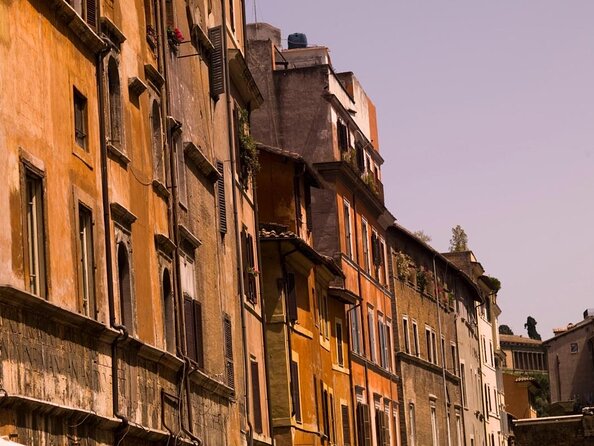
- Jewish Ghetto time adds real-world context beyond the postcard stops
- Pantheon gets the kind of explanation that helps the building make sense
- Trevi Fountain finish wraps the walk on one of Rome’s most recognizable sights
Walking Rome’s center in a small group (and why it works)
If you want to see Rome without spending your vacation glued to a map, this is a smart approach. The tour runs about 2 hours 30 minutes, starts at 10:00 am, and ends at the Trevi Fountain area, so you’re moving through the center while the city is still waking up. With a maximum of 12 people, you’re not constantly trying to stay with a crowd.
I like that you’re not forced into a rigid, lecture-style rhythm. You get short, focused time at each stop, then you move on—quick enough to keep momentum, slow enough to take in what you came for. And because you’ll be walking from landmark to landmark, you’ll feel how different parts of Rome connect, not just what they look like.
One more practical note: the tour uses a mobile ticket, so it’s easy to pull up when you meet your guide. You’ll also want to plan for streets that can be crowded around the major squares, especially later in the morning.
You can also read our reviews of more walking tours in Rome



Starting point: Trajan’s Column and the Fori Imperiali zone
The tour begins at Trajan’s Column on Via dei Fori Imperiali. This is a great starting anchor because it immediately puts you in the middle of the imperial Rome story—before the tour shifts into plazas and churches you may already have seen in photos. If you’re trying to build a mental map of the city fast, this is a strong first step.
What I like here is the way the guide can set context before you get overwhelmed. You’re not just standing by a monument and hoping you understand it. You’re getting the basics of what it was for and why it was built there—so the rest of the walk has something to click into place.
Trajan’s Column: victory in stone, not just a photo stop
At Colonna Traiana, you’ll spend about 15 minutes. The column is famous for its spiral bas-relief, which depicts wars between the Romans and the Dacians, and it was completed in AD 113. That spiral detail is the kind of thing that looks impressive on its own, but it’s even better when you know what the story is actually showing.
This stop is also a reminder that Rome loved symbols. Victory columns weren’t just decoration—they were messages. If you pay attention to the spiral narrative, you’ll start noticing how later Roman and later European buildings borrow from Roman ideas.
Mercati di Traiano: a Roman shopping-mall myth you can test yourself
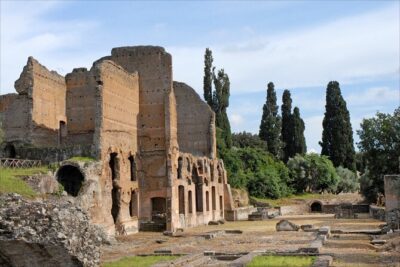
Next comes Mercati di Traiano – Museo dei Fori Imperiali, also around 15 minutes. Trajan’s Market is described as a huge ruin complex, and it’s often linked with the idea of being the world’s oldest shopping mall because of its arcade-like spaces.
Here’s a detail worth paying attention to: the arcades are now believed by many to have served administrative functions for Emperor Trajan. That little twist is exactly the kind of guide help that makes a walk like this valuable. Without it, you might just file the site under looks-cool-ruins. With it, you understand that the space likely had a purpose beyond what the nickname suggests.
Piazza Venezia: a major square with major buildings
After the ruins, the route opens up at Piazza Venezia. You’ll spend about 15 minutes here, and the square is known for its large scale and historic buildings—especially the Victor Emmanuel II Monument and Palazzo Venezia.
I like Piazza Venezia because it functions like a crossroads for Rome’s identity. You can feel how the city’s layers keep stacking: ancient-era foundations near modern monuments. Even if you don’t go deep into the architecture in one sitting, the square helps you re-orient your eyes for what comes next.
You can also read our reviews of more guided tours in Rome






Antico Quartiere Ebraico: the Jewish Ghetto as a living neighborhood
The walk then turns to Antico Quartiere Ebraico, the Jewish ghetto area. This stop is about 30 minutes, which tells you the tour considers it more than a quick curbside glance. Between the Tiber and Piazza Venezia, it’s also described as a smaller, less obvious attraction compared to the headline sights.
This is where the tour adds perspective. The area is presented as home to the oldest Jewish community in Europe, and over time it has grown into a neighborhood with restaurants, churches, and synagogues that mix Jewish culture with Roman architectural grandeur. If you’ve only seen Rome as monuments-on-a-list, this stop gives you a different lens: Rome as a place where communities still live.
Practical tip: in a neighborhood like this, slow down and watch where people are going. It’ll make the area feel less like a set and more like a real part of the city.
Campo de’ Fiori: market vibes you can actually use
Next is Campo de’ Fiori, about 15 minutes. This square is famous for its street market, where you can explore stalls and pick up souvenirs.
I like that this stop breaks the pattern. After temples, columns, and grand squares, you get a more everyday Roman scene. Even if you don’t buy anything, it’s a good chance to reset your senses and grab a small snack later if your schedule allows.
Piazza Navona: from ancient stadium to baroque drama
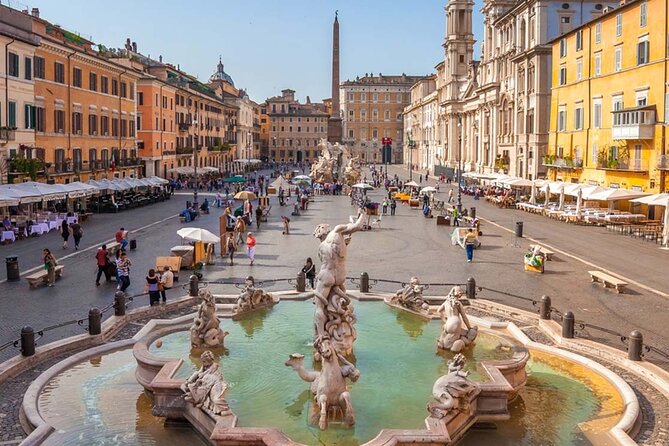
Then you hit Piazza Navona for about 15 minutes. The square’s origins go back to ancient Roman times, when this area hosted a stadium. Today, the baroque design gives it that dramatic look—especially with the Fontana dei Quattro Fiumi by Bernini and the church of Santa Agnese in Agone.
This is one of those places where photos can trick you. The square looks like a single visual, but it’s really a composition. A guide’s commentary helps you understand what you’re looking at—why the fountain and the church feel like the heart of the space, and how the stadium-era layout likely influenced what the area became.
Pantheon: why it still feels ancient (and why that matters)
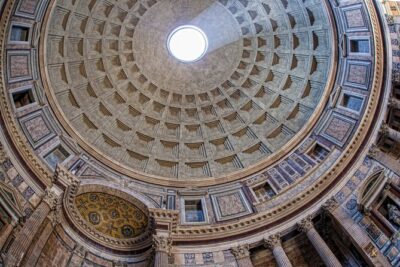
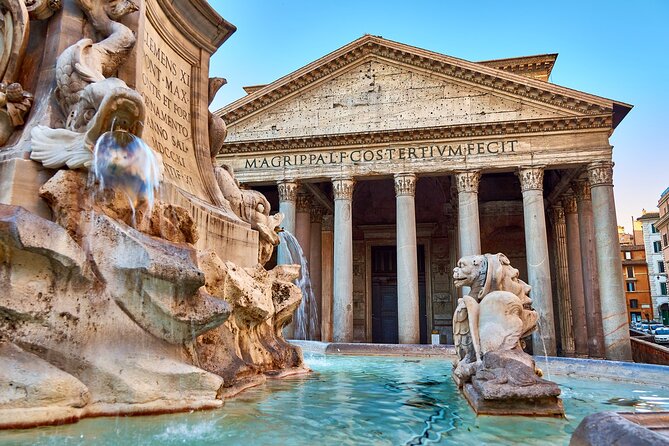
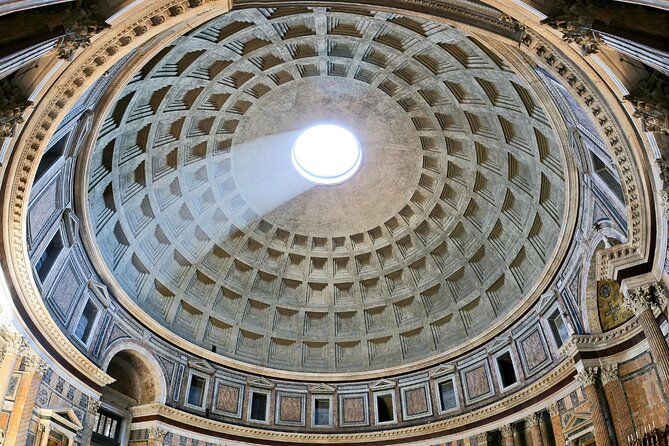
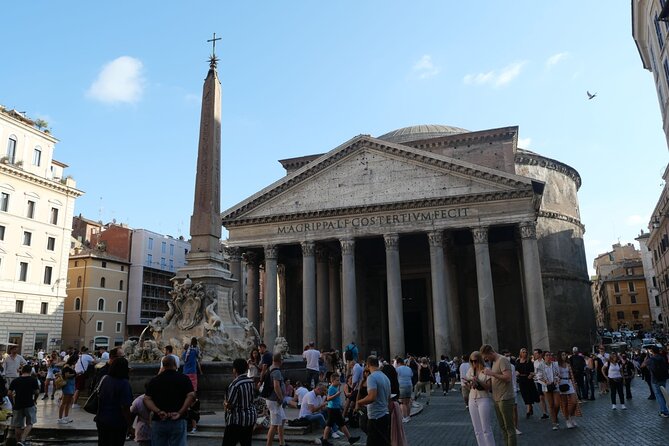
Next up is the Pantheon, another 15 minutes. It’s described as one of the best-preserved ancient Rome monuments and one of the greatest examples of Roman engineering. Originally built as a temple dedicated to all the gods, it was converted into a church in the 7th century.
That detail matters because it explains the building’s feel. Since it looks basically like it did in ancient times, you’re not comparing a ruin to a modern copy. You’re seeing a structure that stayed relevant through centuries by changing roles.
If you want the Pantheon to make sense quickly, this tour’s stop length is a sweet spot. Long enough for you to look around, short enough that you don’t get stuck staring in one spot while the city moves on.
Piazza di Pietra and the Temple of Hadrian
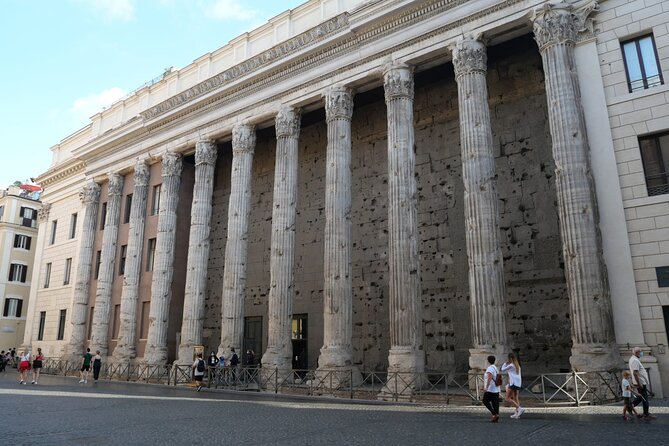
Then the tour heads to Piazza di Pietra for about 15 minutes, tied to the Temple of Hadrian. The tour frames it as an ancient Roman structure dedicated to Emperor Hadrian.
This stop is less about crowd energy and more about focus. When the walk includes both big headline landmarks and smaller, calmer structures, you come away with a better sense of variety. You don’t just see the obvious icons—you get a chance to notice the subtler pieces that make Rome feel like Rome.
Fontana di Trevi finish: a big baroque moment to wrap the walk
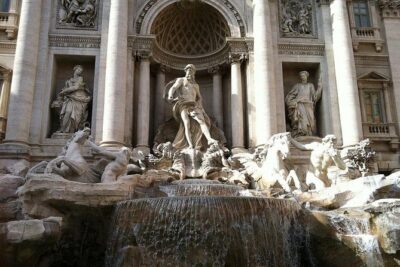
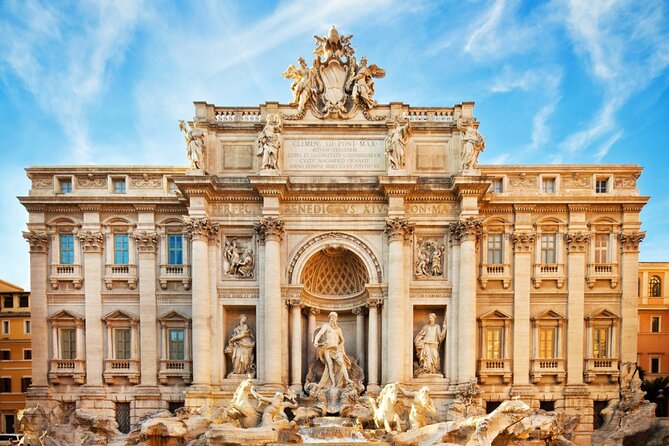
Finally, the group ends at Fontana di Trevi at Piazza di Trevi. You’ll spend about 15 minutes, and the fountain is described as the largest baroque fountain in Rome and arguably one of the most famous and beautiful fountains in the world.
Ending here is practical and satisfying. It’s instantly recognizable, and you can keep exploring on your own after the tour without having to change areas. Just know that by the time you reach Trevi, the space is usually more crowded than the earlier stops. Give yourself a little patience so you can still enjoy it.
Value for money: what $40.52 buys you in the center
The price is $40.52 per person, and in my view the value comes from the combination of structure and help. You’re paying for a guide who can explain what you’re seeing, and you’re saving time that would otherwise go to stitching together a plan on your phone while you’re standing in front of something confusing.
Duration matters too. A 2.5-hour walk is long enough to cover a lot of key highlights, but short enough that you’re not exhausted before you can enjoy dinner. With a max of 12, you’re also paying for quality social logistics, not just transportation from stop to stop.
Timing, pace, and the weather factor
This tour expects good weather. If conditions are poor, it can be rescheduled or refunded, so it’s worth keeping an eye on forecasts if your dates are tight.
Pace is another quiet strength. The stops are spaced so you get context, then move. I also like the feel of a route that includes major icons like the Pantheon and Trevi, but doesn’t only chase them. The Jewish Ghetto stop and the market square make the day feel like you’re seeing real Rome, not just a greatest-hits album.
Who should book this Rome center walk?
This is a great match if you:
- Want the essentials without building an itinerary from scratch
- Like guided explanations that help architecture and monuments click into place
- Prefer a small group over a big bus-style experience
- Are happy with a walking tour that focuses on highlights and interpretation, not museum time
It can also work well on quieter dates. One helpful detail I took from the experience: on some off-season days, the group can get small enough to feel close to private, so you’re not competing with a crowd for the guide’s attention.
Should you book this tour?
Yes, if your goal is to get oriented in Rome’s center fast and understand what you’re looking at. The route hits Trajan’s Column, the Pantheon, Piazza Navona, and Trevi Fountain, while also including stops that many people skip—like the Jewish Ghetto area and a proper market square.
I’d pass if you’re looking for a deep museum experience, or if you hate walking and want fewer street-level moments. But if you want a well-paced, guide-led overview that leaves you confident to wander afterward, this is a strong pick.
FAQ
How long is the Rome center walking tour?
It’s approximately 2 hours 30 minutes.
How much does the tour cost?
The price is $40.52 per person.
What time does the tour start?
The start time is 10:00 am.
Where does the tour start and end?
It starts at Trajan’s Column, Via dei Fori Imperiali, 00187 Roma RM, Italy and ends at Trevi Fountain, Piazza di Trevi, 00187 Roma RM, Italy.
How large is the group?
This experience has a maximum of 12 travelers.
Is there a licensed guide?
Yes. The tour includes a licensed tour guide.
Do I need to buy tickets for the stops?
The stops are listed with admission ticket free, so you should not need paid entry for the sights included.
What major sights are included?
You’ll visit Trajan’s Column, Mercati di Traiano, Piazza Venezia, the Jewish Ghetto area, Campo de’ Fiori, Piazza Navona, the Pantheon, Piazza di Pietra / Temple of Hadrian, and Fontana di Trevi.
Is the ticket delivered by mobile?
Yes, it uses a mobile ticket.
What happens if the weather is bad?
This tour requires good weather. If it’s canceled due to poor weather, you’ll be offered a different date or a full refund.
Is free cancellation available?
Yes. You can cancel up to 24 hours in advance for a full refund.