REVIEW · ROME
Skip-the-line Vatican and Sistine Chapel Private Guided Tour
Book on Viator →Operated by Raphael Tours & Events · Bookable on Viator
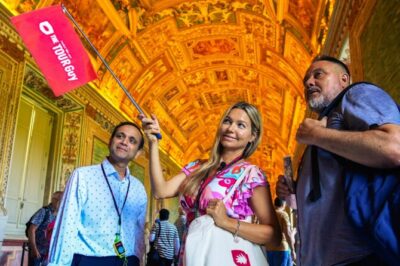
Three hours, and the Vatican feels manageable. This private skip-the-line tour gives you a Blue Badge, professional art historian guide, plus a route that hits the Vatican Museums, the Raphael Rooms, and the Sistine Chapel without wasting time. I especially love how the pacing is built for real conversation, so you can ask questions as you move through major works like Michelangelo’s Creation of Adam. You’ll also end in Saint Peter’s Square for a final, postcard-level payoff: the Pope’s Palace view and the Swiss Guards.
The one thing to factor in is timing risk. Pope-related mass events can close areas at short notice, and that can affect access to the Sistine Chapel and/or Saint Peter’s Basilica, with an alternative tour focus provided if that happens.
In This Review
- Key highlights worth planning for
- Skip-the-line and private pacing: why this feels easier than DIY
- Meeting at Viale Vaticano: set yourself up for a smooth start
- The Belvedere Courtyard and Bramante setting the scene
- Pio-Clementino to the Gallery of Maps: the Vatican’s brainy side
- Raphael Rooms: School of Athens with the right kind of context
- Sistine Chapel: Creation of Adam plus the conclave story
- Saint Peter’s Square finale: Pope’s Palace view and Swiss Guards
- What’s included with the guide package (and why it matters)
- Is the $396.37 per person price worth it
- Who should book this private Vatican and Sistine tour
- Should you book this tour?
- FAQ
- Is this a private tour?
- How long is the Vatican and Sistine Chapel tour?
- Where do we meet for the tour?
- Is skip-the-line entrance included?
- Does the tour include the Sistine Chapel?
- What is the dress code?
- Is food allowed inside the museums?
- Is Saint Peter’s Basilica included?
- What if the Sistine Chapel or other areas close last minute?
- Can I get a refund if I cancel?
Key highlights worth planning for
- Belvedere Courtyard first: The Bramante courtyard sets the tone before you hit the art and statues.
- Pio-Clementino Museum statues: A focused look at Ancient Roman and Greek sculpture that’s easy to miss on your own.
- Gallery of Maps: Renaissance maps and display scale that make the Vatican feel strangely modern and political.
- Raphael Rooms (Stanze di Raffaello): School of Athens and Parnassus get explained in context, not as random fresco panels.
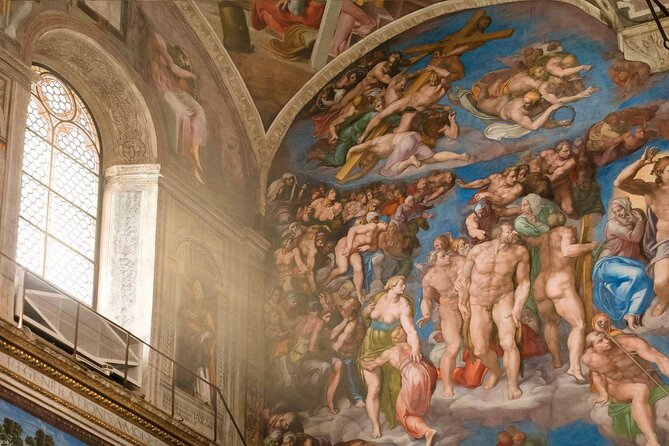
- Sistine Chapel history, not just icons: You’ll hear about the conclave that elects a new Pope, alongside the famous paintings.
- Saint Peter’s Square finale: You finish where the Vatican’s power and pageantry land in real life.
Skip-the-line and private pacing: why this feels easier than DIY
The Vatican can be a stampede. Even when you’ve done the ticket homework, you still lose time to entry lines, crowd funnels, and the slow drift of “where do we go next?” With a private tour, you’re not stuck in a big-group rhythm, and you’re not forced to sprint from room to room.
What makes this tour feel like good value is that it compresses the experience into a clean loop. You start with major museum anchors, move into the Raphael Rooms, then land in the Sistine Chapel when you’re ready to pay attention. And since it’s private, you can slow down for the parts you care about without feeling like you’re holding anyone up.
I also like that the tour is built around understanding, not just sight-seeing. You’ll get context as you go—what you’re looking at, why it mattered, and what to notice. That turns the Vatican from a list of famous names into a story you can actually follow.
You can also read our reviews of more guided tours in Rome



Meeting at Viale Vaticano: set yourself up for a smooth start
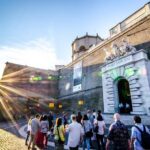
You’ll meet at Viale Vaticano, Roma RM, and the tour starts at the Vatican Museums entrance. Since the meeting point is near public transportation, you can avoid extra transit complexity. Bring a little time buffer before your start, because Vatican crowds don’t exactly follow your schedule.
Also, plan to dress for church-level rules. You need knees covered and shoulders covered for both men and women—no shorts or sleeveless tops. If you ignore that, you risk refused entry, and the whole day becomes a scramble. It’s the kind of rule that feels annoying until you realize how quickly it can ruin momentum.
If you’re traveling with kids or family members, this is a good tour structure because your guide can pace around questions. A private guide can answer “why did they paint it that way?” without turning your group into a moving lecture hall.
The Belvedere Courtyard and Bramante setting the scene
The tour begins at the Belvedere Courtyard, designed in the 16th century by Donato Bramante. Even if you’re not an architecture nerd, you’ll feel why it matters. It’s not just a pretty lead-in—it’s an early example of how the Vatican shaped space to impress and control movement.
From there, you head into the Pio-Clementino Museum. This is where you get a curated look at a large collection of Ancient Roman and Greek statues. If you try this on your own, it’s easy to get statue fatigue or miss what makes a work special. With a guide, you get clearer orientation: what period you’re seeing, what themes show up, and what details are worth your attention.
A practical benefit: because you’re not part of a giant group, you may have more freedom to pause in smaller rooms. That matters in a place with constant foot traffic, because a “quick glance” on your phone often turns into a missed masterpiece when you’re squeezed.
Pio-Clementino to the Gallery of Maps: the Vatican’s brainy side
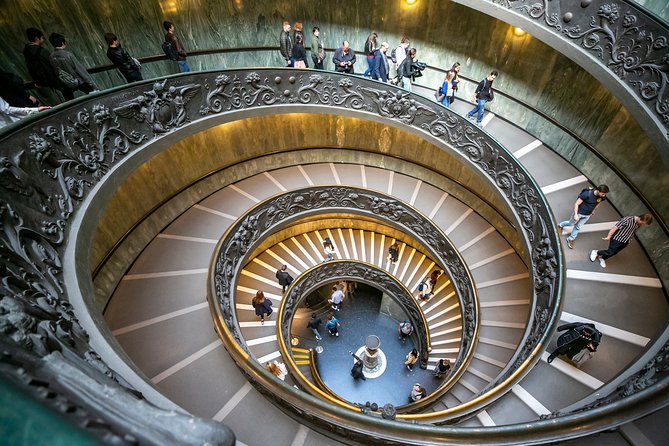
After the statue collections, you move through highlights like the Gallery of Tapestries and Geographic Maps. The Gallery of Maps is described as the Vatican’s grandest and most significant display of Renaissance maps. That’s a useful label, because most people think of the Vatican as purely religious art. Here, you get a different angle: power, geography, and politics shown through craft and design.
You’ll also stop in the Sobiesky Room, where you can see the Vatican’s largest canvas painting. Then the route continues to the Immaculate Conception Room and its 19th-century frescoes. This part of the tour helps you slow down and stop treating the Vatican Museums like one long hallway of famous names.
A small watch-out: the Vatican Museums are huge, and even with skip-the-line access, your feet and attention will matter. This is why that “about 3 hours” time block works well. You cover core masterpieces without pretending you can see everything.
One more practical detail: food and drinks aren’t allowed in the museums except bottled water. So if you’re the type who likes a snack break, plan around it. Bring water, keep it simple, and treat the museum stop as a focused viewing sprint.
Raphael Rooms: School of Athens with the right kind of context
Next comes the Stanze di Raffaello, the Raphael Rooms. This section is a huge reason to book a guide. Raphael’s rooms aren’t just famous images. They’re rooms built to communicate messages, and your guide helps you see the logic behind the compositions.
Your focus is on Raphael’s paintings commissioned by Pope Julius II, especially Parnassus and The School of Athens. The School of Athens is one of those works that looks “obvious” at first glance—people, ideas, a big scene. But a good guide will point out who is shown, what the groupings suggest, and how the painting connects to the Vatican’s worldview at the time.
This stop lasts about an hour. That’s long enough to stop skimming and short enough that you don’t get lost in museum overload. It’s also a strong fit if you love art history, because it’s not only aesthetic. It’s ideas on plaster.
You can also read our reviews of more private tours in Rome




Sistine Chapel: Creation of Adam plus the conclave story
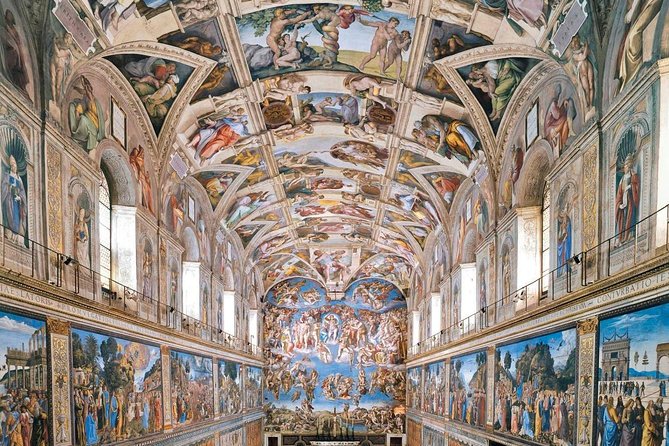
Then you enter the Sistine Chapel. You’ll see the famous frescoes by Michelangelo, Botticelli, and other major artists. The star is Michelangelo’s The Creation of Adam, the image people come for, but the point of the tour isn’t to just stand there and stare.
What makes this Sistine Chapel experience feel more complete is that your guide explains the history, facts, and curiosities of the chapel. You’ll also learn about the papal conclave held there, the process of electing a new Pope. That political and ceremonial layer changes how you look at the art. It stops being only “beauty” and starts feeling like a system: images tied to belief, authority, and ritual.
You should also know the time pressure here can be real. The chapel is a high-demand space, and if crowds swell, you’ll need to listen closely and stay flexible. A private guide helps you manage that by pointing you to where attention matters most, instead of leaving you wandering.
Also take the timing risk seriously. The tour notes that some areas might be closed last minute due to intense activity tied to Pope Francis and mass events. If the Sistine Chapel is inaccessible, your guide provides an alternative focusing on the Vatican Museums. That doesn’t ruin the day, but it does mean you should mentally accept that your schedule might shift.
Saint Peter’s Square finale: Pope’s Palace view and Swiss Guards
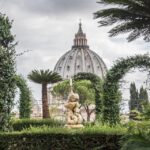
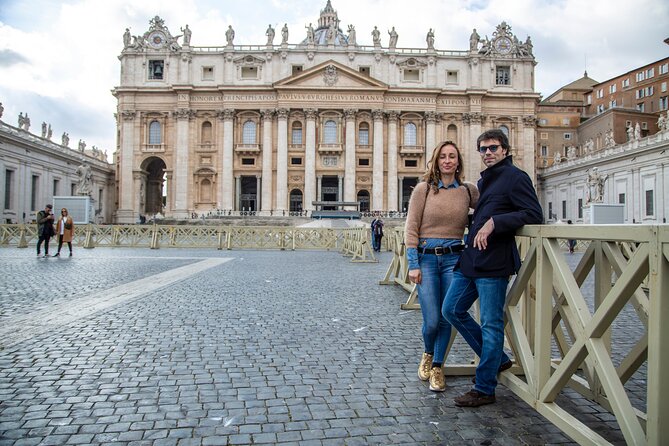
You end in Saint Peter’s Square to see the Pope’s Palace and the Swiss Guards. This is a smart ending because it gives you a real-world sense of the Vatican beyond the art rooms. The square is where the Vatican’s presence becomes visible and dramatic, even if you’re not doing the Basilica interior.
One key limit: Saint Peter’s Basilica is not included in this tour due to Jubilee new access rules. You can visit by going to Saint Peter’s Square and queueing there. So if Basilica interior is your absolute must-see, you’ll want a plan after this tour rather than assuming you’ll roll right into it.
The good news is that finishing in the square often helps your photos and orientation. You’ll have a clearer sense of where things sit relative to each other before you decide whether to add extra time for the Basilica line.
What’s included with the guide package (and why it matters)
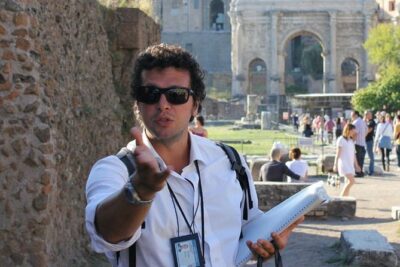
This tour includes local guidance with a Blue Badge guide and a professional art historian guide, plus guaranteed skip-the-line entrance fees. That combination matters because the Vatican punishes guesswork. Without context, it’s easy to miss what you’re looking at and to spend time in the wrong spots.
The “private” part also changes how you experience the day. Instead of racing to keep up, you can ask questions and get answers tailored to your interests. The tour is set up for you to travel at your own pace, with built-in time to slow down in smaller rooms.
It also helps that the tour is offered in English and uses a mobile ticket. That saves you from ticket-printing stress and makes entry smoother.
Is the $396.37 per person price worth it
At $396.37 per person for about 3 hours, this is not a budget move. The value comes from three things working together:
- Skip-the-line entry removes the biggest time sink at the Vatican.
- Private, art-history-guided attention gives you clarity in rooms that are otherwise overwhelming.
- A focused route hits major highlights without asking you to run a marathon through museums.
If you’re a first-time visitor and you only have a limited window, paying for a guided route often beats spending your precious hours wandering randomly. Also, the tour mentions group discounts, so if you’re traveling with friends or family, the per-person value can improve.
Booking timing matters too. This is commonly booked about 25 days in advance on average, which signals real demand. If you want a specific day and time, you’ll be happier booking early rather than hoping.
Who should book this private Vatican and Sistine tour
This tour fits best if you want to see the core masterpieces and understand them, without trying to master the Vatican map on your own. It’s also a strong match if you prefer fewer crowds and more control over pacing.
You should also consider it if your group includes art lovers, history fans, or kids old enough to engage with explanations. The tour’s structure supports questions as you walk, which is where a private guide really earns their fee.
You may want a different plan if you want a slow, do-it-yourself stroll through every museum hallway for a full day. This is a “high-impact highlights” approach, not a whole Vatican residency.
Should you book this tour?
Yes, if your top goals are the Vatican Museums highlights, the Raphael Rooms, and the Sistine Chapel with context, and you want to spend your limited time wisely. The private pacing and art historian guidance turn major works like The Creation of Adam and The School of Athens into something you can actually understand.
Book it especially if you hate uncertainty from crowds and you’d rather pay to protect your time. Just go in with one calm expectation: Pope-related closures can happen last minute, and your guide may shift you to an alternative focus inside the museums.
FAQ
Is this a private tour?
Yes. It’s a private tour/activity, so only your group participates.
How long is the Vatican and Sistine Chapel tour?
It runs about 3 hours (approx.).
Where do we meet for the tour?
The start is Viale Vaticano, Roma RM, Italy.
Is skip-the-line entrance included?
Yes. The tour includes skip-the-line entrance fees and guaranteed long-line avoidance.
Does the tour include the Sistine Chapel?
Yes. The Sistine Chapel is part of the tour, and you’ll visit to see frescoes by Michelangelo, Botticelli, and others.
What is the dress code?
You need knees and shoulders covered. No shorts or sleeveless tops are allowed, and you may be refused entry if you don’t comply.
Is food allowed inside the museums?
Food and drinks are not allowed in the museums except bottled water.
Is Saint Peter’s Basilica included?
No. The Basilica is not included due to Jubilee new access rules. You can visit from Saint Peter’s Square by queueing there.
What if the Sistine Chapel or other areas close last minute?
Some areas might close due to Pope-related mass events. If that happens, your guide will provide an alternative focusing on the Vatican Museums.
Can I get a refund if I cancel?
No. The experience is non-refundable and cannot be changed for any reason.