REVIEW · ROME
Sketching in Rome Villa Borghese Private lesson with Guido
Book on Viator →Bookable on Viator
A sketchbook workout in Rome’s gardens. You get a private lesson with Guido and real instruction as you move through Villa Borghese, stopping often to draw, color, and even try watercolor. I especially like how the class treats the park like a living art textbook, not just a place to stand and look.
Two things really drive the value here: you receive step-by-step technique that starts simple and builds, and you’re supplied with a complete range of drawing tools. One consideration: this is outdoors in the park, and it is explicitly not inside Galleria Borghese, so you’ll want comfortable shoes and an easy pace for walking between stops.
In This Review
- Key highlights for sketching in Villa Borghese with Guido
- A sketch-first lesson in Villa Borghese, not the museum
- Meeting at the Terrace of Pincio (and staying on track)
- 10 sketch stops that turn Villa Borghese into your classroom
- Stop 1: Giardino di Piazzale Scipione Borghese
- Stop 2: Fontana dei Cavalli Marini
- Stop 3: Piazza di Siena
- Stop 4: Temple of Asclepius
- Stop 5: Tempio di Diana
- Stop 6: Casa Del Cinema
- Stop 7: Monumento Ad Umberto Primo
- Stop 8: Museo Carlo Bilotti
- Stop 9: Fontana di Venere
- Stop 10: I Giardini Segreti di Villa Borghese
- How Guido teaches drawing: fountain pens, perspective, and fast watercolors
- What’s included: the full art kit and what to bring
- Price and value for a private 2.5-hour session
- Who this private sketching lesson is best for
- Should you book Sketching in Rome with Guido
- FAQ
- Where do we meet for the sketching lesson?
- How long is the private sketching session?
- Is the lesson taught in English?
- Do I need to bring drawing supplies?
- Is this tour private?
- Is there a cancellation window for a full refund?
Key highlights for sketching in Villa Borghese with Guido
- Private instruction with Guido, tailored to your level and questions
- All art materials included, from fineliners and pencils to fountain pens, markers, and watercolor paints
- Multiple sketch stops across the gardens, including fountains, temples, monuments, and a museum building
- A progression of exercises, with helpful focus on perspective and fast, fun “try it now” sketching
- Meet at the Terrace of Pincio (near the Fountain of Venus) and return to the same spot at the end
A sketch-first lesson in Villa Borghese, not the museum
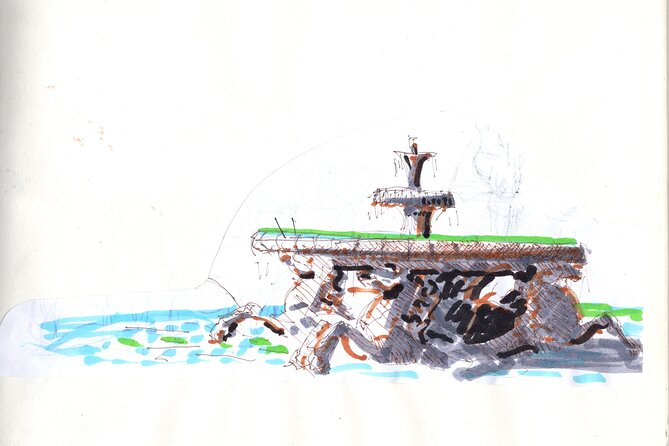
This is a rare kind of Rome activity: instead of a museum day with a little creativity added on, you do creative work first. The whole session is about observing closely and making drawings on location, with Guido guiding you from basic marks to more confident lines and shading.
I like that you’re not sent into a gallery. The experience is set in Villa Borghese gardens and viewpoints, so your “classroom” keeps changing as you walk. That matters because your sketch skills improve faster when you practice on what’s in front of you, not just on a still reference.
The tone also feels right for real life: expect stories, humor, and a relaxed pace, with Guido coaching you while you work. In past sessions he’s been described as warm, patient, and flexible enough to respond to what you want to focus on that day.
You can also read our reviews of more private tours in Rome

Meeting at the Terrace of Pincio (and staying on track)
Plan to meet at the Fountain of Venus area on the Terrace of Pincio. That meeting point is listed as Fountain of Venus, Piazzale Scipione Borghese 5, 00197 Roma, Italy, and the lesson’s location is tied directly to the Pincio terrace.
You’ll use a mobile ticket, and you should get booking confirmation at the time you reserve. The activity ends back at the meeting point, so you’re not left guessing how to get home or where to regroup.
A practical tip: show up a few minutes early so you can settle in, choose your tools, and get your bearings fast. Once the walking starts, you’ll want to be ready to sketch rather than figuring out where you are.
10 sketch stops that turn Villa Borghese into your classroom
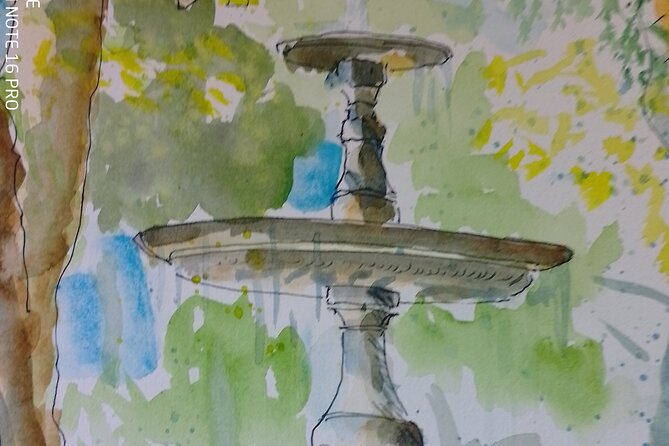
The route is built around frequent sketch breaks. That means you don’t just admire famous corners of Villa Borghese; you practice seeing shapes, edges, and proportions in multiple styles.
Here’s how the stops work as a sketching path, and what each one gives you.
Stop 1: Giardino di Piazzale Scipione Borghese
You start with a garden area that’s good for warm-up drawing. This kind of first stop helps you get the hang of the tools and the way Guido breaks down what you’re seeing.
Practical note: garden paths can be uneven, so keep your footing in mind while you set up to draw.
Stop 2: Fontana dei Cavalli Marini
Fountains add a natural challenge: you’re dealing with curved forms plus lots of visual details. Expect this stop to be useful for learning how to simplify structures so your sketch doesn’t get stuck in tiny parts.
A consideration here is time. Fountains are visually busy, so you’ll get more value if you focus on big shapes and only a few key details.
You can also read our reviews of more tours and experiences in Rome




Stop 3: Piazza di Siena
Squares and open spaces are great for practicing scale and perspective. This is the sort of stop that can help you draw architecture and ground planes with more confidence.
If you like clean compositions, this is likely to feel satisfying because the space encourages clear lines.
Stop 4: Temple of Asclepius
Temples are excellent for learning structure. You’ll practice drawing strong geometry—columns, steps, and the sense of depth—without needing to “copy” everything perfectly.
This stop is also a good checkpoint for whether your early sketches are improving, because classical forms force you to be deliberate.
Stop 5: Tempio di Diana
A second temple stop keeps the lesson going, so you can compare how different structures feel on paper. It’s also a useful moment to tighten up line weight and add light cues through shading.
If you want less detail and more form, this stop can give you that balance.
Stop 6: Casa Del Cinema
Buildings shift the focus from isolated monument shapes to walls, openings, and surrounding space. Expect Guido to guide you in how to “frame” a structure so it sits correctly in your drawing.
This is a good stop if you want to practice how to include your surroundings without turning the sketch into a cluttered map.
Stop 7: Monumento Ad Umberto Primo
Monuments bring bold shapes that can be fun to interpret quickly. This is where sketching becomes about choosing what to emphasize, not trying to reproduce every element.
A practical drawback: the setting can be detailed, so you’ll want to follow Guido’s “focus points” rather than getting lost.
Stop 8: Museo Carlo Bilotti
A museum building can feel like both a subject and a background. You’ll likely practice drawing the architecture while keeping the composition readable.
This stop is a strong “in-between” moment: enough structure to learn from, but with variety around it.
Stop 9: Fontana di Venere
Returning to Venus-themed fountain scenery helps reinforce what you practiced earlier with curved, decorative elements. Water features are also a natural excuse to try a different tool or technique, especially color.
If you like color work, this is the point where a richer, more expressive approach can pay off.
Stop 10: I Giardini Segreti di Villa Borghese
The session ends with the “secret gardens” area, which tends to feel calmer and more intimate for drawing. This is a great final stop because your earlier technique practice can now become more personal.
Keep in mind that finishing at the end of a walk means you may want to pace yourself so your final sketches don’t feel rushed.
How Guido teaches drawing: fountain pens, perspective, and fast watercolors
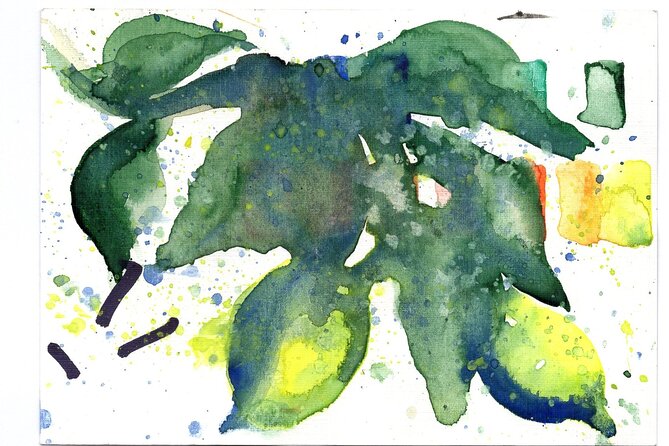
Guido’s teaching approach is practical and staged. The class is described as starting basic, then moving toward perspective and more confident mark-making once you understand the fundamentals.
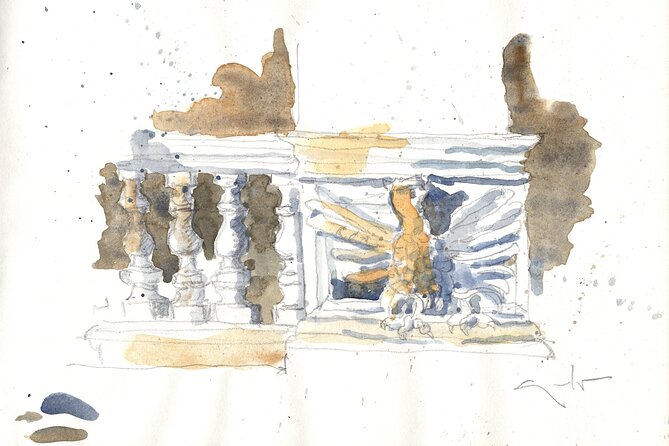
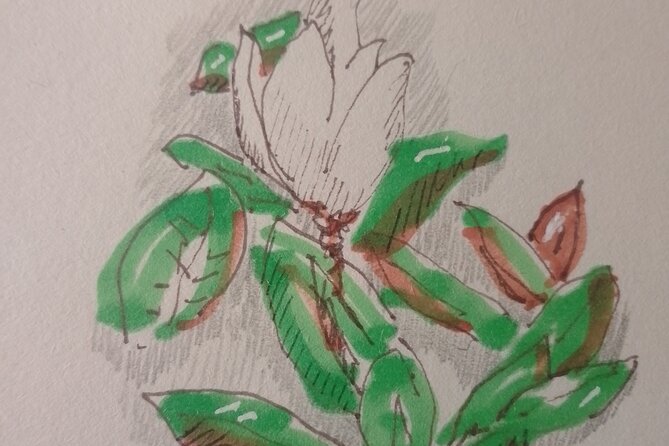
One reason this works for beginners is that the exercises are varied. You might start with cleaner tools like a fountain pen, then build into colored pencil and markers, and later add watercolor. That step-by-step progression keeps you from feeling stuck in one style.
A key technique many people find useful is perspective. The lesson includes a perspective focus that helps you understand how lines and proportions behave when things get farther away.
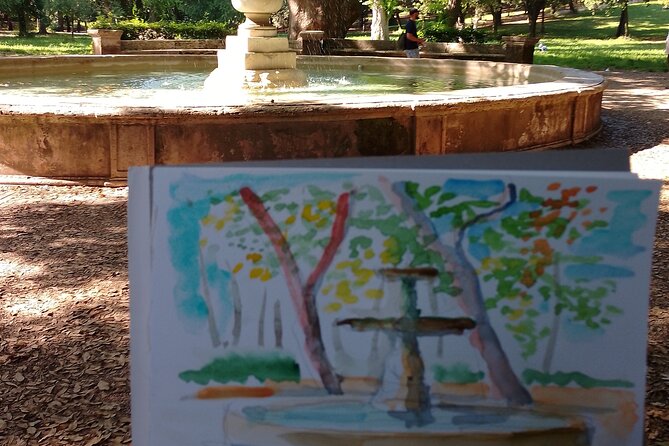
Guido also uses playful, structured challenges. For example, you may work on drawing a fountain in a way that makes you switch what you look at: you draw, then flip your attention to the paper and draw again using the page rather than the object. It sounds odd, but it’s the kind of exercise that trains your hand and your eye to collaborate.
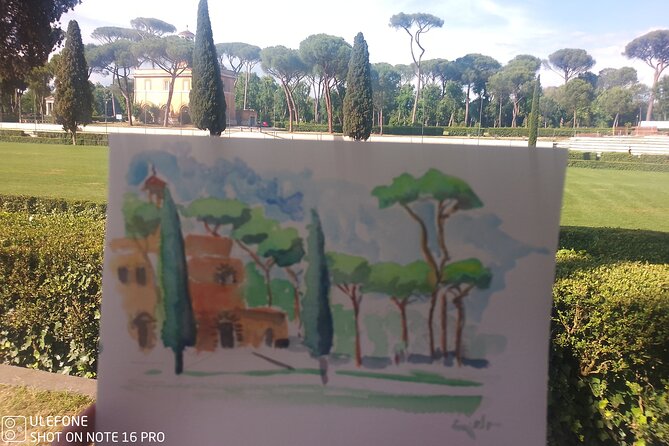
There’s also a fun speed element. You might be guided to sketch a villa very quickly with pen, then move on to painting it with watercolor just as fast. Those quick turns push you to stop overthinking and focus on what matters.
Beyond the art, Guido shares personal stories tied to Villa Borghese as a playground from his childhood. That storytelling makes the walking feel like a conversation, not just instruction. And yes, the park has plenty of dog energy, which can turn a “serious drawing session” into a surprisingly funny one when it happens in the background.
What’s included: the full art kit and what to bring
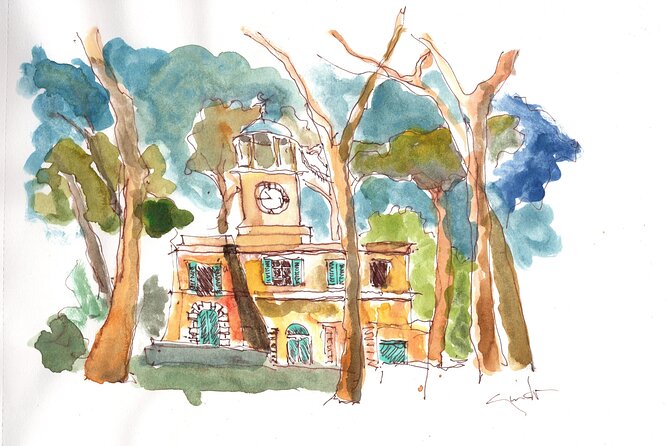
You don’t need to bring drawing supplies. The lesson includes use of drawing tools and materials: pens, markers, brushes, drawing paper, and watercolor paints. You’re also provided a support tablet, which can make a big difference when you’re sketching outdoors on uneven surfaces.
The tool range matters because it lets you experiment without committing to one medium too early. If you’re the type who thinks you’re either a pencil person or a watercolor person, this class nudges you to try both and compare results.
What’s not included is bottled water and gratuities. I’d still recommend bringing your own water bottle, especially because you’ll be walking between multiple sketch stops over about 2 hours 30 minutes.
One more comfort note: since this is outdoors and walking-based, dress for the realities of Rome in motion. You’ll enjoy the lesson more if your body isn’t negotiating blisters or struggling with slippery shoes.
Price and value for a private 2.5-hour session
The price is $72.01 per person for roughly 2 hours 30 minutes. For many people, that looks reasonable because you’re paying for three things at once: a private instructor, structured exercises, and a fully supplied art kit.
What I think makes the cost feel fair is that you’re not just getting time with an instructor. You’re also being given materials to use during the session, so you aren’t spending extra just to try out art methods on your trip.
Booking demand also suggests this is a popular “slow down and do something real” experience. It’s commonly booked about 35 days in advance on average, so if your dates are firm, don’t wait until the last minute.
Who this private sketching lesson is best for
This lesson is built for people who want to see Rome differently. If you like taking your time, learning a practical skill, and producing something you can keep, this fits nicely.
It also seems ideal for novices. The exercises are designed to start basic, and Guido is described as patient and step-by-step in how he teaches. If you’re nervous about drawing ability, the structure helps remove the pressure because you’re doing guided tasks rather than facing a blank page.
Families can make this work too. The session has been described as encouraging for kids, with everyone feeling proud of their work.
The main group to consider carefully is anyone who dislikes walking. Since the session moves through many stops in Villa Borghese, your enjoyment will depend on your comfort with a park stroll and repeated setup for sketching.
Should you book Sketching in Rome with Guido
I’d book it if you want a break from standard sightseeing and you like the idea of learning how to see. The mix of private guidance, varied tools, and multiple sketch stops turns Villa Borghese into an active art lesson, not a passive photo walk.
Skip it if you’re hoping for an indoor art class or you want a sit-and-watch experience. This is a moving, hands-on format, and the value comes from sketching along the route.
If you’re drawn to classic Rome views and also curious about drawing fundamentals like perspective, this is one of the more memorable ways to spend a half-morning in the city.
FAQ
Where do we meet for the sketching lesson?
You meet at the Fountain of Venus on the Terrace of Pincio, at Piazzale Scipione Borghese 5, 00197 Roma, Italy.
How long is the private sketching session?
It lasts about 2 hours 30 minutes.
Is the lesson taught in English?
Yes, the experience is offered in English.
Do I need to bring drawing supplies?
No. The lesson includes drawing paper, a support tablet, watercolor paints, brushes, markers, pens, and other necessary sketching tools.
Is this tour private?
Yes. It’s a private activity, and only your group participates.
Is there a cancellation window for a full refund?
Yes. You can cancel up to 24 hours in advance for a full refund. If you cancel less than 24 hours before the start time, the amount paid is not refunded.