Rome loves to trip you up with its size.
This tour helps you find the order of the city on foot in just a few hours. I like how it’s built as a simple story you can follow—start near the Pantheon, then flow through the center toward the Colosseum—so you leave with a real sense of where things sit. I also love that you get a local guide and group chat energy along the way, which makes a first day in Rome feel less overwhelming. One thing to consider: you’ll be walking for about 2.5 hours and it’s outdoors in all weather, so comfortable shoes and layers matter.
You also get the practical benefit of seeing big names without spending your whole day in lines. Since the group does not enter paid attractions, this is best for orientation and context; if you’re chasing a ticketed, inside-only experience, you’ll likely want to book a separate entry tour.
In This Review
- Key Highlights You’ll Actually Feel
- Why This 2.5-Hour Walk Works for First-Time Rome
- Getting to Piazza di Santa Chiara and Starting on the Right Foot
- Pantheon: Light, Scale, and What to Notice at Eye Level
- Trevi Fountain: Coin Toss Is Cute, But the Details Matter More
- Piazza Venezia and Ancient City Views: Where Roads Tell a Story
- Altare della Patria: A Monument That Shows You Modern Rome
- Roman Forum: How the Center of Power Feels on Foot
- Ending Near the Colosseum: Getting Close Without the Inside Ticket
- Guides, Group Size, and the Pace You Should Expect
- Price, Value, and the Pay-What-You-Wish Model
- What You’ll See vs. What You Won’t Enter
- Practical Tips for Walking in Central Rome
- Who This Tour Is Best For
- Should You Book This Guided Walking Tour?
- FAQ
- How long is the guided walking tour in Rome?
- Where does the tour start and end?
- Is admission included for the stops?
- What language is the tour offered in?
- Will I get a mobile ticket?
- What kind of physical activity should I expect?
- Does the tour run in bad weather?
- What’s the group size limit?
- Is this tour fixed-price or pay-as-you-wish?
- Is free cancellation available?
Key Highlights You’ll Actually Feel
- A first-day Rome route that links the Pantheon, Trevi, Piazza Venezia, Forum area, and ends near the Colosseum
- Local guide storytelling plus a group atmosphere, so you’re not wandering Rome alone and guessing
- No paid-entry stops inside the tour so your time stays focused on key sights and street-level context
- English-guided and mobile-ticket friendly, with confirmation at booking
- Small max group size (up to 35), which helps keep the experience manageable in busy central Rome
Why This 2.5-Hour Walk Works for First-Time Rome
Rome isn’t just a collection of monuments. It’s a set of neighborhoods that feel like they’re layered on top of each other. This tour is useful because it doesn’t try to cover everything. Instead, it guides you across a smart stretch of central Rome where you can connect major landmarks with the streets between them.
The price is also refreshingly reasonable for a guided, narrative-style walk. At about $31.31 per person for roughly 2 hours 30 minutes, you’re paying for a guide’s time and expertise, not a ticketed attraction. If you’re trying to make your money go further, this is a solid way to start.
One more practical perk: it’s designed to fit into a busy itinerary. You can do it early to get your bearings, or use it later as a “now I get it” refresher—without burning half your day.
You can also read our reviews of more walking tours in Rome


Getting to Piazza di Santa Chiara and Starting on the Right Foot
The tour begins at Piazza di Santa Chiara (00186 Roma RM). Starting in a central spot matters because it reduces the stress of “where do we meet?” on day one.
From that point, you’ll be walking through the core sights area, and the route is laid out so the landmarks make sense in sequence: you move from major ancient Roman symbolism into the Baroque spectacle zone, then back toward the power-and-history heart of the city near Piazza Venezia and the Roman Forum area.
You’ll also want to plan for the fact that this is an outdoor experience. Dress for weather changes, bring a layer if the forecast looks questionable, and wear shoes that can handle uneven sidewalks.
Pantheon: Light, Scale, and What to Notice at Eye Level
Stop 1 is the Pantheon, one of Rome’s engineering miracles and a place that rewards you for slowing down just a bit. You get the wow factor right away: the iconic domed roof, plus the oculus that brings in a controlled beam of light from above.
You’ll also get the basic context that makes the building click. It wasn’t created as a random tourist stop. It began as a temple to the gods, and the building’s preservation helps explain why it still feels so exact and powerful today.
Since this is part of a guided walk, you’re not just looking at the outside and moving on. Your guide’s narrative helps you read the structure the way Romans likely did—where geometry and light do half the teaching for you. No paid entry is required for this stop on the tour.
Trevi Fountain: Coin Toss Is Cute, But the Details Matter More
Next comes the famous Trevi Fountain. Yes, it’s the postcard fountain. But the value here is in learning what you’re seeing instead of just taking a quick photo and sprinting away with everyone else.
Your guide frames it as a Baroque masterpiece with intricate sculpture work—Neptune and mythical sea creatures are central to the scene. That context turns the fountain from a single image into a whole set of symbols.
You’ll also hear about the long-running tradition of tossing a coin over your shoulder, tied to the hope of returning to Rome. I like that this tour includes the cultural habit without acting like it’s the only reason the place is worth your time.
Another smart point: the stop is short, so don’t plan to linger for hours here. If you want extra time, plan to come back later with a quieter block of time.
Piazza Venezia and Ancient City Views: Where Roads Tell a Story
Stop 3 is Piazza Venezia / Ancient City, a busy central junction loaded with landmark energy. This is the part of the walk where Rome starts to feel like a system: streets connect, squares funnel people, and major monuments act like anchors.
You’ll focus on the square’s role as a hub linking important historic roads in the center. That’s helpful if you’re trying to understand Rome as more than a list of attractions.
From here, you’re positioned to appreciate why certain monuments got built where they did. The square is surrounded by major structures such as Palazzo Venezia and the Trajan’s Column area, giving you a strong sense of how the city’s identity got layered over time.
You can also read our reviews of more guided tours in Rome






Altare della Patria: A Monument That Shows You Modern Rome
Then you move to Altare della Patria, also known as the national monument built for Victor Emmanuel II. This is the kind of site you either rush past or slow down for, depending on whether you understand what it represents.
Here, the guide’s storytelling helps. The monument is neoclassical in style and tied to Italy’s national unification—so it’s not just a dramatic backdrop for photos. It’s a political statement carved into the skyline.
You’ll see statues, columns, and the commanding equestrian statue of Victor Emmanuel II. Even if you’re not into monuments, this stop is worth it because it rounds out the Rome you’re seeing. Ancient Rome is only half the picture; modern Rome is built right alongside it.
Roman Forum: How the Center of Power Feels on Foot
Stop 5 is the Roman Forum, the ancient heart of political, religious, and commercial life. Even if you’ve read about it before, experiencing it during a guided walk helps you understand how the space functioned.
You’ll be shown ruins tied to government buildings, temples, and basilicas—basically the structures you’d expect in a place where Rome’s decisions got made and daily life intersected.
This is also a good moment for questions. In a guided setting, it’s easier to ask why certain areas mattered, or how the Forum connected to the broader ancient city. That’s where the narrative becomes practical: your brain starts organizing the chaos of ruins into a clear pattern.
Ending Near the Colosseum: Getting Close Without the Inside Ticket
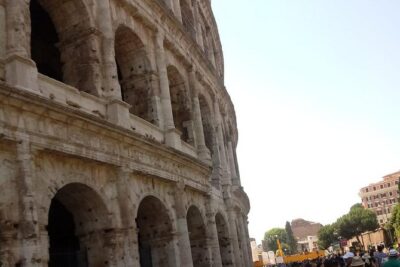
The tour ends near Piazza del Colosseo by the Colosseum. This matters because you’re finishing on the most recognizable symbol in Rome, after you’ve already built context for what ancient Rome looked like beyond just one building.
A key detail: the tour does not enter paid attractions. So think of this as a guided orientation and photo-friendly finale, not a “walk the arena floor” experience.
Still, it’s a strong way to end. After passing through the Pantheon, treasuring the symbolic fountain, and walking the Forum area, the Colosseum isn’t just a shape in the distance. It becomes the logical next chapter—ancient entertainment and spectacle, built on the same civic world you just learned about.
Guides, Group Size, and the Pace You Should Expect
This tour is capped at 35 travelers, and that feels like a sweet spot: big enough to meet other visitors, small enough that the guide can keep the group moving.
The biggest praise is consistently about the guides. I’m paying attention to names here because it’s a good sign when you see the same pattern across different people. Chiara gets singled out for being pleasant and highly informative. Anja is described as knowledgeable and accommodating, while Laura is praised for being excellent and very informative. Kara stands out for using visual aids to make each stop easier to understand.
That guide mix matters for you because the route covers iconic sites that can blur together fast. With the right guide, each stop has its own purpose in the story.
Pace-wise, you should have moderate physical fitness. Expect steady walking and short stops—enough to absorb the main ideas, not enough to turn Rome into a sit-down museum day.
Price, Value, and the Pay-What-You-Wish Model
The listed price is $31.31 per person, and that feels like good value for a guided walk that focuses on major sights without paid entry.
Here’s the part you should read carefully: booking this tour includes joining a general pay as you wish style model. The amount you pay covers the reservation fee and the guide’s payment. If you want a smaller private tour, the provider says you can ask and they’ll organize it.
So what should you do with that information? If you’re budgeting tightly, treat the upfront price as your baseline plan. If you’re the type who likes to tip based on how much you enjoyed it, you’ll like the flexibility of this model. And if you prefer strict fixed pricing with no ambiguity at the end, I’d confirm how the reward portion works for your booking before you go.
Also, one note from real-world experiences: I’ve seen situations where some people in the group treated the pay model differently. That can change the vibe. If you want everything predictable, don’t assume the group will all behave the same way.
What You’ll See vs. What You Won’t Enter
This tour is built for outdoor sights and guided context. During the walk, the group will not enter paid attractions.
That means you should manage expectations. You’re getting the key exteriors, the street-level atmosphere, and the explanation behind what you’re seeing. If your goal is timed entry, indoor access, or specific inside-the-site experiences, you’ll likely want to pair this with a separate ticketed tour or booking.
Think of it as the “map in human form” tour. It helps you stop guessing and start appreciating.
Practical Tips for Walking in Central Rome
Because the experience runs in all weather, plan like you’re going to meet Rome’s mood swings. If it’s warm, bring water. If it’s chilly, layer up. If it rains, you’ll still be walking.
A few simple moves that pay off:
- Wear comfortable shoes with grip.
- Keep your phone charged for maps and quick photo checks.
- Bring a small day bag so you can handle sudden weather.
The walking itself is the main commitment. If you’re traveling with kids, note that children must be accompanied by an adult.
Who This Tour Is Best For
This is a strong fit for:
- First-timers who want orientation and a clear walking route through central Rome
- Visitors who want major icons without turning the day into a line-wait festival
- People who like guided storytelling and short stops over long museum-style pacing
- Solo travelers and couples who appreciate meeting other people along the way
If you’re someone who wants to spend maximum time inside each monument, this may feel a bit too streamlined. But if you want to understand Rome quickly and keep moving, it hits the sweet spot.
Should You Book This Guided Walking Tour?
Book it if you want a guided “get your bearings fast” Rome experience that connects the Pantheon to the Forum area and finishes near the Colosseum, without paid-entry time sucking up your schedule. The guide reputation is a big plus, especially with the focus on clear explanations and even visual aids.
Skip it only if your top priority is inside access to ticketed sites. In that case, use this as a primer and then book separate entry experiences where you can linger longer.
If your schedule is tight and you want value, this tour is a smart, efficient way to start your Roman adventure on the right track.
FAQ
How long is the guided walking tour in Rome?
It runs for about 2 hours 30 minutes (approx.).
Where does the tour start and end?
It starts at Piazza di Santa Chiara, 00186 Roma RM, Italy and ends near the Colosseum (Piazza del Colosseo, 1, 00184 Roma RM).
Is admission included for the stops?
The tour information lists admission ticket free for the stops described, and it also notes the group will not enter any paid attractions.
What language is the tour offered in?
The guided tour is offered in English.
Will I get a mobile ticket?
Yes, you receive a mobile ticket.
What kind of physical activity should I expect?
The tour recommends moderate physical fitness. It’s a walking experience with time spent outdoors.
Does the tour run in bad weather?
Yes. It operates in all weather conditions, so you should dress appropriately.
What’s the group size limit?
There is a maximum of 35 travelers.
Is this tour fixed-price or pay-as-you-wish?
The provided details say that booking joins a general pay as you wish tour model, where the amount you pay covers a reservation fee and the guide’s payment.
Is free cancellation available?
Yes. You can cancel for a full refund up to 24 hours in advance of the experience start time.