REVIEW · ROME
Rome walking tour: Churches, Squares and Fountains
Book on Viator →Operated by City Walkers Tours · Bookable on Viator
Rome’s best highlights fit on one walk. This 2.5-hour route threads ancient monuments, baroque squares, and classic fountains with on-foot storytelling you can actually use as you move through the center. You’ll cover major sights like Trajan’s Column, the Jewish Ghetto area, and end at Trevi Fountain without juggling trains or figuring out complicated routing.
What I love most is the scope for the time: you’re walking through Rome’s big-photo zones while your guide keeps it all tied to real meanings. I also like the small group size (max 15 people) and the radio headsets, which make it easy to hear the stories even when the crowd thickens. One possible drawback: it’s an exterior-focused tour, so if you were hoping for inside visits, you’ll need to plan that separately.
In This Review
- Key Highlights You’ll Feel on This Walk
- Why This Rome Churches, Squares and Fountains Walk Works in 2.5 Hours
- Meeting Point, Timing, and How the Day Runs
- Trajan’s Column: The Best “Roman Power” Starter
- Trajan’s Market and Imperial Fora Area: Ancient Streets You Can Still Read
- Piazza Venezia: A Huge Square With Big-City Meaning
- Antico Quartiere Ebraico: Jewish Ghetto Area and the Real Mix of Rome
- Campo de’ Fiori: A Market Square That Makes Rome Feel Current
- Piazza Navona and Santa Agnese in Agone: Baroque Drama in Stone
- Pantheon From the Outside: Why This Building Still Rules the Street
- Piazza di Pietra and the Temple of Hadrian: A Smaller Stop With Major Payoff
- Trevi Fountain Finale: Ending at the Most Famous Photo Spot
- What’s Included, What Isn’t, and How to Budget Smart
- Guides, Pace, and the “Hot Day” Reality
- Who This Tour Fits Best (and Who Might Want Another Plan)
- Should You Book This Rome Walking Tour?
- FAQ
- How long is the Rome Churches, Squares and Fountains walking tour?
- What time does the tour start, and what time should I arrive?
- Where does the tour start and where does it end?
- Is the tour offered in English?
- Are entrance tickets included for the monuments and churches?
- How large is the group?
- Is the tour suitable if I have a moderate fitness level?
- Can I cancel for a full refund?
- Does the tour provide equipment to hear the guide?
Key Highlights You’ll Feel on This Walk
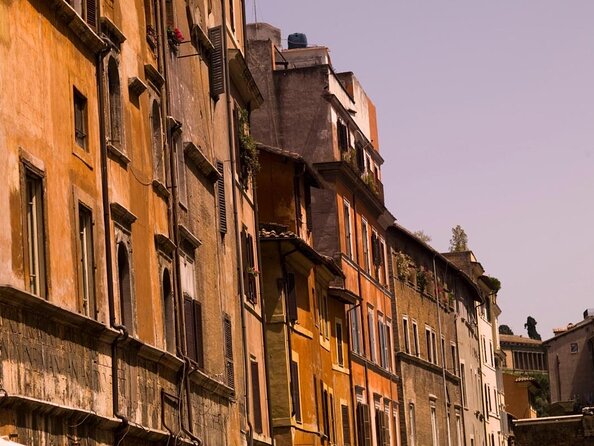
- Small group (15 max) keeps the pace human and the stops more personal
- Radio headsets help you hear the guide clearly through busy streets
- Jewish Ghetto area + monumental Rome in one smooth stretch of the city
- Baroque set-pieces like Piazza Navona and the Bernini-style Fountain of the Four Rivers
- Trevi Fountain finish puts you right where you’ll want to keep exploring on your own
Why This Rome Churches, Squares and Fountains Walk Works in 2.5 Hours
Rome has a way of swallowing your day. You plan a “quick loop,” then suddenly it’s late and you’ve seen half a square and all of one church. This tour is built to prevent that.
The format is simple: you start in the ancient forum area, then move outward through some of Rome’s most recognizable squares—ending at Trevi. Along the way, you’re not just sightseeing. You’re learning what each place was for, who used it, and why the design still shapes how the city feels today. That’s what makes it practical. Even if you’re only in Rome for a short time, you come away with your bearings.
Two things really help the experience: the tour keeps moving at a steady walking pace, and the guide explains sites from the outside. That means fewer “ticket lines” and more time looking at what makes Rome Rome—columns, facades, fountains, and the way people use public space.
You can also read our reviews of more walking tours in Rome

Meeting Point, Timing, and How the Day Runs
You’ll meet at Foro Traiano, 84 and the walk ends at Trevi Fountain (Piazza di Trevi). Start time is 10:00 am, and the end point is in the Trevi area, which is convenient if you want to continue sightseeing, grab coffee, or simply wander.
Plan to arrive 20 minutes early. Not because you’ll need to warm up for a marathon, but because you want the group to depart smoothly. This tour also expects moderate physical fitness. It’s not described as a strenuous trek, but it is a walking route with multiple stops.
The max group size of 15 people matters more than you might expect. Smaller groups tend to get better attention at each stop, and your guide can slow down when someone wants extra context. Add radio headsets, and you get the rare combo: Rome’s busy street noise doesn’t drown out the information.
Trajan’s Column: The Best “Roman Power” Starter
You begin at Colonna Traiana (Trajan’s Column), a freestanding triumphal column completed in AD 113. The real star is the spiral bas-relief wrapping the column. It depicts wars between Romans and Dacians, and it became a model for later victory columns—ancient and modern.
This first stop works well because it sets the theme fast: Rome didn’t just build monuments for beauty. It built for message, authority, and memory. Even if you’ve seen photos before, standing near the column helps you grasp the scale of the carving and why it’s such an iconic piece of Roman visual storytelling.
Admission is listed as free for the stop. More importantly, the tour approach keeps you focused on looking and understanding rather than entering.
Trajan’s Market and Imperial Fora Area: Ancient Streets You Can Still Read
Next up is Mercati di Traiano – Museo dei Fori Imperiali. Trajan’s Market is described as a vast complex of ruins, and it’s often noted as the world’s oldest shopping mall—arcades and all. One of the most interesting angles here is that those arcade spaces are now believed by many to have served administrative functions for Emperor Trajan, not just retail.
This is where the tour does something smart: it turns ruins into clues. You’re not just seeing “old stones.” You’re learning how the layout suggests everyday movement, power structures, and how complex Rome’s city plan really was.
The stop is short, and admission is listed as not included. That aligns with the tour’s exterior explanation style. If you want an “inside” museum experience, you’d need to add that separately.
Piazza Venezia: A Huge Square With Big-City Meaning
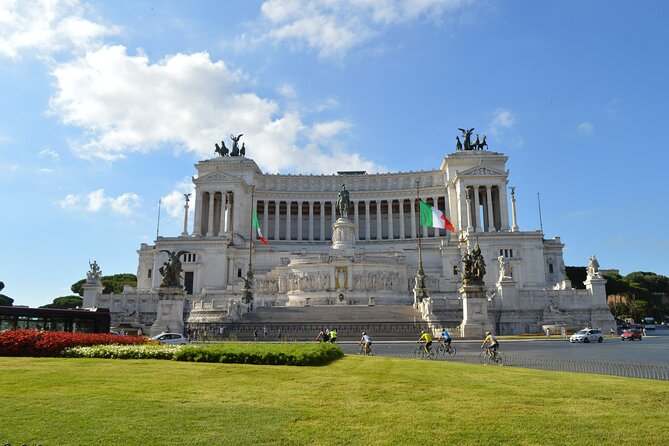
Then you land in Piazza Venezia, one of Rome’s most famous squares. It’s large, open, and packed with history—home to the Victor Emmanuel II Monument and Palazzo Venezia, among other historic buildings.
I like this stop because it gives you a breather while still delivering meaning. Squares in Rome aren’t just pretty; they’re political and social stages. The size and architecture tell you why this area mattered, and it also helps you orient your mind for what comes next: the Jewish Ghetto area and the walk toward the Tiber.
The stop is listed as free, and the tour keeps to exterior viewing.






Antico Quartiere Ebraico: Jewish Ghetto Area and the Real Mix of Rome
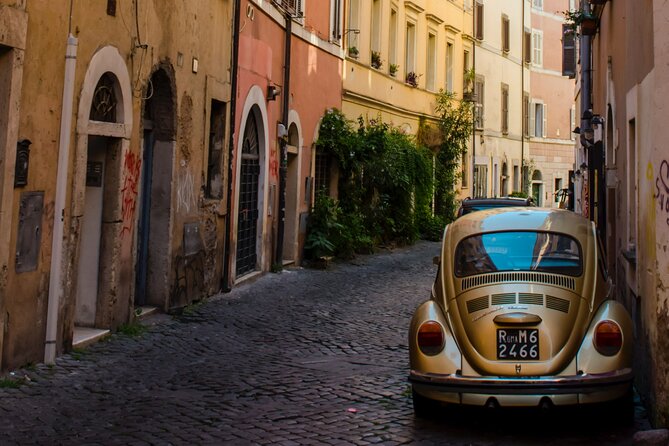
After Piazza Venezia, the route shifts into the Antico Quartiere Ebraico area, Rome’s Jewish Ghetto. It’s described as a little hidden jewel between the Tiber and Piazza Venezia—and it’s also singled out as a less-seen attraction compared to the headline monuments.
This is one of the best parts of the tour because it shows how Rome’s identity isn’t only ancient empire. The Jewish community of Rome is described as the oldest in Europe, and over time the neighborhood has become a layered mix of restaurants, churches, and synagogues, all sharing the stage of Roman architecture.
I find these moments matter. You don’t just learn facts—you start understanding how neighborhoods grow, adapt, and keep identity while living inside a city famous for stone and centuries. The tour’s approach keeps it respectful and contextual, and you’re not forced into an indoor “lesson” to get it.
This stop is listed as free.
Campo de’ Fiori: A Market Square That Makes Rome Feel Current
From the ghetto area, you swing into Campo de’ Fiori. This is a square known for its street market, with plenty of stalls and a lively street vibe.
This stop is short, but it’s a good palate cleanser after heavier history. It’s also a smart choice for practical travelers: if you want a quick souvenir or something local to snack on later, this is the kind of place where you can spot options without losing your place in the group.
The tour keeps the visit simple and exterior-focused, and admission is listed as free.
Piazza Navona and Santa Agnese in Agone: Baroque Drama in Stone
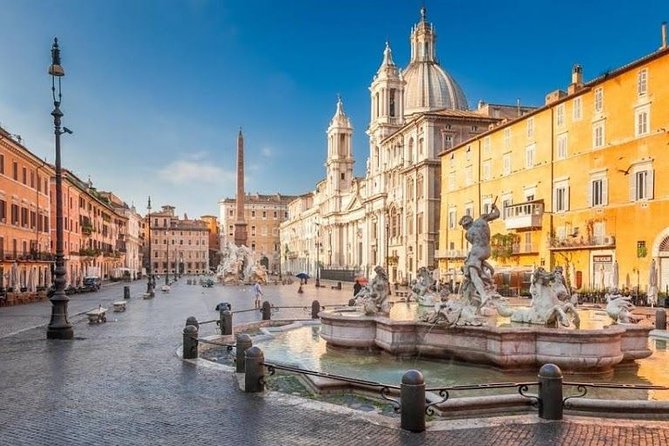
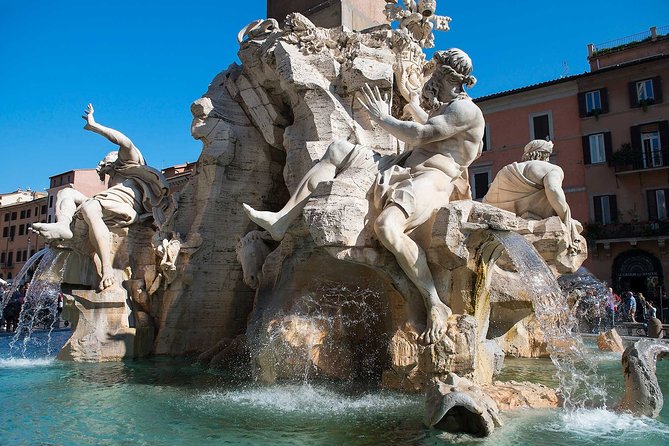
Then comes Piazza Navona, one of Rome’s most beautiful baroque squares. Its origin is tied to ancient Rome, when the area hosted a stadium. So you get that “Rome-on-Rome” effect: old layout under newer style.
Two landmarks get your attention:
- Fontana dei Quattro Fiumi (Fountain of the Four Rivers) by Bernini
- Church of Santa Agnese in Agone
Even from outside, Piazza Navona is the kind of place where the architecture feels like it’s performing. The fountain is a focal point you can literally build a photo around, and the church adds that church-and-square rhythm Rome does so well.
Timing is good here. The stop length is listed as 15 minutes, enough to absorb the shapes without dragging.
Pantheon From the Outside: Why This Building Still Rules the Street
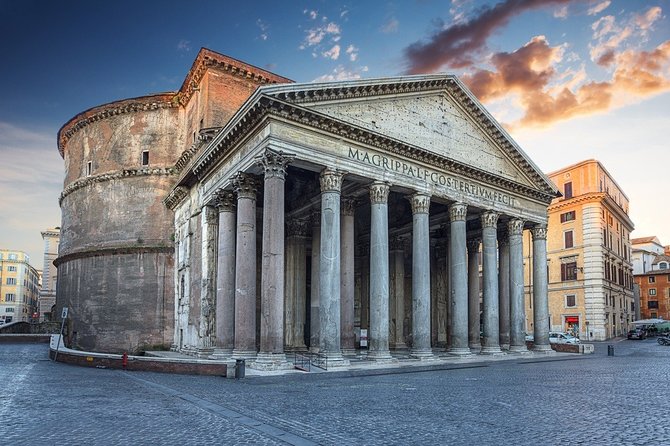
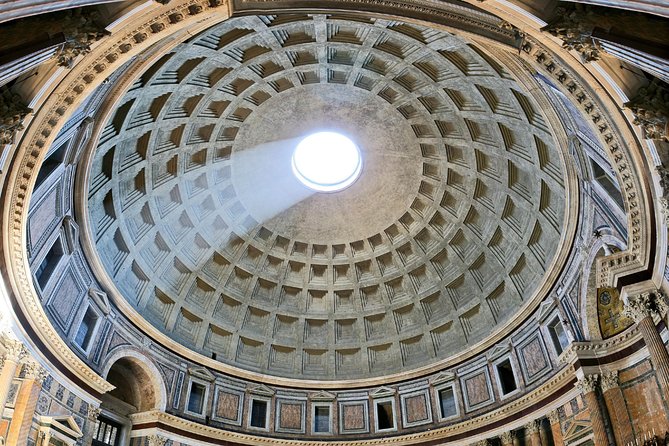
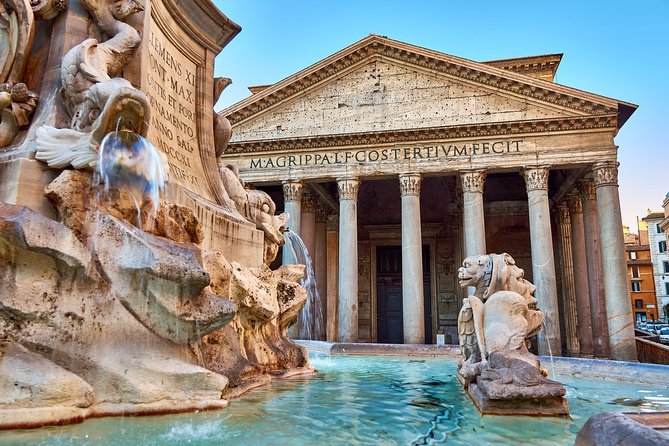
The tour then heads to Pantheon. It’s described as one of the best preserved ancient Rome monuments and one of the best examples of Roman ingenuity. Originally dedicated to all the gods, it became a church as early as the 7th century—so it looks much like its ancient form.
That conversion detail is the kind of thing that makes Rome click. You’re standing in a building that shifted purpose but kept its physical identity. It’s not “ancient ruined temple” or “new church facade.” It’s both, in one roofline.
Admission is listed as not included. But here’s the practical upside: because the tour is structured for exterior viewing, you’re not spending your tour time figuring out entry logistics. If you want inside access, you’ll need to plan it separately.
Piazza di Pietra and the Temple of Hadrian: A Smaller Stop With Major Payoff
Next is Piazza di Pietra, where you’ll see the Temple of Hadrian. Dedicated to Emperor Hadrian, it’s not as instantly famous as the Pantheon or Trevi, but it’s a strong reminder that Roman “sacred” architecture didn’t always live in the biggest spaces.
This stop also helps balance the route. After the grand squares, the tour gives you something more compact, so you can keep absorbing details without feeling like you’re on a nonstop photo sprint.
Admission is listed as free and the tour explains from the outside.
Trevi Fountain Finale: Ending at the Most Famous Photo Spot
You finish at Trevi Fountain in Piazza di Trevi. It’s described as the largest baroque fountain of Rome and arguably the most famous fountain in the world, which is exactly why ending here is smart.
You get two advantages by finishing at Trevi:
- You’re done with the structured part of the day, so you can linger.
- You’re positioned in the core area where you can easily turn your walking into dinner, gelato, or a follow-on stroll.
The tour lists Trevi as free. It also fits the overall “overview first” goal: see it, understand it, then decide how much more time you want after the guide ends the route.
What’s Included, What Isn’t, and How to Budget Smart
This tour includes:
- a guide
- radio headsets
Private transportation isn’t included, which is typical for a walking route. The tour itself is designed for exterior viewing, with explanations at various monuments and churches without entering buildings.
Because there’s no ticket-based building time built into the experience, your cost is mostly “guide + itinerary value.” That’s why the price—$42.17 per person—can make sense even for travelers who don’t want to pay for a lot of separate entries.
The trade-off is also clear: if you want to go inside major sites like the Pantheon or any other building, you’ll likely need additional plans and tickets outside this tour.
One more budgeting note: the tour is often booked ahead—on average about 72 days in advance. That’s a sign it’s a reliable choice, not a last-minute gamble. If your dates are firm, don’t wait too long.
Guides, Pace, and the “Hot Day” Reality
Some of the guide names mentioned include Brian, Alessandra, and Suzanna. Beyond the names, what stands out is how guides handle comfort and attention.
On hot Rome days, the tour description includes the idea of placing you in shaded areas as much as possible. That’s a real benefit on this specific route because you spend time in open squares like Piazza Venezia, Campo de’ Fiori, and Piazza Navona—places where sun can feel unrelenting.
The pace also keeps you from rushing. You have short stops, but they’re not “drive-by” snapshots. The goal is to give you a framework fast, so you can wander smarter afterward.
Who This Tour Fits Best (and Who Might Want Another Plan)
This is a strong pick if you want:
- a high-coverage Rome introduction without long transfers
- an easy way to connect major sights—Trajan’s Column, Jewish Ghetto area, Piazza Navona, Pantheon area, Trevi Fountain
- a route that’s timed for a morning start and lets you continue on your own
It’s also ideal for couples, friends, and small families who can manage a walking route with a moderate fitness level. The cap of 15 helps keep it controlled rather than chaotic.
You might want a different style of tour if you:
- care most about entering buildings (since this one is described as outside-only)
- want a slow, deep museum-style experience rather than an overview walk
Should You Book This Rome Walking Tour?
Yes—if you want a smart first pass through Rome’s headline monuments and iconic squares, this tour is good value. The small group (15 max), radio headsets, and the way it stitches ancient empire to later cultural life make the whole route more useful than just collecting photos.
I’d especially recommend it if it’s your first day (or near it). You’ll leave with context, and that makes the rest of your Rome wandering feel more intentional.
If you’re the type who must go inside places, book this for your “orientation” day and then add separate time for entrances and interior visits afterward.
FAQ
How long is the Rome Churches, Squares and Fountains walking tour?
It’s about 2 hours 30 minutes.
What time does the tour start, and what time should I arrive?
The start time is 10:00 am. You should arrive at the meeting point 20 minutes early.
Where does the tour start and where does it end?
It starts at Foro Traiano, 84, 00187 Roma RM, Italy and ends in Trevi’s square (Piazza di Trevi, 00187 Roma RM, Italy).
Is the tour offered in English?
Yes, it’s offered in English.
Are entrance tickets included for the monuments and churches?
No. The tour says there is no entry into any buildings, and some stops note admission as not included.
How large is the group?
The tour is capped at 15 travelers.
Is the tour suitable if I have a moderate fitness level?
Yes. It’s noted that travelers should have a moderate physical fitness level.
Can I cancel for a full refund?
Yes. You can cancel up to 24 hours in advance for a full refund.
Does the tour provide equipment to hear the guide?
Yes. The tour includes radio headsets.