REVIEW · ROME
Rome: Via Crucis Pilgrim 3-Hour Walking Tour
Book on GetYourGuide →Operated by Crucis Tours · Bookable on GetYourGuide
Reverence hits you fast in Rome. This 3-hour Via Crucis walking pilgrimage strings together some of the most famous Passion-related sites and relics in the city, with prayer time built into the pacing. I especially like the small group size and the way the tour keeps you moving from place to place without feeling rushed. The other big win: you’re not just looking at churches; you’re learning what each object and artwork points to.
The trade-off is practical: this is a traditional Catholic experience with a clear dress code (no shorts or short skirts) and limited step-free access, so it’s not a “wander and vibe” kind of outing. It’s also devotional by design, so the atmosphere may feel more quiet and reverent than typical sightseeing.
I like that the guide is English-speaking live, and many folks end up highlighting one guide by name, Tom, for his careful explanations and reverent tone. Just note one logistical detail: even though radio headsets are included for groups of 7 or more, this tour caps at 5 participants, so you should plan to hear the guide without headsets in a quieter setting.
In This Review
- Key highlights you can plan around
- Where this Rome Via Crucis route fits into the Holy Year mindset
- Start at Santa Maria Maggiore and the 2025 Holy Door connection
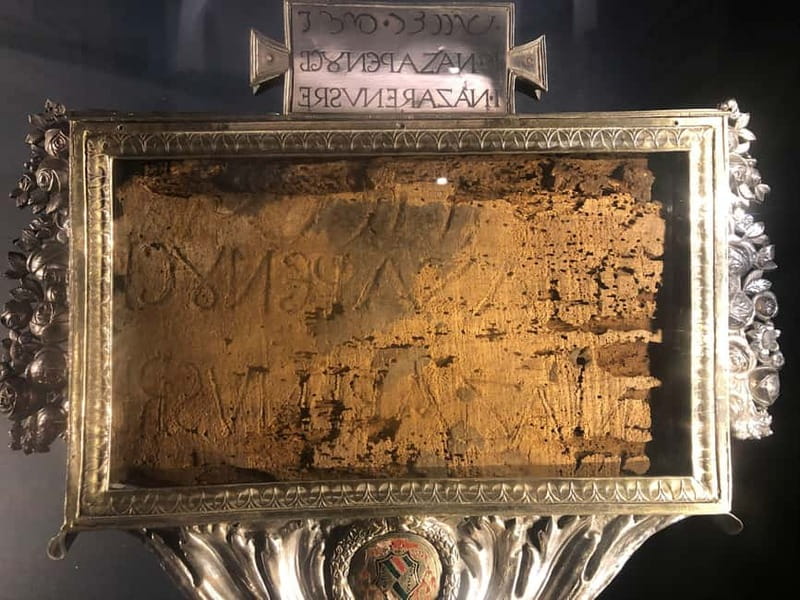
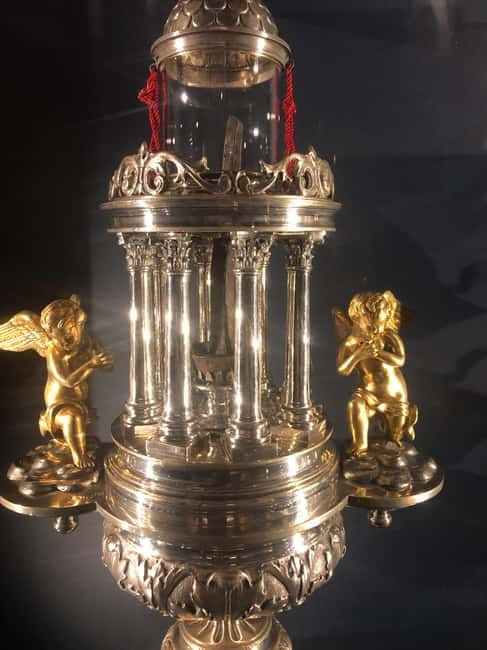
- Relics of Christ’s Passion: what to expect beyond the postcards
- Santa Prassede and the power of mosaics and symbolism
- Our Lady of Perpetual Help and the story inside the artwork
- The Holy Stairs (Scala Sancta): what you’ll see and what you might do separately
- St. John Lateran: Saints Peter and Paul, and the Holy Sponge
- Finish at the Basilica of the Holy Cross in Jerusalem, with a homily on request
- Price and value: is $107.62 worth it for 3 hours?
- Practical tips that prevent the usual Rome headaches
- Who should book this Via Crucis Pilgrim tour?
- Should you book the Rome Via Crucis Pilgrim 3-Hour Walking Tour?
- FAQ
- How long is the Via Crucis Pilgrim walking tour?
- How far do you walk during the tour?
- Where do you meet for the tour?
- What is the tour’s ending point?
- Is the tour wheelchair accessible?
- Are there any dress code rules?
- Is a homily included?
- What’s included in the price?
Key highlights you can plan around
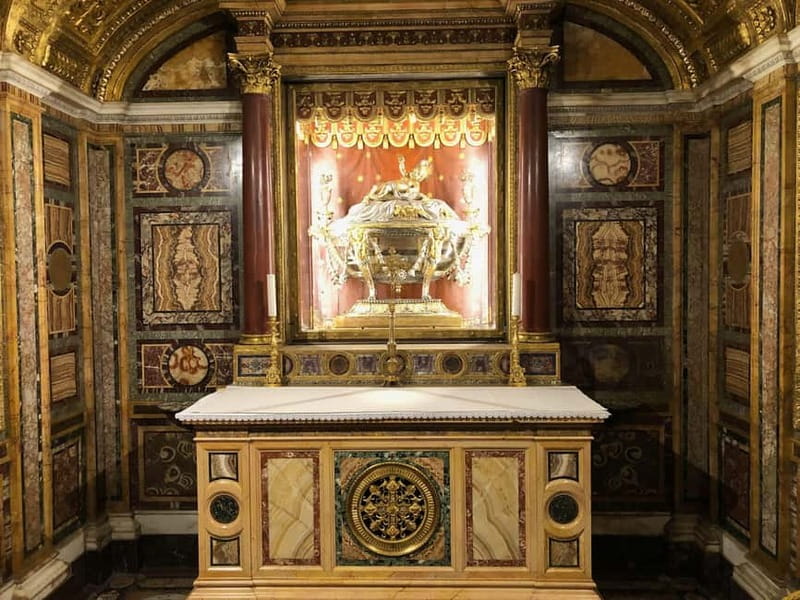
- A Passion relic route you can’t piece together on your own: parts of the One True Cross, Holy Nails, Thorns, the Title of the Cross, and the pillar from Christ’s flogging are part of the story.
- Santa Maria Maggiore at the Holy Door: you start in a Major Basilica and a site connected to Holy Doors opening in 2025.
- Hidden-but-important Rome stops: Santa Prassede and the Church of Saint Alphonsus Maria de Liguori help connect art, symbolism, and early Christian persecution.
- Scala Sancta (Holy Stairs): you’ll see the famous steps associated with Christ’s condemnation journey, with a long kneeling tradition you can do separately.
- St. John Lateran as the “Mother Church” stop: skulls of Saints Peter and Paul and other treasured items are part of the Lateran visit.
- A homily at the end (on request): the tour doesn’t just end on a building; it finishes with a short spiritual message if you ask.
Where this Rome Via Crucis route fits into the Holy Year mindset
If you’re traveling during the Jubilee year of 2025, this is the kind of tour that makes the theme feel real. The route is built around the Passion of Christ and uses relics and sites linked to key moments from Christ’s final days, leading from condemnation toward execution. It’s also designed as a pilgrimage that traditional Catholics often consider essential before and during the Holy Year.
What I like about this setup is the balance between devotion and structure. You get a planned sequence of stops that map to the story, but you’re also given time for veneration and prayer. That matters in Rome, where it’s easy to feel like you’re rushing from one landmark to the next with no time to actually absorb anything.
Also, this route isn’t just “churches for churches.” One of the stops is directly connected to the tradition of climbing the steps in condemnation on your knees. Even if you don’t do that specific kneeling tradition during the tour, you’ll still understand why it’s such a big deal for pilgrims.
You can also read our reviews of more walking tours in Rome
Start at Santa Maria Maggiore and the 2025 Holy Door connection
The tour begins at the fountain in front of the main entrance to Basilica Papale di Santa Maria Maggiore (Santa Maria Maggiore). Small detail, big help: the basilica’s main face is on Piazza Santa Maria Maggiore, not Via Cavour. If you’ve only got Rome in your head and not the exact piazza, you can easily waste time. I’d treat this meeting point like a mission and double-check your map before you arrive.
Santa Maria Maggiore is one of Rome’s four Major Basilicas, which gives the start a strong sense of “this is the main event.” The tour also points out a Holy Door connection that will open in 2025. Whether you’re going for the Jubilee theme or just for the Passion focus, starting at a Major Basilica sets the right emotional tone: grand, historic, and unmistakably Catholic.
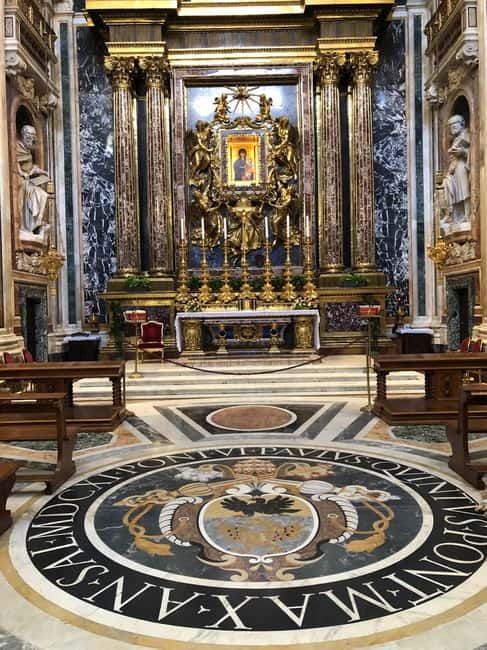
Inside, you’re also told you can venerate original wood from the Crib of the Nativity. That’s not part of the Via Crucis timeline exactly, but it deepens the larger story of Christ’s life and the Church’s devotion to sacred objects. You also stand near the original icon associated with St Luke, called Salus Popoli Romani.
My take: starting here means you get a powerful first anchor before the route gets more intense with the Passion relics and the Holy Stairs.
Relics of Christ’s Passion: what to expect beyond the postcards
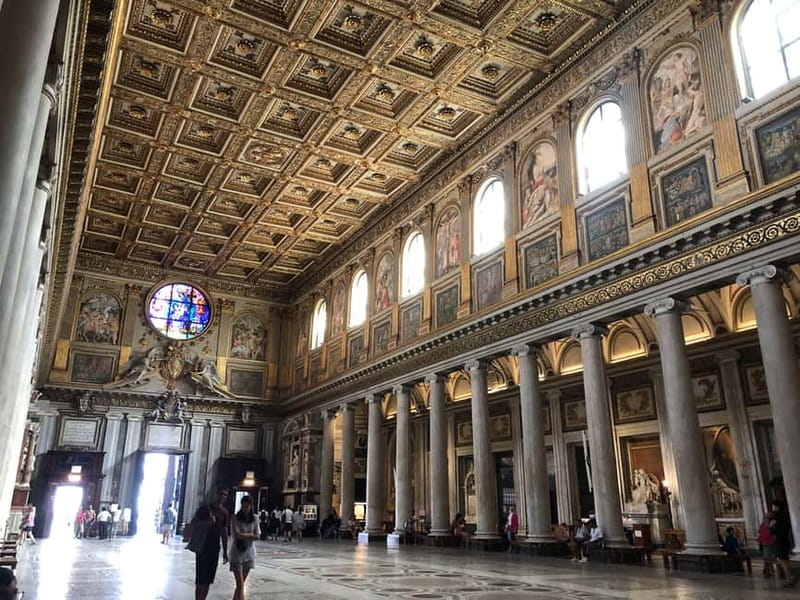
This tour’s core strength is that it’s built around relics connected to Christ’s suffering. If you’re the kind of traveler who likes to understand symbolism—why a specific artifact appears in a specific church—this route gives you the threads.
You’re guided to relic-related items tied to:
- parts of the One True Cross
- Holy Nails from the Cross
- Thorns from the Crown of Thorns
- the Title of the Cross placed above His head
- the pillar connected to His flogging
Even if you’re not a relic pilgrim by habit, the point here is meaning. Each relic is presented as a physical bridge to a moment in the Passion story. And since this tour is also framed as a Via Crucis walking pilgrimage, the relics are not treated like trivia—they’re treated like prayer objects.
You’ll also hear about the Via Crucis itself as the Way of the Cross: following in Jesus’s footsteps from condemnation toward execution. The guide sets up the Jerusalem context too, connecting the Roman authority in Jerusalem to what happens next.
What to watch for: you might be tempted to spend “extra” time reading every sign or staring at architecture. Keep your focus on the guided narrative. This tour works best when you let it connect the story beats for you.
Santa Prassede and the power of mosaics and symbolism
One of the more “Rome-like” aspects of the route is how it includes places that feel less like mass tourism and more like structured discovery. After Santa Maria Maggiore, you move to Santa Prassede for a shorter guided stop.
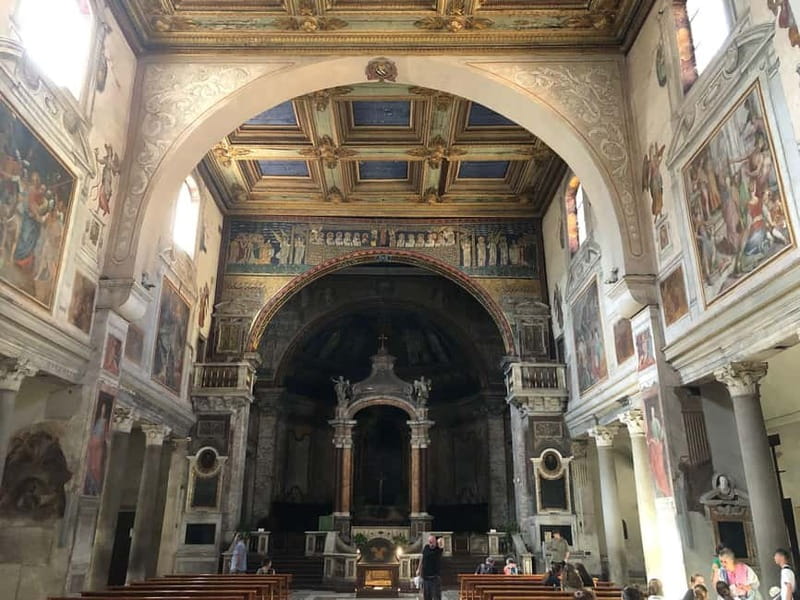
Santa Prassede is presented with a lot of symbolism in mind—mosaics filled with meaning, plus the sense of early Christian struggle and perseverance. The tour highlights the history of persecuted followers in a hostile pagan world, then uses the art and sacred spaces to make the story feel tangible rather than abstract.
This is one of those stops where you’ll likely notice how the guide connects visuals to doctrine and Scripture themes. If you’ve ever walked into a Roman church and wondered what you’re actually looking at, this kind of stop is where the tour starts to pay off.
You’ll likely leave with two skills:
1) how to spot recurring symbols in church art, and
2) how those symbols match the Passion story you’re working through.
Our Lady of Perpetual Help and the story inside the artwork
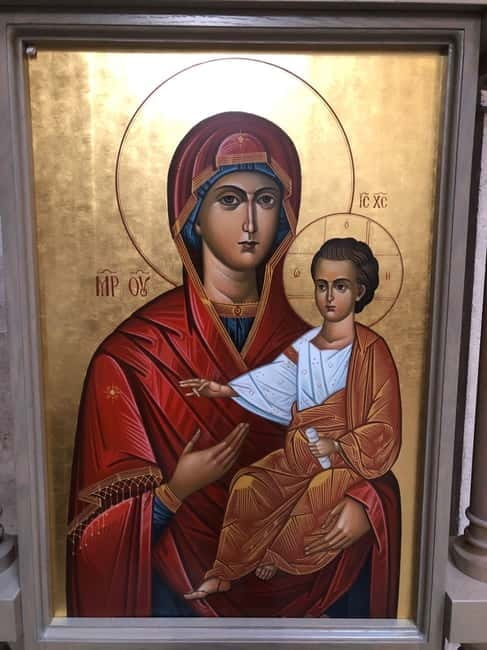
Another stop is the Church of Saint Alphonsus Maria de Liguori. Here, the tour centers on Our Lady of Perpetual Help, also called Our Lady of Perpetual Succour or Our Lady of the Passion.
Why this matters for your pilgrimage isn’t that the artwork is famous—it is—but that it’s used as a “theological shortcut.” It helps you move from relic object to lived faith. The guide’s focus on symbolism makes the image feel like more than decoration.
This stop also helps explain why the tour calls itself essential for traditional Catholics. It’s not only about the Passion sequence in Jerusalem; it’s also about how Rome’s churches kept that Passion devotion alive, taught it visually, and placed it where worshippers could return to it again and again.
You can also read our reviews of more tours and experiences in Rome


The Holy Stairs (Scala Sancta): what you’ll see and what you might do separately
The biggest emotional stop on this route is Scala Sancta (the Holy Stairs). You’ll get a guided visit here as part of the itinerary.
These steps are associated with Jesus ascending to the praetorium of Pontius Pilate, where He was condemned. The tour explains why a common tradition is to climb those steps on your knees today. The guide also notes that doing the kneeling climb takes around 45 minutes, and that tradition is not part of the tour’s main itinerary.
That means you have a key decision point:
- If you want the kneeling practice, plan it separately and treat this stop as a spiritual rehearsal.
- If you want to keep the full 3-hour arc, you’ll still experience the steps’ meaning through the guided explanation and prayer time.
There’s also a devotional detail included in the tour’s framing: the Scala Sancta is described as a place tied to a holy inner sanctum traditionally accessed by nobody but the Pope, and associated with an icon said to have begun by St Luke and completed by angels. Even if you’re not there for “verification,” the tour uses the detail to show how Rome elevates sacred story into sacred space.
Practical note: since one location on the route is not wheelchair-accessible and the tour is not suitable for wheelchair users, the Holy Stairs stop is likely the most demanding portion. Wear shoes you can stand in for the full 3-hour period.
St. John Lateran: Saints Peter and Paul, and the Holy Sponge
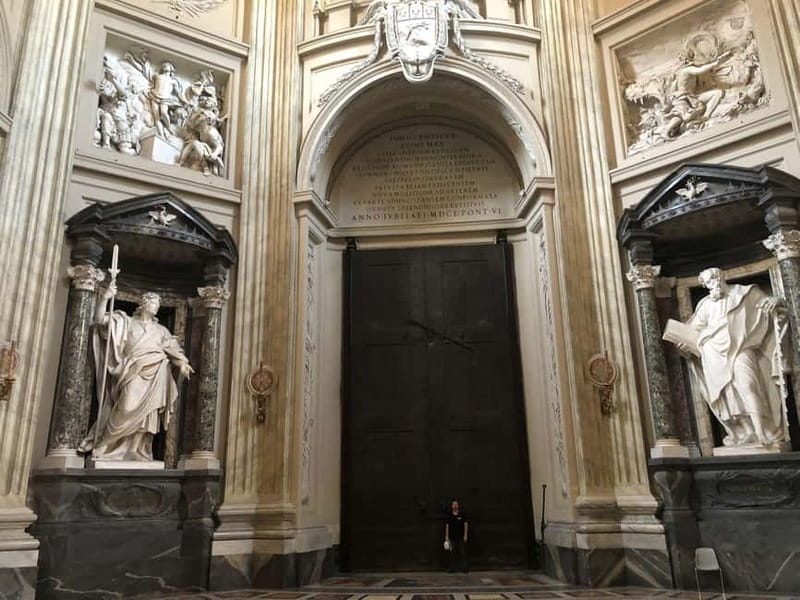
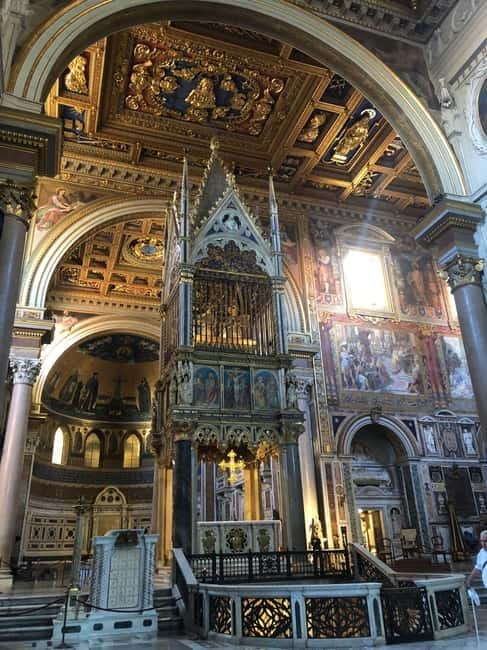
Next comes the penultimate stop: Basilica di San Giovanni in Laterano (St John Lateran), described as the Cathedral of Rome and Mother Church of the World.
This is a stop for scale and for doctrine. It’s not just “another basilica”—the tour frames it as central to the Church’s identity. In particular, you’re told that the basilica houses:
- the skulls of Saints Peter and Paul
- the Pillars of the Church
- the Holy Sponge used to douse Jesus while He hung from the Cross
That last item is especially striking because it ties the Passion story to a concrete object. It makes the scene specific. Instead of thinking of Jesus’s suffering as a distant painting, you’re guided to understand how the Church preserved relic connections to key moments of the Passion.
The tone here tends to feel heavier in a good way. You’re at a “center” of Catholic Rome, so the pilgrimage shifts from story retelling to a sense of continuity—how the Church still treats these events as present realities through sacred objects and liturgical remembrance.
Finish at the Basilica of the Holy Cross in Jerusalem, with a homily on request
The tour concludes at the Basilica of the Holy Cross in Jerusalem (Santa Croce in Jerusalem). The route is roughly described as about a 10-minute walk from the nearest metro station, so it’s easy to connect to the rest of your day afterward.
The tour framing here is clear: you’re not just ending on a building. Your guide will leave you with a homily on request, which gives you a chance to process everything you just heard and prayed about while it’s still fresh.
Another nice detail is the location context. The basilica is described as near the edge of the Aurelian Wall that encompasses Rome’s historic city center. That gives you a sense of how the city’s layers surround pilgrimage practice—ancient defense walls, medieval sacred buildings, and modern worshippers all in the same walk.
You’ll likely finish the route feeling both educated and emotionally grounded, especially if you took the guide up on prayer time.
Price and value: is $107.62 worth it for 3 hours?
At $107.62 per person for a 3-hour guided walk, you’re paying for a very specific thing: a structured Passion pilgrimage led by a devout Catholic guide, focused on relic access, meaning, and prayer.
Here’s what’s included:
- a devout Catholic guide
- all taxes and fees
- homily on request
- radio headsets for groups of 7 or more
And what you should budget separately:
- transport to the meeting point
- transport from the end point (and the end-point logistics can vary depending on how the activity is handled day-of)
- a guide tip
The value calculation comes down to how you like to travel. If you enjoy museums on your own, you may feel this is expensive for “just church visits.” But if you want to understand why each relic and artwork matters, and you appreciate prayer time with a guide who keeps the tone reverent, this price starts to make sense.
Also, the group size limit is capped at 5 participants. In Rome, that often means less crowd noise and more time for individual questions. If you’re traveling during major liturgical events, that smaller-group pacing is a big deal.
Practical tips that prevent the usual Rome headaches
This tour is built to be prayerful, so make your logistics boring and smooth.
Dress code matters. Shorts and short skirts are not allowed. I’d wear long trousers or a longer skirt, and plan for a covered look at churches. Rome summer heat is real, but the rule is real too.
Use the right meeting point details. Meet at the fountain in front of Santa Maria Maggiore’s main entrance. The front faces Piazza Santa Maria Maggiore, not Via Cavour. The operator also advises using WhatsApp so the guide team can coordinate in real time if anything goes off-track.
Expect a short walk, not a long hike. It’s about 2–3 km total in 3 hours. You’re on foot, but you’re not crossing half the city. Still, you’ll be standing in churches and moving between them, so bring comfortable shoes.
Bring patience for itinerary changes. Because Rome’s liturgical calendar is packed, the route may be modified on certain feast days. If that happens, you should be informed by email ahead of time.
Who should book this Via Crucis Pilgrim tour?
This tour is ideal for:
- Catholics looking for a structured Via Crucis pilgrimage in Rome
- travelers who want the story of Christ’s Passion tied to specific relics and sacred art
- people who prefer small groups and a guided, prayerful tone
It’s not a good fit for:
- wheelchair users (the tour notes it is not suitable, and one location is not wheelchair-accessible)
- anyone who needs a casual, no-rules sightseeing style
- people who want kneeling on the Holy Stairs as part of the main itinerary (it’s specifically noted as a separate 45-minute tradition)
If you’re traveling with family, it can work well because the guide’s explanations are designed to make symbolism and theology understandable in everyday terms.
Should you book the Rome Via Crucis Pilgrim 3-Hour Walking Tour?
Book it if you want a guided Catholic pilgrimage that connects relics, symbols, and the Passion story in a walkable route. The small-group limit, prayer time, and emphasis on meaningful artifacts are the reasons this feels worth your time—especially if you’re in Rome during 2025.
Skip it if you’re looking for general “Rome sightseeing” without a devotional framework, or if dress rules and step access will stress you out. Also, if you’re expecting a completely free-form itinerary, this route is intentionally structured around a spiritual narrative, so you’ll feel it more than you’d feel on a casual tour.
FAQ
How long is the Via Crucis Pilgrim walking tour?
It’s a 3-hour walking tour.
How far do you walk during the tour?
It’s about 2–3 km total.
Where do you meet for the tour?
You meet at the fountain in front of the main entrance to the Basilica of St Mary Major (Santa Maria Maggiore). The front faces Piazza Santa Maria Maggiore, not Via Cavour.
What is the tour’s ending point?
The tour ends at the Basilica of the Holy Cross in Jerusalem (Santa Croce). The nearest metro station is described as about a 10-minute walk away.
Is the tour wheelchair accessible?
No. The tour is not suitable for wheelchair users, and one location is not wheelchair-accessible.
Are there any dress code rules?
Yes. Shorts and short skirts are not allowed.
Is a homily included?
A homily is available on request.
What’s included in the price?
The price includes the guide, taxes and fees, radio headsets for groups of 7 or more, and a homily on request.