REVIEW · ROME
Private Vatican Experience
Book on Viator →Operated by Rometourguide · Bookable on Viator
The Vatican feels faster with a private guide. With VIP access and skip-the-line tickets, you start before the crowds and get help making sense of the art and symbols. It’s a high-speed route through the biggest highlights, but with a real person guiding the pace.
I like that you’re not just shuffled through rooms. You get a private guide and can ask unlimited questions, which makes a huge difference when you want to understand what you’re seeing. Guides such as Sarah (praised for pacing for an elderly mom) and Daniella/Sara (praised for engaging explanations) show how varied and custom the experience can feel.
One thing to keep in mind is time. Your Sistine Chapel visit is set to about 30 minutes, so if you love to stare for long stretches, you may wish you had more. And since it’s a private meet-up, there’s always a small risk of timing problems if a guide runs late or can’t make it.
In This Review
- Key things to know before you go
- Why early Vatican access changes everything
- Entering the Vatican Museums: where your guide saves your feet
- The Sistine Chapel approach within the museum
- Sistine Chapel timing: how to make 30 minutes work
- St. Peter’s Basilica: the highlights you can spot fast
- The value of a private guide (and why questions matter here)
- Price and what you’re really paying for
- Walking, steps, and stamina: a moderate-fitness day
- Getting to the start and continuing after the finish
- Who this tour is best for
- Should you book this private Vatican experience?
- FAQ
- How long is the Private Vatican Experience?
- Is this a private tour?
- Do I get skip-the-line admission?
- What’s included for tickets at each site?
- Where do we meet, and where does the tour end?
- Is the tour offered in English?
- Can I cancel for a full refund?
Key things to know before you go
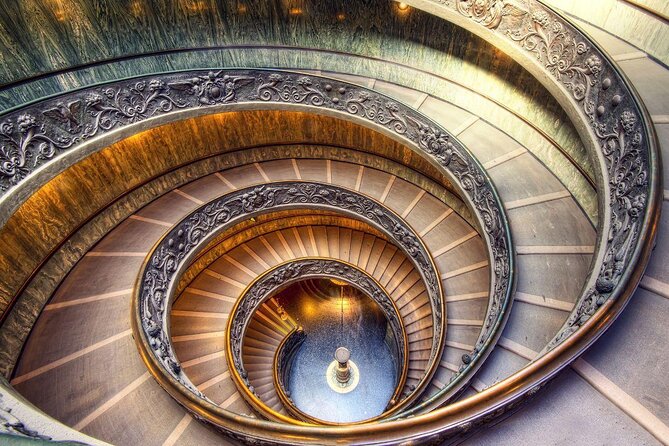
- VIP early entry: You access the Vatican Museums before public opening hours.
- Skip-the-line tickets: Less waiting means more time looking at art.
- Sistine Chapel time box: Expect about 30 minutes in the Chapel.
- Private, question-friendly format: You can ask as many questions as you want.
- Big-picture highlights in St. Peter’s: You’ll focus on famous spots like the canopy by Bernini and Michelangelo’s Pietà.
- End in St. Peter’s Square: Your tour finishes right where sightseeing can keep going.
Why early Vatican access changes everything
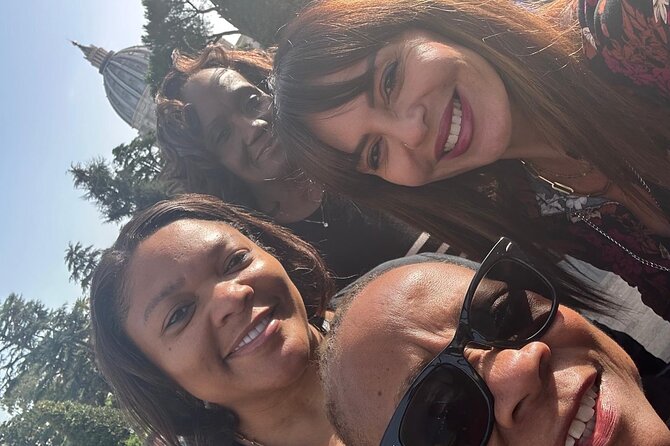
The Vatican can turn into a test of patience. Lines move slowly, groups bottleneck, and you end up spending more time managing crowds than noticing details. This tour cuts that problem down at the start by getting you into the Vatican Museums before public opening.
That early start matters because the Vatican is not one “thing.” It’s a patchwork of rooms, halls, and signature masterpieces that each reward you for slowing down. When you’re not waiting outside, you can actually use your eyes on what you came for.
Also, you’re not trapped in a one-note script. A private guide can tailor the order of attention—what you should pause for, what you can speed past, and what you may want to revisit in the Sistine Chapel.
You can also read our reviews of more private tours in Rome


Entering the Vatican Museums: where your guide saves your feet
You begin at the Vatican Museums area and head in with skip-the-line admission. The idea isn’t just to reach famous rooms; it’s to keep the day flowing so you can see a lot without feeling like you’re being chased.
From there, you’ll focus on the Vatican’s own collection and the visual language of power and faith. The tour is positioned around key categories you’ll recognize on sight—sculptures, tapestries, candelabras, and the kind of ceremonial objects that explain how popes displayed wealth and authority through art.
You’ll also hear context that makes the place more than a photo backdrop. Vatican City became its own independent state in 1929, and understanding that helps the museums feel less like a random archive and more like a functioning seat of history.
One practical win: because you’re with one guide, you can ask follow-ups while the art is still in front of you. That’s how the museums stop being a blur of rooms and turn into a chain of ideas you can track.
The Sistine Chapel approach within the museum
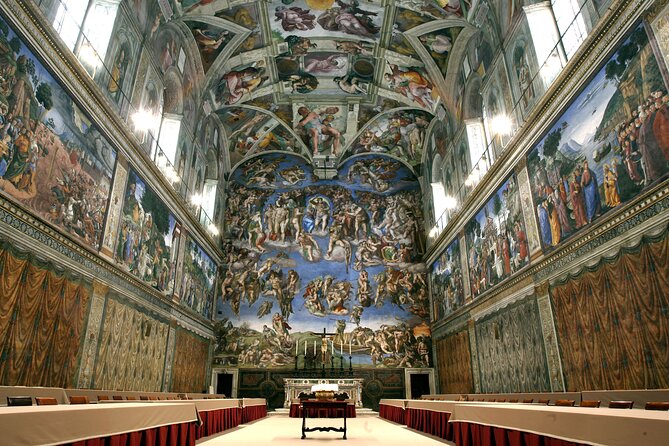
A big advantage of this format is how it handles your approach to the Sistine Chapel. Instead of treating the Chapel like a quick checkbox, you spend more time inside with your guide getting you close to the frescoes.
That positioning matters. The Sistine Chapel is famous, but it’s also easy to feel overwhelmed. A good guide helps you know what you’re looking at, where the composition leads your eyes, and what details you might miss if you’re trying to do it all by yourself.
Sistine Chapel timing: how to make 30 minutes work
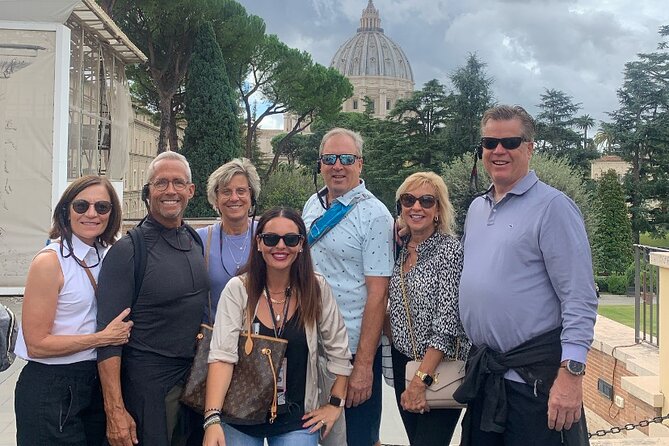
The Sistine Chapel visit is about 30 minutes. That’s not enough time for everyone to “wander and absorb,” but it can be perfect if you know your priorities and let your guide steer.
Here’s the trick: use the first part of the time to orient yourself. Michelangelo’s paintings are designed as a whole, but your brain needs a few anchors—main scenes, key sections, and the visual grammar that ties them together. With a guide, you get those anchors fast.
Then you can spend the remaining minutes doing what you actually want: focusing on a section, looking for a detail, and asking questions while you still have the ceiling in view. This tour’s private format helps here because there’s no rigid group chatter drowning out your questions.
If you’re the type who wants to linger on one panel until you’ve memorized the story beats, you may feel the time limit. But if you want the most famous masterpiece experience with smart guidance, this timing can be a good compromise.
St. Peter’s Basilica: the highlights you can spot fast
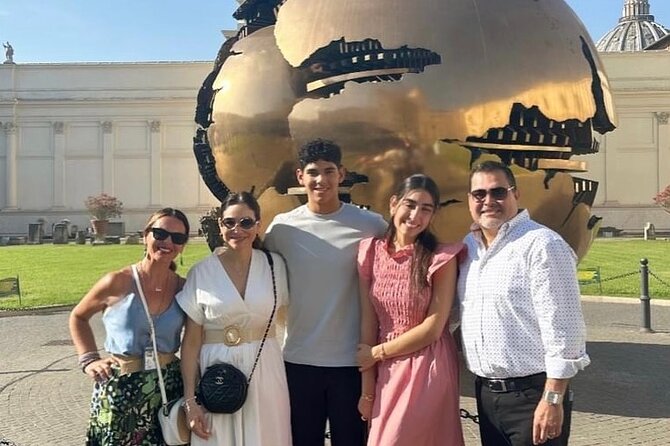
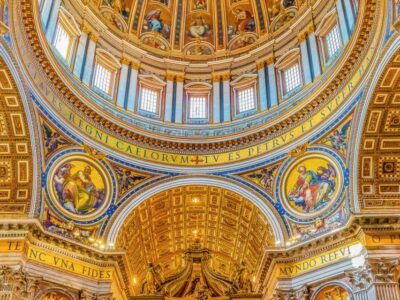
After the Sistine Chapel, you move into St. Peter’s Basilica with skip-the-line entry. St. Peter’s is enormous, so a “see everything” goal is usually a fantasy. Instead, this tour focuses on the high-impact landmarks that most people come to find.
You’ll get to see:
- The thumb of Saint Peter
- The holy statue representing Saint Peter
- The main altar with Bernini’s canopy
- Michelangelo’s Pietà
That list is a practical roadmap. It tells your eyes what to look for immediately, instead of walking around trying to guess which details people mean when they talk about this church.
Also, your schedule includes a very short stop time at the Basilica. That can sound alarming, but it actually works if your goal is to hit the essential spots and then enjoy the atmosphere on your own afterward. When you’re done, you finish at St. Peter’s Square, so you’re positioned perfectly to keep exploring without backtracking.






The value of a private guide (and why questions matter here)
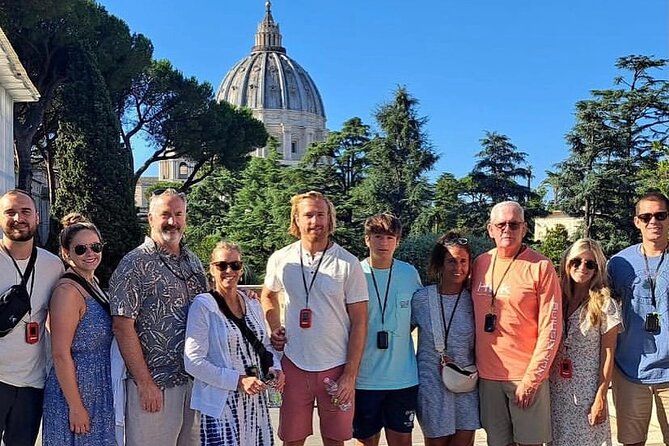
A private Vatican tour sounds fancy. In reality, it’s about control: control of pace, control of attention, and control of what questions you get answered.
This one explicitly works as a question-friendly experience. In a private group, you’re not waiting for the guide to finish a group explanation before you can ask what you’re really wondering. That turns the experience from a lecture into a conversation.
You can see the payoff in the kinds of guides people praised. Sarah was noted for matching her pacing to an elderly mom’s energy, which is exactly what you want in a place with steps and tight flows. Guides like Franz/Michele were praised for connecting art history to what you’re standing in front of, especially around the Sistine Chapel experience.
Even if your group is small and you think you don’t need help, a guide still saves time and prevents you from missing the good stuff. In the Vatican, that’s not a small benefit.
Price and what you’re really paying for
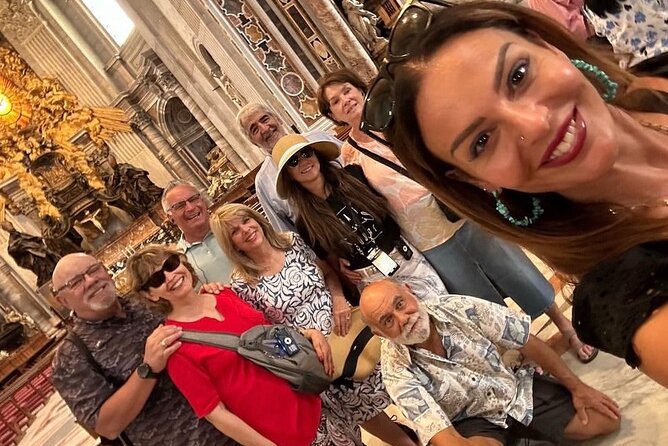
At $240.29 per person, this is not a bargain-basement Vatican ticket. But it’s also not priced like a luxury fantasy day. The value comes from three concrete things:
- Skip-the-line access plus early entry before public opening hours.
- Private guiding, not a shared group funnel.
- A tight, high-yield route through the biggest hits: Vatican Museums, Sistine Chapel, and St. Peter’s Basilica.
For some people, the math will depend on who’s traveling. If you’re going as a couple or a small group that can split the cost, the per-person rate starts to feel much more reasonable for the time you save. If you’re solo, you’re paying more for the privilege of having the guide’s attention to yourself—which can still be worth it if you truly want the questions answered and the pacing tailored.
A quick reality check: you’re not buying “more hours.” You’re buying better use of the hours you have.
Walking, steps, and stamina: a moderate-fitness day
This tour lists a moderate physical fitness level requirement. That fits the Vatican perfectly. Even when lines are short, you’re still dealing with movement through museum corridors and stair-heavy museum layouts.
A review-style takeaway you should take seriously: people noted plenty of walking and steps. If you have mobility limits, you may want to plan on taking it slower than you would in, say, a museum with level ground.
The good news is that a private guide can often adjust pacing—like the Sarah example where she matched an elderly mom’s energy. Just make your needs clear upfront so your guide can plan the rhythm.
Getting to the start and continuing after the finish
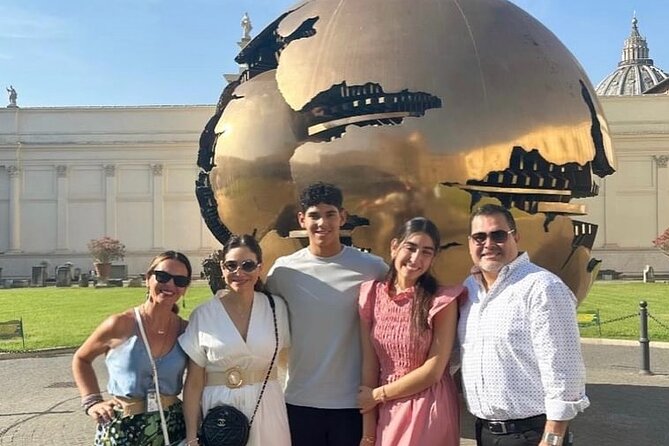
You start at Vatican Museums, in Vatican City, and you end at St. Peter’s Square. That end point is more than convenient—it’s how you keep the day from feeling like a loop.
You’ll also have a mobile ticket, so you’re not hunting for paper or trying to figure out the right line at the last second. The experience is offered in English, and it’s near public transportation, which helps if you’re mixing this day with other Rome plans.
Who this tour is best for
This works especially well if:
- You want a guided route that doesn’t waste your morning waiting in queues.
- You care about understanding what you’re seeing, not just taking pictures.
- Your group includes people who need pacing help (kids, older parents, or anyone who doesn’t want a sprint).
- You prefer a conversation-style experience where questions are welcome.
It may be less ideal if:
- You want long, slow “sit and stare” time in the Sistine Chapel.
- Your group needs a lot of time to wander independently without any guidance steering you back on track.
- Your schedule is extremely rigid and you can’t handle any potential delays on a private meet-up.
Should you book this private Vatican experience?
I’d book it if your top goals are early access, skip-the-line entry, and a private guide who can answer your questions in real time. This tour is built for efficiency with enough structure to keep the art meaningful, especially in the Vatican Museums and the Sistine Chapel.
Before you buy, ask yourself one simple question: do you want to spend your Vatican day looking at masterpieces—or managing crowds and trying to figure out what matters most? If you want the first (and you’re okay with a set time in the Sistine Chapel), this is a strong match.
FAQ
How long is the Private Vatican Experience?
The tour runs for about 4 hours.
Is this a private tour?
Yes. It’s a private tour/activity, and only your group participates.
Do I get skip-the-line admission?
Yes. You’ll enter the Vatican Museums with skip-the-line admission tickets, and you’ll also skip the line to enter St. Peter’s Basilica.
What’s included for tickets at each site?
Vatican Museums admission is included. Sistine Chapel admission is listed as free, and St. Peter’s Basilica admission is listed as free.
Where do we meet, and where does the tour end?
You start at Vatican Museums (00120, Vatican City) and finish in St. Peter’s Square (Piazza San Pietro, 00120).
Is the tour offered in English?
Yes, it’s offered in English.
Can I cancel for a full refund?
Yes, you can cancel up to 24 hours in advance of the experience start time for a full refund.