REVIEW · ROME
Rome in Golf Car a Private Trip between History and Beauty
Book on Viator →Operated by Exclusive Experience · Bookable on Viator
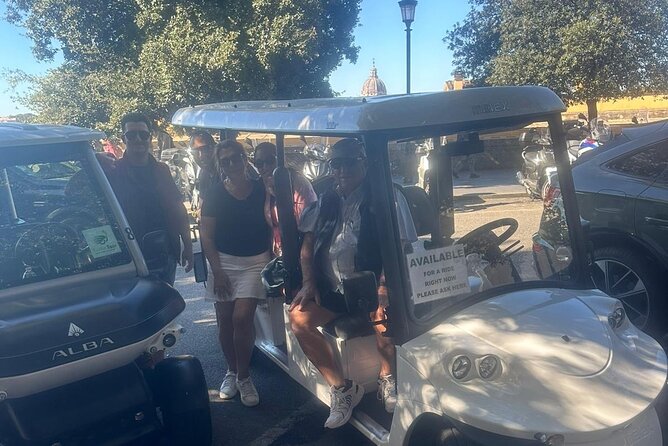
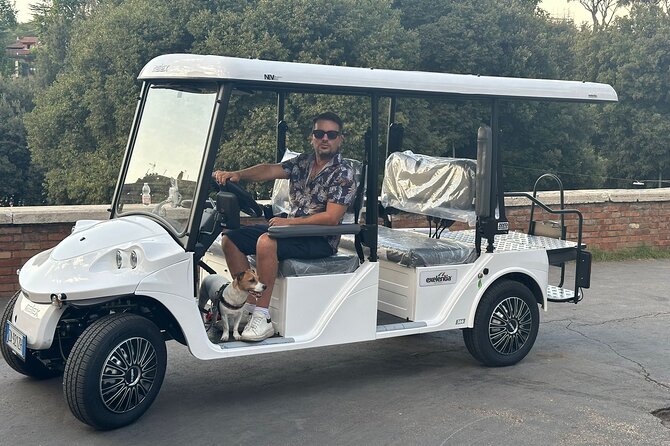
Rome looks different from a low golf-cart seat. This private 3-hour ride knits together Rome’s big sights and calmer moments, with hotel pickup and guide narration in multiple languages. You’ll move between famous squares and monuments without spending your whole day stuck in traffic or doing mile after mile on foot.
I especially love how the route is built for short, high-impact stops. You get timed moments to see the art and architecture up close, then step out for photos before you roll to the next spot. I also like that the most ticketed moments are covered: admission tickets are included at Trevi Fountain and the Pantheon, so you don’t have to hunt down add-ons.
One consideration: this is an efficient sampler. With lots of legendary stops packed into about 3 hours, you’ll feel the pace, and the most popular areas can be crowded even when you’re only there briefly.
In This Review
- Key points that make this golf cart Rome tour work
- A 3-hour private ride through Rome’s biggest photo stops
- Trevi Fountain: baroque drama and the coin-throw pause
- Piazza Venezia and the Altare della Patria viewpoint feel
- Piazza di Spagna and the Spanish Steps photo circuit
- Piazza del Popolo and the Flaminian Obelisk in the middle of everything
- Via del Corso: walking a historic commercial artery without the long haul
- Shopping road bonus: Via dei Condotti and the luxury stretch
- Trinità dei Monti church and the Renaissance-to-Rome viewpoint feel
- Bocca della Verità: a listed stop for a classic curiosity
- Teatro di Marcello: Augustus-era theater ruins with real scale
- Pantheon: the dome, the oculus, and why it survived
- Imperial Forums area: power, politics, and Roman engineering in fragments
- Orange Garden on the Aventine: views that slow your pace
- Price and logistics: does $131.81 per person make sense?
- Should you book Rome in a golf car?
- FAQ
- How long is the Rome in Golf Car private trip?
- Does the tour include hotel pickup?
- Is this a private tour?
- What languages is the guide available in?
- Are any admission tickets included?
- Does the tour require a mobile ticket?
- Is it suitable for most travelers?
- What is the cancellation policy?
Key points that make this golf cart Rome tour work
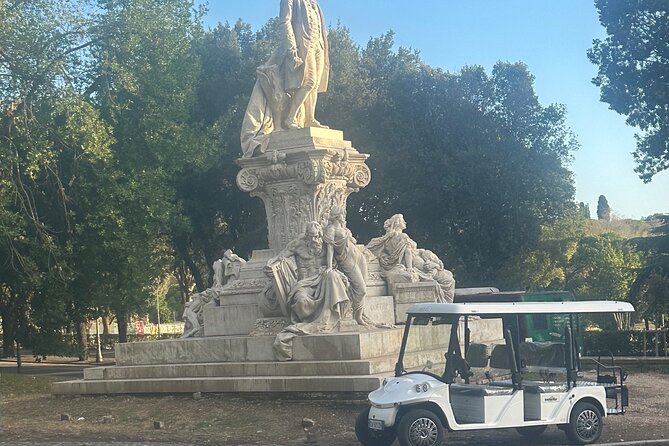
- Private group + golf cart access for getting near major landmarks without long walks
- Photo-friendly timing with set stop lengths like 10–20 minutes at key sights
- Tickets included for Trevi Fountain and the Pantheon
- Pickup from hotels so you start fast and lose less time in transit
- Guides who adjust on the fly, with standout service names like Max, Mauricio, Alex, and Alessandro in guest feedback
- Clear communication and comfort, including praise for being understandable even for hearing loss and for helping with shade and drinks on hot days
A 3-hour private ride through Rome’s biggest photo stops

This is a private golf cart tour, so it’s just your group and your pace. With roughly 3 hours on the clock, it’s designed to help you do the classic Rome circuit quickly, then decide what to return to later (if you want).
The golf cart part matters more than you might think. Rome’s top sights are spread out, and many of the best viewing spots are in areas where buses struggle or walking turns into a slog. Here, you get the advantage of getting close enough to feel you’ve arrived, while still keeping walking manageable.
You’ll also feel the “human” side of the tour. In reviews, guides like Max and Mauricio were singled out for being flexible, and other names like Alex and Alessandro came up for enthusiasm and real effort. That usually means fewer rigid stops and more adapting to what your group actually wants to see from the cart.
You can also read our reviews of more private tours in Rome


Trevi Fountain: baroque drama and the coin-throw pause
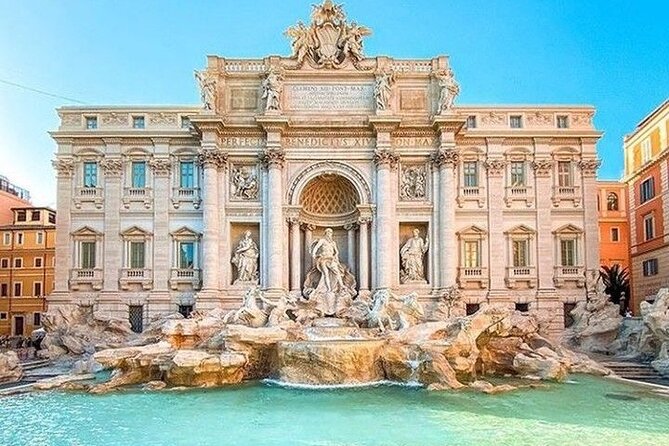
Trevi Fountain is the kind of stop that makes Rome feel cinematic. You’ll see the famous semicircular basin, the imposing baroque façade, and the central figure of Oceanus driving a shell-shaped chariot pulled by sea horses and tritons. The fountain is packed with allegorical sculptures, including references to the seasons and themes like health and wealth.
The timing here is about 20 minutes, and admission is included. That’s a good setup: you’re there long enough to take photos from different angles and also actually look at details, like the surrounding columns and statues, instead of only snapping a quick shot.
Practical tip: if your goal is photos, treat this stop like a mini performance. Walk a little along the edges to find a less cluttered view, then return to your main spot for one final photo before moving on. Even when the crowd is heavy, your best results come from small repositioning.
One more note: Trevi Fountain includes the well-known tradition of throwing a coin into the water, which the tour builds into the experience as part of the fountain’s symbolism of returning to Rome.
Piazza Venezia and the Altare della Patria viewpoint feel
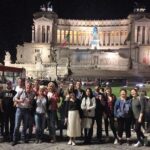
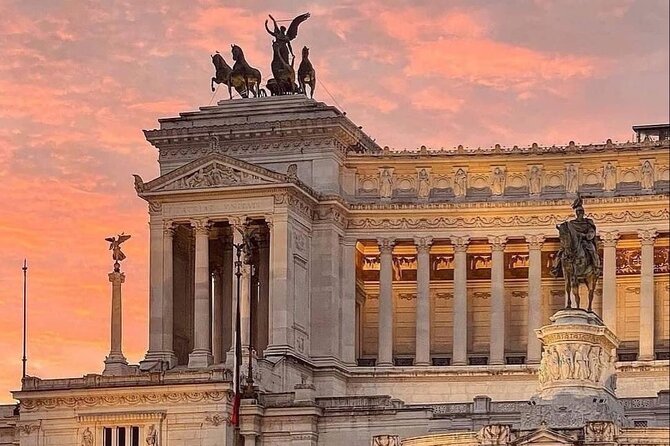
Right near the Colosseum area, your tour spends time around Piazza Venezia, one of Rome’s best “orientation” stops. The square is centered on the white marble monument called Altare della Patria, also known as Vittorio Emanuele II. Even if you don’t go deep into the monument itself, the setting gives you a sense of where Rome’s major corridors meet.
This stop is listed as about 10 minutes, and the ticket is free. That makes it a smart checkpoint: you’re close to the energy of Rome, but you’re not stuck here long enough to overpay in time you could spend elsewhere.
What you should look for here is the way the square connects the city. Piazza Venezia links roads like Via del Corso and Via dei Fori Imperiali, and it’s surrounded by historic buildings, including Palazzo Venezia, which takes its name from the square and was once a papal residence. In other words, it’s not just a photo backdrop. It’s a map in physical form.
Piazza di Spagna and the Spanish Steps photo circuit

Piazza di Spagna is Rome in “postcard mode,” and you’ll spend around 10 minutes at the square. The big visual payoff is the Spanish Steps (135 steps), plus the Barcaccia Fountain in the center of the piazza. That fountain is a baroque scene designed to look like a boat about to sink, linked to the symbol of the rising waters of the Tiber.
This is the spot where you’ll feel why Rome works for people-watching. The square and steps are also framed by elegant buildings and shopping streets, so you get a mix of tourists, musicians, street artists, and local energy in one view.
The key here is timing. Ten minutes is enough to take in the architecture and get the signature shots, but not enough to wander forever. If you want shopping to be a real plan, keep your walk short here and come back later on your own schedule.
Piazza del Popolo and the Flaminian Obelisk in the middle of everything
Next up is Piazza del Popolo, Rome’s northern-entrance anchor. It has a dramatic elliptical shape, and the centerpiece is the Flaminian Obelisk, an ancient Egyptian obelisk erected in 10 BC. The obelisk rises above a decorative fountain, and the square is framed by landmark churches: Santa Maria in Montesanto and Santa Maria dei Miracoli on either side, plus Santa Maria del Popolo at the opposite end.
You’ll get about 10 minutes here, also with free admission. That length may sound short, but it’s just right for what this stop gives: a powerful sense of scale and a quick architectural sweep without draining your day.
If you like planning your own second day, this square also helps. It’s an access point to Via del Corso, Rome’s main shopping street, so it’s a natural starting block for walking farther once you’ve gotten your bearings.
You can also read our reviews of more historical tours in Rome



Via del Corso: walking a historic commercial artery without the long haul
Via del Corso is one of Rome’s major streets, stretching about a kilometer between Piazza del Popolo and Piazza Venezia. On foot it can be a lot, but from a golf cart you can get the feel without losing your legs early.
This part of the route focuses on the street’s mix of old and new. You’ll pass shops, boutiques, cafes, and restaurants, and you’ll also see churches and historic buildings along the way, including references to San Lorenzo in Lucina and Palazzo Doria Pamphili, which holds an important private art collection.
If your group likes structure, this is a nice “move-through” segment. It lets you understand how Rome routes people through the center, so later you’re not guessing which street leads where.
Shopping road bonus: Via dei Condotti and the luxury stretch
The tour also includes a stop along Via dei Condotti, one of Rome’s most prestigious streets. It runs from Piazza di Spagna to Piazza del Popolo, and the vibe is classic high-end: designer stores, luxury fashion boutiques, and a string of well-known brands like Gucci, Prada, Valentino, and Bulgari.
The time here is listed as about 20 minutes, and it’s free. That’s enough to stroll, look at windows, and grab a coffee break without turning it into a shopping day.
Even if you’re not buying anything, this is useful. It’s a quick way to understand Rome’s two faces: grand public art in squares, and fashion branding on these sleek streets. And if you do want to shop, you’ll have a clear target street on your map for later.
Trinità dei Monti church and the Renaissance-to-Rome viewpoint feel
Near the Spanish Steps area, you’ll also stop at Trinità dei Monti, a historic Catholic church on the summit of the Pincio. The church was built between 1502 and 1585, and it’s described as an example of Renaissance architecture, with an elegant façade and an interior that features frescoes and paintings.
This stop is about 10 minutes and free. The exterior has two twin bell towers and an imposing portico, which makes it easy to spot and take in even during a short stop.
Inside, the tour framing points to works by artists such as Francesco Salviati and Daniele da Volterra, and it’s dedicated to the Holy Trinity with religious celebrations through the year.
This is also a good “calm counterpoint” stop. You’re leaving the busiest square energy and switching into architecture that rewards slower looking. Even if you don’t go fully inside, the proportions from outside can make the whole area feel more legible.
Bocca della Verità: a listed stop for a classic curiosity
The tour includes Bocca della Verità as one of its named stops. That’s the key detail provided, so I recommend using this moment to ask your guide what story connects it to Rome’s broader world.
Practically, think of this as a quick “check the box” moment. If you’re the type who likes folklore and odd-but-famous sights, you’ll probably enjoy fitting it into the route. If you’re more focused on architecture and big monuments, you may want to treat it as a short pause before getting back to the main sites.
Teatro di Marcello: Augustus-era theater ruins with real scale
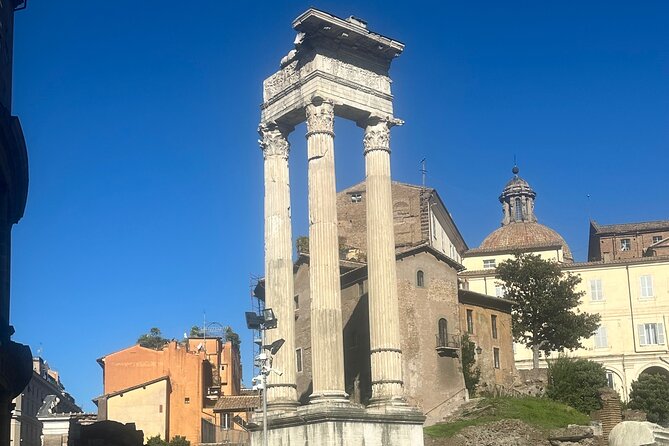
One of the tour’s Rome-nerd highlights is Teatro di Marcello, an ancient Roman theater near the Tiber. Built between 13 and 11 BC at the request of Emperor Augustus and dedicated to his nephew Marcellus, it held about 20,000 spectators.
What I like about this stop is how it teaches you to read Roman buildings. The theater is described as semicircular with marble seating, and the stage was adorned with columns and statues. Over time it changed and deteriorated, but today you can still see a lot of the structure, partly folded into modern Rome.
This is about 20 minutes, and it’s free. That timing is right: enough time to appreciate the scale and walk a little around the visible edges, but not so long that it drags compared with the Pantheon or Trevi.
If you enjoy Roman public life beyond the Colosseum headline, Teatro di Marcello gives you that broader cultural context fast.
Pantheon: the dome, the oculus, and why it survived
The Pantheon is one of the best-preserved monuments in Rome, and the tour gives it a proper window of about 20 minutes with admission included. You’ll see the classic portico with Corinthian columns and the grand pronaos, and the real star is the dome.
The description matters here: it’s the largest unreinforced concrete dome in the world, with a diameter of 43 meters. The central oculus lets light filter in, creating a strong sense of atmosphere. And the story of survival is baked in too: the building was transformed into a Christian church in the 7th century, which is part of why it remained intact.
Practical tip: when you’re inside, don’t only look at the dome. Pause and look at how the light lands as you move. That’s where the Pantheon becomes more than a photo spot.
This is also a good stop for mixed-interest groups. Even if someone isn’t a architecture buff, the dome is hard to not respect.
Imperial Forums area: power, politics, and Roman engineering in fragments
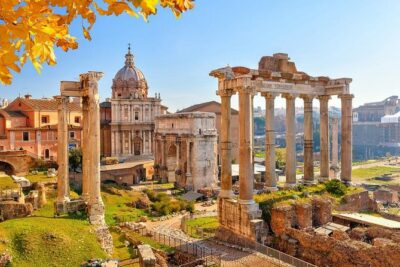
You’ll also get time around the Imperial Forums (Fori Imperiali), described as the ancient political, social, and economic heart of Rome. The area was built between the 1st century BC and 3rd century AD, with projects attributed to emperors from Julius Caesar to Trajan.
What makes this stop valuable is the list of what you’re standing near: the Forum of Caesar, Forum of Augustus, Forum of Nerva, and the Forum of Trajan. The tour points out temples, basilicas, columns, and triumphal arches as public symbols of imperial power.
This section is about 20 minutes and free. That’s enough to get a “now I see it” feeling, especially if you’ve ever looked at a map of ancient Rome and felt lost. Here, the ruins become a storyline you can hold onto.
Orange Garden on the Aventine: views that slow your pace
To close your tour, you’ll likely end with a calmer kind of Rome: Giardino degli Aranci on the Aventine Hill, also called Parco Savello. It’s known for scenic beauty and a panoramic view of Rome and the Tiber.
The garden dates to the 14th century, and it’s described as having orange trees, aromatic plants, and shaded paths that help you relax after the busiest central sights. This is not a museum stop. It’s a breather.
If your legs are tired from a day of walking, this is a smart finish. You can stand, look, and snap a few photos without needing to power-walk across crowded squares.
Price and logistics: does $131.81 per person make sense?
At $131.81 per person for about 3 hours, this tour is priced for efficiency and convenience, not for slow museum time. The math gets better because Trevi Fountain and the Pantheon include admission in the plan. For many visitors, that turns the tour into a net win: you’re paying for guide time and the golf cart ride while also covering two ticketed highlights.
You also get practical value from the setup. Pickup is offered for hotels, so you can start right away without spending the morning decoding transit and meeting points. The tour also provides mobile tickets, which is the kind of small thing that reduces stress.
If you want to squeeze maximum value from your single day, this is a strong match. If you already have a tight plan for museums and want long, unhurried time inside major sites, you’ll likely want extra independent time after this tour.
One more logistics thought: the tour requires good weather. If rain is in the forecast, have a backup plan for rescheduling.
Should you book Rome in a golf car?
Book this if you want a smart first pass through Rome’s top sights with minimal walking and a guide who can keep things moving. It’s a great option when you’re short on time, you’re traveling with people who don’t want long stretches on foot, or you simply want a route that covers the big names without you doing the hard logistics work.
Don’t book it as your only Rome plan if you’re the type who needs lots of time per site. This is built for coverage. It’s excellent for getting your bearings and checking off major landmarks like Trevi, the Spanish Steps area, the Pantheon, and the Imperial Forums. After that, you’ll know exactly what deserves your second round.
If you’re open to asking your guide for photo spots and small adjustments, this tour is the kind that rewards you. And based on the standout feedback tied to guides like Max, Mauricio, Alex, and Alessandro, you’re likely to get a trip that feels personal, not robotic.
FAQ
How long is the Rome in Golf Car private trip?
The tour duration is about 3 hours.
Does the tour include hotel pickup?
Yes. Direct pickup from hotels is offered so you can start without stress.
Is this a private tour?
Yes. Only your group participates.
What languages is the guide available in?
The guide is offered in English, Spanish, Italian, Russian, Ukrainian, and Polish.
Are any admission tickets included?
Yes. Admission tickets are included for Trevi Fountain and the Pantheon. Other stops listed are marked as free.
Does the tour require a mobile ticket?
Yes. A mobile ticket is provided.
Is it suitable for most travelers?
Most travelers can participate, and service animals are allowed.
What is the cancellation policy?
You can cancel for a full refund up to 24 hours before the experience starts. If you cancel less than 24 hours before, the amount paid is not refunded. The tour also requires good weather and may be rescheduled or refunded if canceled due to poor weather.