REVIEW · ROME
Special First Entry Vatican Museums Small Group Tour
Book on Viator →Operated by Italy Wonders SRLS · Bookable on Viator
The Vatican hits fast—so go early. This small-group tour gives you skip-the-line admission plus headsets, so you can hear the guide clearly even when the rooms get loud.
I like the small group size (up to 20) because you’re not lost in a crowd. And the route is built around major visual payoffs: Upper Galleries highlights, the Belvedere sculptures, the Raphael Rooms, and finally the Sistine Chapel.
One catch: show up on time. If you arrive late, you might miss your Vatican Museums entrance, and the day won’t wait for you.
In This Review
- Key Things to Know Before You Go
- Early Vatican Entry at 7:30: What That Timing Really Changes
- Small Group (Up to 20) and Included Headsets: Clear Audio Beats Guesswork
- Meeting at Via Vespasiano and the Radio Deposit: Simple, But Don’t Ignore It
- Vatican City Orientation: A Tiny Country With Big Energy
- Vatican Museums Upper Galleries: Maps, Tapestries, and Candelabra
- Belvedere Highlights: Apollo of Belvedere, Laocoon, and Nero’s Bathtub
- Raphael Rooms: The Feeling of Painting as Power
- Sistine Chapel in Ten Minutes: How to Make It Count
- What’s Not Included: St Peter’s Basilica (Plan for That Day)
- Price and Value: Is $70.88 a Good Deal for This Route?
- Who This Tour Suits Best (And Who Might Be Happier Elsewhere)
- Should You Book This Early Vatican Small Group Tour?
- FAQ
- What time does the Vatican Museums small group tour start?
- Where do we meet, and where does the tour end?
- Is a skip-the-line ticket included?
- Are headsets included?
- What is the dress code for entry?
- What’s included and not included in this tour?
Key Things to Know Before You Go
- Headsets are included, plus you’ll hand back radios at the end for a 10-euro refundable deposit
- Skip-the-line tickets get you through the biggest early bottleneck
- Group size is capped at 20, which makes it easier to ask questions and re-find your guide
- The visit focuses on Vatican Museums + Raphael Rooms + Sistine Chapel, not St Peter’s Basilica
- Dress code is strict: shoulders and knees covered for everyone, no sleeveless tops or shorts
- Your pace is guided but requires moderate physical fitness for walking and stairs
Early Vatican Entry at 7:30: What That Timing Really Changes
Starting at 7:30am is the whole game here. The Vatican Museums can turn into a steady crush later in the morning, and that affects your ability to stop, look, and actually take in what you came for. With early access, you get your first big rooms while your brain is still fresh—and before everyone else has had hours to build the lines.
This tour is designed around that early window. You’ll have a guided plan that moves you through several standout zones without the usual free-for-all. The upside is obvious: less time circling, more time seeing art and architecture at a pace that still feels human.
If you’re the type who likes to get oriented fast, this schedule helps you get your bearings quickly. By the time you reach the more famous ceiling views, you’re not fighting the crowd flow as much.
You can also read our reviews of more museum experiences in Rome



Small Group (Up to 20) and Included Headsets: Clear Audio Beats Guesswork
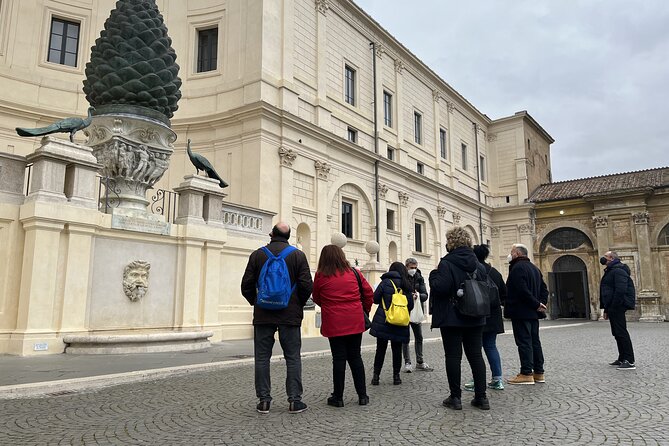
A lot of Vatican tours fail for one simple reason: you spend your museum time trying to hear your guide. This one fixes that with headsets included. You’ll hear instructions and art explanations much more clearly than if you rely on shouting over people.
In practice, this matters because the Vatican is full of “wait, where are we?” moments. Headsets reduce the scramble. You also get better context as you move—what you’re looking at, why it mattered, and what to notice next—without needing to crane your neck or guess from a distance.
The group cap of 20 also keeps things from turning into a long conga line. You can usually pause longer at key pieces, and your guide can adjust in real time when you’re looking at the right details or missing them.
Meeting at Via Vespasiano and the Radio Deposit: Simple, But Don’t Ignore It
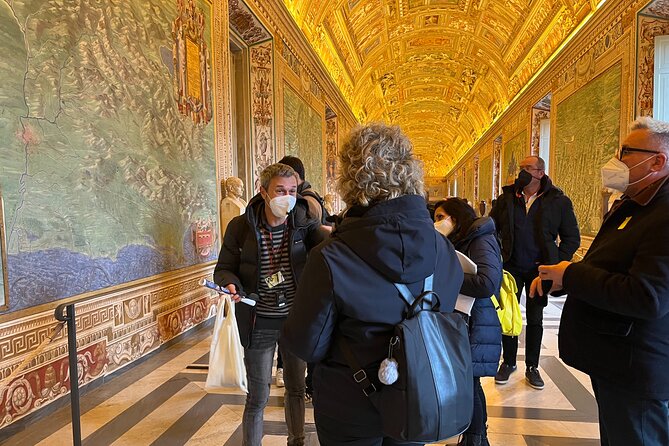
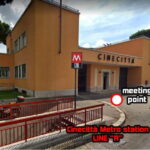
You’ll meet at Via Vespasiano, 28, 00192 Roma at 7:30am. The ending point is at/near the Sistine Chapel area (Vatican City, 00120). There’s no hotel pickup, so plan to arrive under your own steam using public transport.
Two logistics details are worth your attention:
- Arrive about 10 minutes early for check-in. If you drift in late, you risk losing your entrance at the Vatican Museums.
- You’ll be asked for a 10-euro refundable deposit for the radios. When you return them, you get the deposit back. If radios aren’t returned, the cost can be charged per device.
That deposit part sounds annoying until you realize why it exists: it protects the operator from missing equipment. So bring small cash or make sure you can handle the transaction smoothly.
Vatican City Orientation: A Tiny Country With Big Energy
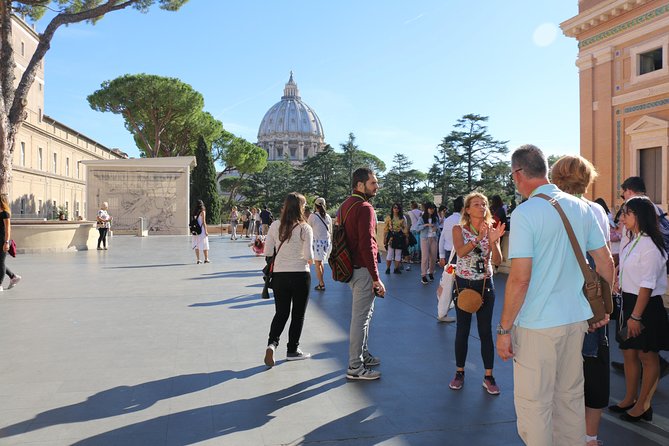
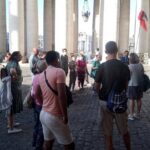
Even though you’ll spend most of your time inside the museum complex, you’ll start with a bit of context about Vatican City State—its size, its independence, and the way the Holy See operates there as a sovereign entity. This matters because the Vatican isn’t just a building you tour; it’s a functioning center with political and spiritual importance.
At 49 hectares and about 825 residents, it’s the world’s smallest country by both area and population. That scale makes the place feel compact, but it’s still packed with layers—architecture, faith, art patronage, and centuries of power.
A good guide’s job is to help you connect the “what am I seeing?” with the “why was it made this way?” Expect your first minutes to set up your eyes before you hit the major galleries.
Vatican Museums Upper Galleries: Maps, Tapestries, and Candelabra
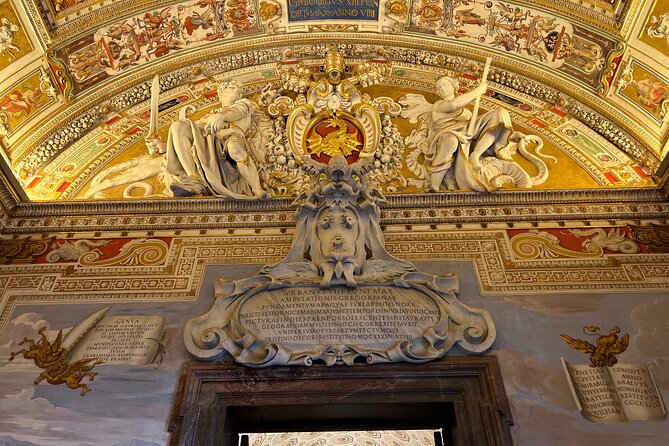
Your first real museum moment is the Upper Galleries, which is smart. You’re not dropped into chaos on the first step. You get a structured introduction that helps you settle into the building’s rhythm and scale.
The highlights here include the:
- Maps
- Tapestries
- Candelabra
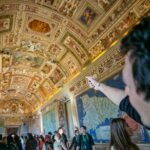
The Maps are worth slowing down for. They’re not just pretty decoration; they’re tied to how knowledge was displayed and valued. Seeing them in the context of the Vatican Museums makes them feel less like “a random room” and more like a visual statement about worldview.
The tapestries add another layer. Textiles can be easy to treat as background if you don’t have guidance. With a guide plus headsets, you’re more likely to notice the patterns and storytelling style instead of just walking past.
And the candelabra visuals give you a good break from pure flat-wall art. They help you read the spaces—what stands taller, what frames sightlines, and where the museum wants your attention.
Potential drawback here: the early start helps, but the Vatican Museums can still be overwhelming. If you get decision fatigue easily (too many things to look at), the key is to listen for what your guide wants you to notice first.





Belvedere Highlights: Apollo of Belvedere, Laocoon, and Nero’s Bathtub
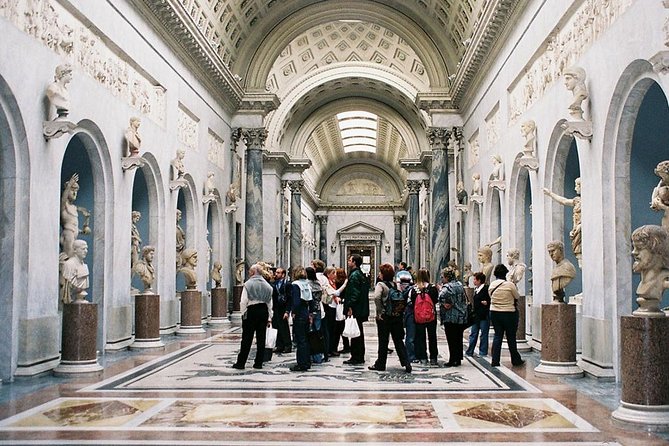
Next you’ll move into three of the most famous “stop-and-stare” objects you can see anywhere:
Apollo of Belvedere, Laocoon, and Nero’s Bathtub.
This trio is powerful because they show different sides of classical sculpture:
- Apollo is about idealized form and presence.
- Laocoon is about drama—movement, emotion, and tension.
- Nero’s Bathtub is a reminder that ancient art wasn’t always created to be static; it was often part of grand settings and showpiece architecture.
The advantage of a guided route is that you’re less likely to treat these as just photos for your camera roll. Instead, you start to look for the small things: how a figure’s posture leads your eye, how the composition makes you orbit around the piece, and why certain sculptures have stayed famous across centuries.
If you love art that invites close viewing, this portion is where the tour pays off fast. The time is limited (you’ll be guided for short stretches), so the best strategy is to let your eyes rest on one or two details per work rather than trying to read everything at once.
Raphael Rooms: The Feeling of Painting as Power
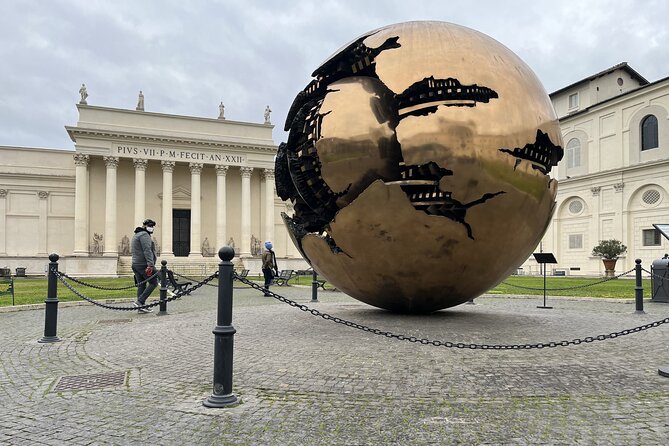
Then comes the Raphael Rooms, which is exactly the kind of switch-up you want after sculpture and museum galleries. These rooms shift you from single objects to coordinated wall-and-ceiling storytelling.
The Raphael Rooms are often where people realize the Vatican isn’t only about grand religious moments. It’s also about how art was used to communicate ideas, authority, and cultural identity.
In practical terms, you’ll have about 40 minutes here. That’s enough time to see key scenes and still regroup if you want a closer look at sections of the walls. With headsets, you’ll stay on track instead of wandering from one fresco to the next with no context.
The biggest value of including the Raphael Rooms on an early, small-group plan is compression without feeling rushed. You’re not staying all day—so you need the route to be efficient. This one is built to hit the scenes most people come for while still giving you a chance to look.
Sistine Chapel in Ten Minutes: How to Make It Count
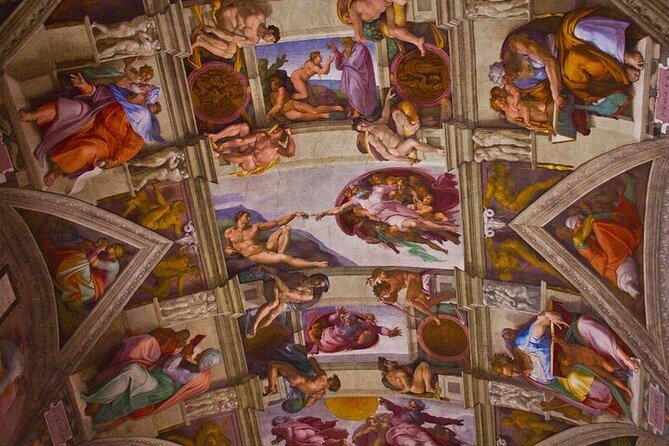
After the Museums, you’ll reach the Sistine Chapel for about 10 minutes. Ten minutes sounds short until you remember the entire building becomes a kind of live viewing space the moment you step inside. People shift. Phones get raised. You’ll likely have to stand and watch without much personal space.
So how do you make it work?
- Use your listening time first. Your guide will point you to what to notice so you’re not stuck scanning randomly.
- Once you’re oriented, slow your eyes down. The most famous ceiling work rewards patience, even in a short window.
- Don’t aim to see everything. Aim to see the parts you’re guided toward and notice how the figures relate to each other.
A short guided moment also keeps you from getting stuck in that “staring at the crowd, not the art” trap. If you’re organized and ready when you enter, you’ll leave with a stronger impression than if you spend half the time trying to figure out your place.
And yes, the ceiling frescoes made for Pope Julius II and Paul III are the reason this stop exists. Even with a short window, it’s a huge payoff—just know you’re not here for a leisurely self-guided wander.
What’s Not Included: St Peter’s Basilica (Plan for That Day)
This tour ends in the Sistine Chapel area and does not include St Peter’s Basilica. That’s not a bad thing—just a planning fact.
If you want Basilica time (and most people do), you’ll need to line it up separately. The Vatican area is walkable, but your timing matters. If you leave the chapel and wander too casually, you can get stuck in the wrong queues for the Basilica entrance.
So think of this tour as your Museums-and-Chapel “core hit.” Then decide what comes next—either Basilica right after, or a later plan depending on your energy level and the rest of your Rome schedule.
Price and Value: Is $70.88 a Good Deal for This Route?
At $70.88 per person for about 2 hours (approx.), this isn’t the cheapest way into the Vatican. But it’s also not trying to be. The value is in the stuff that’s hardest to buy on your own:
- Skip-the-line admission (time savings in the Vatican are real)
- A professional guide for roughly 2.5 hours of guided time, even though the activity itself is listed as about 2 hours
- Headsets, so you don’t waste your limited time straining to hear
- A tight selection of major sights: Upper Galleries, Belvedere highlights, Raphael Rooms, and Sistine Chapel
If you’re comfortable doing museums self-guided, you might decide to save money. But if you want the experience to feel organized, with fewer wrong turns and better explanation, the added cost starts to make sense quickly.
Think of it this way: the Vatican isn’t only about seeing famous works. It’s about understanding what you’re looking at while you’re looking at it. Headsets and a guide are what make that happen in the time you have.
Who This Tour Suits Best (And Who Might Be Happier Elsewhere)
This experience fits best if you:
- Want a guided, high-impact plan without spending the entire day inside
- Appreciate a small group and clear audio
- Like classic art and Renaissance frescoes more than pure wandering
- Can handle moderate walking and standing
It may be less ideal if you:
- Want a long, slow, self-paced museum day
- Need lots of flexibility to stop for extended breaks
- Miss entrances easily when timing slips—because being late can cost you entry
One more practical note: the tour has a dress code for places of worship and selected museums. No shorts or sleeveless tops. Knees and shoulders must be covered for both men and women. If you arrive in the wrong clothing, you risk being refused entry.
Also, bring your documents if needed. You’ll need a current valid passport or ID document for children under 18 as proof of age.
Should You Book This Early Vatican Small Group Tour?
If your goal is the smart route: Museums first, then Raphael Rooms, then the Sistine Chapel—this one is a strong choice. The combo of early access, headsets, and a group capped at 20 solves the two most common Vatican problems: lost time and lost context.
My call: book it if you want a guided hit with fewer headaches, especially if it’s your first trip to the Vatican Museums. Skip it only if you’re determined to go fully self-guided and you’re ready to handle long waits and the challenge of hearing explanations without a radio.
If you’re going to take one lesson from this tour: arrive early, dress correctly, and don’t let time slip at check-in. Do that, and you’ll get the kind of Vatican experience that feels focused instead of chaotic.
FAQ
What time does the Vatican Museums small group tour start?
The tour starts at 7:30am.
Where do we meet, and where does the tour end?
You meet at Via Vespasiano, 28, 00192 Roma. The tour ends at the Sistine Chapel area (Vatican City, 00120).
Is a skip-the-line ticket included?
Yes. Early skip-the-line admission tickets are included.
Are headsets included?
Yes. Headsets are included, and you’ll also need to return the radios at the end to get back a 10-euro refundable deposit.
What is the dress code for entry?
You need to cover knees and shoulders. No shorts or sleeveless tops are allowed. You may be refused entry if you don’t meet the dress requirements.
What’s included and not included in this tour?
Included: Vatican Museums/Upper Galleries, Belvedere highlights, Raphael Rooms, and the Sistine Chapel, along with a professional guide and admission tickets. Not included: St Peter’s Basilica.