REVIEW · ROME
Rome: Guided Walking Tour in English
Book on GetYourGuide →Operated by Walkative Tours · Bookable on GetYourGuide
Rome is a walking lesson. This 2.5-hour guided route pulls you from one legend to the next, linking what you see now with what happened here centuries ago. I especially like that the guide points out Rome’s iconic anchors and also adds local-style context you can carry with you afterward.
Two things I like a lot: you get an English-speaking local guide explaining what the sites meant, and you’ll cover the big hitters without turning it into a sprint-and-vanish experience. One consideration: because this is a pay-as-you-wish style tour, you should be ready for the tipping conversation, and one past participant even felt it was handled awkwardly.
In This Review
- Key highlights you’ll care about
- Walking start: Piazza di Santa Chiara and 2.5 hours that fit
- Piazza Navona: where Roman games meet a lively piazza
- The Pantheon: a temple turned church, with serious names inside
- Trevi Fountain: the coin ritual, but with context
- Piazza Venezia and the Altar of the Fatherland: big monument, clear story
- Foro Romano: what “ancient government” looks like in real life
- The Colosseum view: Roman engineering and entertainment power
- The food angle: carbonara, amatriciana, cacio e pepe, and where to stop after
- Price and value for $31, plus the pay-as-you-wish reality
- What the guide experience tends to be like
- Who this tour suits best, and who should rethink it
- Should you book Rome: Guided Walking Tour in English?
- FAQ
- FAQ
- What’s the duration of the Rome guided walking tour?
- Where do I meet the guide?
- Is the tour in English?
- What sights are included on the route?
- Is transportation included?
- What should I do right before the tour starts?
- Is the tour wheelchair accessible?
- How much does it cost?
- What’s the cancellation policy?
- Is there flexibility in payment?
Key highlights you’ll care about
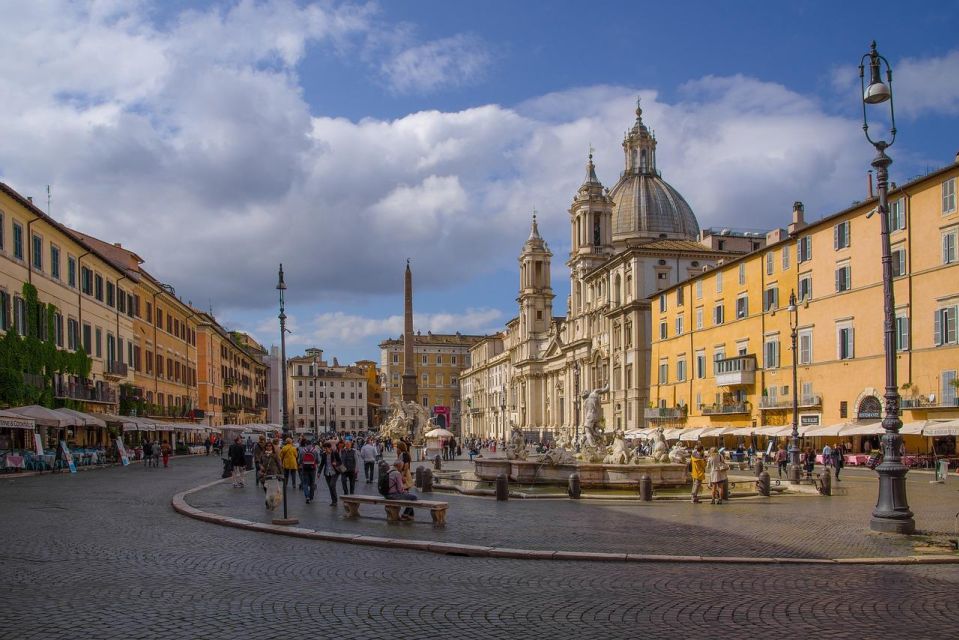
- Old Town hits fast: Piazza Navona, Pantheon, Trevi Fountain, Piazza Venezia, Foro Romano, and the Colosseum view are all on the route.
- History that connects the dots: the guide ties monuments to real events, like Roman games and Italy’s unification.
- Coin-throwing at Trevi: you’ll be there for the famous ritual, not just a photo from the curb.
- Real Rome food guidance: you’ll get recommendations for carbonara, amatriciana, or cacio e pepe, plus where to grab coffee and gelato afterward.
- Guides can make or break it: multiple strong comments call out standout guiding; one person found the pace boring and felt some described stops were missed.
Walking start: Piazza di Santa Chiara and 2.5 hours that fit
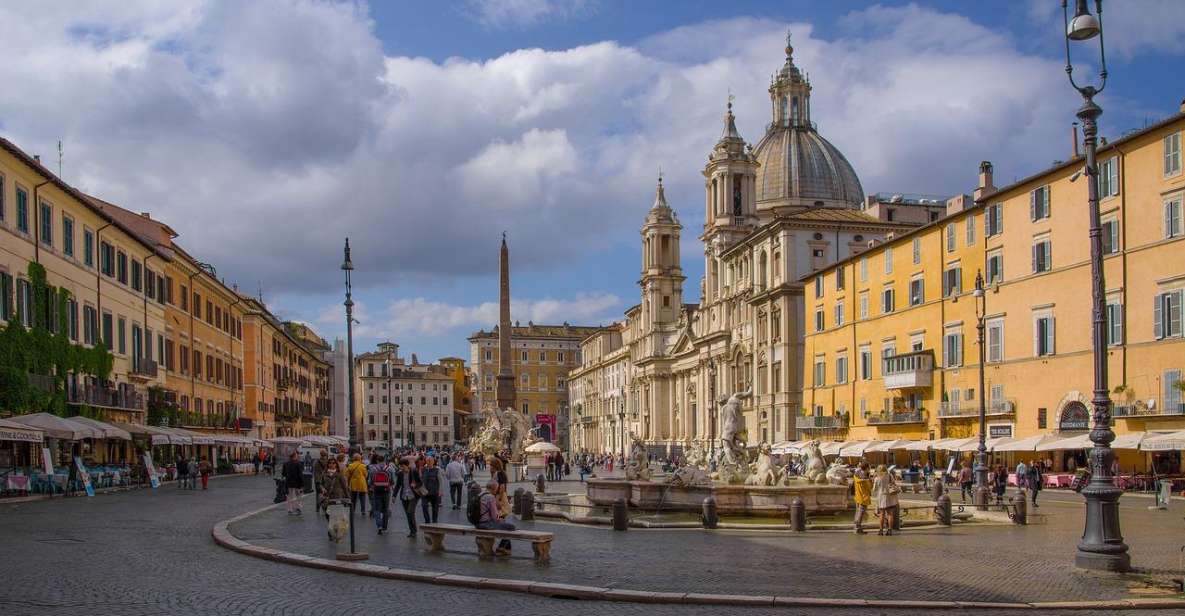
Meet your Walkative! guide at Piazza di Santa Chiara. Plan to arrive about 10 minutes early so you don’t stress yourself out while Rome does its usual thing with crowds and traffic. The good news is the tour length is only 2.5 hours, so it works well as your first or second day when you still need to get your bearings fast.
Because this is a walking tour, wear shoes you trust for uneven stone and standing around for views. No transportation is included, so you’re essentially “on your feet” the whole time. That’s not a flaw, it’s the point: Rome’s best moments are often right there at eye level.
You can also read our reviews of more walking tours in Rome

Piazza Navona: where Roman games meet a lively piazza
The route begins with Piazza Navona, famous as one of Rome’s great public squares. What makes it interesting on a guided walk is the way the guide frames the square not as a pretty stop, but as a place that once hosted ancient Roman games. That historical link helps you read the space instead of just watching other people take pictures.
Practical tip: this area can feel busy because it’s central. If you want your best experience, stay flexible—pause for the story, then step into a better viewing position as the group moves.
The Pantheon: a temple turned church, with serious names inside
Next up is the Pantheon. The standout detail here is the transformation: this huge ancient temple is now a church, and it’s the resting place for influential Italian figures, including King Vittorio Emanuele II and King Umberto I. When a site has layers like this, a guide can really help you understand why people still treat it like something living, not just ancient.
You’ll also get a sense of why the Pantheon matters beyond postcard value. The design and reuse through time show how Romans built for power and how later Italy kept reworking the same bones.
One drawback to watch for: this is a major stop. Expect that you might not linger as long as you’d like if your heart is set on maximum time inside. This tour is designed to move between icons, not to function like a slow museum day.
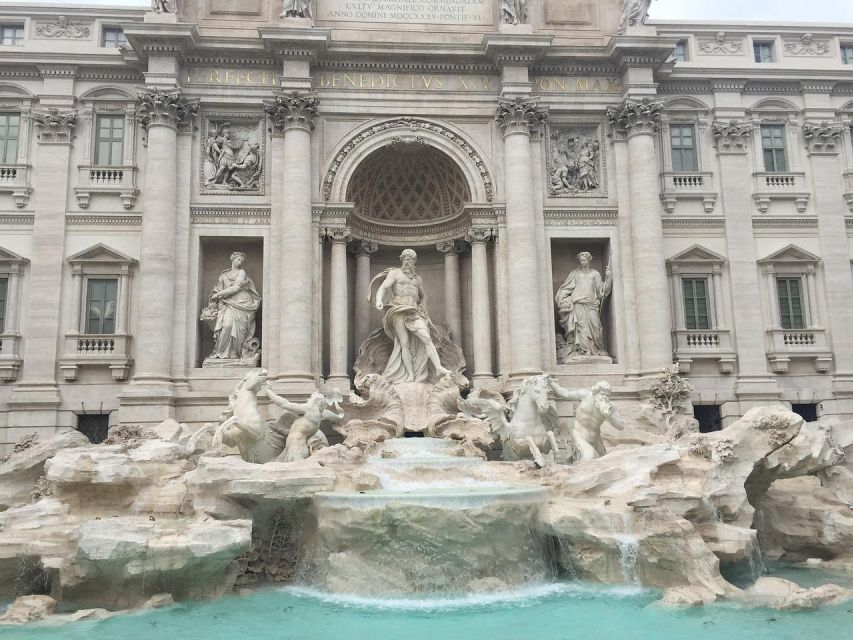
Trevi Fountain: the coin ritual, but with context
You’ll reach the Trevi Fountain, and yes, this is the moment for the classic coin ritual. The guide’s explanation makes it more fun because you’re not only repeating a tradition—you’re learning what makes the fountain such a magnet for culture and tourism.
Here’s what I’d plan for: give yourself a little time in your head for crowds and for people blocking angles. The tour setting won’t make the fountain empty, but a guide can help you time your photos and keep the story from getting swallowed by the noise.
If you’re the type who likes to “get the shot and go,” consider doing one quick photo early, then re-focus on the guide’s points. You’ll remember it longer.
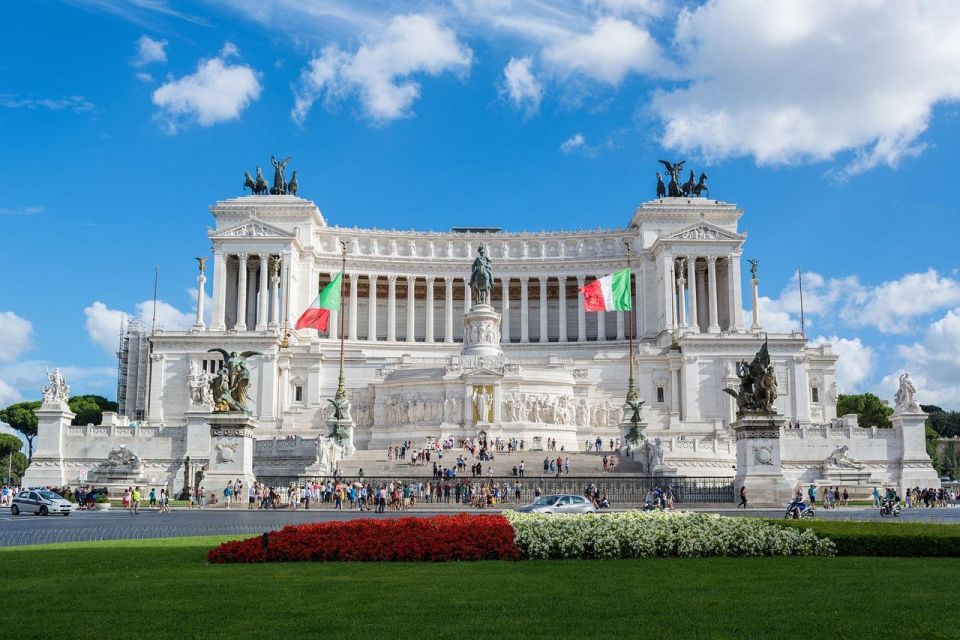
Piazza Venezia and the Altar of the Fatherland: big monument, clear story
At Piazza Venezia, you’ll see the imposing Altar of the Fatherland, tied to Italy’s unification. This is one of those places where the scale can feel like a movie set, but the guided explanation helps you grasp what it’s representing and why it’s so important in modern Italian identity.
This stop also gives you a useful contrast: you’re moving from ancient Rome’s government and entertainment to a 19th/20th-century monument about nation-building. That contrast is a big part of why this tour works—Rome isn’t one era. It’s layers that keep talking to each other.
Consideration: this kind of monument can be impressive from a distance. If you want a long sit-down view, the tour pace may feel brisk. The upside is that you won’t lose the day to one single stop.
You can also read our reviews of more guided tours in Rome






Foro Romano: what “ancient government” looks like in real life
Then you’ll get to the heart of ancient Rome at Foro Romano. This is where the walking tour becomes more than a checklist. When a guide explains the remnants of temples and government buildings, the space starts to make sense as a working civic center, not just broken stone.
A good guide helps you visualize how the forum would have functioned: meetings, power, ritual, and public life. Even if you don’t catch every detail, you’ll leave with a mental map that makes later self-guided wandering easier.
Possible drawback: the forum area can be uneven and visually busy. If you’re sensitive to lots of standing time or hot sun, plan to pace your photos and take short water breaks when you can.
The Colosseum view: Roman engineering and entertainment power
The tour ends with a view of the Colosseum, described as the largest ancient amphitheatre ever built. This is where Roman engineering and political entertainment meet in one dramatic silhouette. Hearing about the gladiatorial contests and spectacles helps you connect the building to real human behavior—crowds, spectacle, and the spectacle of power.
Important detail: the tour information points to a view, not an entry. So I’d treat this as your “see it from the outside and get oriented” moment. If you want to go inside and spend extra time, plan a separate visit.
Also, if crowds are intense that day, you might feel that you’re taking turns to see what you came for. That’s normal here; what matters is how the guide frames it, so the time doesn’t feel wasted.
The food angle: carbonara, amatriciana, cacio e pepe, and where to stop after
One of the best parts of this kind of Rome tour is the food guidance. In the tour description, the guide promises secret-leaning place recommendations for classics like carbonara, amatriciana, and cacio e pepe. You’ll also get direction for the best Italian coffee and gelato afterward.
You should know this isn’t stated as a sit-down included meal. Think of it as insider advice for where to spend your next hour. That can be hugely valuable because Rome has plenty of tourist traps, and when you’re hungry, it’s easy to pick the wrong line.
My practical advice: after the tour, eat what the guide suggests only if it matches your current hunger level and location. If the recommendation needs a hike, decide whether you want the walk or a closer option. You’ll still benefit from the guide’s tastemaker instincts.
Price and value for $31, plus the pay-as-you-wish reality
At $31 per person for a 2.5-hour guided walking tour, the value depends on what you want from Rome. If you’d rather read plaques on your own, you could skip a guide. But if you want the “why” behind the icons—like what the Pantheon became and why the Altar of the Fatherland matters—then $31 starts to look pretty fair for the time and guidance.
One more thing: this tour is described as a general pay as you wish format, where the amount you pay covers the reservation fee and the guide’s payment. Even so, one negative experience noted feeling pressured to tip despite already paying. That’s a cue for you to decide your comfort level before you arrive.
Here’s how I’d handle it: if you’re going on this tour, be mentally ready to reward your guide. If you prefer a strict “no surprises” approach, you might want to confirm how the tipping conversation is expected to work on your specific day.
What the guide experience tends to be like
The strongest feedback points to guide quality. Several comments highlight impressive guide knowledge and one person specifically mentioned a guide named Kim as wonderful. That matches what you’re signing up for: this tour lives or dies by whether the guide can connect the big sights into a coherent story.
So aim for a guide-and-group dynamic that fits you. If you enjoy listening and asking small questions, you’re in the right place. If you’re more of a head-down wanderer, the structured pace might feel slow—or, in one case, even boring.
Also, one criticism mentioned the tour not visiting some places listed in the description. While you shouldn’t assume that will happen, if you have a must-see item, it’s smart to check in briefly at the start so you’re not hoping for a stop that might shift.
Who this tour suits best, and who should rethink it
This tour is a strong match if you want:
- A fast orientation to Old Town Rome through the big names
- Clear explanations tying monuments to real events and ideas
- Food and drink suggestions you can use right away
It may be less ideal if you:
- Want a long, slow pace at one site
- Are easily frustrated by crowds
- Prefer totally predictable stop timing and do not want any chance of variation
The duration is also a clue. Two and a half hours is enough for a guided overview, not for a deep-dive into museum-level detail.
Should you book Rome: Guided Walking Tour in English?
Book it if you want a guided, English-language walkthrough that hits the essentials and gives you the context to understand what you’re looking at. The combination of major stops plus food recommendations is a nice real-world bonus.
Skip or reconsider if you dislike pay-as-you-wish style guidance conversations, or if you prefer to spend more time inside major sites on your own schedule. In that case, you might be happier with an option focused on fewer stops and longer time at each.
FAQ
FAQ
What’s the duration of the Rome guided walking tour?
The tour lasts 2.5 hours.
Where do I meet the guide?
Meet your Walkative! guide at Piazza di Santa Chiara.
Is the tour in English?
Yes, the tour includes an English-speaking guide.
What sights are included on the route?
The tour description lists Pantheon, Trevi Fountain, Piazza Venezia, Altar of the Fatherland, Foro Romano, and the Colosseum view, plus a stop at Piazza Navona.
Is transportation included?
No. Transportation is not included.
What should I do right before the tour starts?
Please arrive at the meeting point 10 minutes before the activity starts.
Is the tour wheelchair accessible?
Yes, it’s listed as wheelchair accessible.
How much does it cost?
The price is $31 per person.
What’s the cancellation policy?
You can cancel up to 24 hours in advance for a full refund.
Is there flexibility in payment?
Yes. You can reserve now & pay later, meaning you can book your spot and pay nothing today.