REVIEW · ROME
Panoramic Rome Off-the-beaten-track Tour with Cannondale Ebike
Book on Viator →Operated by TopBike Rental and Tours · Bookable on Viator
Rome’s hills quit fast on an e-bike. I love how the electric assist lets you cover major viewpoints with less leg-burning effort, yet you still get a real bike ride. I also like the practical add-ons—helmets, bottled water, and handlebar bags—that make you feel set up for the street. One catch: Rome’s cobblestones and pedestrian crossings can still make the ride feel a bit hands-on, even at an easy pace.
This tour is built for moving beyond postcard Rome without spending half your day in traffic on a bus. You’ll cover about 12 miles (18 km) in roughly 4 hours, with a small group (up to 10) and an English-speaking guide available in several other languages too. If you want plenty of stops plus a view-focused route, this format usually works well.
In This Review
- Key highlights at a glance
- E-bikes on Rome hills: faster sightseeing with less sweat
- Your starting point at Via Labicana and what you get with the ride
- Riding reality in Rome: cobblestones, pedaling, and safe turns
- Circo Massimo and Giardino degli Aranci for views before the crowds
- Trastevere streets and Santa Maria v Trastevere church stop
- Janiculum Hill and St Peter’s Square without the long walk
- Castel Sant’Angelo to Piazza Farnese: monuments at street level speed
- Jewish Ghetto lanes, Portico of Octavia, and Teatro di Marcello
- Capitoline Hill, the Forum ride-through, and the panoramic finish
- Price, value, and small-group attention up to 10 riders
- Should you book this panoramic off-the-beaten-track e-bike tour?
- FAQ
- How long is the panoramic Rome off-the-beaten-track e-bike tour?
- How much does the tour cost?
- Where do I meet for the tour?
- What’s included in the tour price?
- What is not included?
- How many people are in the group?
- Is the ride considered easy?
- Are there age rules for the e-bikes?
- What languages are available for the guide?
- Can I get a refund if my plans change?
Key highlights at a glance
- Cannondale e-bikes with anti-puncture tires for easier Rome hill climbing
- Helmet, bottled water, and handlebar bags included for comfort and safety
- Max 10 riders so you get real attention when streets get tight
- Stops that combine classic monuments with quieter neighborhoods like Trastevere
- Panoramic payoff from Janiculum Hill plus a final ride through the Forum/Imperial Fora area
- Route design aims for limited-traffic streets, with some sections having little to no traffic
E-bikes on Rome hills: faster sightseeing with less sweat
Rome is famous for stairs, sloped streets, and that feeling of watching your destination get higher while you get slower. The point of this tour is simple: you still experience Rome on wheels, but the assist takes the edge off the worst climbs. That means you can spend more energy looking up at domes and views, and less energy fighting gradients.
I also like that the bike setup feels practical, not gimmicky. You get a helmet (mandatory) and the ride comes with bottled water plus a handlebar bag, which helps keep small items accessible while you’re stopping for photos. The e-bike itself is a Cannondale with anti-puncture tires, which matters on cobblestones where flats can ruin a day.
Still, the e-bike is not a magic carpet. Some feedback notes that certain e-bikes can lurch forward when you slow down, so you’ll want to get comfortable with the controls before you’re bouncing through tighter alleys. And even on leisure mode, you’re riding for hours—so bring a mindset of steady movement, not a stroll.
You can also read our reviews of more cycling tours in Rome
Your starting point at Via Labicana and what you get with the ride
The tour meets at Via Labicana, 49 (00184 Rome). It’s also described as near public transportation, which is handy if you don’t want to fight for parking or commit to a taxi plan.
Before you roll, you’ll be fitted onto a Cannondale e-bike and given a helmet since it’s required and provided. Bottled water and a handlebar bag are included, which is more useful than it sounds when you’re stopping at viewpoints and churches and you don’t want to carry everything in your hands. The route also follows a carefully planned line designed to limit traffic exposure, with some stretches reported as having no traffic at all.
Two practical constraints to keep in mind: the gear has a weight limitation of 300 lbs (136 kg), and electric-assist bikes are available only for participants over 9 years old. The tour is listed as “most travelers can participate,” but if you’re unsure about your comfort riding in a city with cobblestones and pedestrians, it’s worth treating this as a real cycling activity—not a casual sightseeing cruise.
Riding reality in Rome: cobblestones, pedaling, and safe turns
Even with electric assist, you still pedal and steer. The difficulty is listed as leisure (or intermediate with a child seat/extension), and the route covers about 12 miles (18 km). So yes, it should feel manageable for many people—but you should expect some sustained riding, not just occasional motion between stops.
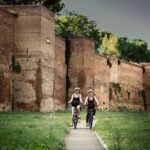
Rome’s ground is the wildcard. Cobblestones can make your hands tingle and your timing a little more delicate, especially when you’re threading through areas with pedestrians. One common piece of advice from the experience feedback is to practice smooth speed changes and be ready to adjust your line in narrow spaces. If you’re the kind of rider who gets nervous around bikes in close proximity, take comfort in the fact that the tour design aims to reduce stress with limited traffic streets and guide support when you need to cross.
The small-group size is a big deal here. With up to 10 riders, the guide can slow things down at tricky moments and keep everyone together. And if you’re worried about safety, the tour is described as following a planned route with limited access to traffic, including sections with no traffic, so the ride can feel calm rather than chaotic—most of the time.
Circo Massimo and Giardino degli Aranci for views before the crowds
Your ride starts at Circo Massimo, where you’ll cruise around what remains of ancient Rome’s grand chariot-racing arena. It’s a short stop, about 10 minutes, but the scale hits quickly: this was a huge venue in antiquity, able to seat around 150,000 spectators. Even if the structures are worn down, the place still gives you that “Rome was built by people who loved big numbers” feeling.
Next is Giardino degli Aranci on the Aventine Hill, a free stop for about 15 minutes. This is one of those pauses that helps the whole tour make sense. You get a garden setting perched above the city, and you’ll notice the skyline connections—St. Peter’s dome dominating the view and the Tiber flowing down below. The catch is time: it’s not a long linger. So treat it as a quick reset and photo break, then get back to moving.
If you’re someone who likes context, this early combination helps. Circo Massimo gives you ancient setting; the orange garden gives you the modern “where you are in the city” picture. Together, they set you up for the panoramic parts later.
Trastevere streets and Santa Maria v Trastevere church stop
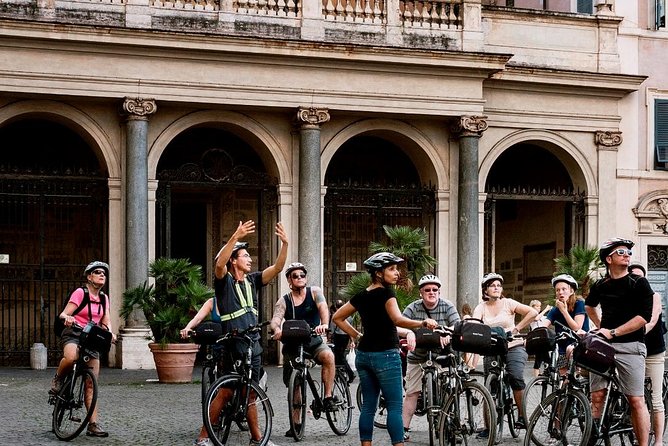
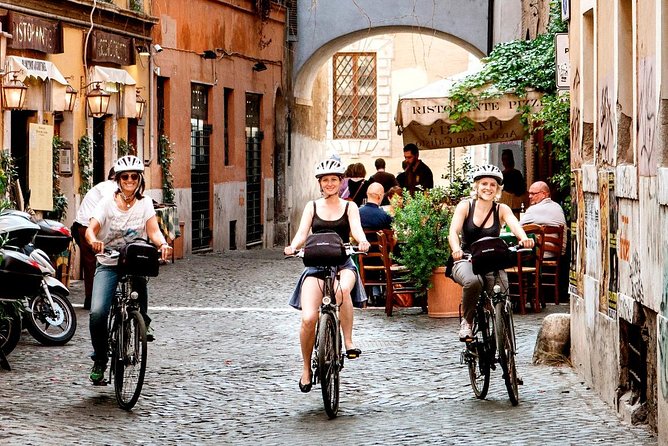
Then the route shifts into neighborhoods, not just monuments. You’ll ride through Trastevere for about 20 minutes—often the most colorful segment of many Rome itineraries, and here it’s handled in a way that feels like you’re moving like a local rather than waiting in lines.
Trastevere by bike also helps you cover more ground than you could on foot. You can experience the streets’ rhythm—turns, small openings, and sudden glimpses—without spending your energy doing endless uphill walking or transit backtracking.
Right after, you stop at Piazza di Santa Maria in Trastevere for about 5 minutes to admire the church. It’s short on purpose. You’ll get the visual hit without turning the day into a half-day church marathon. If churches are your thing, you’ll probably want more time later on your own, but as a bike tour stop, it works well as a highlight moment.
You can also read our reviews of more tours and experiences in Rome

Janiculum Hill and St Peter’s Square without the long walk
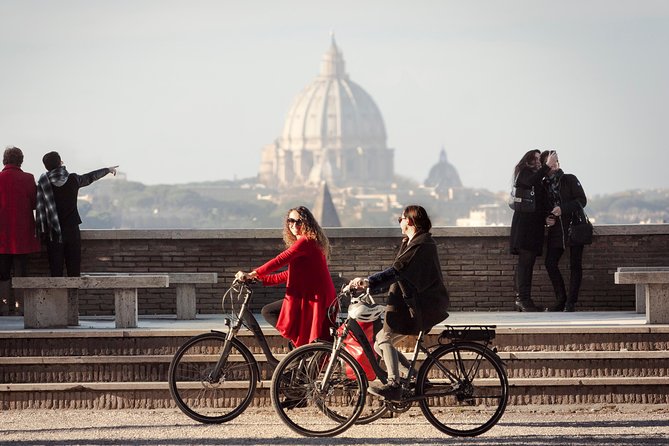
This is where the tour earns its name “panoramic.” You climb to Colle del Gianicolo (Janiculum Hill) for roughly 10 minutes, and you’ll see why Rome keeps pulling artists and photographers back to the same viewpoints. The view is the payoff: you get the city spread out, plus a sense of where everything sits in relation to everything else.
After that, you ride to St. Peter’s Square for about 10 minutes. The tour route brings you to the monumental basilica area, and the guide will share history as you’re there. The timing is short, so treat this as an overview moment: you’ll come away with orientation and story cues, then you can return later if you want to spend serious time inside.
If you’re concerned about crowd levels, note that you’re not stuck doing everything on foot in a line. You’re still in a high-interest area, but bike mobility can help you keep the day moving and reduce the time spent inching through slower pedestrian-only stretches.
Castel Sant’Angelo to Piazza Farnese: monuments at street level speed
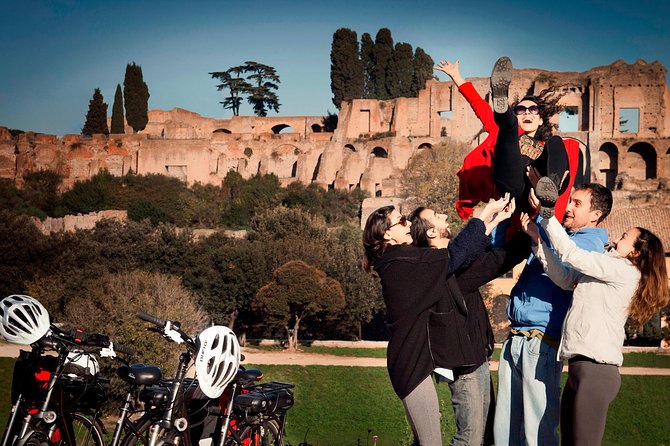
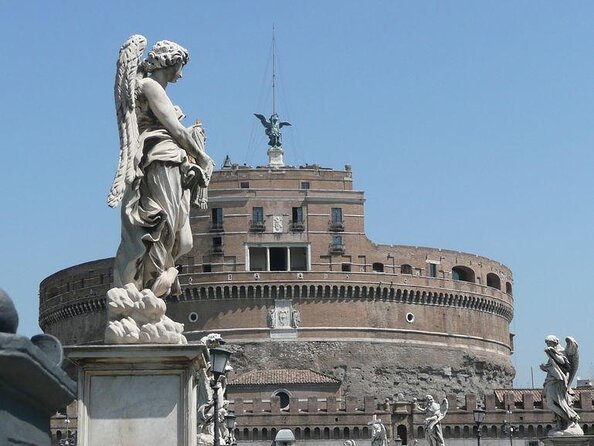
Next up is Castel Sant’Angelo for about 10 minutes. It’s described as one of Rome’s older buildings that got reused again and again: first a mausoleum, then later a castle, papal residence, prison, and eventually a museum. Seeing it from the street while you’re rolling past gives you a different perspective than just approaching on foot from one direction.
Then you’ll hit Piazza Farnese, about 5 minutes at the feet of Palazzo Farnese. This stop is brief, but it’s useful. It shows you Renaissance power concentrated in a refined city setting, and it helps break the day into smaller chunks rather than treating every stop like a big event.
One value of riding between these monuments is the pace control. You can take in what you’re seeing without committing to a long transit plan between far-flung points. The route is compact enough to feel efficient, but diverse enough that you’re not just repeating a single city zone.
Jewish Ghetto lanes, Portico of Octavia, and Teatro di Marcello
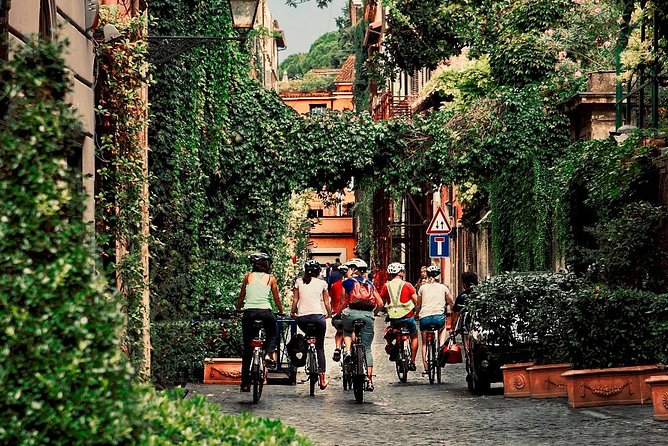
This segment adds depth beyond the classic sightseeing loop. You ride through the area identified as the historic Jewish quarter and what used to be the Jewish ghetto for centuries (1555–1871). The tour gives you a quick, guided look at the streets in that area, and you’ll see the Portico of Octavia, a first-century gallery of columns.
This is also where a good guide matters. Several named guides in the experience feedback—like Nima, Fabio, and Bruno—are mentioned for clear safety and strong storytelling. Even in a short stop, their explanations can turn a quick pass into something you remember because it connects architecture to human life.
After that, you stop at Teatro di Marcello for about 5 minutes. It’s an ancient theater used as a model for the Colosseum. Even if you just glance at it from where the bike route lets you, it’s easy to see why it would serve as a prototype: the shape and stonework carry the DNA forward.
Capitoline Hill, the Forum ride-through, and the panoramic finish
To end strong, you climb to Colle Capitolino (Capitoline Hill) for about 10 minutes. From here, you get breathtaking views over the Roman Forum area from above. It’s a classic angle, but arriving on a bike makes it feel like you reached it by your own route choices, not by being dropped off and absorbed into a crowd.
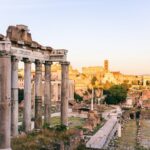
The finish then includes a ride on a large road cutting straight through the Roman Forum and the Imperial Fora area. This is a practical kind of sightseeing: you’re moving through the corridor where so many big stories happened, without spending hours walking the same path twice.
This ending sequence is also why I’d recommend the tour earlier rather than saving it for your last day. It gives you orientation. After you see the Forum from the Capitol and then ride through the area, it’s easier to decide what you actually want to return to on foot later.
Price, value, and small-group attention up to 10 riders
At $102.80 per person for about 4 hours, the price lands in the mid-range for guided tours in Rome. What you’re paying for is not just a guide’s voice. You’re paying for a ready-to-ride bike (Cannondale e-bike with anti-puncture tires), a helmet, bottled water, and a handlebar bag, plus a planned route designed to limit traffic exposure.
That equipment bundle matters in Rome. Helmets and bags don’t sound “tour-like,” but they reduce small hassles that add up when you’re doing hours of stops and starts. And because the bike does most of the heavy climbing, you can keep the pacing relaxed rather than turning it into a cardio contest.
Small-group size (maximum 10) is also part of the value. Fewer riders means the guide can manage crossings and keep you from stretching into a line that the city can swallow. One note to consider: if you’re a new or hesitant rider, the city’s movement still demands attention, even with assist power. The tour’s structure helps, but it won’t replace basic bike confidence.
Should you book this panoramic off-the-beaten-track e-bike tour?
I’d book this if you want Rome in a way that feels like you’re moving through neighborhoods, not just collecting monument photos. The combination of panoramic viewpoints (Janiculum and the Capitol) with neighborhoods across the river (Trastevere and the historic Jewish quarter area) is the main reason this works. It’s also a smart choice if you want to reduce hill stress while still doing something active.
I’d think twice if you know you hate cobblestones, or if you’re uneasy riding in close pedestrian spaces. You can still do it, but you’ll want a mindset for careful riding and slower speed adjustments.
A good practical move: wear comfortable shoes you don’t mind getting a little dusty, and plan on taking photos during stops rather than trying to manage everything while riding. With the bike, helmet, water, and guidance all included, you’re free to focus on the views and the stories your route brings you to.
If the idea of a 4-hour ride with short but meaningful stops feels like your travel style, this is a strong way to get your bearings and see more of the city than walking alone allows.
FAQ
How long is the panoramic Rome off-the-beaten-track e-bike tour?
It runs for about 4 hours.
How much does the tour cost?
The price listed is $102.80 per person.
Where do I meet for the tour?
The meeting point is Via Labicana, 49, 00184 Roma RM, Italy. The tour ends back at the same meeting point.
What’s included in the tour price?
You get a Cannondale e-bike with anti-puncture tires, a mandatory helmet, bottled water, a handlebar bag, and a guide (language depends on what you select).
What is not included?
Hotel pickup and drop-off are not included, and food and drinks are not included.
How many people are in the group?
The tour has a maximum of 10 travelers.
Is the ride considered easy?
It’s listed as leisure difficulty, with electric assist and the route designed for comfort. It can be intermediate with a child seat or child extension mounted on the bicycle.
Are there age rules for the e-bikes?
Electric-assist bicycles are available only for participants over 9 years old. For children aged 5–8 years, a child extension is provided.
What languages are available for the guide?
Guides are available in English, Dutch, French, German, Italian, and Spanish (depending on the chosen language).
Can I get a refund if my plans change?
Yes. There is free cancellation, and you can cancel up to 24 hours in advance for a full refund.