REVIEW · ROME
Taste of Testaccio: Special 15 Year Anniversary Edition
Book on Viator →Operated by Eating Europe Food Tours Rome · Bookable on Viator
Rome has a food side most miss. In Testaccio, this 3.5-hour walk trades big-name sightseeing for real neighborhood bites and local food counters, with stops that mix pastry shops, markets, and classic Roman dishes. I especially like the way the tour turns shopping and street food into a story you can taste, and the gelato guidance that helps you spot what’s actually made well. One possible drawback: it’s a walking-focused experience, and the food stops come with limits if you have severe food allergies.
You’ll start and end close by, with a small group (up to 12) and an English-speaking guide who points out more than just food. If you’re sensitive to lots of dairy or meat-based ingredients, read the dietary notes carefully before you book, because the tour can’t guarantee it’s safe for life-threatening allergies.
In This Review
- Key highlights to look for
- Why Testaccio feels like the real Rome (even with tourists nearby)
- The pacing: 3.5 hours, lots of bites, not a marathon
- Volpetti: cured meats, cheese, and a Prosecco toast to start strong
- Piramide Cestia: the Egyptian-style pyramid in plain sight
- Testaccio Market: bruschetta you actually make, plus mozzarella and caprese
- Rome’s “quinto quarto” mindset and the food history you can taste
- Flavio al Velavevodetto: carbonara, amatriciana, and cacio e pepe with local wine
- Supplì and Trapizzino: the street food portion that makes Rome click
- Giolitti Caffè e Gelateria: a gelato lesson that pays off on every future scoop
- Price and value: what $131.81 buys you in real food terms
- Who should book, and who might not love it
- Should you book Taste of Testaccio’s 15-Year Anniversary Edition?
- FAQ
- How long is the Taste of Testaccio tour?
- Where does the tour start and end?
- Is the tour offered in English?
- What’s included in the experience?
- What food stops and specialties can I expect?
- Are there any dietary accommodations?
- Is there a maximum group size?
- Do children need a ticket?
- What if I cancel?
- What sites will I see besides the food?
Key highlights to look for
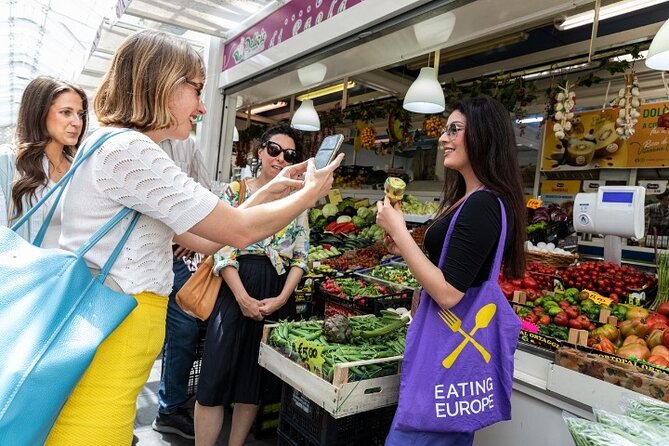
- Testaccio Market bruschetta making with tomatoes from local vendors
- Piramide Cestia (the city’s 2,000-year-old Egyptian-style pyramid) in the middle of town
- Roman classics in proper sauce order: carbonara, amatriciana, and cacio e pepe
- Supplì and Trapizzino for the street-food side of Rome
- A gelateria lesson on how to tell real gelato from the fake stuff
- Cheese and cured-meat start with an olive oil and balsamic tasting plus Prosecco
Why Testaccio feels like the real Rome (even with tourists nearby)
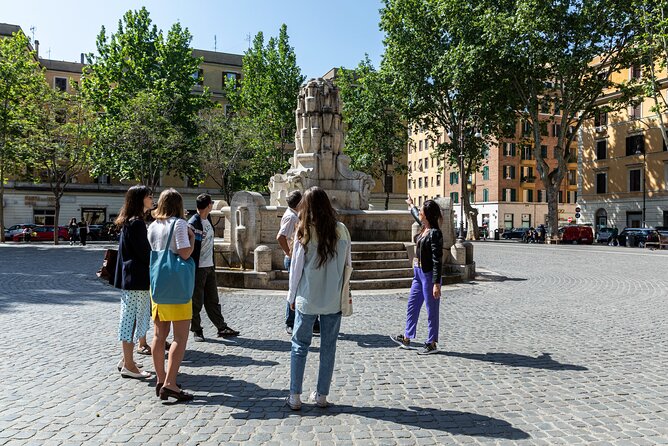
Testaccio is Rome’s working neighborhood energy. It’s not trying to be a theme park, and that’s the point. You’ll spend your time where people actually buy groceries, snack after work, and debate what makes gelato good.
What I like is the balance: you get both the food and the context—why these foods exist here, what people used to eat, and how the neighborhood shaped Roman meals. The food tour format works because it moves you through the everyday places: shops you’d walk past, market lanes you’d never find on a hurry, and a few surprising sights that make Rome feel weird in the best way.
Also, this version is the 15-year anniversary edition, so you’re getting a polished route with well-established stops (and a schedule that’s easy to slot into a Rome day). You’re not stuck with one mega restaurant where everything tastes the same. Instead, you’re sampling across several local counters and kitchens.
You can also read our reviews of more tours and experiences in Rome.



The pacing: 3.5 hours, lots of bites, not a marathon
Plan on about 3 hours 30 minutes of walking and eating. It’s not an all-day ordeal, but it’s long enough that you’ll want comfortable shoes and a steady rhythm. The tour ends just a couple of blocks from where it starts, which makes it easier to continue your day afterward.
Most groups are small—up to 12 travelers—and you’ll be moving as a unit. In real life, that means you don’t get the feeling of being herded. You can ask questions about ingredients, Roman sauces, or how to judge quality without the guide rushing you.
A practical tip: Rome can be hot, and some stops are outdoors or semi-outdoor. One reason people love this tour is that it keeps you busy with food and stories, but you should still bring water instincts into your plan. If you’re visiting in peak summer, dress for the heat and don’t go on an empty stomach.
Volpetti: cured meats, cheese, and a Prosecco toast to start strong
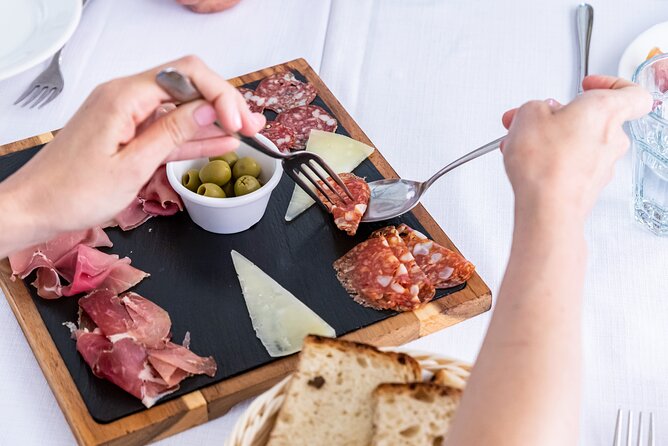
The tour kicks off at Salumeria Volpetti, a stop built for flavor variety from the first minute. You’re welcomed with a selection of fine cured meats and artisanal cheeses, then enhanced by an olive oil and balsamic vinegar tasting. That’s a smart opener because it trains your palate before the street-food portion begins.
You also get a celebratory toast with a glass of crisp Prosecco. It’s the kind of small included drink that makes the start feel festive without turning the tour into a drinking event.
What this stop does well for you: it sets a quality baseline. When you later sample mozzarella, Roman street snacks, and gelato, you’re not guessing. You’re tasting with a sense of what “good” looks like—especially with cheese aging, cured texture, and the way olive oil and balsamic can change what you notice about a bite.
If you’re the kind of person who usually skips cheese tastings because they seem repetitive, don’t. This one is built around contrasts, not just sampling for sampling’s sake.
Piramide Cestia: the Egyptian-style pyramid in plain sight
Then the tour goes from food-world into the “wait, what?” category with Piramide Cestia. You’ll see one of Rome’s most bizarre landmarks: an authentic, 2,000-year-old Egyptian-style pyramid located right in the city.
This short stop matters because it breaks up the food rhythm and adds a layer of Roman identity. Rome isn’t only classical ruins and grand museums. It has odd corners, trade-era influences, and architecture you stumble into only if you wander intentionally.
It also gives your legs a mini reset. It’s only about 15 minutes, so you’re not losing tour time to photo ops. You get the sight, you learn the context, and you’re back to tasting mode.
Testaccio Market: bruschetta you actually make, plus mozzarella and caprese
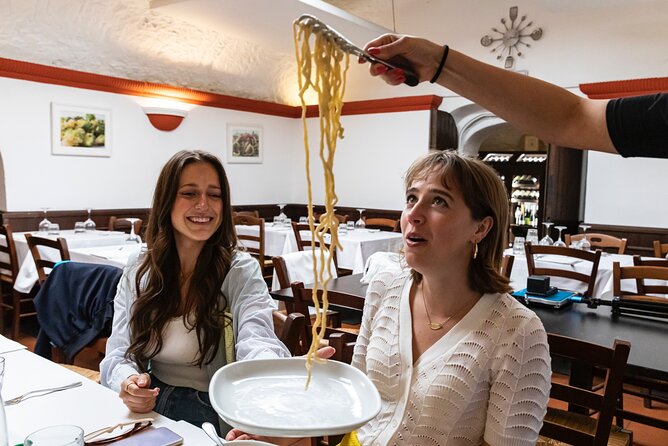
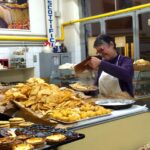
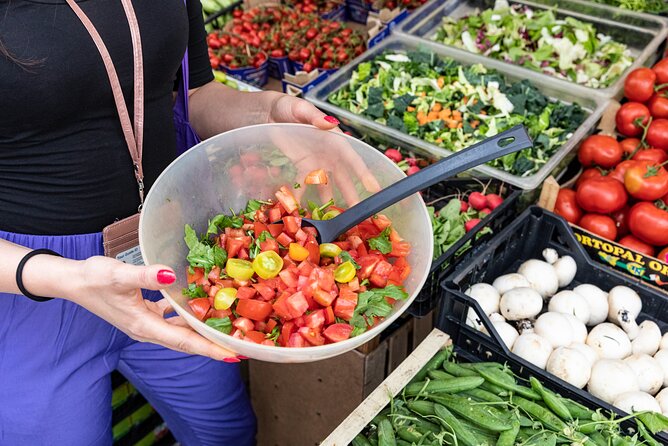
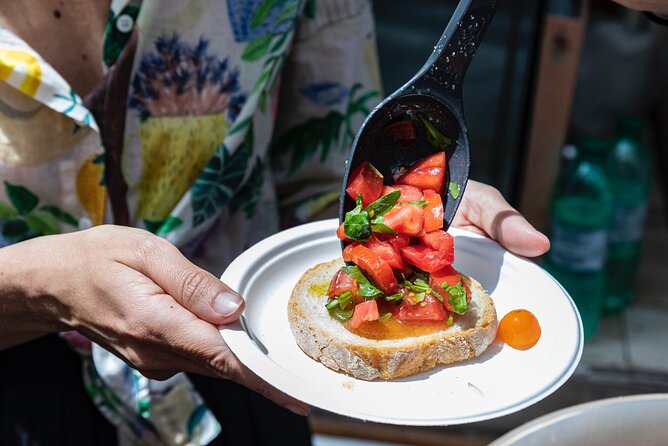
The heart of the tour for many people is Testaccio Market. This is where the experience stops being just “eat and walk” and turns into hands-on food. You’ll make your own bruschetta using fresh tomatoes sourced from market vendors.
That hands-on piece is more valuable than it sounds. You learn how simple ingredients become great food when they’re treated with attention—tomatoes that taste like tomatoes, not tomato-flavored expectations. Then you continue with more classic market bites, including things like buffalo mozzarella and a fresh caprese salad.
This is also a place where you get to chat with vendors, which is where the tour becomes more than consumption. You’ll pick up small, practical cues about what’s in season and what to look for in quality produce. Even if you don’t plan to cook at home, you’ll go back to your Rome grocery runs with better instincts.
Drawback to keep in mind: market foods can vary by day and season. The tour notes that offerings can change, so if you’re chasing a very specific item, don’t assume every bite will be identical across dates. The trade-off is that you’re more likely to get what’s best that day.






Rome’s “quinto quarto” mindset and the food history you can taste
At some point in the route, you’ll step into the story of the neighborhood’s food past—Rome’s former slaughterhouse complex, the historic culinary heart of Testaccio. This is where you hear about the famous quinto quarto cuisine, a way of using parts of the animal that weren’t traditionally treated as the “main” cuts.
If you’re curious about why certain Roman flavors feel hearty and sauce-driven, this is the explanation. It makes the later pasta stops and street snacks feel less random. You start to see the logic: scarcity, technique, and tradition all shaped what ended up on everyday tables.
Then the tour includes another wild Testaccio landmark: a man-made hill built from fragments of millions of ancient Roman olive oil jars (amphorae). That means you’re standing in a place literally built from imperial appetite—an archaeological reminder that Rome has always been a city of food logistics, not just food festivals.
These stops aren’t long, but they anchor your tasting. You’ll remember the smells of the market more because someone explained the neighborhood’s role in feeding people.
Flavio al Velavevodetto: carbonara, amatriciana, and cacio e pepe with local wine
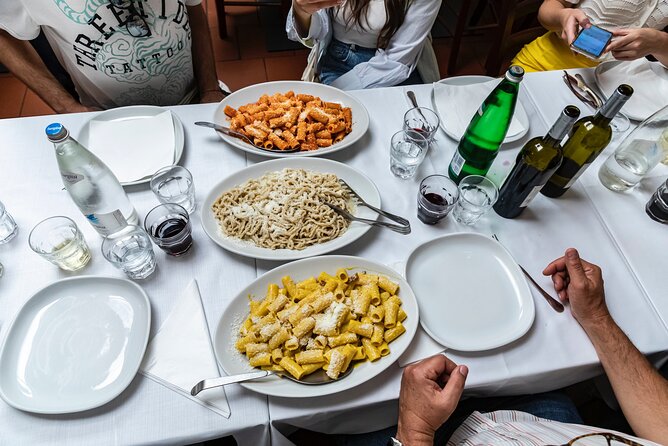
Next you’ll eat at Flavio al Velavevodetto, one of the neighborhood’s best picks for traditional Roman cuisine. Here’s where the tour shifts from street food and markets into “how Romans do dinner.”
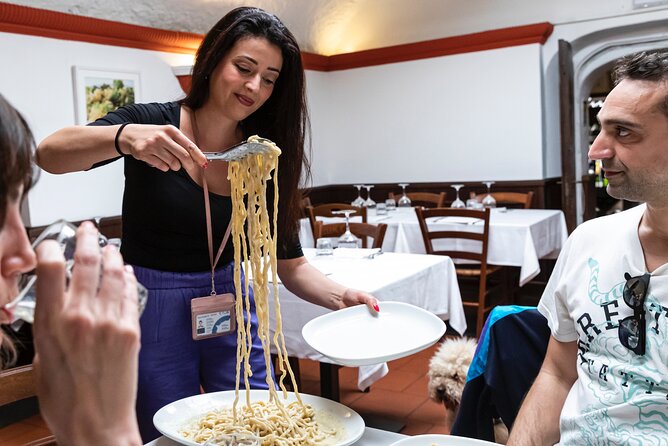
You’ll sample three iconic pastas: creamy carbonara, rich amatriciana, and cheesy cacio e pepe—paired with local wine. The inclusion of wine matters because Roman meals are often about sauce balance and timing, not just the pasta itself. You’ll taste the differences more clearly when you’re sipping something meant to match food.
What you should pay attention to: the tour is basically training you to notice sauces. Carbonara isn’t just “pasta with cream” (and the tour’s framing helps you avoid that common misunderstanding). Amatriciana is about the punch of cured pork and tomato balance. Cacio e pepe is about the magic of cheese and pepper done right.
This is a good stop if you want to learn without taking a cooking class. You get your tasting, you get the context, and then you can go eat Roman pasta on your own later without ordering blindly.
Supplì and Trapizzino: the street food portion that makes Rome click
Before the sit-down pasta, you’ll also hit classic Roman street snacks. One is supplì, a fried rice ball that’s often described as a Roman specialty. Another is Trapizzino, a beloved street-food format, including hunter-style chicken in this tour’s sample.
This part is where the tour earns its value for me. Street food is fun, but it can be confusing if you don’t know what you’re looking at. Here, you get the what-and-why behind each snack, so it feels intentional rather than random.
Supplì is especially satisfying after market time. It’s warm, crunchy, and filling—perfect for keeping your energy up through the later gelato stop. And Trapizzino is a Rome answer to the “handheld meal” idea: pizza-meets-pocket concept, but with Roman flavors and comfort built in.
If you’re thinking about appetite, this is the stage where you should stop “snacking on the side” before you come. Save room.
Giolitti Caffè e Gelateria: a gelato lesson that pays off on every future scoop
You finish at Giolitti Caffè e Gelateria, a gelateria made famous by its long-running presence—over 100 years. The tour doesn’t treat gelato as dessert trivia. You’ll learn insider tips on how to spot authentic gelato and the difference between real and fake.
That instruction matters because you’ll keep seeing “gelato” everywhere in tourist-heavy areas. After this tour, you’ll have a sharper eye for texture, quality cues, and what to expect from good gelato compared to the sweeter, airier versions that often rely on different shortcuts.
Finishing with gelato is also smart timing. It comes after the heavier pasta and fried bites, so your taste buds are ready for a cool reset. Plus, it gives you a satisfying final moment in the neighborhood—then you’re only a few blocks from where you started.
Price and value: what $131.81 buys you in real food terms
At $131.81 per person for about 3.5 hours, this isn’t a budget “wander and snack” tour. It’s priced like a curated neighborhood food experience with multiple tastings and at least one sit-down meal.
Here’s why it can still be good value:
- You’re getting a hands-on market activity (bruschetta making), not just watching.
- You’re sampling across multiple specialty stops: cured meats/cheese, market foods, street snacks, pasta, and gelato.
- Several inclusions are real “sit down meal” caliber: you’ll taste the major Roman pasta trio and you get pairing drinks like local wine and earlier a Prosecco toast.
- The group size stays small (max 12), so you’re not just paying for food—you’re paying for explanation and pacing.
If you’re a solo traveler who plans to eat well anyway, the cost can feel easier to justify because you’d spend a similar amount just buying multiple meals and desserts. If you only want a light taste and hate walking, it might feel expensive because it’s built around full stops and multiple courses.
Who should book, and who might not love it
This tour is a strong match if you:
- Want Roman street food you won’t usually find outside Rome
- Like learning why foods work, not only what to order
- Enjoy neighborhoods as much as monuments
- Prefer a small group with an English guide
You might want to think twice if you:
- Have severe or life-threatening food allergies, since the tour can’t guarantee safety
- Want a quiet sightseeing day with minimal food and minimal walking
- Don’t want any alcohol at all (some tastings include Prosecco and local wine)
One more practical note: the tour often gets praise for guide personality and good flow. Names that have popped up in past experiences include Valentina, Katherine, Lucca, Edma, Rishad, Francesca, Giuseppe, Amin, Giorgia/Georgia, Fabio, Valter, Gianluca, and Valeria. That’s a good sign that the experience leans human, not robotic.
Should you book Taste of Testaccio’s 15-Year Anniversary Edition?
If you’re aiming for a Rome day that feels local—food-first, neighborhood-led, and not stuck in the center for every meal—this is a smart booking. I’d especially recommend it if you like Testaccio as an area or you’re already planning to eat your way through Rome and want a guided path.
Book it if you want your gelato choice to get better, your Roman pasta orders to make sense, and your market browsing to feel confident. Skip it only if walking and food variety aren’t your thing, or if you need strict allergy safety you can’t get from a shared tasting format.
If you’re visiting soon, reserve early and show up ready to eat. This is the kind of tour where being hungry makes everything taste better—inside and out.
FAQ
How long is the Taste of Testaccio tour?
It runs for about 3 hours 30 minutes.
Where does the tour start and end?
It starts at Piazza Testaccio, 39, 00153 Roma RM, Italy and ends at Via Amerigo Vespucci, 35, 00153 Roma RM, Italy.
Is the tour offered in English?
Yes, it’s offered in English.
What’s included in the experience?
You’ll make bruschetta at Testaccio Market, taste Rome’s three iconic pastas (carbonara, amatriciana, cacio e pepe), visit a gelateria and learn how to tell real vs fake gelato, and enjoy Food & the City insider tips. An espresso and typical Italian pastry are part of the sample menu, along with other tastings on the route.
What food stops and specialties can I expect?
The tour includes cured meats and artisanal cheeses at Salumeria Volpetti, a visit to Piramide Cestia, tastings at Testaccio Market (including buffalo mozzarella and bruschetta you make), Roman street food like suppli and Trapizzino, pasta at Flavio al Velavevodetto, and gelato at Giolitti.
Are there any dietary accommodations?
The tour says you can email or add a note at booking so they can do their best for vegetarians, gluten-free guests, or other dietary needs. It also notes it isn’t suitable for severe or life-threatening food allergies, and the company can’t take responsibility for food allergies or intolerances.
Is there a maximum group size?
Yes. The tour has a maximum of 12 travelers.
Do children need a ticket?
Children under 4 can join for free and do not need a ticket, but food is not included for children aged 3 and under. Paid tickets with food included are available for ages 4 and up.
What if I cancel?
Cancellation is free if you cancel at least 24 hours before the experience’s start time for a full refund.
What sites will I see besides the food?
You’ll see Piramide Cestia, plus additional little-known sights in Testaccio, including a former slaughterhouse complex connected to quinto quarto and a man-made hill made from fragments of ancient olive oil jars (amphorae). The Protestant Cemetery is also mentioned, with John Keats buried there.