REVIEW · ROME
Rome Fountains & Squares Walking Tour–Small Group w/ Local Expert
Book on Viator →Operated by ROMAETRAVEL · Bookable on Viator
Fountains, squares, and stories in two hours. I like this tour because it keeps a small-group feel while still hitting big landmarks, and because the local expert ties each stop together with real context you can use while wandering on your own. One possible drawback: at the most popular fountain moments, the pace can feel a bit quick if you want extra time for photos.
I also appreciate the practical flow: it starts at Piazza Barberini and ends in the easy-to-find zone of Piazza Navona, so you’re not stuck backtracking across central Rome. Along the way you’ll hear why these places look the way they do, from ancient stadium curves under Piazza Navona to the symbolism carved into Bernini’s fountains.
In This Review
- Key highlights that make this walk worth your time
- How this tour fits into your first days in Rome
- Meeting at Piazza Barberini, ending at Piazza Navona
- Piazza Navona: fountains and an ancient stadium you can almost feel
- Bernini’s Four Rivers Fountain: the symbolism you’ll notice next time
- Campo de’ Fiori and Giordano Bruno: history with a sharp edge
- Pantheon area: ancient reuse and royal tombs worth your upward gaze
- Spanish Steps zone: Fontana della Barcaccia and Trinità dei Monti’s position
- Trevi Fountain: getting the scale and design story right
- Price and value: is $67.29 for two hours a good deal?
- Who should book this walking tour, and who might skip it
- Should you book it?
- FAQ
- What is the duration of the Rome Fountains & Squares Walking Tour?
- How much does the tour cost?
- Is the tour offered in English?
- How big is the group?
- Where do I meet the guide?
- Where does the tour end?
- Is a mobile ticket provided?
- Are entrance tickets included?
- Is pickup or drop-off included?
- What is the cancellation window?
Key highlights that make this walk worth your time
- Small group (max 15) means fewer bottlenecks and more chances to ask questions
- Piazza Navona sits on an ancient stadium with arcades that shaped the square you see today
- Bernini’s Four Rivers Fountain connects sculpture to Rome’s global reach with river-god symbolism
- Campo dei Fiori’s executions tie directly to Giordano Bruno at the statue’s exact spot
- Pantheon and royal tombs give you a reason to look up, not just take photos
- Trevi Fountain is framed with Baroque scale and design details so it lands harder when you see it
How this tour fits into your first days in Rome
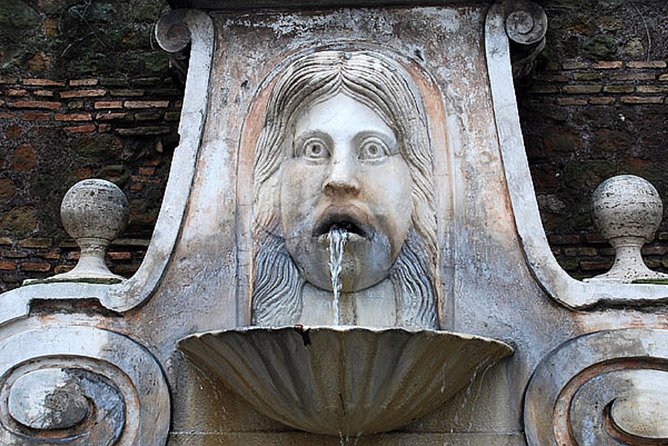
Rome can feel like a photo scavenger hunt if you don’t have a thread to follow. This walking tour gives you that thread fast: it strings together Rome’s most recognizable squares and fountains and explains what’s going on beneath the surfaces. You get the big hits without feeling like you’re herded through them.
What makes it work for your schedule is the mix of famous sights with short, focused stops. You’re looking at Piazza Navona, Campo dei Fiori, the Pantheon area, the Spanish Steps zone, and Trevi Fountain in about two hours, with time for questions and photos. That timing is handy when you’re jet-lagged or still figuring out your walking legs.
The small-group size matters more than you’d think. In a large crowd, fountains turn into a stationary waiting game. Here, the guide’s pacing and positioning help you get closer viewing angles and better context—especially at spots like Fontana dei Quattro Fiumi, where the details are part of the story.
You can also read our reviews of more walking tours in Rome

Meeting at Piazza Barberini, ending at Piazza Navona
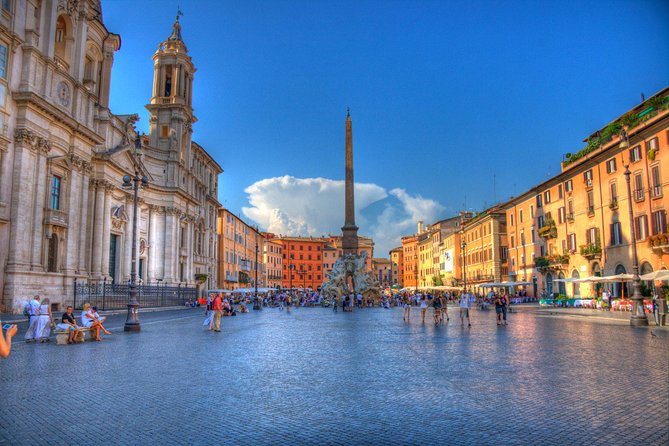
The route is built around central Rome. You meet in Piazza Barberini (easy to locate in a well-known area), then you walk through the core sights and finish at Piazza Navona—a practical landing point because it’s both photogenic and convenient for continuing your day.
This start/end choice is smart because it lets you design the rest of your itinerary without stress. If this is your first outing, it helps you learn Rome’s layout: how Piazza Navona connects to the walkable core, and how the Pantheon area sits in relation to the Spanish Steps and Trevi area. Then later, when you want to browse, buy a snack, or just slow down, you’re not guessing where you are.
Comfort is a real factor too. You’re walking between multiple iconic stops, often on uneven pavement. The tour recommends comfortable shoes, and in summer it also makes sense to plan for sun with a hat and sunglasses.
Piazza Navona: fountains and an ancient stadium you can almost feel
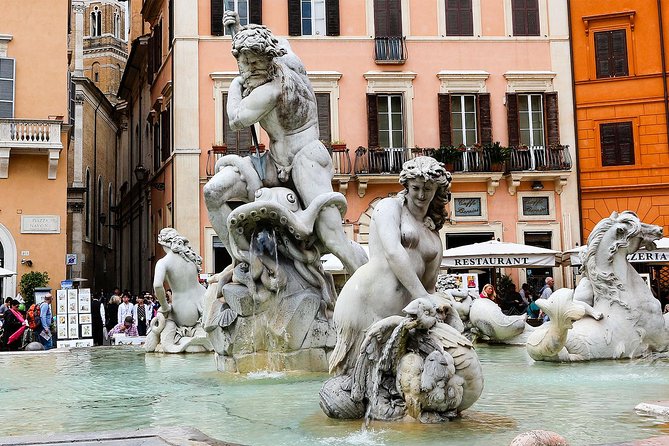
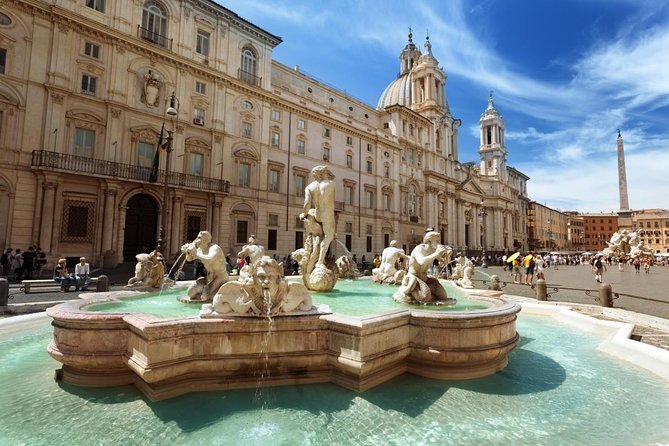
Piazza Navona is one of those Roman places where you understand why people fall in love with the city. The square’s current Baroque look was shaped in the 15th century, but it sits on top of the older Stadium of Domitian—a horseshoe-shaped arena for athletic contests in the 1st century AD. That “two layers at once” feeling is what you’ll hear the guide connect while you stand in the middle of it.
The main reason this stop hits is the concentration of fountains. You’re looking at Fontana dei Quattro Fiumi, Fontana del Moro, and Fontana del Nettuno in the same space, so you’re not hopping around for every photo. If you only learn one thing here, make it this: the art is doing political and cultural work, not just decorating the square.
A great bonus is the connection to the underground beneath the piazza. You’ll also spend time at the Stadio di Domiziano / Navona Square Underground stop, where the guide explains that the buildings hugging the square incorporate original lower arcades. It’s a rare moment when the square stops being a postcard and becomes a physical map of Rome’s time layers.
Bernini’s Four Rivers Fountain: the symbolism you’ll notice next time
Fontana dei Quattro Fiumi is designed to be read. It was created in the mid-1600s (1651) by Gian Lorenzo Bernini for Pope Innocent X, and it’s packed with symbolism you can actually point out while you’re there. The fountain’s base rises from travertine rocks, supporting four river gods, and topped with a copy of an Egyptian obelisk and the Pamphili family emblem.
The guide’s job here is turning “cool sculpture” into something you can remember. You’ll learn that the four rivers represent four major regions: Nile for Africa, Danube for Europe, Ganges for Asia, and Río de la Plata for the Americas. That global framing fits Rome’s self-image in the papal era, and once you understand it, the fountain feels less random and more intentional.
Practical note: this fountain is popular. If you care about getting a clean photo, treat it like a slow stop, not a quick glance. Even in a two-hour tour, you’ll want a few minutes to step around so you can catch different angles of the obelisk and the river figures.
Campo de’ Fiori and Giordano Bruno: history with a sharp edge
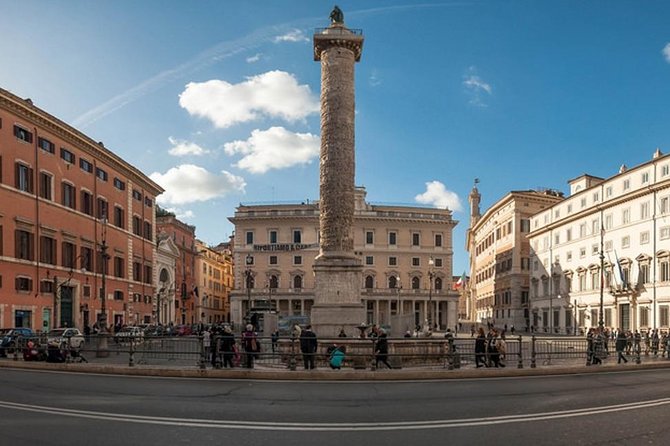
Campo de’ Fiori changes energy depending on the time of day. In the morning, it’s a busy market area, and it later shifts into a nightlife center, all while staying rooted in older meaning. The key point: this square was also the site of public executions, which gives the place a heavy historical undertone.
At the center is the Statua di Giordano Bruno, created in 1888 and placed at the exact spot of his execution. This stop is worth your attention because it connects the politics of the era to a clear, fixed location. Standing there, it’s easier to understand why the square kept its role in Rome’s public life long after the events themselves.
If you’re worried about the tone being too dark for a holiday, that’s fair. Still, it’s also part of why Rome feels real. The guide’s job is to keep it factual and understandable, so you leave with knowledge that doesn’t rely on generic “shock factor.”






Pantheon area: ancient reuse and royal tombs worth your upward gaze
The Pantheon is one of Rome’s best-preserved ancient monuments, and it makes sense that it’s a stop on this route. What you’ll want to focus on is the idea of reuse: the building was consecrated for worship in an ancient sense, then later adapted from a Christian perspective. That mix of eras is visible in how the site continued to matter.
From there, the guide will connect the Pantheon to more recent Italian history too. You’ll hear that in 1870 the Pantheon became the shrine of the kings of Italy, and it holds the mortal remains of figures like Victor Emanuel II, Humbert I, and Margaret of Savoy. It also notes that Raffaello Sanzio is buried in the Pantheon, which gives you another reason to look beyond the doorway and into the commemorative role the monument played.
This is a good stop for balance. Fountains are visual spectacle, but the Pantheon is about structure, proportion, and continuity. Even if your photos turn out less than perfect, the architecture itself gives you enough to remember without needing a perfect angle.
Spanish Steps zone: Fontana della Barcaccia and Trinità dei Monti’s position
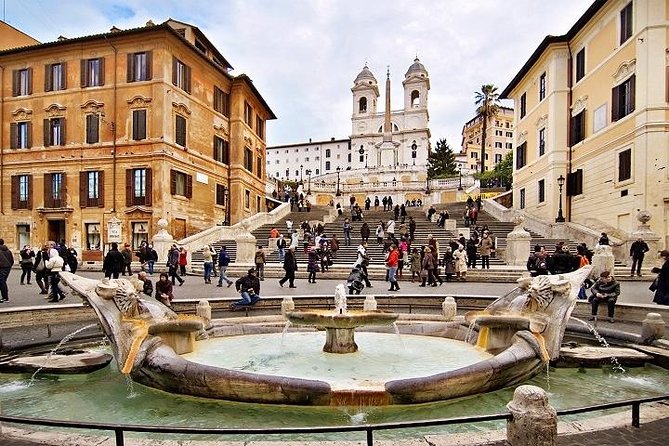
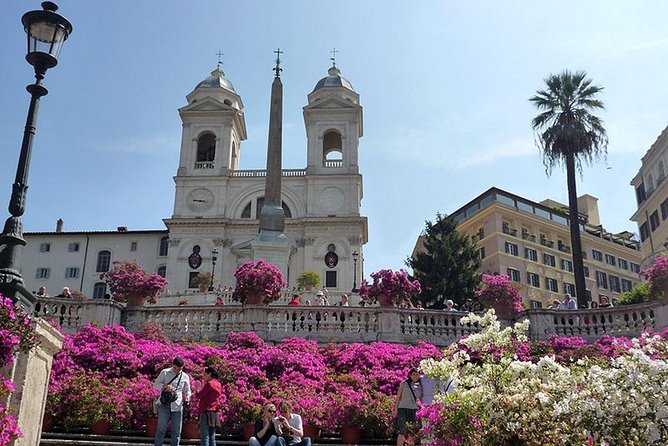
The walk shifts from big museum-grade icons to a more intimate Rome scene, especially around the Spanish Steps. First you’ll reach Fontana della Barcaccia, located at the foot of the Spanish Steps in Piazza di Spagna. It’s Baroque in style and decorated with papal coats of arms, while water gushes out of the mouths of two suns tied to the Barberini symbol.
Then the guide points out the area’s vertical drama: Trinità dei Monti sits above the Spanish Steps, known for its commanding position. The surrounding area, including Villa Medici, is described as a French State property, which adds a modern layer to the old streets and stairways.
The Spanish Steps themselves are famous, but it’s easy to stand there and miss why they matter. You’ll learn the steps got their name from the Palazzo di Spagna, the seat of the Spanish Embassy to the Holy See. Nearby is also the Column of the Immaculate Conception, and the guide’s context helps you understand why the square is more than just a meeting point.
One thing to watch for: this zone can be crowded, so expect a bit of compression around the photo spots. If you want sharp photos, aim to pause slightly off the busiest lines and let others move first.
Trevi Fountain: getting the scale and design story right
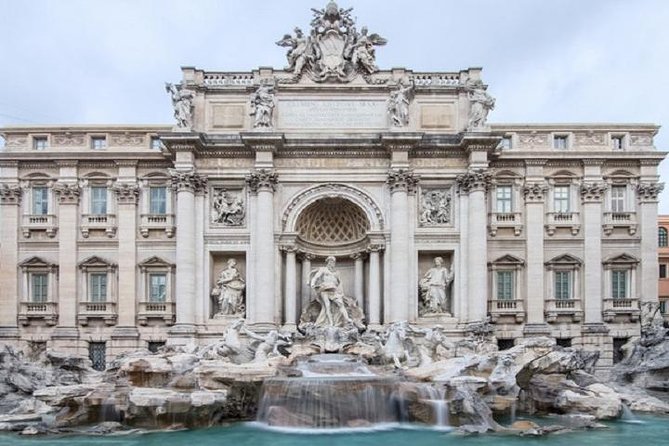
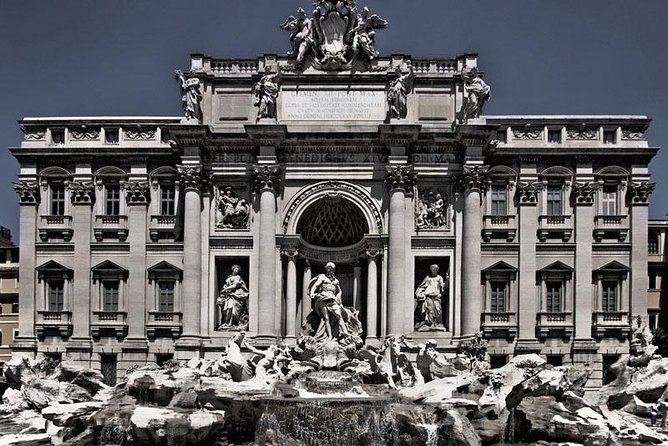
Trevi Fountain is the last major “wow” moment on the route. It’s an 18th-century Baroque fountain designed by architect Nicola Salvi and completed in 1762 by Giuseppe Pannini, along with others. The scale is real: it’s listed as 26.3 meters high and 49.15 meters wide, which is big enough to make you feel like the building is breathing.
The guide’s help here is not just pointing at statues. It gives you enough design context that you notice more than the obvious center. In a city full of fountains, Trevi stands out because of its monumentality and the sheer Baroque design energy.
Practical reality: Trevi can be crowded. That’s one reason the small group pacing helps. If you want a clean shot, the best plan is to stand where you can take in the whole composition briefly, then step aside for a couple closer angles when space opens.
Price and value: is $67.29 for two hours a good deal?
At $67.29 per person for about two hours, the value depends on what you’re optimizing for. If you want a self-guided stroll, you can build a similar route on your own. But if you’d rather pay for interpretation—why each fountain or square looks like it does—this is a reasonable trade.
Here’s what you’re paying for, specifically:
- a local expert who links the landmarks into one story
- small-group attention (max 15)
- time for questions and photos, not just “stand here, move on”
You also get a smart mix of iconic sights and learning moments, like the symbolism at Fontana dei Quattro Fiumi and the location-based history at Giordano Bruno’s statue. That kind of context is exactly what makes Rome feel easier to navigate afterward.
Who should book this walking tour, and who might skip it
This tour is a strong fit if you:
- want a first-timer introduction to Rome’s central layout
- care about the way art, architecture, and politics connect
- like the idea of small-group guidance instead of a bus crowd
You might want to skip or adjust your expectations if you:
- hate any walking in crowds, even for short stops
- want long, sit-down time at each fountain (this is built for movement and context, not lingering for an hour at one spot)
- are sensitive to language clarity, since the guide’s English skill can vary by person
Should you book it?
If your goal is to get your bearings fast and learn what you’re looking at, I think this is a smart way to start. You cover major anchors—Piazza Navona, the Pantheon area, the Spanish Steps zone, and Trevi Fountain—and the guide’s job is to make the details stick, especially the symbolism and the “Rome underneath Rome” connections.
If you want your Rome day to feel like a guided highlight reel with enough freedom to ask questions and take photos, this is the kind of tour that earns its spot.
FAQ
What is the duration of the Rome Fountains & Squares Walking Tour?
The tour lasts about 2 hours.
How much does the tour cost?
The price is $67.29 per person.
Is the tour offered in English?
Yes, it’s offered in English.
How big is the group?
The experience is small group with a maximum of 15 participants.
Where do I meet the guide?
You meet at Piazza Barberini, P.za Barberini, 00187 Roma RM, Italy.
Where does the tour end?
The tour ends at Piazza Navona, 00186 Roma RM, Italy.
Is a mobile ticket provided?
Yes, the tour uses a mobile ticket.
Are entrance tickets included?
Entrance tickets are not included, but the stops listed show admission ticket free.
Is pickup or drop-off included?
No pickup or drop-off is included.
What is the cancellation window?
You can cancel up to 24 hours in advance for a full refund. If you cancel less than 24 hours before the start time, the amount paid is not refunded.