REVIEW · ROME
Rome: Julius Caesar & the Emperors’ Nighttime Stories Tour
Book on GetYourGuide →Operated by Storytelling Rome Tours & Walks · Bookable on GetYourGuide
Caesar was stabbed, then history kept moving. This 2.5-hour nighttime walk turns the story of Rome’s early emperors into something you can follow scene by scene, stop by stop, in the city center. You get Julius Caesar and the emperors together in one route, plus lesser-known figures who help the big names feel real.
I especially like the way the tour anchors the drama at the assassination site connected to Caesar’s murder, not just in textbooks. I also love the timing: you’re walking after dark when central Rome is quieter and cooler, and the streets look beautiful under lights instead of midday crowds.
One thing to consider: this is first and foremost a storytelling experience. If you’re expecting lots of time to roam, study multiple big monuments at length, or take deep dives into architecture, you may want more before or after.
In This Review
- Key things to know before you go
- Julius Caesar and the early emperors at night: why this format works
- Meeting by Torre del Papito near Largo di Torre Argentina
- The assassination story told at the murder-linked spot
- Marcus Agrippa and the loyalty story people miss
- Julia, Hadrian, and Marcus Aurelius: power with personality
- Nero as the dramatic finale: the story gets darker
- A 2.5-hour night walk: pacing, vibe, and what you’ll actually feel
- The guide matters: Massimo’s storytelling style
- Who should book this tour (and who might want something else)
- Practical tips to make the night easier
- Should you book Julius Caesar & the Emperors Nighttime Stories Tour?
- FAQ
- How long is the Rome Julius Caesar and the Emperors Nighttime Stories Tour?
- Where is the meeting point for the tour?
- Where does the tour finish?
- What language is the tour guide speaking?
- Is the tour wheelchair accessible?
- Is food or drinks included?
- Is the tour in the evening?
- Do I need to worry about tour availability and start times?
- Is free cancellation available?
- Can I reserve without paying right away?
Key things to know before you go
- Only tour focus on Julius Caesar plus the early emperors in one nighttime story arc
- Caesar’s assassination story is told right at the location tied to the murder
- Marcus Agrippa and other supporting characters get real screen time
- A night route through central Rome feels calmer, with city lights doing half the work
- The stories run through major emperors like Hadrian, Marcus Aurelius, and Nero
- The finale leans into Nero’s life, ending the night with a strong dramatic punch
Julius Caesar and the early emperors at night: why this format works
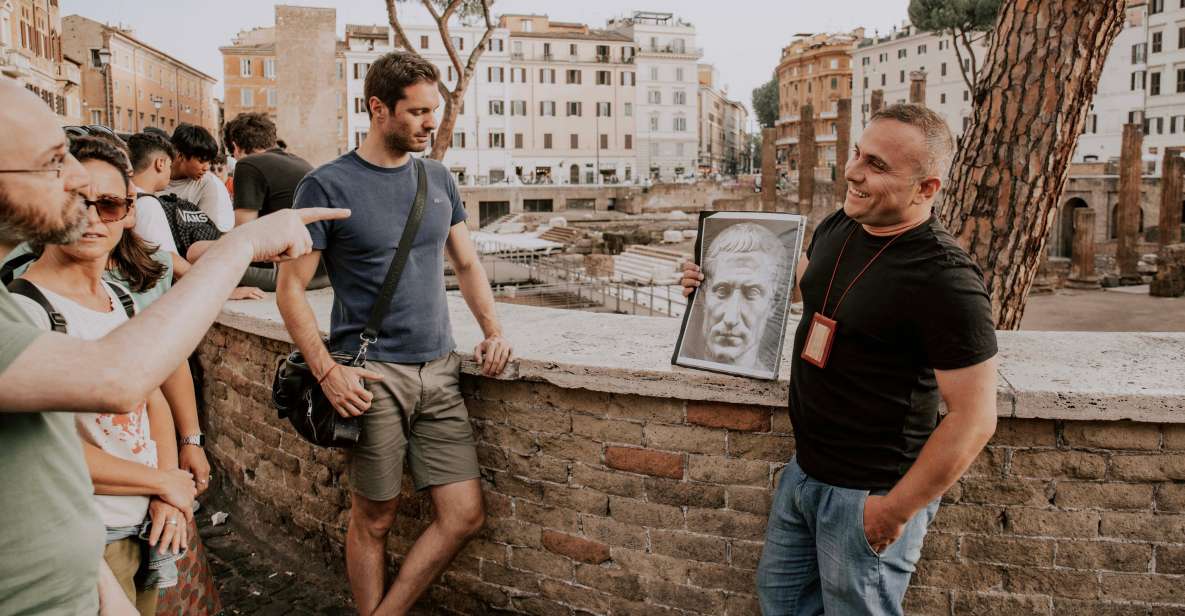
Rome at night has a different tempo. Sounds carry differently. Shadows stretch across stone. And the city’s glow makes the ancient world feel less like a museum and more like a living stage set.
This tour leans into that. You’re not just hearing dates. You’re hearing choices, rivalries, loyalties, and those messy personal details that historians don’t always package neatly. The guide’s job is to make the people behave like people again—conflicted, ambitious, sometimes ridiculous, sometimes terrifying. That’s exactly why the Caesar-to-emperors theme is such a good match for an evening walk. It gives you a storyline that flows.
And yes, the big names are there. But what makes it satisfying is the mix: Caesar, early imperial power, and then the supporting cast you might not have studied before. When characters like Marcus Agrippa appear, they don’t just feel like footnotes. They feel like engines in the plot—especially around Augustus and the loyalty that helped early Rome hold together.
You can also read our reviews of more tours and experiences in Rome.



Meeting by Torre del Papito near Largo di Torre Argentina
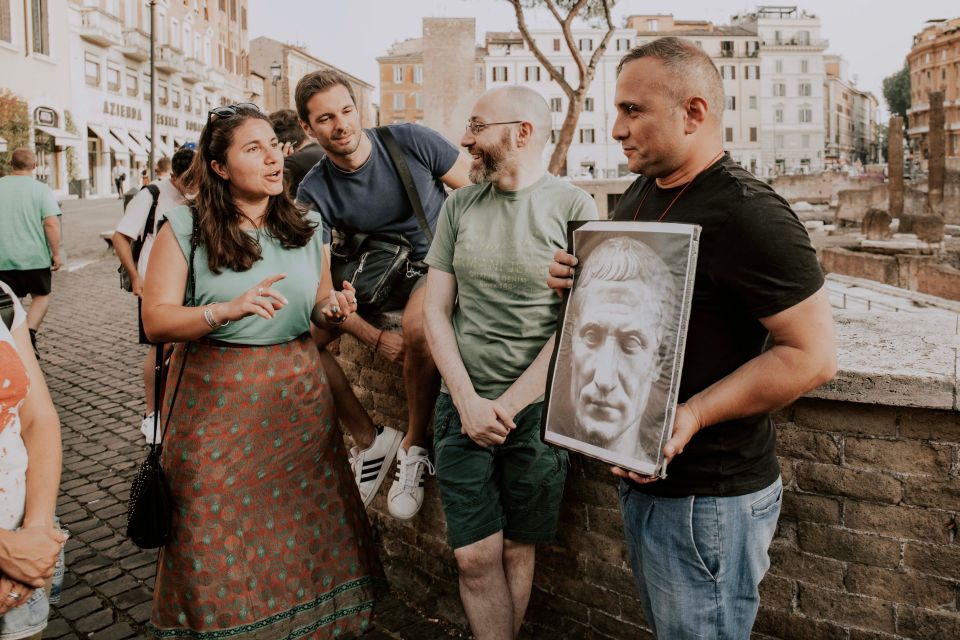
You start at Torre del Papito, right by Largo di Torre Argentina. The meeting spot is easy to find because the Torre del Papito is described as the only brick tower you can see there. Your guide will be by the tower holding a sign with the tour title.
That matters more than you might think. In Rome, meeting points can turn into stressful little scavenger hunts—especially at night. This one is simple: look for the brick tower, then look for the sign.
You’ll also finish at Piazza del Popolo, which is a helpful touch. It gives your evening a clear endpoint and makes it easier to plan dinner or a last stroll afterward.
The assassination story told at the murder-linked spot
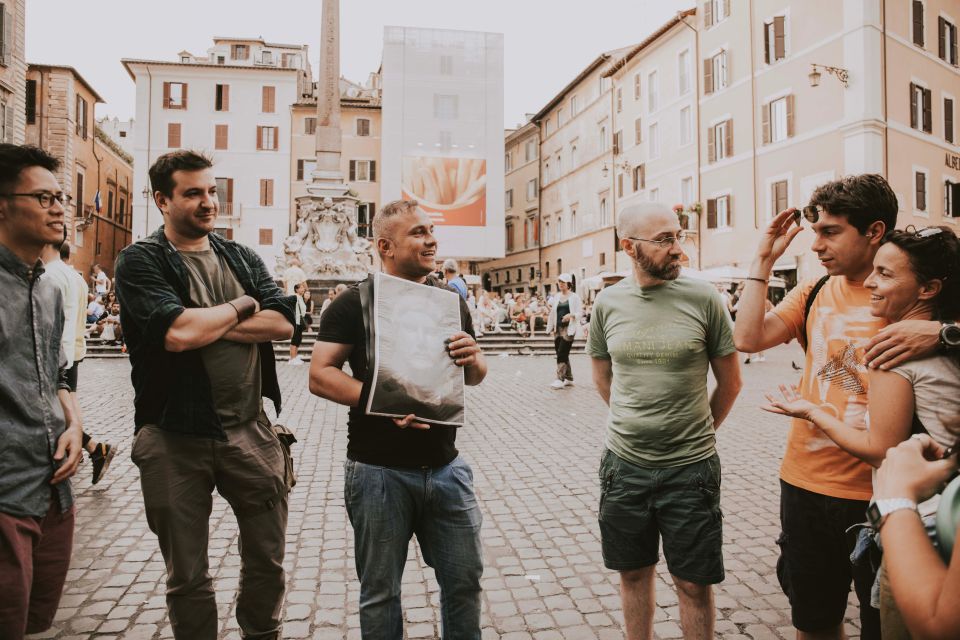
The tour’s first major emotional peak is the story of Julius Caesar’s assassination, told on location at the spot associated with where the tragedy happened.
This is the part I’d call the anchor. You hear the setup, the tension, and the aftermath through a human lens instead of a distant summary. Standing there while you listen changes the feel of the event. Caesar’s story stops being a chapter title and becomes a scene with urgency.
It also sets up the tour’s bigger theme: Rome doesn’t just change governments—it changes the rules of power. When you hear Caesar’s story as a turning point, then move forward into the world of early emperors, you start spotting connections faster. Who benefited. Who feared retaliation. Who tried to look legitimate while the ground shifted.
If you only do one Rome “story tour,” this is a strong candidate because it handles Caesar in a way that’s specific to place, not just famous facts.
Marcus Agrippa and the loyalty story people miss
One of my favorite parts of this tour concept is that it doesn’t treat the early empire as only emperors and villains. It gives you Marcus Agrippa as a key figure—someone with loyalty and a real relationship to the first emperor.
Agrippa’s role helps you understand how power actually worked on the ground. Emperors might be the headline, but loyalty and partnerships are what keep the system from collapsing. In the tour’s telling, Agrippa’s friendship with Augustus becomes part of the emotional engine of the era: who stood by whom, and what that meant when Rome’s politics got dangerous.
And that’s why the “lesser-known characters” detail is so important. You’re not just collecting names. You’re seeing a fuller cast, which makes the major emperors easier to track. When Augustus enters the story more clearly through relationships like this, later emperors feel less random and more like an evolution of the same underlying power dynamics.
Julia, Hadrian, and Marcus Aurelius: power with personality
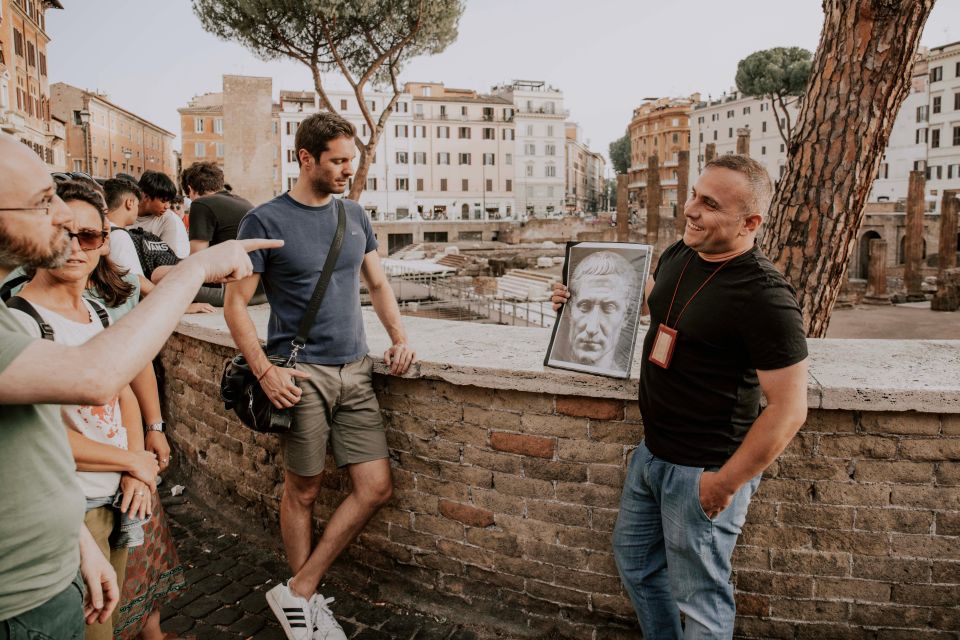
The tour keeps moving beyond the men-in-charge storyline by bringing in women and contrasting leadership styles.
Julia, described as the strong-minded, rebellious daughter of Augustus, is one of the best examples. Her story is framed as a dramatic fall—from riches to rags—while she tries to stay true to her beliefs. That kind of arc adds emotional variety to a period that can otherwise feel like one long political chess match.
Then you get emperors like Hadrian and Marcus Aurelius, who the tour frames as revered for reasons that go beyond slogans. You’re meant to leave with a clearer sense of why people looked to them—and why memory of their reigns lasted.
The practical win here: when you understand the personal traits behind leadership—discipline, principle, stubbornness, ambition—you’ll recognize those themes if you visit other Roman sites afterward. Even a casual walk through Rome starts to feel more connected once your brain has a storyline to hang it on.






Nero as the dramatic finale: the story gets darker
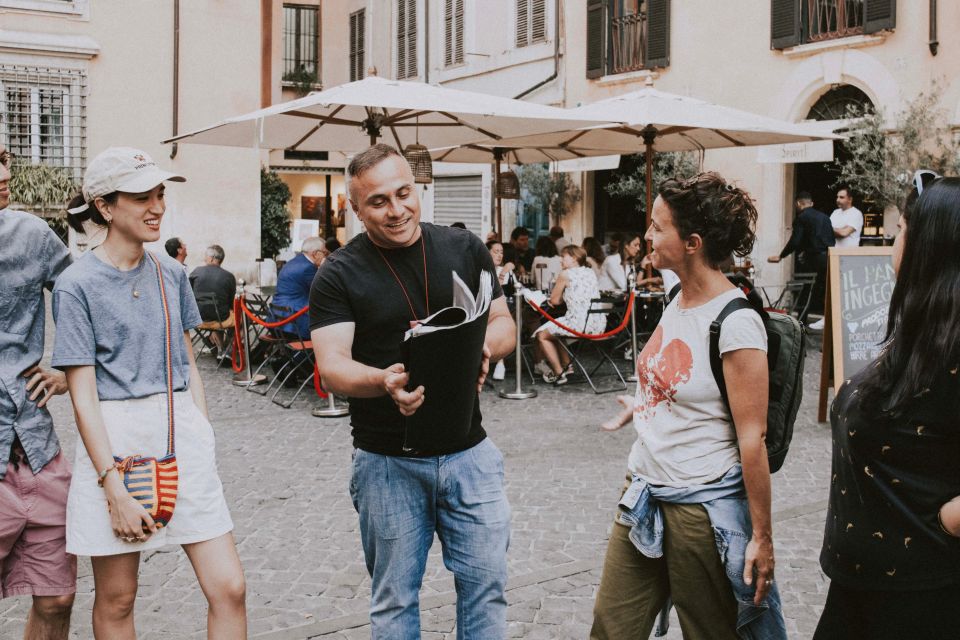
Every great nighttime story tour needs a finish that lingers. This one ends with Emperor Nero—the big finale of the evening.
Nero’s life is portrayed as hard to believe, and that’s exactly the point. The tour uses his rise and fall as a way to show how quickly Roman power could turn from controlled image-building into something darker and more volatile.
By the time you reach Nero, you’ll be carrying the earlier threads. Caesar’s assassination sets the stage for political transformation. Augustus and Agrippa help explain how loyalty and legitimacy get built. Julia and the later emperors show that personalities shape outcomes. Then Nero lands like a full stop—often shocking, sometimes unsettling, but memorable.
If you like your history with edge, this ending is the payoff.
A 2.5-hour night walk: pacing, vibe, and what you’ll actually feel
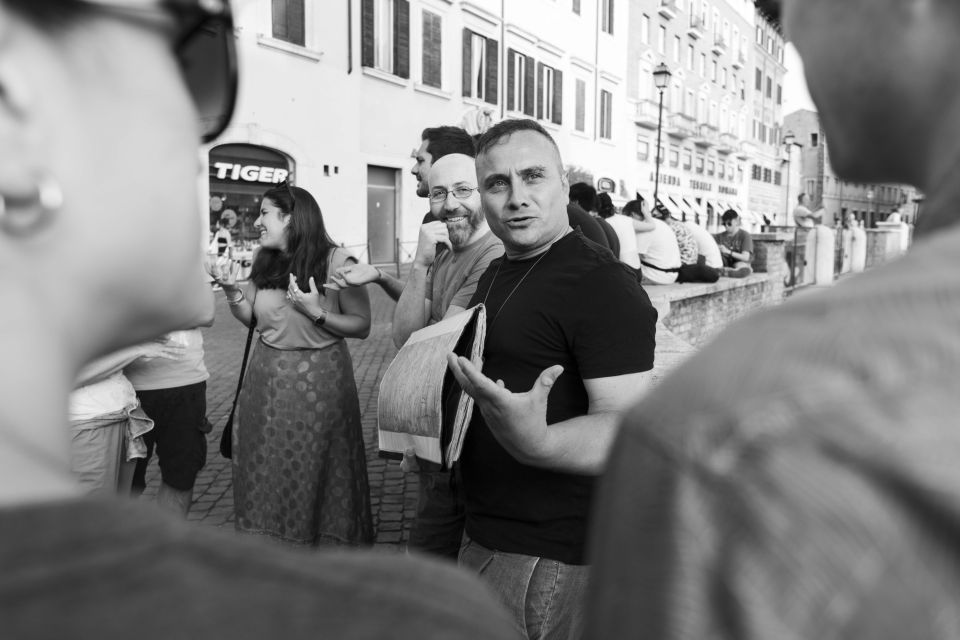
This experience lasts 2.5 hours. That length is a sweet spot for Rome at night: long enough to tell a connected story with real arcs, short enough that you’re not stuck outside when the fatigue hits.
Because it runs in the evening, you get a major bonus: the city center feels quieter and cooler than daytime. You’re also moving through a Rome that’s beautifully lit up, so the atmosphere supports the subject matter. When you’re listening to power struggles, rumors, love stories, and betrayals, the lighting and nighttime soundscape make the whole thing feel more cinematic.
Keep in mind a basic pacing truth. This is not a museum line you stop and start on your own. It’s a guided movement through the evening. So wear shoes that handle cobblestones well, and plan to focus on listening. You’ll enjoy it more if you treat it like a live performance with walking as part of the show.
The guide matters: Massimo’s storytelling style
The quality of this tour really comes down to delivery. In the best versions of this experience, the guide doesn’t just talk. They perform.
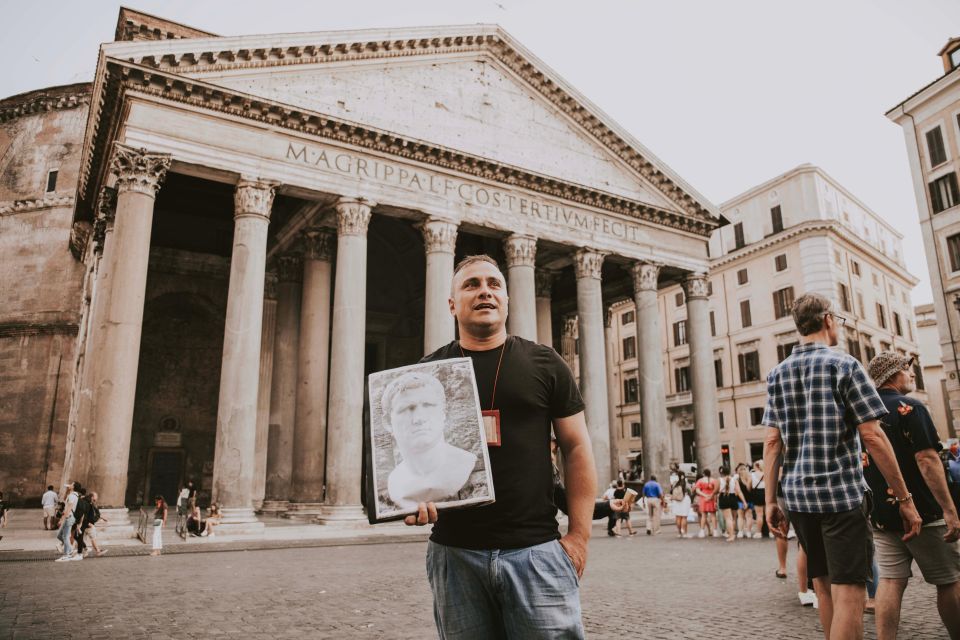
Many guests specifically highlight Massimo for engaging, fresh storytelling, with humor and sharp pacing. The theme you keep seeing in the feedback is that the stories don’t feel canned. Instead, they’re clearly researched and told with personality—so the facts land, and the emotional beats land too.
Even if your interest in Roman history is casual, that matters. The tour is designed to make complicated figures understandable, without turning the stories into a simplified cartoon. And if you do have an interest, you get those extra details that help the emperors feel less like names and more like people you can picture.
Who should book this tour (and who might want something else)
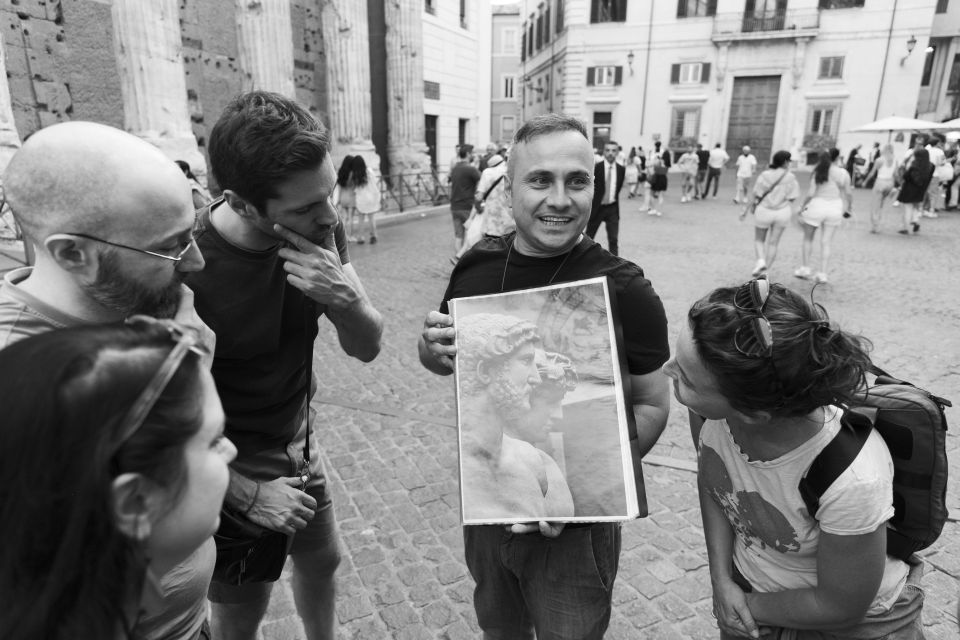
I’d book this if:
- You want the rare combo of Julius Caesar plus the early emperors in one evening story
- You like history told through characters, not just monuments
- You’d rather experience Rome at night with a clear structure than wander aimlessly
- You enjoy stories with a bit of edge: love, politics, ambition, and the messy stuff in between
I might skip it if:
- You want long stops for lots of independent sightseeing time at major landmarks
- You prefer a strictly academic approach with minimal storytelling
- You don’t want to spend most of the time listening while walking
Practical tips to make the night easier
This is a walking storytelling tour, and food and drinks are not included, so plan for comfort:
- Have dinner or a snack before you go, or plan to stop after.
- Wear layers you can handle at night.
- Bring a small flashlight if you’re the kind of person who likes seeing where you step (the city is lit, but street surfaces can be uneven).
- If you’re bringing a phone for photos, treat it as secondary. The best moments are when you keep your eyes on the guide and the location.
Also, arrive a few minutes early. Standing at Torre del Papito and lining up your meeting moment helps the start feel relaxed instead of rushed.
Should you book Julius Caesar & the Emperors Nighttime Stories Tour?
Yes—if you want Rome to feel alive. This tour is built for an evening audience who likes stories with structure and location-specific drama. The Caesar assassination on-site framing, the inclusion of Marcus Agrippa, and the arc that carries you through Julia, Hadrian, Marcus Aurelius, and Nero make it more than a greatest-hits talk.
If you’re choosing between a standard history walk and something more theatrical, this one tends to win on energy. And if you’re the type who enjoys linking what you hear to what you later see around Rome, you’ll likely feel the “wait, I get it now” effect as you move through the city on other days.
FAQ
How long is the Rome Julius Caesar and the Emperors Nighttime Stories Tour?
The tour lasts about 2.5 hours.
Where is the meeting point for the tour?
You meet at Torre del Papito, adjacent to Largo di Torre Argentina. The guide will be by the tower holding a sign with the tour title.
Where does the tour finish?
The tour finishes at Piazza del Popolo.
What language is the tour guide speaking?
The tour is offered with a live guide in English.
Is the tour wheelchair accessible?
Yes, the tour is listed as wheelchair accessible.
Is food or drinks included?
No. Food and drinks are not included.
Is the tour in the evening?
Yes. The tour runs in the evening so you can enjoy Rome at night with the city lights and atmosphere.
Do I need to worry about tour availability and start times?
You’ll need to check availability to see the starting times.
Is free cancellation available?
Yes. Free cancellation is available up to 24 hours in advance for a full refund.
Can I reserve without paying right away?
Yes. You can reserve now and pay later.