REVIEW · ROME
Ancient Mosaic Workshop in Rome
Book on Viator →Operated by Studio Cassio - Arte del Mosaico · Bookable on Viator
Tile by tile, Rome comes alive. In this Via Urbana workshop, you learn authentic Roman mosaic methods and build your own 7×5 keepsake while skilled artisans explain the craft and design logic behind ancient floors. It is a creative pause from sightseeing, and the end result is something you can actually hold.
I especially love the hands-on workflow: you cut marble tiles and assemble a traditional design with real guidance, plus you get a frame and a protective box for the finished piece. I also like how the teaching connects technique to history, with instructors such as Eleonora and Renato (and other artists like Alex and Giulia/Giuliana) sharing what they know about mosaic making and restoration.
One thing to consider: it is not a full-day outing, so you will leave with a small artwork rather than something huge, and there is no included transportation. You’ll need to plan how to get to Studio Cassio on your own.
In This Review
- Key things to know before you go
- Studio Cassio on Via Urbana: what the setting gets right
- Starting with Roman mosaic basics: technique and design rules
- Your hands-on work: cutting marble and building an indirect-style mosaic
- Choosing your composition: patterns, textures, and what you can control
- The small perks that make the class feel easy
- Taking your mosaic home: frame, sturdy box, and travel reality
- Price and value: why $107.68 can be a fair deal
- Who this workshop suits best
- Final call: should you book Studio Cassio’s Ancient Mosaic Workshop?
- FAQ
- How long is the Ancient Mosaic Workshop in Rome?
- Where does the workshop meet and start?
- What will I make?
- What’s included in the price?
- What are the age requirements?
- Is the workshop offered in English, and is it a small group?
Key things to know before you go
- A small group class (max 7) means you get real attention while you work.
- 7×5 inch mosaic is designed to be finished in about 2.5 hours.
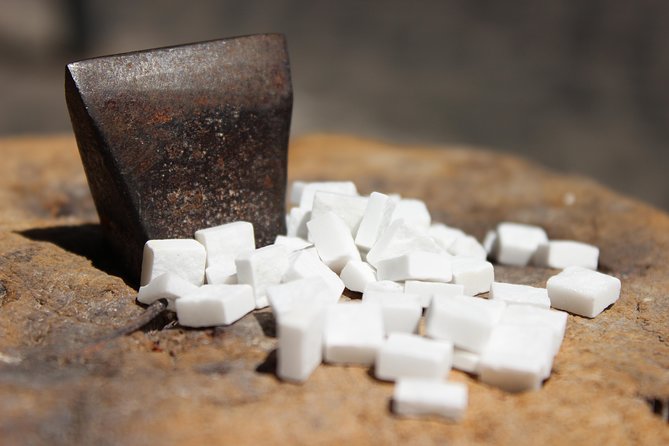
- Natural marble and proper tools are included, so you are not paying extra for materials.
- Coffee, tea, and bottled water keep the session comfortable and steady.
- Your studio piece comes framed and boxed, which matters if you’re traveling with luggage.
- A short history + technique lesson helps you understand what you’re building.
Studio Cassio on Via Urbana: what the setting gets right
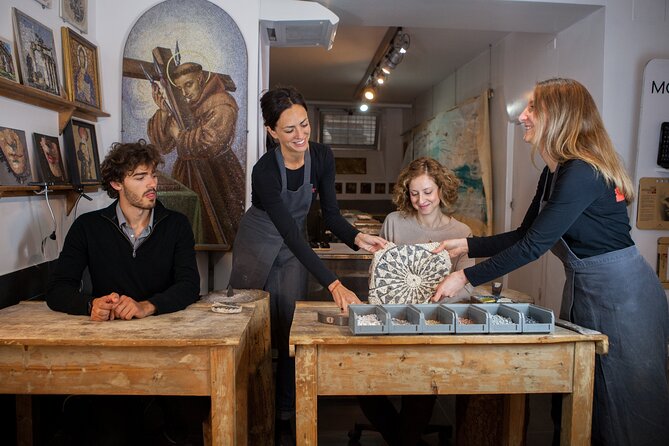
Studio Cassio is the kind of place you feel on contact. This is not a rushed craft booth in a mall; it’s a working mosaic studio environment where you can see the seriousness of the material and the care that goes into restoration work. Several class sessions are taught on site, and the tone is practical: the goal is for you to make something you’ll be proud to take home.
The location is Via Urbana (right in central Rome), and the workshop is scheduled for 2:00 pm. That start time is great if you like slow mornings (coffee, espresso stops, and a museum sprint) and then want something seated, focused, and cool indoors. And since the group size tops out at 7 travelers, you’re less likely to feel like you’re standing in the background while someone else gets all the attention.
There’s also a simple comfort factor that shows up repeatedly in the class vibe: you’ll get breaks in the form of included drinks, and the pace is guided. If your trip schedule has you walking all day, this workshop is a smart reset. Not “sleepy,” just calmer.
You can also read our reviews of more tours and experiences in Rome



Starting with Roman mosaic basics: technique and design rules
The workshop begins with an intro to Roman mosaic techniques and history. You’ll learn enough to stop guessing and start making decisions. The big idea is that Roman mosaics weren’t random decoration. They followed design principles: how shapes align, how texture creates depth, and how a pattern reads clearly from a normal viewing distance.
Then you move into the creative part: cutting your marble tiles and planning the textures for your composition. That “plan first” step matters. It’s easy to treat mosaic as just placement, but the instructors push you toward thinking like a designer: what should be crisp, what should soften, and where you want contrast.
In the class, you’re also building with traditional principles rather than a generic craft-template. The result is that your mosaic ends up looking like it belongs in the broader conversation of ancient Roman decorative art, not just like a hand-made project. And that’s why people who usually skip art classes often end up genuinely hooked. You’re not just copying; you’re learning how to see.
Your hands-on work: cutting marble and building an indirect-style mosaic
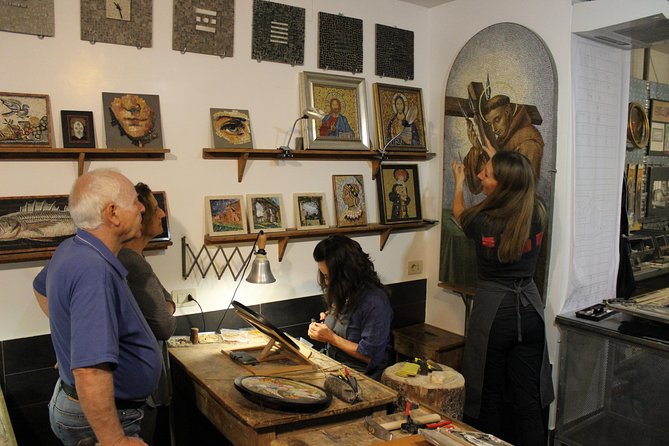
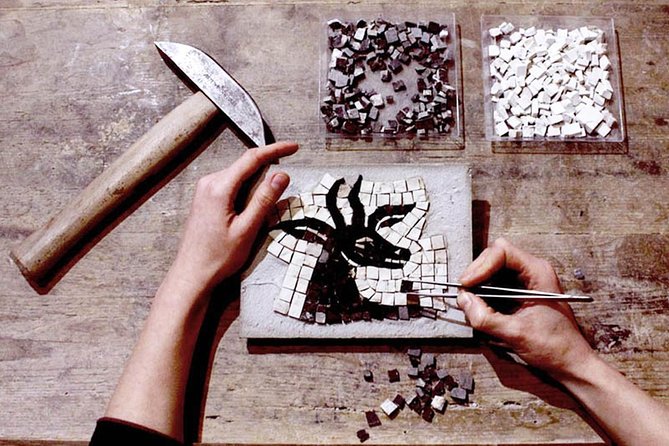
Once your plan is in place, you start cutting marble. This is the moment most first-timers remember. You go from “I’ve seen mosaics” to “I understand why the pieces look the way they do.” Cutting marble tesserae takes steady hands, and you’ll get that steadiness by doing it, not by watching.
A key part of the experience is how instruction stays close to your work. Instructors like Renato and Eleonora, and other team members such as Alex and Giulia/Giuliana, are repeatedly described as patient and encouraging. That matters because mosaic-making can feel technical fast—especially when you’re new—and you don’t want to be left figuring out basics alone.
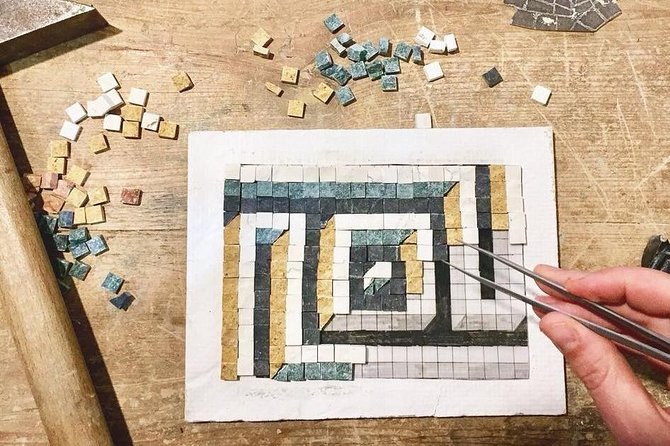
As you assemble your mosaic, you’re guided through a traditional approach to the design. The goal is a finished piece that follows best principles of Roman mosaic layout. You’re not just placing shiny squares; you’re creating an image with structure and texture. That’s also why the class feels educational even if you’re not an arts person. You’re learning a system.
If you’ve done micromosaic or similar crafts before, you might notice the difference in scale and technique. This workshop focuses on a classic ancient feel—bolder material and design choices—so it can be a great complement if you want to compare styles within the mosaic world.
Choosing your composition: patterns, textures, and what you can control
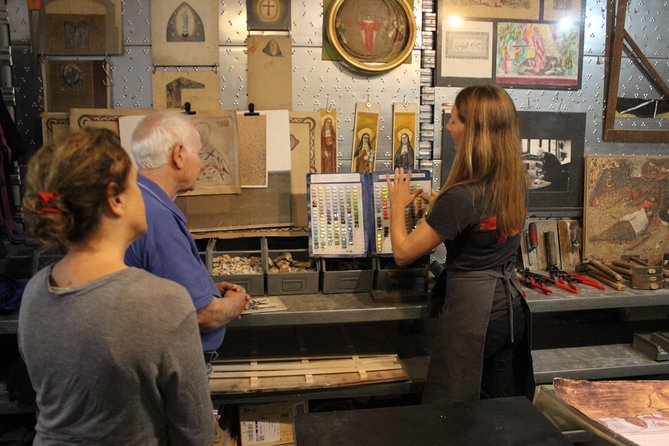
Your finished mosaic is about 7 x 5 inches, which is a very workable size for a 2 hours 30 minutes session. It also means you can take it seriously without losing time. You’ll be able to complete your artwork and still enjoy the history piece before you get to work.
You generally get to choose a design/pattern from examples connected to the ancient world. Some people describe picking from several patterns, often based on studies from restoration contexts such as Pompeii. That selection step makes a difference for first-timers: you start with something that already has good proportions and a design logic that reads well when completed.
Then comes the texture planning. Even if your pattern choice is set, you can still influence how it looks by deciding on the textures within your composition. The class helps you make the pattern “click” visually, so the final piece doesn’t look like random placement—it looks like an image with intentional depth.
The small perks that make the class feel easy
It may sound minor, but coffee, tea, and bottled water change the whole experience. You’re sitting and concentrating; you’ll appreciate having something offered without needing to pause your work to find a café. This is one of those travel details that doesn’t show up in photos, but you feel it in real time.
Also, because the studio setting is focused, the session works well even for solo travelers. You aren’t doing a “tour with stops”; you’re joining a small group that turns into a quiet workshop. That is often less stressful than navigating Rome with a crowd.






Taking your mosaic home: frame, sturdy box, and travel reality
This is a craft class, but it respects travelers. You’re given a frame for your artwork and a sturdy box to store and protect the finished piece. That packaging is not just convenient—it protects your souvenir from the kind of bumps and compression that happen when you’re moving through hotel rooms and trains.
The workshop ends back at the same meeting point. Transportation is not included, so you’ll want to think about how you’ll get home with the box. If you’re traveling with a daypack only, you can often make it work. If you’re hauling a big roller suitcase, the box should help keep everything in one place.
If you like practical souvenirs—something that lasts and has a personal story—this fits the bill. You end the day with an object you can display and remember, plus a new skill you can appreciate every time you see mosaic floors in Rome (or anywhere in Europe).
Price and value: why $107.68 can be a fair deal
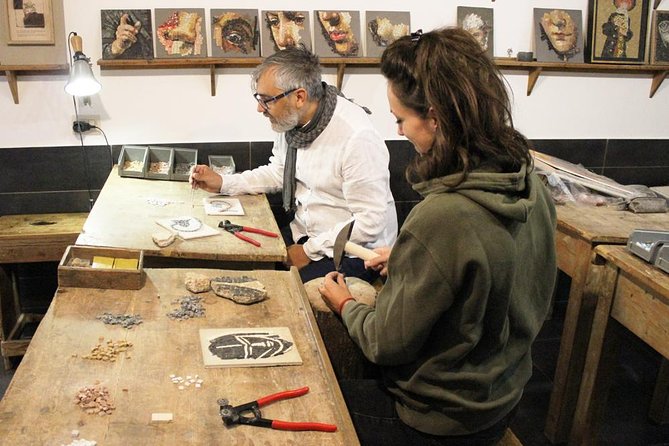
At $107.68 per person, you’re paying for more than “an art activity.” You’re getting the materials and support that usually cost extra if you DIY it: natural marble and the tools, guided instruction in the technique, plus the frame and sturdy transport box.
You’re also paying for something that’s hard to replace elsewhere on a trip: time with artisans who actually work on mosaics. The class is short enough to fit into a normal Rome schedule, but it still covers both the why (history and design principles) and the how (cutting and assembly). And because the group size stays small—up to 7—you’re less likely to feel like you’re paying for a seat near the front desk.
If you compare that to buying a mosaic souvenir, this feels different. A souvenir is ready-made and usually decorative. This is handcrafted, personal, and tied directly to a skill and a design tradition.
For value-minded travelers, the best sign is that the workshop is focused: you leave with something complete and protected. No waiting. No unfinished project. Just your framed mosaic at the end of the session.
Who this workshop suits best
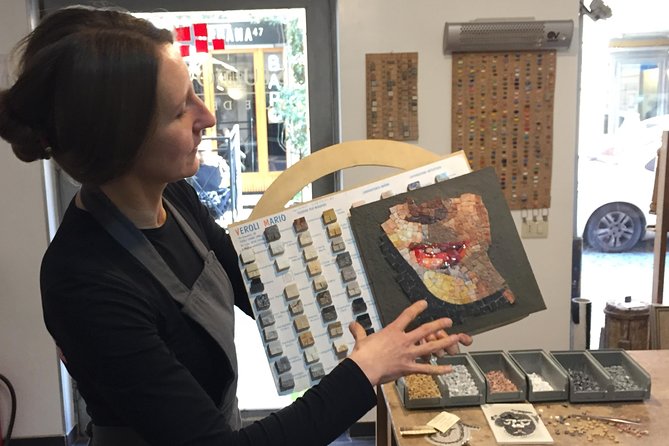
This is ideal if you want a hands-on Rome experience that is still grounded in authenticity. It’s also a strong choice if you like mixing art with history, because you learn the design logic while you work.
It’s suitable for ages 12 and up, and children must be accompanied by an adult. Most people can participate, and the class format supports beginners who have no prior mosaic experience. The repeated theme from the studio side is patience—there’s time to get you through the steps without making you feel behind.
It’s also a great match for:
- Couples who want something different from churches and ruins
- Solo travelers who want a calm, guided activity
- Families with at least one teen who enjoys making things
- Anyone who likes craftwork that teaches you a new way to look at art
If you’re the type who only wants big-seat, must-see monuments during your one day in Rome, then you may want to pair this with a museum day rather than replace sightseeing entirely. But if you want a memorable skill and a real keepsake, this workshop is a smart use of time.
Final call: should you book Studio Cassio’s Ancient Mosaic Workshop?
I’d book it if you want an authentic Rome activity with real instruction, not just a pass-through craft. The combination of marble-cutting, a traditional design approach, and take-home packaging (frame plus sturdy box) is hard to beat for the price. And the small group size helps a lot—this feels like a workshop you can actually learn from.
I would hesitate only if you know you want a larger “wow” souvenir than a 7×5 artwork, or if you hate traveling with boxed items. Otherwise, this is one of those experiences that turns your vacation memories into something you can display—and it teaches you to notice mosaic design details long after you’ve left Rome.
FAQ
How long is the Ancient Mosaic Workshop in Rome?
The workshop lasts about 2 hours 30 minutes.
Where does the workshop meet and start?
You meet at Studio Cassio – Arte del Mosaico, Via Urbana, 98, 00184 Roma RM, Italy. The start time listed is 2:00 pm.
What will I make?
You will create a personalized Roman mosaic sized 7 x 5 inches.
What’s included in the price?
The workshop includes access to natural marble and tools, a frame, a sturdy box to protect your finished artwork, your mosaic creation and a hands-on mosaic lesson, and bottled water plus coffee and/or tea.
What are the age requirements?
The minimum age is 12. Children must be accompanied by an adult.
Is the workshop offered in English, and is it a small group?
Yes, it is offered in English, and the workshop has a maximum group size of 7 travelers.
If you tell me your travel dates and whether you’ll be bringing a carry-on or larger luggage, I can help you pick the best day/time to slot this in so the mosaic box fits your schedule comfortably.