REVIEW · ROME
Rome: Ancient Rome Night Tour
Book on GetYourGuide →Operated by Guided Tours E.D. · Bookable on GetYourGuide
Rome at night feels personal. This small-group walk turns familiar landmarks into a calmer, more cinematic story, led by guides like Mario who tell it with real energy. You start at the Vittoriano (Altare della Patria) and spend your evening moving between viewpoints that feel made for night lights, not daytime heat.
I especially love two things: you escape the worst of the daytime crowds, and you get a guide who connects the monuments to the people who lived around them. One thing to consider: this is a walking, exterior-view experience—so if you’re hoping to go inside major sites like the Roman Forum or the Colosseum, plan your expectations for what you’ll see from outside.
English-speaking guides make it easy to follow the big threads of the city, from emperors to neighborhood legends. And at this price point, it’s a strong way to spend your first evening in Rome if you want context fast and don’t want to roast in the sun.
In This Review
- Quick hits before you go
- Why the Vittoriano-to-Colosseum Night Route Feels Like a Win
- Meeting at Altare della Patria (Vittoriano) and Getting Your Bearings
- Piazza Venezia: Where the Stories Start to Make Sense
- Capitoline Hill: The View That Turns the Forum Into Real Space
- Via dei Fori Imperiali: Walking the Boulevard of Power
- Rione Monti After Dark: The Neighborhood Side of Ancient Rome
- A Palace Linked to Pope Borgia: When the Stones Get Personal
- Piazza del Colosseo: Colosseum Facade, Big Drama, Limited Access
- Guides Really Drive the Value: Mario, Lara, Yash, Bryan, Jason
- Who Should Book This Night Tour (and Who Might Not)
- Should You Book This Rome Ancient Rome Night Tour?
- FAQ
- How long is the Rome Ancient Rome Night Tour?
- Where do I meet the guide?
- What language is the tour in?
- Is this tour food or transportation included?
- Do you go inside the Roman Forum or the Colosseum?
- Can I cancel for a full refund?
- Do I need to pay right away?
Quick hits before you go
- Small-group pacing so you can actually hear the stories while you walk
- Vittoriano to Capitoline Hill views that help you understand Rome’s layout
- Fori Imperiali at night gives the boulevard a sense of imperial force
- Rione Monti wandering into the area tied to Julius Caesar
- Colosseum facade lighting for dramatic photos without long ticket lines
- Guide-led narration—I’ve seen how names like Lara, Yash, Bryan, and Jason can completely steer the experience
Why the Vittoriano-to-Colosseum Night Route Feels Like a Win
For $29 per person, you’re buying more than “a night walk.” You’re buying orientation. Rome can feel like a pile of famous stones unless someone helps you see the connections: where power sat, how the city moved, and why certain neighborhoods mattered.
This tour is designed for that after-dark effect. With fewer crowds and cooler air, you can slow down and actually notice details you’d normally miss in a rush. The route also intentionally strings together viewpoints. You get the grand picture from the top of Capitoline Hill, then the street-level feeling of the imperial boulevard, and finally the Colosseum area as the light turns it into a monument you feel in your chest.
The other smart move is the small-group format. It keeps the walk from turning into a herd, which matters for two reasons: listening gets easier, and the guide can adjust the flow to what the group needs. If you’re in Rome for a short trip and want a fast emotional and historical “map,” this hits the mark.
You can also read our reviews of more evening experiences in Rome

Meeting at Altare della Patria (Vittoriano) and Getting Your Bearings
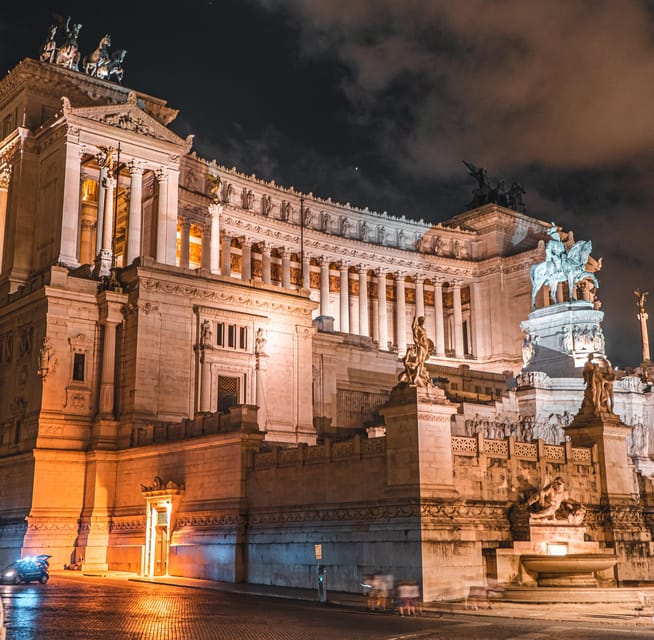
Your evening starts at the Altare della Patria, also known as the Vittoriano, in Piazza Venezia. This is the kind of meeting point that helps you anchor the trip right away. You’re in one of Rome’s most prominent squares, with clear sight lines and a big sense of orientation.
Look for the guide holding an E&D Tours sign. From there, the first part of the walk matters: it’s not just moving people from A to B. It’s getting you situated so the later stops make sense.
A practical note: this area is busy even at night, so I’d show up a few minutes early. You want a calm start, not a stressful sprint. Once you’re with the group, you’ll feel the guide’s role more clearly—how they frame what you’re about to see, and how they connect earlier landmarks to later stories.
Piazza Venezia: Where the Stories Start to Make Sense
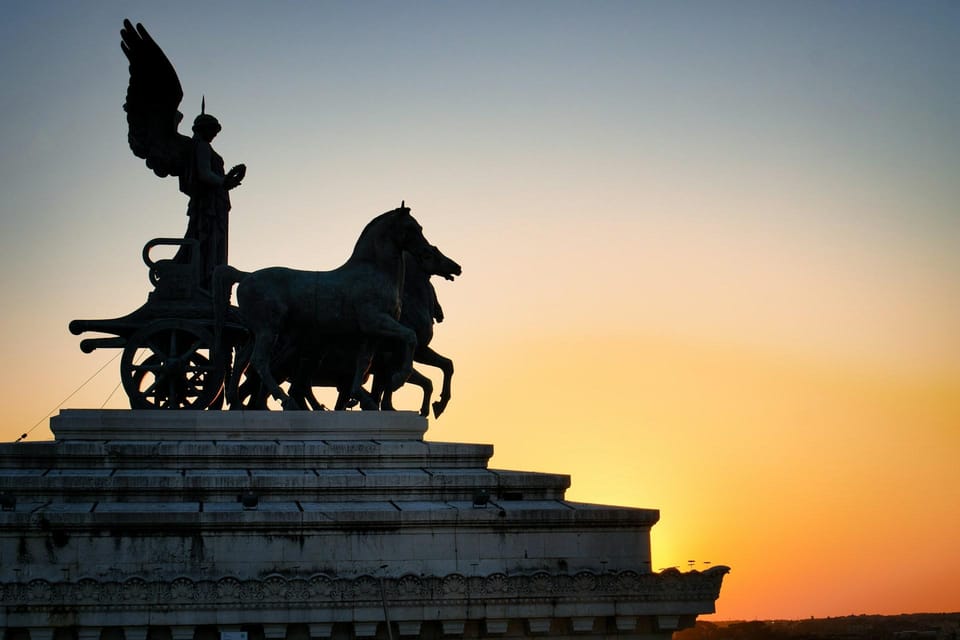
At Piazza Venezia, you get a guided moment that sets up what comes next. This stop is short, but it’s important. Piazza Venezia is where Rome’s “big idea” becomes visible: the way the city’s center pulled people in and kept them moving through grand public spaces.
You’re standing near a monumental centerpiece, and the guide’s job is to translate that scale into meaning. That’s what makes the night tour different from wandering on your own. Even if you’ve seen photos of Roman landmarks all day, the guide helps you understand what you’re looking at and why it mattered.
If you like walking tours that give you context rather than a checklist, this part usually feels like the payoff begins here. The narration at the start helps you follow the route instead of just absorbing names.
Capitoline Hill: The View That Turns the Forum Into Real Space
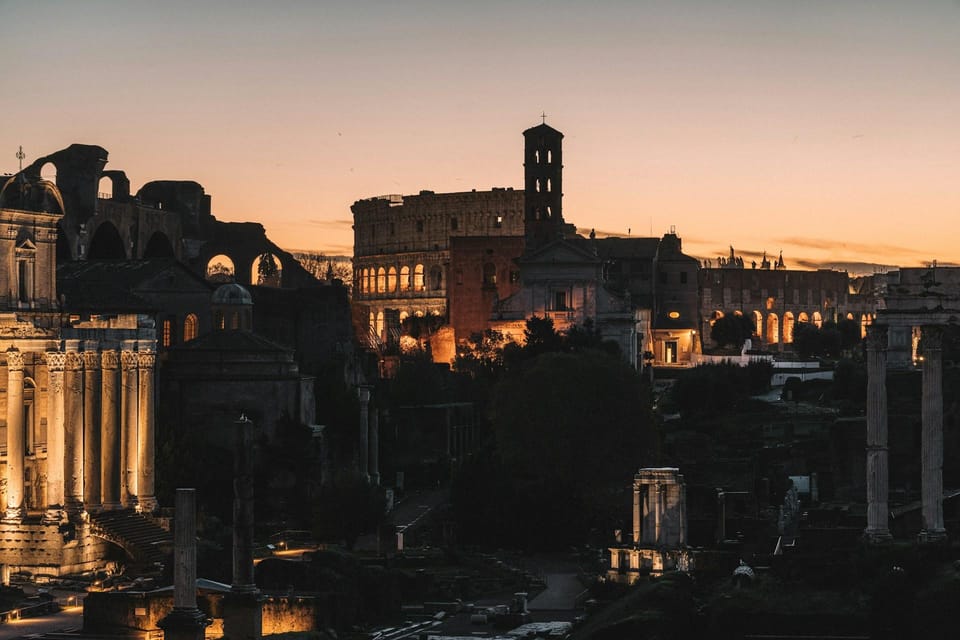
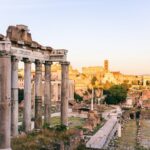
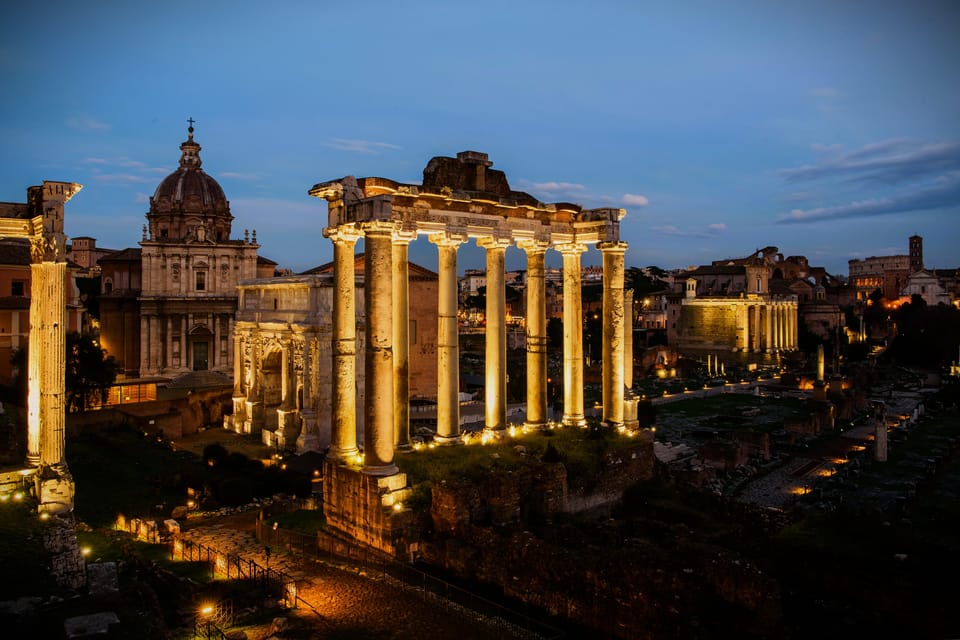
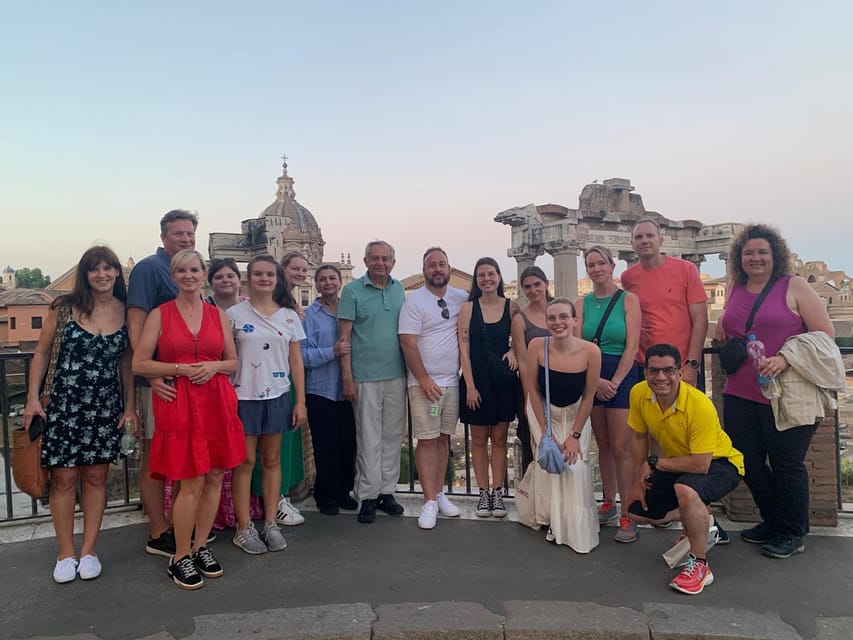
The most “aha” moment for many people comes at Capitoline Hill. You climb to a view that makes the Roman Forum area easier to understand—suddenly, it stops being vague ruins and becomes a real layout in your mind.
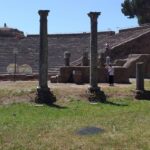
This is a smart choice for an evening tour. The Forum region is famous, but it can feel confusing at ground level. From Capitoline Hill, you can see the spacing, the direction of movement, and the way the city’s power concentrated in a core zone.
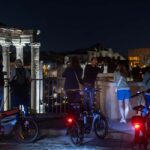
Also, night lighting changes the mood. Instead of the harsh daytime glare that flattens depth, you get contrast. The stones look older, and the city feels more layered. For photographers, it can be a great time to frame the skyline and get that dramatic “Rome from above” feeling without the daytime press.
Your guide keeps this stop more than a scenic pause. The best guides here don’t just point out scenery—they give you a reason to care about the view, so you’re not staring quietly while your brain stays off.
Via dei Fori Imperiali: Walking the Boulevard of Power
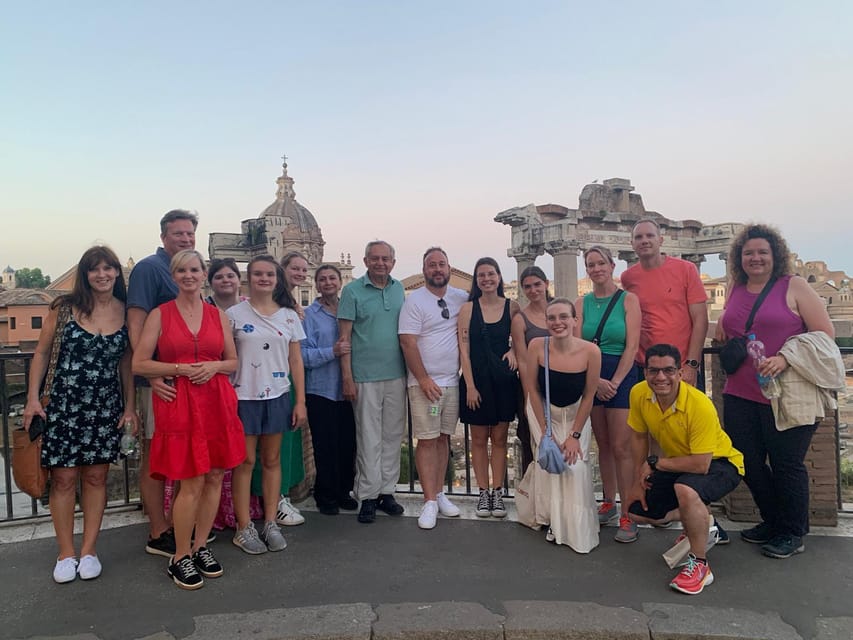
Next comes Via dei Fori Imperiali, the boulevard that reads like a timeline in stone. Walking here at night gives you a strong sense of movement: it’s designed like a long, processional corridor, and at night the emptier streets make that design feel purposeful.
This segment is shorter than the hill stop, but it’s one of the most satisfying “feel Rome” moments. You’re moving through the space between major eras. With the guide explaining what was happening and who used these routes, the boulevard starts to feel less like a street and more like a stage.
A drawback to keep in mind: since the tour is focused on viewpoints and narration, you’re not spending hours lingering in one place. If you want museum-style time, you might feel the walking pace. But if you want a guided evening tour that keeps momentum while still teaching, this portion delivers.






Rione Monti After Dark: The Neighborhood Side of Ancient Rome
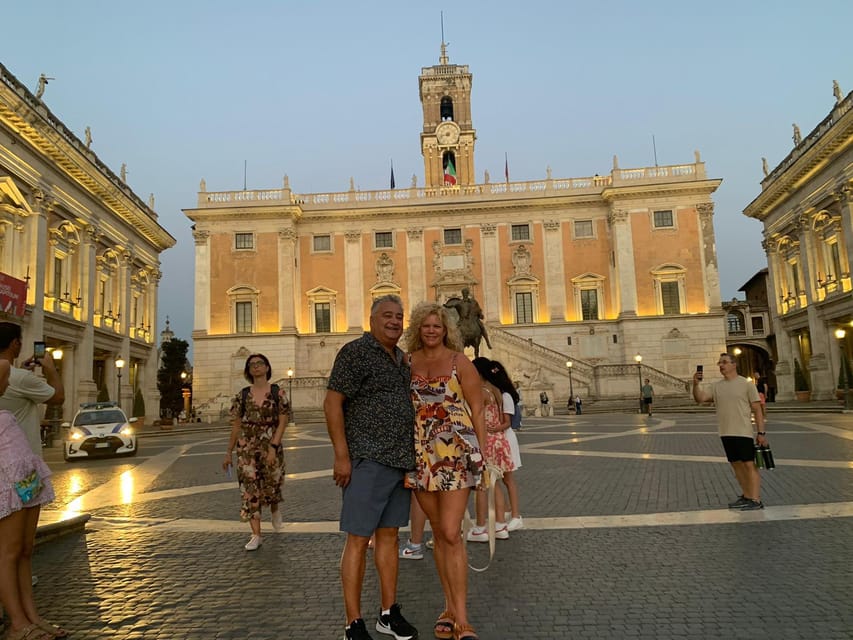
Then you head into Rione Monti, which is where Rome feels more like living streets instead of just famous monuments. This area is strongly tied to the city’s ancient roots, including connections to Julius Caesar’s birthplace area.
That matters because it gives you a different angle on ancient Rome. You’re not only seeing the official sites of power—you’re also seeing the neighborhood fabric that surrounded them. Night helps here too. The pace slows, the street rhythm is calmer, and the guide can steer you toward the meaning of what you’re walking past.
One practical thing: Monti streets can be uneven, and it’s a walking tour. If you’re wearing shoes that are fine for flat sidewalks but not for cobbles, you might feel it. I’d plan for comfortable footwear and an evening that’s more “stroll with meaning” than “sit-and-watch.”
A Palace Linked to Pope Borgia: When the Stones Get Personal
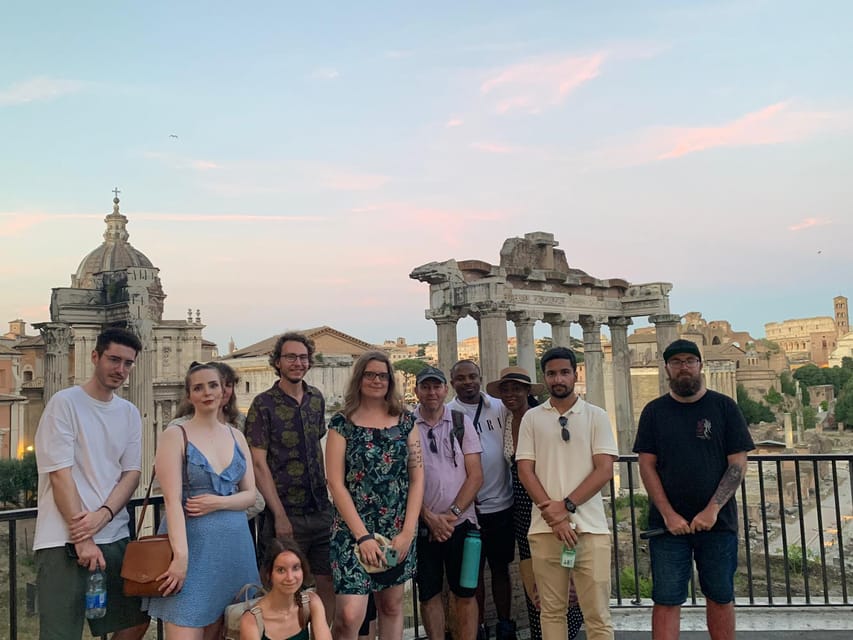
One stop is described as a palace that once belonged to Pope Borgia. This is a great contrast point within the tour. Ancient Rome isn’t isolated; it’s layered. Centuries later, the same city keeps recycling power structures, wealth, and buildings.
This kind of stop works well on a night tour because you’re already in a storytelling mood. The guide turns architecture into a clue—why certain locations held influence, how the city kept reinventing itself, and how the past stays physically present.
If you like history that has characters instead of just dates, this is where the narrative can get especially fun. Even if you’ve read about Renaissance-era Rome before, standing near a palace tied to Borgia gives that broad sweep of time a more human shape.
Piazza del Colosseo: Colosseum Facade, Big Drama, Limited Access
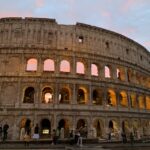
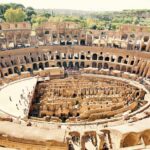
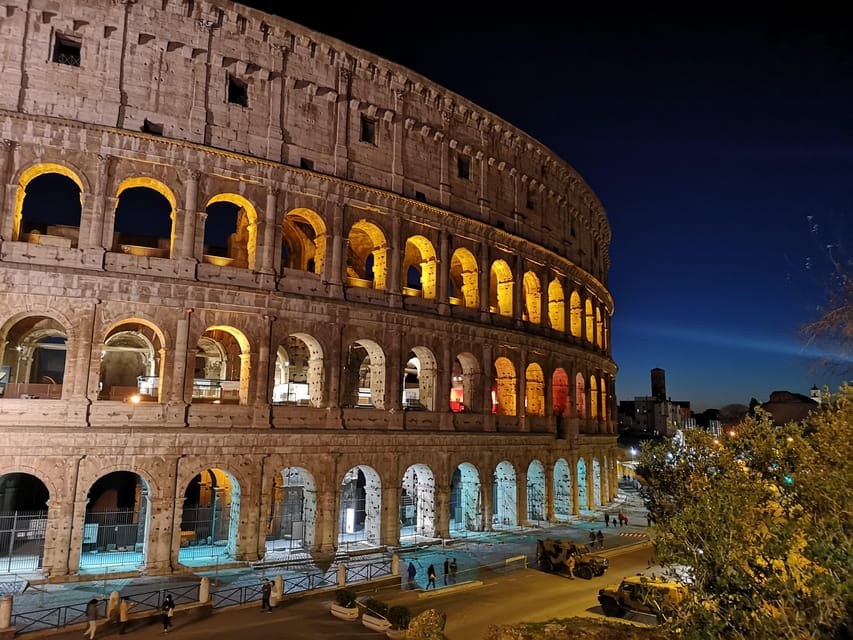
The tour ends around Piazza del Colosseo, with the impressive Colosseum facade in view. This is the emotional closer: you’ve spent the evening learning how Rome worked, and then the Colosseum appears as the symbol everyone knows.
Here’s the key expectation to set: the tour is focused on what you can see from outside. One of the best practical notes from people who did the experience is that you do not go inside the Roman Forum or the Colosseum. You still get strong views, especially with the lighting, but you’re not touring the interiors.
That’s not a flaw—it’s a tradeoff. Night walking gives you atmosphere and context, while interior access often requires separate tickets, timed entry, and additional planning. If your goal is to understand Rome quickly and get those photos, this night version can be a very efficient choice.
Guides Really Drive the Value: Mario, Lara, Yash, Bryan, Jason
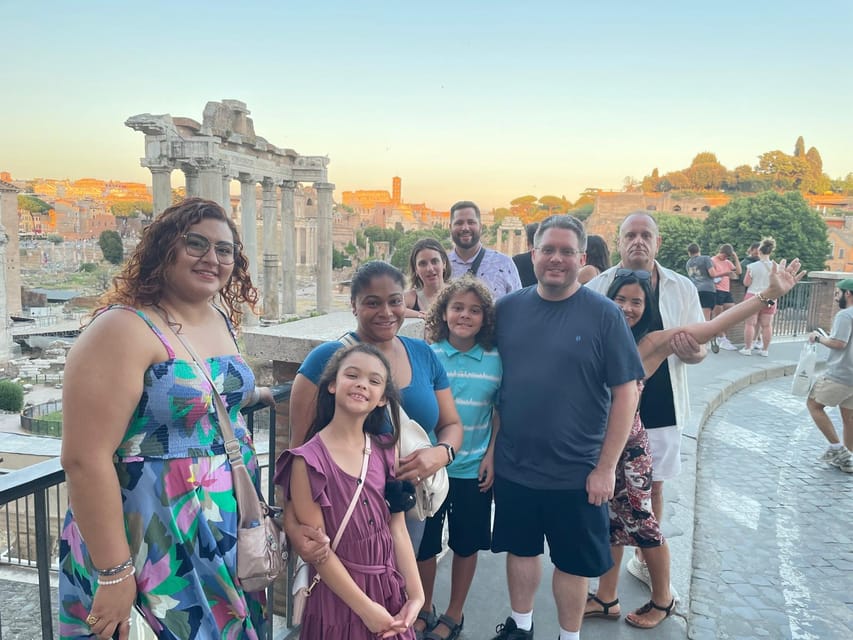
The biggest pattern in the experience is how much the guide changes everything. Names like Mario and Lara show up repeatedly, and different guides bring different storytelling styles—everything from passionate narration to a more flowing, easy-to-follow pace.
You’ll notice it in small ways. When the guide loves the subject, the walk stops feeling like a lecture. It becomes a conversation with the city: you ask questions, they connect them, and your brain clicks into place.
Guides also help you with pacing. A good one keeps the group together, explains what you’re looking at, and knows when to give you a short moment to look without talking. That matters a lot after dark, when you’re tired in that subtle way that hits after walking and reading signs.
If you want history that feels alive, this is where the tour earns its money.
Who Should Book This Night Tour (and Who Might Not)
I think this tour is a great fit if you:
- Want to see major Rome landmarks in a single evening without a stressful schedule
- Prefer cooler conditions and less crowd pressure than daytime sightseeing
- Like guided storytelling that connects neighborhoods to emperors, power, and place
- Are traveling with mixed ages or energy levels who still enjoy walking
You might want to look at other options if:
- You mainly care about interior access and timed entries
- You dislike walking on uneven pavement
- You want long stays at each site, like you’d get with museums
If it’s your first time in Rome and you want context fast, this is a smart early-book move.
Should You Book This Rome Ancient Rome Night Tour?
Yes, if your goal is a guided introduction to central ancient Rome with strong night atmosphere. At $29, the value is in the combination: small-group pacing, expert guide storytelling, and a route that hits the big “Rome map” points—Piazza Venezia, Capitoline Hill views over the Forum area, Via dei Fori Imperiali, Rione Monti, and the Colosseum facade to close.
Just go in with the right expectation: this is not an inside-access tour. You’ll see the monuments and understand the city’s layout, but you’re mostly there for exterior views and guide-led context.
If that sounds like your kind of evening, book it.
FAQ
How long is the Rome Ancient Rome Night Tour?
The duration is listed as 1.5 hours. The experience is also described as a 2-hour walking tour, so I’d check your specific confirmation time details.
Where do I meet the guide?
Meet your guide in front of Altare della Patria (the Vittoriano) in Piazza Venezia. The guide will be holding an E&D Tours sign.
What language is the tour in?
The live tour guide offers the experience in English.
Is this tour food or transportation included?
Food and drinks are not included, and transportation or pick-up/drop-off is not included.
Do you go inside the Roman Forum or the Colosseum?
The tour focuses on views from the outside. You get a good look at the Roman Forum area and the Colosseum without entering them.
Can I cancel for a full refund?
Yes. You can cancel up to 24 hours in advance for a full refund.
Do I need to pay right away?
No. The tour offers reserve now & pay later, so you can book your spot without paying immediately.