REVIEW · ROME
Appian Way & Aqueducts small group e-bike tour(catacombs & food)
Book on Viator →Operated by EsBikeTours · Bookable on Viator
Ancient Rome on an e-bike sounds wrong, right? It works here because you follow the Appian Way out of town, hit major catacombs underground, and come back with a Rome feel that’s different from the museum grind. I especially like how the tour builds in “big Roman” moments fast, from an imperial gate to aqueduct ruins, without making you wrestle with tickets and timing on your own.
Two things I really like: the e-bike setup lets you focus on the route and the views (not exhaustion), and the catacombs stop is actually included with entry and a guided visit (with a couple of day-based swaps). One consideration: the ride isn’t for brand-new cyclists. You’ll be on mixed surfaces and you’ll need confidence with traffic around the city.
In This Review
- Key highlights at a glance
- The Appian Way route: why an e-bike is the smart way to do it
- Meeting at Via Marco Aurelio and how the group flow works
- Porta San Sebastiano and the Arch of Drusus: the first imperial power move
- Villa di Massenzio: walking where an emperor actually lived
- Spa ruins and the Mausoleum of Cecilia Metella: scale that hits differently outdoors
- Mercato di Campagna Amica and Fonte Acqua Egeria: the food break with a Roman water story
- Catacombe di San Callisto (and the Wednesday switch): going underground with a guide
- Parco degli Acquedotti and Aqua Claudia/Aqua Felix: the aqueducts finish strong
- E-bike reality check: you don’t need motor skills, but you do need control
- Food and timing: lunch vs aperitivo, and why it changes the vibe
- Value for $90.70: what you’re really paying for
- Who should book this e-bike Appian Way tour?
- Should you book the Appian Way & Aqueducts small group e-bike tour (catacombs & food)?
- FAQ
- How long is the e-bike tour?
- What’s included in the price?
- Do I need prior e-bike experience?
- Is the tour hard?
- Where does the tour start and end?
- Are the catacombs always included?
- What catacombs will I visit?
- Is there food, and can I choose dietary options?
- How big is the group?
- Is this tour suitable for children?
Key highlights at a glance
- Max 15 people means you’re not swallowed by a giant crowd and you can hear your guide
- Imperial gate to Christian catacombs packs two very different sides of Rome into one loop
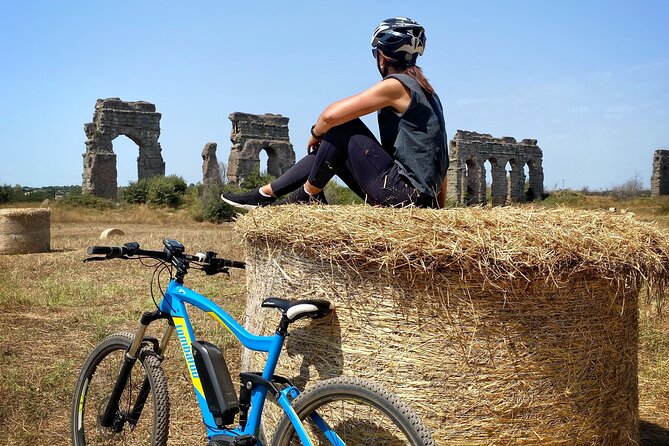
- Aqueduct park finale for Aqua Claudia and Aqua Felix—stone scale that feels real, not postcard-flat
- Lunch or aperitivo included with vegetarian and gluten-free options
- Catacombs plans adapt: callixtus shifts on Wednesdays, and other sites can replace it
- Helmet + bottled water keep things practical for a long, active few hours
The Appian Way route: why an e-bike is the smart way to do it
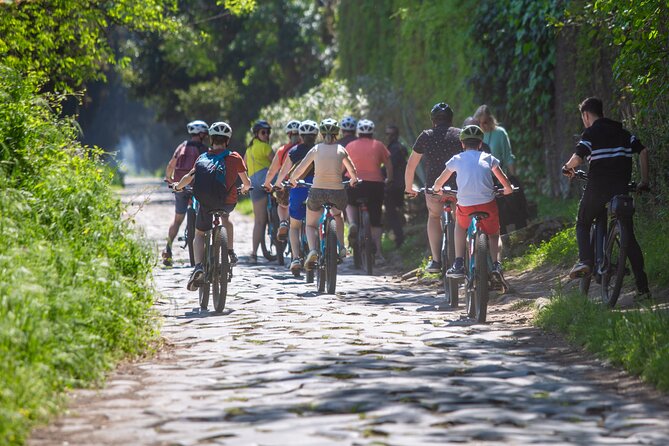
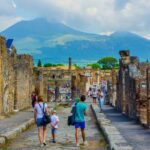
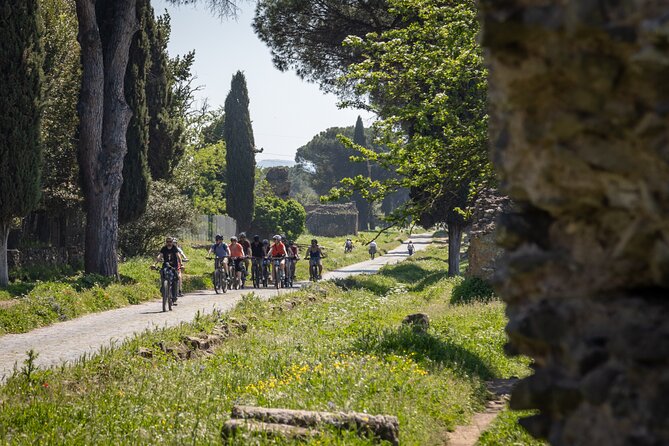
Rome’s Appian Way isn’t just a “road.” It’s an archaeological corridor where the city thins out into countryside, and that change is part of the magic. On a normal bicycle, distances and rough stones can turn into a chore fast. With an e-bike here, the assist takes the sting out so you can enjoy the ride, not white-knuckle it for every bump.
You still have to pedal. You still need to stay alert. Cobblestones and dirt paths show up at different points, and the group moves at a pace that works best if you can ride smoothly without wobbling. If you’ve ridden a regular bike before—even if it’s been a while—you’ll likely be fine with the e-bike assist.
Also: the tour includes helmets and bottled water, and a live guide leads you through both the quieter stretches and the quicker traffic moments near the city. That combination matters because you’re not only sightseeing; you’re navigating.
You can also read our reviews of more food & drink experiences in Rome

Meeting at Via Marco Aurelio and how the group flow works
The tour meets at Via Marco Aurelio, 30a, 00184 Roma, and it loops back to the same place. It’s a small-group format (up to 15), and that affects everything: you get fewer stop-start delays, and guides can keep an eye on riders’ comfort levels.
Because the tour is built around multiple archaeological stops plus a longer underground visit, timing is everything. Plan to arrive early, not “right at the start.” One person was helped to catch up, but the stress of that is avoidable—just show up ahead of time and let the check-in and bike fitting happen calmly.
English is available, and guides may be multi-lingual depending on the day. Names you might run into include Sylvia/Silvia, Felipe, Bruno, and Iman—and a strong pattern is clear: the guides manage safety on the road while still giving you history that connects the sites.
Porta San Sebastiano and the Arch of Drusus: the first imperial power move
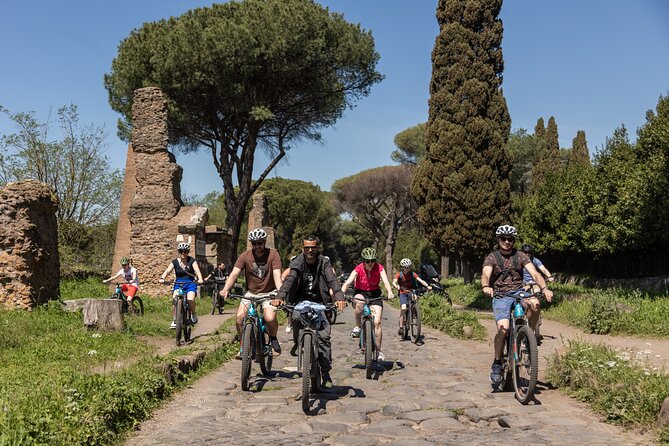
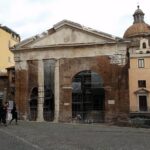
The ride starts with Porta San Sebastiano, one of the major gates of the imperial city. Gates like this aren’t just architecture—they’re a reminder that Rome was built to control movement, and that control shaped daily life long before cars existed.
From here you can also look at the Appian Way from above, through the Museum of the Roman Walls area. Even if you don’t climb for views every time, this is a smart first stop because it gives you orientation. You’re about to spend time following a route that feels ancient, but you need a mental map early.
The Arch of Drusus adds another layer. It’s the kind of landmark that can look purely decorative at ground level, but when you see it as part of a gate complex, it reads as a statement of power and lineage—Rome signaling who mattered.
Practical note: this is a quick stop, around 10 minutes, so treat it as a launch pad.
Villa di Massenzio: walking where an emperor actually lived
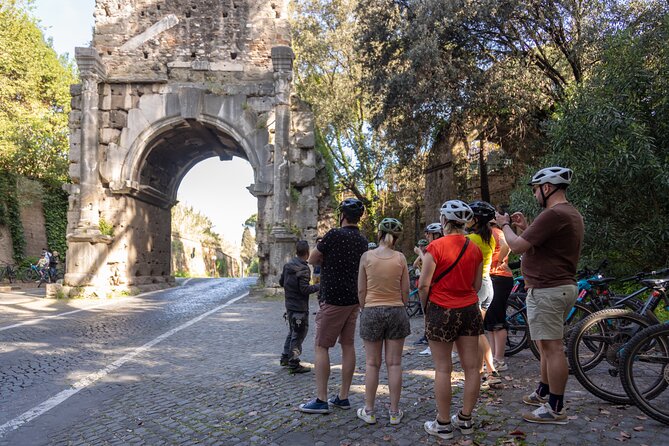
Next up is Villa di Massenzio, a place tied to the last emperor who spent his life in Rome. The villa grounds are a contrast to the city gate: you get space to breathe, room for a stroll, and time to notice how emperors shaped “comfort” even in the shadow of political decline.
This stop is brief—about 15 minutes—but it’s valuable because it breaks the “one-stone-look” pattern. You’re not just passing ruins; you’re learning how Roman elites used space. Even at a walking pace, you can feel the difference between defensive Rome and lived-in Rome.
The downside is also predictable: if you’re hoping for long museum-style explanations, you won’t get that here. The tour’s rhythm is made for moving, seeing, and then moving again.
Spa ruins and the Mausoleum of Cecilia Metella: scale that hits differently outdoors
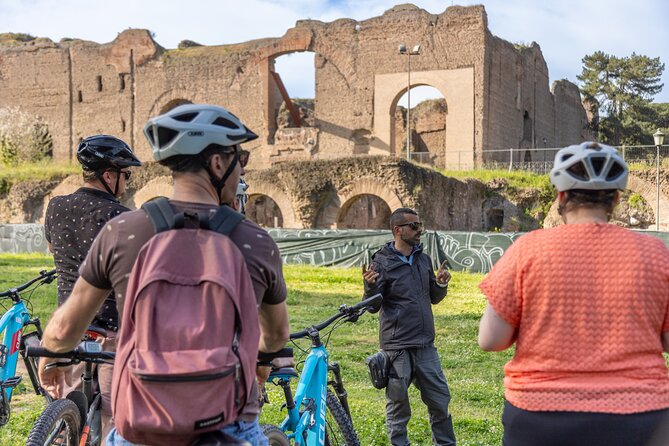
After leaving the city center, the tour pauses near the ruins of the biggest spa in ancient Rome. That matters because it reminds you that “Roman life” wasn’t always temples and triumphal arches. Baths were social hubs—places where people talked, relaxed, and stayed connected.
Right after that, you reach the Mausoleum of Cecilia Metella. This landmark is one of the standout sights on the route: it feels imposing because it was built to last, and because the surrounding countryside keeps it from being swallowed by modern buildings.
In real time, outdoors, this kind of structure often lands better than it does in photos. You get the sense of why it became a recognizable reference point along the way—both historically and visually.
You can also read our reviews of more tours and experiences in Rome




Mercato di Campagna Amica and Fonte Acqua Egeria: the food break with a Roman water story
The middle stop is both practical and very Roman. The tour heads to Mercato di Campagna Amica – Fonte Acqua Egeria, a water bottling plant where locals come for mineral water. This is where you’ll get the food break—about 50 minutes—and it’s a big part of why the tour feels worth doing even if you’re not a hardcore cyclist.
Here’s what makes it more than “just a lunch stop”:
- You get a real local setting, not only a tourist restaurant
- You tie the Appian Way to how people still live with these ancient water sources
- You get downtime for bikes, legs, and hydration before the underground portion
If you’re doing the lunch/aperitivo option, the tour includes vegetarian and gluten-free choices. One rider also noted that the lunch can include meat-heavy dishes and burrata-style items, plus coffee and a sweet pastry, depending on the option and day. Your best bet is to flag dietary needs at booking, then let the provider do the menu matching.
Bathroom tip: the park/restroom setup at the food stop may be basic. If you’re headed into catacombs right after, I’d use the restroom before you leave the lunch area.
Catacombe di San Callisto (and the Wednesday switch): going underground with a guide
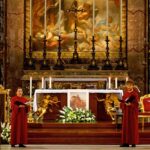
The core emotional moment for many people is the catacombs visit. The tour schedules Catacombe di San Callisto for about 1 hour. This is an important site: it’s considered one of the first examples of a Christian cemetery and church.
A few operational details affect what you’ll see:
- Catacombs are closed on Christmas, Easter, and January 1
- On Wednesdays, San Callisto is closed, so the tour goes to Catacombe di San Sebastiano
- If those are also closed, the tour uses Catacombe di Domitilla
Inside the catacombs, expect a guided visit with the site’s own format. The experience is powerful, but it isn’t the same as being “fully in charge” of your pace like an outdoor walk. The space is fixed, pathways are narrow, and groups may be larger underground.
What to know before you go:
- Wear the gear you’re given and keep your helmet secured
- Bring a calm mindset; crowds, acoustics, and low light are part of the environment
- If you don’t like feeling “rushed,” go slowly once the underground tour begins—don’t fight your body’s urge to hurry
Even with those constraints, the catacombs section is where the Appian Way turns from scenery into story.
Parco degli Acquedotti and Aqua Claudia/Aqua Felix: the aqueducts finish strong
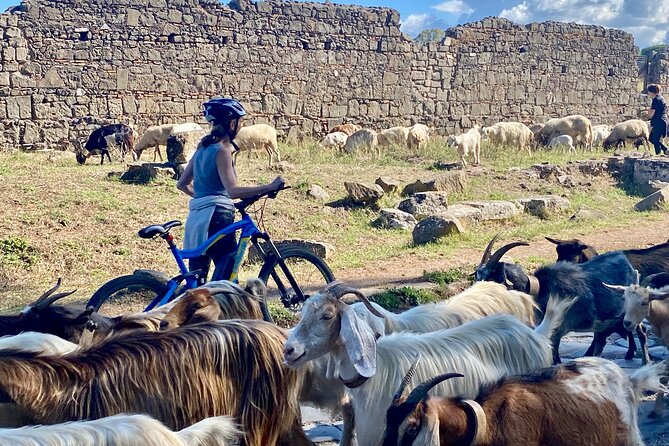
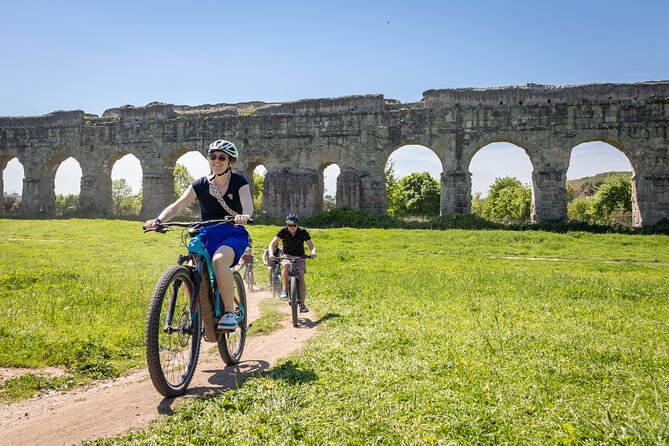
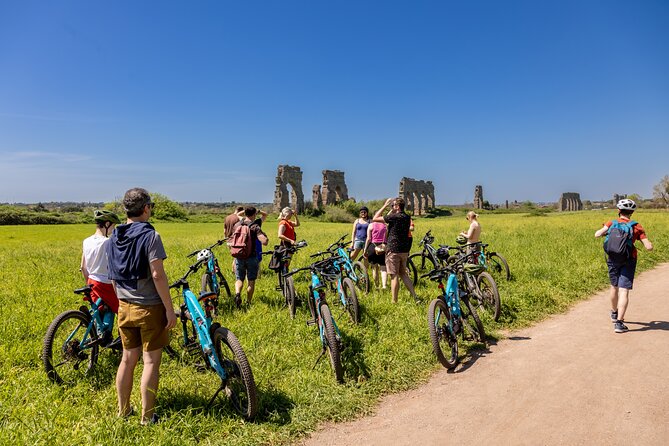
The last stop is Parco degli Acquedotti in the Parco Archeologico dell’Appia Antica. This is the payoff zone for Roman engineering. You’ll see remains of Aqua Claudia and Aqua Felix, two aqueducts that helped supply a growing city.
What makes an aqueduct stop so satisfying here is context. You’ve already ridden past imperial-era infrastructure, moved through countryside ruins, and gone underground. Then you return to a structure built for flow—water as a system, not a decorative detail.
The stop itself is shorter—about 20 minutes—but enough time to take in the scale, snap photos, and connect what you saw at Fonte Acqua Egeria earlier with the larger aqueduct network.
If you like photography, this is a great moment for it. The stone lines and repeated arches look good in different light, and being outside the city core helps the views feel open.
E-bike reality check: you don’t need motor skills, but you do need control
This is the part I want you to take seriously. The tour is often described as easy to hop on because the e-bike assist helps you roll over rough sections. Still, the requirement is clear: you need good cycling skills and confidence riding a bike. It’s also not recommended if you don’t know how to ride.
Terrain varies. One of the main things I’d prepare for is mixed surfaces—pavement, cobblestones, and dirt-like tracks in stretches. Even with assist, those surfaces demand attention. You’ll be asked to keep your line, follow instructions, and stay aware of the group.
Also, Rome traffic can show up briefly. Your guide manages the timing and keeps the group together, and guides like Sylvia/Silvia and Felipe were specifically praised for road-savvy navigation and patient handling of less-experienced riders. That’s reassuring, but it still means you should ride with focus.
Best fit? People with moderate physical fitness and the ability to pedal and balance.
Food and timing: lunch vs aperitivo, and why it changes the vibe
The tour includes lunch on the morning option or aperitivo on the afternoon option. Either way, the idea is the same: you eat in the countryside after the main ride segment and before catacombs.
This timing is smart. Catacombs are one of the most mentally heavy parts of the day. Eating beforehand helps you stay steady, and it gives you a chance to refuel without turning the day into a rushed snack quest.
The food style can vary by day and option. The data guarantees vegetarian and gluten-free choices, which is the key comfort point. Beyond that, the menu may include a mix of Roman/Italian favorites—some groups have described a spread with meats, salad, burrata, bread, and coffee plus a sweet pastry.
If you’re picky about quality, don’t assume the meal will be fine-dining level. It’s more like a well-sized regional stop than a gourmet destination.
Value for $90.70: what you’re really paying for
At about $90.70 per person, the headline cost looks like a lot until you itemize what’s included.
You’re getting:
- E-bike and helmet
- Bottled water
- Live guide
- Catacombs visit with entry included (except closure days)
- Lunch or aperitivo, plus vegetarian and gluten-free options
When you price those components separately, the tour starts to look like a practical bundle—especially because catacombs aren’t the easiest thing to organize on your own without ending up with time gaps.
Also, small group size helps value. You’re not just buying a bike; you’re buying guided transitions between multiple sites, plus safety and route management when you’re cycling through mixed environments.
Who should book this e-bike Appian Way tour?
You should book if:
- You’ve already done Rome’s headline sights (or you’re done for the day and want something different)
- You want history outdoors, not only indoors
- You ride well enough to handle cobblestones and dirt paths
- You’re excited by aqueduct engineering and Christian burial history
You might skip this if:
- You can’t confidently ride a bike yet
- You hate any chance of rough terrain
- You’re expecting a gentle, fully paved cruise with no road sections
And if you want even more personal attention, there’s an option to upgrade to a private tour.
Should you book the Appian Way & Aqueducts small group e-bike tour (catacombs & food)?
If your goal is a real Rome day outside the main tourist lanes, I think this is a strong choice. The big wins are the combination: Appian Way riding + aqueduct ruins + catacombs + included countryside meal. It’s one of those formats where the day stays varied instead of turning into one long “look at stones” session.
Just be honest about your cycling comfort. If you can handle mixed surfaces and follow instructions, you’ll likely have a fantastic time. If you can’t, you’ll spend the day worried, not sightseeing.
If you want the best odds for an easy, satisfying outing, plan on being at the meeting point early, ride with control (not speed), and use the bathroom before the catacombs section. Then let the route do its job: turning Roman infrastructure into a story you can feel under your wheels.
FAQ
How long is the e-bike tour?
It runs for about 5 hours.
What’s included in the price?
You get bike use, helmets, bottled water, a live guide, catacombs entry and visit, and lunch (morning) or aperitivo (afternoon). Vegetarian and gluten-free options are available.
Do I need prior e-bike experience?
No e-bike experience is required in the general sense. But you do need good cycling skills, and it’s not recommended if you don’t know how to ride a bike.
Is the tour hard?
It’s a moderate-physical-fitness ride with varied terrain (including cobblestones and dirt sections) plus some city traffic moments. You should be comfortable cycling and staying focused.
Where does the tour start and end?
It starts and ends at Via Marco Aurelio, 30a, 00184 Roma.
Are the catacombs always included?
Catacombs are included, but they’re closed on Christmas, Easter, and January 1. On Wednesdays, San Callisto is closed and the tour goes to Catacombe di San Sebastiano instead. If needed, the tour may use Catacombe di Domitilla.
What catacombs will I visit?
The tour is scheduled for Catacombe di San Callisto, with substitutions to Catacombe di San Sebastiano on Wednesdays, and Domitilla if the others are closed.
Is there food, and can I choose dietary options?
Yes. You’ll have lunch or aperitivo, with vegetarian and gluten-free options.
How big is the group?
The tour has a maximum of 15 travelers.
Is this tour suitable for children?
It’s not accessible for children under 12.