REVIEW · ROME
Rome Golf Cart Tour: Highlights of the Eternal City
Book on Viator →Operated by ROME GOLF CART TOUR · Bookable on Viator
A golf cart beats Rome traffic. I love the hotel pickup and the way you roll through calmer backstreets to dodge some of the worst congestion, while still stacking up big sights like the Pantheon and Trevi Fountain. The trade-off is that each stop is brief, so this tour is for seeing lots fast, not for slow wandering.
You also get an English-speaking driver-guide, and it’s set up to fit real schedules with multiple departure times. Names like Francesco, Yvonna, and Hadi show up in the feedback because they don’t just drive, they talk history and help with practical ideas like where to eat afterward.
One thing to keep in mind: Rome’s cobblestones can make the ride feel a bit bumpy, and on a rainy day you’ll still be out moving between photo stops. If you go in with the right expectations, the whole experience stays fun and efficient.
In This Review
- Key Highlights You’ll Actually Feel on This Tour
- Why a Golf Cart (and eFiat) Is a Smart Way to See Rome
- Price and Value: What $163.26 Buys in 3 Hours
- Pickup, Meeting Point, and How to Start Without Stress
- Your 3-Hour Route: Big Sights, Quick Stops, Real Roman Corners
- Pantheon: Temple to Church, Still the Main Character
- Piazza Navona: Baroque Drama in a Place Built on an Old Stadium
- Trevi Fountain: Short Time, Big Photo Payoff
- Spanish Steps and Campo de’ Fiori: People Watching With Purpose
- Villa Borghese, Palatine Hill, and Aventine Hill: Views and Context Without the Long Day
- Circo Massimo and Piazza del Popolo: Ancient Scale Meets the City’s Gate System
- Sant’Ignazio di Loyola: A Short, Artistic Pause With Jesuit-Era Power
- Tips to Make This Tour Feel Worth It
- Who Should Book This Rome Golf Cart Tour, and Who Might Not
- Should You Book This Rome Golf Cart Tour?
- FAQ
- How long is the Rome golf cart tour?
- Is hotel pickup included?
- Does the tour include admission tickets?
- Will I understand the guide if I only speak English?
- Is this tour private or shared?
- What stops are included?
- What is the cancellation policy?
Key Highlights You’ll Actually Feel on This Tour
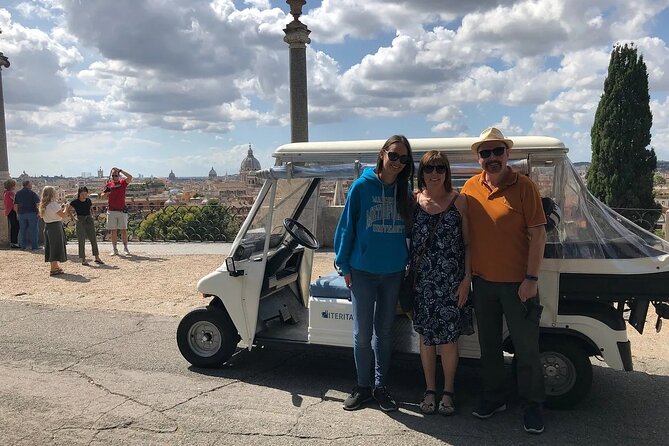
- Hotel pickup in central Rome so you start relaxed instead of hunting meeting points
- Backstreets + less time in traffic to make a short tour feel like more than 3 hours
- English-speaking driver-guide with stories and local tips, not just a checklist
- Quick photo stops at major landmarks like Pantheon, Piazza Navona, Trevi, and the Spanish Steps
- Ancient sites plus viewpoints including Palatine Hill, Aventine Hill, and Circo Massimo
- A private setup where your group stays together for the whole route
Why a Golf Cart (and eFiat) Is a Smart Way to See Rome
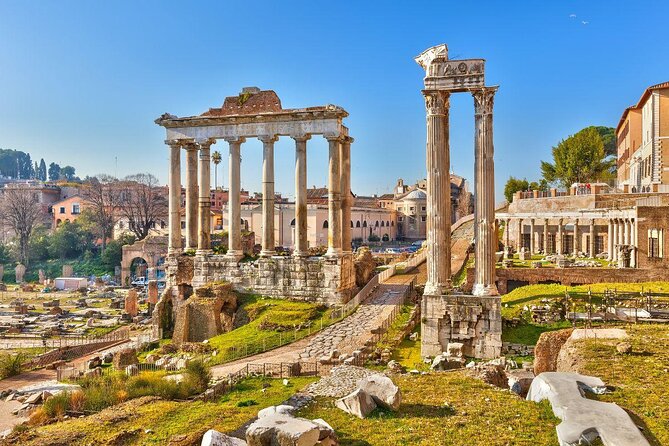
Rome is beautiful, but it can be exhausting. Between long walks, traffic, and the stop-start reality of traffic lights, a first visit can feel like you’re constantly moving just to reach the next photo.
That’s where a golf cart or eFiat shines. You cover ground quickly, then spend your short time at each stop where it matters: the exact corners you want to photograph, the plazas that define the city, and the uphill-and-downhill views that normally eat up your time on foot. You also get to experience that distinctly Roman rhythm: scooters darting, pedestrians doing their own thing, and tour groups filtering through the same landmarks. The difference is you’re not stuck in it as long.
I also like how the tour leans into the idea of efficiency without turning Rome into an assembly line. The route mixes poster-famous places with a few quieter context stops, so you leave with better “map in your head” understanding. One day in Rome can be enough to get oriented, and this is a very direct way to do it.
The only real drawback is time. When you only have minutes per stop, you won’t get the same depth you might want from a full museum day. But if you’re traveling with limited time, limited mobility, kids, or just a desire to see more without wiping yourself out, this format makes sense.
You can also read our reviews of more city tours in Rome


Price and Value: What $163.26 Buys in 3 Hours
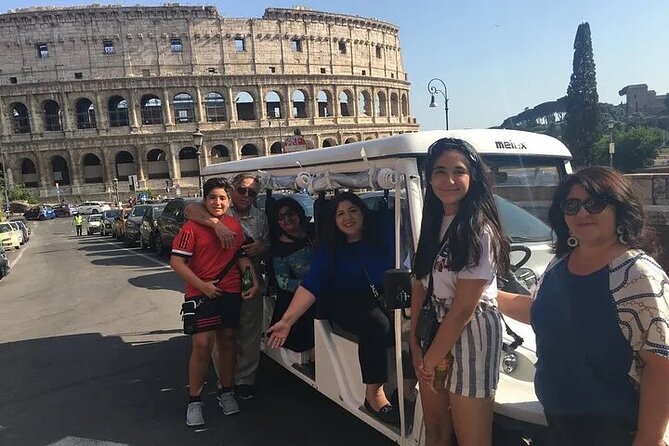
At $163.26 per person, you’re not paying for a bargain bus tour. You’re paying for three things that matter in Rome:
1) Private, guided transport that saves your legs
Rome’s main sights are spread out. Walking between them can be a lot—especially if your day includes heat, stairs, cobblestones, or a tight schedule. Riding in a cart/eFiat changes the whole math: you spend your energy on photos, viewpoints, and questions.
2) A driver-guide who helps you make sense of what you see
The best part isn’t the vehicle. It’s the storytelling. In the feedback, guides like Francesco and Mario get praised for knowing how to explain places and answer questions without turning the tour into a lecture. You’ll also get practical suggestions for where to go next, including dinner ideas.
3) A route design that targets “Rome highlights” fast
The stops hit high-demand landmarks: Pantheon, Piazza Navona, Trevi Fountain, Spanish Steps, and more. Then it adds ancient context stops such as Palatine Hill and Circo Massimo. That’s where the value shows—your short tour becomes a strong overview.
Is it perfect value for someone who wants to linger? No. If you want a long sit-down at fountains, a slow climb, or museum-level time, you’ll need to add separate time on your own. But for a first visit or a time-crunched day, I think the pricing lines up with what you’re buying: less walking, faster orientation, and a guided route.
Pickup, Meeting Point, and How to Start Without Stress
This tour is built around convenience. If you’re in central Rome, you’ll typically get pickup from your hotel. That matters because Rome isn’t easy to “just meet somewhere.” Streets are narrow, cabs can be unreliable, and it’s easy to lose time.
If you’re not staying in central Rome, you’re told to contact the operator, and a private car can be arranged. That’s helpful because it avoids the common situation where you end up spending your first hour simply getting to a meeting point.
If you do meet at the start location, the meeting point listed is Pic Nic – Just Amir srl at Piazzale delle Canestre, SNC, 00197 Roma. The tour ends back at the meeting point.
Also keep an eye on what you’re given: it’s a mobile ticket experience, and it runs in English. Service animals are allowed, and the tour says most travelers can participate. If you have mobility concerns, this type of vehicle-based route can be a real advantage—one reason families and people avoiding long walks tend to love it.
Your 3-Hour Route: Big Sights, Quick Stops, Real Roman Corners
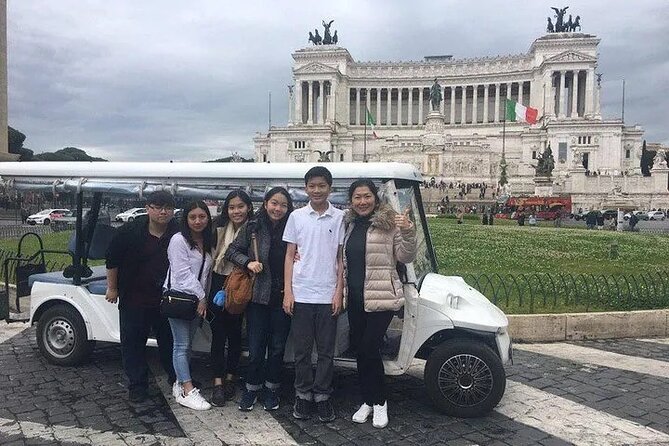
The entire experience is about 3 hours, with numerous departure times so you can match it to your day. It’s also private, meaning only your group participates. That makes it feel less rushed than a larger group “herd” tour, even with short stops.
Here’s how the route comes together, stop by stop, and what each one gives you.
Pantheon: Temple to Church, Still the Main Character
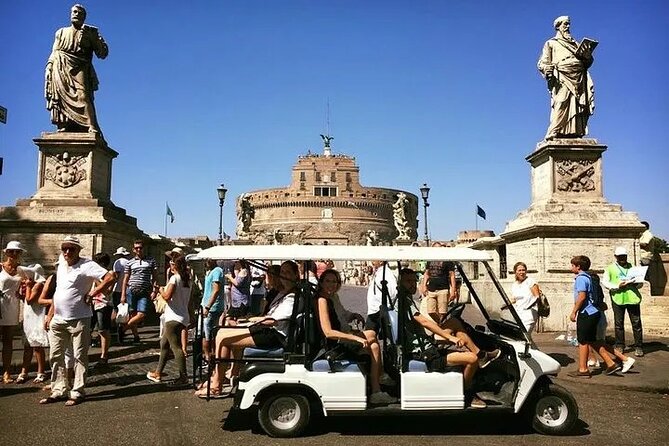
The Pantheon stop is about 15 minutes. This is a place you can appreciate even if you’re not a hardcore history person. You’re stepping onto the site of earlier Roman work (commissioned under Augustus), and then the building becomes a Catholic church in 609 AD. That layered story is exactly what Rome does best.
In a short visit, focus on two things:
- The scale and proportions of the main space
- The vibe shift from ancient “Roman temple” to Christian church
One practical bonus: this stop is listed as admission free in the tour info, but the tour as a package doesn’t include entry tickets generally. So I’d still treat it as a “check what’s required on arrival” situation. Even if there’s no paid ticket, there can be rules about access or lines.





Piazza Navona: Baroque Drama in a Place Built on an Old Stadium
Next is Piazza Navona, another 15-minute stop. This square is known for its Baroque look, but it’s built on the remains of the Stadium of Domitian. That means you’re standing in a spot that’s been a gathering place for ages—first for spectacle, then for the arts and social life.
What I like about stopping here briefly is that it gives you a clear sense of how squares work in Rome. People watch, buskers perform, and the space feels designed for lingering—even when you’re just there for a quick look.
Since you only have minutes, I’d use it like this:
- Take your main “square photo”
- Look for the way buildings frame the space
- Then move on before the crowd cycles shift
Trevi Fountain: Short Time, Big Photo Payoff
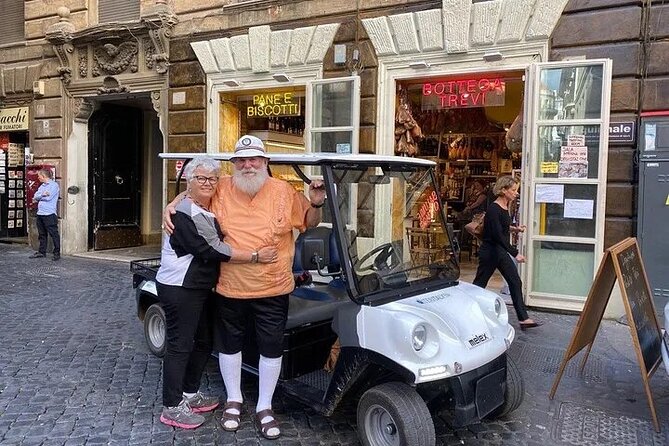
Trevi Fountain is a quick 10-minute stop. That’s both good and bad.
Good: you get the iconic view without eating your entire schedule. Trevi is one of those places where you can’t really “understand” it in a few seconds, but you can absolutely capture it and feel the scale.
Bad: if you want to stand and relax for a long time, 10 minutes won’t do it. You’ll likely be close to other visitors, and the fountain’s constant attention means you have less room for your own timing.
Quick strategy: aim for your main photo angle, then look around for small details while the group moves. That way you still get something beyond the postcard moment.
Spanish Steps and Campo de’ Fiori: People Watching With Purpose
The Spanish Steps stop is about 5 minutes, with the route moving you along the slope between Piazza di Spagna at the bottom and Piazza Trinità dei Monti at the top. Even if you don’t climb, you get the “shape” of the place—the way it funnels crowds up and down.
Then you’ll spend about 5 minutes at Campo de’ Fiori. This square is known for its colors and sounds, and it overlooks a statue connected to philosopher Giordano Bruno, burned alive in the center of the piazza. That’s a heavy historical anchor, sitting inside a lively public space.
What makes these quick stops worth it is contrast:
- Spanish Steps for the famous visual geometry and crowd energy
- Campo de’ Fiori for a more grounded sense of Roman street life and its darker memories
Villa Borghese, Palatine Hill, and Aventine Hill: Views and Context Without the Long Day
After the central highlights, the route shifts into ancient-and-view territory.
Villa Borghese is listed as a major public park in Rome. You’ll get a short stop (time isn’t specified in the data), but the point is simple: you want that sense of green space and grand Roman scenery without needing a full day ticket plan.
Then come Palatine Hill and Aventine Hill—both among the Seven Hills of Rome. Palatine Hill is described as the centremost and called the first nucleus of the Roman Empire. Aventine Hill is described as another Seven Hill, linked to the modern ward of Rome.
These stops work best if you treat them like viewpoint breaks. You’re not trying to replicate a long hike. Instead, you’re collecting perspective:
- Where would Romans have held power or traded influence?
- Why do certain hills dominate the city’s layout?
Also, these stops can help you connect the dots between what you saw at the Pantheon, where emperors later shaped power, and how Rome’s geography influenced everything. That is the kind of “mental map” benefit that makes a first trip feel easier.
Circo Massimo and Piazza del Popolo: Ancient Scale Meets the City’s Gate System
Circo Massimo is another short stop, listed at about 5 minutes. It was the first and largest stadium for chariot racing in ancient Rome. Even if you can’t fully picture the old scale right away, standing in the area gives you a sense of how entertainment and politics were braided together.
Then the tour moves to Piazza del Popolo, listed at about 5 minutes. This is located near the northern gate area that was once called Porta Flaminia. The square’s name—People’s Square—fits its role as a key public space tied to city movement and access.
I like how this portion of the route rounds out your Rome understanding. Early stops showed “Rome as monuments.” These stops show “Rome as systems”—stadiums, gates, and public space.
Sant’Ignazio di Loyola: A Short, Artistic Pause With Jesuit-Era Power
The tour includes a stop at Chiesa di Sant’Ignazio di Loyola, listed at about 5 minutes.
This church is tied to Jesuit influence, built to a design associated with the Jesuit mathematician Orazio Grassi. It also connects to plans credited to Carlo Maderno and others, and the facade is described as inspired by the nearby church of Gesù. The architectural notes in the description mention layers like pilasters, Corinthian columns, and large windows.
Even in a brief stop, this works because it breaks the pattern. After fountains and outdoor plazas, you get a compact moment to notice architecture and religious art choices. If you’re only doing one guided overview day, that variety helps.
Tips to Make This Tour Feel Worth It
Here’s how I’d set yourself up so the short stops don’t feel too short.
1) Treat each stop as a photo + question combo
At 5 to 15 minutes, you’ll get more if you have a plan. Take one main photo, then pick one question for your driver-guide about what you’re seeing. This is how you turn “quick viewing” into real understanding.
2) Wear shoes you can handle on cobblestones
Even with a vehicle ride, you’ll step on and off and walk a few steps. One review called out serious cobblestones and a bumpy feel. Good traction helps.
3) Go early in your trip if you can
If your goal is orientation, do this on an early day. The tour layout makes it easier to decide what you want to revisit later.
4) If you’re traveling with kids or needing less walking, this is a strong fit
There are praise notes from families, including a one-year-old who loved the ride. The vehicle part isn’t a minor perk when you’re trying to keep little attention spans happy.
5) Expect some weather reality
A review specifically mentioned a rainy day and said the tour still went well. Bring what you need so you can keep enjoying rather than getting grumpy.
Who Should Book This Rome Golf Cart Tour, and Who Might Not
This tour fits best when you want:
- A first-time Rome overview
- A short, guided day without long hikes
- A group-friendly option for couples, families, and mixed-mobility situations
- A route that hits the big names (Pantheon, Piazza Navona, Trevi, Spanish Steps) plus ancient context
It might not be your best choice if you want:
- Deep time at one site (like a museum day)
- Long, slow walking through neighborhoods
- A tour style where someone stays with you for every single photo moment for the entire stop window
There’s also one clear reminder from the feedback: the experience can depend on your driver-guide. Most guides are praised for being interactive and supportive, but one review was disappointed with a quieter guide who didn’t stay as engaged. Since it’s private, you should still be able to ask questions and steer your priorities.
Should You Book This Rome Golf Cart Tour?
If you’re deciding between a heavy walking day and a guided overview, I’d lean toward booking this one—especially if you’re on a first trip or on a tight schedule. The rating is high (4.9) and the recommendation rate is strong (96%), which usually means the format works for most people.
Book it if you want to:
- Get your bearings fast
- Cut down walking time between far-flung sights
- Learn enough to enjoy the rest of Rome better on your own
Consider something else if you know you’ll be upset by short stops and quick photo time. This tour is efficient by design, and it’s at its best when you use it to plan your next steps.
FAQ
How long is the Rome golf cart tour?
It lasts about 3 hours.
Is hotel pickup included?
Yes, pickup is offered from central Rome hotels for a private experience.
Does the tour include admission tickets?
No. Entry tickets are not included, even though some stops are listed as admission free.
Will I understand the guide if I only speak English?
The tour is offered in English, and an English-speaking driver-guide is provided.
Is this tour private or shared?
This is private. Only your group participates.
What stops are included?
The route includes stops at the Pantheon, Piazza Navona, Trevi Fountain, Spanish Steps, Campo de’ Fiori, Villa Borghese, Palatine Hill, Circo Massimo, Aventine Hill, Piazza del Popolo, and Chiesa di Sant’Ignazio di Loyola.
What is the cancellation policy?
You can cancel for a full refund up to 24 hours in advance. If you cancel less than 24 hours before the start time, the amount paid is not refunded.