REVIEW · ROME
Rome City Center Walking Tour and GelatoTasting- Up To 6 People
Book on Viator →Operated by Italy In Love Tours · Bookable on Viator
Rome is best read on foot. This small-group city center walking tour strings together big-name landmarks and lesser-known ruins, then slows down for a gelato tasting break. You’ll move through the Spanish Steps, Pantheon area vibes, Piazza Navona, and Trevi Fountain, while your guide fills the gaps with street-level history you can actually picture.
What I like most is the mix of stops: you get the drama of the classics (hello, Spanish Steps and Navona) and also quieter layers like Trajan’s Market and the art nouveau Galleria Sciarri. I also like the pace for a short tour—about 2 hours 30 minutes—so you’re not sprinting from one photo spot to the next.
One drawback to plan around: with a group capped at 6, you may not have headsets. In my view, that matters if you’re sitting a bit farther from the guide, since some people find it harder to catch every word.
In This Review
- Key Highlights You’ll Feel on the Walk
- A 2.5-Hour Rome Walk That Keeps You Moving (and Eating)
- Start at Via del Cardello, End Near Piazza Navona
- Trajan’s Market: Rome’s First Shopping Center Moment
- Galleria Sciarri’s Glass-and-Iron Ceiling (Free and Fast)
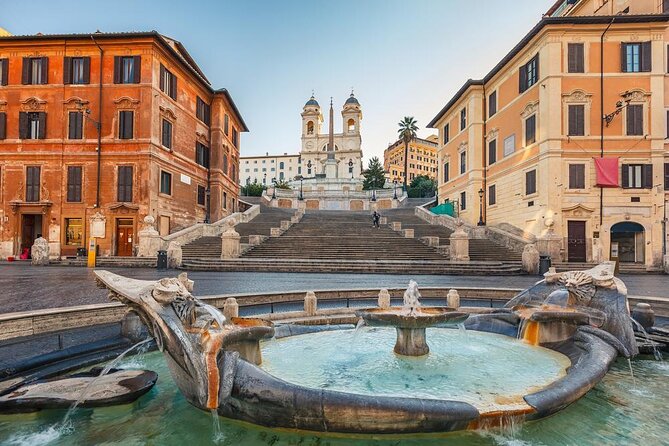
- Spanish Steps: The Classic Scene, Explained Beyond the Photos
- Piazza Navona: Bernini’s Fountain and What the Symbols Mean
- Trevi Fountain: Timing, Coins, and Why This Stop Feels Different
- Gelato Stop: Why the Included Sweet Break Works
- Price and Value for a Group of Up to 6
- Tips to Get More From Your Guide (Especially Without Headsets)
- What’s Included—and What You’ll Pay for Yourself
- Who This Tour Fits Best
- Should You Book This Rome City Center Walk and Gelato Tasting?
- FAQ
- How long is the Rome City Center Walking Tour and Gelato Tasting?
- How big is the group?
- Where does the tour start and end?
- What’s included in the price?
- Is gelato included?
- Do I need to pay for admission at the stops?
- Are headsets provided?
Key Highlights You’ll Feel on the Walk
- Small group (up to 6) keeps it calmer and easier to ask questions
- Gelato is built in, not tacked on at the end
- Trajan’s Market gives you a Roman “first shopping center” moment before the crowds
- Galleria Sciarri’s glass-and-iron ceiling is quick but memorable, and it’s free to enter
- Piazza Navona and Bernini’s Fountain of Four Rivers come with real explanation, not just a photo stop
- Trevi Fountain coin toss is timed as part of the experience, not an afterthought
A 2.5-Hour Rome Walk That Keeps You Moving (and Eating)
This is the kind of tour that works because it doesn’t pretend Rome is one neat checklist. You get a guided route through Rome’s historic center, with a slower, more relaxed rhythm than the “see everything fast” style tours.
The big idea here is simple: walk the streets, stop at smart moments, and use your guide to connect the dots. You’ll hit iconic sights like the Spanish Steps, Piazza Navona, and the Trevi Fountain, but you’ll also get detours that most first-timers don’t think to look for—like the archaeology around Trajan’s Market and the architectural curiosity of Galleria Sciarri.
And yes, you’ll eat. The tour includes ice cream/gelato, which is a practical win in Rome, where you’ll easily burn energy walking between major piazzas.
You can also read our reviews of more walking tours in Rome



Start at Via del Cardello, End Near Piazza Navona

Logistics matter more in Rome than people expect. This one starts at Italy In Love Tours, Via del Cardello 31, 00184 Roma, and ends at Piazza Navona.
That end point is handy. Once you reach Navona, you’re in one of the easiest zones to keep exploring on your own—restaurants, viewpoints, and more walking options radiate outward from there. You also avoid the “you’re dropped somewhere random” feeling.
The tour is listed as near public transportation and the route assumes moderate physical fitness. Wear comfortable shoes. You’re spending a couple of hours on stone streets, plus time standing at monuments while the guide explains what you’re seeing.
Trajan’s Market: Rome’s First Shopping Center Moment
Your first major stop is Mercati di Traiano (Trajan’s Market) / Museo dei Fori Imperiali area. Even if you don’t go inside any museum spaces, the setting is the point: this part of Rome shows you a side of the city that feels less like postcard Rome and more like lived-in empire city planning.
The tour frames it in a fascinating way—Trajan’s Market is described as Rome’s first shopping center, and today the area is associated with the Museum of the Imperial Forums. Nearby, you’ll also see Trajan’s Column from the outside, the giant monument tied to Trajan’s Dacian Wars. The guide’s explanation is what turns “big round column” into a story you can visualize.
A practical note: this stop says admission ticket not included. So if you decide you want to step into museum spaces, you’ll likely pay extra and should expect your total time at this stop to be adjusted by the guide’s pacing.
Galleria Sciarri’s Glass-and-Iron Ceiling (Free and Fast)
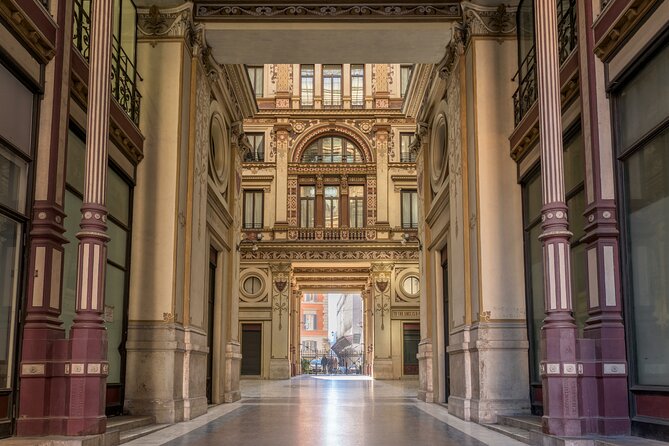
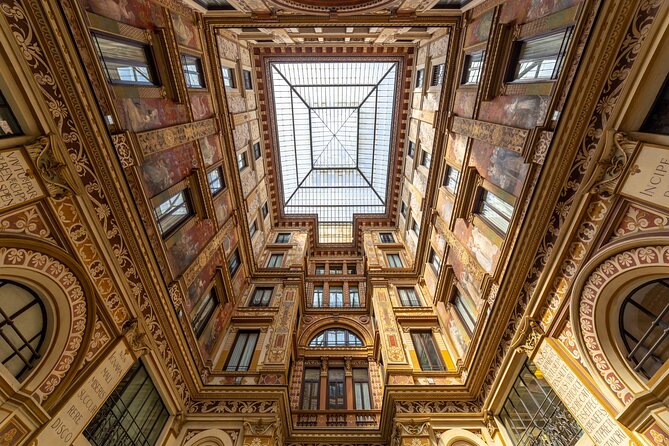
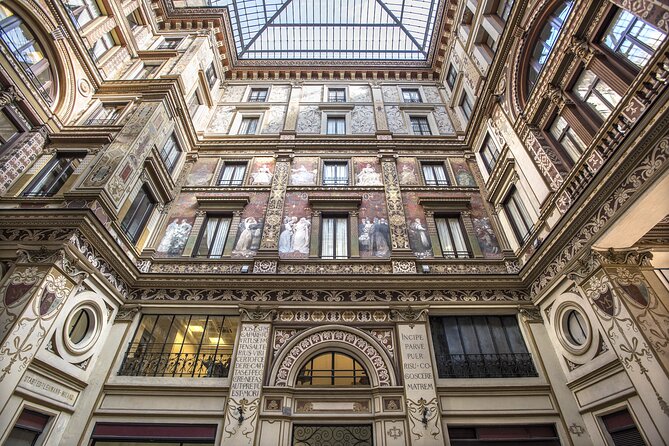
Next up is Galleria Sciarra, built between 1885 and 1888 as part of Palazzo Sciarra Colonna. This is one of those Rome stops that’s almost unfair to skip, because it’s small and quick, but it delivers.
What makes it special is the design described in the tour details: a vaulted ceiling of glass and cast iron. It’s late 19th-century architecture, and it feels different from the stone-and-church rhythm of many Roman walks.
The best part for your schedule: entry here is listed as free. So even if you’re tired from walking, this is still a worthwhile breather stop without turning the tour into a pay-to-enter math problem.
Spanish Steps: The Classic Scene, Explained Beyond the Photos
Then you hit one of Rome’s most recognized views: the Spanish Steps. This stop is set up with pop-culture context too, since the area is tied to the classic movie A Roman Holiday starring Audrey Hepburn and Gregory Peck. It helps explain why people treat these steps like a stage set.
But the tour’s value isn’t just “take a photo where the movie was filmed.” It’s the way your guide connects what you’re looking at to Rome’s larger role as a city built for public life—stairs, streets, and gatherings.
This is also a practical consideration: the Spanish Steps stop is allocated about 35 minutes, and it’s admission free. That’s enough time to see the view from different angles and still move on without feeling rushed.
You can also read our reviews of more city tours in Rome





Piazza Navona: Bernini’s Fountain and What the Symbols Mean
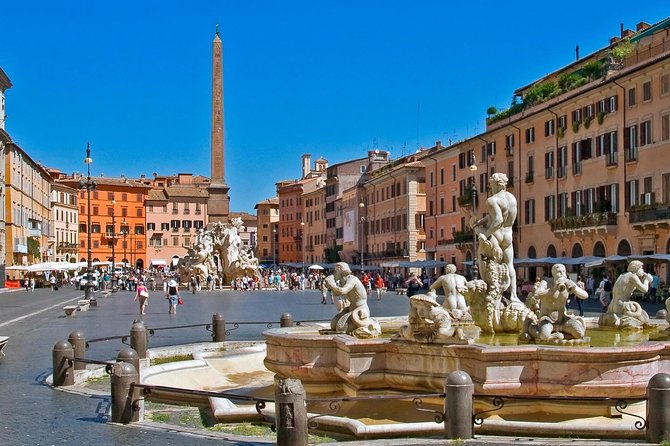
Piazza Navona is one of my favorite Roman squares because it feels social even when you’re just passing through. This tour gives you time here—about 35 minutes—and that matters, because Navona isn’t only architecture. It’s the way the square works as a meeting point for artists, performers, and locals.
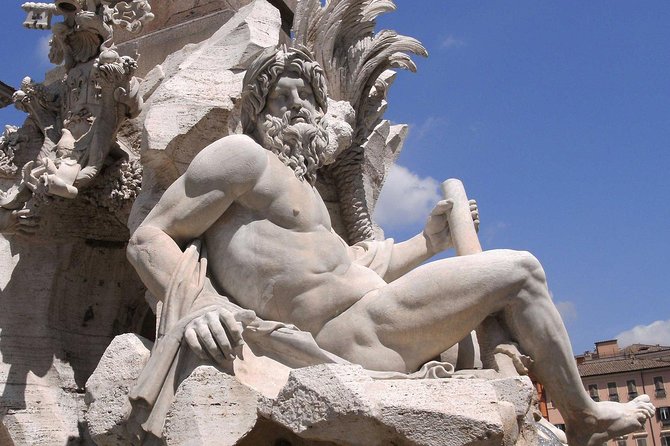
The highlight is Bernini’s Fountain of Four Rivers. The tour details connect the fountain to four great rivers known at the time: the Danube, Nile, Ganges, and Río de la Plata. That symbolism turns the fountain from “pretty sculpted water” into a window on how people in that era understood the world.
If you’re the type who likes learning what you’re actually seeing, Navona is a strong stop on this walk. If you’re more focused on photos, you’ll still have plenty of time to frame your shots—just listen when the guide talks, because the fountain’s meaning makes the sculpture more interesting.
Trevi Fountain: Timing, Coins, and Why This Stop Feels Different
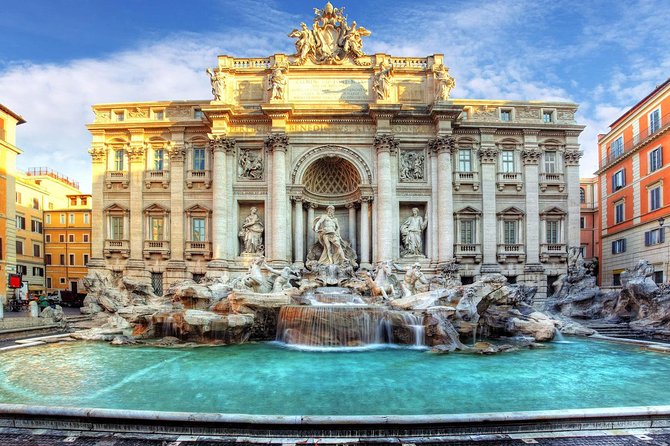
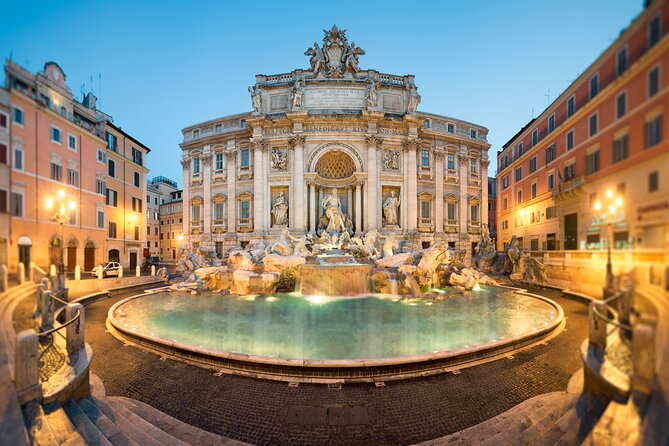
The route ends at the Fontana di Trevi, with another about 35 minutes on the fountain itself. Trevi is famous for a reason: the Baroque architecture and intricate sculpture details draw you in fast.
And you’ll probably notice how everyone handles the fountain differently. The tour calls out the popular coin-toss tradition—throwing coins into the water as a sign you’ll return to Rome. Even if you’ve heard it before, it works better when you’re not just watching from the sidelines. When the guide gives you context about the stories behind the fountain’s design, the whole ritual feels less random.
This stop also indicates admission is not included. So the “cost” here is mostly your time and patience with the crowd flow. If you’re sensitive to busy spaces, focus on arriving with a calm mindset: this part of Rome is popular for a reason.
Gelato Stop: Why the Included Sweet Break Works
The tour includes ice cream/gelato, and in Rome, that’s more than a treat. It’s a pacing tool.
A good walking tour in Italy should keep you energized. Instead of stopping at the wrong time (when you’re starving or overheated) the tour builds a sweet pause into the flow so you don’t lose the day to hunger.
Also, because it’s a small group, you’re not watching a long train of strangers shuffle in and out of a shop while your guide waits. The included gelato should feel like part of the route rather than a detour.
Price and Value for a Group of Up to 6
The price is $230.29 per person for a tour lasting about 2 hours 30 minutes, in a group of up to 6. That’s not cheap, so you want to ask: what are you paying for?
In this case, you’re paying for:
- a professional local expert guide (the centerpiece of this tour)
- a safe, semi-private group size that keeps the experience more manageable
- included gelato
- a route that combines major landmarks with specific, lesser-known stops
If you’ve only done self-guided walks, the value here comes from the way the guide connects each stop to a bigger story. The emphasis on Trajan’s Market, Galleria Sciarri, and the explanation behind Bernini’s Four Rivers fountain are exactly the kinds of details that are hard to assemble on your own while you’re juggling crowds, signage, and your next photo.
The average booking window is about 63 days in advance. Translation: popular times can fill, and if you have a fixed travel schedule, it’s smart to lock it in sooner rather than later.
Tips to Get More From Your Guide (Especially Without Headsets)
Here’s the one thing I’d plan around based on the feedback tied to this tour: people can find the guide harder to understand without headsets. The tour group size is up to 6, and headsets are noted as being available for groups larger than 8.
So what should you do?
- Position yourself closer to the guide when you can. In a small group, that usually means you’ll hear better without needing any technology.
- If you’re concerned about audio, don’t assume the pace will slow down for you—this tour keeps moving between stops.
- If you want more history and less time spent on churches, you’re better off choosing tours where the description clearly signals history-heavy stops. This one includes both recognizable monuments and archaeology/architecture, so it’s generally aligned with that goal, but your best strategy is to ask your guide what they recommend focusing on during the walk.
The upside: the guide is described as informative. When you can hear clearly, that information is the core reason the tour feels worth it.
What’s Included—and What You’ll Pay for Yourself
Included:
- Tour in a safe, semi-private group of 6
- ice cream/gelato
- a professional, local, expert guide
Not included:
- alcoholic beverages
- private transportation
- tips/gratuity
- admission tickets where noted (Trajan’s Market area is listed as not included)
Also note: some venues or parts of venues may close last-minute. If that happens, the provider says they’ll offer an extended tour to keep the total length close to what’s advertised. That’s reassuring because Rome’s sites can shift due to maintenance or crowd control.
Who This Tour Fits Best
This walk is a great fit if you want:
- a guided route without the stress of a huge group
- a mix of major landmarks plus architecture/archaeology you might not find on your own
- gelato without having to plan where to stop
It’s especially good for first-timers who feel overwhelmed by Rome’s scale but don’t want to miss the classics. It also works for repeat visitors who want a more structured way to connect the dots between places like Trajan’s imperial context and the Baroque storytelling of Bernini’s fountain.
If you hate busy areas, just know Trevi and the Spanish Steps can be crowded. The tour’s value is that you’ll still get explanations and timing, not just stuck-in-the-throng moments.
Should You Book This Rome City Center Walk and Gelato Tasting?
I’d book it if you want a small-group, history-and-architecture-focused walk that includes gelato and doesn’t treat Rome like a sprint. The strongest reason to go is the way the route mixes recognizable sights with specific, detailed stops like Trajan’s Market and Galleria Sciarri—plus the guide’s explanations are clearly a core part of the experience.
Skip it or rethink it if you’re hard of hearing or very sensitive to audio. With a group of up to 6, you might not get headsets, so you’ll want to stand near the guide and be ready to concentrate. If you’re the type who likes lots of church time, you should also know the tour description leans more toward landmarks and history rather than long indoor worship stops.
FAQ
How long is the Rome City Center Walking Tour and Gelato Tasting?
It’s about 2 hours 30 minutes.
How big is the group?
The tour has a maximum of 6 travelers.
Where does the tour start and end?
It starts at Italy In Love Tours, Via del Cardello, 31, 00184 Roma and ends at Piazza Navona, 00186 Roma.
What’s included in the price?
The price includes the tour with a professional local expert guide, and ice cream/gelato. Tips and alcohol aren’t included.
Is gelato included?
Yes. Ice cream/gelato is included.
Do I need to pay for admission at the stops?
Some admission is not included. For example, Trajan’s Market / Museo dei Fori Imperiali lists admission as not included, while Galleria Sciarri is listed as free.
Are headsets provided?
Headsets are available for groups larger than 8. With this tour’s group size cap of 6, you may not have headsets.