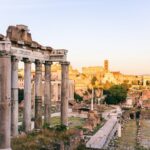
Night in Rome has a special glow.
This private Taxi City Tour is built for quick, efficient sightseeing in about two hours, with an air-conditioned car and pickup so you’re not wandering blindly. I especially like the way the route strings together major viewpoints in a logical loop, and how you can ask for time for photos at each stop. One thing to consider: this is a private taxi-style experience, so a certified guide isn’t included, and it can feel pricey if you were expecting something close to a regular street taxi.
You’ll see old Rome and modern Rome at night, from panoramic hills down to central squares. The stops are mostly outside, so you’re paying for courtesy of transport + positioning rather than museum time. If the traffic is heavy, expect the driver to work around it and you’ll likely want to be flexible with exact timing.
In This Review
- Key Highlights You’ll Feel Fast
- How This Private Taxi Tour Works at Night
- The Route: From Hill Views to the Heart of Rome
- Palatine Hill View: Start With Roman Scale
- Aventine Hill and Area View: A Different Angle on Rome
- Piramide Cestia: Ancient Monument That Still Feels Unusual
- Isola Tiberina: The Small Island With a Medical Reputation
- Castel Sant’Angelo: The Popes’ Fortress, Viewed From the Right Angle
- St. Peter’s Basilica Exterior: Colonnade and Glow
- Terrazza del Gianicolo: Panoramic Rome Without the Marathon
- Piazza Venezia: Rome’s Ground Zero Feeling
- Fontana di Trevi: One of the World’s Most Photogenic Pit Stops
- Piazza Barberini: Elegant and More Relaxed Than You Think
- Palazzo del Quirinale: A Historic Building With a Modern Role
- Campo de’ Fiori: Night Energy Plus a Darker Chapter
- Price and Value: What You’re Really Paying For
- Who This Tour Suits Best
- Small Logistics That Can Make or Break Your Night
- Traffic and timing
- Exterior viewing expectations
- Should You Book This Taxi City Tour?
- FAQ
- FAQ
- How long is the Rome by Night Taxi City Tour?
- What’s the price and group size?
- Is pickup available?
- Do we get a certified tour guide?
- Is there a mobile ticket?
- Are there admission tickets included for the stops?
- Does the tour include visits inside St. Peter’s Basilica?
- Does the tour include Castel Sant’Angelo entry?
- Is the tour private?
- What if the weather is bad?
Key Highlights You’ll Feel Fast
- You move efficiently: a coordinated night route that hits big-name spots without long transit gaps.
- Photo-friendly timing: the schedule gives room to stop and shoot without rushing you out.
- Hilltop viewpoints: quick looks from the Palatine and Aventine areas set the tone for Rome.
- Iconic “from the outside” monuments: you’ll admire major landmarks without ticket pressure.
- A small-group private ride: up to 4 people, so it feels more like a tailored outing than a bus tour.
- Lots of lit-up central Rome: Piazzas like Venezia and Trevi become easier when you’re dropped right there.
How This Private Taxi Tour Works at Night
This is not a “park your feet and follow a script” tour. It’s a private car experience designed to get you to the best-lit stops while Rome is at its most atmospheric. You pick a departure address, and pickup is part of the plan. You also get a mobile ticket, which simplifies day-of logistics.
The big practical advantage here is speed. Rome’s streets can be slow at night, and neighborhoods can feel confusing if you’re arriving cold. This route tackles that by layering viewpoint stops (good for orientation) with recognizable monuments (good for instant wow).
One more practical point: the car is air-conditioned, which matters in warmer months. And the setup is private transportation only, meaning you should think of the driver as the person orchestrating the drive and stops, not as a guaranteed museum-style guide.
You can also read our reviews of more city tours in Rome


The Route: From Hill Views to the Heart of Rome
The itinerary is roughly a chain of short stops—about 10 minutes each—with a couple of skyline-style pauses. That structure works well for a night outing because it keeps your energy up and your photos sharp (Rome’s nighttime light changes minute to minute).
Here’s how the stops fit together and what to watch for.
Palatine Hill View: Start With Roman Scale
You begin with a view from the Palatine area. Even if you don’t know every forum detail, seeing the hill at night helps you understand why so many “great Rome” images reference this spot. It’s an orientation starter: you’re not just seeing buildings—you’re seeing elevation and layout.
Why it’s worth it: Palatine viewpoints help you connect later sights to the city’s ancient “center of gravity.”
Watch for: night photos need steady handling. If you’re shooting with your phone, give yourself a moment to brace your arms.
Aventine Hill and Area View: A Different Angle on Rome
Next comes the Aventine hill view and nearby area. This stop adds variety. Rome’s hills don’t just look pretty—they change sightlines. You’ll feel that when you compare the Aventine view to what you’ll see later around central squares.
Why it’s worth it: It breaks up the classic postcard loop and gives you a second “Rome height” perspective.
Watch for: parking and curb positions vary. If the car drops you a short walk away, don’t expect long strolling time.
Piramide Cestia: Ancient Monument That Still Feels Unusual
You then head to Piramide Cestia (Pyramide Cestia), a monument linked directly to ancient Rome. The attraction here is its shape and age: it’s distinctive in a city full of layered ruins and churches. At night, that contrast can look extra dramatic.
Admission isn’t included, so treat this as a viewing stop rather than a deep-entry moment.
Why it’s worth it: A quick ancient oddball that stands up visually without waiting for opening times.
Watch for: if you want to go inside or do formal ticket entry, this tour won’t cover it.
You can also read our reviews of more evening experiences in Rome

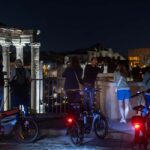
Isola Tiberina: The Small Island With a Medical Reputation
The tour includes Isola Tiberina, the island in the Tiber, known for powerful healing lore—so much so that hospitals sit on this small land. It’s one of those Rome scenes that feels like it’s still “working” while the city changes around it.
Admission is free for this stop.
Why it’s worth it: It’s a calm, scenic break from the big-name squares and it gives you a different kind of Roman story—more practical than purely monumental.
Watch for: it’s still a quick stop. If you want a longer island walk, you’ll likely want to plan separately.
Castel Sant’Angelo: The Popes’ Fortress, Viewed From the Right Angle
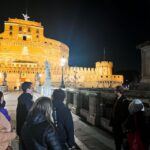
Next is Museo Nazionale di Castel Sant’Angelo, described as the fortress of the Popes. Even without admission, you’ll recognize the silhouette. At night, the fortress reads like a landmark set for dramatic lighting.
Admission isn’t included here.
Why it’s worth it: It’s a skyline anchor. If you’ve ever seen this place in photos, you’ll connect the dots quickly from the road.
Watch for: keep your expectations about time. This is “admire and photo,” not “tour museum rooms.”
St. Peter’s Basilica Exterior: Colonnade and Glow
You’ll see St. Peter’s Basilica from the outside, including the colonnade. This is a smart way to experience the area at night, since going inside can turn into a ticketing and scheduling puzzle.
Admission isn’t included, and the plan is specifically exterior viewing.
Why it’s worth it: The scale hits harder at night when the lighting emphasizes the architecture.
Watch for: crowds can still form in the Vatican zone depending on events, even at night. If you’re sensitive to tight sidewalks, keep your pace calm.
Terrazza del Gianicolo: Panoramic Rome Without the Marathon
Then you’ll get to Terrazza del Gianicolo for a panoramic view. This is where Rome’s nighttime “map feeling” clicks. The city looks broader than you expect when you’re up on a viewpoint and can see multiple directions at once.
Admission is free.
Why it’s worth it: It’s a built-in orientation moment. After this, central landmarks feel more connected.
Watch for: nighttime photos from viewpoints benefit from a few seconds of patience. Wind can also affect steadiness.
Piazza Venezia: Rome’s Ground Zero Feeling
After the hills, you hit Piazza Venezia, often described as the center of the city center. At night, this square becomes a natural hub for sightlines: lots of directions, lots of light, and fast “I’m really in Rome” clarity.
Admission is free.
Why it’s worth it: If you want your night to feel efficient and iconic, Piazza Venezia gives instant payoff.
Watch for: if you’re traveling with someone who gets anxious in crowds, plan for a short, focused stop rather than lingering.
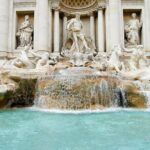
Fontana di Trevi: One of the World’s Most Photogenic Pit Stops
Of course you’ll go to Fontana di Trevi. It’s listed as one of the most beautiful fountains in the world, and at night it often looks extra cinematic. Admission isn’t involved here; this is the kind of stop where the “value” is being dropped close and having time for photos.
Admission is free.
Why it’s worth it: You get a classic Rome photo without building your whole schedule around it.
Watch for: if you’re aiming for a cleaner shot, consider standing slightly back to include the architecture lines rather than only the crowd.
Piazza Barberini: Elegant and More Relaxed Than You Think
Next is Piazza Barberini, described as elegant and in one of Rome’s famous areas. This stop often feels like a shift into a different mood—less “must-see monument” and more “Roman street elegance.”
Admission is free.
Why it’s worth it: It helps balance the heavy-hitter stops with something that feels more lived-in.
Watch for: don’t over-plan this as a long wander; it’s still a short scheduled viewing stop.
Palazzo del Quirinale: A Historic Building With a Modern Role
You’ll see Palazzo del Quirinale, the historic building associated with the president of the Italian republic. Again: think outside viewing. Admission isn’t included.
Admission not included makes sense because the point is recognition and exterior appreciation.
Why it’s worth it: You get a feel for how Italy’s government and historic Rome share space.
Watch for: photo angles depend on where you’re dropped; give your driver clear photo goals.
Campo de’ Fiori: Night Energy Plus a Darker Chapter
Finally, there’s Campo de’ Fiori. It’s described as a place with morning market energy and, in the evening, nightlife fame. The square is also tied to the story of Giordano Bruno, who was burned here; a statue stands in memory.
Admission is free.
Why it’s worth it: It’s the kind of stop that connects Rome’s public square culture with a real, human historical note.
Watch for: nightlife can get loud. If you want quieter photos, stay close to the edges and keep your stop tight.
Price and Value: What You’re Really Paying For
The price is $198.48 per group up to 4, lasting about 2 hours. That means the cost doesn’t scale like per-person “museum ticket math.” It’s priced like private transport and time.
So where’s the value?
- You’re buying positioning: instead of calculating routes, parking, and timing, you’re letting a driver handle the night logic.
- You’re buying photo flexibility: you can ask for time at each stop, and the stops are short enough to reduce wasted time in transit.
- You’re buying comfort: an air-conditioned vehicle helps you keep your energy for multiple photo moments.
Where the value can feel thin is if you compare it to a standard street taxi. One review called it overpriced versus a regular ride. That’s a fair comparison if your only goal is transportation and you don’t care about a structured route.
My practical take: If you’re a small group and you want your night to be smooth—door-to-door pickup, a set sequence of lit landmarks, and easy photo stopping—this can feel worth it. If you’re traveling solo or you don’t mind figuring out routes, you may decide a regular taxi (or ride-hail) is enough.
Who This Tour Suits Best
This works especially well if you:
- Have limited time in Rome and want a high-impact first night.
- Prefer seeing landmarks from the outside and don’t need museum entries during this outing.
- Are traveling with up to three friends or family and want a private ride rather than a bus.
- Want a quick orientation using viewpoints like the Palatine/Aventine areas and Terrazza del Gianicolo.
It may feel less ideal if you:
- Expect a certified tour guide with deep narration at every stop. Certified guide service is not included in the listing details.
- Want long stays at monuments or interior visits. This is built around short viewing stops and exterior admiration.
Small Logistics That Can Make or Break Your Night
Two practical things matter for a taxi-style night tour.
Traffic and timing
Rome traffic can stretch plans. The good news is the stops are short, and the driver is set up to work within the two-hour window. If a moment matters to you—like Trevi photos—tell the driver early so you’re not negotiating at the last second.
Exterior viewing expectations
A lot of the main draws here are “admire from the outside.” That’s not a flaw; it’s part of the night strategy. If you want ticketed interior experiences (for example, museum entries), you’ll need separate plans.
Should You Book This Taxi City Tour?
I’d book it if you want a simple, high-payoff night: a private car, a sensible route, hill-to-square viewpoints, and enough time for photos without turning your evening into a navigation exercise. It’s also a solid option when your group includes people with different stamina levels—short stops keep everyone in the loop.
I’d think twice if you’re price-sensitive and happy to DIY your night routing. Also consider it carefully if you were expecting a certified guide-led commentary. This tour’s strength is transport + positioning, not guaranteed ticketed sightseeing.
FAQ
FAQ
How long is the Rome by Night Taxi City Tour?
The tour lasts about 2 hours.
What’s the price and group size?
It costs $198.48 per group, up to 4 people.
Is pickup available?
Yes. Pickup is offered, and you insert your departure address.
Do we get a certified tour guide?
A certified tour guide is not included. The experience includes private transportation and the driver handles the tour logistics.
Is there a mobile ticket?
Yes, the tour includes a mobile ticket.
Are there admission tickets included for the stops?
Admission tickets are not included in general. Some stops are listed as free (for example Isola Tiberina, Terrazza del Gianicolo, Piazza Venezia, Fontana di Trevi, Piazza Barberini, and Campo de’ Fiori), while others are not included (for example Piramide Cestia, Castel Sant’Angelo, St. Peter’s Basilica exterior viewing, and Palazzo del Quirinale).
Does the tour include visits inside St. Peter’s Basilica?
No. You admire St. Peter’s Basilica from the outside and the plan lists external viewing.
Does the tour include Castel Sant’Angelo entry?
No. The listing describes the stop as a viewing stop, with admission not included.
Is the tour private?
Yes. It’s a private tour/activity, and only your group participates.
What if the weather is bad?
The experience requires good weather. If it’s canceled due to poor weather, you’ll be offered a different date or a full refund.