REVIEW · ROME
Rome Walking Tour with Piazza Navona, Trevi Fountain and Pantheon
Book on Viator →Operated by City Wonders Ltd · Bookable on Viator
Rome is a city where you can waste hours. That is exactly why this guided walk appeals: you move in a smart line between the big sights, with a guide steering you through the busy bits instead of having you wander. You get baroque spectacle at Piazza Navona, then one of the most astonishing interiors in Europe at the Pantheon, and you finish with the view-heavy magic of the Spanish Steps.
I like two things a lot here. First, the Pantheon entrance is handled for the group option, which saves time and stress when lines are long. Second, you also get extra value built in: gelato is included, and you end the loop in a classic spot for hanging around and continuing your own Rome day.
One possible drawback to plan for: you’re on a set route and the final stop at Piazza di Spagna can feel time-tight if you want lots of photos. If you’re very sensitive to crowds or want total free wandering time, this format may feel a bit structured.
In This Review
- Key things to know before you go
- Why this Rome highlights walk works so well in 2.5 hours
- Piazza Navona: Bernini fountains and the lively public square vibe
- Pantheon inside: skip-the-line value plus the ID rule
- Piazza Colonna and the Column of Marcus Aurelius: Rome’s power story in one landmark
- Trevi Fountain and the coin toss: iconic photos, one extra ticket detail
- Gelato in Trevi: included sweetness and a real break
- Spanish Steps finale: views, social energy, and the short photo window
- How the tour handles crowds without turning your day into stress
- Value check: is $35 a smart use of your Rome time?
- Who this tour suits best
- Quick tips to make this walk easier on your feet
- Should you book this Rome walking tour?
- FAQ
- How long is the Rome walking tour?
- How much does the tour cost?
- Is Pantheon entry included?
- Do I need a passport for the Pantheon?
- Is Trevi Fountain coin tossing included?
- Is gelato included?
- Where does the tour start and end?
- Are there morning and afternoon options?
- What group size should I expect?
Key things to know before you go
- Pantheon tickets included (group option): fewer headaches when you reach the door.
- Passport or valid ID required: Pantheon security can deny entry without it.
- Trevi coin toss isn’t included: you’ll need a separate ticket if you want to throw in a coin.
- Gelato is part of the deal: shop can vary, but the sweet break is built in.
- Small group limit (25 max): easier to stay together through tight streets.
- Private upgrade changes the Pantheon stop: private option includes exterior explanation only.
Why this Rome highlights walk works so well in 2.5 hours
Rome’s top sights are popular for a reason, but they are also packed, especially around the Pantheon, Trevi, and the Spanish Steps. This tour’s real trick is order. You start in Piazza Navona, then head to the Pantheon for your one inside stop, then keep moving through the route toward Trevi and up to the Spanish Steps.
At about 2 hours 30 minutes, it’s a solid “day-one footing” walk. You come away with a mental map of central Rome and a feel for how the city’s layers connect: ancient Rome, then Renaissance and baroque Rome, then the Rome of everyday street life. You also get to choose morning or afternoon timing, so you can fit it around other priorities like museums, neighborhoods, or a long lunch.
The price—$35 per person—isn’t trying to be a bargain, and it isn’t pretending to replace a full-day deep-dive. For what you get (guided route, Pantheon admission in the group option, and a gelato stop), it’s a practical value pick if your goal is to see the key hits without building your own logistics from scratch.
You can also read our reviews of more walking tours in Rome

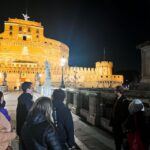

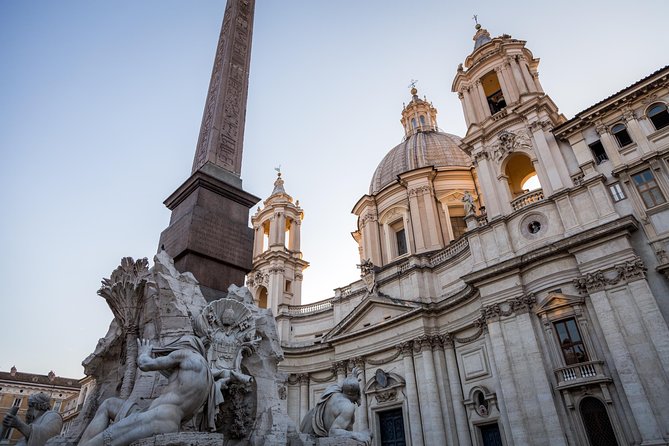
Piazza Navona: Bernini fountains and the lively public square vibe
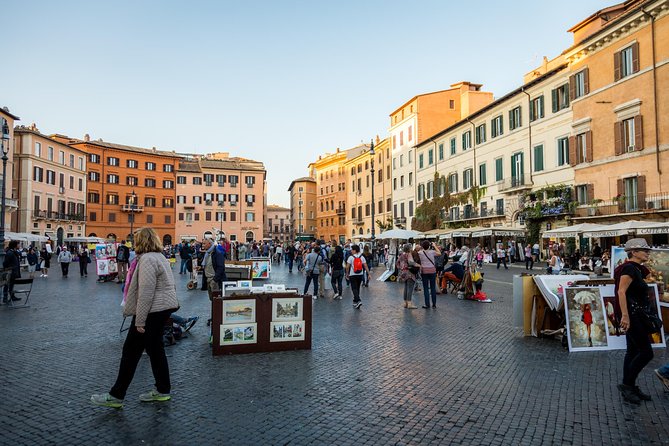
Your tour begins at Via Giuseppe Zanardelli, 21 and quickly drops you into the energy of Piazza Navona. This square is famous for its street performers, its crowds, and its big baroque centerpiece: Bernini’s Fountain of the Four Rivers. Even if you think you’ve seen photos, seeing it in person hits different. The scale and the details look designed for humans standing right there, not just looking at a postcard.
This stop is short, about 20 minutes, so it’s mostly a “get oriented fast” moment: learn what you’re looking at, then get enough time to take pictures and soak in the atmosphere. The main drawback with Navona is also the main reason it’s worth it: it can get packed. If you want ultra-clear photos, try to position early rather than waiting for the perfect angle.
Pantheon inside: skip-the-line value plus the ID rule
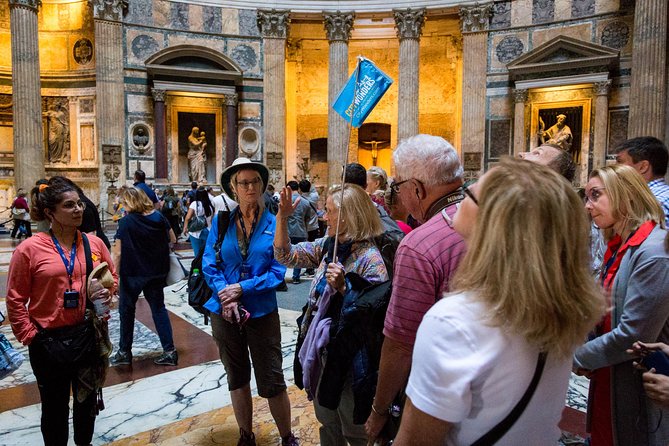
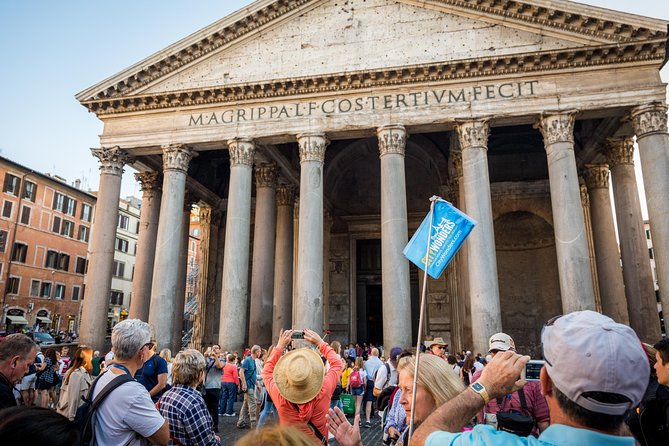
The Pantheon is where this tour earns its keep. You step inside one of the best-preserved ancient monuments and see what made Rome’s engineering so famous. You focus on the dome, the oculus, and how the building evolved from a pagan temple into the kind of monumental resting place and religious site Italians honor today.
In the group option, Pantheon entrance is included, and the tour is designed to save you from a long wait at the ticket door. That matters in Rome because your time disappears quickly. A scheduled guided slot is often the difference between feeling productive and feeling stuck.
Two rules you must take seriously:
- Passport or valid ID document is mandatory for Pantheon security. If you show up without it, entry can be denied.
- On some days, the Pantheon may be closed for religious ceremonies or access can be limited. In those cases, you’ll still get a full explanation from the outside.
There’s also a difference if you upgrade to private tour. The private option includes an exterior explanation for the Pantheon, not interior entry. So if Pantheon interior is your top priority, you’ll want the group option.
A nice touch from real-world experience is how groups handle the noise and movement here. Some guides use a radio/ear-piece setup, which can make it much easier to follow the story while crowds surge around you.
Piazza Colonna and the Column of Marcus Aurelius: Rome’s power story in one landmark
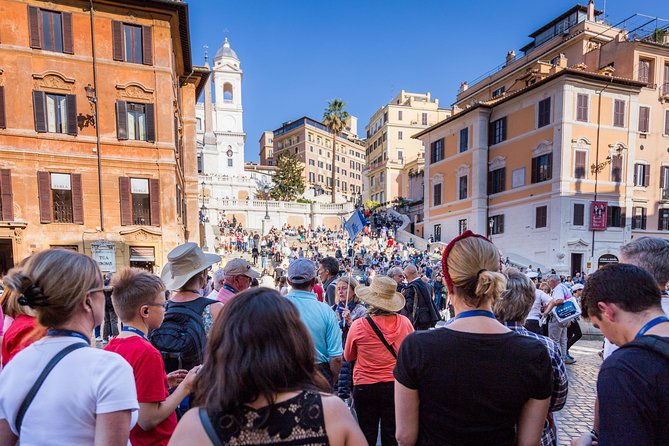
After the Pantheon, you head toward Piazza Colonna for a look at the Column of Marcus Aurelius. It’s a big visual reminder that Rome didn’t just build monuments for looks; it built them to project authority and tell stories through images.
This stop is about 15 minutes. That’s enough time to understand what the column is, why it matters, and how it connects to the modern world nearby—especially the political symbolism of the area right next to the Italian Parliament.
Because this is a shorter stop, don’t expect it to replace a museum visit. What it gives you is context. After you see this, the rest of central Rome reads more clearly. You start noticing how power and religion and art all share the same streets.
Trevi Fountain and the coin toss: iconic photos, one extra ticket detail
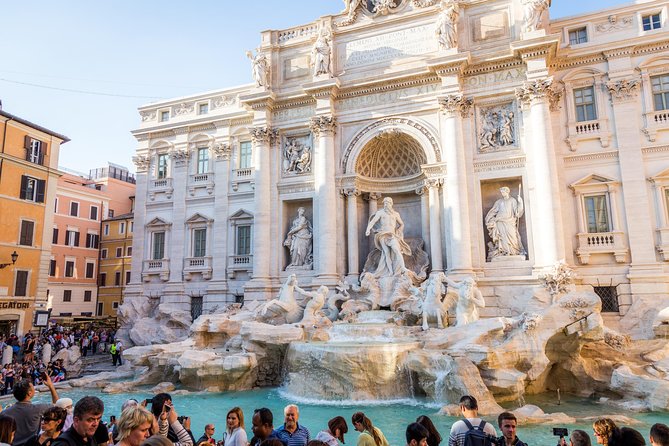
Then you reach Trevi Fountain, one of the most photographed landmarks in Italy. The sight is instantly recognizable, but the guide adds the part that photos often miss: history, symbolism, and the design choices that make it feel theatrical even in daylight.
This stop is about 15 minutes with photos and some time to look around. One important detail: the classic coin-toss ritual has a separate ticket requirement, and it is not included in this tour. If you want to do the coin toss, plan for that extra step.
Trevi is also very crowded, which can be hard if you want a calm walk-through. The tour format keeps you moving so you don’t get stuck waiting for your turn. Still, treat Trevi like a photo stop, not a long sit-down experience.






Gelato in Trevi: included sweetness and a real break
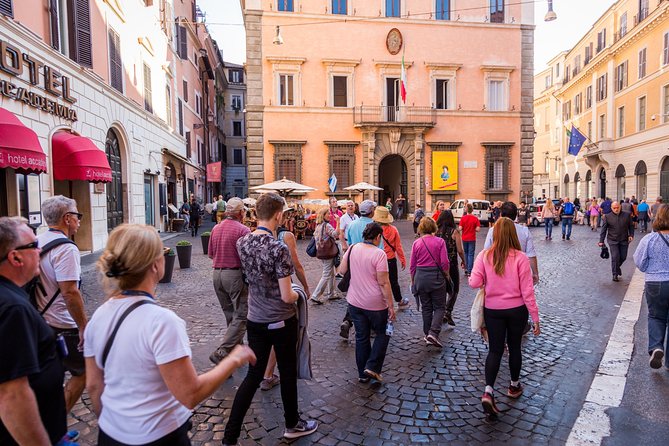
Right in the Trevi area, the tour builds in a break: gelato is included. This is about 15 minutes, and it’s one of those Rome details that makes the whole experience feel less like a checklist.
The tour’s gelato shop can vary, so you’re not counting on one specific place. But you are getting a real rest in the middle of a concentrated sightseeing block—plus the chance to step out of the loudest street crush for a few minutes.
If you’re traveling with kids or anyone who gets tired of constant standing, this gelato stop is a lifesaver. Even adults appreciate the reset before you head into the final stretch.
Spanish Steps finale: views, social energy, and the short photo window
The tour ends at Piazza di Spagna with about 20 minutes at the Spanish Steps. This area is known for elegance and for people-watching. Even on a busy day, it has a different mood than the fountain squares because it’s more about views and strolling nearby lanes.
This is a good finish because you’re not just dropped off in the middle of nowhere. You’re placed right where you can continue on your own. Walk a few blocks for side streets, grab coffee, or just take your time moving upward for better viewpoints.
The catch: 20 minutes can vanish fast once you factor in crowding and photo lines. If Spanish Steps photography is your goal, consider arriving earlier than your tour end, or aim to take your key shots first thing when the group arrives. Once you miss the prime spot, you’ll be fighting people for angles.
How the tour handles crowds without turning your day into stress

A big reason this tour works for first-timers is that it keeps you from getting lost between stops. Your guide leads the way, so you spend less time re-checking maps and more time actually seeing things.
Another practical plus: the group size is capped at 25 travelers. That usually means you get enough people around for atmosphere but not so many that you can’t hear instructions or move as a unit.
You should still expect busy streets and some waiting at major sights. The Pantheon and Trevi especially can slow down the schedule. That is why the tour’s timing matters. Booking a tour like this early in your Rome visit helps you build a route you can repeat later at your own pace.
One more thing to watch for: the quality of any walking tour depends on guide communication. The overall pattern of feedback is strong on engaging commentary and helpful guidance, but there are occasional notes about understanding difficulties or a pace change when crowds and routes get complicated. If clear audio is a deal-breaker for you, pick a timing when the streets are likely calmer for your day.
Value check: is $35 a smart use of your Rome time?
For $35, you’re basically paying for three things:
- A guided route between the central highlights.
- Pantheon entry included for the group option.
- Gelato included, which softens the day and makes the route feel human.
If you tried to do this alone, you’d still have to buy Pantheon tickets, figure out the best walking path, and manage the chaos of meeting points. You’d save some money by skipping the guide, but you’d likely pay in time and stress—two things Rome charges in a very real way.
Where the value gets even better is if you are short on time on day one. A tour like this gives you a high-impact overview you can build on later. You’ll know where to return for a second look, and you’ll understand what matters rather than collecting random landmarks.
Who this tour suits best
This is a great fit if:
- You want to see the big central sights without spending your whole day planning.
- You appreciate a guide giving context, not just letting you wander.
- You like a moderate pace and a structured route.
It may be less ideal if:
- You hate crowd crush and prefer long, slow wandering time.
- You want maximum time for one stop (like only Trevi or only the Spanish Steps).
- You are doing a very tight schedule where 2.5 hours feels like too much commitment.
A good strategy is to treat this as a backbone tour. Then you spend the rest of your day in neighborhoods you choose, using the route knowledge you gained.
Quick tips to make this walk easier on your feet
Rome walking tours sound easy until you’re standing still in crowds. A few practical habits help:
- Wear comfortable shoes. You’ll do a lot of standing and short walking segments.
- Bring your ID/passport even if you think it’s overkill. Pantheon security is serious.
- If you care about photos at the Spanish Steps, plan your moments early when the tour ends.
- Keep your expectations realistic about time at the busiest landmarks. The guide can’t control the street.
Also, if you’re sensitive to noise and you’re able, listen for any ear-piece/radio setup your guide uses. It can make the difference between hearing the story and missing parts because the square is too loud.
Should you book this Rome walking tour?
Book it if you want a smooth, no-stress way to hit Piazza Navona, the Pantheon (group option), Trevi Fountain, and the Spanish Steps in one tidy block. The combination of Pantheon tickets handled for you, plus gelato included, turns this into a practical first-visit plan.
Skip or reconsider if you only want to linger at one or two sights, or if you know you struggle with crowded walking routes. In that case, you might be happier piecing together these stops on your own at a slower pace.
If you’re deciding between group and private, remember the big difference: private upgrades change the Pantheon stop to exterior explanation only. If Pantheon interior is the point, choose the group option.
FAQ
How long is the Rome walking tour?
It runs about 2 hours 30 minutes (approx.).
How much does the tour cost?
The price is $35.00 per person.
Is Pantheon entry included?
Yes, Pantheon entrance is included only when you select the group tour option. If you select the private tour option, you’ll receive an exterior explanation only.
Do I need a passport for the Pantheon?
Yes. A passport or valid ID document is mandatory for entry due to Pantheon security rules.
Is Trevi Fountain coin tossing included?
No. The coin toss requires a separate ticket that is not included in the tour.
Is gelato included?
Yes. Gelato is included in the tour price, and the shop can be subject to change.
Where does the tour start and end?
The tour starts at Via Giuseppe Zanardelli, 21, 00186 Roma RM, Italy and ends at Piazza di Spagna, 00187 Roma RM, Italy.
Are there morning and afternoon options?
Yes. You can choose from morning or afternoon tour timings.
What group size should I expect?
The group size is capped at a maximum of 25 travelers.