REVIEW · ROME
Private Rome City Walking Tour
Book on Viator →Operated by Carpe Diem Tours · Bookable on Viator
Rome’s highlights fall into place on a short walk. This private city walking tour strings together Trevi Fountain, the Pantheon, and Piazza Navona with a leisurely pace that works for your group. I also like that the listed sights are free to enter, so you’re paying for the guide and the route—not surprise ticket costs. One possible drawback: each stop is timed, so you’ll need to decide what matters most to you before you go.
If you want a first-night win, this is it. The tour ends right where the best food energy starts—Piazza Navona—and guides often share personal ideas for where to eat and what to try next. One standout theme from the experience is dinner intel from guides like Dalila, including recommendations that lead to a meal people remember.
In This Review
- Key highlights to know before you go
- Private Rome walk with a smart route: start at Piazza d’Aracoeli, finish in Piazza Navona
- Price and value: what $120.15 per person really buys
- Stop 1: Monumento a Vittorio Emanuele II and the unification story above the city
- Stop 2: Trevi Fountain for coins, baroque drama, and a gelato window
- Stop 3: Chiesa di Sant’Ignazio di Loyola for a calmer pause
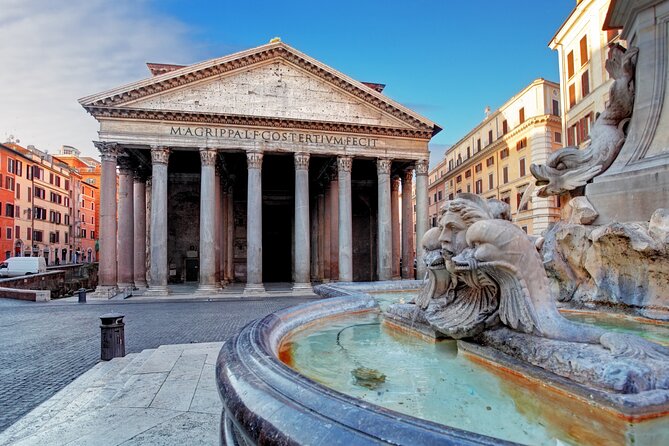
- Stop 4: The Pantheon by the alleys—Hadrian’s dome and that surprise square
- Stop 5: Trajan’s Column and the outer forum—power in stone
- Stop 6: Piazza Navona—three fountains, Sant’Agnese in Agone, and dinner starts here
- How to make the most of this 2-hour window
- Who this private Rome walking tour fits best
- Should you book this private Rome city walking tour?
- FAQ
- How long is the private Rome city walking tour?
- Is the tour private or shared with other groups?
- What language is the tour offered in?
- Where does the tour start and where does it end?
- Do I need to buy tickets for the sights on the route?
- What is the cancellation policy?
Key highlights to know before you go
- Private pace for your group: Only your party goes, so questions and timing stay flexible.
- Free admission at the listed stops: Your tour cost covers guiding and walking, not entry fees.
- A tight “must-see” loop in ~2 hours: You’ll hit major landmarks without getting stuck in one place too long.
- Trevi and Navona get real time: About 30 minutes at Trevi and 20 minutes at Piazza Navona.
- Ends at Piazza Navona for dinner: You finish in an easy-to-explore dining zone and the guide points you to good options.
- English guided experience with a mobile ticket: Built for simple check-in and a straightforward schedule.
Private Rome walk with a smart route: start at Piazza d’Aracoeli, finish in Piazza Navona
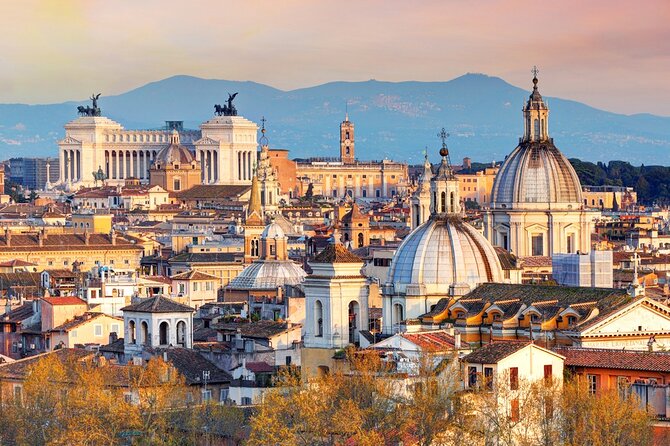
This tour is set up as a classic Rome circuit: you start near Piazza d’Aracoeli and wrap up in Piazza Navona. That matters more than it sounds. Starting one place and ending another means you’re not backtracking, and you leave the tour already positioned to keep going on your own.
The walking style is described as leisurely and tailored to your group. In practice, that means you’re not rushing between landmarks like a relay race. You’ll still move through Rome’s streets and piazzas, but the pace is meant to be comfortable for most people who can handle a normal city walk.
You’ll also be walking in areas close to public transportation, which helps if you’re juggling arrival times or want to hop off quickly for gelato, coffee, or a bathroom break. (Rome can be dramatic about that.)
You can also read our reviews of more walking tours in Rome

Price and value: what $120.15 per person really buys
At $120.15 per person for about 2 hours, the value here comes from three places: planning, guidance, and savings on entry fees.
First, the routing is doing the heavy lifting. In a short window, you get a sequence of Rome icons—Vittorio Emanuele II Monument, Trevi Fountain, the Pantheon area, Trajan’s Column area, and Piazza Navona. That’s a lot of geography covered without you needing to stitch together directions on your own.
Second, you’re paying for a guide to explain what you’re looking at while you’re walking. The reviews highlight guides sharing not just facts, but context tied to architecture and culture—and giving a personal list of restaurant and bar ideas. That kind of local decision-making is where tours can earn their keep.
Third, admission fees aren’t the problem on this itinerary. The listed stops include free admission, which keeps your total cost cleaner. You still pay for the tour itself, but you avoid stacking entrance charges on top.
If you’re traveling as a small group, check whether a group discount applies for your booking. Even when it doesn’t feel like a “deal,” it can still be good value because you’re buying convenience and a guided route for a short, high-impact walk.
Stop 1: Monumento a Vittorio Emanuele II and the unification story above the city
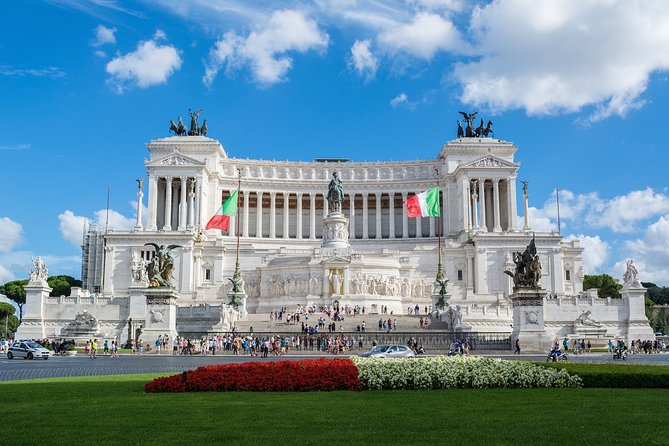
You kick off at Monumento a Vittorio Emanuele II. This is Rome, but with a skyline view and a national story. The monument is described as Rome’s tallest building, built to commemorate the unification of Italy and Vittorio Emanuele. It’s not just another photo spot. It’s an opening act that frames how modern Italy uses monuments to tell big political and historical messages.
What I like about starting here is altitude—at least visually. Even if you’re not going inside (and the stop notes free admission), seeing the structure up high helps you understand where you are in the city’s layout. It’s the kind of first anchor point that makes everything else feel more connected.
The time is about 10 minutes, so don’t treat this stop like a long sit-down. Treat it like orientation. If you want the best photos, arrive ready to move quickly and follow your guide’s direction on where to stand.
Stop 2: Trevi Fountain for coins, baroque drama, and a gelato window
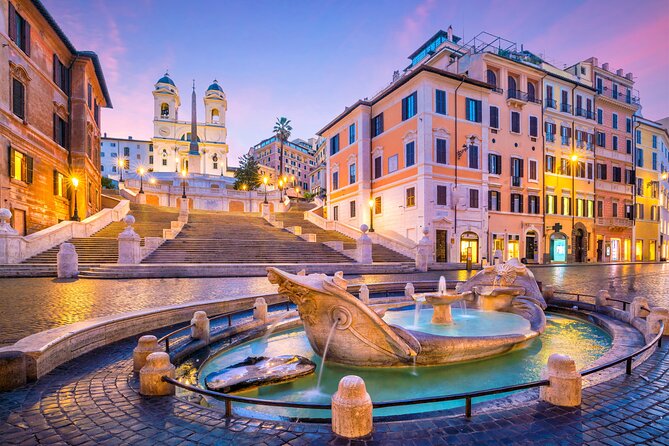
Then you hit Trevi Fountain, one of Rome’s most recognizable showpieces. The description calls it the pinnacle of Baroque architecture, and you’ll spend about 30 minutes here—plenty for the classic coin toss and enough breathing room to look around without feeling frantic.
Trevi is also where the tour’s timing logic becomes clear. A short, timed visit to the fountain would feel pointless. But 30 minutes gives you time to:
- throw coins and do the ritual bits
- look closely at the fountain’s design details
- step away to find gelato and reset before moving on
One practical thought: Trevi can be crowded. Even with a guide, you may not control the flow of people around you. The upside is that you’re not alone guessing what to do next. A good guide helps you move with purpose, so the crowd doesn’t turn your visit into a stuck-in-place situation.
This is one of the stops that best supports a “first evening” approach. You’re taking in a top landmark, but the tour doesn’t let it steal the whole night.
Stop 3: Chiesa di Sant’Ignazio di Loyola for a calmer pause
Next is Chiesa di Sant’Ignazio di Loyola, also described as a Roman Catholic titular church of deaconry rank dedicated to Ignatius of Loyola, founder of the Society of Jesus. It’s not the most famous stop on a casual Rome list, which is exactly why it’s useful.
Here’s the value: while Trevi and the Pantheon area pull you toward big-picture spectacle, this stop gives you a change of tone. A church visit like this can help break up the walking intensity and give you something to look at beyond crowds and fountains.
Time is about 10 minutes, so again this isn’t a slow religious retreat. But it’s a smart “pause in the program,” especially if you want your Rome day to include actual places of meaning—not only postcard landmarks.
You can also read our reviews of more city tours in Rome



Stop 4: The Pantheon by the alleys—Hadrian’s dome and that surprise square
After the church stop, the tour moves to the Pantheon area. The description sets the scene well: you’ll see it as if it appears from nowhere, framed by rustic cobbled alleyways. That sense of arrival is part of the magic of the Pantheon, and it’s one reason walking tours feel better here than bus tours.
The key facts you’ll hear include that it was built by Emperor Hadrian nearly 2000 years ago, and that it remains the largest unreinforced concrete dome in the world. Even if you’ve seen photos, these details tend to make the building feel more real in person. The dome isn’t just impressive—it’s technical, and that’s part of why it still holds attention.
You won’t be stuck in a long official visit here. The plan says you’ll pass by the Pantheon and spend about 20 minutes exploring the surrounding square area. That’s enough time to:
- get the full exterior impression
- look at how the space sits in the neighborhood
- enjoy the atmosphere without feeling like you’re missing the entire point
Drawback to consider: if you’re the type who wants to spend a full hour (or more) studying one building inside and out, 20 minutes around the square may feel short. This tour is built for seeing many “big ones,” not for deep dive time in one place.
Stop 5: Trajan’s Column and the outer forum—power in stone
Next up is Trajan’s Column. The tour notes that you’ll explore the outer forum and discover the mighty Trajan, with about 10 minutes allocated for this stop.
This is another timed moment. But Trajan’s Column is the kind of sight that rewards a guide’s framing. Without context, it’s easy to see a tall column and move on. With context, you’re more likely to notice what it represents and why it mattered in its setting.
Because your time here is short, aim to use the stop for one job: look, absorb, and connect it to what you’ve just seen around the forum area. It’s a bridge between the classical era themes you’ve already hit earlier in the walk, and it helps turn “a bunch of monuments” into a coherent story.
Stop 6: Piazza Navona—three fountains, Sant’Agnese in Agone, and dinner starts here
You finish in Piazza Navona, with about 20 minutes on the square before your tour ends. This is the grand finale: the space is famous for its three magnificent fountains and the classic Baroque church of Sant’Agnese in Agone.
Why ending here works: Piazza Navona isn’t just a landmark. It’s a practical payoff. The tour information notes that after you finish, you can explore nearby bars and restaurants, and the guide will point you toward local eateries, rooftop terraces, and places to eat with views.
If you take the tour on your first evening, this ending location becomes even more valuable. One theme from the experience feedback is that the guide’s dinner recommendations made the meal a highlight of the trip. The best part is that the guide’s suggestions aren’t random. They’re tied to where you physically are at that moment, so you can go straight from sightseeing to eating without burning time searching.
One thing to plan around: Navona can also be busy. Even if the crowd doesn’t disappear, your time there is designed to help you enjoy the square without feeling trapped.
How to make the most of this 2-hour window
This tour is best understood as a “get your bearings fast” walk. It covers a lot of major Rome in around two hours, which is ideal when you’re:
- arriving for the first time and want must-sees
- short on time but still want a guided plan
- tired of trying to choose between landmarks on your own
To make it work well, I’d set expectations upfront. This isn’t a tour where you linger at every stop for a long time. It’s structured like a highlight reel with just enough time at each key point.
A practical strategy:
- Decide your top two priorities before you start (Trevi? Pantheon? Navona?).
- Take quick photos at the first pass, then use the remaining time at each stop for closer looking.
- If you’re someone who cares about meals, pay attention during the tour when the guide offers restaurant ideas—because the ending location helps you act immediately.
The crowds at Trevi and Navona can be intense, but that’s also part of the real Rome experience. The difference with a guided walk is that you’re not stuck figuring out what to do next.
Who this private Rome walking tour fits best
This is a good match if you want:
- a private experience where it’s only your group
- a leisurely walking pace
- a guide in English
- a route that mixes famous landmarks with at least one church stop for variety
- a finish that sets you up for dinner right away
It’s also described as suitable for most people can participate, and you’ll be near public transportation. So if you’re planning a trip where you need easy logistics, this tour checks that box.
It’s not the best fit if you want:
- long museum-level time inside major buildings
- lots of off-the-cuff wandering with no structure
- a tour that replaces multiple days of Rome sightseeing
Should you book this private Rome city walking tour?
I’d book it if you want a smart, efficient Rome walk that hits the iconic stops and gives you a guide’s point of view. The most compelling part is the combination of major sights plus a finish in Piazza Navona, where the next step is usually dinner. Add in free admission at the listed locations and the tour becomes a cleaner value proposition.
Skip it (or pair it with other time) if you’re the type who wants deep time at just one place, like the Pantheon area or a long, slow church visit. This itinerary is built for breadth in two hours, not for extended stays.
If you’re visiting Rome for the first time and want to start with momentum, this private route is a solid way to get your bearings and leave with a plan for what to do next.
FAQ
How long is the private Rome city walking tour?
It lasts about 2 hours.
Is the tour private or shared with other groups?
It’s private. Only your group participates.
What language is the tour offered in?
The tour is offered in English.
Where does the tour start and where does it end?
It starts at Piazza d’Aracoeli (Via di S. Venanzio, 8, 00186 Roma RM) and ends at Piazza Navona (00186 Roma RM).
Do I need to buy tickets for the sights on the route?
The stops listed in the itinerary are marked as free admission.
What is the cancellation policy?
You can cancel for a full refund up to 24 hours in advance of the experience’s start time. Changes within 24 hours of the start time aren’t accepted.