REVIEW · ROME
Jewish Ghetto,Great Synagogue & Trastevere – Private Walking Tour
Book on Viator →Operated by Sara Terracina · Bookable on Viator
You can connect Rome’s Jewish past to its streets in one loop. This private tour strings together the Jewish Museum of Rome and the Tempio Maggiore di Roma, plus key nearby landmarks. It is timed for a comfortable pace, about 2 hours 30 minutes, with a licensed guide keeping everything clear and human.
Two things I like a lot: you get guided access to major sites (museum rooms and synagogue visits), and you also get a food stop that feels local, not touristy. The included pastry taste at Pasticceria Boccione is the kind of break that makes the story stick.
One thing to consider: a portion of the sights you’ll see are quick exterior stops, so if you want long, inside-only time everywhere, this route may feel a bit “see-and-understand” instead of “linger-and-collect.”
In This Review
- Key highlights worth planning for
- A Private 2.5-Hour Route: Jewish Ghetto to Trastevere
- Jewish Museum of Rome: rooms, collections, and a clear story
- Tempio Maggiore di Roma and the Spanish Synagogue: what you’ll actually see
- Fountains and gates: Cinque Scole, Costaguti, and the Tartarus of clues
- Octavia’s Portico and the Roman theatre/bridge layer
- San Gregorio della Divina Pieta: a bilingual facade you can actually read
- Isola Tiberina and the move toward Trastevere’s medieval Jewish presence
- Pastry break at Pasticceria Boccione: a small stop with big payoff
- Value and price: what you’re paying for at $240.32 per person
- When a private guide like Sara Terracina changes the feel of the walk
- Who this tour suits best (and who might want something else)
- Should you book this Jewish Ghetto & Trastevere private walk?
- FAQ
- What does the price include?
- How long is the tour, and where does it start?
- Is this tour private?
- Are tickets included for all stops?
- Is there a food stop, and can I request allergy accommodations?
- Can I cancel for a full refund?
Key highlights worth planning for
Private, one-group pace: Only your party joins, so questions and photo pauses stay easy.
Museum + synagogues with tickets included: You cover the big indoor anchors without having to chase admissions.
Two-synagogue visit under one roof: The Great Synagogue visit also includes the Spanish Synagogue.
Stories tied to specific places: You’ll hear why fountains and buildings matter to the Jewish quarter, including a Costaguti family connection.
A built-in food break: The included Jewish pastry stop includes allergy guidance so you can plan ahead.
Roman landmarks around the quarter: Portico of Octavia, Roman theatre, an ancient bridge, and Isola Tiberina appear as part of the bigger city layer cake.
A Private 2.5-Hour Route: Jewish Ghetto to Trastevere
This is the kind of tour that makes Rome feel less like a checklist and more like a map with meaning. You start in the area around Piazza delle Cinque Scole and work your way through the Jewish Ghetto’s key points, then continue toward Trastevere. The total time is about 2 hours 30 minutes, so it fits well if you already have a main sightseeing block planned the same day.
Because it’s private, the pacing is steadier than most group walks. Your guide can slow down when a building needs context or speed up if you’re the type who just wants the highlights and to move on. That matters in this neighborhood, where the streets are tight and the stories are dense.
Also, this isn’t just “look at old stuff.” The itinerary mixes indoor visits (Jewish Museum and the synagogue complex) with short stops that teach you how to read the city: fountains, gates, church facades, and Roman monuments all become clues. Expect many moments where you’ll say, oh, that’s why this place is mentioned.
You can also read our reviews of more walking tours in Rome
Jewish Museum of Rome: rooms, collections, and a clear story
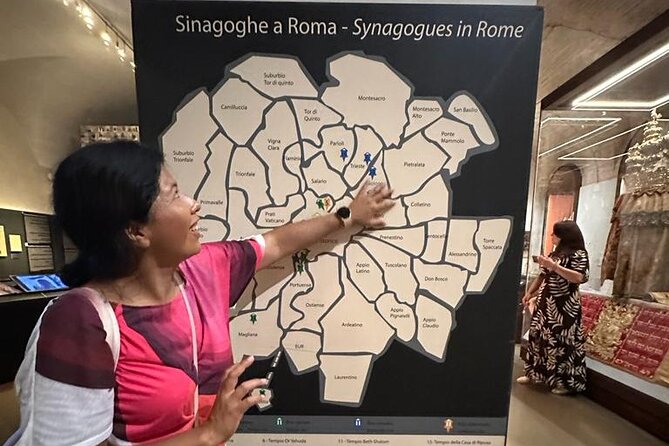
Your first stop is the Jewish Museum of Rome, and the time set aside is about 1 hour. Here, your guide stays with you for the visit and walks you through the rooms and collections. That is a big deal in museums: without context, you can end up watching labels slide by like subtitles on fast-forward.
A guided museum visit helps you understand what you are seeing. Instead of random highlights, you get a thread: what these objects and accounts say about Jewish life in Rome over time, and how community identity was shaped by laws, neighborhoods, and everyday habits.
Practical payoff: you don’t need to build your own mini-lesson before you arrive. The guide does the connecting for you, room by room, so your brain doesn’t have to hold everything at once. And because museum admission is included, you avoid the hassle of last-minute ticket checks or timing stress.
Tempio Maggiore di Roma and the Spanish Synagogue: what you’ll actually see
Next comes Tempio Maggiore di Roma, where the tour includes entrance and a visit to the Great Synagogue and also the Spanish Synagogue. The scheduled time here is about 30 minutes, which is short enough to keep the route moving, but long enough to see the essentials if your guide explains what to notice.
Synagogues are not just architecture. They are a window into community life, ritual space, and how traditions were maintained and expressed in the city. With a guide, you can focus on the details that tell you more than the building’s age—things like how space is organized and why certain design choices matter.
One practical note: even though the guide is there, synagogues can have rules about photography, quiet behavior, and movement. Your best move is to follow the guide’s lead and plan to listen for the meaning behind what you’re looking at.
Fountains and gates: Cinque Scole, Costaguti, and the Tartarus of clues
Between indoor stops, the tour brings you to several exterior landmarks that connect directly back to the Jewish quarter.
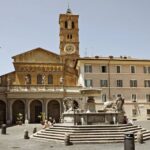
You’ll pause at a fountain in Piazza delle Cinque Scole, described as a Renaissance work by Giacomo della Porta. It’s a quick stop (about 5 minutes), but the point is interpretation: you’re not just taking a picture. You’re learning how water, public space, and the neighborhood’s identity overlap.
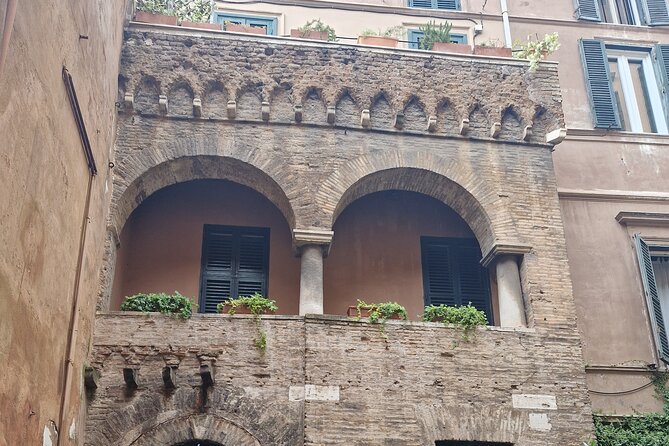
Then you visit a small “wait, that matters” moment tied to ghetto boundaries. The plan includes seeing a building from the outside connected to one of the gates of the Ghetto, plus a story about the Costaguti family. These kinds of stops are easy to overlook on your own, because from the street it can look like any old facade. With the right framing, it becomes a landmark with teeth.
The tour also includes Fontana delle Tartarughe, another Renaissance fountain with a touch of Baroque styling. It’s listed as a 5-minute stop, and the connection you’ll hear is specifically about its link to the Jewish quarter. That kind of “why this here?” storytelling is exactly how these walks become more than scenery.
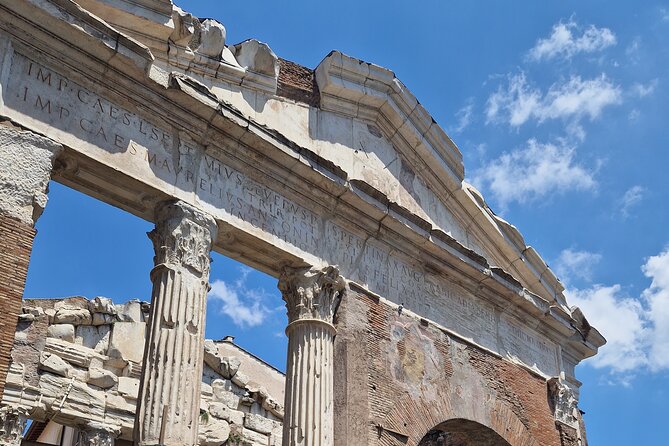
Finally, you’ll pass the Portico of Octavia, an ancient Roman monument dedicated to the sister of the first emperor, Octavianus Augustus. Even if you are not a Roman-history obsessive, this gives you a sense of the layers under Rome’s later neighborhoods. The city isn’t replaced—it’s stacked.
Octavia’s Portico and the Roman theatre/bridge layer
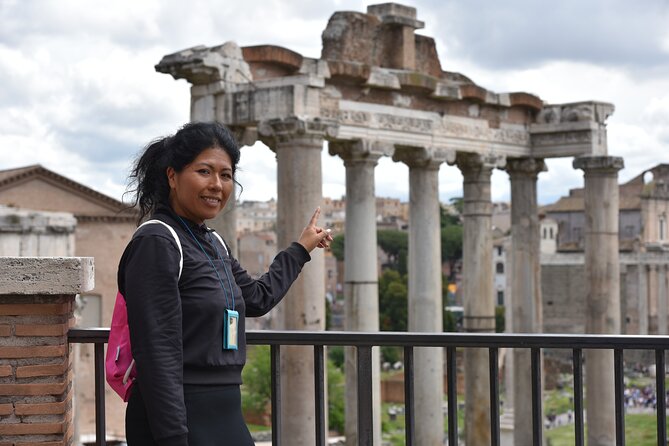
Rome’s Jewish quarter exists inside a bigger Roman puzzle, and this tour keeps reminding you that the ground you walk on has older chapters.
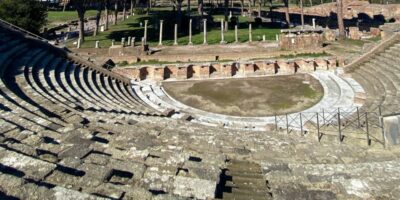
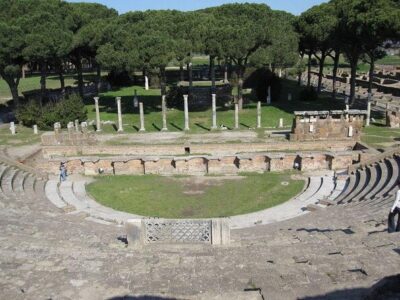
After Portico of Octavia, the itinerary includes an Ancient Roman theatre stop and also an ancient Roman bridge stop. You’re guided through these as part of the walking flow, meaning you’ll get short, focused context rather than a full archaeology lecture.
If you’re wondering whether these Roman stops will feel like filler, it depends on how you like your sightseeing. I think this works best for people who enjoy “reading the city.” Even brief Roman pointers help you understand why certain neighborhoods took the shapes they did, and why later communities adapted to the spaces already present.
You can also read our reviews of more private tours in Rome




San Gregorio della Divina Pieta: a bilingual facade you can actually read
There is a church stop on this route: Chiesa di San Gregorio della Divina Pieta. You see it from outside, and your guide reads and explains the meaning of the bilingual inscription on the facade. The time here is about 10 minutes, and there is no admission included.
This is the kind of stop that pays off later, when you realize you were not just walking past a church. You were learning how language, identity, and public messages were used on buildings where lots of different communities would have seen the same facade.
Because this is an exterior stop, you are not committing time to a long interior visit. It’s more like a quick lesson on how to notice what most people rush through.
Isola Tiberina and the move toward Trastevere’s medieval Jewish presence
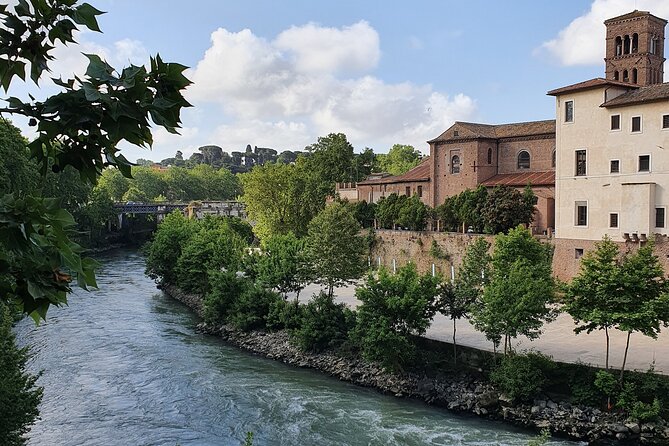
After the Jewish-quarter stops and Roman landmarks, the route shifts toward Isola Tiberina and then Trastevere.
Isola Tiberina is an ancient island in the Tiber River, with its history explained during the 10-minute stop. Even with limited time, being on or near river landmarks can change how you understand a city. Rivers are routes, boundaries, and practical centers, which makes this an important pause in a walking tour.
Then you move into Trastevere for about 10 minutes. The itinerary frames it as historically important for the Jewish people of Rome and mentions a medieval synagogue presence. If your goal is to go beyond the Ghetto walls and see where Jewish life also showed up in other areas, this final leg helps.
Trastevere itself is famous for its streets, but this tour’s angle keeps you focused on the religious and historical significance rather than only the photo spots.
Pastry break at Pasticceria Boccione: a small stop with big payoff
The tour includes a taste of a traditional Jewish pastry at Pasticceria Boccione, scheduled for about 10 minutes. This is not a random dessert add-on. It is part of how the tour connects daily life to the sites you’re visiting.
One very practical detail: you should let the operator know about any food allergy. That is rare to see stated clearly, and it’s worth taking seriously. If you’re traveling with allergies, ask what ingredients are involved before you assume the pastry will be safe.
I also like that this stop is timed. It breaks up the heavy indoor content so you can reset. You’ll come back out with a clearer head, better ready for the next set of fountains and church facade reading.
Value and price: what you’re paying for at $240.32 per person
At $240.32 per person, this is not a budget walking tour. But it also isn’t “pay for the guide and figure out the rest.” The structure matters.
Here’s the value you’re buying:
- A local licensed guide who leads the museum and synagogue visits.
- Entrance ticket to the Jewish Museum of Rome.
- Entrance and visit coverage for the Great Synagogue and Spanish Synagogue.
- The included Jewish pastry tasting.
- Multiple key stops along the way that are free or brief, so you spend more time learning than searching.
Because it’s private, you’re also paying for flexibility. That is the real cost driver: you’re not sharing the guide with a bigger crowd, and you don’t have to accept a one-size-fits-all pace.
When is it worth it? If you want a guided route that handles admissions and keeps you oriented in a neighborhood that can feel confusing without local framing. If you love asking questions and you prefer learning over wandering, this cost can make sense fast.
When a private guide like Sara Terracina changes the feel of the walk
The provider is Sara Terracina. One reason this tour earns a top rating is the way the guide connects details to people. In particular, the tour is praised for being personal, with family-history context woven into the storytelling. That changes how the route feels: it becomes a conversation rather than a list.
That’s also why the private format matters. A good guide can make small streets feel meaningful, but only if there is room for questions and for the story to land. With Sara Terracina, the emphasis seems to be on explanation that feels human—something you can carry with you after the walk is over.
Who this tour suits best (and who might want something else)
This tour is a smart pick if you want:
- Jewish culture and sites across the Jewish Ghetto area, not just one church or one museum.
- A route that balances indoor time (museum and synagogues) with short, meaningful exterior stops.
- Included tickets and a guide who keeps you on schedule without you playing Rome ticket Tetris.
It might be less ideal if you:
- Want long, slow museum time everywhere.
- Expect every stop to be inside and fully dedicated to one single site.
- Prefer to build your own self-guided route and don’t care about curated explanations.
That said, the mix here can be a strength. It helps you see the city as a connected story instead of separate attractions taped together.
Should you book this Jewish Ghetto & Trastevere private walk?
I’d book this if you’re the type who wants the neighborhood to make sense. The combination of the Jewish Museum, the synagogue complex (including the Spanish Synagogue), and the way the tour uses fountains, gates, and Roman landmarks to explain context is a strong match for visitors who like understanding what they’re seeing.
It’s also a good fit if you care about comfort and pacing. Private means you don’t get swallowed by a crowd, and the tour includes the key ticketed pieces plus a pastry stop so you can spend your time on learning rather than logistics.
If you’re traveling with food allergies, plan ahead for the pastry ingredients. And if you’re craving only long inside visits, choose a different format.
FAQ
What does the price include?
The price includes a local licensed tour guide, entry for the Jewish Museum of Rome, a tasting of a Jewish pastry at Pasticceria Boccione, and the synagogue entrance/visit. Tips are not included.
How long is the tour, and where does it start?
The tour runs about 2 hours 30 minutes. It starts at Piazza delle Cinque Scole, 00186 Roma RM, Italy, and ends back at the same meeting point.
Is this tour private?
Yes. It’s a private tour/activity, so only your group participates.
Are tickets included for all stops?
Museum and synagogue admissions are included. Some stops are free or exterior, and the church stop at San Gregorio della Divina Pieta lists admission as not included.
Is there a food stop, and can I request allergy accommodations?
Yes, there is an included taste of a traditional Jewish pastry at Pasticceria Boccione. You should let the tour know if you have any food allergy.
Can I cancel for a full refund?
Yes. You can cancel up to 24 hours in advance for a full refund, based on local time. If you cancel less than 24 hours before the start time, the amount paid is not refunded.