REVIEW · ROME
Guided Group Walking Tour of Rome Top Sights
Book on Viator →Operated by EcoArt Travel · Bookable on Viator
Rome gets real when you walk it. This 2.5-hour guided route strings together the Trevi Fountain, Spanish Steps, Pantheon, Piazza Navona, and St. Peter’s Square in a tight loop, with a certified local guide who makes the city’s details easier to spot.
I especially love how the guide connects what you’re seeing to why it matters. The Bernini references at the Trevi Fountain and Piazza Navona are the kind of specifics that turn photos into a story. I also like the pacing: multiple big stops in one morning without pretending you’re sprinting across Rome.
One catch to consider: it’s a walking tour. If your energy runs low fast, plan on being on your feet for the full route, and keep an eye out for Jubilee restoration notes that can affect what’s visible.
In This Review
- Key things to know before you go
- Why this Rome top-sights walk makes sense in 2.5 hours
- Meeting at Babington’s Tea Room, then getting your bearings
- Piazza di Spagna and the Spanish Steps: view first, then decide how many stairs
- Trevi Fountain: your guide’s Bernini details turn the chaos into meaning
- Tempio di Adriano: big columns, short stop, outside-only payoff
- Pantheon inside: the dome you can actually experience up close
- Piazza Navona and the Four Rivers Fountain: Rome’s outdoor art gallery
- Castel Sant’Angelo from the Tiber: fortress, prison, hideaway, museum
- St. Peter’s Square: Bernini’s colonnade and the best kind of grand finale
- Price and value: why $46.25 can be a smart deal for this specific route
- What to expect from the guide (and why that’s a big part of the experience)
- Who should book this walking tour
- Should you book this guided walk to Rome’s top sights?
- FAQ
- How long is the Guided Group Walking Tour of Rome Top Sights?
- Where do I meet the guide, and where does the tour end?
- What sights are included on the tour?
- How big is the group?
- Are service animals allowed, and can most people participate?
- Is food or drink included in the price?
- Are monument admissions included?
- What if monuments are under restoration for the Jubilee, or I need to cancel?
Key things to know before you go
- A compact top-sights route: Spagna to the Vatican, without long transit breaks
- Bernini callouts at multiple stops: Trevi Fountain and Piazza Navona get special attention
- Pantheon inside time: you actually step in, not just look from the sidewalk
- Small group size: up to 20 people keeps the feel friendly
- Free-entry stops are built in: the itinerary notes admission ticket free at each main stop
- Outside views plus a final payoff: Hadrian’s Temple and Castel Sant’Angelo are best seen from the street
Why this Rome top-sights walk makes sense in 2.5 hours
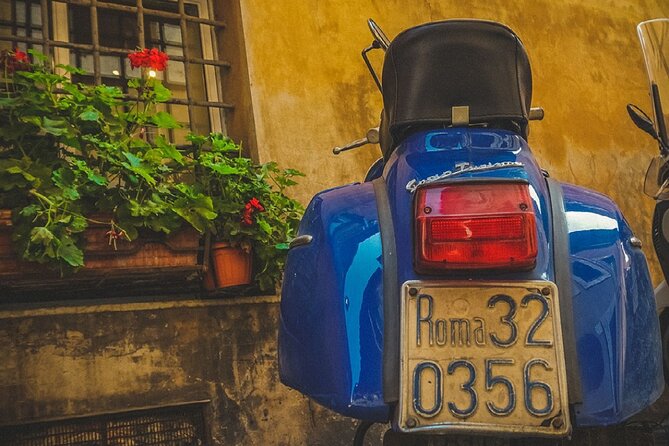
Rome can be overwhelming fast. This tour avoids the classic problem of spending your day commuting between far-flung sights. Instead, it builds a route where each landmark flows into the next, so you spend more time seeing and less time figuring out the map.
You also get the benefit of having someone answer questions on the spot. That matters most when you’re staring at something famous and want the “what am I looking at?” part explained in plain terms.
And because it’s a group walk with a cap of 20, it’s not the huge bus-tour vibe. You’ll still hear your guide clearly, and you can ask for clarification when something catches your eye.
You can also read our reviews of more walking tours in Rome



Meeting at Babington’s Tea Room, then getting your bearings
You start at Babington’s Tea Room right in Piazza di Spagna (Piazza di Spagna, 23). The tour begins at 10:00 am, and you’ll be checked in there before moving to the Spanish Steps area.
That opening matters because it sets you up for the rest of the walk. You’re not dropping into the middle of Rome cold; you begin at the base of the Spagna slope and immediately get oriented to the “layers” of the city—streets below, viewpoints above.
From there, the route stays close by. You’ll keep moving through areas where you can realistically connect sights without feeling like you’re constantly rushing to catch up.
Piazza di Spagna and the Spanish Steps: view first, then decide how many stairs
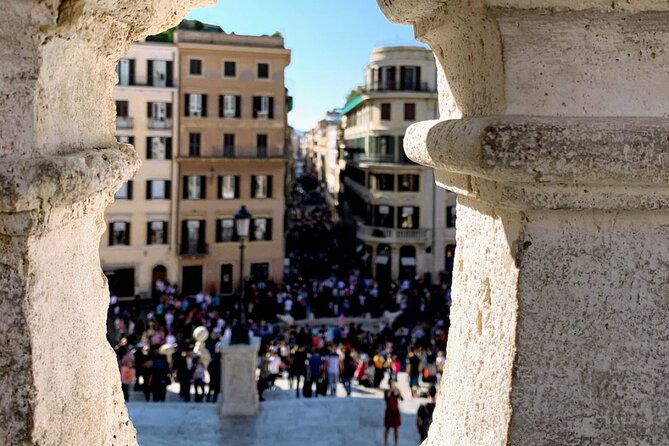
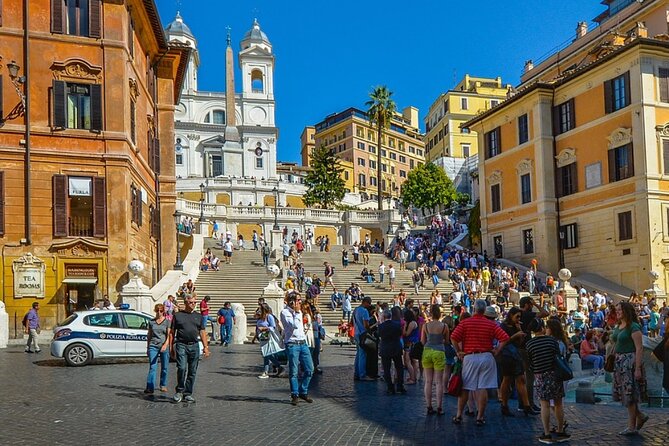
The tour starts with Piazza di Spagna—close enough to admire the Spanish Steps from below. This is a smart first stop because you can take it in even if climbing feels like too much this morning.
Then comes the obvious star: the Spanish Steps themselves. You’ll have about 15 minutes here, and the itinerary highlights the fact that the stairs total 138 steps. You can climb them all, or you can do a partial climb and still enjoy the view over Via dei Condotti, Rome’s famous shopping street.
What I like about this stop on a guided walk is that it’s not only about the steps as a photo spot. Your guide is there to help you understand how the area fits into Rome’s look and rhythm—what’s up, what’s down, and why this spot became such a social and visitor magnet.
Trevi Fountain: your guide’s Bernini details turn the chaos into meaning
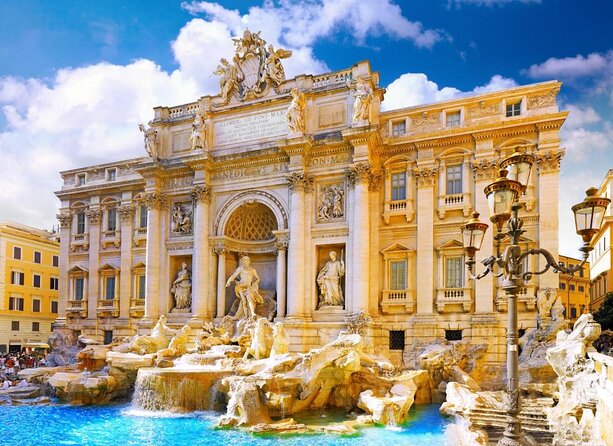
Next you head toward the Trevi Fountain. Expect it to be busy, but don’t let that stop you from paying attention. The tour is designed so you’re not just looking at the fountain—you’re learning what to notice while you’re there.
The guide points out secrets Bernini hid in the sculptures. That’s the difference between seeing a “famous fountain” and actually spotting the artistic choices you’d miss on your own. You’ll also get a sense of how the fountain fits into the center of Rome’s street layout—the winding alleys that bring you right into the scene.
This stop is where the tour can feel most like a Rome education. You’ll walk away with a few specific things to remember when you’re back at your hotel scrolling through photos later.
Tempio di Adriano: big columns, short stop, outside-only payoff
After Trevi, you’ll have a brief stop at Tempio di Adriano, also known as Hadrian’s Temple. The itinerary calls out that it’s used as an event space now, which is a helpful reminder that Rome isn’t frozen in time.
You don’t go inside here; instead, you focus on the towering columns from outside. The value is quick: you get Roman temple scale and form without spending a long block of time in a place that may not be fully open for visitors depending on the day.
This short stop also works as a “reset” in the walking rhythm. You’ve just done a major landmark; now you see another kind of Roman monument, and then you move on while you still have energy.
You can also read our reviews of more guided tours in Rome






Pantheon inside: the dome you can actually experience up close
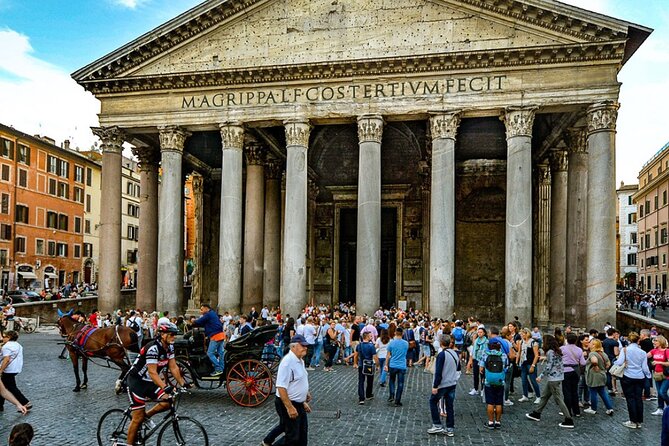
Then comes one of the best parts of the itinerary: the Pantheon. You have time to step inside with your guide, which is a big deal for a top-sights walk. Staring at the exterior is fine, but the interior is where the building really flexes.
The tour description focuses on the Pantheon’s structural star: it has the largest unreinforced concrete dome in the world (and it has stood for nearly 2,000 years). That’s the kind of fact that makes you look longer at the ceiling and the space around you, instead of just snapping a picture and moving on.
You’ll also hear about how the building’s purpose changed over centuries—from pagan temple to church to the tomb of Roman kings. That layered past is easier to grasp when someone points out the transitions while you’re inside, standing where those changes took place.
Piazza Navona and the Four Rivers Fountain: Rome’s outdoor art gallery
Next is Piazza Navona, often called a place where you can feel the “heart” of Rome in its piazzas. You’ll get about 15 minutes to appreciate the scene and the fact that this square still functions as a public space, not a museum display.
The guide also brings in a key artistic highlight: another Bernini masterpiece, the Fountain of the Four Rivers. On your own, you might notice the fountain and the statues as decoration. With a guide, it becomes easier to track the symbolism and why this kind of work mattered in its time.
This is also a good stop for people-watching, because you’ll see locals and visitors moving through the square as part of daily life. Just keep your eyes up and your attention on the details your guide calls out, or it’s easy to drift into “photo-only mode.”
Castel Sant’Angelo from the Tiber: fortress, prison, hideaway, museum
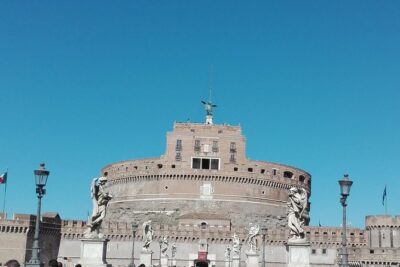
From Piazza Navona, you’ll continue toward the Tiber for Castel Sant’Angelo. The tour frames it as a multi-role structure: fortress, prison, hideaway, and now a museum.
You’ll admire it mainly from outside, which still works because the building sits in a visually dramatic spot along the river. You don’t need to be inside to understand what this place has meant over time; the size and position do a lot of the storytelling for you.
This stop also helps bridge the day’s bigger themes. Earlier you saw temples, fountains, and church spaces. Castel Sant’Angelo shifts the focus to power and conflict—Rome’s long tug-of-war between politics, survival, and architecture.
St. Peter’s Square: Bernini’s colonnade and the best kind of grand finale
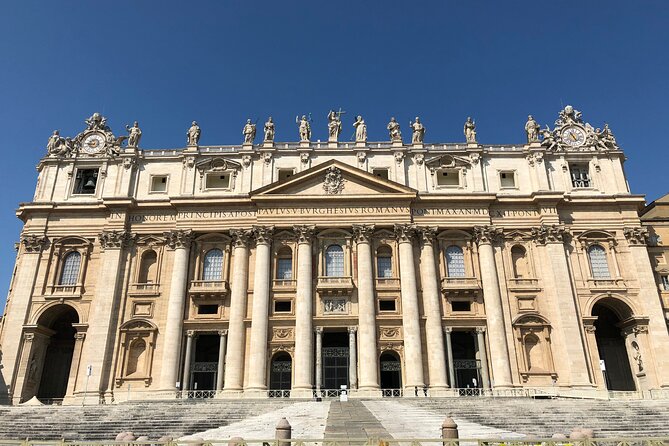
Your walking tour ends at St. Peter’s Square, around Piazza San Pietro. This is one of the best finish points because it’s designed for foot traffic—you’re meant to approach the space, feel the scale, and take it in without being shoved through.
The guide emphasizes the Bernini colonnade and the way it frames the approach. You’ll also look toward the blue dome of St. Peter’s Basilica and notice that the square includes saints chosen by Bernini.
I like that the tour doesn’t rush you out at the end. You finish with about 15 minutes here, and then you’re free to continue exploring on your own. That’s ideal if you want to spend extra time in the places that caught your eye during the walk.
Price and value: why $46.25 can be a smart deal for this specific route
At $46.25 per person, this isn’t a budget tour in the absolute sense. But it’s also not just you wandering from one famous site to the next.
Here’s the value logic:
- You’re paying for a certified local guide who helps you notice the details that matter.
- The itinerary marks admission ticket free for the listed stops, which makes the “total cost” easier to predict.
- You get a lot of major sights in a compact timeline (about 2 hours 30 minutes), which can save you time vs. trying to DIY everything in one morning.
If your goal is to get grounded in Rome’s big icons—fast—and you like explanations you can actually use while you’re looking at the object, this is good value.
What to expect from the guide (and why that’s a big part of the experience)
This tour stands or falls on the guide. The names that show up in real-world feedback include Stefano and Eddy, both praised for making the tour feel fun and not dragged out.
The consistent theme is clear explanations with enough detail to be memorable, without turning the whole walk into a lecture. You also get Q&A time along the way, which helps when you spot something you don’t understand and want it answered right there.
If you’re traveling with kids, you’ll likely appreciate that the guide keeps things engaging. One review notes the tour worked well even for a child close to four, which is a good sign that the explanations can be adapted to different attention spans.
Who should book this walking tour
This tour fits best if you want:
- A fast way to cover multiple top Rome sights in one morning
- A guide to highlight specific details (especially the Bernini connections)
- A route that ends in the Vatican area, so you can keep exploring afterward
It may be less ideal if you:
- Need a lot of breaks during walking-heavy routes
- Prefer very slow, unstructured sightseeing with no set stops
Should you book this guided walk to Rome’s top sights?
Yes, if you want a practical Rome overview that still feels personal. The route is tight, the guide-led details make the famous landmarks more rewarding, and you finish in St. Peter’s Square where you can choose your next move.
If you’re the type who loves getting the story behind what you’re seeing, this is exactly the sort of guided walk that turns Rome from a list of monuments into a connected day.
FAQ
How long is the Guided Group Walking Tour of Rome Top Sights?
It lasts about 2 hours 30 minutes.
Where do I meet the guide, and where does the tour end?
You meet at Babington’s tea room at Piazza di Spagna, 23, 00187 Rome. The tour ends in St. Peter’s Square at Piazza San Pietro, 00120.
What sights are included on the tour?
The stops include Piazza di Spagna and the Spanish Steps, Trevi Fountain, Tempio di Adriano, the Pantheon, Piazza Navona, Castel Sant’Angelo (seen from outside), and St. Peter’s Square.
How big is the group?
The tour has a maximum of 20 travelers.
Are service animals allowed, and can most people participate?
Service animals are allowed. The tour also notes that most travelers can participate.
Is food or drink included in the price?
No. Food and drink are not included.
Are monument admissions included?
The itinerary lists admission ticket free for the stops, and you’ll also receive a mobile ticket.
What if monuments are under restoration for the Jubilee, or I need to cancel?
Some monuments may be under restoration due to the Jubilee, so it’s important to pay attention to any messages you receive. For cancellation, you can cancel for a full refund up to 24 hours before the experience starts.