REVIEW · ROME
Renaissance Scarlet Ladies Tour: Caravaggio’s and Borgia’s Women
Book on Viator →Operated by Storytelling Rome Tours & Walks · Bookable on Viator
Rome has a different story to tell. The Renaissance Scarlet Ladies Tour puts women at the center of Renaissance Rome with church and palace stops most visitors miss, plus a guide who keeps it funny and clear.
I really like how the tour connects fame to everyday power—how courtesans shaped art, politics, and money—without turning it into a lecture. You also get Caravaggio’s women in the places that still hold the artwork and the setting, including the church where his painting is found. One thing to consider: it’s a walking tour and you will cover several blocks and steps inside churches, so wear shoes you trust.
In This Review
- Quick takeaways before you go
- Women as your guide through Renaissance Rome
- Price and value check for a 3-hour guided walk
- Meet Massimo, and why the format works
- Stop 1: Basilica San Marco Evangelista and Lady Lucrezia
- Stop 2: Villa Doria Pamphilj courtyard and Anna Bianchini
- Stop 3: Santa Maria Sopra Minerva and the courtesan’s European reach
- Stop 4: Basilica S. Agostino and Caravaggio’s Virgin Mary and the Pilgrims
- Stop 5: Via dei Coronari and buildings tied to courtesan life
- Stop 6: Campo de’ Fiori and Vannozza Cattanei, mother of the Borgias
- Stop 7: Piazza Farnese and Giulia Farnese at the Michelangelo-designed Palazzo
- Logistics that make the afternoon easy
- Who this tour is best for (and who might not love it)
- Should you book the Renaissance Scarlet Ladies Tour?
- FAQ
- How long is the tour?
- What time does the tour start?
- How many people are in the group?
- Where do you meet and where does the tour end?
- Is admission to the stops included?
- What is the refund cutoff if I cancel?
Quick takeaways before you go
- Small group size (max 18) keeps it conversational, with time for your questions.
- You follow seven stop stories, moving from famous names to the real streets and buildings they lived around.
- Caravaggio’s first model and most frequent model shows up at Villa Doria Pamphilj: Anna Bianchini.
- You’ll see church art tied to the original Caravaggio canvas Virgin Mary and the Pilgrims at Basilica S. Agostino.
- The tour ends with a moving Borgia-era thread at Piazza Farnese, featuring Giulia Farnese.
- Most stops list admission ticket free, so the main cost is the guide.
Women as your guide through Renaissance Rome
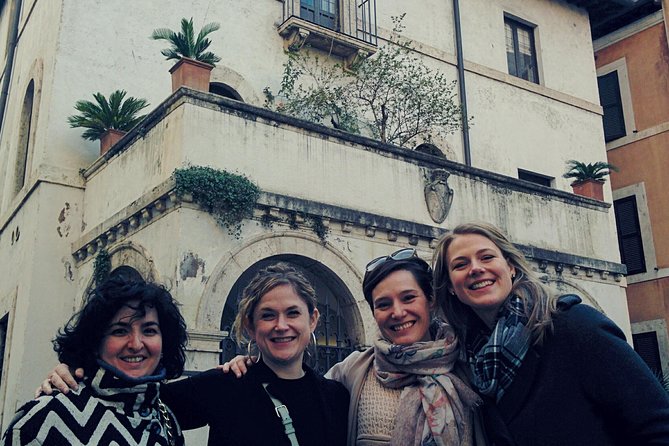
This tour works because it changes your lens. Instead of sightseeing as a straight line of kings, saints, and famous buildings, you’re taught to look at the women who operated in the real systems of status, patronage, and influence. That means you spend time on places where people like Lady Lucrezia, Anna Bianchini, and Vannozza Cattanei are not just mentioned—they’re threaded into the artwork and the architecture around you.
It’s also a smart way to see Rome if you already know the big-name highlights. You’re still in classic parts of the city—Capitoline area down toward Campo de’ Fiori and Piazza Farnese—but the route feels like a guided story walk through the “other” Rome.
You can also read our reviews of more tours and experiences in Rome.



Price and value check for a 3-hour guided walk
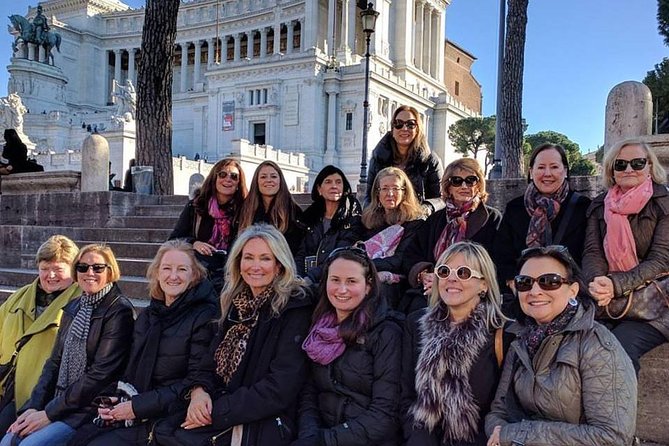
At $47.07 per person for about 3 hours, this isn’t the cheapest option—but it often feels fair once you understand what you’re buying: a storyteller who ties together art, politics, and gender roles in Renaissance Rome.
A big part of the value here is that the tour is guided through multiple major sites that are listed as admission ticket free for the stops on the route. So you’re not constantly dealing with extra entry fees or ticket lines. For a city like Rome, that matters.
Also, the guide is not just naming paintings. The tour is built like a set of connected character studies. When you learn the “why” behind what you see—especially around Caravaggio’s muse and the courtesan class—you tend to remember more, and the stroll feels purposeful rather than repetitive.
Meet Massimo, and why the format works
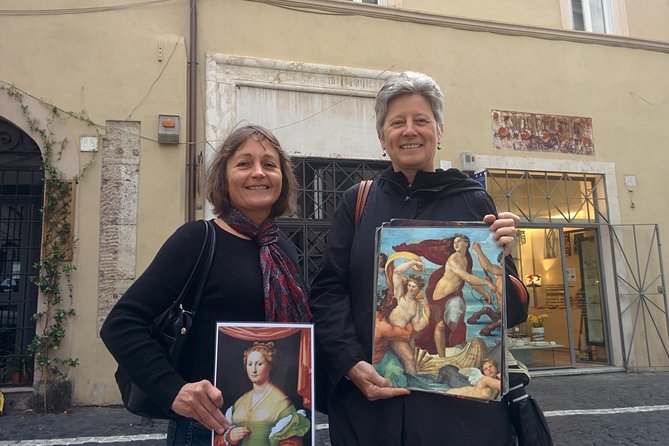
The tour is led by Massimo, and his style is the reason a lot of people come away calling this a must. He brings both knowledge and humor to the stories, which keeps you from getting bogged down. You’ll also get time to ask questions, and with a maximum of 18 people, the tour doesn’t feel like a noisy lecture herd.
You’ll walk at a comfortable pace—enough movement to feel like you’re touring the city, but not so fast that you lose the plot. And because the tour is focused on people (not just monuments), you’re not left guessing what anything means.
Stop 1: Basilica San Marco Evangelista and Lady Lucrezia
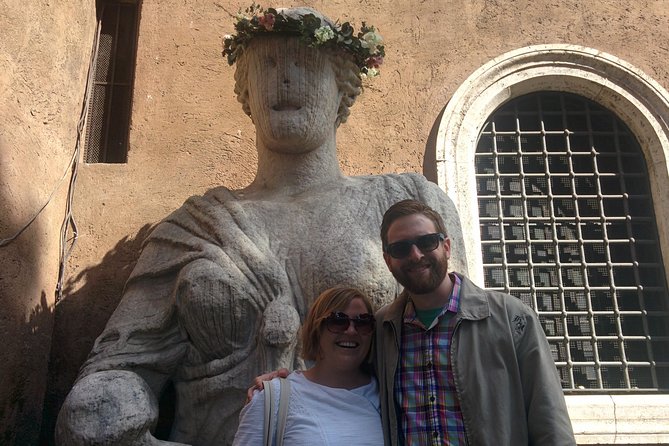
You start at Basilica of St Mark Evangelist near Campidoglio/Palazzo Venezia (Piazza di S. Marco 48). The first scene is visually dramatic: a massive statue associated with a courtesan named Lady Lucrezia.
This statue traces back to 1477, when it was named after a famous courtesan. The storytelling here matters. It’s not just a statue description; it’s your first lesson in how women could achieve visibility and power—even when society tried to limit them. By the time you move on, you’re already training your eyes to ask: who benefited here, who paid, and who got remembered?
Tip for this stop: take a few seconds before you look around. The guide’s story is built to make the statue click, and rushing your first impression makes it harder to follow.
Stop 2: Villa Doria Pamphilj courtyard and Anna Bianchini
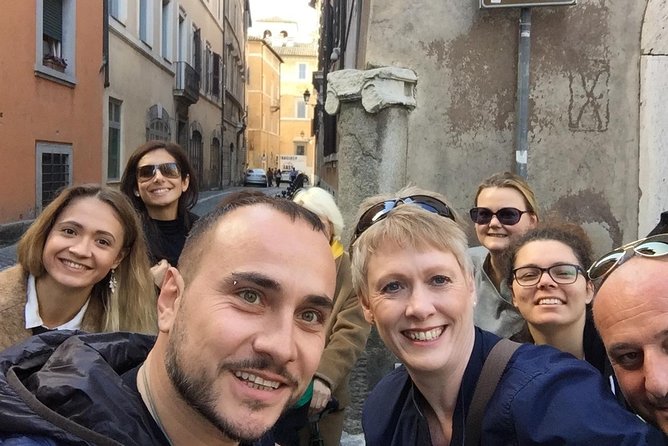
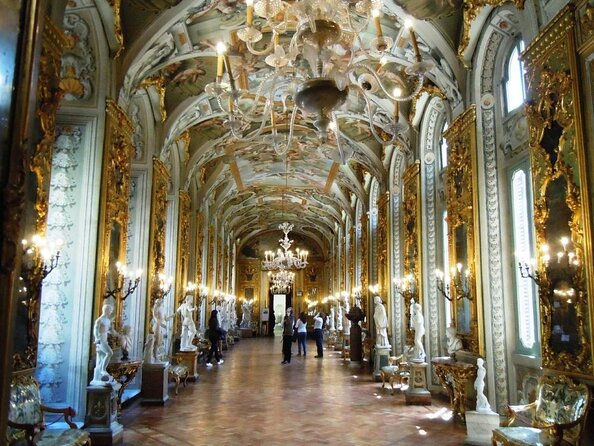
Next you head to the courtyard of Villa Doria Pamphilj, where the tour shifts into the world of art and patronage. Here’s where Anna Bianchini enters the story.
You learn that Anna Bianchini was Caravaggio’s first model and also the one he used most often. That detail changes how you think about Caravaggio. It’s easy to treat his paintings like pure genius floating above life. The tour brings the “person in front of the canvas” back into view, and it makes his women feel like real collaborators, not background symbols.
Even if you’re not a hardcore art fan, this stop helps you understand why the courtesan class mattered to artists. These women could be models, muses, and social connectors in the networks that shaped what got painted and who got seen.
What to expect: a quick, focused story moment in a courtyard setting, then you’re back outside, moving your legs along with the narrative.



Stop 3: Santa Maria Sopra Minerva and the courtesan’s European reach
At Chiesa di Santa Maria Sopra Minerva, you step into a church with important artworks and a story built around one of the standout “types” of Renaissance women: the courtesan who becomes a legend.
Here the tour tells you about one of the most successful courtesans in Europe in the early 16th century. The point isn’t gossip for gossip’s sake. You’re learning how reputation worked like currency—how a woman’s social standing could translate into real leverage with powerful men and institutions.
This is also a helpful stop if you like connecting literature, art, and lived reality. Courtesans show up in paintings and poems, but you often don’t get the street-level explanation of why those images were so effective. This church stop gives you that missing context.
Practical note: churches can feel cool and dim. Bring your phone brightness down a bit so you can see the art without glare.
Stop 4: Basilica S. Agostino and Caravaggio’s Virgin Mary and the Pilgrims
At Basilica S. Agostino, the tone gets more layered. The tour explains how the church is historically tied to women through stories connected to what happens inside and around the space.
Then you get a specific Caravaggio payoff: the tour points you toward the original Virgin Mary and the Pilgrims canvas painted by Caravaggio.
That is the kind of detail that makes a tour worth it. You’re not only hearing that Caravaggio painted something—you’re being guided to the exact work tied to the place. When you understand the story framework first, the painting tends to feel less like a museum object and more like a cultural signal sent through a religious space.
If you care about art, this is one of the stops that will likely stick the most.
Stop 5: Via dei Coronari and buildings tied to courtesan life
Then comes the most “walk and picture it” segment: Via dei Coronari. The tour moves among original 15th- and 16th-century buildings that, in their time, were associated with courtesans.
This is where the tour earns its name in a practical way. You’re able to look at streetscape and architecture and understand that daily life happened inside those walls. The guide makes the case that this is one of the best ways to bring the stories to life because you’re not trapped in a single room explaining the past. You’re seeing the environment that supported it.
Consideration: this part is outdoors, so plan for Rome weather. In cooler months, you might still want a light layer for church air once you go back inside.
Stop 6: Campo de’ Fiori and Vannozza Cattanei, mother of the Borgias
When you reach Campo de’ Fiori, the story shifts into power politics and family connections. This is the stop that many people treat as their favorite, because it lands on Vannozza Cattanei, the mother of Cesare and Lucrezia Borgia.
The Borgia angle is built in, but the tour’s focus stays human. Vannozza’s story helps you see how influence can pass through family lines and social alliances. Instead of treating the Borgias as mythic villains and legends, you get the groundwork for why they mattered.
This stop also works well if you like cinema-level drama but want something grounded: the names are famous, but the explanation helps them feel like they belonged to real lives and real choices.
Stop 7: Piazza Farnese and Giulia Farnese at the Michelangelo-designed Palazzo
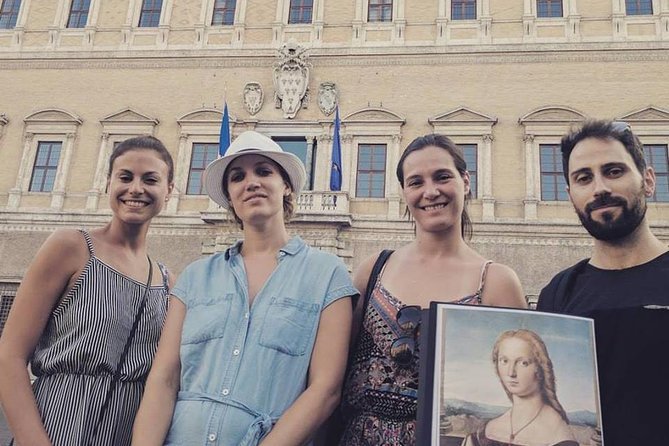
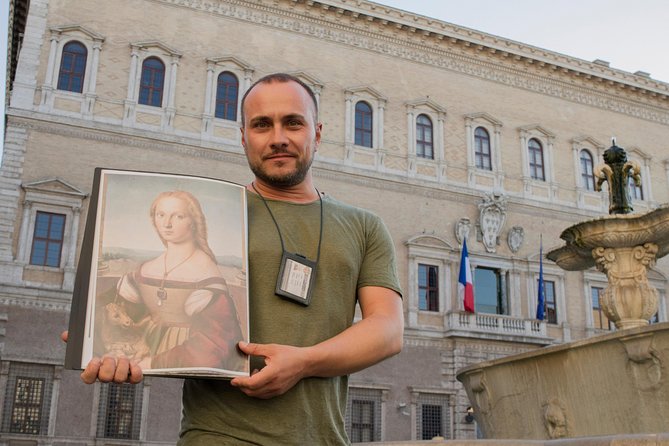
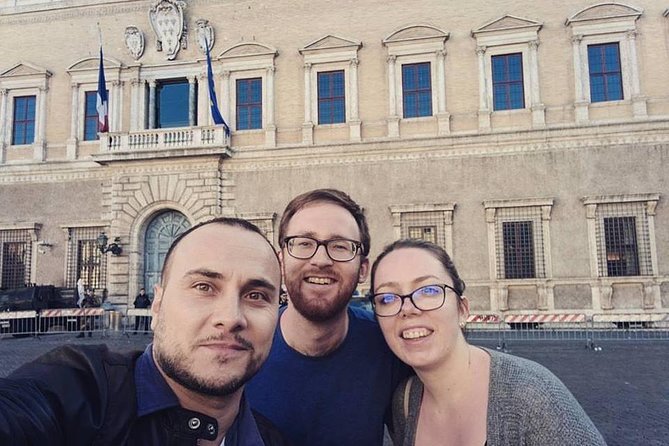
The tour ends at Piazza Farnese (Piazza Farnese 44), right by the Palazzo designed by Michelangelo, which is now the French Embassy. This final stretch brings you to the story of Giulia Farnese.
The ending is described as moving—built as a finale rather than another “random stop.” It ties together the tour’s central theme: women navigating power in systems where their choices mattered, but where history didn’t always give them a straightforward spotlight.
And you finish in a good location for getting your bearings. Piazza Farnese is central, close to Campo de’ Fiori and not far from Piazza Navona, with taxi stands and bus stops nearby.
Smart move after the tour: if you still have energy, continue on foot toward Campo de’ Fiori and see how the streets feel when they’ve been explained through people, not monuments.
Logistics that make the afternoon easy
This tour starts at 2:30 pm. With a roughly 3-hour run time, it’s a strong option for a day when you want a cultural experience that isn’t locked into a museum timetable.
Meeting point and route structure make it workable:
- Start: Basilica of St Mark Evangelist near Palazzo Venezia, Piazza di S. Marco 48.
- End: Piazza Farnese 44, close to major transit options.
You’ll also get a mobile ticket, and the tour is offered in English. The group limit of 18 keeps it intimate enough to ask questions, which is a big part of the value.
If you’re bringing a service animal, the tour allows it, and the tour is described as suitable for most travelers. And since it’s near public transportation, you’re not stuck in “only taxi” land.
Who this tour is best for (and who might not love it)
You’ll probably love this if you want:
- Renaissance Rome with a fresh angle beyond the standard checklist
- art context tied to real people, especially around Caravaggio
- a story-driven walk that mixes politics, social power, and places you can physically stand in
You might want to think twice if you prefer strictly “high art” lectures with no focus on courtesan culture. This tour centers women who often sat on the edge of what society wanted to openly admit. If that theme would bother you, it may not match your taste—even if the storytelling is excellent.
Should you book the Renaissance Scarlet Ladies Tour?
Book it if you want Rome to feel personal. This tour is priced reasonably for what you get: a guided story walk, multiple church and palace-linked stops, and the kind of character connections that help art and politics make sense in the same afternoon.
Skip it only if you dislike walking or if you want a purely mainstream highlights tour. Otherwise, this is one of those experiences that changes how you see the city after you leave the last stop—especially once you’ve learned how Caravaggio and the Borgia family fit into the larger social world.
If you can handle a few church visits and some pavement, I’d say it’s a strong choice for an English-speaking afternoon in Rome.
FAQ
How long is the tour?
The tour runs for about 3 hours.
What time does the tour start?
It starts at 2:30 pm.
How many people are in the group?
The maximum group size is 18 travelers.
Where do you meet and where does the tour end?
You meet at the Basilica of St Mark Evangelist near Palazzo Venezia, Piazza di S. Marco, 48, 00186 Roma RM, Italy. You end at Piazza Farnese, 44, 00186 Roma RM, Italy.
Is admission to the stops included?
The stops listed on the route show admission ticket free for each site.
What is the refund cutoff if I cancel?
You can cancel for a full refund up to 24 hours before the experience’s start time.