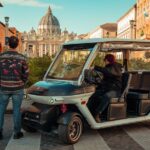
Rome feels huge; this cart tour fixes that. You’ll ride an electric golf cart through Rome’s must-sees and a handful of lesser-known viewpoints, with stops built for quick orientation instead of museum marathons. The payoff is a final gelato or tasting moment that turns the route into something you’ll actually remember.
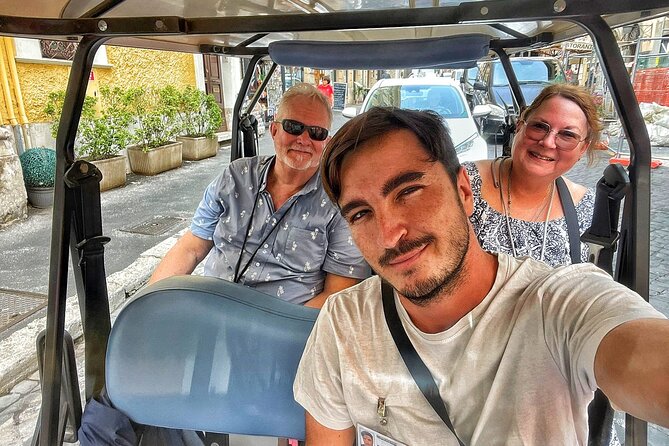
I really liked two things right away: the private pace and the smart use of the cart. With a friendly guide (names like Christian, Margarita, and Stefano show up in the mix), you get clear history cues without getting stuck in heavy foot traffic. And that included gelato at the end isn’t a tiny throwaway—people call it the best they had in Italy.
One thing to think about: at $118.95 per person, this feels premium compared with tours that bundle more ticketed sights. If you’re hoping for lots of entry tickets inside big venues, check your expectations, because this route is built around sights where the stops are quick and the cart does the heavy lifting.
In This Review
- Key highlights you’ll feel on the ground
- The basic idea: why this Rome tour works in 3 hours
- Where you start (and how pickup changes your morning)
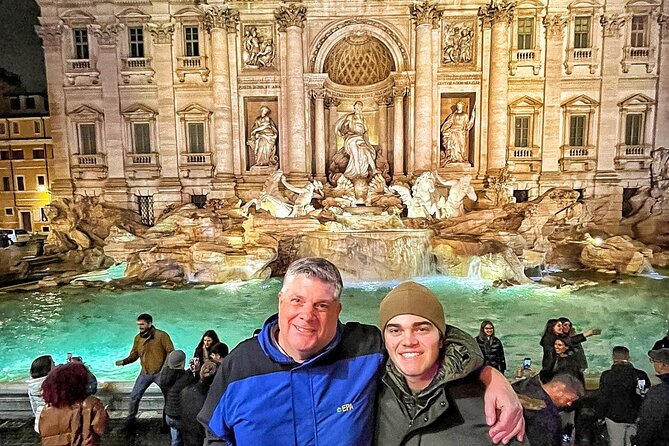
- Trevi Fountain: the postcard moment with an aqueduct backstory
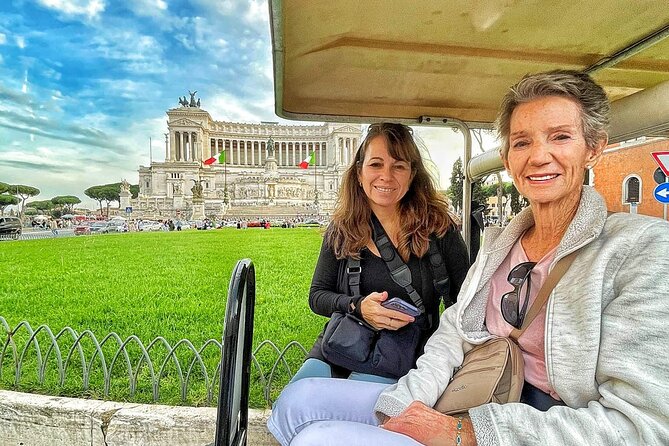
- Piazza Venezia and the Tomb of the Unknown Soldier
- Via dei Fori Imperiali: Rome’s straight-line “ancient highway”
- Teatro di Marcello: an open-air theatre that locals once filled
- Circo Massimo: Rome’s big stadium energy
- Giardino degli Aranci (Aventine): a viewpoint that changes your perspective
- Arch of Constantine: victory, power, and a turning point story
- Colosseum: the icon, explained in a way that helps you picture the action
- The first condominium in the world: a weirdly modern Rome moment
- Basilica di Santa Maria Maggiore: major Marian landmark, no long museum day needed
- Turo Aventi (Aventine): quieter hill walks after the big hits
- Gelato, wine, and snacks: where the included treat fits the day
- Price and value: is $118.95 per person worth it?
- The practical fit: who this tour suits best
- Should you book this private golf cart tour?
- FAQ
- How much does the Rome private golf cart tour cost?
- How long is the tour?
- Is the tour private or group-based?
- Is hotel pickup available?
- What language is the tour offered in?
- What sights are included on the route?
- Is admission required for the listed stops?
- What food or drink is included?
- Is the tour accessible for wheelchairs?
- What’s the cancellation rule?
Key highlights you’ll feel on the ground
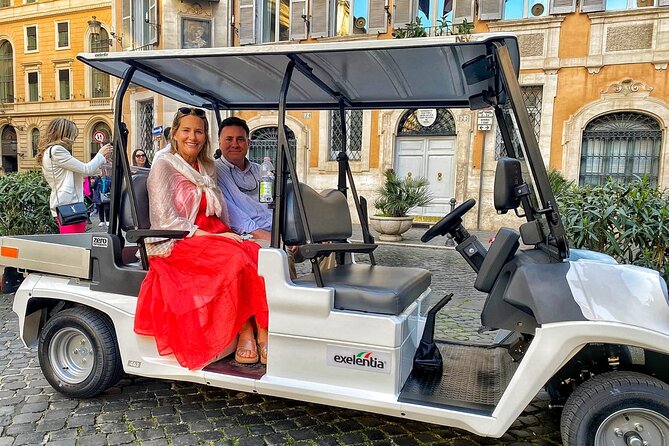
- Private electric golf cart that keeps you moving smoothly in Rome’s crowds
- A tight 3-hour loop covering Trevi, the Fori area, Aventine viewpoints, and the Colosseum
- Giardino degli Aranci (Aventine views) without committing to a big hike
- Circo Massimo area gives you a wide-open feel tied to chariot-racing Rome
- Gelato homemade or tasting wine + Italian snacks included
- English-speaking guide plus mobile ticket and pickup options
The basic idea: why this Rome tour works in 3 hours
This is the kind of tour that helps you understand Rome fast. You’re not trying to “do everything.” Instead, you get a structured route across key neighborhoods and landmarks—then you can decide what deserves a longer return trip.
The electric cart matters more than it sounds. Rome can be hot, crowded, and full of sudden stop-and-go pedestrian movement. The cart lets you cover ground with far less strain, and you still get out for real viewpoints like the ones on the Aventine hill.
You also get to travel privately. It’s just your group, so you’re less likely to feel like you’re herded through photo stops. That private setup is one of the reasons the tour scores so high.
You can also read our reviews of more private tours in Rome



Where you start (and how pickup changes your morning)
Your meeting point is Piazza della Repubblica, 48 (near/at the Anantara area). Pickup is offered, and you can start and end at your hotel, which is a huge help if you’re staying slightly off the center.
The end is listed back at the meeting point, but since hotel start/end is available, you can often avoid the “where do we go after” shuffle. Either way, the tour is designed so you’re not constantly reorganizing plans.
One practical note: you’ll want to be ready on time. With a 3-hour schedule and multiple short stops, being late can compress the whole flow.
Trevi Fountain: the postcard moment with an aqueduct backstory
Stop one is the Trevi Fountain, and you’ll spend about 20 minutes here. Yes, it’s famous. But the value isn’t only the famous image—it’s the context. The fountain sits at the junction of three roads, and it’s tied to the revived Acqua Vergine (Aqua Virgo) aqueduct that supplied water to ancient Rome.
That’s the kind of detail that makes future wandering easier. Once you know the aqueduct connection, Trevi stops being just a photo spot. It becomes part of a larger system—Rome as an engineered city.
Possible drawback: Trevi is a busy area. The tour doesn’t promise you a private bubble; instead, it uses timing and the cart route to keep the overall day comfortable.
Piazza Venezia and the Tomb of the Unknown Soldier
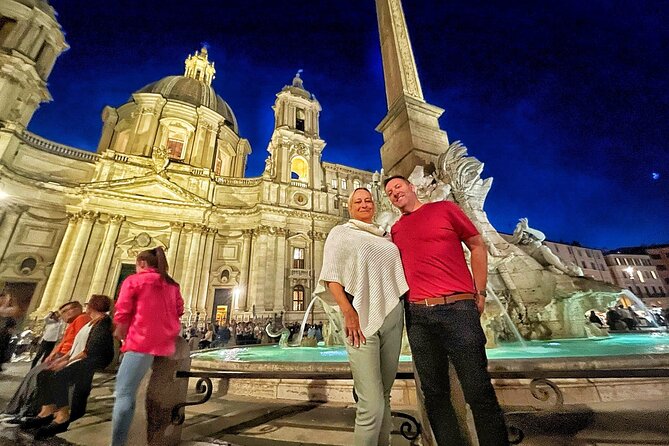
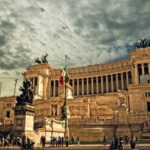
Next is Piazza Venezia, where you’ll spend about 10 minutes. One side of the piazza holds the Altare della Patria, which includes the Tomb of the Unknown Soldier and the big Monument to Vittorio Emanuele II.
This stop is short, but it helps you anchor one of Rome’s central political and national-history spaces. After seeing it, you’ll understand why so many major routes in the city “point” toward this zone.
If you’re the type who likes to connect monuments to the stories behind them, this is a good early stop. It sets the tone: Rome isn’t just ancient ruins—it’s also a modern capital with layers.
Via dei Fori Imperiali: Rome’s straight-line “ancient highway”
Stop three is Via dei Fori Imperiali, also about 10 minutes. The road runs straight from Piazza Venezia toward the Colosseum area, crossing parts of the Forum of Trajan, Forum of Augustus, and Forum of Nerva.
Why this matters: you get a rare kind of visual comprehension. Instead of turning corners and guessing where you are, the route’s linear layout gives you an instant sense of how emperors planned public space.
It’s also a nice “breather stop,” because you’re not asked to do a long walk. You’ll be out for a short moment, then back into the cart flow.
You can also read our reviews of more tours and experiences in Rome



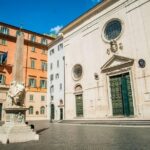

Teatro di Marcello: an open-air theatre that locals once filled
You’ll move to Teatro di Marcello for about 10 minutes. This ancient open-air theatre was built in the closing years of the Roman Republic, and it was used for performances of drama and song.
A quick stop here is actually a great choice. If you walk past ruins without knowing what they did, they can feel like leftovers. A theatre stop gives shape to daily life: people gathered for performances, not only spectacles.
One consideration: since the stop is brief, you’ll get interpretation more than “study time.” If you want to linger, you’ll likely want to return later on your own.
Circo Massimo: Rome’s big stadium energy
Stop five is Circo Massimo, with about 10 minutes set aside. This is the ancient Circus Maximus, a chariot-racing stadium and major entertainment venue.
Even if you don’t know much about Roman racing, the scale is the lesson. Being in the valley area between hills helps you feel how massive ancient gatherings were.
This is also one of those stops that pairs well with the cart. You get the wide view without having to do an endurance day just to reach it.
Giardino degli Aranci (Aventine): a viewpoint that changes your perspective
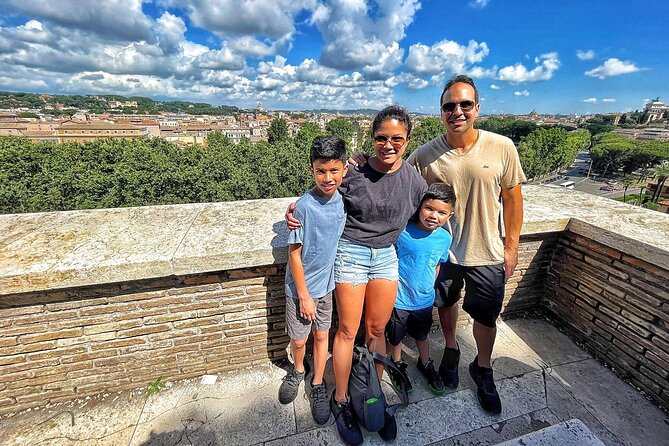
Then you reach Giardino degli Aranci, around 20 minutes, with one big goal: Rome rooftops and horizon views from the Aventine hill.
This stop is often where the tour earns its “quick but memorable” reputation. You’re seeing the city from a hillside angle, with less of the crush you feel closer to the core streets. It’s also a natural moment to slow down, take photos, and just breathe.
Possible drawback: viewpoints can still have crowds in peak hours. The tour can’t remove that reality, but the time block helps you avoid feeling rushed.
Arch of Constantine: victory, power, and a turning point story
Stop seven is the Arch of Constantine, with admission free and the cart helping you position for good viewing. Victory arches are Roman inventions, and this one is tied to Constantine the Great—including the story point that Christianity gained major power in Rome.
This is a stop that rewards you if you like symbols. Arches aren’t just decoration; they were political messaging in stone.
It’s also a bridge between the city’s “ancient Rome as imperial stage” feeling and the grand amphitheater ahead.
Colosseum: the icon, explained in a way that helps you picture the action
Stop eight is the big one: the Colosseum (15 minutes). The tour frames it as the Flavian amphitheater, where gladiators fought and emperors staged public entertainment.
Fifteen minutes isn’t enough to make you an expert. But it’s enough to give you a mental map—where the drama was, how the building was used, and why it became a symbol bigger than the events it hosted.
If you’re planning to return later for a longer visit, this stop can act like your “first lesson.” You’ll know where to focus.
The first condominium in the world: a weirdly modern Rome moment
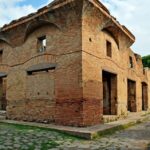
Between the Colosseum and the next basilica stop, the itinerary includes a site described as the first condominium in the world from ancient Rome.
Even without a long explanation time, this kind of stop is valuable because it breaks the “ancient Rome = temples only” mindset. It hints at everyday living—shared buildings, stacked spaces, and how city life actually worked.
How to get the most out of this moment: listen closely to the guide’s framing, then take 30 seconds to look at the structure from angles that show how people could have lived close together.
Basilica di Santa Maria Maggiore: major Marian landmark, no long museum day needed
Stop nine is Basilica di Santa Maria Maggiore, about 15 minutes. The key detail here is its importance as the largest temple dedicated to the Virgin Mary and described as one of the most important in the world.
This stop adds a different kind of Rome. You go from arena-level drama to a sacred centerpiece that has mattered for centuries. It’s also a nice contrast after the heavy “Roman power” energy of the earlier stops.
Since the stop is time-limited, plan to treat it like a meaningful glance. If you want more, you can usually build on it later.
Turo Aventi (Aventine): quieter hill walks after the big hits
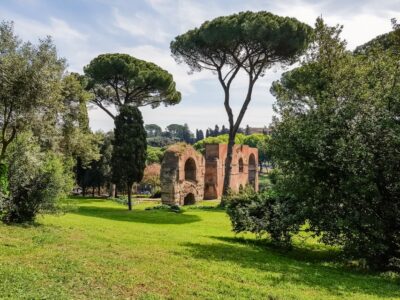
Finally, the tour includes Turo Aventi (the Aventine hill), about 15 minutes. The Aventine was once a suburb before becoming an important center of Christian worship. Today, it’s known for a more relaxed, walkable feeling away from the loudest modern streets below.
This is a smart final “release valve” stop. After iconic sights like Trevi and the Colosseum, you finish on a hill where Rome feels less like a checklist and more like a place you could wander slowly.
If you’re trying to balance sightseeing with comfort, ending here is a win.
Gelato, wine, and snacks: where the included treat fits the day
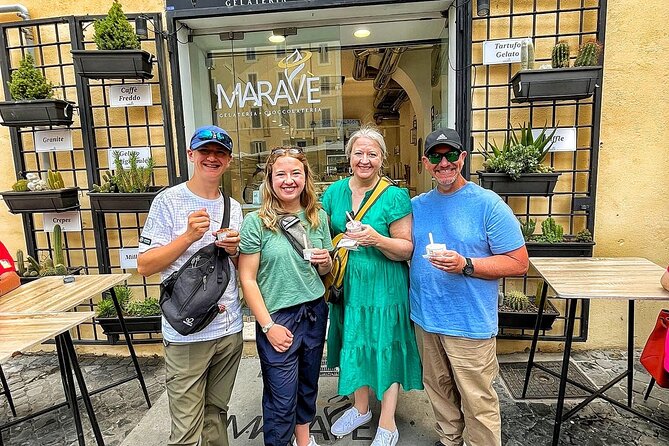
The tour includes gelato homemade or a tasting wine and Italian snacks. Practically, this is what turns the route from a fast drive-by into an experience.
Why it’s a good value move: instead of spending your own time hunting for a good dessert (or guessing where to stop), you get a built-in break. And because Rome has plenty of tourist traps, having this as part of the plan reduces decision fatigue.
In the feedback you provided, the gelato stop is repeatedly singled out as a top highlight—so if gelato is your thing, this alone is a strong reason to book.
Price and value: is $118.95 per person worth it?
At $118.95 per person for about 3 hours, this isn’t the cheapest way to see central Rome. The value comes from the combination:
- Private electric transport instead of walking the full loop
- Hotel pickup options (which can save time and energy)
- Multiple iconic and context-heavy stops packed into a short window
- Included tasting (gelato and/or wine + Italian snacks)
One trade-off you should be aware of: some tours that feel cheaper often include entry tickets to venues. This one focuses more on sights with free access (the stops are marked as free in the itinerary) and uses the cart to make the route efficient. So you’re paying for the experience design and guide time, not for paid museum admissions.
If you want a lot of indoor time or ticketed entry, you may feel like it’s not “enough.” If you want orientation, viewpoints, and a comfortable way to get your bearings fast, the price starts to make more sense.
The practical fit: who this tour suits best
This tour fits best if you:
- want a guided overview of Rome’s core landmarks without a long day of walking
- like the idea of a private schedule you can enjoy at a calmer pace
- want included food (gelato or wine/snacks) rather than squeezing meals between stops
- prefer English-speaking guidance
It’s also listed as suitable for wheelchair (foldable), and service animals are allowed, which is helpful if accessibility is part of your planning.
One more reality check: there’s no child under 2 years, so this is geared toward groups beyond toddler age.
Should you book this private golf cart tour?
I’d book it if your goal is: see the big stuff, learn enough to guide your next days, and stay comfortable. The electric cart, the short stop blocks, and the Aventine viewpoint moments make it a strong “first Rome” or “first Rome in a while” move.
I’d think twice if you’re chasing value through ticketed entries, or if $118.95 per person is hard to justify when you could self-tour more sites. Also, if you’re the type who needs long time in each stop, this won’t feel like a slow art-and-ruins day.
If you’re booking, I’d do it earlier rather than later—on average, this kind of tour is reserved about 65 days in advance. That gives you a better chance of the time slot that matches your pace and energy.
FAQ
How much does the Rome private golf cart tour cost?
It costs $118.95 per person.
How long is the tour?
The duration is about 3 hours.
Is the tour private or group-based?
It’s private. Only your group participates.
Is hotel pickup available?
Pickup is offered, and the tour can start and end at your hotel. If you don’t use pickup, the meeting point is Piazza della Repubblica, 48, near the Anantara hotel area.
What language is the tour offered in?
The tour is offered in English.
What sights are included on the route?
The tour includes Trevi Fountain, Piazza Venezia, Via dei Fori Imperiali, Teatro di Marcello, Circo Massimo, Giardino degli Aranci, Arch of Constantine, Colosseum, a stop described as the first condominium in the world from ancient Rome, Basilica di Santa Maria Maggiore, and the Aventine hill (Turo Aventi).
Is admission required for the listed stops?
The itinerary marks the listed stops as free admission, so you generally won’t need paid venue tickets for these particular moments.
What food or drink is included?
You’ll have gelato homemade or a tasting wine with Italian snacks included in the tour.
Is the tour accessible for wheelchairs?
Yes. It’s listed as suitable for wheelchair (foldable).
What’s the cancellation rule?
Free cancellation is available up to 24 hours in advance for a full refund. If you cancel less than 24 hours before the start time, the amount you paid isn’t refunded.