REVIEW · ROME
Tour of Rome:Trevi Fountain, Spanish Steps,Pantheon with Italian Ice Cream
Book on Viator →Operated by Raphael Tours & Events · Bookable on Viator
Rome hits fast, and this tour keeps up. You’ll get guided time in the Pantheon and nearby churches, plus quick hits at the Trevi Fountain and Spanish Steps, so the icons feel connected instead of random.
I love how the guide turns landmarks into stories. You learn how the Pantheon was dedicated to the worship of every god, and you actually look up through the oculus inside one of the world’s most famous domes.
I also like the practical pace: Trevi, Spanish Steps, and then a focused walk to Santa Maria sopra Minerva, finishing with Italian ice cream. One drawback to plan for: the Pantheon portion is short (about 20 minutes in the planned flow), so you won’t have hours to wander if the crowd crushes your timing.
In This Review
- Key highlights to know before you go
- Getting Oriented Fast at Via dei Condotti
- Trevi Fountain Timing: Legend, Photos, and 30 Minutes of Rome Magic
- Spanish Steps Without the Detour: A Clean View of the City
- Column of Marcus Aurelius: Where Modern Rome Touches Ancient Rome
- Entering the Pantheon: Gods, the Oculus, and Real Tombs
- Santa Maria sopra Minerva: Gothic Beauty on Pagan Ground
- The Ice Cream Stop: A Small Perk That Helps the Whole Walk
- Price and Value: What $325.32 Buys You in Real Terms
- Who This Tour Is Best For (and When to Adjust Expectations)
- Should You Book This Rome Walk with Pantheon and Ice Cream?
- FAQ
- How long is the tour?
- Where does the tour start?
- What sights are included?
- Is the tour offered in English?
- Is admission included for the Pantheon?
- Is Italian ice cream included?
- Is this a private tour?
- Is there a dress code for churches?
- Can children join?
- Can I cancel for a full refund?
Key highlights to know before you go
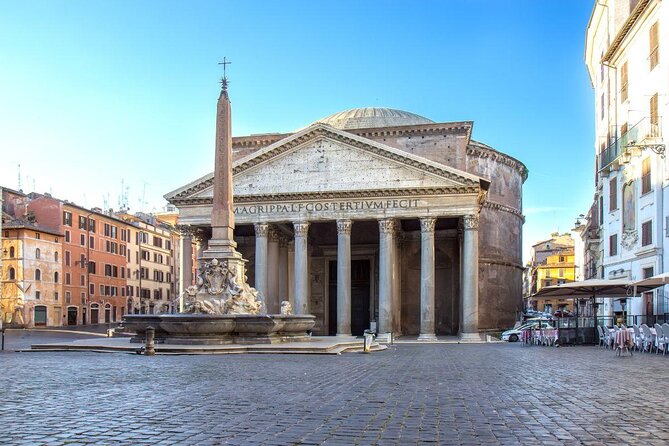
- Pantheon explained start-to-finish: gods, history, the open-air oculus, and what makes the dome so special
- Tombs you can actually see in the Pantheon: Raphael, King Victor Emmanuel II, and Queen Margherita
- Santa Maria sopra Minerva’s art and saints: Michelangelo’s statue plus major frescoes and altarpiece details
- A smart one-day hits plan: Trevi Fountain and Spanish Steps rolled into a short walking circuit
- Local guides with real energy: names like Tommaso, Mateo, Claudia, Giovanna, and Virginia show up often in standout experiences
- Italian ice cream included: a simple perk that keeps the walk feeling fun instead of just exhausting
Getting Oriented Fast at Via dei Condotti
This tour starts near central Rome at Via dei Condotti, 86. That’s a good thing. You’re dropped into the thick of the city, close to sights and public transport, so you’re not burning time getting from one “area” to another.
You’ll also circle back to the meeting point at the end, which matters in Rome. It sounds minor, but after a few stops—especially on a warm day—having a clean finish beats hunting for your next plan.
One practical tip: the exact meeting spot can feel confusing because the tour area is tight and landmarks cluster. One common note from past experiences is that the actual meet point may be on the side of the Pantheon area near Santa Maria sopra Minerva rather than straight at the front of the Pantheon. When you confirm, check the exact pin and arrive a few minutes early.
Finally, this is offered in English and you’ll have a local guide. You also get a mobile ticket, which is handy when you’re bouncing between churches and public squares.
You can also read our reviews of more tours and experiences in Rome



Trevi Fountain Timing: Legend, Photos, and 30 Minutes of Rome Magic
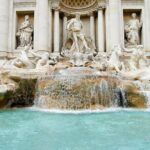
The first major stop is Fontana di Trevi. You get about 30 minutes, which is just enough time to do the two things Rome demands: take pictures and follow the legend.
Yes, you’ll toss a coin into the fountain and make a wish. But the real value here is having someone help you understand what you’re looking at—why this fountain became a film-famous symbol of Rome, and how the space works when it’s crowded. The guide’s job isn’t to wave you through; it’s to point you toward viewpoints that make sense even when everyone else is squeezing for the same angle.
Tickets aren’t included for this stop, but Trevi is an outdoor public landmark, so in practice you’re just paying for the tour experience, not entry.
If you’re trying to minimize stress, go into Trevi expecting crowds. The good news: 30 minutes is the right length for a first visit. You’ll see it, enjoy it, and then move on before the day melts your patience.
Spanish Steps Without the Detour: A Clean View of the City
Next you head to the Spanish Steps area. This stop is also about 30 minutes, and it’s a smart bridge between the big tourist icon photos and the more historical weight of the Pantheon.
This part of Rome is great for getting your bearings fast. The steps look dramatic from multiple angles, and even if you don’t climb all the way up, you can still take in the geometry and the surrounding streets that feed into the shopping lanes.
The tour keeps things efficient. You’re not stuck wandering without a plan. Instead, you get a guided walk that gives the Spanish Steps context—why they matter in the city’s image—and helps you connect them to the other landmarks you’ll see in the same morning or afternoon.
One small consideration: if you’re going in hot weather (and Rome can do that), you’ll feel the walking more than you expect. Past experiences often recommend choosing morning timing in summer, when the heat hasn’t fully set in.
Column of Marcus Aurelius: Where Modern Rome Touches Ancient Rome
Then comes a slightly less obvious but very useful stop: the Column of Marcus Aurelius. It’s paired with views of the government district nearby (including the Parliament area), so you can look at Rome’s present while still spotting traces of its imperial past.
This stop runs about 30 minutes, with no admission cost. You also get an extra layer of context: the Temple of Hadrian is nearby, and the column is tied to the story of Antoninus Pius building an amazing structure in appreciation of his ancestor.
Why I like this stop for readers: it breaks the “only famous tourist spots” rhythm. Trevi and the Spanish Steps are iconic, but you can start to feel like Rome is just postcards. Marcus Aurelius helps you see the continuity—how the city kept building over itself while still leaving clear signals of its older identities.
Entering the Pantheon: Gods, the Oculus, and Real Tombs
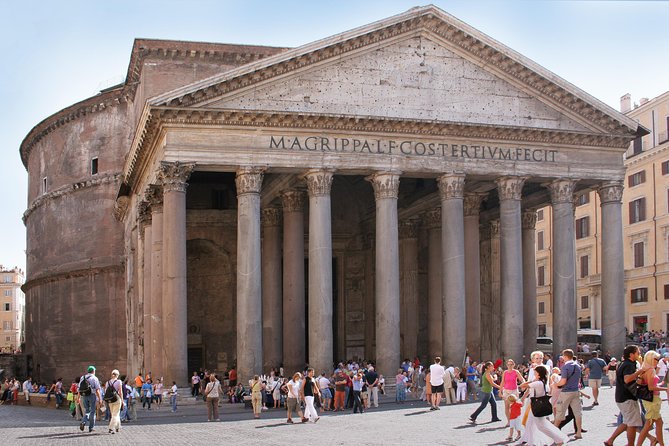
The Pantheon is the centerpiece. You’ll enter and get guided time inside, including the story of how it was dedicated to worship of every god. The guide also explains what’s known about its history and why this building is such a standout.
The Pantheon’s design is the star:
- You’ll step beneath the dome, still famous as the largest unreinforced concrete dome in the world.
- You’ll look up through the oculus, the open-air circle at the top that lets light pour in and changes the mood of the interior.
This stop is where the tour’s “do it with a guide” value really shows. Without explanation, the Pantheon can feel like a gorgeous room you’ve already seen in photos. With a guide, it becomes a working lesson in Roman religion and architecture.
You’ll also see important tombs inside: Raphael, King Victor Emmanuel II, and Queen Margherita. That mix of Renaissance and modern Italian history layered into an ancient space is one of those details you’d likely miss if you were going solo.
Two practical notes:
1) Dress matters. For places of worship, you’ll need knees and shoulders covered—no shorts or sleeveless tops. You could be refused entry if you don’t match the rule.
2) Time inside is limited. The planned flow gives about 20 minutes at the Pantheon. If you want long, slow contemplation, you might find the pace a bit tight—especially during peak crowd hours.
People consistently highlight the guide effect here, with standout experiences credited to names like Mateo and Claudia, and one common theme is that guides know how to keep the group moving without turning the visit into a sprint.






Santa Maria sopra Minerva: Gothic Beauty on Pagan Ground
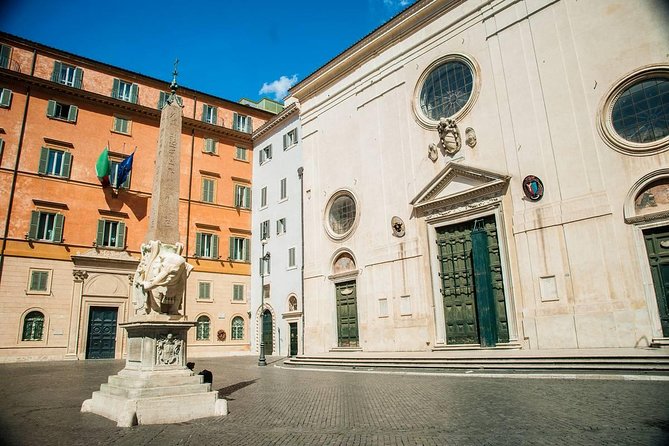
After the Pantheon, the tour continues to Basilica of Santa Maria sopra Minerva. This church sits on the site of three pagan temples, and that fact alone gives you a deeper read on the space. Rome’s religious layers are visible even when you’re just standing in a doorway.
Inside, you’re set up to notice specific art and major works:
- A statue by Michelangelo
- 15th-century frescoes
- An altarpiece attributed to Fra Angelico
- An altar that covers the headless body of St. Catherine of Siena
That’s a lot of weight for a single stop, and it’s exactly why guides matter. You’ll get pointed to the right features so you’re not just walking through and hoping something clicks.
Also: there can be substitutions. One set of experiences notes that when Santa Maria sopra Minerva was closed due to construction, the guide took the group to St. Ignatia (also spelled Ignatia in some references). So even if your church plan changes, the guide’s job is to keep you in great, relevant territory rather than stuck outside.
The Ice Cream Stop: A Small Perk That Helps the Whole Walk
This tour includes Italian ice cream. That might sound like a minor detail, but it’s more strategic than it looks.
A three-hour walking experience around Rome’s densest attractions can turn into “stand, hurry, look, repeat.” The ice cream is a pressure release. It gives you a quick reset so your brain stays engaged instead of drifting into heat fatigue.
If you’re planning your day, treat the ice cream as your mental break. Take a few minutes, cool down, and then go back out for the final stretch feeling human.
Price and Value: What $325.32 Buys You in Real Terms
At $325.32 per person for about 3 hours, this isn’t a budget tour. The real question is whether you’re paying for tickets and views—or for the human layer that makes Rome make sense.
Here’s what you do get that supports the price:
- A local guide with a track record of strong experiences (multiple guides are singled out by name, including Tommaso, Mateo, Claudia, Giovanna, and Virginia)
- Private tour format, meaning only your group participates
- A focused plan that hits big icons (Trevi and Spanish Steps) and then goes inside the big museum-level spaces (Pantheon and a major church)
- Key inclusions like Italian ice cream
This price can feel more reasonable if you’re traveling as a small group and sharing the cost of a guided visit that would otherwise be harder to assemble yourself. You also get a guided explanation layer, which is where the Pantheon and church stops really pay off.
Where cost awareness comes in: if you mainly want to take photos and wander without history, you may not squeeze enough value out of a guided format. But if you like your Rome with context—religion, architecture, and the “why does this place look like this” answers—this is aiming in the right direction.
Who This Tour Is Best For (and When to Adjust Expectations)
This fits best when you want a guided overview that stays efficient. It’s also friendly for many traveler types because it’s built as a short, paced walk with a local guide keeping you oriented.
It’s especially good for:
- First-time visitors who want Trevi and the Spanish Steps without losing the day
- People who love architecture and art and want details pointed out (Pantheon and Santa Maria sopra Minerva are packed with them)
- Families who need patient guidance—some experiences specifically mention a guide being very patient with a toddler
Adjust expectations if:
- You want a long, slow Pantheon visit. The stop is short, and Rome crowds can tighten your timing.
- You’re traveling in peak heat. If you’re going in mid-August or similar, you’ll likely do better choosing a morning slot when possible.
Should You Book This Rome Walk with Pantheon and Ice Cream?
If you want Rome in about three hours, with the Pantheon and Santa Maria sopra Minerva done the smart way, I’d book it. The guide-driven details—Pantheon as a temple of every god, the dome and oculus, plus the real tombs inside—are hard to replicate on your own without turning your trip into a DIY research project.
I’d only hold back if you’re chasing maximum time inside the Pantheon or you prefer unguided wandering. In that case, you might want a longer, more flexible plan.
If you’re somewhere in the middle—curious, short on time, and ready for a guided hit of the city’s most famous sights—this tour is a strong fit. Just show up dressed right for churches, check the exact meeting pin, and plan for crowds.
FAQ
How long is the tour?
It runs for about 3 hours.
Where does the tour start?
The start location is Via dei Condotti, 86, 00187 Roma RM, Italy.
What sights are included?
The tour covers Trevi Fountain, Spanish Steps, the Column of Marcus Aurelius area, the Pantheon, and Basilica of Santa Maria sopra Minerva, plus Italian ice cream.
Is the tour offered in English?
Yes, it’s offered in English.
Is admission included for the Pantheon?
Yes. The Pantheon admission ticket is listed as included.
Is Italian ice cream included?
Yes, Italian ice cream is included.
Is this a private tour?
Yes. Only your group participates.
Is there a dress code for churches?
Yes. No shorts or sleeveless tops are allowed, and knees and shoulders must be covered. You may risk refused entry if you don’t meet the rule.
Can children join?
Children must be accompanied by an adult.
Can I cancel for a full refund?
Yes, free cancellation is available up to 24 hours in advance for a full refund.