REVIEW · ROME
Rome with Golf Cart at Night with Pizza & Ice Cream
Book on Viator →Bookable on Viator
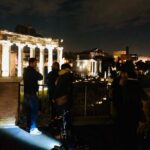
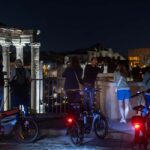
Rome at night feels like a movie.
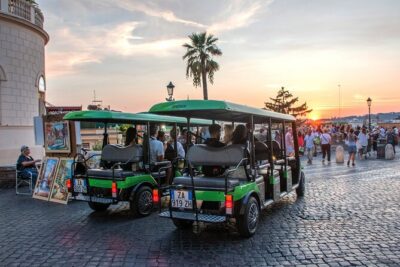
This tour is built for easy night sightseeing: a relaxed golf cart route lets you hop between big-name sights without grinding through crowds and blazing afternoons. I also like that the evening includes a real Roman meal—mozzarella with cured meats, then pizza or Roman pasta, finished with cappuccino and tozzetto—plus artisan gelato later. One thing to consider: the route includes a lot of cobblestones and walking for short stretches, so if you’re sensitive to rough ground, plan for small on-and-off steps.
The timing also helps. Starting at 6:30 pm means you’ll see Rome lit up while temperatures usually feel more comfortable than midday. You’re also in a small group (max 7), which keeps the stops from turning into a herding exercise.
In This Review
- Quick take: Why this Rome at Night golf cart + food tour works
- First, why night in Rome is the smart move
- Pickup and the 4-hour rhythm that keeps you moving
- Piazza Navona: the cobblestone square made for night photos
- Pantheon: seeing the outside first, then deciding if it’s worth going in
- Trevi Fountain after dark: size, drama, and that famous glow
- Spanish Steps: a quick look at the living-room view of Rome
- Piazza del Popolo and the gateway feeling of the old city
- Piazza Farnese and Piazza Venezia: elegant stops that slow your eyes
- Circo Massimo: a massive stadium space in miniature time
- St. Peter’s Square at night: the colonnades and the statue count
- Campo de’ Fiori: a lively square stop with market roots
- Dinner in a Roman restaurant: the meal is built into the value
- Gelato after dinner: artisan ice cream as the nightcap
- Colosseum and Pantheon tickets: what you pay extra and why it can be worth it
- Price and logistics: a small group for a reason
- What you’ll like most (and who this suits best)
- Who leads this tour: Onofrio and Riccardo’s different strengths
- Should you book this Rome at Night golf cart + pizza and ice cream tour?
- FAQ
- What time does the tour start?
- How long is the experience?
- Is hotel pickup offered?
- How many people are in the group?
- What language is the tour offered in?
- What’s included in the dinner?
- Is Pantheon entrance included?
- Is Colosseum entrance included?
- What happens if weather is bad or the tour can’t run?
Quick take: Why this Rome at Night golf cart + food tour works
Small-group pace: max 7 people means you get time to look and ask questions.
Night views you’ll remember: Trevi and the big piazzas look better after dark.
Meal is part of the ticket value: dinner plus gelato is included, not an optional add-on.
You get a driver who talks: guides like Onofrio and Riccardo are known for clear, story-driven commentary.
Two paid attractions only: Pantheon and Colosseum entrances are the only main paid items, while most stops are free to view.
First, why night in Rome is the smart move
If you only have so many days in Rome, you want two things: strong highlights and less friction. This tour gives you both. Going at night helps because you’re not fighting the harsh daytime light or peak daytime crowds, and the air often feels kinder for walking in short bursts.
The golf cart is more than a gimmick. It’s a practical way to cover ground quickly and keep your evening flowing. You’ll still get out at the key stops for photos and a quick wander, but the cart keeps you from burning energy on constant backtracking.
And because you’re on a set route, you don’t have to guess where to go first. That matters on a first night, especially if you just arrived and don’t want to start day one by navigating complicated streets alone.
You can also read our reviews of more evening experiences in Rome
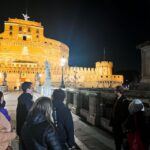
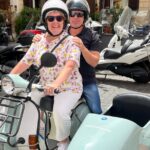
Pickup and the 4-hour rhythm that keeps you moving
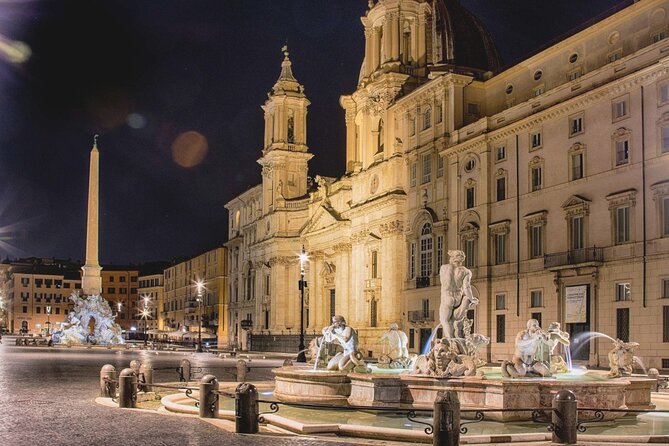
The tour runs about 4 hours (approx.) and starts at 6:30 pm. You’ll be picked up from your hotel if it’s within the city center. That alone can save you time and stress, because you’re not trying to line up public transport or taxis right after a long travel day.
At night, Rome can also feel a little chaotic—traffic, crowds, and street closures happen. The cart route helps you roll with it. Your guide will handle the turning points and detours as needed, and a few reviews mention they’ll adapt when access to certain areas is tricky.
The best part: you’re not stuck in one place for too long. You’ll see the major squares and fountains, then you’ll switch gears into dinner and dessert, and finish with more night sights.
Piazza Navona: the cobblestone square made for night photos
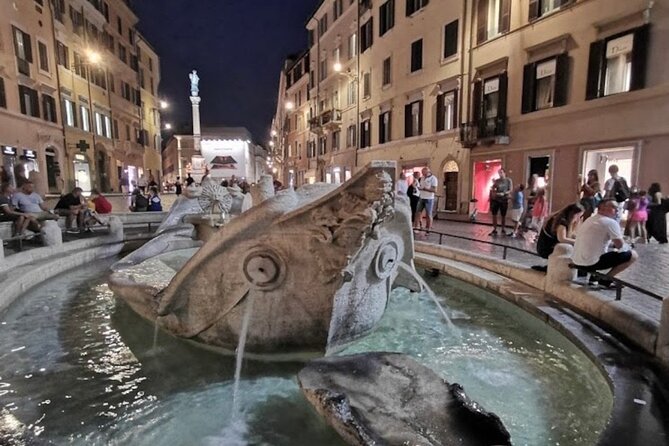
Your evening begins at Piazza Navona, an elongated cobblestone square with a classic Roman-feeling layout. It’s shaped by the old Stadium of Domitian, which is one reason it doesn’t feel like a generic modern plaza—you can actually sense the past in the geometry.
Look for the three fountains and the Egyptian obelisk. At night, the lighting makes the stone and water look softer, and it’s much easier to take photos without spending half your time dodging daytime crowds.
Practical note: this stop is short (about 20 minutes). You’ll want to decide quickly what you want—fountain photos, a quick loop for the obelisk angle, or a minute to just sit and watch the atmosphere.
Pantheon: seeing the outside first, then deciding if it’s worth going in
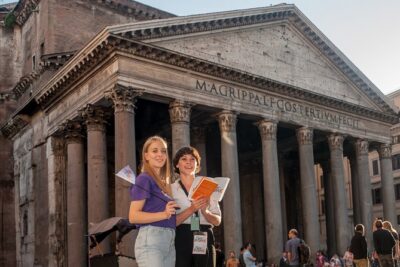
Next up is the Pantheon, one of Rome’s most famous ancient buildings. Even if you’re not entering, the architecture hits hard, and at night the exterior feels more dramatic than you’d expect.
One key detail for planning: Pantheon entrance is not included, and it costs €7. The stop time is brief (about 15 minutes). That means you’ll either enjoy the view and skip entry, or you’ll use that window to go inside—if you do, arrive ready to move.
If you’re the type who likes interiors—art, scale, details—this is the one extra payment that often feels justified. If you prefer to spend your time on multiple exterior highlights and photos, you can treat this as an outside moment and keep moving.
Trevi Fountain after dark: size, drama, and that famous glow
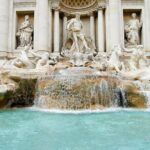
Then comes Trevi Fountain, free to view and a major photographic target. It’s enormous—about 20 meters wide and 26 meters high—and the big scale shows up even before you read any facts.
At night, you’ll get the real payoff: the lighting gives the fountain a warmer tone, and the whole scene feels more like a set than a tourist checkpoint. It’s the kind of stop where you can spend a few minutes just watching people, then capture one or two good angles without rushing.
Stop time is around 20 minutes. That’s enough for photos, a quick look around, and a short moment to take in how the water and stone feel together in the dark.
You can also read our reviews of more tours and experiences in Rome



Spanish Steps: a quick look at the living-room view of Rome
The Spanish Steps area is next, with about 20 minutes allotted. The focus here is the Trinità dei Monti staircase in travertine, built in the 18th century, plus the church that dominates the area.
This stop is free and designed for quick sightseeing. The main downside is also the nature of the place: it’s photogenic, which means it can get busy. Still, at night it tends to feel calmer than daytime and the stair shape reads really well in low light.
If you want a tip: pick one “hero” photo early, then wander slightly for a second angle. The cart brings you close, but you’ll still get the best results by moving a bit on foot.
Piazza del Popolo and the gateway feeling of the old city
Next is Piazza del Popolo, a junction of major historic streets and a big entrance point in Roman times. It sits beneath the Pincio gardens, and you get a sense of how this area functioned like a hub.
Your time here is short (about 10 minutes), so I’d treat it as a quick orientation moment. This is one of those stops where you don’t need to overthink it—you just want to see the space, notice the street geometry, and then keep rolling.
Because it’s free and outside, it’s a good way to add variety without draining your evening.
Piazza Farnese and Piazza Venezia: elegant stops that slow your eyes
From there, the tour gives you a couple of elegant squares that feel more “Roman neighborhood” than “checklist stop.”
Piazza Farnese is elegant and aristocratic-feeling, anchored by two large fountains and the building that has housed the French Embassy since 1874. Your time is just a few minutes (about 5 minutes), but it’s enough for a quick reset in the evening pace.
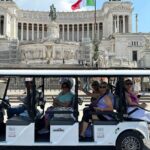
Then comes Piazza Venezia, dominated by the Vittoriano. It’s one of the national symbols, and it’s surrounded by monumental buildings, including Palazzo Venezia. Again, it’s short (about 5 minutes), so think of this as a “big picture” break—good for understanding where you are in the city’s grand layout.
Circo Massimo: a massive stadium space in miniature time
You’ll also pass Circo Massimo—an ancient stadium site between the Aventine and Palatine. The old scale was wild: a capacity once estimated around 300,000 spectators.
Your stop is brief (around 15 minutes), but this is one of the best places on the route to get an instant lesson in Roman ambition. You might not feel the “arena” the way you do at the Colosseum, but you’ll still understand why Rome was built to host huge events.
If you want to do one thing here, do this: look across the space and picture the crowds. Even a short stop works if you try to visualize what the ground was meant to handle.
St. Peter’s Square at night: the colonnades and the statue count
Next is St. Peter’s Square, one of the most impressive civic spaces in the world. The square is huge—about 340 meters wide—with an elliptical arc and massive colonnades. The detail that really sticks is the huge number of columns and statues lining the top.
Your stop lasts about 25 minutes, and it’s free to view. The nighttime lighting helps everything read more clearly: the geometry, the scale, and the feeling of space around you.
A practical caution: access can change with major events. One account mentions a situation where parts of the Vatican area were closed off due to a Jubilee-related setup. If you’re traveling during a big Vatican season, expect your guide may need to adjust the exact viewing approach.
Campo de’ Fiori: a lively square stop with market roots
Then you’ll end up at Campo de’ Fiori, built in an area connected to old Roman temple grounds. Its name comes from the idea of a flowery meadow/vegetable gardens in the 15th century.
Your time is short (about 10 minutes). This stop gives you a change of pace right before dinner—less monumental, more everyday Rome energy.
If you want something low-effort: stand still for a minute and watch how the square flows. You’ll get a feel for how local life mixes with the tourist route.
Dinner in a Roman restaurant: the meal is built into the value
This is the part that makes the tour feel complete. Dinner is included (about 1 hour), and it’s not a sad “tour snack.”
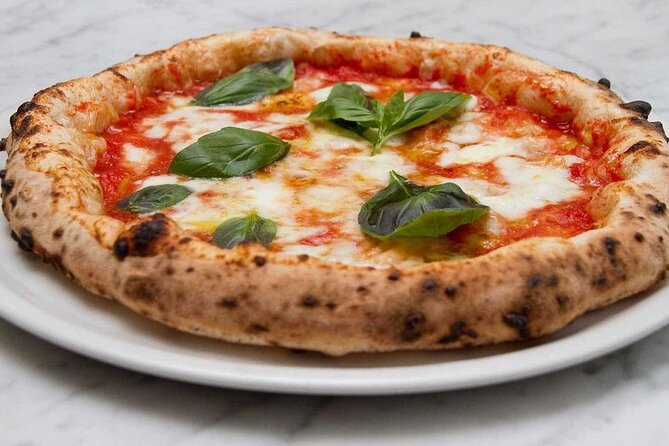
You’ll start with a land starter that features mozzarella with cured meats. Then you choose between a first course of Roman pasta (examples include Amatriciana, Carbonara, and Cacio e Pepe) or pizza. Dessert is described as tozzetto, with cappuccino included.
The biggest value here is timing. If you’ve spent most of your day wandering, you often end up eating late or picking something random close to your last stop. This meal plugs right into the night rhythm, so you’re not scrambling.
And yes, the vibe matters. Multiple guides are described as friendly and humorous, which makes dinner feel like part of the evening rather than a rushed checkbox.
Gelato after dinner: artisan ice cream as the nightcap
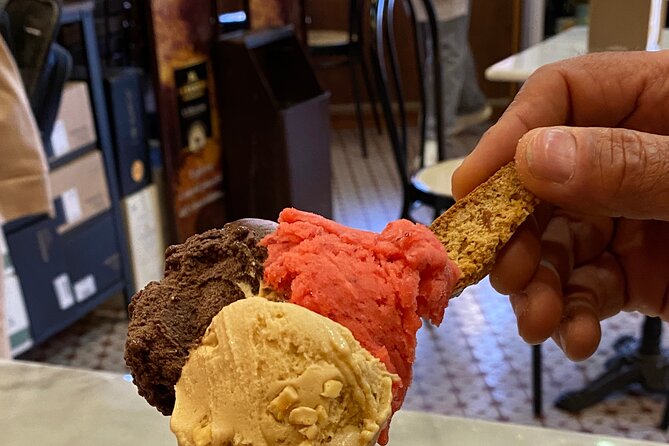
After dinner, you get Italian artisan ice cream. It’s a simple ending, but it’s a smart one. You just walked and toured, then you sit down, eat something sweet, and let the evening land.
The gelato stop also helps with pacing. It’s a gentle transition from major sights to calmer final moments before pickup back to your hotel.
If you’re the kind of person who hates ending a tour too abruptly, this soft landing is a real plus.
Colosseum and Pantheon tickets: what you pay extra and why it can be worth it
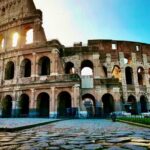
Two major stops have entrance fees that are not included: Pantheon (€7) and the Colosseum (from €20). Those are the only “budget surprises” if you plan to go inside.
So here’s the math-minded way to think about value. The tour price is $203.95 per person, and your dinner plus gelato are included. When you also consider that you’re getting guided movement between many highlights—most of which are free exterior views—the extra ticket fees don’t feel like the whole price story. They’re add-ons for the moments you personally care to enter.
My practical advice:
- If you want interiors at both places, budget the extra entrance costs.
- If you only care about exterior seeing and photos, you can still get a strong Rome-at-night experience without paying for both interiors.
Price and logistics: a small group for a reason
At $203.95, you’re paying for three things: night access, guided stops, and the included meal. This tour isn’t trying to be the cheapest way to see Rome. It’s trying to be the smooth way.
The small group size (max 7) matters because night tours can get rough fast—more people means more waiting, less flexibility, and worse photo timing. Here, you’ll generally move as a compact group, which keeps the evening from turning into constant regrouping.
Also, the pickup from your hotel within the city center is a big quality-of-life detail. Rome is easy to enjoy when you’re not wasting time figuring out where to meet.
What you’ll like most (and who this suits best)
This tour fits best if you want an easy first-night overview with real food as part of the package. It’s a great pick if:
- you’re short on time and want multiple must-sees in one evening
- you prefer guided context over wandering solo
- you like the idea of seeing Rome lit up without overheating and without major crowd grinding
- you want a dinner plan that’s not a last-minute scramble
It’s also a good fit for couples. The pacing works well when you want to talk and take pictures without everyone moving at a sprint.
One consideration: because you’re out at multiple stops, you’ll still do some walking. It’s not a full “sit-and-watch.” Comfortable shoes help.
Who leads this tour: Onofrio and Riccardo’s different strengths
Guide style matters because the whole point of a night tour is story plus motion. A couple of guides come up clearly in the experience people describe.
Onofrio is mentioned as very informative, with explanations that make the history of each site easier to picture while you’re moving through the city. Riccardo is also noted for being kind and friendly, with strong background knowledge in art that adds extra meaning to what you’re seeing. Even different guide names show a common theme: humor, helpful pacing, and a focus on keeping you engaged.
If you’re the type who likes facts but also appreciates a human voice, you should feel good about the guiding.
Should you book this Rome at Night golf cart + pizza and ice cream tour?
If you want a first-day or first-night Rome “best-of” that feels relaxed and tastes like Rome, I’d say yes. The included dinner and gelato make it more than a sightseeing ride, and the small group size keeps the evening from feeling like a bus tour.
I’d skip it (or at least consider a different option) if your priority is long time in one or two places, not a sweep across many highlights. The stops are designed to be efficient. You’ll see a lot, but you won’t have hours to linger at every single site.
If you’re booking now, my best call is this: pick a night soon after you arrive so you can use the route to orient yourself. Rome makes more sense once you’ve seen it lit up and driven through—then your next day wander feels easier.
FAQ
What time does the tour start?
It starts at 6:30 pm.
How long is the experience?
It lasts about 4 hours.
Is hotel pickup offered?
Yes. Pickup is available from your hotel within the city center.
How many people are in the group?
The maximum group size is 7 travelers.
What language is the tour offered in?
The tour is offered in English.
What’s included in the dinner?
Dinner includes a starter with mozzarella and cured meats, then either Roman pasta options or pizza. Cappuccino and tozzetto are included as well.
Is Pantheon entrance included?
No. Pantheon entrance is not included, and the cost is listed as €7 per person.
Is Colosseum entrance included?
No. Colosseum entrance is not included. Prices are listed as starting from €20 per person.
What happens if weather is bad or the tour can’t run?
The experience requires good weather. If it’s canceled due to poor weather, you’ll be offered a different date or a full refund.