REVIEW · ROME
Domus Aurea Tour with WEST WING & Virtual Reality Experience
Book on Viator →Operated by Open Mind Tours · Bookable on Viator
Nero’s palace is buried under your feet. On this Domus Aurea tour, you get a short pre-visit story about Nero and the city after the great fire, then head inside for access to the palace spaces (including the recently reopened West Wing) with a licensed English-speaker. The VR reconstruction is the wow factor, because it helps you picture the gold, color, and scale that don’t survive on the walls today.
I especially like the two-part structure: first an outside guide-led orientation that gives you the timeline, then the internal site tour itself so you’re not wandering through ruins with zero context. I also like the small-group size (max 22), which keeps the pacing realistic for a 2-hour visit underground. One thing to consider: the experience has handoffs, so your outside guide won’t follow you into every internal segment.
In This Review
- Key things that make this tour worth your time
- Domus Aurea, West Wing, and VR: what you’re really seeing
- The 2-hour flow: why the pacing works (and when it can annoy you)
- Entering Domus Aurea: the “mini-Pompeii” feeling
- East Wing and the West Wing: two sides of the same power story
- VR reconstruction: turning decoration fragments into a whole palace
- The guides: what to expect from the licensed historian/archaeologist role
- Price and value: what $84.19 buys you in real terms
- Logistics you’ll feel on the ground: meeting point, walking, and comfort
- Who this tour fits best
- Should you book Domus Aurea with West Wing and VR?
- FAQ
- How long is the Domus Aurea tour with the West Wing and VR experience?
- Is the Domus Aurea entry skip-the-line?
- What does the virtual reality part include?
- How big is the group?
- Where do we meet for the tour?
- What language is the guide?
- Are snacks included?
Key things that make this tour worth your time
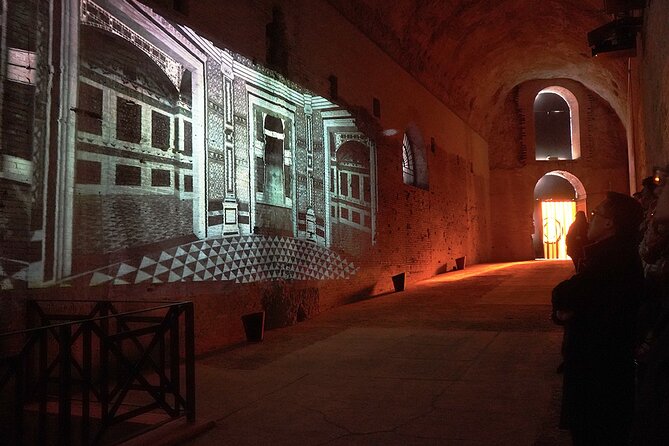
- Skip-the-line, direct access to a site with limited entry.
- Small group capped at 22 so you spend less time waiting and more time looking.
- Nero-focused, licensed guide orientation to connect the ruins to the real political story.
- East plus recently reopened West Wing so you’re not seeing just one corner of the complex.
- VR glasses to reconstruct what the palace looked like in its prime.
- Underground cool-down: it can feel much cooler inside than the Rome heat outside.
Domus Aurea, West Wing, and VR: what you’re really seeing
Domus Aurea, Nero’s Golden House, sits in a weird place in Rome’s story. It’s both an archaeological site you can walk through today and also a political move Nero made after the city suffered a disaster. Just a few years after the great fire destroyed much of Rome, Nero used the damaged areas to expand his palace on the Palatine Hill. The result was a complex that felt like power made physical—part residence, part statement.
The palace didn’t last. Nero’s popularity collapsed as discontent grew, and he died by suicide in June 68 AD. That mattered, because the next emperor, Vespasian, chose a different direction—building the Colosseum on top of what had been Nero’s lake area. So as you visit Domus Aurea now, you’re looking at an “in-between” phase: an emperor’s dream that didn’t survive, later reshaped by new Roman priorities.
The West Wing is the reason this specific tour is attractive if you’ve already studied Domus Aurea photos online. A “recently reopened” wing means you’re more likely to get newer views and fresher access compared with the tired, over-circulated set of images you’ll see elsewhere.
Then there’s VR. This isn’t just a novelty headset you wear for a minute. The VR portion is built to help you translate what you see in fragments—ruins, walls, and remaining decorative traces—into a coherent sense of how the space may have appeared at its peak.
You can also read our reviews of more tours and experiences in Rome.



The 2-hour flow: why the pacing works (and when it can annoy you)
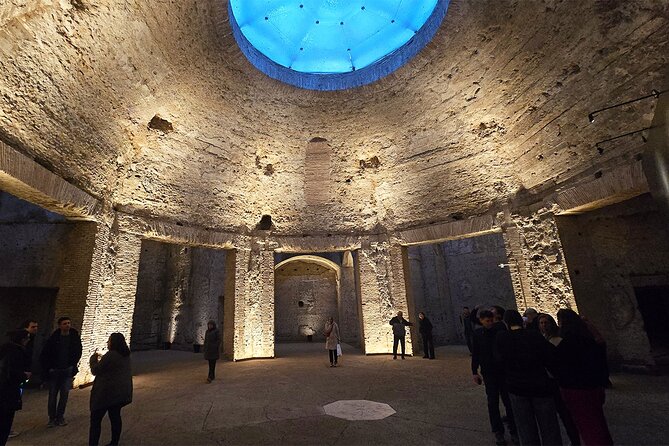
This tour runs about 2 hours. You start at Vle della Domus Aurea, 00184 Roma RM and you end back at the same meeting point. With Domus Aurea, timing is tight for a simple reason: limited access and controlled entry mean you can’t treat this like a “wander at your own pace” stop.
What you’ll feel is a planned sequence:
- A pre-visit orientation outside the site
You’ll hear the core story first: the fire, Nero’s expansion, why he chose this setting, and how the political backlash pushed events toward his downfall. The point is not to bury you in dates. It’s to help you recognize the “why” behind the architecture as you step into the space.
- Entry into the site for the internal tour
Domus Aurea has its own internal guides. Your outside guide leads you to the entrance area and gives the context, but you’ll then be handed over so the internal team can run the official portion.
- VR reconstruction
The VR experience is timed so you can use it as a visual bridge. If you’re still staring at ruins like they’re random walls, VR helps your brain assemble the original picture.
Here’s the balanced bit: this structure is usually a strength because it prevents information overload. But if you strongly prefer one guide to carry you start-to-finish, the handoff can feel like you lost momentum. The upside is that the outside talk sets the stage fast, and then the internal tour handles the specifics of what’s in front of you.
Entering Domus Aurea: the “mini-Pompeii” feeling
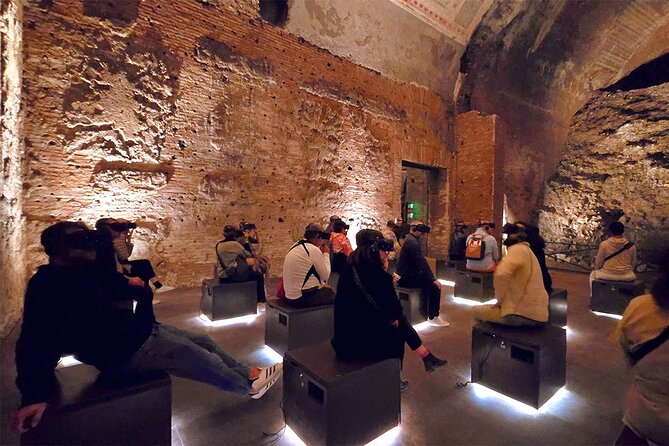
People often describe Domus Aurea as if it’s a hidden time capsule, and there’s a real reason the comparison feels understandable. The palace is underground, and that changes your physical experience immediately. You step away from Rome’s street-level noise and into a controlled, archaeological environment.
It can also feel cooler than you expect. One practical takeaway: on a hot day (and Rome loves hot), the underground spaces can be noticeably cooler—think about bringing a light layer if you run warm. Even if you start in the sun, you may end up wishing you’d packed something small for your shoulders or back.
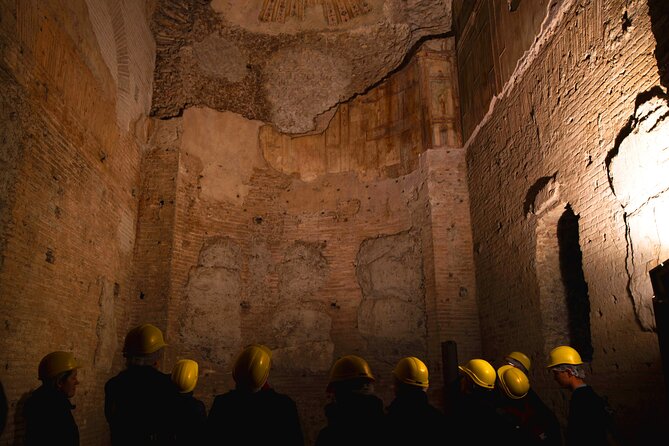
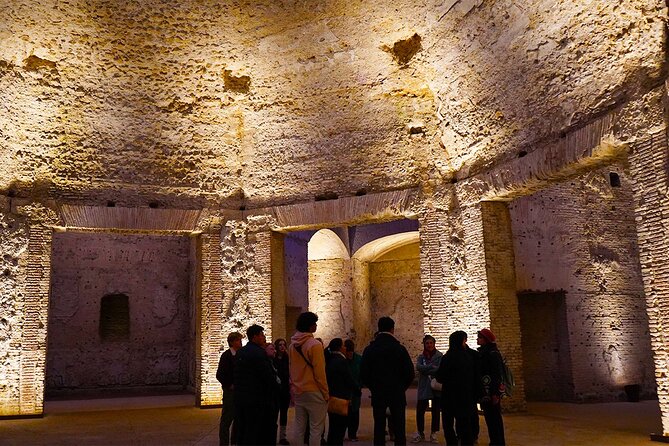
Inside, you’ll get to see the palace in ways that make it feel large and intentional. The Domus is not tiny. It takes time to move through, and it’s easy to underestimate how much walking happens in a “2-hour” ticket. Wear comfortable, supportive shoes. You don’t need hiking boots, but you do want something that handles uneven surfaces and long periods on your feet.
East Wing and the West Wing: two sides of the same power story
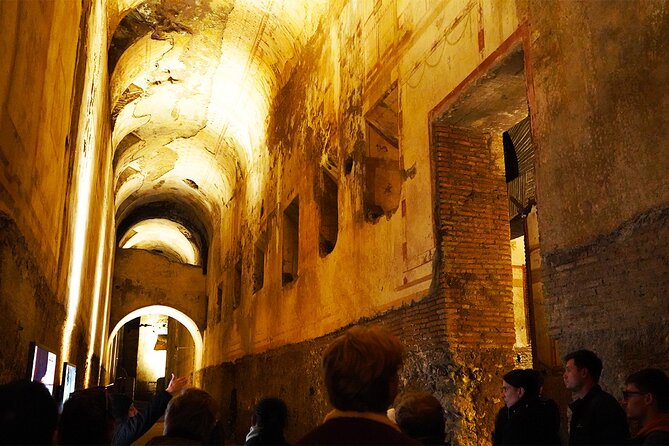
The big promise here is seeing both major areas during your visit—the East and the recently reopened West Wing. Even when two sections belong to the same palace, they don’t feel the same in your mind. The architecture and decorative remnants help you sense how the complex expanded and functioned.
The East side is where the tour’s narrative usually connects best: the earliest context and the core story of Nero’s building choices. As you move through, you’ll start to understand how the palace interacted with the broader changes happening across Rome after the fire. The point is less about “this wall is from year X” and more about reading the space like a diagram of imperial ambition.
The West Wing adds freshness. A reopened wing can mean more than “new rooms to photograph.” It changes your emotional experience of the tour because you’re not just repeating what you’ve already seen in standard access. It also makes the VR portion feel more grounded—because once you’ve walked a section of the palace, VR isn’t floating on top of empty context. You can connect the reconstruction to something you already stood in.
VR reconstruction: turning decoration fragments into a whole palace
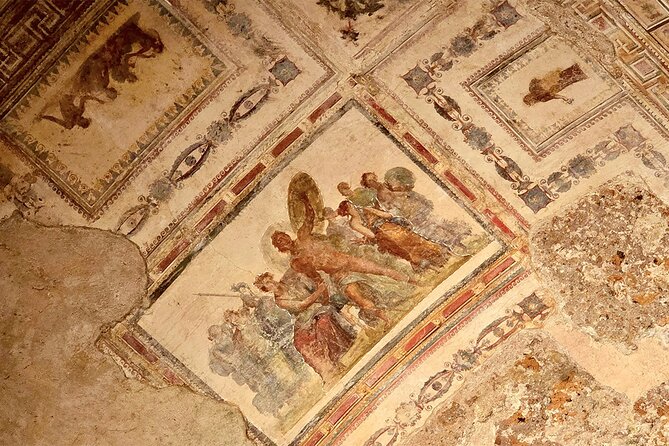
VR is the main reason some people rate this tour higher than a standard Domus visit. The reason is simple: Domus Aurea is famous, but the present-day look can be confusing if you don’t have a visual reference.
VR helps you do that translation. You see the complex as it may have looked in its heyday, so the remaining traces—surviving decorative elements, the shape of spaces, and the scale of rooms—stop feeling like random remnants. They start feeling like a designed environment.
In a good setup, VR comes after a short orientation. That way, you’re not wearing the headset like it’s a separate attraction. You’re using it like a tool. The outside story gives you the emotional and political stakes (Nero’s power, the backlash, the fall), and then VR shows you what the “power” looked like when it was alive.
One practical note: your VR comfort depends on your glasses and your fit. If you wear prescription glasses, plan for possible fuzziness with the headset. A quick adjustment and a careful seat can help.






The guides: what to expect from the licensed historian/archaeologist role
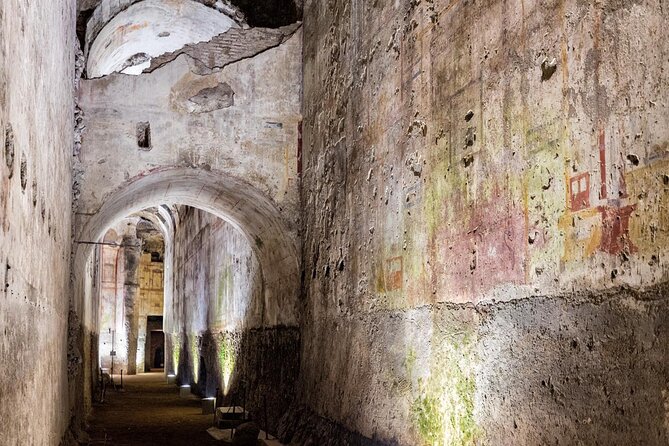
This tour uses a licensed English-speaker guide with a history or archaeology background. In a site like Domus Aurea, that matters because the ruins alone don’t explain themselves.
You’ll hear a focused story first: the fire, Nero’s opportunity, and the political fallout. Inside, the internal guides handle the official walkthrough, and those internal segments can feel scripted at times. That’s not automatically bad—it can keep the visit on track—but it does mean you may get fewer “organic” moments of Q&A during the internal portion.
One thing that can affect your experience is accent clarity. If English is your comfort language, you’ll likely be fine overall, but don’t assume every internal guide will match your preference for crisp clarity. The upside: once VR kicks in, visuals often carry you through any language gaps.
Price and value: what $84.19 buys you in real terms
At $84.19 per person, this isn’t the cheapest way to see Domus Aurea. But it’s also not overpriced when you look at what’s included.
You get:
- Skip-the-line direct access to a limited-entry site
- A licensed English-speaking guide for the structured orientation
- A small-group format (max 22)
- VR reconstruction tied directly to what you’re walking through
- Access that covers East plus the recently reopened West Wing
If you’ve ever tried to chase Domus tickets last minute, you know the value of guaranteed entry. Limited access is the real cost driver here. Paying for this kind of organized entry can save you time and stress, especially if you’re fitting Domus into a tight Rome plan.
Also, you’re buying time quality. A 2-hour experience with a plan beats an aimless visit where you spend half your attention figuring out what you’re looking at.
If you’re strictly budget-driven, you might compare this to ticket-only options. But when VR plus a licensed guide plus direct access is your goal, this price starts to make sense.
Logistics you’ll feel on the ground: meeting point, walking, and comfort
The meeting point is Vle della Domus Aurea, 00184 Roma RM. A small but important practical point: the meeting spot is the address on the street, not the site entrance. Give yourself a few extra minutes so you don’t end up searching while the group is being called.
Getting there is manageable because it’s near public transportation. If you’re building a day with other central sights, plan your route so you don’t arrive hot and rushed. Underground sites reward calm pacing.
What to bring:
- Comfortable shoes (the site is large)
- A light layer or scarf for indoor coolness
- Your phone for the mobile ticket
- If you wear glasses, be prepared that VR headsets sometimes need fine adjustments
Also, the tour is listed with most travelers can participate, so it’s not framed as an extreme-physical hike. Still, it’s underground walking, so treat it like a real walking experience, not a sit-down lecture.
Who this tour fits best
This is a strong match if you:
- Want a guided Roman story instead of just looking at walls
- Like archaeology and decorative art, especially in a space with political context
- Prefer a short, efficient orientation followed by time on site
- Are excited by VR as a way to understand what ruins used to look like
It can also work well for families. Even when a tour isn’t strictly marketed for kids, VR can act like a bridge. If your child struggles with long explanations, the reconstruction helps them stay connected while still seeing a serious historical site.
Should you book Domus Aurea with West Wing and VR?
I’d book it if you want limited-entry access plus a structured introduction plus VR that actually supports your understanding. At $84.19, the value comes from avoiding ticket stress and getting a guided narrative that turns ruins into a story you can follow.
Skip it (or consider a lighter option) if you strongly dislike guided handoffs or you know you prefer a single continuous guide voice. Also, if you’re the type who hates headsets and wants everything explained only by live commentary, you may find the VR portion less compelling than you hope.
FAQ
How long is the Domus Aurea tour with the West Wing and VR experience?
It lasts about 2 hours.
Is the Domus Aurea entry skip-the-line?
Yes. The tour includes Domus Aurea skip-the-line tickets with direct access.
What does the virtual reality part include?
The experience includes virtual reality to help you see how the Domus Aurea complex may have looked during its heyday.
How big is the group?
The tour has a maximum of 22 travelers.
Where do we meet for the tour?
You meet at Vle della Domus Aurea, 00184 Roma RM, Italy, and the tour ends back at the meeting point.
What language is the guide?
You’ll have a licensed English-speaker guide (history or archaeology background).
Are snacks included?
No. Snacks, food, and drinks are not included.