REVIEW · ROME
Rome Cooking Class 2-in-1: Make Fresh Pasta and Tiramisu Together
Book on Viator →Operated by Carpe Diem Tours · Bookable on Viator
A small kitchen class in Rome beats another checklist day. You’ll learn fresh pasta and tiramisu step by step with a chef, and you’ll eat what you make, not just watch it happen; one possible drawback is you need a fair bit of standing time and the menu isn’t gluten- or dairy-free.
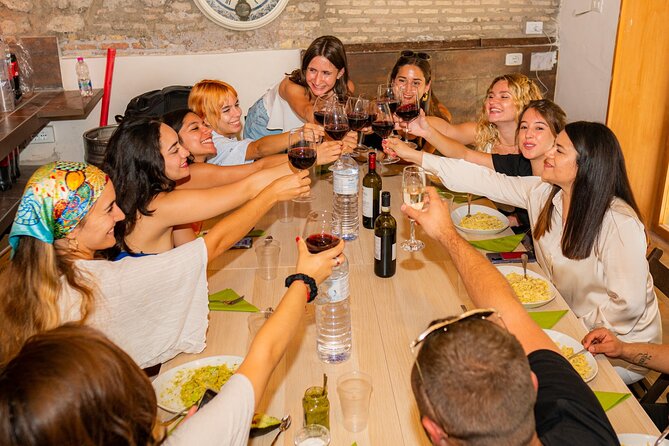
This is also one of those rare classes that feels like a true dinner invitation: there’s a glass of prosecco at the start, wine and limoncello during the meal, and enough hands-on work that you leave with real technique. I like the small group size (up to 15), because questions don’t get lost and you get coached on details like dough feel and sauce consistency.
One more consideration: if you’re aiming for a fully vegan or gluten-free meal, this class can’t accommodate those diets since it uses gluten and dairy.
In This Review
- Key highlights worth building your Rome evening around
- A real Roman kitchen experience, with chefs who teach like humans
- The 3-hour plan: prosecco welcome, tiramisu first, then pasta and sauce
- Pasta-making you can repeat: dough feel, cutting, and sauce handling
- Rolling and cutting fettuccine
- Sauce choice: carbonara vs cacio e pepe
- Tiramisu that’s actually learnable, not a mystery dessert
- Drinks, dinner, and the value of eating your own work
- Dietary needs and who this class fits best
- Logistics that make the class easier to pull off
- Should you book this Rome pasta and tiramisu class?
- FAQ
- How long does the Rome cooking class last?
- Is this cooking class in English?
- How many people are in the group?
- What’s included in the price?
- Are vegetarian options available?
- Can I get a gluten-free or vegan meal?
- Where do I meet, and does it end nearby?
- What if I need to cancel?
Key highlights worth building your Rome evening around
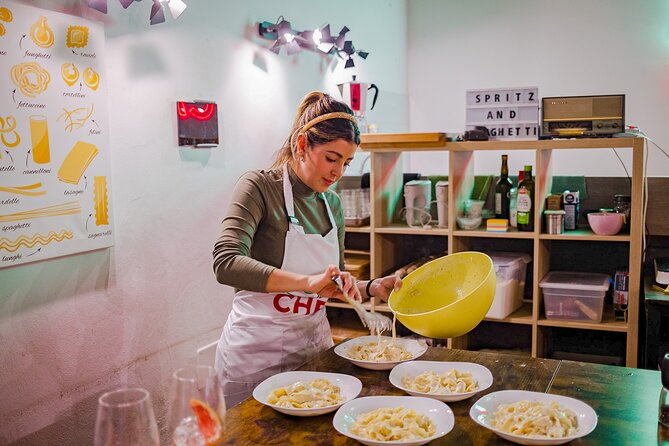
- Two classic Roman results: handmade fettuccine plus traditional tiramisu, both from scratch
- Real restaurant-kitchen setting with an expert chef teaching you how to do the work, not just the steps
- Good adult-and-family energy with instructors who keep people engaged (you’ll see names like Gaia, Shivi, Angela, Gio, Marcia, and Jem in the guides leading sessions)
- Drinks included: prosecco at the start plus wine and limoncello with the meal, along with unlimited water and soft drinks
- You leave with an ebook of the recipes so you can cook again at home
- Limited to 15 people, so it stays interactive instead of one big line waiting for your turn
A real Roman kitchen experience, with chefs who teach like humans
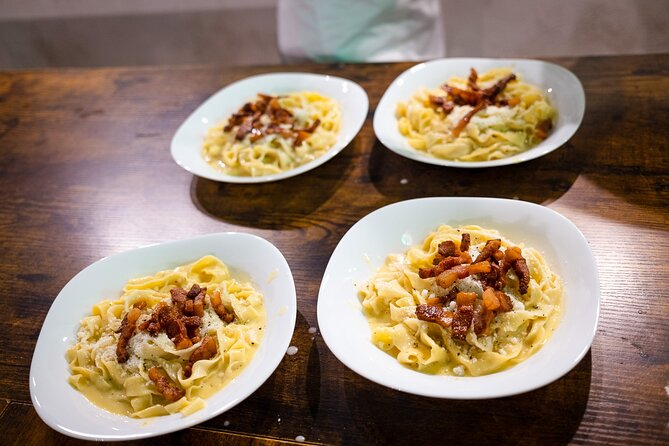
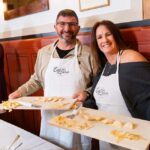
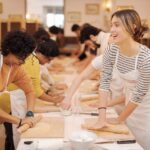
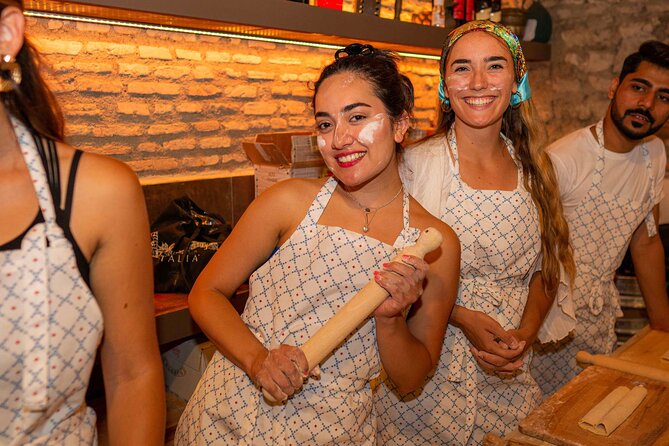
This class is built around a simple idea: make Roman comfort food the way Italians actually do it—hands on, in a working kitchen, with guidance you can use later. It’s not a demo where you take notes and hope you can recreate it. You’re rolling dough, shaping pasta, and building tiramisu layers as you go.
In the reviews, the tone is consistent: chefs like Gaia, Shivi, Ezgi, Angela, Gio, Marcia, and Jem come across as patient teachers with a light sense of humor. That matters more than people expect. Pasta dough can be forgiving, but it still needs real coaching—especially when you’re learning how stiff or soft it should feel.
The kitchen also has the right kind of social rhythm. You cook in a group, you share wine during the meal, and you end up eating together like you’re part of a small Roman table. If you like learning through doing, this format fits.
You can also read our reviews of more cooking classes in Rome

The 3-hour plan: prosecco welcome, tiramisu first, then pasta and sauce
You’re meeting at Via Cesare Balbo, 25 (and the activity ends back at the same spot). The class runs about 3 hours, which is long enough to get serious about technique but short enough that you’re not spending your whole evening stuck in a kitchen.
Here’s how the evening typically flows:
1) Drinks and warm-up
The start is social and easy. You kick off with a glass of prosecco and then move into cooking with Italian wines or a non-alcoholic drink option. There’s unlimited water and soft drinks throughout, so you can pace yourself.
2) Tiramisu from scratch
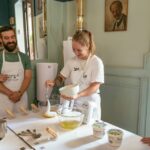
Next comes dessert. You’ll create a traditional tiramisu from the ground up using fresh, local ingredients. The key here is that you’re building it yourself, not assembling a pre-made kit. Expect a real step-by-step structure so you know what each stage should look like.
3) Fresh pasta: roll, knead, cut, cook
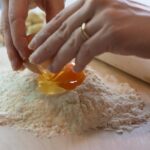
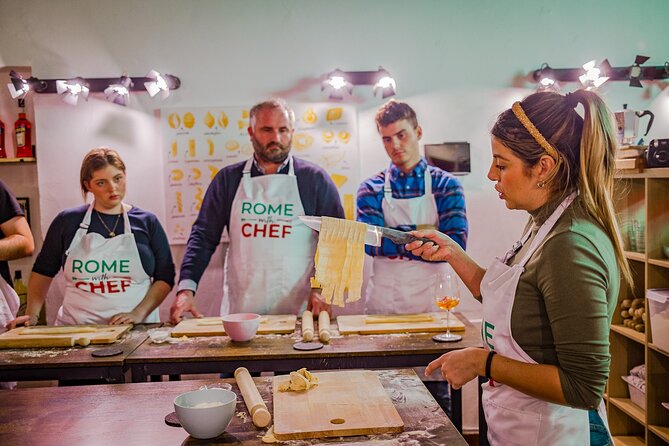
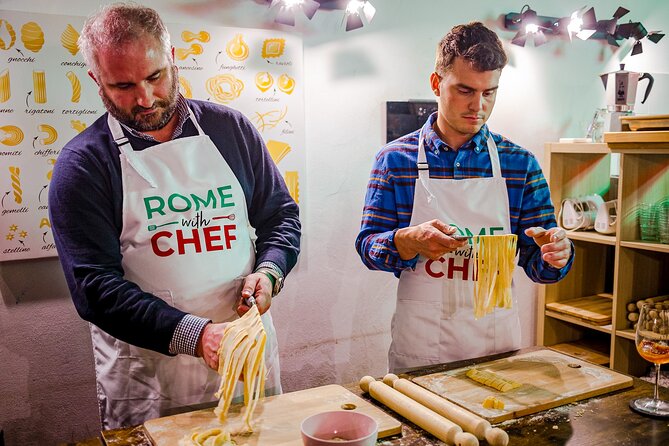
Then it’s pasta time. You’ll roll, knead, and cut fettuccine by hand, then cook it with a sauce choice: carbonara or cacio e pepe. Even if you’ve made pasta at home before, you’ll probably pick up small fixes—like how to handle dough consistency or when the sauce needs attention.
One practical point: one review notes the experience involved lots of standing. That’s normal for pasta work, since the prep happens near work surfaces. If you plan to do it, wear supportive shoes and give yourself a quick warm-up stretch before you start.
Pasta-making you can repeat: dough feel, cutting, and sauce handling
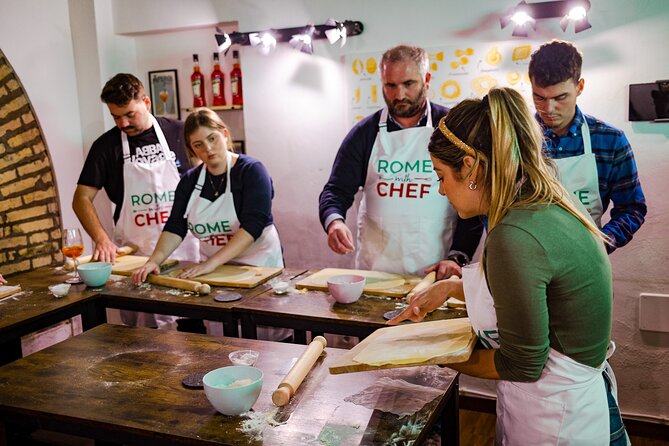
The best souvenir from this class isn’t a photo. It’s the muscle memory and the decision-making. Pasta has a few moments where you can’t just follow a recipe line-by-line; you need to feel what’s happening.
This is where the coaching shows up. Reviews highlight instructors helping people one-on-one, taking time to correct dough and guiding you through rolling and cutting until it’s right. The payoff is big: you don’t just learn which steps come next, you learn what “right” feels like.
Rolling and cutting fettuccine
When you roll and cut fresh pasta, you’ll quickly understand why this is labor. You’re working with dough that needs proper handling. One review mentions spending about 20 to 25 minutes getting dough just right. That time makes the final result better, and it’s also why the class feels satisfying.
Sauce choice: carbonara vs cacio e pepe
You’ll learn two Roman-style sauce paths, and then you eat what you made with your chosen sauce: carbonara or cacio e pepe. You also get a demonstration of sauce technique, which helps you understand why the final texture is the way it is.
A heads-up from the feedback you’ll see: the two sauce options are similar enough that some people wished for a wider variety. With limited time, the class focuses on depth instead of having you bounce across multiple recipes. For most cooks, that’s a fair trade.
You can also read our reviews of more tours and experiences in Rome

Tiramisu that’s actually learnable, not a mystery dessert
Tiramisu can sound fancy, but the class treatment makes it feel doable. You’re making a traditional version from scratch using fresh local ingredients, and you’re not left guessing what the mixture should look like at each stage.
The big win is that you end up understanding how the layers work—what gets combined, how it sets, and how it tastes when finished. Several reviews mention tiramisu being delicious, even for people who weren’t originally into it. That’s a sign the recipe isn’t overly sweet or off-balance.
And since it’s made during the workshop, you’re not waiting days for a dessert you’ll never learn to recreate. You’ll see the process, and you’ll have the ebook to repeat it at home.
Drinks, dinner, and the value of eating your own work
This is priced at $83.48 per person for about 3 hours, and I think the value is strongest because the cost isn’t only for instruction. You’re paying for:
- chef-led technique in a small group (max 15),
- ingredients and equipment used while you cook,
- a full meal that includes the pasta and tiramisu you made,
- and included drinks: a glass of prosecco, wine, limoncello, plus unlimited water and soft drinks.
When a cooking class includes the meal and alcohol, it stops feeling like you’re buying a ticket to a classroom. Instead, it becomes a real evening plan—something between a dinner and a lesson.
Another detail I like: you get recipes in an ebook when you’re done. That matters because when you’re cooking by hand, you forget exact ratios the second the action starts. The ebook helps you lock it in after you’re home.
Dietary needs and who this class fits best
This is one of the first things to check, because the answer is clear: no gluten-free options and no vegan options. The class also can’t accommodate coeliac disease, gluten intolerance, lactose intolerance, or dairy-free needs. The menu includes gluten and dairy products.
Good news: there are vegetarian options. The data doesn’t list what those options are, so you’ll want to confirm what fits your personal vegetarian style, but at least the operator has vegetarian accommodations available.
Who will enjoy it most?
- People who want a hands-on Rome experience instead of passive sightseeing
- Couples, friends, and small groups who like sharing a meal at the end
- Families with kids old enough to handle kitchen tasks (one family used the class for two kids aged 11 and 8 and described it as a great family night)
Who should probably skip it?
- Anyone who needs gluten-free, dairy-free, lactose-free, or vegan food
- Anyone who hates standing for part of the session
Logistics that make the class easier to pull off
The meeting point is Via Cesare Balbo, 25. If the meeting point changes, it’s only a five-minute walk between the two possible locations, and you’ll be informed in advance. The start and end are the same area, so you’re not stuck figuring out a second drop-off after you’re finished eating.
The class is offered in English, and you get a mobile ticket. It’s also near public transportation, which helps if you’re pairing it with other evening plans.
One last practical note: it’s a weather-dependent activity. If the session is canceled due to poor weather, you’ll be offered another date or a full refund.
Should you book this Rome pasta and tiramisu class?
If you want an evening that’s part cooking lesson, part dinner, and part social time, I’d book it. The combination of fresh pasta + traditional tiramisu, the included drinks, and the small group format (up to 15) make it feel like you’re getting more than a one-off activity.
I’d only hesitate if you need gluten-free or dairy-free (including lactose intolerance) or if you eat vegan—this class can’t adjust the core menu for those requirements. Also, if you’re sensitive to standing for a good chunk of the session, consider wearing comfortable shoes and planning an early night afterward.
For most people, though, this is a smart way to spend time in Rome: you leave with techniques you can actually repeat and recipes you can cook without guesswork.
FAQ
How long does the Rome cooking class last?
It runs for about 3 hours.
Is this cooking class in English?
Yes, the class is offered in English.
How many people are in the group?
The experience has a maximum of 15 travelers.
What’s included in the price?
You get the pasta and tiramisu workshop, one glass of prosecco, wine and limoncello, unlimited water and soft drinks, and an ebook with take-home recipes.
Are vegetarian options available?
Yes. Vegetarian options are available, but the class cannot accommodate gluten-free, lactose intolerance, dairy-free, or vegan diets.
Can I get a gluten-free or vegan meal?
No. There are no gluten-free options, and the class does not offer vegan options.
Where do I meet, and does it end nearby?
You start at Via Cesare Balbo, 25, 00184 Roma RM, Italy, and it ends back at the same meeting point. If the meeting point changes, it’s only about a 5-minute walk away.
What if I need to cancel?
You can cancel for a full refund up to 24 hours before the experience starts.