Rome rewards the curious on foot.
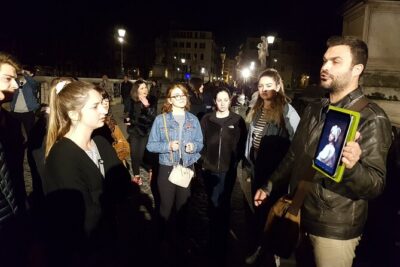
This private walking tour is built for exactly that: you hit top landmarks like the Pantheon and Piazza Navona, then you thread through older lanes where the city still feels lived-in. I especially like the way Simone ties the big sights to everyday Roman life, and how you can ask questions freely instead of rushing past everything. One possible drawback: it’s a solid 3-hour stroll in the historic center, so plan for crowds around the famous stops and wear shoes you trust.
What makes it work so well is the flow. You start in the area around Piazza di Sant’Apollinare, move through 16th-century churches and courtyards, pause at markets and squares for real atmosphere, and end on the Trastevere side at Piazza di Santa Maria in Trastevere—perfect if you want to keep exploring right after. And because Simone’s guiding style is part history lesson, part story time, this tour can be a great way to get your bearings fast.
In This Review
- Key Highlights Worth Your Time
- Why This Private Rome Walk Works (Even If You’ve Seen Photos)
- Starting at Piazza di Sant’Apollinare: Getting Oriented in Real Old Streets
- Chiostro del Bramante and Santa Maria dell’Anima: Art, Worship, and Who Changed Rome
- Piazza Navona, Campo de’ Fiori, and the Smell of Everyday Rome
- Sant’Ivo alla Sapienza and a 13th-Century Basilica: Study, Books, and Quiet Awe
- The Pantheon Photo Moment: How to Look Like You Know What You’re Seeing
- Piazza Venezia, Palazzo Caffarelli, and the View That Ends the Story
- Price and Value: What $92.19 Gets You in Real Life
- Who This Tour Fits Best (and Who Might Want Another Option)
- What I’d Do Next After the Tour Ends
- My Booking Verdict
- FAQ
- How long is the private walking tour?
- What are the start and end points?
- Is the tour private or shared?
- Is there a mobile ticket?
- What if the weather is bad?
- Are there places on the route that are free or ticket-free?
Key Highlights Worth Your Time
- Private pace with Simone: you can ask questions anytime, which makes the landmarks stick
- Mix of famous and overlooked Rome: you see icons and the calmer streets most people skip
- Ticket-free style stops: the schedule lists free access at each major point, so you spend time looking, not lining up
- Pantheon photo time: quick, focused time to frame one of Rome’s most iconic buildings
- A Roman pizza bite between sights: built-in energy for a walk that stays interesting the whole way
- Works for families: Simone’s been praised for patience, including helping with prams and keeping kids engaged
Why This Private Rome Walk Works (Even If You’ve Seen Photos)
Rome can be a little overwhelming on day one. You see the big names—Pantheon, Piazza Navona, the Forum—and then your brain starts sorting facts instead of enjoying the place. This tour is designed to solve that problem by giving you a guided route that connects how Rome changed across centuries, without making you sit through a lecture.
The payoff is practical. In 3 hours, you’ll learn how the city’s layers fit together: ancient stadium space turned into a grand square, religious buildings reflecting communities from far beyond Italy, and viewpoints that explain why some corners of Rome feel so strategically important. It’s not just “look here.” It’s “here’s why this matters.”
Most of the stops are listed as admission-free, and even when you’re not going inside, you’re close enough to read the architecture. That’s a smart value move: you get the feel of Rome without stacking up tickets and time-consuming lines.
And yes, it’s private. That means you’re not stuck waiting for the slowest pace or getting swept along by a crowd. If you like asking questions, Simone’s guiding approach is built for that.
You can also read our reviews of more walking tours in Rome



Starting at Piazza di Sant’Apollinare: Getting Oriented in Real Old Streets
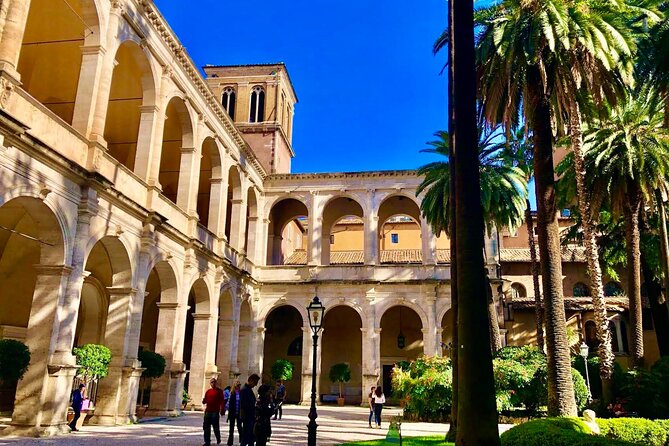
You meet at Piazza di Sant’Apollinare (00186 Roma). This spot is a good launch point because it’s not “right at the main postcard,” but it still drops you into the historic center quickly.
Before you hit the headline monuments, you get two early moments that help the whole walk click:
- You pass through an area described as an original neighborhood from the 16th century, including the kind of meeting point used by pilgrims when they arrived in Rome.
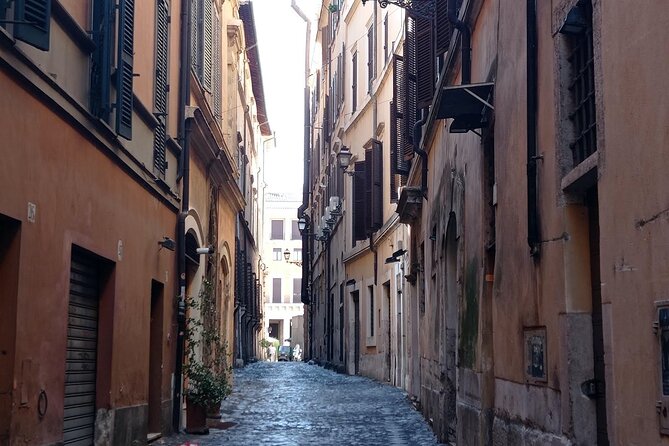
- Then you move along a 16th-century street that’s still well preserved.
Those first stops might sound small compared to the Pantheon, but they matter. Rome often feels confusing because the city is continuous—old and new stacked on top of each other. Starting with living streets and preserved lanes helps you notice details later. By the time you reach the big squares, you’ll be able to tell what you’re looking at and why it looks the way it does.
In other words: you’ll start understanding Rome before you start collecting landmarks.
Chiostro del Bramante and Santa Maria dell’Anima: Art, Worship, and Who Changed Rome
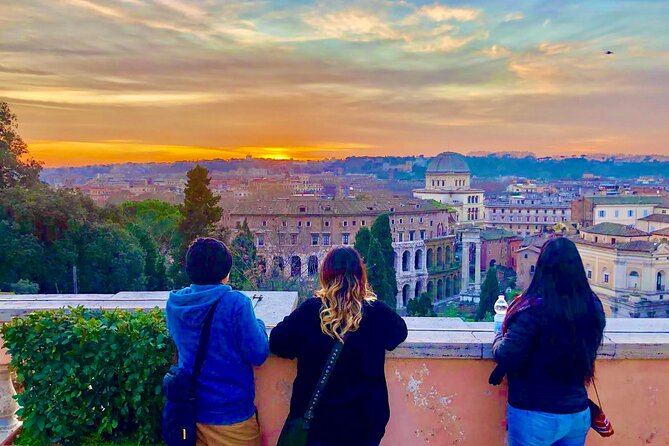
Next up is Chiostro del Bramante. The schedule describes it as an original 16th-century house linked to one of the key Renaissance artists in Rome who worked for the Pope. Even if you only have around 10 minutes here, it’s the kind of stop that makes the city feel personal. You’re not just seeing a structure; you’re learning that Rome’s power centers and art worlds overlapped.
A short step away is Chiesa di Santa Maria dell’Anima, a 16th-century church associated with German and Austrian communities. That detail is more than trivia. It explains how Rome attracted people from outside Italy—and how religious life created long-lasting footprints in the city center.
One thing I like about this part of the route is that it slows you down. You’re walking through lanes, then pausing at places where visitors usually only glance at the doorway. With Simone’s storytelling, these buildings turn into chapters—who built what, for whom, and when.
Piazza Navona, Campo de’ Fiori, and the Smell of Everyday Rome
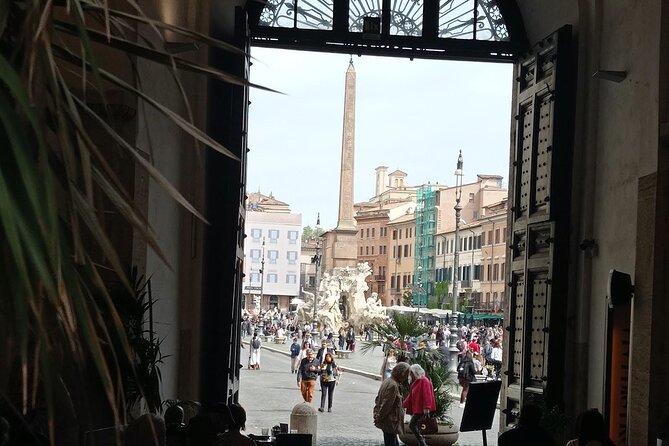
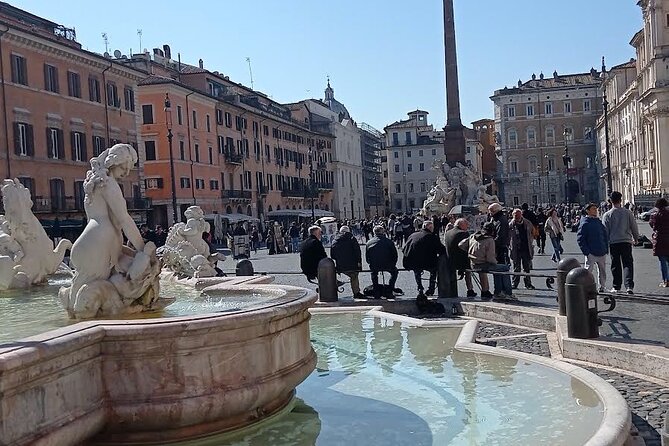
You’ll then reach one of Rome’s most famous squares, described as a place that used to be a Roman-time stadium, then swapped into a grand 16th-century square by the Pope, with major buildings, an obelisk, and fountains. This is where Rome turns from history into theater.
At the square, you get to do two useful things:
1) take in the architecture without rushing, and
2) learn how the shape and function of the space changed over time.
From there, you head to Campo de’ Fiori, including time at the market area. The tour notes it as an old-style setting with a real local bakery feel—exactly the kind of stop that keeps your brain from going full museum mode.
And yes, there’s a chance to grab a bite of authentic Roman pizza between stops. This is a small detail, but it’s a big deal on a walk-heavy day. You’ll enjoy the late afternoon energy more if you don’t try to power through on espresso alone.
Practical tip: if you’re traveling with kids, this is where they can burn off energy a bit, and you’ll be able to keep everyone happy without turning the day into a snack hunt.
Sant’Ivo alla Sapienza and a 13th-Century Basilica: Study, Books, and Quiet Awe
Your next highlight is Chiesa di Sant’Ivo alla Sapienza, described as an impressive 16th-century building tied to the first university in Rome. Now it’s used as a library to preserve old books, with availability noted Monday to Friday.
This stop is smart for two reasons:
- It shifts your focus from Rome’s monuments to Rome’s role as a center of learning.
- It shows how buildings change use over centuries, not just styles.
If you’re on a weekday, you might get more of that library atmosphere described in the schedule. If it’s not Monday to Friday, you should still enjoy the architecture and the “why does this look like this” conversation your guide can lead.
After that comes a stop at a 13th-century basilica. The day keeps a good rhythm: each stop is short, but each one adds a different lens—faith, art, markets, education—so you don’t start zoning out.
You can also read our reviews of more private tours in Rome





The Pantheon Photo Moment: How to Look Like You Know What You’re Seeing
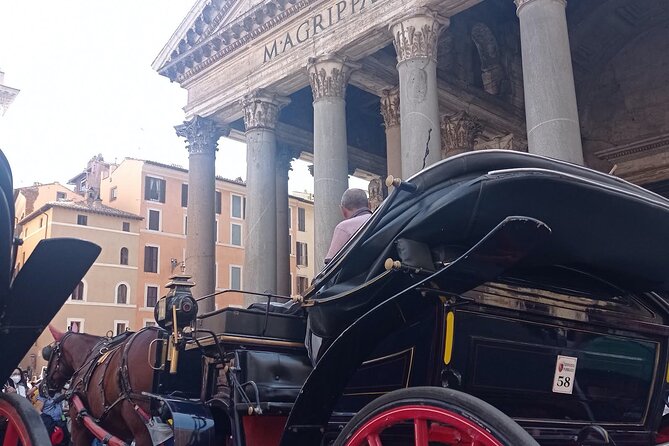
The big headline arrives: the Pantheon. The tour notes it as the oldest building in Rome standing since 27 BC, and the schedule is designed for a focused 10-minute visit that’s especially good for snapping photos.
Here’s the key: don’t treat the Pantheon as just a famous dome. Treat it as a lesson in Roman confidence. Even in a short stop, you can notice how Rome’s engineering created a space that feels both grand and oddly human—like it was built for crowds, not just kings.
Because your time here is brief, plan to do two things quickly:
- Get your main photo first.
- Then take a slower look at the details that explain how it’s constructed and how the space feels.
If you want your “Rome knowledge” to jump, this is where it happens. In a compact walk, the Pantheon is the one stop that rewards attention the most.
Piazza Venezia, Palazzo Caffarelli, and the View That Ends the Story
After the Pantheon, the route swings toward the bigger power-and-government vibe of central Rome.
You’ll reach Piazza Venezia / Ancient City, with a huge 14th-century building described as used as a residential house from the Pope, plus a hidden garden in the historical center. Even if you only have around 10 minutes here, the point is clear: Rome’s leadership wasn’t remote—it lived inside the same urban fabric visitors walk through today.
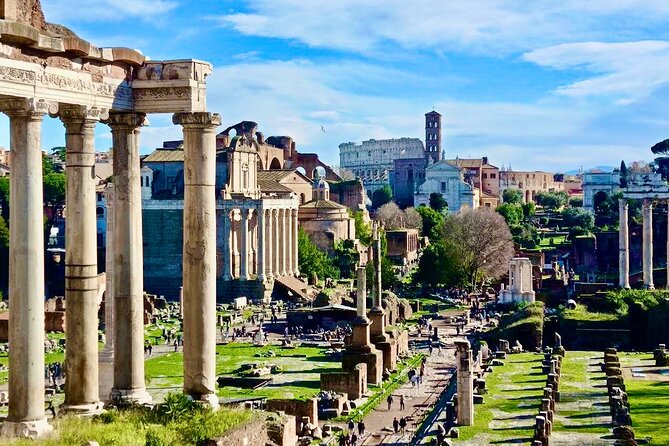
Next comes Piazza del Campidoglio, decorated by Michelangelo, and described as offering one of the most beautiful viewpoints for the Roman Forum. This is a “pause and understand” moment. You’re not just looking at ruins; you’re getting the mental map of where things sit relative to each other.
Then the tour ends with Palazzo Caffarelli, where you get access to a terrace described as one of the best skyline viewpoints of downtown Rome. The value here is simple: your day ends with an overview. That last view helps everything you’ve seen line up in your head.
Finally, your tour concludes back near Piazza di Santa Maria in Trastevere. Ending in Trastevere is convenient because you can keep going without backtracking across town.
Price and Value: What $92.19 Gets You in Real Life
At $92.19 per person for an approximately 3-hour private walk, you’re paying for two things: time with a guide and a route that’s built to make you understand Rome fast.
Is it cheap? No. But it doesn’t claim to be a bargain walking tour either. The value comes from:
- private format (your group only, not shared with strangers),
- guide-led explanations that turn landmarks into a connected story,
- and multiple major sights plus quieter streets packed into one half-day.
One practical plus: the tour is listed with a mobile ticket, and confirmation happens at booking. That matters because Rome is full of small friction points—this helps remove some of them.
Also, the schedule highlights include time at places that are listed as admission ticket free. Even when you’re only there briefly, you’re spending your time seeing, not buying tickets.
If you’re traveling as a couple, family, or small group and you want maximum value from limited time, this is the kind of tour that can justify itself quickly.
Who This Tour Fits Best (and Who Might Want Another Option)
This private walk is a strong match if you:
- want a guided introduction to Rome’s historic center,
- care about explanations you can ask questions about,
- like balancing famous landmarks with calmer, less-visited streets,
- and want a day plan that still feels flexible.
It’s also shown to work for families. In reviews, Simone was praised for being patient with a toddler and for practical help with a pram. That’s a sign the pacing is thoughtful, not frantic.
You might consider another option if you:
- prefer a very long, monument-heavy day with lots of inside visits,
- don’t enjoy walking in busy central areas,
- or are traveling with mobility limits that make stairs and uneven historic surfaces hard.
What I’d Do Next After the Tour Ends
You finish near Trastevere (Piazza di Santa Maria in Trastevere). That’s a smart landing spot because it’s easy to keep exploring on foot. If you’ve just spent 3 hours learning how Rome changed across centuries, you’ll be in the right mindset to notice details on your own—doors, street corners, small chapels, and the way neighborhoods shift character.
If the day still has energy left, you’re also positioned well to add dinner plans nearby rather than dragging yourself back across the center.
My Booking Verdict
Book it if you want a private, story-forward introduction to central Rome that combines the big names with older lanes and viewpoints, and you like asking questions along the way. The Pantheon photo stop, the Piazza Navona square moment, and the end views from Palazzo Caffarelli are the kind of “I get Rome now” payoff that’s hard to manufacture on your own in a short time.
If you hate walking, don’t have good footwear, or want a day packed with long museum interiors, you might feel rushed. But for most people who want Rome to make sense quickly, this tour is a solid choice.
FAQ
How long is the private walking tour?
It’s listed as about 3 hours.
What are the start and end points?
The tour starts at Piazza di Sant’Apollinare, 00186 Roma and ends at Piazza di Santa Maria in Trastevere, 00153 Roma.
Is the tour private or shared?
It’s a private tour/activity, meaning only your group participates.
Is there a mobile ticket?
Yes. The experience includes a mobile ticket, and you receive confirmation at booking.
What if the weather is bad?
This experience requires good weather. If it’s canceled due to poor weather, you’ll be offered a different date or a full refund.
Are there places on the route that are free or ticket-free?
The itinerary details multiple stops with admission listed as free, and the Pantheon stop is geared for a short visit with photo time.