REVIEW · ROME
Colosseum, Roman Forum and Palatine Hill Guided Walking Tour
Book on Viator →Operated by Roman Way · Bookable on Viator
This walk through ancient Rome hits fast. I love the included monument tickets plus the guide’s stories that turn stone into something you can picture. I also like that you get headsets so you can keep up in the crowds. One thing to plan for: the Colosseum security check can add waiting, and you’re on your feet for a long stretch.
If you want the big three sights in one outing, this is a clean way to do it. You’ll start at Via del Colosseo, 41 with a small group (up to 25) and end with time to explore the Roman Forum on your own. The pacing is built around three stops of about 45–50 minutes each, and the visit order can swap if needed.
In This Review
- Key things to know before you go
- Why this Colosseum–Forum–Palatine loop fits your first Rome day
- Entering the Colosseum: group access, tiers, and the best photo moments
- Palatine Hill right after the arena: ruins, trees, and emperor-era leftovers
- Roman Forum: temples, markets, and the daily machine of ancient Rome
- Guides, headsets, and group size: how you stay in the story
- Price and ticket value: what your money is really buying
- Practical logistics: meeting point, start-time changes, and Colosseum security
- Who should book this tour, and who might prefer another plan
- Should you book this Colosseum–Forum–Palatine guided walk?
- FAQ
- How long is the tour?
- Is admission to the Colosseum, Roman Forum, and Palatine Hill included?
- Where do we meet for the tour?
- Is the tour offered in English?
- Do you provide headsets?
- What ID do I need to enter the Colosseum and Roman Forum?
- What security rules should I expect at the Colosseum?
- How big is the group?
- Can I cancel, and what if the weather is bad?
Key things to know before you go
- Group entrance at the Colosseum plus a licensed guide who explains what you’re seeing
- Wi-Fi headsets so you can hear clearly even in busy sections
- Clear focus on how the Colosseum worked: tiers, social class, gladiators, and show logistics
- Palatine Hill breaks the day up with villas, fountains, trees, and emperor-era ruins
- Roman Forum time on your own afterward so you can linger where you care most
- Small group cap (25 people) helps the walking stay manageable
Why this Colosseum–Forum–Palatine loop fits your first Rome day
Rome’s ancient core can feel like three different worlds that overlap. This tour is built to connect them in a smart order: arena first, then the hill where power gathered, then the Forum where daily political life played out. You get a guided storyline while you’re fresh, and you still finish with free time in the Forum to slow down.
I like the balance here: the Colosseum is the big visual magnet, but the Palatine Hill is where the tour often turns more personal. It’s calmer, more park-like, and you spend time among trees and ruin remains rather than just walking through a crush of stone. Then the Roman Forum brings you back to the city’s public heartbeat with temples, markets, and the foundations of civic life.
Group size matters more than you’d think. With a max of 25, you’re less likely to lose your place, and the guide has a better chance of keeping everyone together through uneven ground and tight corridors. If you’ve ever tried to manage a self-guided plan while also trying to understand what you’re looking at, the guided portion is what saves you time and energy.
You can also read our reviews of more walking tours in Rome

Entering the Colosseum: group access, tiers, and the best photo moments
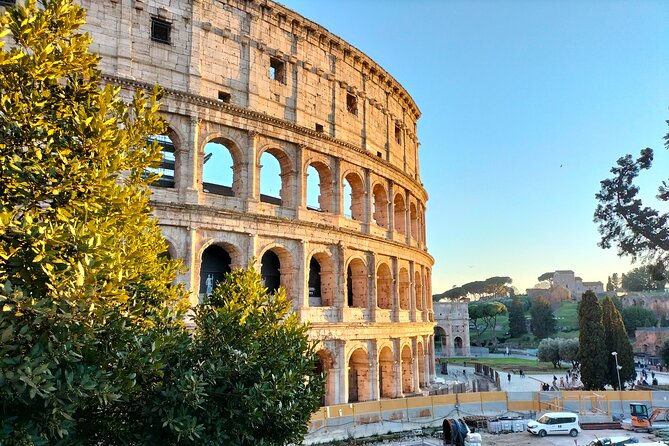
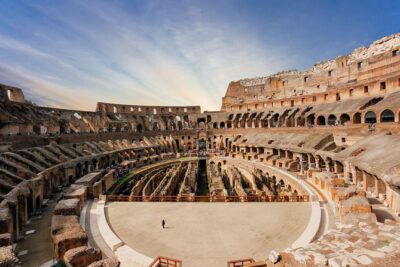
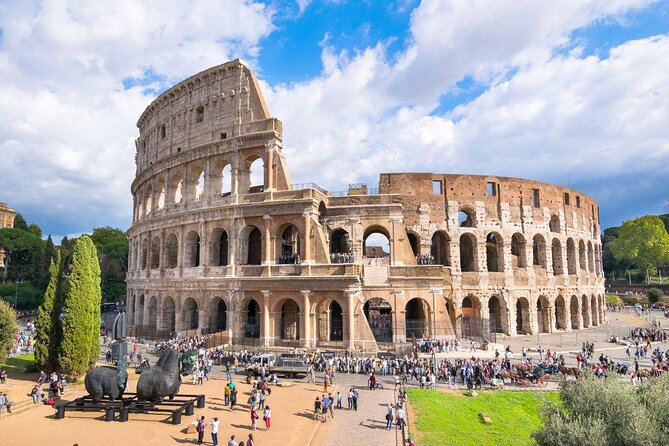
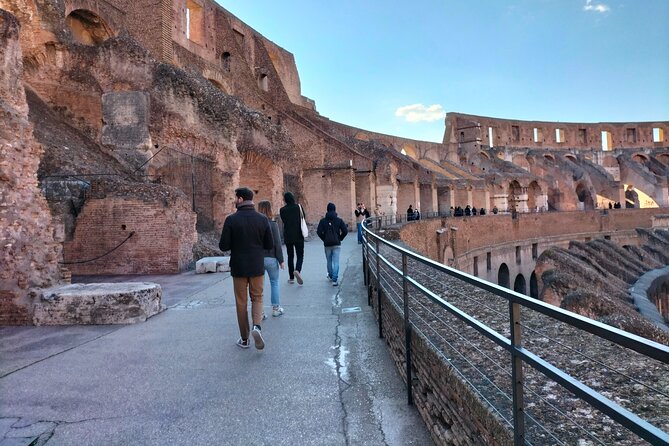
The Colosseum stop is about 50 minutes, and it’s paced for one goal: make the arena make sense quickly. You start outside by studying the massive facade and learning how and when it was built, what its purpose was, and what it originally looked like. That first context matters. Without it, the building is just an impressive shell. With it, you can actually track what happened inside.
Then you enter using the dedicated group entrance. Even with that advantage, you still have to pass the metal detector security check, and there may be a line. The good news is that the tour is designed around using the right entry flow for groups—several guides in this program are praised for getting people through more easily than doing it alone.
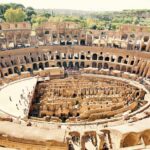
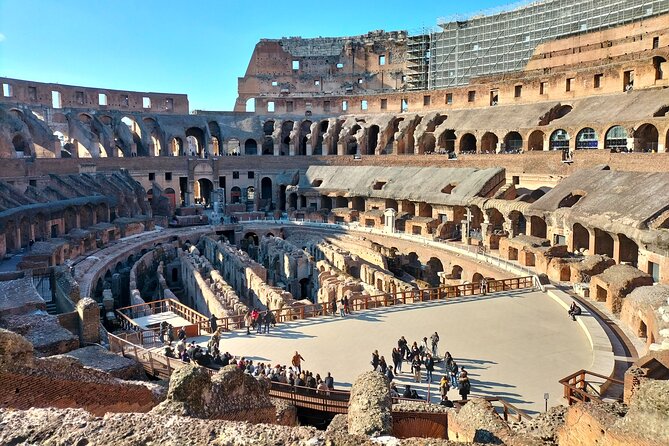
Inside, the tour focuses on how spectators were divided into tiers based on social class. You also hear who the gladiators were and how the fights were organized. I like that this isn’t just names and dates. It’s an explanation of the system—who sat where, why it mattered, and how the show was staged—so your photos end up being more than just selfies in front of an icon.
Photo stops are built into the walk. You’ll be pointed to perfect spots for pictures while you’re still listening to the guide. That’s the trick: don’t wait until the end to search for angles when your feet are tired and the group is moving. If you want the photo to match the story, this tour helps you do both.
One practical note: the Colosseum has a long list of what’s not allowed. No luggage or large bags, and no glass objects. Plan to travel light and leave anything risky at your accommodation. It’s not glamorous, but it prevents delays.
Palatine Hill right after the arena: ruins, trees, and emperor-era leftovers
After the Colosseum, you head to Palatine Hill for about 45 minutes. This is a smart switch in scenery. The Palatine is where Rome was founded, and later it became the place where emperors built their residences. You’re moving from a public spectacle to a power center—same city, very different vibe.
What I like about this stop is that it mixes nature with archaeology. You walk among trees, and you see ruin remains connected to villas and fountains. The pacing here feels more like a park stroll than a sprint. That matters because after the Colosseum, your legs are often ready for something less intense.
Even if you think you know Palatine Hill, a guided explanation helps you connect what you see to what it represented. You don’t just look at broken walls. You understand why this hill mattered, who lived here, and why this area became a symbol of authority. If you’re traveling with teenagers or someone who usually tunes out museum talk, this is often the section that brings them back.
Accessibility is worth a quick reality check. The general program says most travelers can participate, but you should expect walking on uneven ground and old surfaces. If mobility is a concern, comfortable shoes are not optional. You’ll feel it more here than in a flat city center stroll.
Roman Forum: temples, markets, and the daily machine of ancient Rome
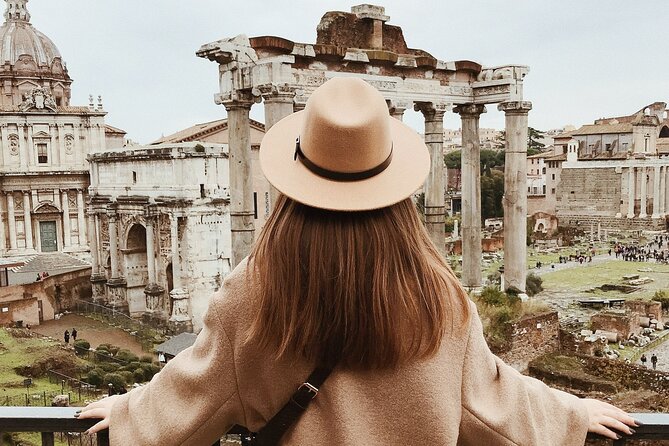
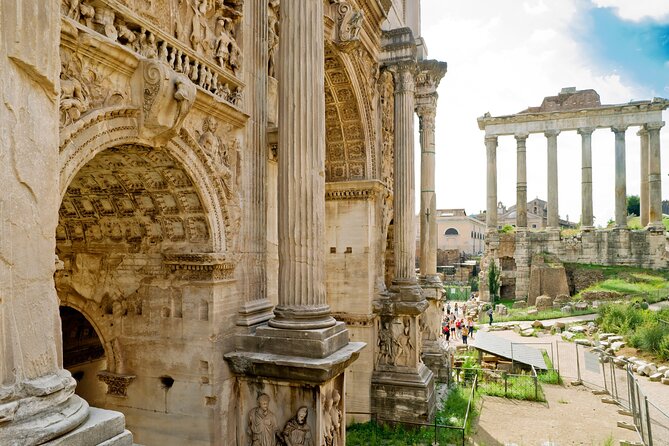
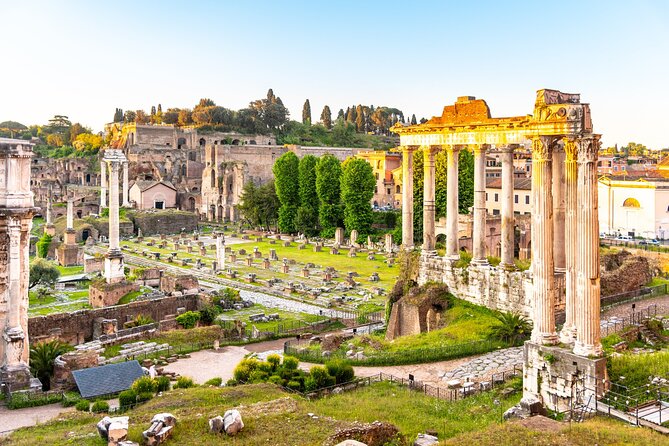
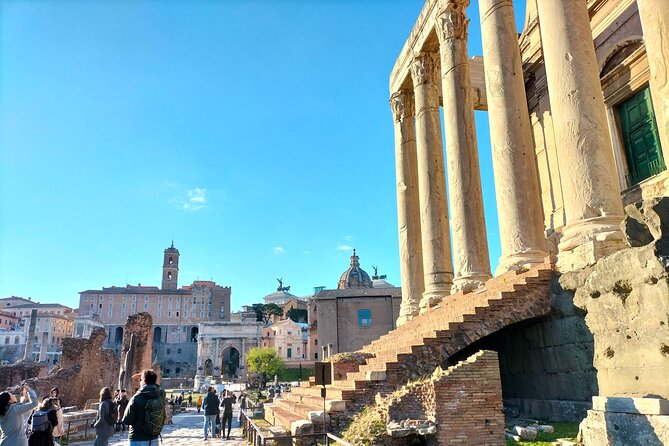
The Roman Forum stop is also about 45 minutes. This is the beating heart portion of the route—the place where markets, temples, public buildings, and civic life all clustered together. The Forum can be confusing if you’re seeing it with no guide. The ruins look scattered, and it’s hard to know what connects to what.
With a guide leading the way, you get evidence of how Romans organized public life. You walk through areas tied to temples and public structures, and you hear anecdotes and curiosities along the route. That turns the Forum from a collection of rocks into a map of how people actually moved, argued, traded, worshiped, and governed.
Another bonus: even though you’re there for a guided chunk of time, the tour ends with free time inside the Roman Forum. That’s not just a polite gesture—it’s practical. Once you’ve learned a framework, you’re better at choosing what to revisit or what to linger over.
If you’re the type who likes to check off must-sees first and then wander, the Forum timing works well. You finish the guided part with an understanding of the site, and you don’t have to rush out immediately.
Guides, headsets, and group size: how you stay in the story
This tour runs in English, and the program provides Wi-Fi headsets. That makes a huge difference at the Colosseum and Forum, where wind, crowds, and noise can swallow your ability to hear. With headsets, you’re not leaning in and fighting for sound. You can keep your eyes on the ruins while the guide talks.
You’ll also get a real sense of how different guides approach the same monuments. Several guides are singled out for humor and high energy—people mention guides like Maximus, Antheia, Alessandra, Henry, Ken, Andy, Ledio, Samuel, Sara, and Samuele. The details vary by guide, but the consistent theme in praised experiences is engagement: jokes, group interaction, and answers that go beyond the first layer.
One tip that I think you should follow even before you meet your guide: stay near the front of your group line. In tight areas, the person who lags behind always ends up hearing less, seeing less, and missing the photo spot. If the guide is using headsets to keep pace, you’ll get more out of it by being where the guide is aiming attention.
Group cap is 25, and that helps with crowd control. You’re not stuck behind a huge wave of people, and the guide can adjust when the group slows down. It’s still a big archaeological site, so you’ll move at a walking-tour pace, but it feels controlled rather than chaotic.
You can also read our reviews of more guided tours in Rome






Price and ticket value: what your money is really buying
At $59 per person for about 2.5 hours, the value comes from combining three things: licensed guiding, monument admissions, and headsets. The monument ticket component is clearly accounted for: Colosseum admission is valued at €18 per person, plus a Colosseum reservation fee valued at €2 per person. That means a chunk of what you pay covers actual entry access.
The rest covers the human part—guide time—and the logistics layer, including the reservation and the group entrance process. In other words, you’re not just buying a ticket. You’re paying for interpretation and smoother use of entry resources so you spend less time stuck and more time understanding.
Also, this isn’t only about seeing famous ruins. The guide explains how and when the Colosseum was built, why the tiers existed, who the gladiators were, and how the shows were organized. For the Forum and Palatine, it connects the remains to the idea of Rome’s founding and later imperial power. That kind of narrative is hard to recreate on your own without digging into multiple sources while you’re standing in the sun.
If you’re short on time in Rome and you want the big three in one morning or afternoon block, this price can feel very reasonable. If you’re the kind of traveler who only wants quiet wandering and you hate structured groups, you might prefer a slower self-guided plan. But for most first-timers, a guided run like this is a good trade.
Practical logistics: meeting point, start-time changes, and Colosseum security
You meet at Via del Colosseo, 41, 00184 Rome. That’s a central location near public transport, which makes it easier to reach without a full-day logistics project. The tour ends at the Roman Forum area, and you get time to explore inside after the guided stops.
Start time can vary by about 30 minutes. The tour operator says they’ll inform you if that happens. I’d treat this as normal Rome-time reality: build a little buffer before or after your tour, especially if you have a later timed booking.
You also want your ID game tight. Tickets are nominative for the Colosseum, and you must have an ID document that matches the name used at booking. Provide full names at checkout and bring your passport or ID. If names don’t match, entry can be denied and refunds won’t be issued.
Security at the Colosseum is a real thing. You pass a metal detector and should expect a potential wait line even with group access. Stick to the rules: no large bags, no glass items, and no prohibited items like alcohol, drugs, weapons, or sharp objects. Bring what you need for the day, then leave the rest behind.
Finally, the itinerary order can change. Sometimes you might visit the Roman Forum first and then the Colosseum. Don’t panic if you see an order shift. The value is in the trio connection, not the exact opening stop.
Who should book this tour, and who might prefer another plan
This works best if you want structure and explanation while you see the top sites. If you love stories about how the Roman world functioned—social class seating, spectacle organization, where emperors built their homes, and how civic life worked—the guide-led format is what you’re paying for.
It’s also a good family option. People have done it with kids and teens and found it engaging. If you’re traveling with someone who needs a reason to care, a lively guide and clear talking points help a lot.
If you’re highly sensitive to crowds, you may feel the big-site energy despite headsets and a small group cap. And because you’ll be on uneven surfaces, comfortable shoes matter. Think of it as an active sightseeing block, not an easy walk.
Should you book this Colosseum–Forum–Palatine guided walk?
Yes, I’d book it if you want the classic ancient Rome trio explained clearly in one outing. The combination of included tickets, headsets, and a guide who keeps the story moving is a strong value for the time you spend there.
I’d hesitate only if you plan to spend most of your Rome time doing quiet, self-paced wandering, or if you strongly dislike any possibility of security lines and a strict start window. In that case, you might enjoy a slower approach with more flexibility.
If you do book, show up on time for the meeting point, travel light for security, and bring the ID that matches your ticket names. Then you’ll walk away with photos you understand—and a Forum you can actually navigate instead of just stare at.
FAQ
How long is the tour?
It runs about 2 hours 30 minutes. The three main stops are roughly 50 minutes at the Colosseum and about 45 minutes each at Palatine Hill and the Roman Forum.
Is admission to the Colosseum, Roman Forum, and Palatine Hill included?
Yes. Monument admissions are included in the tour price, including Colosseum entrance and the related reservation fee.
Where do we meet for the tour?
The meeting point is Via del Colosseo, 41, 00184 Roma RM, Italy. The tour ends at the Roman Forum area (00186 Rome).
Is the tour offered in English?
Yes, the tour is offered in English.
Do you provide headsets?
Yes. You’ll receive Wi-Fi headsets so you can hear the licensed guide while walking.
What ID do I need to enter the Colosseum and Roman Forum?
You need a valid passport or ID document that matches the full name provided at booking. Names are required for entry, and mismatches can lead to denied access.
What security rules should I expect at the Colosseum?
You must pass a metal detector security check. You should not bring luggage or large bags, glass objects, pets, alcohol or drugs, weapons or sharp objects, or explosive substances.
How big is the group?
The tour has a maximum of 25 travelers.
Can I cancel, and what if the weather is bad?
You can cancel up to 3 days in advance for a full refund. If the tour is canceled due to poor weather, you’ll be offered another date or a full refund.