REVIEW · ROME
Ancient Appian Way PRIVATE Bike Tour
Book on Viator →Operated by Roma STARBIKE · Bookable on Viator
Slow down on Rome’s oldest road. This private e-bike ride trades downtown honking for the Via Appia Antica, with stops at Porta San Sebastiano, Caffarella Park, and stretches of aqueduct ruins that shape the green edge of the city; I love how the e-bikes keep you moving without punishing your legs, and I love the aqueduct park moments where Roman engineering feels uncomfortably close.
A second reason I liked it: the guide can give you a calmer, more personal pace and explain what you’re actually seeing as you roll. One consideration, though: the ride includes some busier streets (roughly 20%), and the e-bikes are pedal-assisted with no throttle, so you need to be ready to pedal and to ride confidently around traffic.
In This Review
- Key things that make this tour work
- Why the Ancient Appian Way by e-bike beats a history walk
- Price and what you really get for about $147.54
- Meeting point to bike fit: start smart so you enjoy the ride
- Porta San Sebastiano: the southern gateway and the Via Appia’s starting line
- Parco della Caffarella: Rome’s big green breath with ancient remains
- Ninfeo di Egeria: myth meets sacred spring
- Parco degli Acquedotti: the aqueduct park and the water network of Rome
- Villa dei Quintili and Santa Maria Nova: power, politics, and an imperial takeover
- Mausoleo di Cecilia Metella and Castrum Caetani: best-preserved tomb, later medieval reuse
- Circus of Maxentius: a surviving Roman circus and the mystery of the spina
- Terme di Caracalla: huge public baths and how aqueducts powered daily life
- What the ride feels like: pedal assist, cobbles, and Rome traffic
- Family fit: child seats, trailer bikes, and what ages work best
- Should you book this private e-bike tour?
- FAQ
- How long is the Ancient Appian Way private bike tour?
- Is this a private tour?
- What language is the tour offered in?
- Are there admission tickets to pay for the stops?
- What’s included with the e-bike setup?
- Do you offer child seats?
- Is tipping included in the price?
- Do the e-bikes have a throttle?
- Do I need to know how to ride a bike?
- What is the cancellation policy?
Key things that make this tour work
- E-bike power, with real pedaling: no throttle—just pedal assist, so plan on active riding.
- A private guide pace: you get attention at every stop instead of rushing with a crowd.
- Antique sights in a tight half-day: you cover about 14 miles and still get time to look closely.
- Aqueducts and parkland together: you’re not just viewing ruins; you’re riding through the green space that surrounds them.
- Family-friendly setup: child seats up to 25 kg, plus a height rule for the kid discount/trailer bike.
- Mixed surfaces and some city traffic: expect cobbles and at least some road-sharing with Rome drivers.
Why the Ancient Appian Way by e-bike beats a history walk
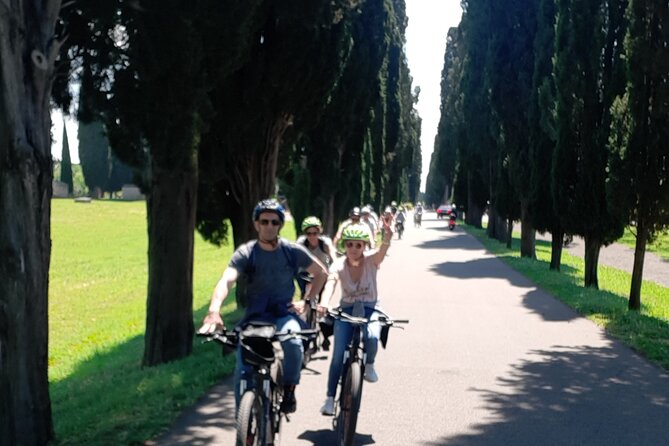
If you’ve only experienced Rome by foot, you already know the problem: it’s fast, it’s crowded, and your brain runs out of space for details. This tour solves that by switching the main mode from walking to rolling. You get that sense of escape—open sky, big ancient walls, long lines of stone—without needing to hike the whole route.
And the e-bike changes the mental math. The Appian Way sounds like it should be a one-size-fits-all postcard experience, but the reality is that you’re mixing parks, ancient infrastructure, and occasional stretches where you’re dealing with traffic. With pedal-assist, you can keep energy for the moments that matter—pausing to read the architecture, listening to the stories, and actually seeing how the water system shaped daily Roman life.
You can also read our reviews of more cycling tours in Rome
Price and what you really get for about $147.54
At about $147.54 per person for a private tour lasting roughly 4 hours, you’re paying for three things at once:
- Time with a guide who can explain what you’re seeing stop by stop
- A high-quality e-bike plus the safety gear, including a helmet and practical bike attachments (phone and handlebar holders)
- A route design that packs major landmarks along the Via Appia Antica corridor
The entry side is also straightforward. Each stop listed is marked admission ticket free, so you’re not adding museum costs to the experience. The trade-off is that you’ll want to show up ready to ride—this is not a sit-and-glide sightseeing bus.
Meeting point to bike fit: start smart so you enjoy the ride
The tour starts at Via dei SS. Quattro, 58, 00184 Roma RM and ends back at the same spot. Since the meeting point is near public transportation, you don’t have to build your whole day around a car or taxi.
When you arrive, plan on a bike fitting and setup time (helmet, phone holder, and how the bike responds for you). That sounds basic, but it matters. On an Appian Way route, comfort and control affect everything: how confidently you handle cobblestones, how easily you can pause at ruins, and how relaxed you feel when the route briefly mixes with city traffic.
One more practical point: you must know how to ride a bike well. This is stated clearly for a reason. With pedal assist, the bike helps—but you’re still responsible for staying balanced and steering.
Porta San Sebastiano: the southern gateway and the Via Appia’s starting line
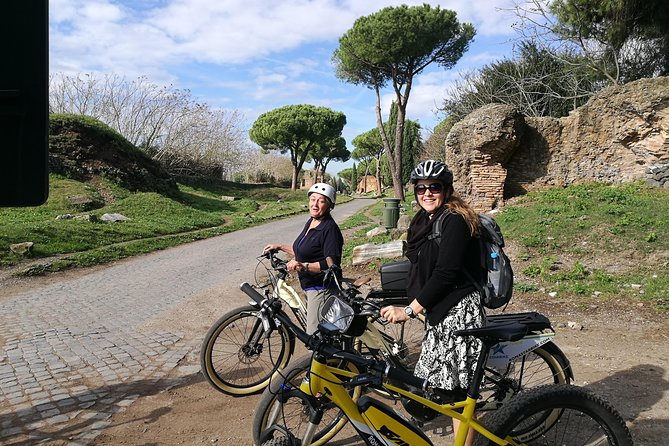
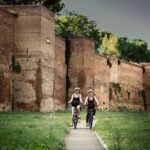
Your first stop is Porta San Sebastiano, a heavy, imposing gateway in the Aurelian Walls dating to around 275 AD. Think of it as Rome’s fortified punctuation mark: it sets the tone for the entire day. From here, the historic Via Appia Antica begins.
What I like about this stop is that it sits at the crossroads of eras. You get ancient stone and later layers too—like the medieval graffiti you can spot on the walls, a reminder that this route has drawn walkers and pilgrims for centuries. It’s not just “look, old thing.” It’s “here’s where people entered Rome’s story.”
The practical upside: this stop is marked free admission, so it doesn’t slow your day with tickets. The practical downside: the area can feel busy compared with the parks that come later, so if you’re expecting quiet immediately, give it a few minutes before judging the whole ride.
Parco della Caffarella: Rome’s big green breath with ancient remains
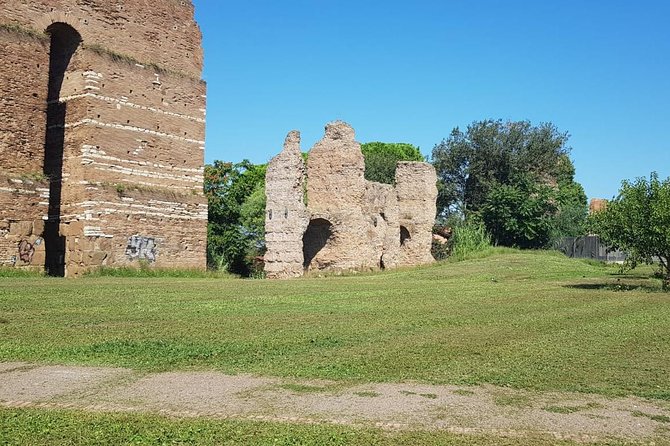
Next up is Parco della Caffarella. Today it’s part of the Appia Antica Regional Park, and it’s one of Rome’s largest green areas. But the real draw is that it’s not just nature; it’s nature with archaeology threaded through it.
This is where you start to feel the tour’s best trick: you ride from urban noise into park quiet, while the ground under you keeps whispering older times. Remains of ancient buildings show up along paths and groves, so you can pause, look, and connect architecture to the terrain around it.
Drawback? Because it’s a park, the route feel can vary—some sections may feel more open and airy than others. If you’re riding with kids, this is usually a good stretch for them to settle into the experience, but you’ll still want to keep an eye on bike control over uneven ground.
You can also read our reviews of more private tours in Rome




Ninfeo di Egeria: myth meets sacred spring
At Ninfeo di Egeria, the atmosphere shifts again. This site is tied to a love story from Roman tradition—Egeria, a nymph, and Numa Pompilius, the second king of Rome. The tale says that when Egeria learned of her beloved’s death, she cried so deeply that it gave life to a spring.
This stop works especially well if you like your history with emotion. You’re not staring at a ruin behind ropes—you’re hearing a story that explains why people would gather, believe, and remember a place tied to water.
And yes, it’s free admission here too. The catch is simple: the stop is short by design (about 20 minutes), so if you want to take longer photos or ask extra questions, tell your guide early and plan for it.
Parco degli Acquedotti: the aqueduct park and the water network of Rome
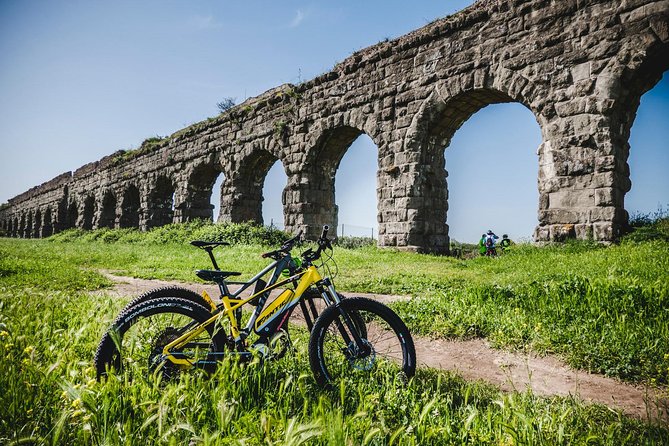
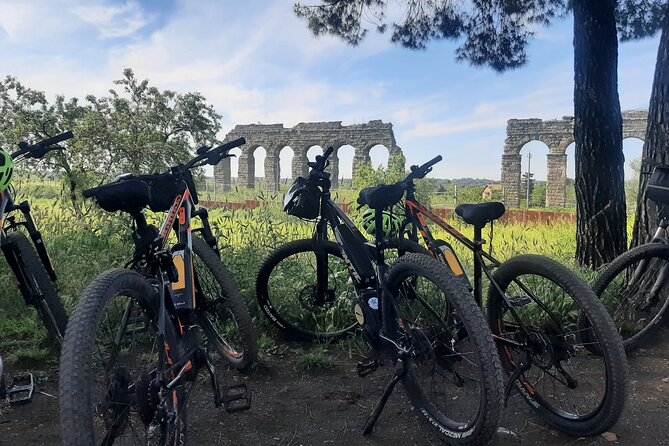
Then comes one of the biggest highlights: Parco degli Acquedotti – Parco Archeologico dell’Appia Antica. This is a wide green zone where you can see the Roman water network made visible through the remains of aqueducts. It’s tied to crossings of roads like Via Latina, described as the oldest road in Rome, so you’re seeing infrastructure at multiple levels.
What I love here is the scale. Aqueduct remains aren’t small details; they’re structures built to work for generations. You’ll notice how the engineering still feels tall and purposeful, and you might even see parts where water engineering still shows up after all these centuries.
A practical note: since this is park-and-ruins territory, it’s a good time to manage your energy and hydration. The ride has peaks of city traffic later, but this segment is where the day’s calm becomes real.
Villa dei Quintili and Santa Maria Nova: power, politics, and an imperial takeover
At the fifth mile of the Appian Way, you’ll reach Villa dei Quintili and Santa Maria Nova in the same archaeological park zone.
The villa belongs to the brothers Sesto Quintilio Condiano and Massimo Valerio, consuls in the second century AD. Then comes the grim political twist: they were killed by Commodus I, and the villa was seized and turned into imperial property.
That combination—opulence, then violence, then the state—gives this stop extra bite. It reminds you that Roman sites weren’t only temples and tombs. Some were personal power centers, and some became public assets when the ruling system changed its mind.
Drawback to consider: because the day is packed, the time at this stop is limited. If you enjoy archaeology that requires slow reading, this is where your guide’s explanation becomes the difference between seeing “walls” and understanding what the walls meant.
Mausoleo di Cecilia Metella and Castrum Caetani: best-preserved tomb, later medieval reuse
Next is Mausoleo di Cecilia Metella, a pagan tomb dating to the 1st century BC. It’s described as the best-preserved mausoleum on the Via Appia Antica, which you can feel right away—this is a structure that still holds its shape and presence.
Here’s what makes it more than a single building: it’s incorporated into Castrum Caetani, linking it to later medieval occupation. You can also see remains connected to the wealthy Caetani family and the church of San Nicola, where only perimeter walls remain.
I like this stop because it shows a Roman pattern that’s easy to miss in a fast city: later eras don’t always erase earlier ones—they often repurpose them. The tomb becomes a foundation for something else. That shift can help you understand why Rome looks layered instead of neatly restored.
Circus of Maxentius: a surviving Roman circus and the mystery of the spina
The Circus of Maxentius is on the Via Appia Antica and is described as the best surviving example of a Roman circus. If you’re used to thinking of colosseum-style arenas, this offers a different picture of public spectacle.
You’ll be able to see the spina—the central barrier—still visible. The story gets extra interesting: the Agonale obelisk that once lived here was moved during the Renaissance to Piazza Navona, where it now sits at the Fountain of the Four Rivers.
This stop is great for building context. Once you connect “what’s here now” with “what got moved,” the city’s landmarks stop feeling random. They start feeling connected.
Time-wise, it’s about 20 minutes. If you’re the type who loves reading architecture cues, you’ll get a lot by paying attention to line-of-sight and the shape of the remains.
Terme di Caracalla: huge public baths and how aqueducts powered daily life
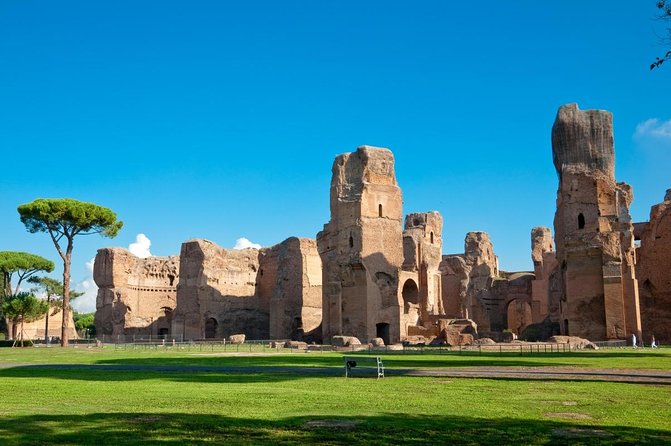
Your final major stop is Terme di Caracalla. These baths were built by Emperor Caracalla, and for about a century they were the largest public baths ever built. Much of the structure is preserved, so you’re not just looking at fragments.
Water is the theme that ties the day together. A branch of the Aqua Marcia brought water to the baths through the Antoninian aqueduct. Even if you don’t track every last channel, you’ll understand the logic: Rome built systems so people could bathe, relax, meet, and conduct daily routines.
The tour notes that small remains can be admired at Porta San Sebastiano too, which loops back nicely to your first stop. It’s like the guide is nudging you to see the whole city as one coordinated machine powered by water.
What the ride feels like: pedal assist, cobbles, and Rome traffic
This is where I’m glad the tour is honest about its requirements.
First: e-bikes have pedal assist but no throttle. That means you will pedal. Good news: it’s not described as difficult pedaling, but you shouldn’t expect a motor that does everything for you. If you want a relaxed cruise without pedaling, this isn’t that.
Second: plan for moderate physical fitness and know how to ride a bike well. You’ll be traveling over a mix of surfaces, including cobblestone areas, and you’ll want balance and control. Helmets are included, and the bike gear setup helps, but it won’t replace skill.
Third: there’s real city traffic. One review notes about 20% of the ride in busy traffic, with road-sharing alongside drivers who can feel chaotic. This doesn’t ruin the tour—but it changes who it’s best for. If you’re nervous about cycling in traffic, consider the possibility that this route may stress you.
Lastly: it can get hot. The Appian Way park areas are still outdoors, and the tour is about half a day. Bring water, wear sun protection, and be ready for summer-style heat.
Family fit: child seats, trailer bikes, and what ages work best
If you’re traveling with kids, this tour is set up with real equipment, not just “maybe.”
You’ll find a child seat up to 25 kg. There’s also a child ticket structure: children aged 6–10 are valid only if they’re less than 4/7 feet (143 cm) tall because they’ll use a trailer bike rather than a bike alone. That matters for planning. If your child is taller, you may need to rethink the setup.
What I like for families is the pacing. The day is structured with short stops (about 20 minutes each), which helps keep everyone engaged. Plus, the tour is private, so you’re not dealing with the friction of trying to manage multiple kids in a larger group.
Should you book this private e-bike tour?
Book it if you want a calmer way to see the Via Appia Antica that combines major ancient sites, aqueduct engineering, and park time, all in about four hours. The e-bikes make it realistic for more people than a straight walking plan, and the private guide setup helps the stories land.
Skip it (or at least think hard) if you’re not comfortable cycling well, if you dislike sharing roads, or if you’re hoping for a throttle-free, no-effort ride. This is pedal-assisted, not fully automatic, and the route includes some busy streets.
If you’re confident on a bike and you like your history with movement, this half-day feels like one of the most efficient—and most memorable—ways to experience ancient Rome beyond the postcard center.
FAQ
How long is the Ancient Appian Way private bike tour?
The tour lasts about 4 hours (approx.) and ends back at the meeting point.
Is this a private tour?
Yes. It’s a private tour/activity, and only your group participates.
What language is the tour offered in?
The tour is offered in English.
Are there admission tickets to pay for the stops?
The stops listed are marked as free admission (admission ticket free).
What’s included with the e-bike setup?
You get a high-quality e-bike, a helmet, and practical phone/handlebar holders.
Do you offer child seats?
Yes. A child seat is included up to 25 kg. There’s also a child option for ages 6–10 that depends on height (less than 143 cm) because they use a trailer bike.
Is tipping included in the price?
No. An optional tip is not included.
Do the e-bikes have a throttle?
Based on the ride experience described, there is no throttle. The e-bikes are pedal assisted, so you will need to do a lot of pedaling.
Do I need to know how to ride a bike?
Yes. You MUST know how to ride a bike WELL.
What is the cancellation policy?
You can cancel for a full refund up to 24 hours in advance. If you cancel less than 24 hours before the start time, it’s not refunded.