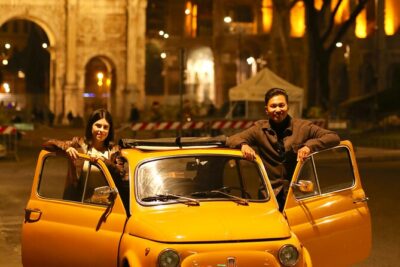
Rome’s back roads feel like a secret. A chauffeured vintage Fiat 500 turns big sights into quick, fun detours, and every stop is built for great photos and short, satisfying history lessons. You’ll bounce from Caracalla to keyhole views and panoramic terraces without the usual big-group drag.
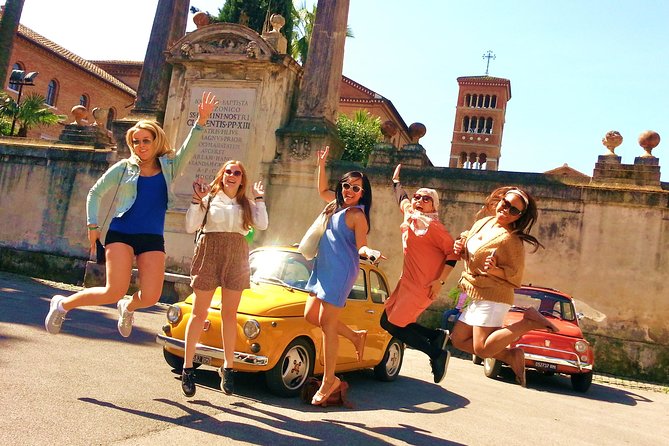
What I really like is the hands-on way the driver/guide handles photos, including free photo shooting with your phone or camera. I also like how the tour is paced: short stops that keep you moving, yet long enough to actually enjoy views (and not just pose while standing on a curb).
One thing to consider: the cars don’t have safety belts in the back seats and there are no air bags. If you’re picky about comfort and safety features, you’ll want to think about where you’ll sit. Also, at this speed, you’re there for orientation, angles, and atmosphere, not a long, deep museum session.
In This Review
- Key highlights to know before you go
- The vintage Fiat 500 experience: why Rome feels different at car level
- Price and value: what your $205.67 actually buys you
- Where you start and how the timing works in real life
- Caracalla: the scale-first stop that shocks you
- Piazza dei Cavalieri di Malta and the keyhole view of St. Peter’s
- Parco Savello: the Garden of Oranges and an optical illusion
- Trastevere: small streets, big atmosphere, and Fiat-sized access
- Piazzale Giuseppe Garibaldi: a terrace that gives you Rome’s big-picture map
- Circus Maximus: echoes, scale, and the entertainment connection
- Porta San Paolo and the pyramid you don’t expect in Rome
- Colosseum: quick orientation at Rome’s loudest address
- Via Galvani: the hill made from broken pottery
- The people factor: guides, jokes, and photo help that changes your day
- Who should book this Fiat 500 tour
- Should you book this Original Fiat 500 Rome tour?
- FAQ
- How long is the Fiat 500 tour?
- Where does the tour start and end?
- What’s the price per person?
- Is the tour offered in English?
- How big is the group?
- Are tickets and admission included for the stops?
- Is there food or drinks provided?
- Does the tour include photos?
- What should I know about safety in the car?
- Who might not be able to join?
- What’s the cancellation policy?
Key highlights to know before you go
- Vintage Fiat 500 convoy ride: you zip through tight streets that big buses can’t touch
- Driver as photographer: easy, on-the-spot pictures with your phone or camera
- Short stop timing: lots of viewpoints and monuments, all in about three hours
- Free admission tickets listed on the route: Caracalla, and the Colosseum stop include free tickets
- Small group cap (max 20): more chat, less crowding than standard tours
- Morning or afternoon departures: you can fit it around your Rome plan from Via Labicana
The vintage Fiat 500 experience: why Rome feels different at car level
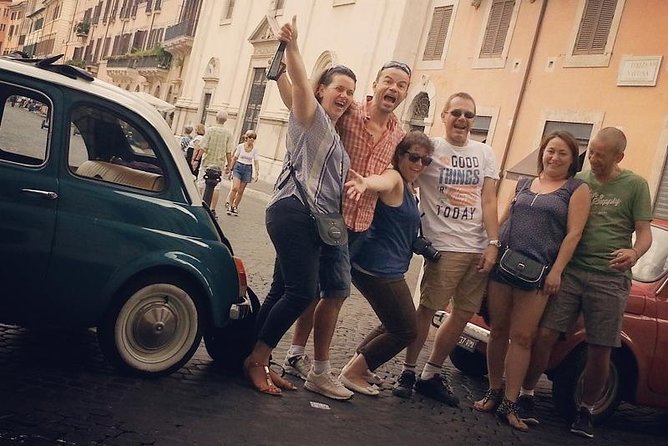
Rome can feel like a theme park if you only do the obvious routes. This tour changes the scale. Instead of being stuck on the outside of traffic, you’re moving through lanes, under arches of buildings, and along streets where you can almost hear everyday life. The vintage Fiat 500 draws attention in the best way: people point, smile, and take photos while you’re busy soaking in the scenery.
It’s also a social format without being chaotic. You’ll be part of a shared group (up to 20), so you get the energy of other people watching and sharing impressions, but the pace stays quick. And because it’s a chauffeured convoy tour, you focus on the sights, not on the logistics of getting there.
I’d call this a good choice if you’re trying to get your bearings fast. In a few hours, you’ll see how Rome’s neighborhoods relate to each other, and you’ll get lots of visual anchors for later on your own.
You can also read our reviews of more tours and experiences in Rome.



Price and value: what your $205.67 actually buys you
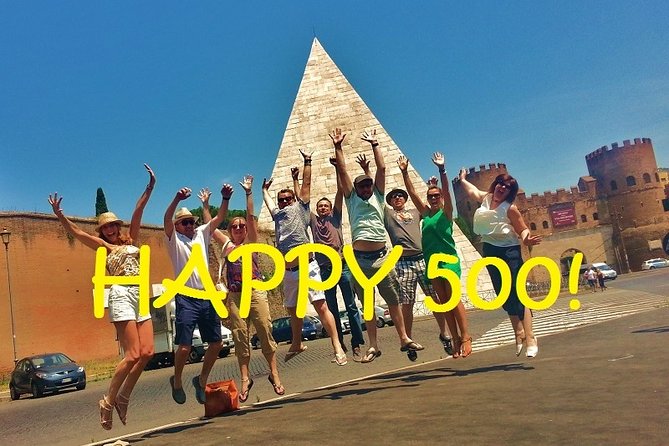
The tour price is not cheap, so you want to be clear on what you’re paying for. You’re paying for (1) the driver/guide, (2) guided movement through multiple areas, (3) light refreshments, and (4) free photo time—where the driver helps you get the shot instead of you doing awkward selfie gymnastics.
On top of that, the listed stops include free entry tickets for the main sites in the route, like Caracalla and the Colosseum. That matters because those admissions can be a line-item cost on your own day.
In practical terms, the value is highest if:
- you want a tight itinerary with minimal walking
- you care about photo angles from places most people miss
- you want someone to explain what you’re looking at while you’re in the moment
If your ideal day is slow wandering with long museum time, you might feel rushed. But if your goal is a high-impact Rome overview with personality, this tour is built for that.
Where you start and how the timing works in real life
You meet at Via Labicana, 125 (00184 Roma) and you return there at the end. The duration is about 3 hours, and the stops are roughly 20 minutes each on the itinerary-style pacing.
That “about 3 hours” detail is more important than it sounds. Rome days often balloon—one late lunch, one extra line, one detour. A tight tour like this can act like a spine for your day: you do the tour first (or mid-day), then you have the rest of the day to roam freely with confidence.
The tour is offered in English, with the possibility of a multi-lingual guide depending on the operation that day. Also, it runs with a minimum of 2 people per booking, so you’ll want to book with enough flexibility in case the date needs to be adjusted.
Caracalla: the scale-first stop that shocks you
Caracalla is one of those places where ruins don’t feel small. This complex was one of Rome’s biggest and most sophisticated bath-and-health centers, with space described as roughly the size of 15 football pitches. You’re looking at a site that wasn’t just about hot water—it also connects to libraries, gyms, a theatre, seminar rooms, gardens, and fountains.
Why it works on this tour: the guide can give you the story in a compressed way, and your 20 minutes are enough to grasp the overall layout and the sheer ambition of Roman engineering. It’s also one of the stops where the free admission ticket listed for the tour is a real perk.
Possible drawback: because it’s a large area, if you show up expecting a fully explained, inside-every-room tour, you’ll get frustrated. Think of it as a strong orientation to a major Roman site—enough to make you want to return later.
Piazza dei Cavalieri di Malta and the keyhole view of St. Peter’s
This is the stop you’ll remember because it’s so unexpectedly playful. You’ll learn why St. Peter’s Church is framed in a keyhole—and the payoff is a view designed to make you look again, slower, and a bit amazed.
The tour’s promise here is the keyhole perspective: you can see three countries in line through the famous opening. Even if you’re not the type who hunts views, this one hits because it turns geography into a visual trick.
How to make it better: pull your phone out early and aim for a steady shot. The real value is not just the photo—it’s the moment you line up your view and realize you’re looking at something planned, not accidental.



Parco Savello: the Garden of Oranges and an optical illusion
Parco Savello is one of those spots where the setting helps do the explanation. You get panoramic views over Rome, and the garden is also nicknamed the Garden of the Lovers, which gives you the right vibe for a quieter pause in the schedule.
The standout detail here is the optical illusion related to St. Peter’s Church. It’s the kind of visual phenomenon that sounds like a gimmick until you see it with your own eyes. Your 20 minutes are perfect: enough time to settle, look around, and re-check the view more than once.
Possible drawback: this stop can feel a bit repeatable if you’re already exhausted from earlier viewpoints. If you want maximum energy for this one, keep your breaks short and save your slower, longer photo session for this terrace.
Trastevere: small streets, big atmosphere, and Fiat-sized access
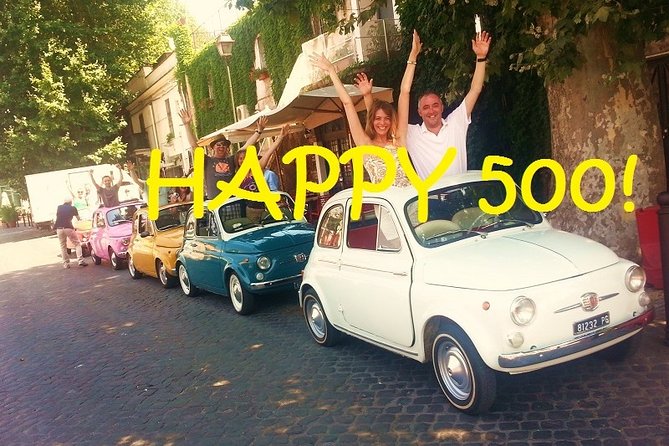
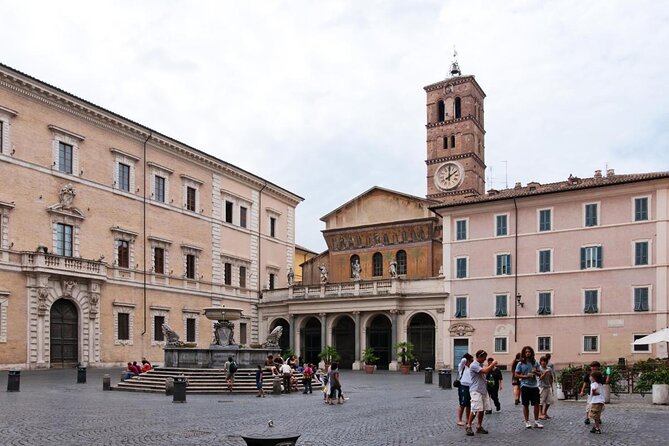
Trastevere is where Rome can feel most human, and the Fiat route is a big reason why. You’ll zip through tiny streets where a Ferrari or Lamborghini vibe is fun—but the real magic is that this car can actually do it. You also get the odd delight of being noticed: people watching you roll by, and the onlookers doing the same.
The guide’s job here is to translate street-level life into context: what you’re seeing, why it matters, and how the neighborhood fits into the city’s story. Your stop is brief, so you’re not trying to “tour Trastevere” in the classic way. You’re getting a taste of the feeling and the geography.
If you’re planning to spend your own time in Trastevere later, this stop is a great warm-up. You’ll spot lanes and angles you’ll want to return to when you’re walking.
Piazzale Giuseppe Garibaldi: a terrace that gives you Rome’s big-picture map
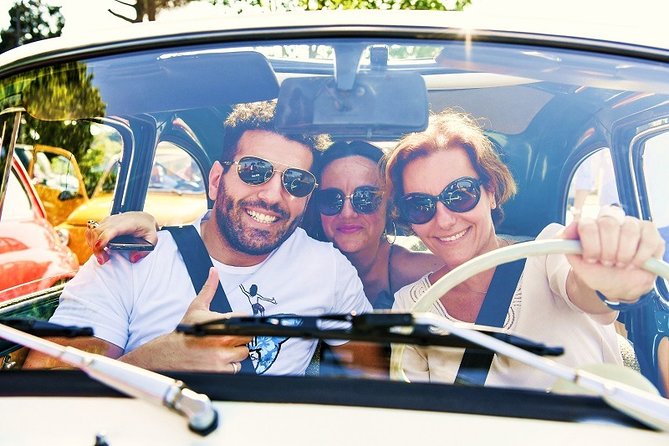
This is another viewpoint stop, but it’s not generic. Piazzale Giuseppe Garibaldi is described as one of the best terraces for panoramas, and the tour focuses on the sweep of landmarks you can see from here.
Expect to take in a “greatest hits” spread that includes the Colosseum, Pantheon, and Altare della Patria, plus the sight of 100 church domes. That last detail matters because domes are the visual language of Rome. Once you’ve counted them from a distance, the rest of your trip feels easier: you know what you’re looking at.
Possible drawback: the view is wide, so if the light is harsh or the air is hazy, some distant details can fade. Still, even on a less-than-perfect day, the arrangement of landmarks is often enough to make this stop worth the time.
Circus Maximus: echoes, scale, and the entertainment connection
Circus Maximus is one of the most interesting “wait, that was here” moments. It’s presented with context about the chariot races that could draw around 250,000 excited people. You’re also told it was built about 400 years before the Colosseum, which helps you understand Roman entertainment wasn’t a late invention—it was baked into the calendar early.
This stop adds a modern layer too. The area is sometimes used for rock concerts, with examples like Rolling Stones and Roger Waters referenced in connection with events. Bruce Springsteen is also mentioned as having played there. That creates a nice sense of continuity: crowds still gather, even if the costumes and vehicles changed.
Possible drawback: this is not a “stand in the middle of the arena and relive a race” kind of place in the way some people expect. Your 20 minutes are about understanding the scale and letting the story make sense from where you’re standing.
Porta San Paolo and the pyramid you don’t expect in Rome
Porta San Paolo brings the kind of oddball fact that makes you smile. You’ll hear that Rome has the 4th biggest ancient Egyptian Pyramid, built in 18 BCE. This isn’t a replica story—it’s tied to Rome’s own burial and monument culture.
The tour connects the pyramid to the tomb of Gaius Cestius, a wealthy and eccentric Roman. That combination—Egyptian-style shape plus a Roman personal story—makes this stop land.
Why it’s a smart stop on this itinerary: it breaks the pattern. Many Rome days stick to the same set of icons. This one gives you something you can’t easily “spot” without a guide’s explanation.
Possible drawback: the pyramid concept can feel like trivia if you’re not in an explanatory mood. If you arrive curious, you’ll walk away with a clearer mental picture of why it’s there and what it meant.
Colosseum: quick orientation at Rome’s loudest address
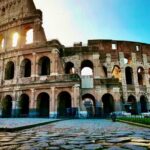
The Colosseum is the big one. It was built around 80 CE and used for gladiator fights, executions, and naval combats. The tour also frames it with a staggering statistic: in about 500 years of activity, it’s estimated that roughly 250,000 people died inside the arena.
Your stop time is short and the emphasis is on getting your bearings. You’re there to connect the site to the stories and then move on to the next part of the schedule. If you want to go deeper—like specific sections, detailed architecture, or longer viewing—this tour won’t replace a dedicated Colosseum visit.
Possible drawback: because the stop is timed, you should mentally prepare for a quick hit. Plan to return later if you fall in love with the place. The benefit is that you’ll leave knowing where things are, not just that you were there.
Via Galvani: the hill made from broken pottery
This stop is fun because it sounds impossible. Via Galvani is tied to an artificial hill created from broken pottery pieces—originally used to transport olive oil, fish sauce, and wine.
The story is wild: what started as a dump of broken vases became a hill about 40 meters high and 700 meters around. The estimate given ties the material to roughly 50 million vases. That’s the kind of scale that turns industrial refuse into an urban feature.
In your 20 minutes, your best move is to focus on the idea more than any single object. It’s a reminder that cities aren’t just built with monuments. They grow from everyday materials and messy leftovers.
The people factor: guides, jokes, and photo help that changes your day
A tour like this lives or dies on the guide. The energy you get can make all the difference between a checklist and an actual experience.
Across the different guides who may operate this tour, you’ll often hear names like Francesco, Alexis, Alex, Alexi, Emmanuelle, Marco, Giorgio, Mike, Max, and Michael. People describe them as funny, engaging, and strong on Rome’s history and architecture, with the kind of pacing that keeps a teen interested too.
More importantly, you’ll notice how the driver/guide handles photos. The setup is simple: they help you get shots using your own camera or phone, and they’re part of the process, not just sitting there waiting. If you’ve ever struggled to get a decent photo at a viewpoint because you’re tired and other people are in your frame, you’ll appreciate this.
And yes, light refreshments are included, which helps you keep your energy for the last third of the route.
Who should book this Fiat 500 tour
This is a great fit if you:
- want short, photo-friendly stops with guidance while you move
- like the idea of tight neighborhood access in a small car
- prefer not to spend hours on one monument on day one
- want a day plan that feels organized, even if Rome is messy outside your window
It’s not the best fit if you:
- need a car ride with safety belts in the back seats and air bag protection (this tour’s cars have no air bags, and back seats have no safety belts)
- want long time inside major sites
- plan to linger in one place all day without a schedule
Should you book this Original Fiat 500 Rome tour?
I’d book it if you want a structured Rome overview that still feels playful, personal, and very photo-friendly. The combination of a vintage Fiat 500, a small group size (max 20), free-entry stops listed on the route, and real photo help makes it more than just transportation.
Before you commit, check your comfort with the safety setup (no air bags, no back-seat belts) and set expectations for time: you’re getting quick orientation and viewpoint moments, not a slow museum day. If that matches your style, this tour is one of the most efficient ways to see a lot of Rome while still feeling like you’re doing something different.
FAQ
How long is the Fiat 500 tour?
It’s about 3 hours on average.
Where does the tour start and end?
The meeting point is Via Labicana, 125, 00184 Roma RM, Italy, and the tour ends back at the meeting point.
What’s the price per person?
The price is listed as $205.67 per person.
Is the tour offered in English?
Yes, it’s offered in English, and it may be operated by a multi-lingual guide.
How big is the group?
The tour has a maximum of 20 travelers/participants.
Are tickets and admission included for the stops?
The listed stops include free admission tickets for the areas described in the itinerary, including Caracalla and the Colosseum stop.
Is there food or drinks provided?
Light refreshments are included.
Does the tour include photos?
Yes. There’s free photo shooting using customers’ cellphones/cameras.
What should I know about safety in the car?
There are no safety belts installed in the back seats of the cars, and there are no air bags in the car.
Who might not be able to join?
It’s not suitable for passengers weighing more than 100 Kg.
What’s the cancellation policy?
You can cancel for a full refund up to 24 hours in advance. If you cancel less than 24 hours before the start time, the amount paid isn’t refunded.