REVIEW · ROME
Vatican: St. Peter’s Basilica & Vatican Museums Guided Tour
Book on GetYourGuide →Operated by QUO VADIS TOUR · Bookable on GetYourGuide
Three hours in the Vatican can feel like a sprint. This tour is interesting because it strings Vatican Museums, the Sistine Chapel, and St. Peter’s into one guided route so you don’t waste time hunting for the “main stuff.” I like that it gives you real context as you move through major galleries, and I also like that you get skip-the-line help for the Museums and the Chapel.
One thing to keep in mind: even with skip-the-line, you still hit museum security, and they can add a 20–30 minute setback—plus you must show up early for the strict entrance time.
In This Review
- Key things to know before you go
- The value of a 3-hour Vatican loop (and where it’s worth the money)
- Check-in, timing, and the easiest way to avoid a headache
- Cortile del Belvedere: the “warm-up” that sets the tone
- Gallery of Tapestries and the human-scale wonder of crafted art
- Gallery of Maps: why it feels like the Vatican’s secret classroom
- Vatican Museums: 54 galleries, 7 kilometers, and why headsets matter
- Sistine Chapel: making the ceiling make sense fast
- St. Peter’s Basilica: Pietà, Baldacchin, relics, and the scale shock
- What’s included (and what that means for your day)
- Who should book this (and who might want a different plan)
- Practical rules that can derail your visit if you ignore them
- Should you book this Vatican Museums and St. Peter’s tour?
- FAQ
- Where is the tour meeting point?
- How early should I arrive for my entry time?
- What parts of the Vatican does the tour include?
- Is the dome of St. Peter’s Basilica included?
- What dress code do I need for the Museums?
- Do I get tickets sent to me in advance?
- Is this tour suitable for wheelchair users or people with mobility impairments?
- Can I cancel for free?
Key things to know before you go
- Skip-the-line is for specific areas (Vatican Museums and Sistine Chapel), not the Basilica dome.
- You cover 54 galleries over about 7 kilometers, so comfy shoes matter.
- Headsets are included, which is a big quality-of-life upgrade in busy rooms.
- St. Peter’s is guided for about 45 minutes, so you get the essentials without lingering.
- Guides like Daniel and Tatiana are praised for making art and symbolism click fast.
- Dress code is strict: knees and shoulders must be covered to enter the Museums.
The value of a 3-hour Vatican loop (and where it’s worth the money)
At $158.17 per person, this isn’t a cheap activity. You’re paying for three things that matter in Vatican City: guided interpretation, timed entry without doing the scramble yourself, and the practical kit (like headsets) that keeps the tour moving smoothly.
You’re also getting a tour format that matches how the Vatican actually works on the ground. The Vatican Museums can be overwhelming in size alone—this route is planned to take you through a large selection of galleries without turning your day into a self-guided guessing game. Then, once you reach the Sistine Chapel, you want someone to point out what you’re looking at, because walking in blind can make an iconic ceiling feel like… ceiling.
And finally, St. Peter’s Basilica is a whole world by itself. This tour gives you guided highlights—including discussion of famous works like Michelangelo’s Pietà and Bernini’s Baldacchin—without trying to do everything (like climbing the dome, which is not included).
You can also read our reviews of more guided tours in Rome



Check-in, timing, and the easiest way to avoid a headache
You start at Via Sebastiano Veniero, 21. Then the big “gotcha” here is that tickets are not sent directly to you. You check in at the tour operator’s office desk, located in the parallel street at the entrance of the Vatican Museums.
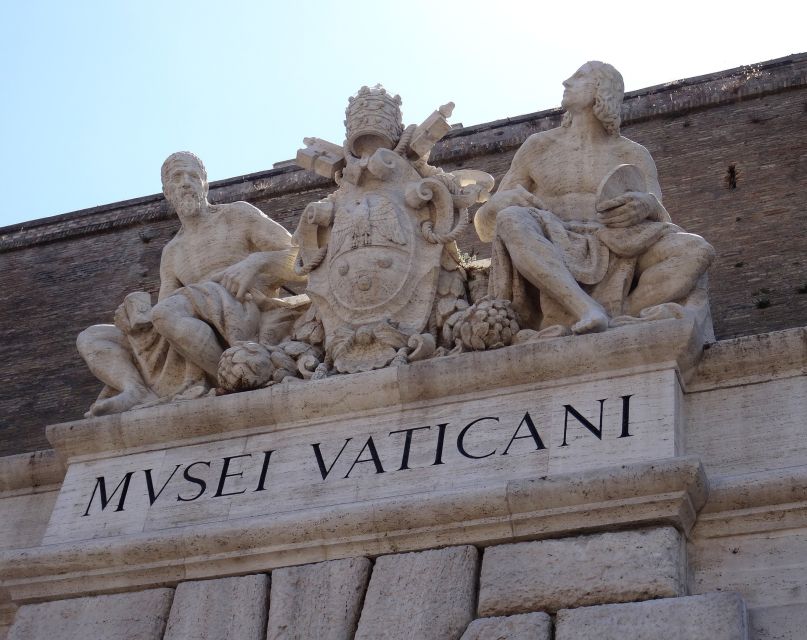
Entrance times are strict. You need to plan to be there at least 20 minutes before your entry time, or you risk being refused entry. And late arrivals are treated as no-show with no refund or rescheduling.
I recommend arriving early in a very literal way. Not five minutes early. More like early enough that you can stand still, check your meeting location twice, and still feel calm. Vatican logistics can be confusing even for people who have done Europe before.
Cortile del Belvedere: the “warm-up” that sets the tone
Your first guided stop is Cortile del Belvedere. Think of this as your orientation moment: you’re in a major museum complex, you’re about to walk a lot, and you’ll benefit from knowing what you’re looking at before you’re deep inside.
This is where a good guide earns their pay. Instead of dumping names and dates, they help you connect the dots between art, architecture, and the Vatican’s role as a power center of the Catholic Church. If you’ve ever felt like big museum tours start too late—this one is built to start early.
Gallery of Tapestries and the human-scale wonder of crafted art
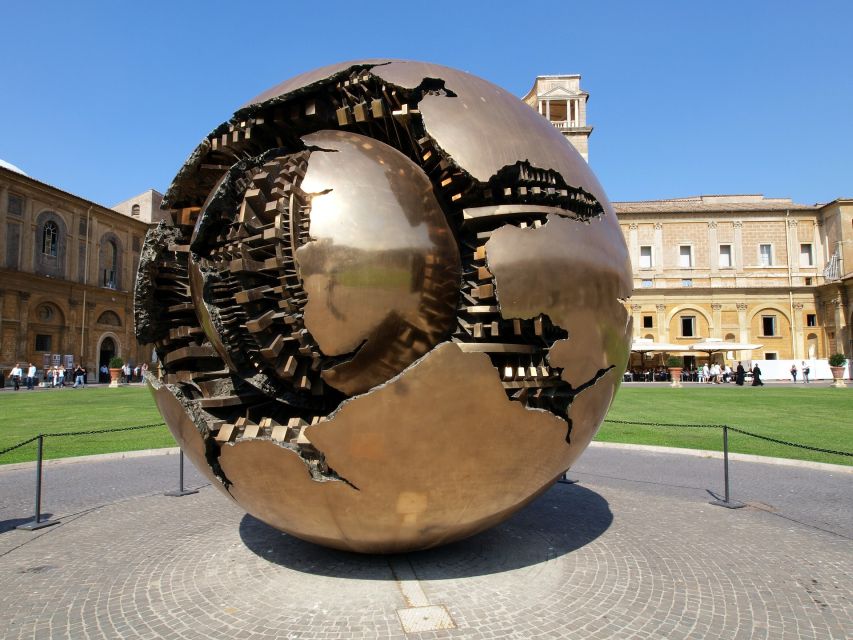
Next up is the Gallery of Tapestries. It’s a room that catches your eye because it’s visual drama you can read from a distance, and because it feels different from the wall-to-wall painting experience most people expect.
What you get on a guided route is not just looking. You’ll learn what these pieces represent and why they mattered enough to be displayed in this setting. For a first visit, that kind of framing turns a “nice-looking room” into something you remember later.
One practical note: this is still part of the museum flow. You’ll want to keep your phone charged (there’s recharging at the meeting point, and you’ll likely rely on it for photos and maps afterward). And because you’re walking through multiple galleries, you’ll want to treat this as the start of a long indoor circuit, not a quick stop.
Gallery of Maps: why it feels like the Vatican’s secret classroom
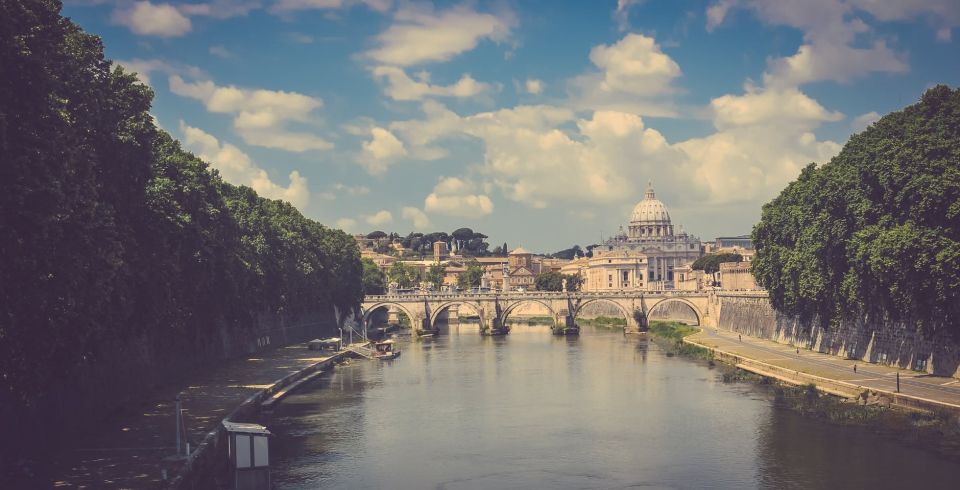
Then comes the Gallery of Maps, Vatican Museums. Even people who don’t consider themselves “museum people” often perk up here because it changes the type of knowledge you’re absorbing.
You’re not staring at the usual figures and scenes. You’re looking at a curated picture of the world as people in earlier centuries understood it—and that’s a powerful reminder that museum displays aren’t just art. They’re education, politics, and belief, all in one.
On this tour, the guide’s job is to keep the room from becoming a blur. You’ll move through with explanations meant to help you interpret what you see instead of trying to do a crash course by yourself while people stream past.
You can also read our reviews of more museum experiences in Rome



Vatican Museums: 54 galleries, 7 kilometers, and why headsets matter
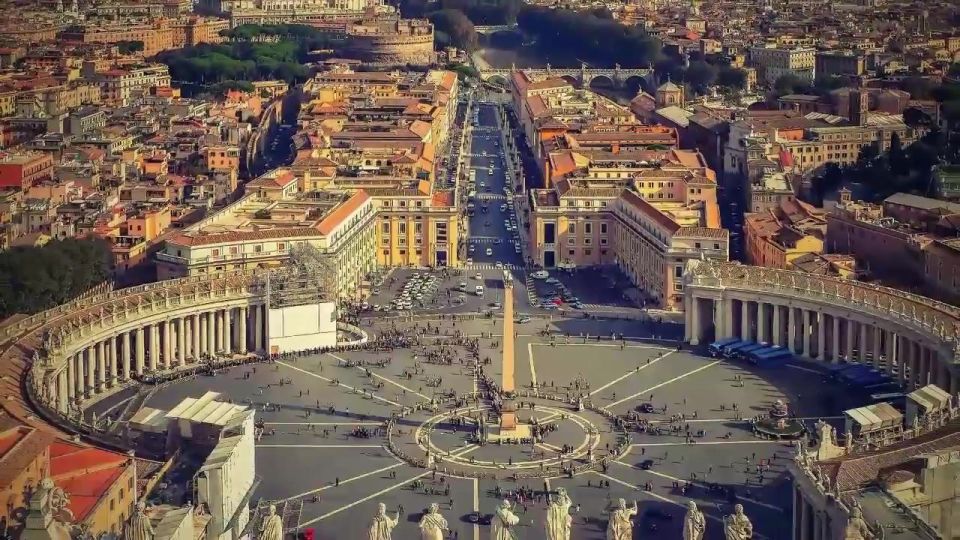
The main Vatican Museums portion is built around a massive route. You’re guided through 7 kilometers of artistic treasures spread across 54 galleries. That’s a lot to take in, and it’s exactly why the included headsets make a difference. In crowded halls, it’s hard to hear clearly—especially when you’re moving.
I also like that this part isn’t presented as a checklist. The route is guided so you’re not constantly asking: Where are we? What am I supposed to notice? What does this mean?
If you have limited time in Rome, this structure is what makes the price feel more reasonable. You’re buying speed, direction, and interpretation all at once.
And yes, there can still be a minor setback from mandatory security checks, even with skip-the-line. It won’t be a full stop, but plan your day with a little buffer.
Sistine Chapel: making the ceiling make sense fast
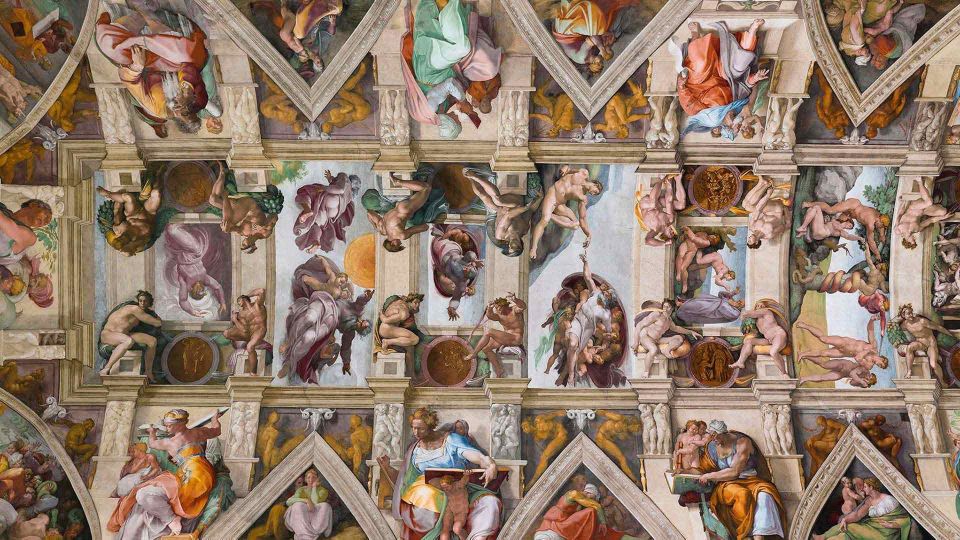
You’ll then visit the Sistine Chapel, home to Michelangelo’s famous ceiling frescoes. This stop is where a good guide can turn awe into understanding.
On this tour, you’ll get help connecting what you see on the ceiling to Michelangelo’s broader life and work. That matters because the Chapel is designed to overwhelm you visually—and without context, you might just register “wow” and then forget the details you were hoping to catch.
You’ll also learn about specific religious themes and symbols that can be tough to spot on your own. The payoff is that you can stand there longer, looking more intentionally, and actually feel like you’re reading the art.
For many people, the Sistine Chapel is the emotional climax. For me, it’s the moment when the tour becomes more than a time-saver. It becomes a story.
St. Peter’s Basilica: Pietà, Baldacchin, relics, and the scale shock
After the Chapel, you head to St. Peter’s Basilica for a guided visit of about 45 minutes. The Basilica is thought to be located above the burial spot of St. Peter, and walking into it feels less like entering a building and more like entering an idea: the Catholic Church expressed in architecture, sculpture, and ritual space.
This tour focuses on guided highlights, including the Pietà and Bernini’s Baldacchin, plus relics discussed by your guide. If you’re the kind of visitor who wants to know why people stop where they stop, this part is useful. You’ll get pointed to works and locations so you don’t spend your time only looking upward.
What’s not included is the dome entry. So you get interior highlights with guidance, but you don’t get the dome climb that many first-timers imagine as part of the “full package.” That’s totally fine if you’d rather save energy and see more of Rome later.
One other practical note: St. Peter’s can have unscheduled closings or late openings due to religious ceremonies. If that happens, the activity provider may offer another date. It’s worth keeping your overall schedule flexible.
What’s included (and what that means for your day)
Here’s what you do get:
- Skip-the-ticket-line entry for the Vatican Museums and the Sistine Chapel
- Guided tour of St. Peter’s Basilica (about 45 minutes)
- A live guide (languages listed: Portuguese, Russian, English, Spanish)
- Headsets
- Free Wi‑Fi at the meeting point and a recharging station
And here’s what you don’t get:
- Hotel pickup/drop-off
- Food and drinks
- Entry to the dome of St. Peter’s Basilica
This is important for planning. Since there’s no included dome time, you should not plan your day around dome tickets. Instead, think of this as a high-impact art and architecture tour that gives you major icons plus explanation, without forcing extra climbs.
Who should book this (and who might want a different plan)
This tour is a great fit if:
- you want guided context for major Vatican art and symbolism
- you’re short on time and want to hit the big sights efficiently
- you like having someone help you find the “meaning” behind the masterpieces
- you appreciate practical tools like headsets in crowded spaces
It’s not a great fit if:
- you’re sensitive to lots of indoor walking (the route is long)
- you need wheelchair access or mobility-friendly support (it’s listed as not suitable for mobility impairments and wheelchair users)
- you don’t want to follow a strict dress code (knees and shoulders covered)
Practical rules that can derail your visit if you ignore them
Before you go, read the restrictions like you’d read a restaurant’s no-shoe policy—because they matter here.
You cannot bring:
- pets
- shorts, short skirts, or sleeveless shirts
- large bags/luggage
- weapons or sharp objects
- glass objects
- crutches
- scooter
- non-folding wheelchairs or non-folding strollers
Also, be aware that security checks are mandatory. Even with skip-the-line tickets, you may face a minor wait.
So pack smart: bring the essentials, wear clothing that covers knees and shoulders, and plan to keep your bag situation simple.
Should you book this Vatican Museums and St. Peter’s tour?
If your time in Rome is limited and you want the Vatican highlights without the stress of route-planning, I think this is a strong buy. The skip-the-line access you get for the Museums and Sistine Chapel plus a guided St. Peter’s visit makes the day feel efficient, not frantic.
I’d especially recommend it if you care about understanding what you’re seeing—because the tour’s value is in interpretation: how the guide helps you connect the art, the places, and the meaning behind it. People like Daniel and Tatiana are praised for the way they explain things and stay patient, which is exactly what makes a complex site like this enjoyable rather than overwhelming.
If you’re traveling with mobility needs, or you want to include the dome as a must-do, you may want to look at a different format. And if you hate strict time windows, take extra care with arrival time, since late entry can mean no entry.
FAQ
Where is the tour meeting point?
The tour starts at Via Sebastiano Veniero, 21. You then check in at the tour operator’s office desk in the parallel street at the entrance of the Vatican Museums.
How early should I arrive for my entry time?
Tickets are not delivered to you. The entrance time is strict, so plan to be there at least 20 minutes before your entry time. If you arrive later than the time on your voucher, you can be refused entry.
What parts of the Vatican does the tour include?
You get guided visits to Vatican Museums, the Sistine Chapel, and St. Peter’s Basilica. The tour also includes guidance through multiple museum stops such as Cortile del Belvedere and key galleries.
Is the dome of St. Peter’s Basilica included?
No. Entry to the dome is not included.
What dress code do I need for the Museums?
To enter the Museums, knees and shoulders must be covered for both men and women.
Do I get tickets sent to me in advance?
No. Tickets are not sent directly to you. You must check in at the tour operator’s office desk to receive your entry arrangement.
Is this tour suitable for wheelchair users or people with mobility impairments?
It is not suitable for people with mobility impairments and not suitable for wheelchair users.
Can I cancel for free?
Yes. The tour offers free cancellation up to 24 hours in advance for a full refund.