REVIEW · ROME
Walk the magic of Rome at night
Book on GetYourGuide →Operated by Lock Your Tour · Bookable on GetYourGuide
Night turns Rome into a glow show. This 2.5-hour walk threads together major icons and a few big-feeling landmarks you might otherwise skip, all under evening lights. You’ll pass the Colosseum, swing by the Trevi Fountain, and end at the Spanish Steps with photo breaks built in.
I especially love how this tour mixes the huge, obvious sights with more specific Rome details. You get headsets for easy listening, and the route is paced so you can actually see things, not just shuffle from stop to stop. I also like that you’ll stop at places such as Piazza Venezia and the Pontifical Gregorian University area, where the city feels like it’s layering eras right on top of each other.
One possible drawback: it’s about 3 miles (5 km) on sidewalks that can be uneven, plus you’ll climb at the Spanish Steps. If you have mobility limits, this may not feel good.
In This Review
- Key highlights to look forward to
- Rome after dark: what makes this walk feel different
- Getting started at Via del Monte Oppio and finding your guide fast
- Colosseum at night: gladiator-era stories in the glowing amphitheater view
- Via dei Fori Imperiali to Piazza Venezia: Rome’s big monuments and big views
- Pontifical Gregorian University: a quick historical detour that adds context
- Trevi Fountain coin wish: left-shoulder tradition and prime viewing time
- Marcus Aurelius Column and Hadrian’s Temple: smaller monuments with big “oh wow” moments
- Pantheon at work: a church stop that changes how you see the building
- Spanish Steps at night: the short climb and the best angles
- Comfort, pace, and who this tour is best for
- Price and value: what $39.86 buys you in real time
- Should you book this Rome at night tour?
- FAQ
- How long is the Rome at night walk?
- How much walking is involved?
- Where does the tour start and end?
- What language is the guide?
- What’s included, and what’s not included?
- Is luggage or large bags allowed?
- Is the tour suitable for mobility impairments?
- Is free cancellation available, and do I need to pay right away?
Key highlights to look forward to
- Small-group walking route that links the Colosseum, Trevi, Pantheon, and Spanish Steps in one evening
- Headsets and Wi-Fi, so you hear the guide without constantly craning your neck
- Photo stop planning at the Colosseum and again at the Pantheon and Spanish Steps
- Trevi coin wish moment, with the classic left-shoulder toss
- Ancient-to-modern sights along Via dei Fori Imperiali and past the Marcus Aurelius Column
- Piazza Venezia and the Victor Emmanuel II monument area for a big Roman panorama
Rome after dark: what makes this walk feel different
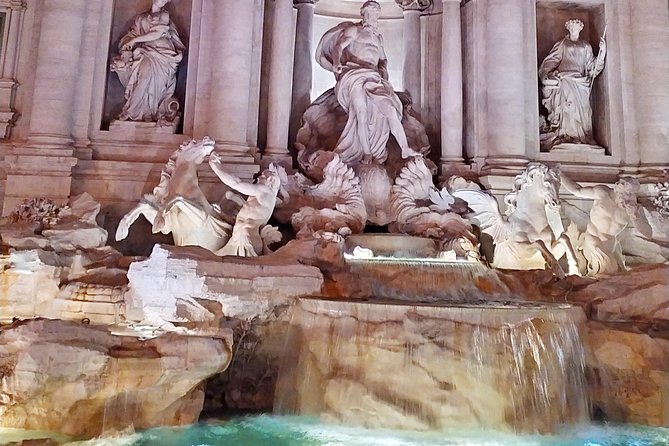
Rome is already impressive. At night, it turns theatrical. Streetlights and building glow change the mood fast, and the big monuments look less like postcards and more like places you can stand inside with your own eyes.
This tour is built around that timing. You’re not just rushing through names on a map. You’re walking a sensible path that hits the Colosseum, the Trevi Fountain, and the Pantheon area, then works your way to the Spanish Steps. The route also includes less-famous-but-still-famous landmarks like Venezia Square and Piazza di Pietra, so you get variety instead of only the top three.
And because it’s guided, you’re learning what you’re looking at while you’re standing there, which is when the city makes the most sense.
You can also read our reviews of more walking tours in Rome
Getting started at Via del Monte Oppio and finding your guide fast
The tour meets at Via del Monte Oppio 3, 00184 Roma RM. The guide arrives at least 10 minutes early, which is helpful because Rome streets can be a little chaotic when you’re looking for a specific flag in the dark.
Look for the guide in front of the red house, identifiable by a Lock Your Tour flag or umbrella. This matters more than it sounds. If you show up right on time and you’re still trying to spot the group, you lose the easiest part of the night: calm setup before you start walking.
Plan to travel light. Luggage or large bags aren’t allowed, and the route is walk-focused. Wear comfortable shoes. Rome at night is gorgeous, but cobblestones do not care about your outfit plan.
Colosseum at night: gladiator-era stories in the glowing amphitheater view
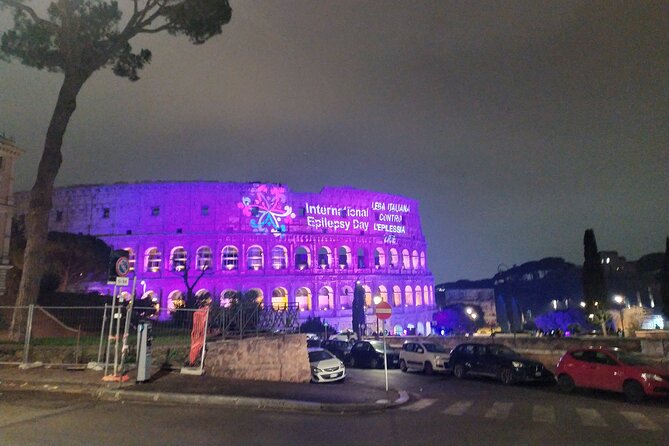
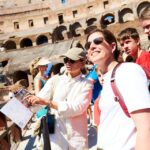
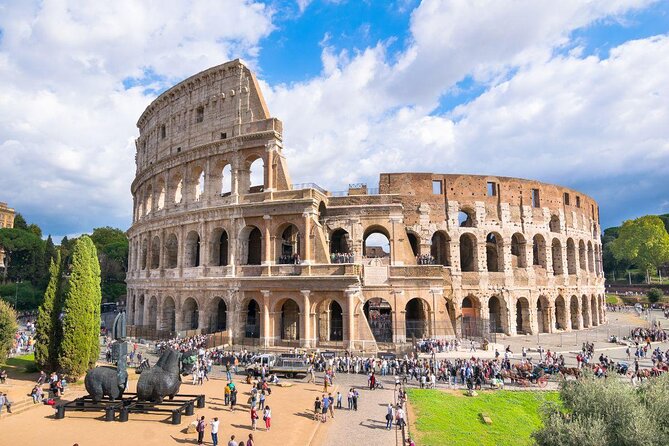
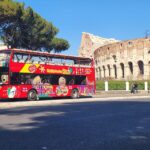
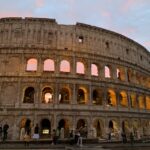
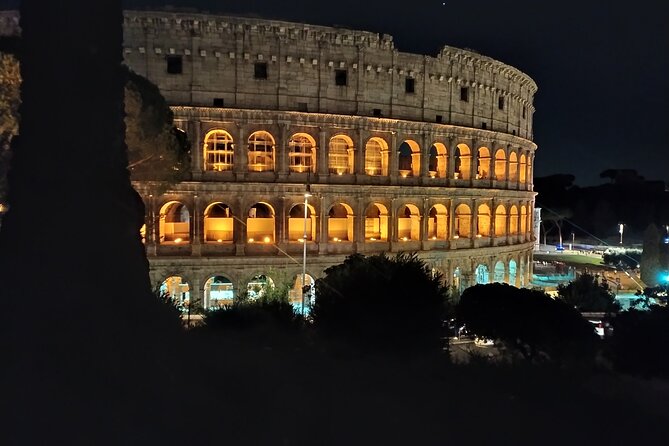
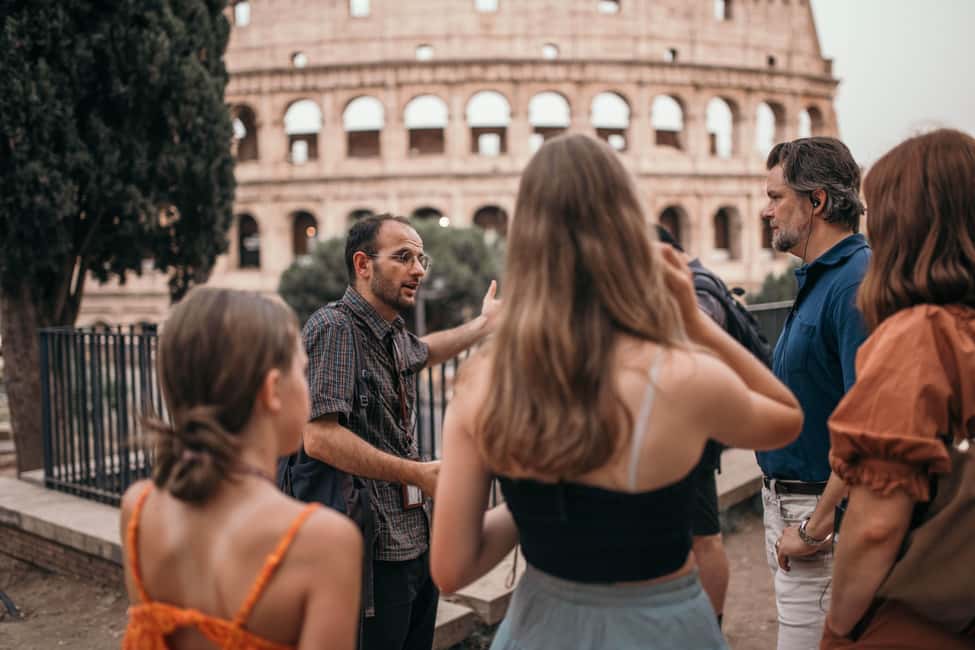
The first major stop is the Colosseum, after a short walk from the meeting point. You’ll get a photo stop and a guided introduction, plus time to look at the monument in evening light.
Your guide shares what happened inside those walls, including the gladiator contests and shows that took place in the amphitheater. Standing outside at night, it’s easier to understand why people were captivated by this place in the first place. Even if you’ve seen photos, the scale feels different when it’s lit up and the streets around it settle into evening.
This is one of the best stops for camera time on the route. The tour is set up so you’re not trying to snap while you’re still figuring out where to stand. If you’re the type who wants one classic shot and one more creative angle, this is where you can do both.
Via dei Fori Imperiali to Piazza Venezia: Rome’s big monuments and big views
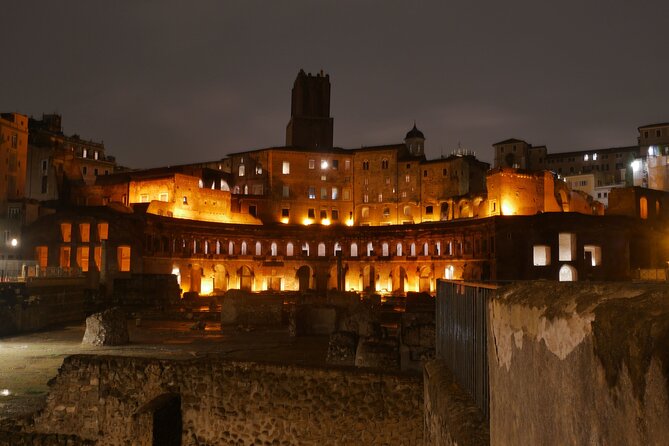
From there, you’ll walk down Mussolini’s grand Via dei Fori Imperiali. It’s a striking stretch, because it’s designed for long views and big scale. At night, it feels like a corridor of history: straight lines, dramatic lighting, and landmarks that keep showing up as you walk.
Then comes Piazza Venezia, where you get another guided moment and a short walk through the area. This is where you’ll see the Victor Emmanuel II National Monument up close. Your guide explains its symbolic importance, and you’ll have a moment to look around and take photos before moving on.
What I like about this section is that it’s not just about taking in one building. It’s about getting oriented in Rome. Once you understand where Piazza Venezia sits relative to the rest of your night, the later stops start to feel like a connected story instead of separate tourist magnets.
Pontifical Gregorian University: a quick historical detour that adds context
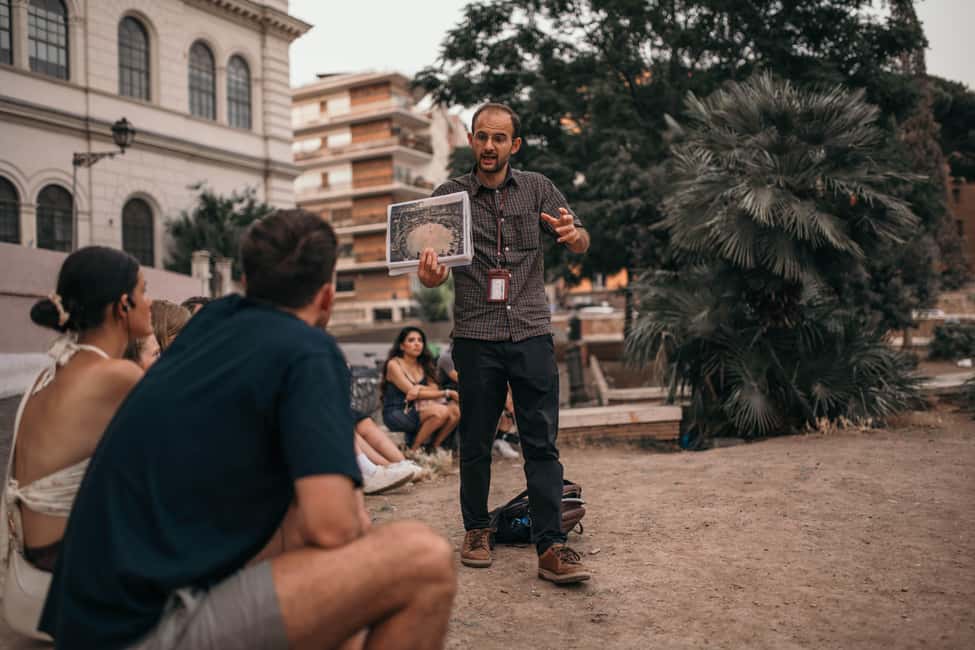
Next you’ll pass the Pontifical Gregorian University. This is described as the first university founded by Jesuits, and your guide points you toward what to notice.
It’s not the kind of stop you’d normally plan around, which is exactly why it helps. Your brain starts linking “Rome as monuments” with “Rome as institutions,” meaning education, religion, and culture all intertwine here.
You’ll have a short break time in this segment, which is practical. By this point, you’ll likely appreciate a breather before you hit the busiest photo stops.
You can also read our reviews of more evening experiences in Rome

Trevi Fountain coin wish: left-shoulder tradition and prime viewing time
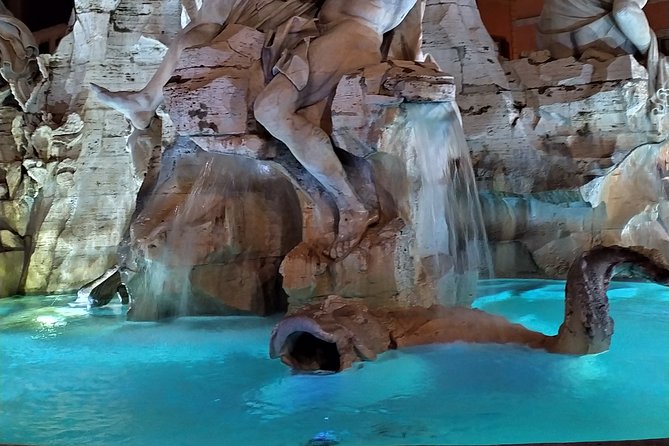
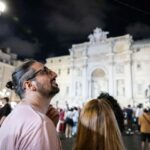
Then the tour turns into pure Rome magic at the Trevi Fountain. You’ll take photos and do the classic visit with a guided stop.
Here’s one detail that’s worth paying attention to: you’ll make the wish by throwing a coin over your left shoulder. That’s the kind of instruction that sounds simple, but it helps you do it the way locals and tradition describe, not the way random videos on your feed might.
Your guide also sets the scene by pointing out what makes the fountain feel like a jewel of water and stone. At night, it’s easier to see the fountain as a centerpiece rather than a crowd magnet.
Timing helps too. The tour includes a dedicated block for Trevi, so you aren’t stuck sprinting through. You can look up at the sculptural details, check your photos, and still move on without feeling rushed.
Marcus Aurelius Column and Hadrian’s Temple: smaller monuments with big “oh wow” moments
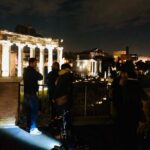
Between major crowd zones, your route includes stops that feel surprisingly satisfying when you slow down. You’ll pass the Marcus Aurelius Column, with guided attention and walking time to see it in context.
Then you’ll reach the Temple of Hadrian area. In the tour flow, this is framed as Piazza di Pietra and Hadrian’s Temple. Your guide will point out the look and significance of this setting so it doesn’t just feel like another stone structure along the way.
I love when a tour gives you variety like this. You get your iconic shots, then you get a chance to notice quieter Roman cues: how monuments connect to plazas, how space is organized, and how the city’s layers show up in plain sight.
Pantheon at work: a church stop that changes how you see the building
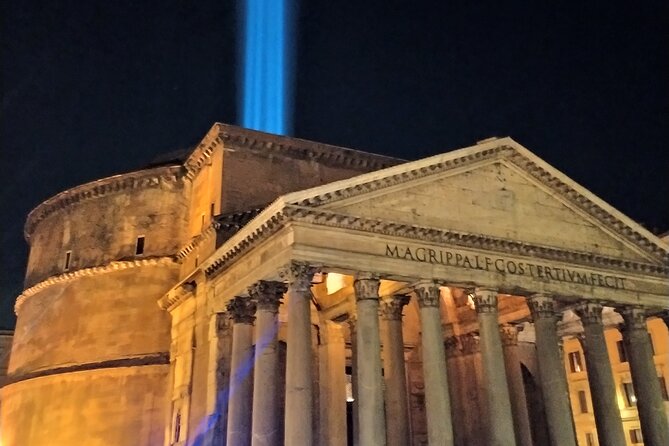
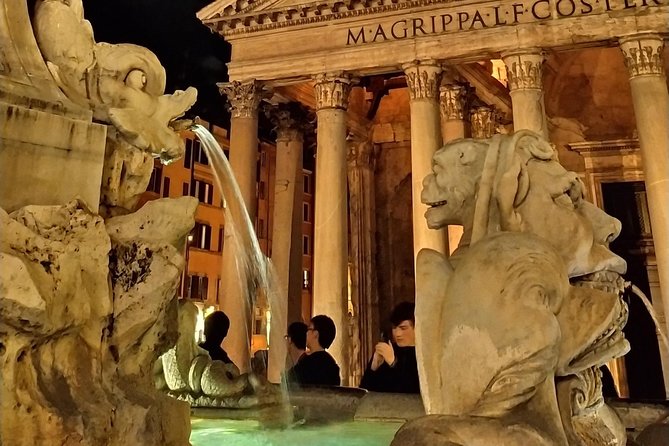
After Trevi, you’ll head to the Pantheon. The Pantheon is still functioning as a church, and your guide helps you understand that reality while you’re there.
The tour includes break time, plus guided sightseeing and photo time. Even if you don’t spend a long moment inside (entry isn’t included), you’ll still get a sense of how the Pantheon works as a living landmark, not only a museum piece.
This stop is valuable because it changes the theme of the evening. Earlier you’re thinking about ancient spectacle and empire-scale architecture. At the Pantheon, the city shifts toward a building meant for ongoing use, and you notice that through the way people move through the space and how it holds attention.
Spanish Steps at night: the short climb and the best angles
The final stop is the Spanish Steps. This is where Rome goes romantic on you, with the design and the nighttime atmosphere turning the stairs into a photogenic stage.
You’ll have break time and photo time, plus a guided visit. The tour also includes getting the chance to climb up the Spanish Steps, which is a huge part of why this stop works. Looking from street level is one thing. Getting higher gives you a different view of the architecture and the crowd energy below.
Keep your expectations realistic. You’re doing this after walking for a while. So don’t try to power through the whole climb and then immediately try to shoot like a professional. Take your time, pick your best angle, and enjoy the fact that the best famous view in Rome is basically right there in front of you.
When the tour ends, you return back to the meeting point.
Comfort, pace, and who this tour is best for
This walk covers about 3 miles (5 km) and you’ll be on your feet for roughly 2.5 hours. That’s a totally normal distance for an evening tour, but it is still real walking time. Add in photo pauses and the occasional break, and the pace stays comfortable as long as your body can handle city sidewalks.
The tour also notes it’s not suitable for people with mobility impairments. That’s worth respecting. You’re dealing with night footing, some stairs, and a final climb at the Spanish Steps.
Who this tour fits best:
- You want the big icons with context, without planning logistics between stops
- You like night photos and want built-in time at each highlight
- You prefer small-group pacing over long bus tours
Who might want to skip or adjust:
- You dislike walking distances around 5 km in an evening
- You need accessible routes at every stop
Price and value: what $39.86 buys you in real time
The price listed is $39.86 per person for about 2.5 hours. You’re not paying for entry tickets. Entry to attractions and food/drinks are not included, so you’ll want a separate plan for any paid sights you might want later.
So what are you paying for? You’re paying for the stuff that usually costs time and energy on your own trip:
- A guide who connects what you see, including stories like gladiator shows at the Colosseum
- Headsets that help you hear clearly in busy areas
- A planned walking route that hits multiple top landmarks efficiently
- Wi-Fi included, which can be handy if you’re juggling maps and messaging
When a tour includes headsets, you feel it immediately. It’s easier to stay present instead of repeatedly looking for where the group went.
If you’re already comfortable navigating Rome on your own, you might question the value. But if you want a low-stress evening with expert storytelling and planned stops, this price is fair for what you get.
Should you book this Rome at night tour?
I think you should book it if you want an evening plan that hits Rome’s biggest names and still offers guidance that makes those names meaningful. The route is practical, the pacing is built for photos, and the guide-focused storytelling is the kind of value you can’t easily replicate by wandering alone.
Skip it if walking 5 km plus stairs sounds like a bad time, or if you’re looking for ticketed museum-style entry throughout. This is a night walk with viewing and stories, not a ticket-heavy attraction marathon.
If your goal is to feel Rome’s nighttime glow while seeing real landmarks in a logical path, this is a strong pick.
FAQ
How long is the Rome at night walk?
It lasts about 2.5 hours.
How much walking is involved?
The tour covers approximately 3 miles (5 km).
Where does the tour start and end?
It starts at Via del Monte Oppio 3, and it ends back at the same meeting point.
What language is the guide?
The live guide speaks English.
What’s included, and what’s not included?
Included items are the guide, headsets, and Wi-Fi. Entry to attractions and food and drinks are not included.
Is luggage or large bags allowed?
No. Luggage or large bags are not allowed.
Is the tour suitable for mobility impairments?
It may not be suitable for people with mobility impairments.
Is free cancellation available, and do I need to pay right away?
Yes. You can cancel up to 24 hours in advance for a full refund, and you can reserve now and pay later.