REVIEW · ROME
Via Crucis Catholic Pilgrim Walking Tour in Rome
Book on Viator →Operated by Crucis Tours · Bookable on Viator
Rome’s churches start speaking when you walk. This Via Crucis Catholic Pilgrim Walking Tour turns the usual Rome church visit into a scripture-and-Church-history journey, with a guide who ties theology to what you’re seeing. You also get the small-group attention that makes the whole walk feel less like a rush and more like a real pilgrimage.
I love that the route focuses on why these places matter to Catholics, not just what they look like. Stop by stop, you get context: saints, relics, and Church teaching explained in plain, human language—so the sites don’t feel like museum props.
One thing to plan for: this is a serious walking tour. It’s not recommended if you can’t walk more than about 2 kilometers, and in summer it can be particularly difficult.
In This Review
- Key Highlights Worth Marking on Your Map
- A Catholic Pilgrim Route Outside the Usual Rome Circuit
- Meeting at Santa Maria Maggiore and Walking Toward the Holy Steps
- Guide Style: Scripture, Theology, and Real Names You Might Hear
- Stop 1 at the Start Point Area: St John Lateran as Mother Church
- Santa Prassede: Peace, Early Christian Mosaics, and the Scourging Pillar
- Church of St Alphonsus Maria de Liguori: The Our Lady of Perpetual Help Icon
- Scala Sancta (Holy Stairs): Seeing the Steps and the Holy of Holies
- Back to St John Lateran Again: Apostles, Tombs, and the Holy Door Theme
- Santa Croce in Gerusalemme: The Passion Relics Finale
- Price and Value: What $114.45 Buys You in Rome
- Who Should Book This Tour (and Who Might Skip It)
- Should You Book the Via Crucis Catholic Pilgrim Walking Tour?
- FAQ
- How long is the Via Crucis Catholic Pilgrim Walking Tour in Rome?
- What time does the tour start, and where do I meet?
- What’s the group size?
- Is the tour in English, and do I get a ticket on my phone?
- Are admission tickets included?
- Will I have time to climb the Holy Steps on my knees?
- What should I wear to the churches?
- Is the tour difficult to walk?
Key Highlights Worth Marking on Your Map
- Small group (up to 5 travelers): more time for questions and slower, clearer explanations.
- English tour with mobile ticket: simple logistics and fewer paper hassles.
- Scala Sancta focused, even if you skip the kneeling: you’ll see the Holy Steps and visit the inner sanctuary.
- Relics of the Passion at Santa Croce in Gerusalemme: the finale centers on some of Christendom’s most famous Passion-related artifacts.
- Hidden-and-quiet moments: Santa Prassede is known here for its peace, mosaics, and relic connections.
- Respectful dress required: shoulders and knees covered at Catholic sites.
A Catholic Pilgrim Route Outside the Usual Rome Circuit
This tour is for you if you like faith-based travel with substance. Not just photos. Not just architecture talk. You’re walking a Via Crucis-style path through major and lesser basilicas, with the story of the Church woven directly into the experience.
What I appreciate is the balance: you’re not only looking at sacred spaces, you’re also learning the “why.” The guide’s job is basically to connect Scripture and theology to what’s in front of you—pillars, tombs, icons, relics, and the physical reminders of Christian history.
And since the group is capped at 5, you’re less likely to feel like a number in a line. You get time to ask the practical questions that matter: What am I looking at? Why is it important? How did it get here?
You can also read our reviews of more walking tours in Rome
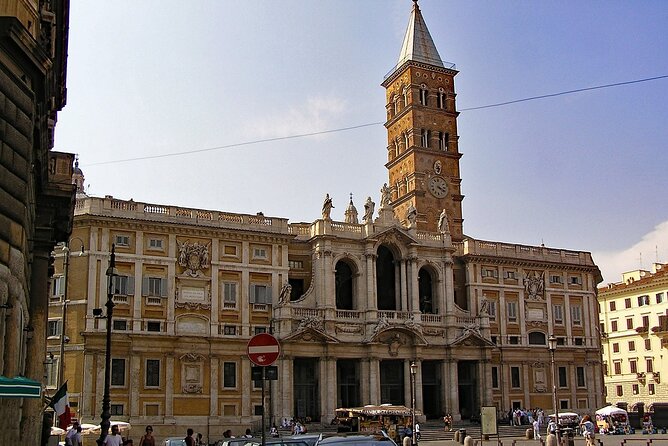
Meeting at Santa Maria Maggiore and Walking Toward the Holy Steps
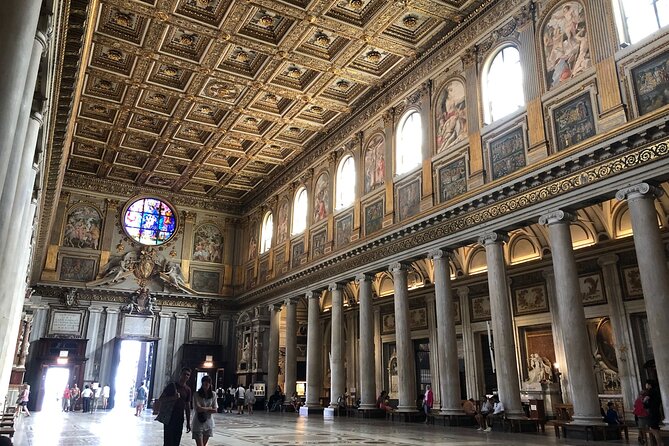
The tour starts at 8:45 am at P.za di Santa Maria Maggiore, 33. It ends at Basilica di Santa Croce in Gerusalemme at Piazza di S. Croce in Gerusalemme, 10. So plan your day around an end point in that neighborhood, not back where you started.
The duration is about 3 to 4 hours, which is long enough to feel meaningful but short enough to fit into a fuller Rome itinerary. You’ll move church to church, with short stops that still allow for explanation and reverent looking.
One more practical note: your comfort matters on this one. The tour is described as having moderate physical fitness needs, and it explicitly warns not to book if you can’t manage more than about 2 kilometers. If you’re traveling with mobility limits, you’ll likely feel stressed by the pace.
Guide Style: Scripture, Theology, and Real Names You Might Hear
This is an English-language tour, and the guide is central to the experience. The strongest praise is consistent: guides are described as deeply grounded in Catholic faith while still being engaging and patient with the group.
You may be led by guides such as Tom or Wen (both names show up in the guide feedback). The key difference here is how they teach. Instead of reciting dates and facts, they connect the sites to the Church’s story—Scripture, theology, and Church history—so you leave with a clearer framework, not just new trivia.
I also like that the tour seems to work even if you’re not Catholic. The tone is said to be faith-forward without being pushy, so you can still appreciate the art, symbolism, and historical layers.
Stop 1 at the Start Point Area: St John Lateran as Mother Church
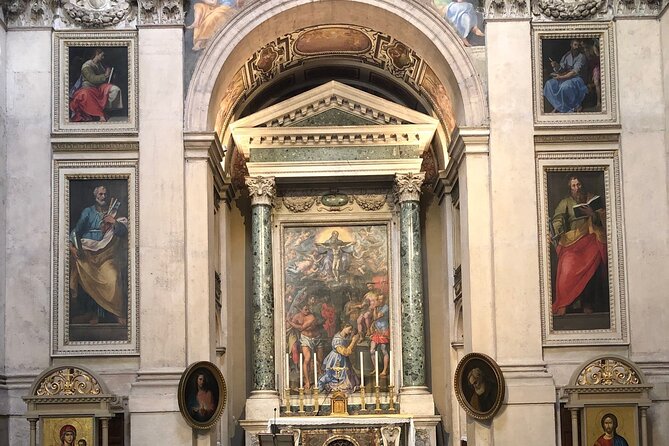
You begin near Piazza di Santa Maria Maggiore, but the first major focus is the Arch-Basilica of St John Lateran (San Giovanni in Laterano), described as the Mother Church of the World and the cathedral of the Bishop of Rome, the Pope.
This stop is given about 1 hour, which is a strong clue that you’re not skimming. Here, the tour frames Lateran not as a stop on a map, but as a statement of Catholic identity and continuity.
Some of the standout elements included in the stop description:
- The interior is said to contain part of the Holy Sponge.
- There are numerous papal tombs.
- It’s also connected here with the skulls of Saints Peter and Paul.
- You’ll hear about the Holy Door used during Jubileum years for a Partial Indulgence.
If you’ve ever wondered why certain popes and saints get tied to particular basilicas, this is the kind of place where the answer starts to click. You’re looking at physical reminders of Church history, not just a beautiful building.
A small caution: the sheer importance of the site can mean it’s crowded on some days. The guide’s pacing matters, and this is where a small group helps.
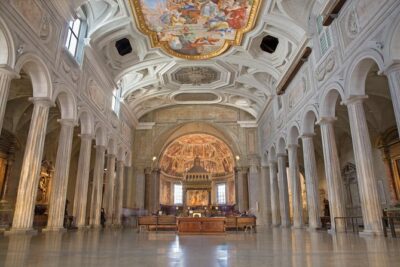
Santa Prassede: Peace, Early Christian Mosaics, and the Scourging Pillar
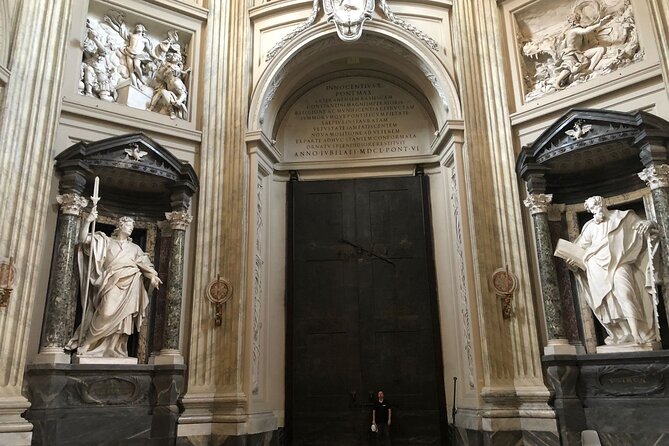
Next is Basilica di Santa Prassede, a quieter-feeling stop located across from St Mary Major. This is where the tour leans into “Rome you don’t always see on a standard list.”
The description here is rich in specifics:
- The basilica honors St Praxedes, linked to early Christian care and martyr support during the Roman Empire.
- Relics of martyrs were brought to this site and hidden in a well.
- The most extraordinary treasure mentioned is a pillar used in the Lord’s scourging before the crucifixion.
- The pillar is said to have been brought from Jerusalem in the 13th century as a donation connected to the Fourth Crusade.
- The basilica also includes some of the earliest examples of Christian mosaic art.
You’ll feel the difference between a loud, famous church and a place that rewards silence. This stop is only about 15 minutes, but it’s enough time to notice the mood shift and understand why the basilica has a reputation for peace.
Potential drawback: because the stop is short, you may want to bring your questions. If you’re curious about mosaics or how relics were transferred and preserved, ask early so the guide can anchor you.






Church of St Alphonsus Maria de Liguori: The Our Lady of Perpetual Help Icon
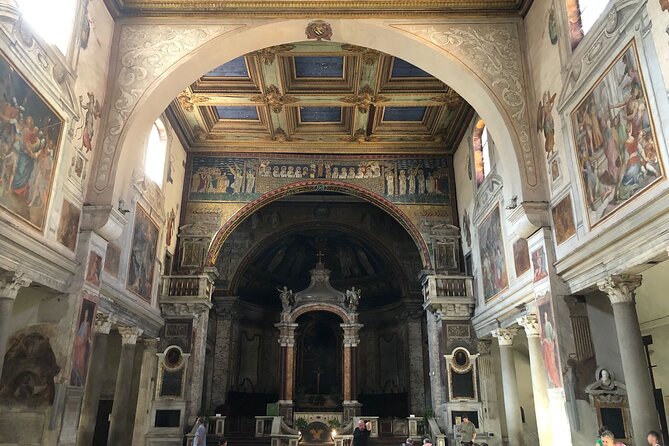
The tour then heads to the Church of Saint Alphonsus Maria de Liguori. From the outside, it’s described as comparatively unremarkable, even with its neo-Gothic architecture—yet the interior is presented as the real payoff.
This stop is about 15 minutes, which means it’s focused. The headline is the original icon of Our Lady of Perpetual Help (also called Our Lady of Perpetual Succour or Our Lady of the Passion). If Marian devotion is part of your faith life, you’ll likely find this moment emotionally resonant.
Why I think this stop matters for you:
- Icons are not only art here; they’re devotional objects.
- The tour connects that devotional role to the wider Catholic world of tradition, relic culture, and teaching through images.
If you’re someone who prefers a lot of time in one place, this may feel like a quick hit. But it pairs well with the heavier relic and Passion stops later.
Scala Sancta (Holy Stairs): Seeing the Steps and the Holy of Holies
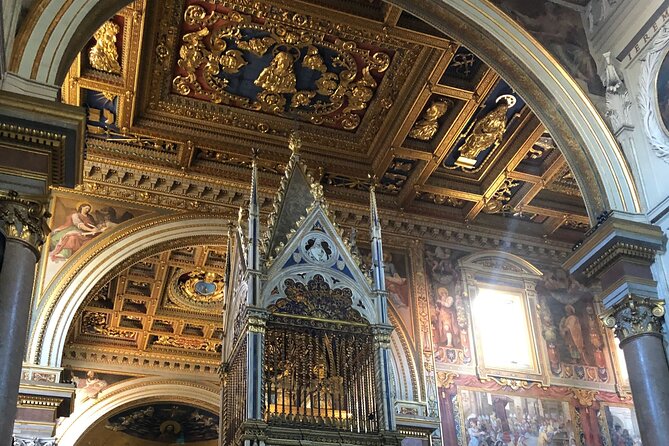
Now you get to the tour’s most famous visual moment: the Pontificio Santuario della Scala Santa, often called the Scala Sancta or Holy Stairs.
You’ll learn that these are the steps associated in tradition with Jesus’ ascent at the praetorium in Jerusalem. It’s also explained that the steps were brought to Rome in the 4th century by St Helena, and that the tradition is to climb on one’s knees.
Important practical detail: the tour notes that you will see the Holy Steps, but you won’t have time to do the on-your-knees tradition during this tour. If you want to make that part of your pilgrimage, the guide suggests organizing a separate visit. Entrance is said to be free and you don’t need to book for that.
The stop includes also visiting the Holy of Holies inside the church of the Holy Stairs. You get a glimpse inside a tiny chapel and its acheiropoieta icon by tradition linked to St Luke and finished by angels.
This is the one stop where the tour explicitly includes admission: 30 minutes with entry included. So you’re not just walking past a famous landmark—you’re getting access to the moment the site is built around.
My advice: even if you’re not doing the kneeling tradition, bring your patience. This is one of those “stand still and let it land” places.
Back to St John Lateran Again: Apostles, Tombs, and the Holy Door Theme
The itinerary includes a second time at Basilica of San Giovanni in Laterano (St John Lateran), with a shorter 30-minute stop.
This part of the tour keeps the Lateran theme but adds emphasis. The description highlights:
- Statues of all the Apostles
- Numerous papal tombs
- The skulls of St Peter and St Paul again
- The idea of the Holy Door during the Jubileum year for Partial Indulgence
Why it works to return:
- The first Lateran segment feels like an orientation to the “Mother Church” concept.
- The second segment feels like reinforcement—letting you revisit key symbols and not miss what you can only understand with time and context.
One consideration: if your energy is running low, two Lateran stops can feel like repetition. But if you’re the kind of person who likes to understand symbolism slowly, the extra time makes sense.
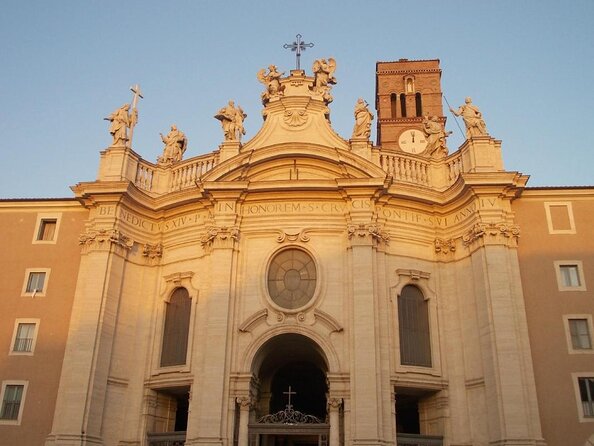
Santa Croce in Gerusalemme: The Passion Relics Finale
The final stop is Basilica of San Giovanni in Laterano’s counterpart? No—this one is the true climax: Basilica di Santa Croce in Gerusalemme (Holy Cross of Jerusalem).
This is where the tour becomes a relic pilgrimage in the most literal way. The description says crowds are rare despite the bustle outside, which is exactly what you’d want for a reverent ending.
The centerpiece is access to and veneration of important Relics of the Passion of Christ, connected to St Helena’s pilgrimage and relic transfer after Christianity was legalized.
Specific relics listed include:
- A section of wood from the True Cross
- Holy Nails from the crucifixion
- Thorns from the Crown of Thorns
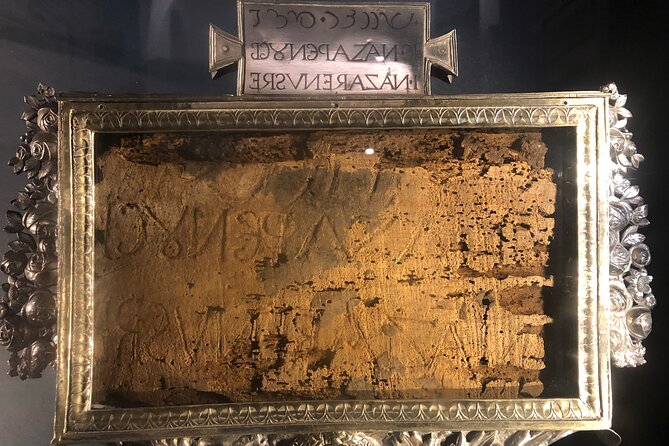
- The board with the inscription Jesus the Nazarene, King of the Jews
- The finger of St Thomas
- Fragments from the cave of the Nativity and the Holy Sepulchre
This stop is 30 minutes and ends your walk with something concrete. For you, that means the tour doesn’t just talk about suffering and salvation; it points you to physical reminders said to connect to the Passion story.
If you’re moved by relics and tradition, this is the moment you’ll remember.
Price and Value: What $114.45 Buys You in Rome
At $114.45 per person, this isn’t the cheapest way to see churches in Rome. But it can be good value for the right traveler because you’re paying for a faith-based guided route with a small group limit.
Here’s where the value math makes sense:
- You get a guide who focuses on Scripture, theology, and Church history tied directly to what you’re seeing.
- The group size is capped at 5, which reduces the usual Rome problem of getting ignored.
- Most admissions are free, but the tour includes admission for Scala Sancta, which is a site you generally want more than a passing glance at.
- The tour runs about 3 to 4 hours, which is a good chunk of time dedicated to a single theme (Via Crucis / Passion / Church history) rather than scattered stops.
Two costs to keep in mind: guide tips aren’t included, and there’s no private transportation. Still, because the itinerary is built around walking between major sacred sites, you’re paying for the guide experience more than for logistics.
Who Should Book This Tour (and Who Might Skip It)
Book it if:
- You want a Catholic pilgrimage walk with theology and Scripture explained in a practical way.
- You like relics, icons, and the physical story of Christianity in Rome.
- You’d rather have a short, focused walk than a huge bus tour with noise and speed.
Consider skipping if:
- You can’t walk more than about 2 kilometers, or you’re likely to feel strained by the pace.
- You’re sensitive to heat; the tour warns it can be particularly difficult in summer.
- You’re uncomfortable meeting dress expectations. Shoulders and knees must be covered, and you’ll want to dress respectfully.
Also think about your goals. If you’re mainly chasing classic Rome sightseeing, this will feel narrower and more devotional. If your goal is faith-forward travel with historical meaning, it’s exactly aligned.
Should You Book the Via Crucis Catholic Pilgrim Walking Tour?
I’d book it if you’re Catholic (or deeply curious about Catholic devotion) and you want a guided route that treats sacred history like living truth, not like wallpaper. The small group limit, the guide-centered teaching style, and the specific focus on Passion relics at Santa Croce in Gerusalemme are the big reasons.
But if your priority is casual sightseeing or you know you struggle with walking distances and standing, you’ll probably get more frustration than value. In that case, you might save this for a cooler season—or consider separate visits to the sites where you can go at your own pace, especially the Holy Stairs if you want the kneeling tradition.
FAQ
How long is the Via Crucis Catholic Pilgrim Walking Tour in Rome?
It lasts about 3 to 4 hours.
What time does the tour start, and where do I meet?
The start time is 8:45 am. The meeting point is P.za di Santa Maria Maggiore, 33, 00185 Roma RM, Italy.
What’s the group size?
The tour has a maximum of 5 travelers.
Is the tour in English, and do I get a ticket on my phone?
Yes, it’s offered in English, and you receive a mobile ticket.
Are admission tickets included?
Most sites listed are free, and the Scala Sancta stop includes admission. Other stops are marked as free admission.
Will I have time to climb the Holy Steps on my knees?
The tour notes that you will see the Holy Steps, but you won’t have time to partake in the on-your-knees tradition during the tour. You would need to organize a separate visit for that.
What should I wear to the churches?
Shoulders and knees must be covered, and you should dress respectfully.
Is the tour difficult to walk?
It’s not recommended if you can’t walk more than 2 kilometers. The tour also notes it can be particularly difficult in summer.