REVIEW · ROME
St. Angel’s Castle: 2-Hour Private Tour
Book on GetYourGuide →Operated by Rome Guides · Bookable on GetYourGuide
Rome has a secret prison history. This private 2-hour guided walk turns St. Angel’s Castle into a story you can actually picture, with panoramic terrace views that make the setting feel real. I like that you get expert context for the big changes over centuries, not just facts on a wall. One consideration: it’s not recommended for people with limited mobility, and luggage/large bags aren’t allowed.
You’ll start at the entrance, go through the castle’s major rooms and collections, then finish down in Piazza Navona. Along the way, you’ll connect Emperor Hadrian’s mausoleum beginnings to the Popes’ Renaissance life, including the famous hidden escape route known as the Passetto.
In This Review
- Key things you’ll notice right away
- St. Angel’s Castle Is Four Buildings in One
- Hadrian to the Popes: Halls, Myths, and Art That Actually Means Something
- Prison Levels and the Passetto Escape Route
- Pope Paul III’s Apartment: When the Castle Becomes Home
- Rome From the Terrace, Then Piazza Navona Finish
- Price and Value: What $135.94 Buys You (Per Person)
- Practical Stuff Before You Go: Timing, Shoes, Bags, and Pace
- Should You Book This St. Angel’s Castle Private Tour?
- FAQ
- How long is the St. Angel’s Castle private tour?
- What does the price include?
- Where do we meet the guide?
- What languages are available for the guide?
- Is this tour suitable for wheelchair users or limited mobility?
- Are luggage and large bags allowed?
- What should I bring for the visit?
Key things you’ll notice right away
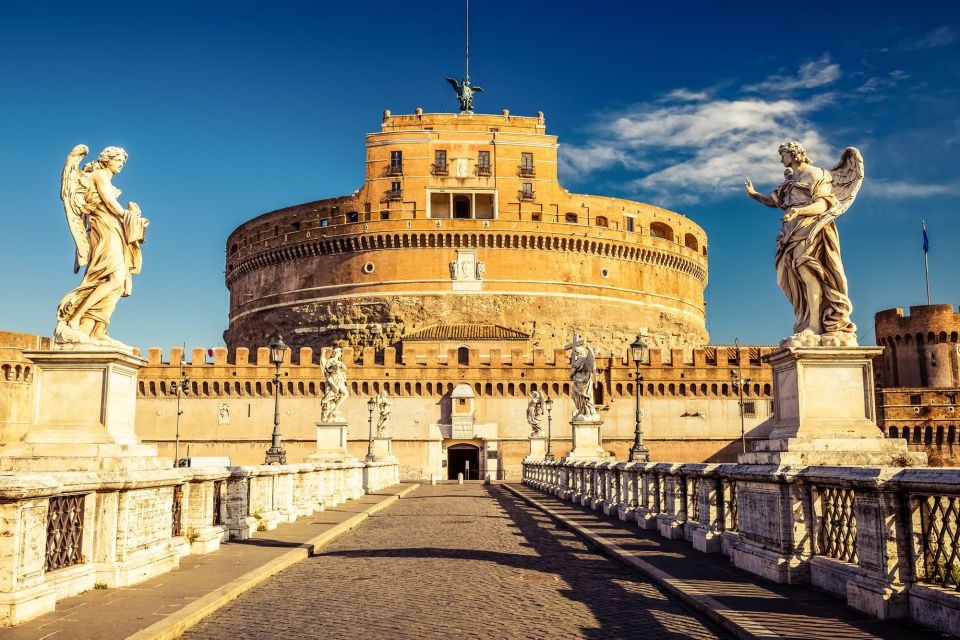
- A guide who makes the centuries connect, from Hadrian’s era to the Popes’ residence
- Terrace panoramas over Rome’s historic center, timed for a proper view break
- Staged storytelling through named halls like Paolina and Persus
- Passetto history explained as the Popes’ escape plan during danger
- A real Pope’s apartment visit, specifically Pope Paul III’s rooms
- A satisfying finish in Piazza Navona, so you don’t end the tour “in the middle of nowhere”
St. Angel’s Castle Is Four Buildings in One
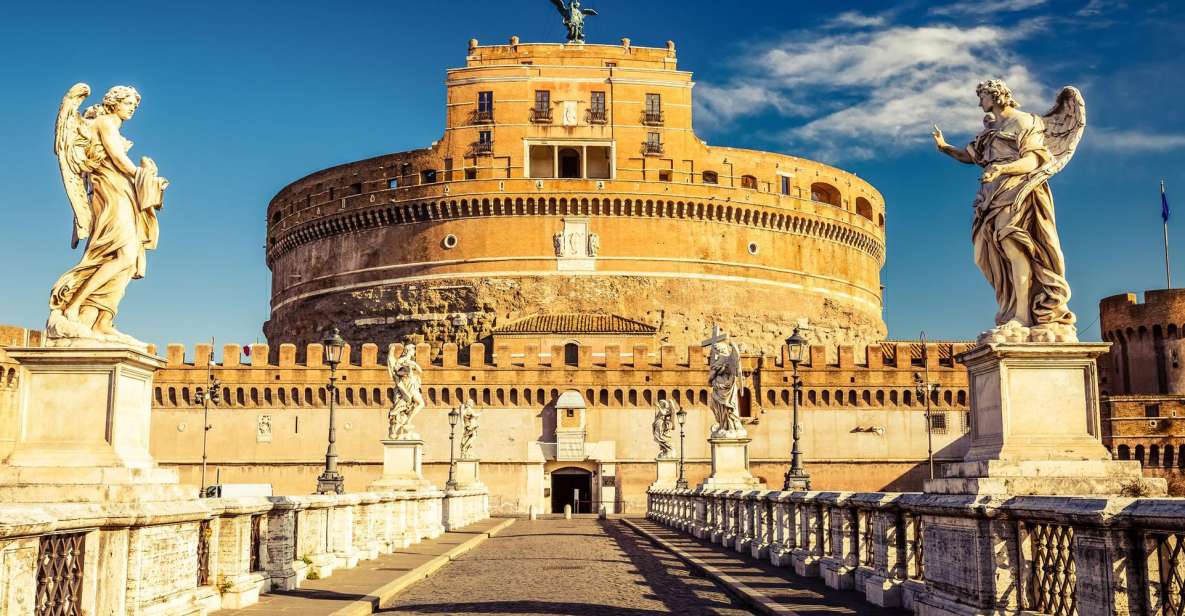
St. Angel’s Castle (often called Castel Sant’Angelo) is one of those Rome sites where the setting changes every time the power structure changes. That’s why this tour works so well: you don’t just walk through stone rooms. You track the building’s job description as it evolves.
You start with the earliest chapter, when the castle began in the 3rd century A.D. as a mausoleum for Emperor Hadrian. Then you move forward into the Middle Ages, when it becomes a fortress. After that, it takes on a darker role as a prison and a working space for Vatican Treasury and Archive functions. Finally, during the Renaissance, the castle shifts again into something closer to a papal residence.
That “role-changing” is the heart of the experience for you. Rome can feel like a blur of timelines unless someone helps you hang each era on a concrete place. Here, the building itself becomes your timeline. Every new room you enter makes the previous era easier to understand, because you’re seeing how the same structure can serve very different needs.
You can also read our reviews of more private tours in Rome



Hadrian to the Popes: Halls, Myths, and Art That Actually Means Something
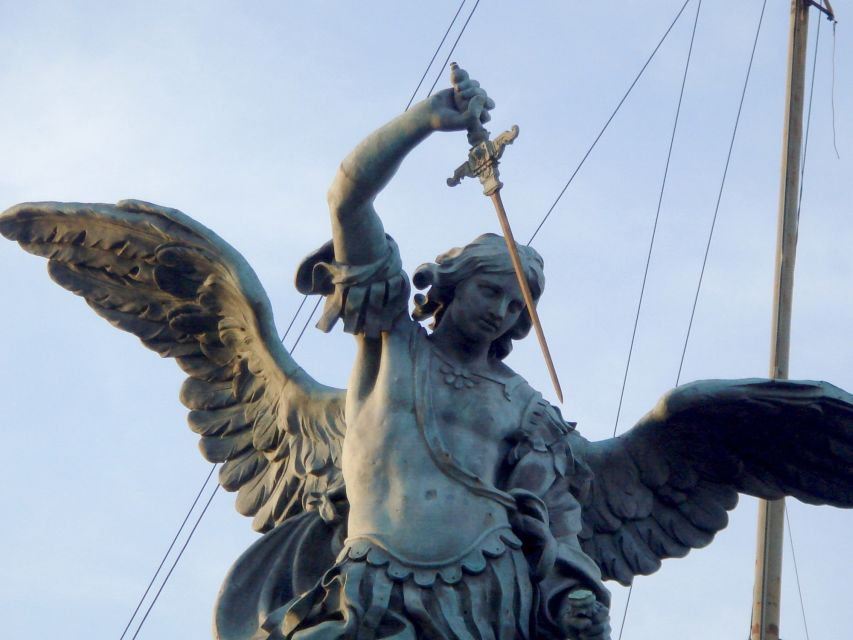
The guided portion isn’t only about dates. It’s about atmosphere—how the castle’s spaces were used, and why certain stories mattered to the people living and working inside.
You’ll spend time in halls with named themes, including the Hall of Paolina and the Hall of Persus. In Paolina, you’ll hear stories connected to Alexander the Great—using the mythic, larger-than-life style that Renaissance-era visitors loved. In Persus, you’ll uncover the myth of the Greek hero Perseus, which ties the room’s imagery to the broader habit of using classical legends to signal power, culture, and education.
Then comes the castle’s “collector’s wall” energy. You’ll admire a collection of ancient arms, marbles, ceramics, and sculptures. This is one of the better stops if you like art, but also if you want to understand how the Popes and the Vatican treated objects: these weren’t casual decorations. They were statements.
After that, there’s a painting gallery stop with works by Carlo Crivelli, Luca Signorelli, and Dosso Dossi. Even if you don’t consider yourself an art person, I’d still recommend paying attention here. These artists anchor the Renaissance vibe inside a building that also had military and prison functions. It’s the contrast that makes the visit click.
Prison Levels and the Passetto Escape Route
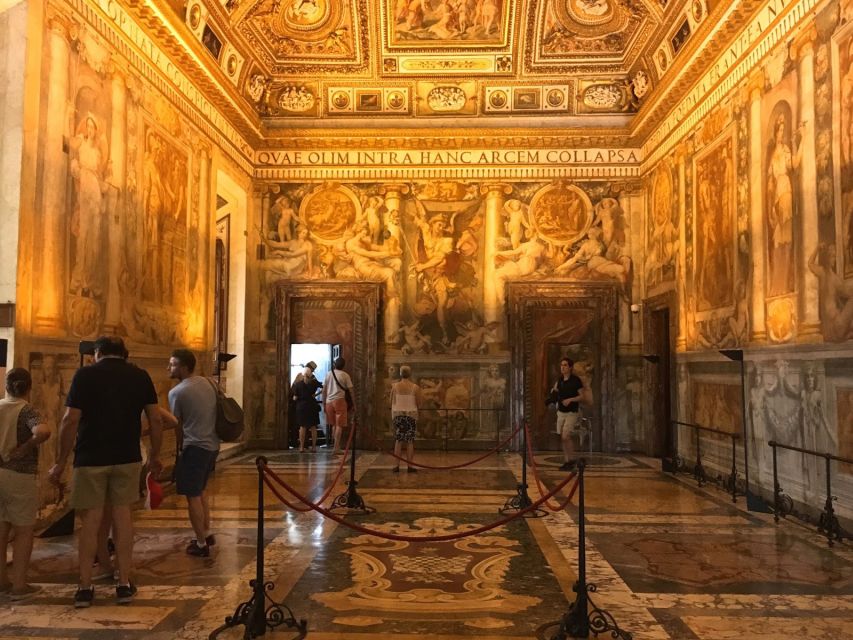
One of the most memorable parts of the tour is the Passetto, the hidden path used by the Popes to escape the castle when the Vatican was under attack.
The practical value of this stop is that it turns the castle from an architectural curiosity into a real security system. It helps you understand why the castle’s layout mattered. A secret escape route doesn’t exist for decoration. It exists because leadership planned for crisis.
This is also where the guide’s job really shows. The Passetto can sound like a cool legend when it’s mentioned quickly. With a guide, you get the logic behind it and the role it played during tense moments. It’s the kind of story that makes you look at the castle differently as you move through it—almost like you’re spotting the building’s “intentions,” not just its design.
Pope Paul III’s Apartment: When the Castle Becomes Home
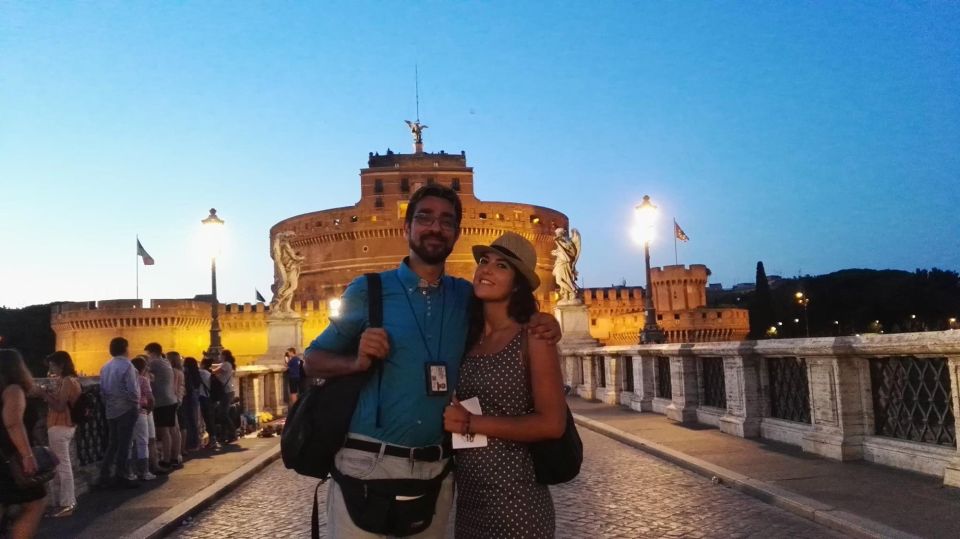
After the heavier stories of fortress and prison, you visit the apartment of Pope Paul III. That shift is more than a change of decor. It’s a change in what the castle allowed the Popes to be: rulers who could function from inside a complex that had once been designed to defend, control, and punish.
You’ll also hear more about papal life beyond the basics. One review highlighted extra attention to the Borgia Pope thread, which tells me the guide style here tends to pull relevant characters into the narrative when they fit the room. In a place like this, that matters because names can otherwise feel like a homework list. When a guide connects people to spaces, it sticks.
If you like Renaissance politics, court culture, or the human side of rule, this is your payoff stop. The apartment visit gives you a sense of daily papal presence—an angle that balances the castle’s hard edges.
Rome From the Terrace, Then Piazza Navona Finish
The terrace is where the castle stops being only a story location and becomes a viewpoint. You’ll take in panoramic views of Rome from the castle’s terrace, with the historic center spread out below you.
This is a smart moment in the timing. After walking through halls and collections, your brain needs one clean visual reset. A terrace view does that. You get to connect what you just learned—imperial origins, fortress logic, papal escape routes—to the city around it.
Then the tour ends with a stroll in Piazza Navona, described as the symbol of the Baroque style of Rome. Ending here is convenient if you plan to keep exploring right after. You don’t have to figure out your next move from a remote point; you step into one of the city’s most recognizable squares.
You can also read our reviews of more tours and experiences in Rome






Price and Value: What $135.94 Buys You (Per Person)
At $135.94 per person for a 2-hour private tour, you’re paying for three big things: an expert English-speaking guide, a private group format, and included entry tickets.
That last part is worth noticing. Entry tickets are included in the price, so you’re not adding another baseline cost later. And with a private setup, you can move at a pace that fits your interest—more time on the stories you care about, less on the parts you’d rather skim.
Is it “expensive”? It can be, depending on how you travel. If you’re the type who enjoys reading on your own and doesn’t need a guide to connect the dots, a self-paced visit might save money. But if you want the building’s transformation explained clearly—especially the Passetto and the shift from prison functions to papal residence—this kind of guided format is often the difference between a quick look and a meaningful visit.
This tour tends to make the most sense for:
- First-timers who want Rome’s timeline to land in the right places
- Families who appreciate a clear narrative (one review specifically mentioned the whole family loving it)
- People who like history stories with real characters, not just dates
- Anyone who wants a viewpoint plus a guided explanation, not one or the other
Practical Stuff Before You Go: Timing, Shoes, Bags, and Pace
Plan for a straightforward meetup. You should arrive 15 minutes before the activity starts. Your guide waits at the entrance holding a sign with the tour name.
Wear comfortable shoes. You’re walking through multiple areas inside the castle and moving between key stops, so you’ll thank yourself for good footing. Also note: luggage or large bags aren’t allowed. If you’re traveling light, you’ll feel at ease; if you’re carrying a big daypack, you’ll want to keep it modest.
For children, bring a passport or ID card as needed for entry. If you’re traveling with kids, this is the kind of detail that prevents last-minute stress.
One more important note for planning: this tour isn’t recommended for people with limited mobility, and it’s not suitable for wheelchair users. If mobility is a concern, it’s best to choose an option that’s explicitly designed for your needs.
Should You Book This St. Angel’s Castle Private Tour?
If you want a guided story that explains why St. Angel’s Castle went from mausoleum to fortress to prison to a papal residence, book it. The tour’s mix of named halls, art, the Passetto escape route, and the Pope Paul III apartment gives you variety without turning the visit into chaos.
It’s also a good pick if you like ending in a central place. Finishing near Piazza Navona means you can keep walking through Rome with momentum.
Don’t book it if:
- You need wheelchair-accessible routing
- You’re hoping for a casual, totally self-guided experience where you can wander slowly without a structured narrative
- You’re coming with large bags or luggage that you can’t leave somewhere else
If you fit the audience, you’ll likely leave with more than a stamp in your passport. You’ll have a mental map of how the castle functioned as power shifted—plus a terrace view that makes all that history look real.
FAQ
How long is the St. Angel’s Castle private tour?
The tour lasts 2 hours.
What does the price include?
Entry tickets, a guide, and a private tour are included in the price.
Where do we meet the guide?
Meet at the entrance of the castle. Arrive 15 minutes early, and the guide will wait in front of the entrance holding a sign with the tour name.
What languages are available for the guide?
The guide is available in English and Italian.
Is this tour suitable for wheelchair users or limited mobility?
It is not recommended for people with limited mobility, and it is not suitable for wheelchair users.
Are luggage and large bags allowed?
No. Luggage or large bags are not allowed.
What should I bring for the visit?
Bring comfortable shoes. Children should bring a passport or ID card.