REVIEW · ROME
Discover the Highlights of Rome in a Walking Tour
Book on Viator →Operated by Journey Tours · Bookable on Viator
Rome teaches itself on foot. I love the locally planned route that keeps the walking tight, and I love the big wow factor of seeing the Pantheon’s dome up close. One thing to keep in mind: entrance fees aren’t included across the board, and some ticketed sights are viewed from outside.
This is a 2 hours 30 minutes stroll through Rome’s historic core with a maximum of 20 people. You’ll have an English-speaking guide, and there are multiple departure times during the day, which helps if you want to match it to your sightseeing rhythm.
You start near Piazza di S. Agostino and end in the area of Piazza Navona (the map shows an end point in the Colosseum area). That finish matters because Piazza Navona is where Rome slows down enough for a coffee and some serious people-watching.
In This Review
- Key highlights at a glance
- Why this walk is a smart 2.5-hour plan
- Starting at Piazza di S. Agostino and lining up Piazza Venezia
- Palazzo Venezia and nearby palazzi: politics, power, and art
- Trajan’s Column and Trajan’s Market: Rome’s win-and-plan combo
- Trevi Fountain: one of the world’s most over-photographed places
- Chiesa di Sant’Ignazio di Loyola: the Baroque ceiling trick worth your time
- Pantheon time: what to expect from the dome moment
- Piazza Navona: the coffee-and-people-watching finish
- Price and value: what $30.10 buys you in Rome
- Best fit: who should take this tour
- One possible drawback (and how to handle it)
- Should you book this walking tour?
- FAQ
- How long is the walking tour?
- Where does the tour start and end?
- Is the tour offered in English, and how large is the group?
- Are entrance fees included?
- Will we go inside the Pantheon?
- What is the cancellation policy?
Key highlights at a glance
- A local-focused route that helps you feel smart fast, without zig-zagging across the center
- Pantheon time built into the walk so the dome stays the main event
- Baroque church + illusion ceiling at Chiesa di Sant’Ignazio di Loyola, with entry included
- Trevi Fountain with the classic coin moment (yes, over your shoulder)
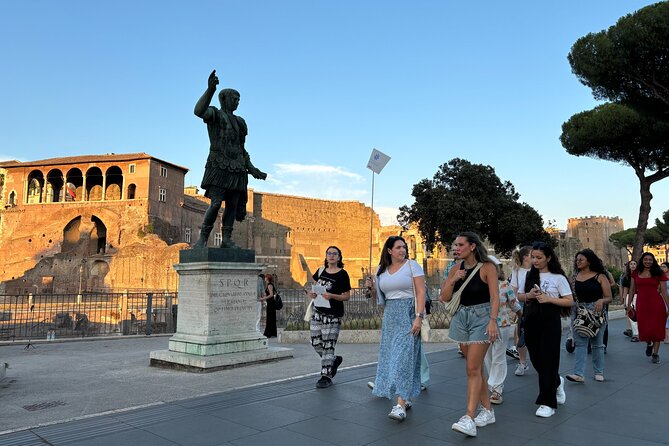
- Trajan’s Column and Market nearby so you see Roman planning in miniature
- Piazza Navona as the payoff for coffee breaks and three major fountains
Why this walk is a smart 2.5-hour plan
Rome can feel like a brain teaser if you show up with a loose list of sights. This tour does the opposite. You follow a focused path designed to cluster major stops so you spend your energy looking, not crossing.
You’ll also appreciate the pacing. With a maximum of 20 travelers, you’re not lost in a crowd, and it’s easier for your guide to keep the group moving while still telling stories at a human pace. The guide who leads the experience—Fabiana is a name you’ll hear in the good reviews—gets praised for being patient and for explaining the background in a way you can actually remember.
Another plus is flexibility. The tour offers multiple times throughout the day, so you can pick a start that fits your other plans (early for cooler walking, later if you want a slower morning).
You can also read our reviews of more walking tours in Rome


Starting at Piazza di S. Agostino and lining up Piazza Venezia
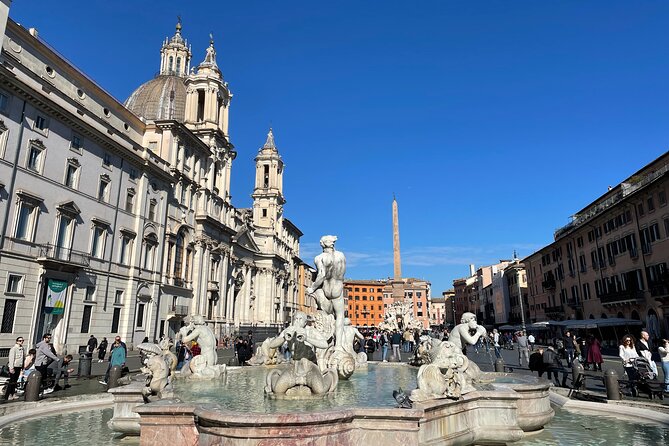
You begin at Piazza di S. Agostino, right in the thick of central Rome, which makes it easy to reach using public transportation. From there, the walk heads to Piazza Venezia, a key meeting point of the city’s streets and eras.
At Piazza Venezia, you’ll see the Vittoriano monument, the huge statement tied to Italian unification. It’s also a reminder that Rome isn’t just ancient. This square has been used for major public events, including Mussolini’s speeches, which your guide can connect to the way modern Rome still uses monumental space.
If you’re the type who likes to know why a place matters before you “just look at it,” this start helps. You’re setting context before you hit the next wave of architecture.
Palazzo Venezia and nearby palazzi: politics, power, and art
Next comes Palazzo Venezia. This building sits in the line of Rome’s big narratives: it has served as a papal residence and also as an office tied to Mussolini. That mix sounds surprising until you realize Rome’s buildings often outlive the people who used them.
The National Museum of Palazzo Venezia is where you can see a collection of medieval and Renaissance art, but keep expectations calibrated. The stop includes time to discover the place, while museum admission is not included. That means you can look at the building and its museum role from the outside and decide whether you want to pay extra on your own.
Then you stroll toward Palazzo delle Assicurazioni Generali, an early 20th-century work of architecture tied to Italy’s major insurance company. The tour gives you a chance to notice how Rome’s more recent layers still shape how the city feels and moves.
Practical tip: palazzi stops are mostly about seeing and learning. If you want lots of indoor museum time, this isn’t that kind of tour. It’s for getting the big pictures fast.
Trajan’s Column and Trajan’s Market: Rome’s win-and-plan combo
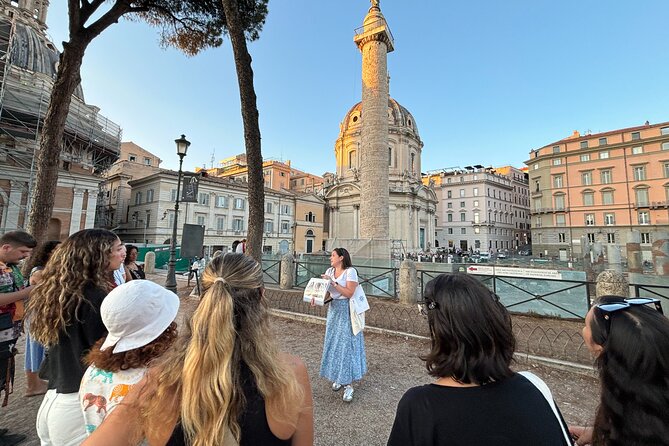
You continue to Colonna Traiana, one of Rome’s famous triumphal monuments. The column is a visual record of Emperor Trajan’s victories, but the real payoff is what comes right nearby.
From here, you can also spend time looking at Trajan’s Market, a well-preserved example of Roman commercial architecture. This is the kind of stop that makes Rome feel less like a museum and more like a functioning machine from centuries ago. The idea of advanced urban planning isn’t just a headline—it shows up when you can still read how people would have moved through space and commerce.
The admission for these is listed as free, so you’re not forced into extra ticket math. Still, don’t expect long, museum-style wandering. This is time for guided highlights and quick orientation.
Trevi Fountain: one of the world’s most over-photographed places
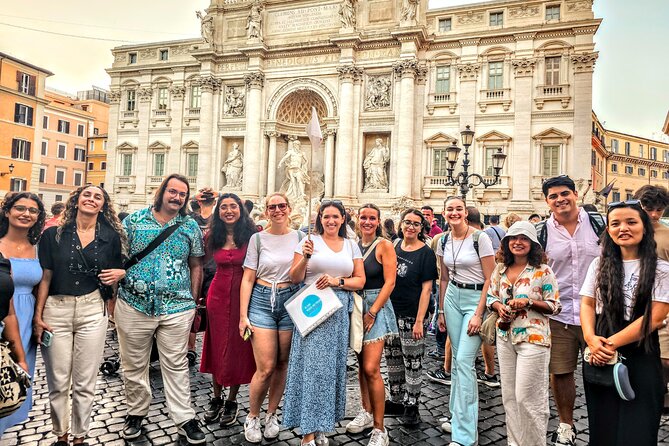
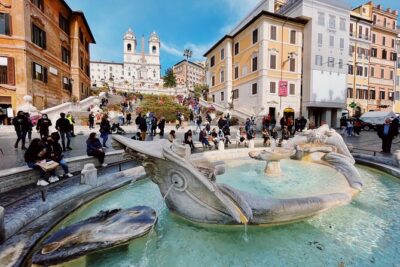
Yes, Trevi Fountain is famous. That doesn’t mean it’s automatically a letdown. The fountain’s Baroque drama—the sculptures, the carvings, the overall theatrical setup—is exactly why it became a global magnet.
The tour gives you about 20 minutes here, which is a practical sweet spot. You’ll have enough time to take in the details and get your classic photo, but you’re not trapped for hours like you might be on a slower visit during peak travel.
And then there’s the tradition: toss a coin over your shoulder to help ensure you return to Rome. It’s the sort of tourist ritual that can feel silly until you watch how many people do it with actual confidence. If you want a fun souvenir move that doesn’t cost extra, this is it.
If you’re hoping for solitude, pick your timing. Even on a planned tour, Trevi is still Trevi.






Chiesa di Sant’Ignazio di Loyola: the Baroque ceiling trick worth your time
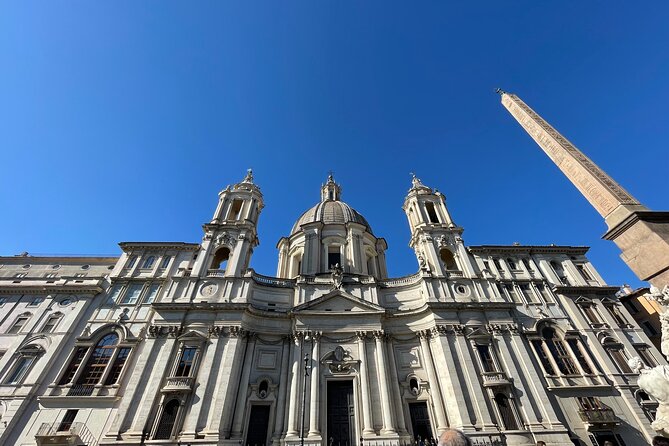
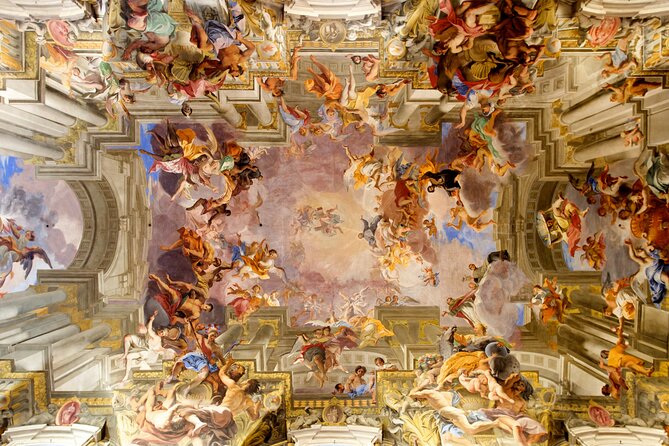
This is one of the strongest moments of the route. Chiesa di Sant’Ignazio di Loyola is a Baroque church with an interior that’s built to impress, including the illusionistic ceiling fresco by Andrea Pozzo.
Here’s why I like this kind of stop on a walking tour: you get something you can’t easily get wrong. Outside, you can only read a building so much. Inside, you experience the art. The tour lists admission here as included, so you’re not scrambling for an extra payment step before the payoff.
The illusion ceiling is the star. You’ll likely find yourself looking up more than you planned, which is a good sign in Rome. It means the building is doing its job, turning architecture into a visual trick.
If you only choose one “go inside” moment on a Rome highlight tour, this is a good candidate.
Pantheon time: what to expect from the dome moment
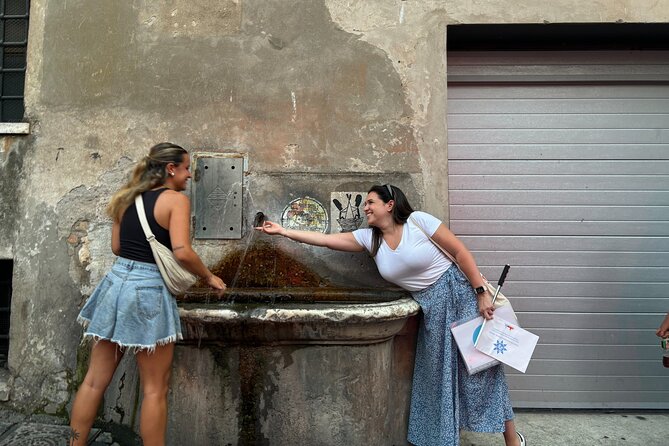
The Pantheon stop is framed as a must-do. You’ll head to one of Rome’s best-preserved ancient monuments and focus on the domed roof and the central oculus. It’s also tied to the site’s history as both a temple and a tomb, with notable figures associated with it—Raphael is one of the names you’ll hear.
Now, here’s the careful part. The tour highlights say you’ll go inside to see the dome. But the details also state that entrance fees aren’t included, and there’s a note that attractions requiring ticket entry are visited from outside. That means you should plan for some uncertainty.
What you can count on: you’ll spend time at the Pantheon and be guided to the right view points so you don’t just stand there guessing. What you should not bank on: that every visitor gets exactly the same entry experience on every day.
Bottom line: even if you see it primarily from the outside, the Pantheon is still one of the best places in Rome to understand why Roman engineering still feels modern.
Piazza Navona: the coffee-and-people-watching finish
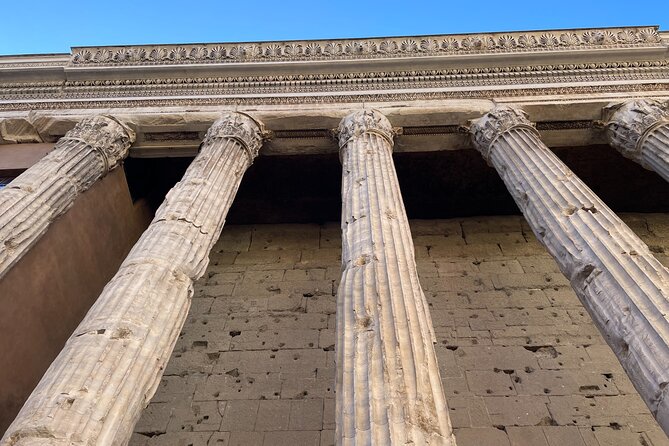
You end in Piazza Navona, and the logic of that ending is solid. This square is known for elegant Baroque architecture and three major fountains, and it’s naturally built for lingering.
You’ll see Fontana dei Quattro Fiumi, Fontana del Moro, and Fontana del Nettuno. The fountains turn the space into a visual anchor, so you can sit down and still feel like you’re “doing something” without needing another ticket.
This is where your tour stops being a checklist and becomes a break. If you want coffee and a slow sweep of the square, this is the moment.
Also, finishing here gives you an easy transition into whatever you plan next—more wandering, a meal, or a relaxed browse of the surrounding streets.
Price and value: what $30.10 buys you in Rome
At $30.10 per person, this is priced like a budget-friendly way to get real guidance rather than just a quick sightseeing loop. You’re paying for a professional English-speaking guide plus a route that strings together major landmarks in a compact walk.
Entrance fees are not included. That’s important for your budgeting, because a few stops have museum-style or ticket-style possibilities. Still, several core moments are free to see, including Trevi Fountain and Trajan’s Column area stops, and the Baroque church stop has entry listed as included.
You’re also getting group size control. With up to 20 people, the experience is much less chaotic than big-bus-style Rome tours. For many first-timers, that’s the hidden value: less stress, more understanding, and a smoother flow through crowded neighborhoods.
If you’re traveling solo or in a small group, this often ends up cheaper than hiring a private guide, while still giving you stories and context you’d otherwise miss.
Best fit: who should take this tour
This tour fits best if you want a highlights route without the full-day commitment. It’s also a good choice if you like getting context with your walking—learning why places matter instead of just snapping photos.
It asks for moderate physical fitness. You should be comfortable walking through central Rome for about 2.5 hours. If you’re managing mobility limits, you might need to plan breaks more carefully, since there’s no hotel pickup and no mention of accessibility accommodations.
You’ll also like it if you prefer English commentary and want the guide to keep things clear. Fabiana’s communication style is described as patient, story-driven, and easy to follow—exactly what you want when the city is moving fast around you.
One possible drawback (and how to handle it)
The biggest “watch out” is the ticket situation. Entrance fees aren’t included, and some ticketed sights are visited from outside, even though the Pantheon is presented as a key inside highlight.
How you handle it:
- Go in expecting outside views to be part of the plan for certain sites.
- If you’re strongly committed to interior entry at the Pantheon, check on the day-of guidance from your operator or confirm what access is available.
- Don’t let that kill the day—this route still hits major outdoor moments, plus it includes entry to Chiesa di Sant’Ignazio di Loyola.
Should you book this walking tour?
Book it if you want a guided Rome sampler that prioritizes the essentials: Piazza Venezia, Trajan’s monuments, Trevi, a true Baroque inside stop, and a confident finish at Piazza Navona. The $30.10 price is a solid value for an organized route, clear English storytelling, and a small group size.
Skip it or adjust your expectations if you’re mainly chasing long museum interiors, or if your ideal day depends on guaranteed inside access at every major ticketed site. On this kind of highlight walk, you trade “every door opens” for “the right things in the right order,” with a guide making the city easier to understand.
If you’re a first-timer, or you just want Rome to make sense quickly, this is an efficient, friendly way to do it.
FAQ
How long is the walking tour?
It runs for about 2 hours 30 minutes.
Where does the tour start and end?
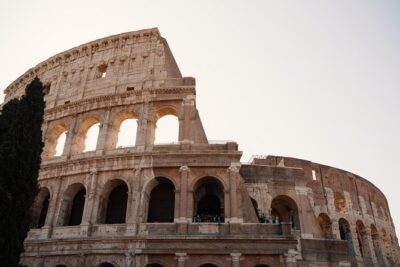
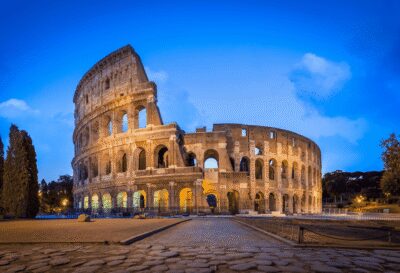
It starts at Piazza di S. Agostino and ends in the Colosseum area (the route finishes in Piazza Navona).
Is the tour offered in English, and how large is the group?
Yes, it’s offered in English, and the tour has a maximum of 20 travelers.
Are entrance fees included?
Entrance fees are not included for attractions in general. One exception noted is that Chiesa di Sant’Ignazio di Loyola is listed as included.
Will we go inside the Pantheon?
The tour highlights include seeing the Pantheon’s dome. At the same time, the details state entrance fees aren’t included and that ticketed attractions may be visited from outside, so access may depend on the situation.
What is the cancellation policy?
You can cancel for a full refund up to 24 hours before the experience start time, and it’s free cancellation.